
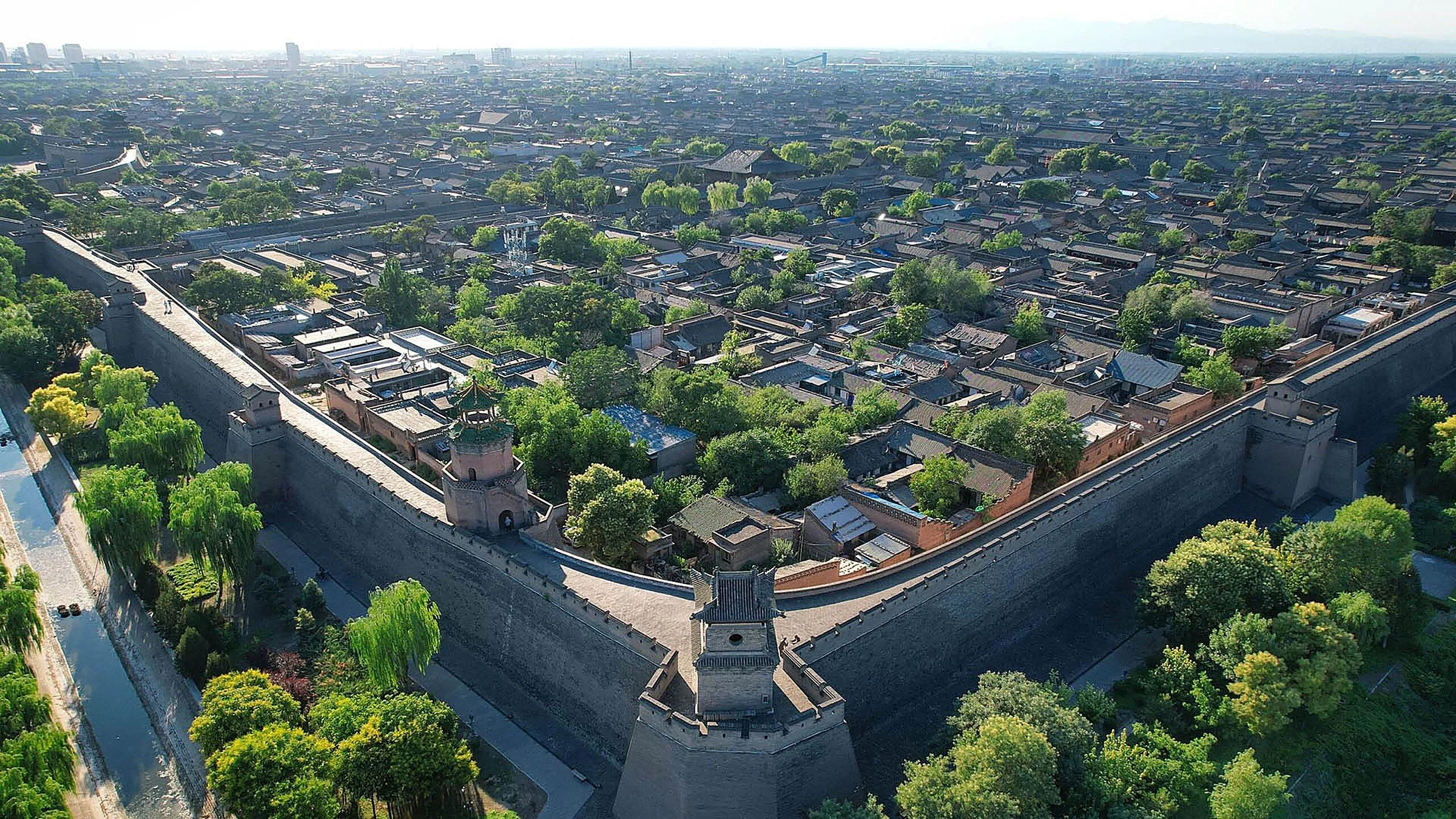
Pingyao Ancient City Wall
平遥古城墙 · Píngyáo Gǔchéng Qiáng
Quick answer
Foreign passport required. The ¥125 combined ticket is sold at the wall entrance gates in cash, Alipay, or WeChat Pay. The ticket is valid for 3 days from first use, so you can pace yourself. No advance booking required.
Why visit
- 1 UNESCO World Heritage since 1997 — the best-preserved Ming-dynasty walled city in China
- 2 6-km city wall, 12 m high, with 6 gates and 72 watchtowers — walk the full perimeter in 2 hours
- 3 4,000+ traditional courtyard residences (四合院) still intact from the 14th century
- 4 Rishengchang Draft Bank (founded 1823) — the first draft bank in China, pioneering the practice of checks
- 5 Ming-Qing Street (明清一条街) — 400 m of 14th-century shopfronts, the only intact Ming-era shopping street in China
- 6 20+ inner attractions included in the ¥125 combined ticket — the most generous wall ticket in China
Essential tips for foreigners
- Buy the ¥125 combined ticket — it's valid for 3 days and includes 20+ inner attractions. The wall-only ticket is ¥40, but the inner attractions are the real draw.
- Stay overnight inside the wall — at least one night in a traditional courtyard hotel (四合院). The wall looks completely different at sunrise and after dark; day-trippers miss the magic.
- Walk the wall at sunset — start at the South Gate, walk counter-clockwise, end at the East Gate. The wall is 6 km; allow 2 hours. The views over the rooftops of the old town are the highlight.
- Visit Rishengchang Bank early morning — the museum is most atmospheric before tour groups arrive (before 9:30 AM).
- Eat Pingyao beef (平遥牛肉) — a local specialty, 1,000-year-old recipe, slightly salty and aromatic. Available at every restaurant on Ming-Qing Street.
- Bring a flashlight — the inner alleyways are dimly lit at night. Useful for photography too.
Suggested route
- 08:00 3.5 hours HSR from Beijing to Pingyao Ancient City station (3.5 hours)
- 11:30 10 min Didi from station to hotel inside the wall (10 min)
- 12:00 1.5 hours Check in to courtyard hotel, lunch on Ming-Qing Street — try Pingyao beef
- 13:30 20 min Buy the ¥125 combined ticket at South Gate entrance
- 13:50 2 hours Walk the wall counter-clockwise from South Gate — 6 km loop, allow 2 hours
- 15:50 1 hour Return to inside the wall, head to Rishengchang Draft Bank (north side)
- 16:50 1 hour County Office for the magistrate court re-enactment (9:30 AM, 11:00 AM, 15:30 PM)
- 17:50 30 min Sunset photos from the wall East Gate area
- 18:30 1.5 hours Dinner on Ming-Qing Street — Pingyao beef, Shanxi noodles, local dumplings
- 20:00 1.5 hours Walk Ming-Qing Street at night — the lanterns come on, the old town is magical
- 21:30 — Return to courtyard hotel
The best-preserved Ming walled city in China
Pingyao is a 6-km square of intact Ming-dynasty architecture, 700 km southwest of Beijing, that contains the best-preserved ancient walled city in China. The wall, the cobblestone streets inside, and 4,000+ traditional courtyard residences are unchanged since the 14th century. UNESCO World Heritage since 1997.
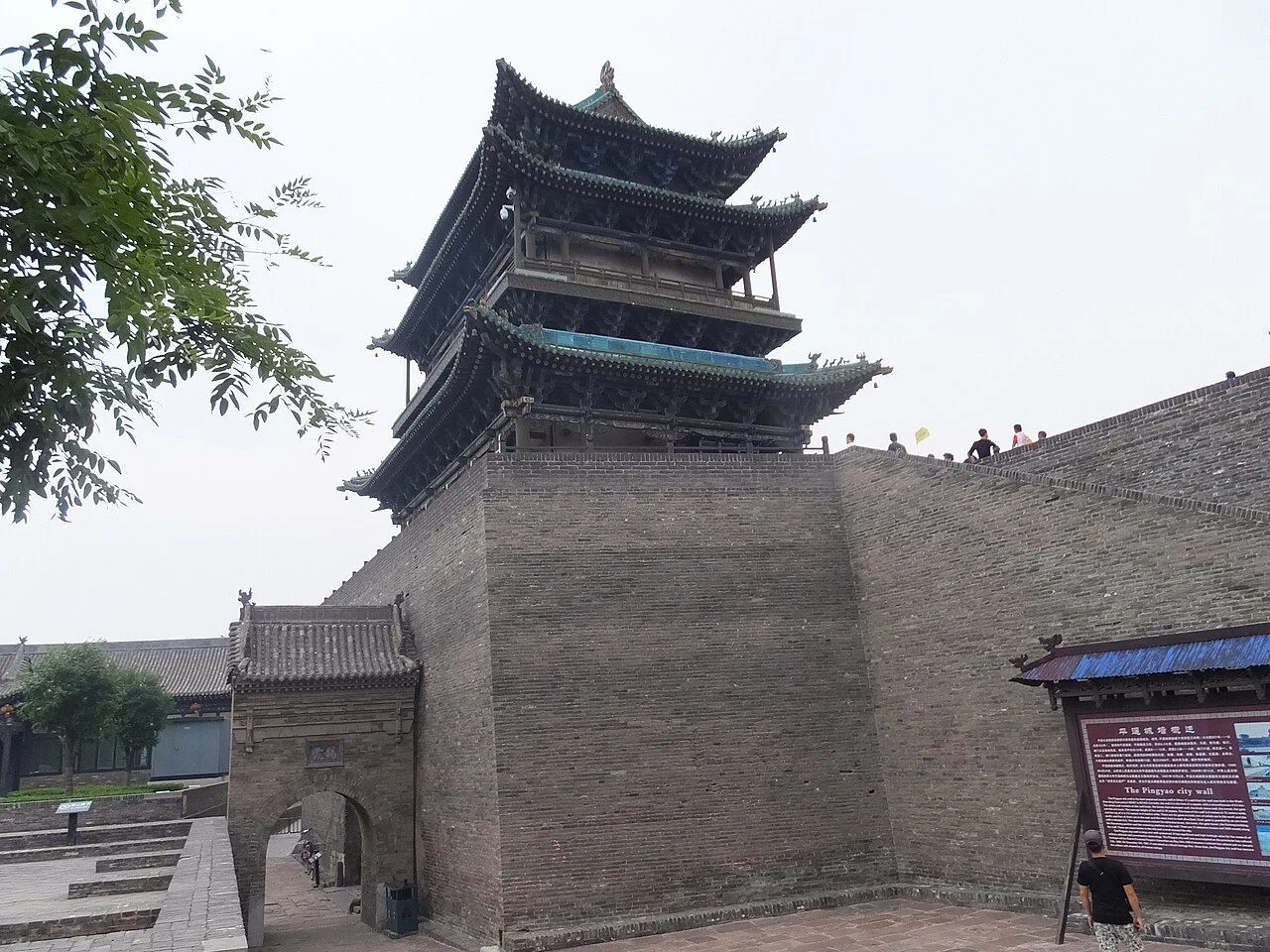
Photo: Wikimedia Commons / CC BY-SA. Source

The city is also the birthplace of Chinese banking. Rishengchang (日升昌), founded in 1823 inside the wall, was the first draft bank in China — it pioneered the practice of writing checks (汇票) and operated branches across the Qing empire. The bank’s original 5-courtyard complex is now a museum and one of the most-visited inner attractions.
The foreigner experience in 2026
Pingyao is one of the most foreigner-friendly heritage sites in China. The ¥125 combined ticket is valid for 3 days and includes 20+ inner attractions — the most generous wall ticket in China. The site is well-signposted in English. The main challenge is the walk: the wall is 6 km and the inner town is large; budget 1-2 days for the full experience.
For first-timers, the recommended approach: arrive afternoon, walk the wall at sunset, spend day 2 exploring the inner attractions. Stay overnight inside the wall in a traditional courtyard hotel — the city looks completely different at night, and most of the day-tripper crowd is gone.
What to actually see
Three things stand out. The wall — 6 km of Ming-dynasty brick wall, 12 m high, with 6 gates and 72 watchtowers. The wall is the only ancient city wall in China with green-tiled watchtowers (every other city has grey). The full perimeter walk is 2 hours and the views are the highlight. Rishengchang Draft Bank — the first draft bank in China, with 5 courtyards showing the original counting room, vault, and account books. Ming-Qing Street (明清一条街) — 400 m of 14th-century shopfronts, the only intact Ming-era shopping street in China. Lively every evening with red lanterns.
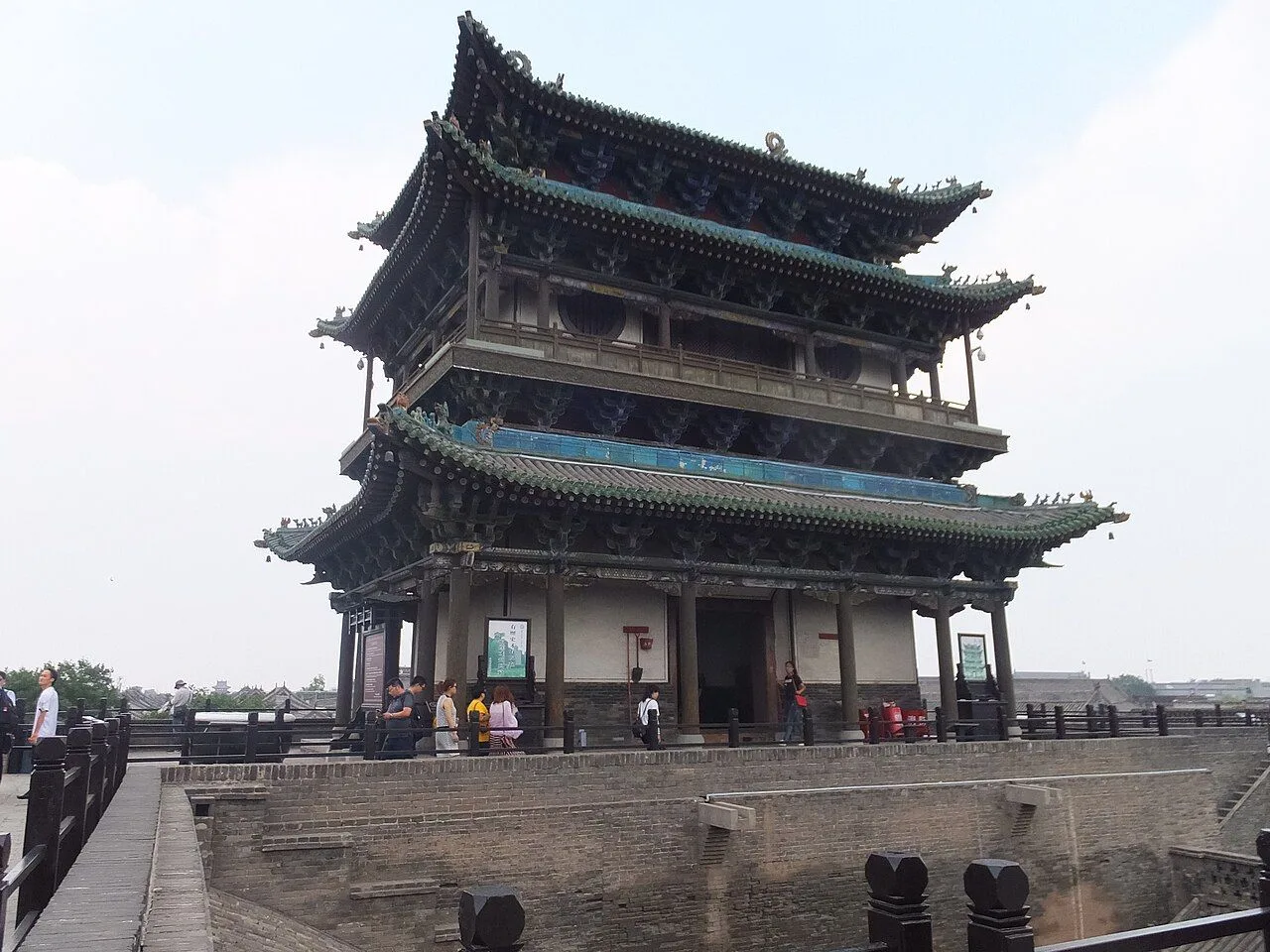
Photo: Wikimedia Commons / CC BY-SA. Source

Side trips from Pingyao
Two family compounds are worth a half-day each. The Qiao Family Compound (乔家大院), 30 km north, is a Qing-dynasty merchant mansion with 6 large courtyards and 313 rooms — made famous by Zhang Yimou’s film “Raise the Red Lantern.” ¥138 entry. The Wang Family Compound (王家大院), 50 km south, is an even larger 25-hectare complex with 123 courtyards and 1,118 rooms — often called the “Forbidden City of the commoners.” ¥80 entry. Both are reachable by Didi or tourist bus.
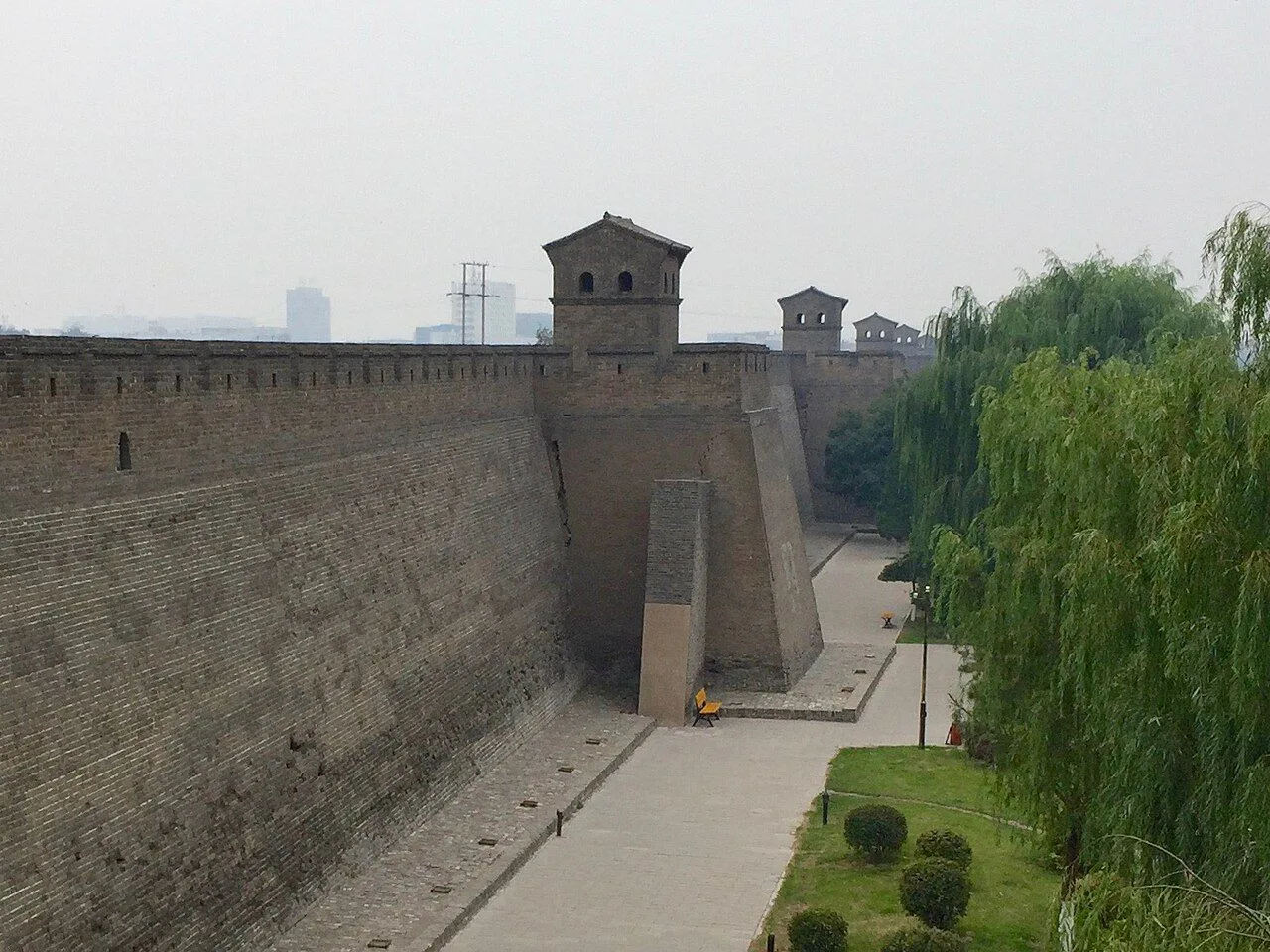
Photo: Wikimedia Commons / CC BY-SA. Source

Final tip
The biggest mistake first-timers make: doing Pingyao as a day trip from Beijing. The HSR connection is fast (3.5 hours) but the city is too rich to rush. 2-3 nights is the right amount of time. The wall looks different at sunset, sunrise, and after dark — all three are worth seeing. And the inner alleyways are the most atmospheric part of the city; don’t just stay on Ming-Qing Street.
Best photo spots
-
South Gate of the wall (sunset) · 17:30-18:00 (sunset, side-lit)
The main entrance gate, best photographed at sunset. The green-tiled watchtowers are unique to Pingyao — no other Chinese walled city has them.
-
Wall walking — north side · 16:00-17:00 (late afternoon)
The full perimeter walk offers 360° views of the old town rooftops. The north side is the most photogenic because the modern city is behind you.
-
Ming-Qing Street at night · 19:00-21:00 (after dark)
The 400m street lined with Ming-era shopfronts, lit by red lanterns. Tripod needed for clean shots; the lanterns cast warm light.
Where to eat nearby
-
Pingyao beef restaurants (平遥牛肉)
Local specialty — 1,000-year-old recipe, salt-cured beef, slightly salty and aromatic · ¥40-80/person · Multiple locations on Ming-Qing Street
-
Shanxi noodle restaurants
Shanxi is famous for noodles — knife-cut noodles, daoxiaomian, with various toppings · ¥20-50/person · Multiple locations on Ming-Qing Street
-
Pingyao local dumpling shops
Hand-folded dumplings with various fillings — pork, beef, lamb, vegetable · ¥30-60/person · Multiple locations on Ming-Qing Street
-
Courtyard hotel restaurants
Chinese and Western (some high-end courtyard hotels have excellent restaurants) · ¥80-150/person · Inside the wall, various courtyard hotels
Frequently asked questions
Is Pingyao worth a day trip from Beijing?
Pingyao is reachable from Beijing by HSR in 3.5 hours — a day trip is technically possible but rushed. The best experience is 2 nights: arrive afternoon, see the wall at sunset + Ming-Qing Street at night, day 2 explore the inner attractions and the County Office, day 3 side trip to Qiao Family Compound before returning.
What is the ¥125 ticket?
The combined ticket includes the wall + 20+ inner attractions (Rishengchang Bank, County Office, Confucius Temple, City God Temple, Qing Void Taoist Temple, etc.). It's valid for 3 days from first use. The wall-only ticket is ¥40, but most of the inner attractions are the real draw.
How long does it take to see Pingyao?
1-2 nights covers the wall + 3-4 major inner attractions (Rishengchang, County Office, Confucius Temple, City God Temple). 3 nights lets you add the Qiao Family Compound (30 km north) and Wang Family Compound (50 km south).
Is Pingyao kid-friendly?
Yes — the wall walk is fun for kids (2-hour loop with great views), the County Office has a 9:30 AM magistrate court re-enactment that's free with ticket, and the courtyard hotels are great for families. Strollers work on the main paths inside the wall. Allow 1 full day with kids.
Is Pingyao worth visiting in winter?
Yes — the city is much quieter (90% of visitors come in summer), and snow on the Ming walls is magical. Most courtyard hotels have heated kang (brick bed) rooms, which are the best part of a winter visit. Pack warm layers; January temperatures drop to -10°C at night.