
Comida de rua na China: 20 pratos seguros para iniciantes (guia 2026)
20 comidas de rua chinesas icónicas com pinyin, nomes em inglês, sabor, origem regional, preço médio em dólares e quais são seguras para quem visita a China pela primeira vez. Inclui regras de segurança alimentar.
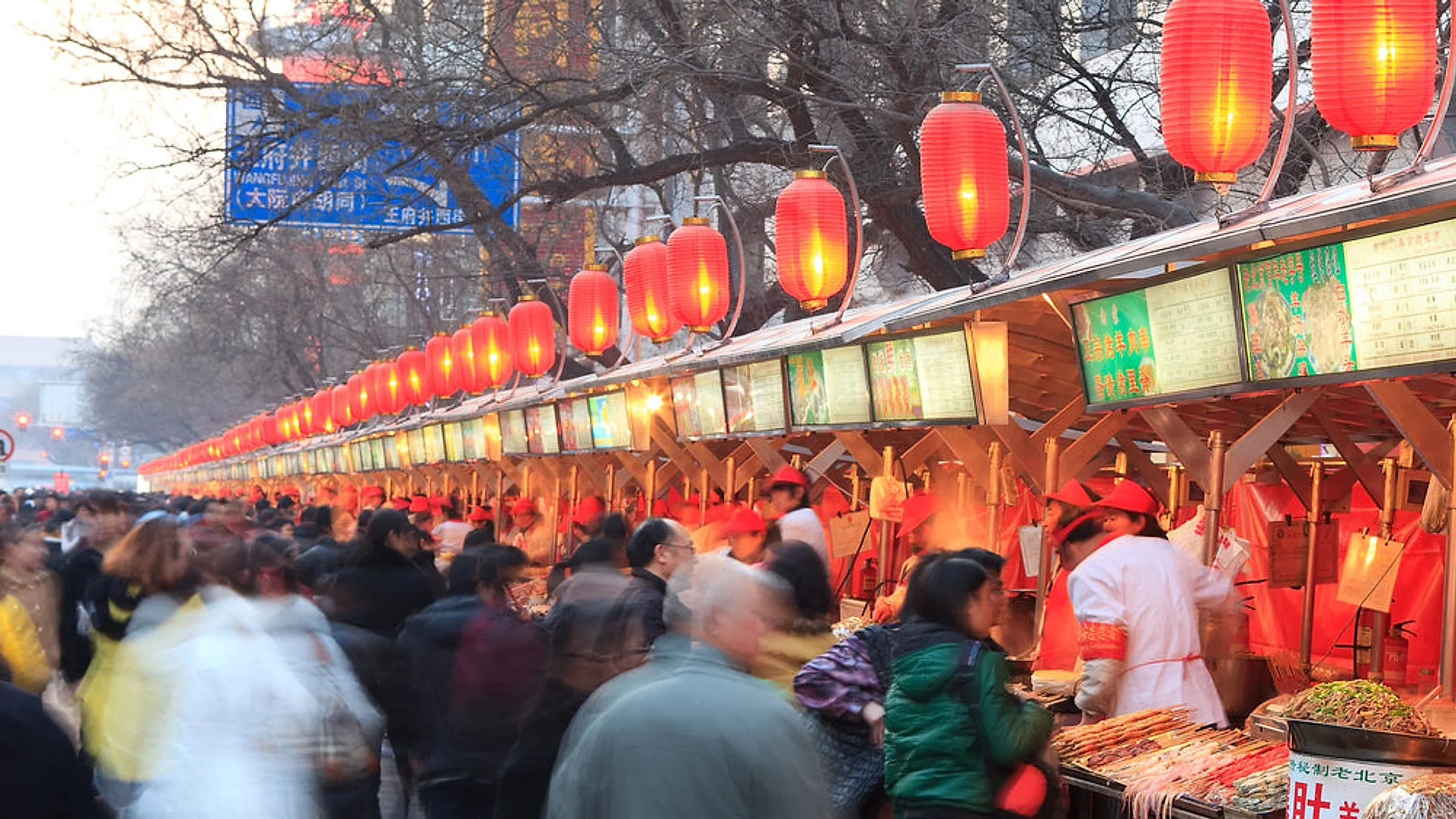
A comida de rua chinesa está entre as mais seguras da Ásia se seguir três regras: coma onde os locais fazem fila, coma comida confecionada à sua frente e evite tudo o que tenha estado exposto durante horas. Os pratos clássicos para quem começa — jianbing (crepe salgado), rou jia mo (hambúrguer chinês), gua bao (pão de barriga de porco), xiaolongbao (bolinhos de sopa) e chuan’er (espetada de cordeiro) — são todos cozinhados a alta temperatura e servidos de imediato, tornando-os de baixo risco e deliciosos. Este guia abrange 20 comidas de rua icónicas, as capitais regionais onde cada uma brilha, preços médios em USD e as quatro regras de segurança alimentar que evitam a temida “dor de barriga de Deli” na China. Para uma análise cidade a cidade sobre que cozinhas regionais priorizar, consulte o nosso guia Comida da China por cidade.
As 4 regras de segurança alimentar que evitam problemas de estômago
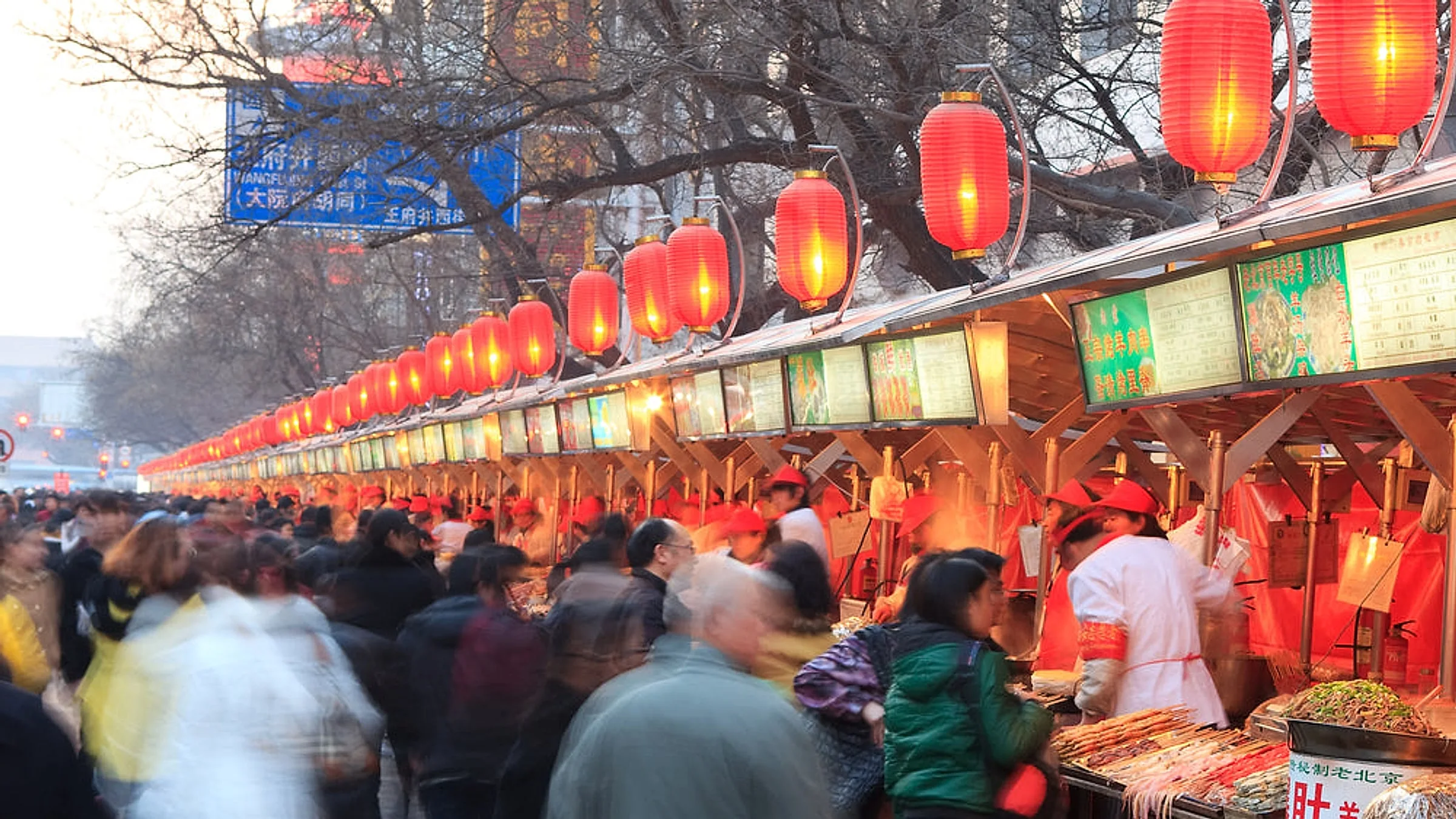
- Coma onde os locais fazem fila. Se 10 clientes chineses estiverem à espera numa banca, a rotação é alta e a comida é fresca. Bancas vazias = suspeitas.
- Veja a comida a ser cozinhada. Caldo a ferver, grelhas a crepitar, fritura fresca = bom. Expositores frios, tabuleiros mornos, moscas na comida = mau.
- Evite vegetais crus, fruta sem casca e água da torneira. Opte por vegetais cozinhados, fruta que descasca você mesmo (bananas, tangerinas) e água engarrafada ou fervida.
- Leve sais de reidratação oral (ORS) e loperamida. Disponíveis em qualquer farmácia chinesa (药店, yàodiàn) por ¥10–20. Se apanhar uma indisposição estomacal de 24 horas, estará de pé no dia seguinte.
As 20 comidas de rua imperdíveis
China do Norte (Pequim, Tianjin, Xi’an, Shandong)
1. Jianbing (煎饼, jiānbing) — crepe salgado de feijão-mungo A comida de rua de pequeno-almoço mais popular no norte da China. Uma crepe fina feita de massa de feijão-mungo e trigo é espalhada numa chapa, parte-se um ovo por cima, pinta-se com molho hoisin e molho de malagueta, e depois enrola-se dentro um biscoito crocante de wonton, cebolinho, coentros e picles. Cortado ao meio e comido com as mãos. Preço: ¥8–15 (1,10–2,10 USD). Onde encontrar: praticamente a cada saída de metro de Pequim há uma banca de jianbing de manhã.
2. Rou jia mo (肉夹馍, ròu jiā mó) — “hambúrguer” chinês Um pão (mo) denso e achatado recheado com porco estufado que foi cozido durante horas com anis-estrelado, gengibre e açúcar de pedra. A comida de rua mais famosa de Xi’an — os historiadores remetem-na à dinastia Qin. Preço: ¥10–18 (1,40–2,50 USD). Onde encontrar: o Bairro Muçulmano de Xi’an (回民街) tem mais de 30 bancas.
3. Chuan’r (串儿, chuàn’er) — espetadas de cordeiro com cominhos Cubos de cordeiro espetados em paus de bambu, grelhados sobre carvão e polvilhados generosamente com cominho, pó de malagueta, sal e sésamo. A comida de rua definitiva de Xinjiang e agora omnipresente em todo o país. Preço: ¥3–8 (0,40–1,10 USD) por espetada. Onde encontrar: Urumqi, a zona Niujie de Pequim e qualquer mercado noturno.
4. Jiaoquan (焦圈, jiāoquān) e douzhi (豆汁儿, dòuzhīr) — pequeno-almoço patrimonial de Pequim Os jiaoquan são varas de massa fritas, crocantes e em forma de anel. O douzhi é leite de feijão-mungo fermentado com um sabor azedo característico — um sabor adquirido que os locais adoram e a maioria dos estrangeiros acha difícil. Preço: ¥2–5 (0,30–0,70 USD) por tigela. Onde encontrar: antigos locais de pequeno-almoço de Pequim perto de Tiananmen e Dashilan.
5. Bingtanghulu (冰糖葫芦, bīngtáng húlu) — baguo de espinheiro com açúcar Frutas de espinheiro espetadas cobertas com calda de açúcar dura e brilhante. Estaladiço por fora, agri-doce por dentro. Originalmente um doce de inverno do norte, agora vendido todo o ano. Preço: ¥5–10 (0,70–1,40 USD) por espetada. Onde encontrar: Wangfujing Snack Street, Pequim.
China do Leste (Xangai, Hangzhou, Suzhou, Nanjing)
6. Xiaolongbao (小笼包, xiǎolóngbāo) — bolinhos de sopa A joia da coroa da comida de rua de Xangai. Um bolinho delicado de porco recheado com caldo gelatinizado que se transforma em sopa ao cozer no vapor. O truque: dê uma pequena mordida, beba a sopa primeiro e depois coma o bolinho. Preço: ¥20–50 (2,80–7,00 USD) por cesto de 8. Onde encontrar: Jia Jia Tang Bao, Din Tai Fung, Yang’s Fry Dumpling — cada rua de Xangai tem pelo menos um. Para uma visão mais ampla do dim sum em casa de chá cantonesa, consulte o nosso guia de dim sum cantonês.
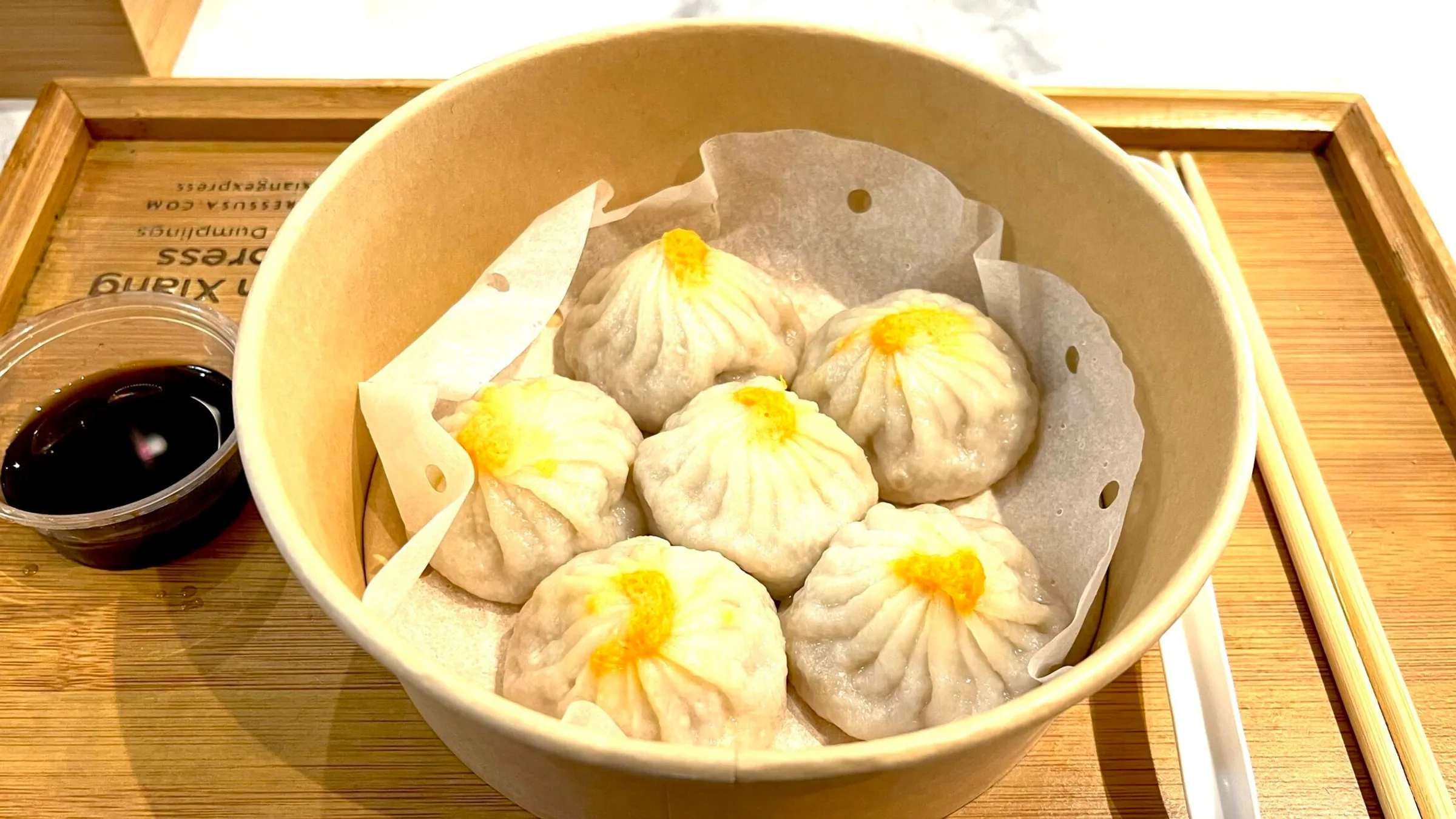
7. Shengjian bao (生煎包, shēngjiān bāo) — pães de porco fritos na frigideira O primo de Xangai do xiaolongbao, mas frito na frigideira em vez de cozido no vapor. Fundo estaladiço, topo macio, recheio de porco suculento. Preço: ¥8–15 (1,10–2,10 USD) por 4 pães. Onde encontrar: Xiao Shao Xing, Da Hu Chun.
8. Cong you ban mian (葱油拌面, cōng yóu bàn miàn) — massa com óleo de cebolinho Massa fina de trigo envolvida em óleo infundido com cebolinho até ficar aromático, misturada com molho de soja. Um básico do pequeno-almoço de Xangai. Preço: ¥10–20 (1,40–2,80 USD). Onde encontrar: qualquer banca de pequeno-almoço de Xangai.
9. Ci fan tuan (粢饭团, cī fàn tuán) — rolo de arroz pegajoso Um clássico do pequeno-almoço de Xangai: arroz pegajoso embrulhado em torno de um youtiao crocante (vara de massa frita), vegetal em conserva e, por vezes, uma gema de ovo de pato salgado. Preço: ¥5–10 (0,70–1,40 USD). Onde encontrar: bancas de rua de Xangai antes das 9h.
10. Xiaochi (小吃, xiǎochī) — petiscos variados de Xangai A categoria Xiaochi inclui pastéis em concha de caranguejo, bolinhas de arroz mochi, panquecas de cebolinho e mais. Preço: ¥3–10 (0,40–1,40 USD) cada. Onde encontrar: o bazar em redor do Yu Garden.
China do Sul (Guangzhou, Shenzhen, Hong Kong, Macau)
11. Cheung fun (肠粉, cháng fěn) — rolos de massa de arroz Massas de arroz largas e escorregadias enroladas em torno de camarão, vaca, porco ou char siu, regadas com molho de soja doce. O padrão do pequeno-almoço cantonês. Preço: ¥10–25 (1,40–3,50 USD). Onde encontrar: qualquer loja de congee de Guangzhou ou cha chaan teng.
12. Dan tat (蛋挞, dàn tà) — tarte de ovo Uma base de pastelaria folhada recheada com creme liso, acabado de solidificar. O petisco mais famoso de Macau, igualmente icónico em Hong Kong. Preço: ¥8–15 (1,10–2,10 USD) por 2 tartes. Onde encontrar: Lord Stow’s Bakery (Macau), qualquer padaria de Hong Kong.
13. Wonton noodles (云吞面, yúntún miàn) — massa de wonton Massa de ovo elástica num caldo claro e saboroso com wontons de camarão e porco. A versão cantonesa usa massa fina e alcalina. Preço: ¥25–50 (3,50–7,00 USD). Onde encontrar: Mak’s Noodle, Tsim Chai Kee (Hong Kong), qualquer loja de massa de Guangdong.
14. Char siu rice (叉烧饭, chāshāo fàn) — porco grelhado sobre arroz Porco grelhado cantonês doce e pegajoso fatiado sobre arroz jasmim com um fio dos sumos de cozedura. Preço: ¥25–45 (3,50–6,30 USD). Onde encontrar: qualquer cha chaan teng de Hong Kong ou loja de churrasco cantonês.
China do Oeste (Chengdu, Chongqing, Xi’an, Yunnan)
15. Mapo tofu (麻婆豆腐, mápó dòufu) — estufado picante de queijo de soja O prato emblemático de Sichuan: queijo de soja sedoso num molho picante de pasta de feijão fermentada, porco moído, pimenta de Sichuan e óleo de malagueta. Entumece (麻) e é picante (辣) ao mesmo tempo. Preço: ¥15–35 (2,10–4,90 USD). Onde encontrar: qualquer restaurante de Chengdu; o Chen Mapo Tofu é o original.
16. Dan dan noodles (担担面, dàndàn miàn) — massa temperada de Sichuan Massa de trigo num molho picante de sésamo, coberta com porco moído, amendoins e cebolinho. Preço: ¥12–25 (1,70–3,50 USD). Onde encontrar: qualquer restaurante de Sichuan.
17. Guo kui (锅盔, guōkuī) — pão achatado assado e crocante Um pão de trigo redondo e assado, crocante por fora e macio por dentro, muitas vezes recheado com carne picante ou apenas alho. Preço: ¥5–15 (0,70–2,10 USD). Onde encontrar: província de Shaanxi, especialmente Xi’an.
18. Crossing-the-bridge noodles (过桥米线, guòqiáo mǐxiàn) — massa de arroz de Yunnan Uma tigela de caldo de frango a ferver, pratos separados de porco fatiado cru, legumes e massa de arroz que adiciona ao caldo para cozer à mesa. Preço: ¥25–50 (3,50–7,00 USD). Onde encontrar: Kunming, capital de Yunnan; cada rua tem mais de 5 lojas.
19. Beringela grelhada (烤茄子, kǎo qiézi) — um clássico de churrasco de rua Beringela inteira grelhada até ficar macia, aberta ao meio e coberta com alho, malagueta, soja e coentros. Preço: ¥15–25 (2,10–3,50 USD). Onde encontrar: mercados noturnos em Xi’an, Chengdu, Chongqing.
20. Lai tang yuan (赖汤圆, lài tāngyuán) — bolinhas de arroz glutinoso Bolinhas de arroz pegajoso recheadas de sésamo preto ou amendoim numa sopa doce de gengibre. Uma sobremesa clássica de Chengdu. Preço: ¥8–15 (1,10–2,10 USD). Onde encontrar: qualquer rua de petiscos de Chengdu; o Lai Tang Yuan é a loja original.
Os 5 pratos que a maioria dos viajantes se arrepende de experimentar
- Stinky tofu (臭豆腐, chòu dòufu) — tofu fermentado com um cheiro forte. Alguns viajantes adoram, a maioria de quem experimenta pela primeira vez repugna.
- Chicken feet (鸡爪, jīzhuǎ) — pés de frango estilo dim sum, muitas vezes servidos frios. Texturalmente desafiante para paladares ocidentais.
- Century egg (皮蛋, pídàn) — ovo de pato preservado em argila alcalina durante meses. Sabe a enxofre; a cor cinzento-preta choca os recém-chegados.
- Sea cucumber (海参, hǎishēn) — pepino-do-mar escorregadio e borrachudo; uma iguaria em restaurantes requintados, mas raramente faz sucesso na rua.
- Balut (毛蛋, máodàn) — embrião fertilizado de pato ou frango, cozido e comido pela casca. Encontrado no sul da China; não para os sensíveis.
Verificado: “Quer sejam bolinhos, shumai, har gow, cabeça de leão estufada ou carne de vaca fria, estes alimentos chineses conquistaram muitos comensais com o seu artesanato requintado e sabor delicioso, mostrando o encanto único da cultura alimentar chinesa” — Xinhua, Festival de Comida de Rua Asiática de Berna, maio de 2025, acedido em 2026-07-24
Como pagar em barracas de rua
A maioria das barracas de rua aceita:
- Alipay — consulte o nosso guia de configuração
- WeChat Pay — consulte o nosso guia de configuração
- Dinheiro (CNY) — notas pequenas (¥5, ¥10, ¥20) são úteis. Veja o nosso guia de dinheiro
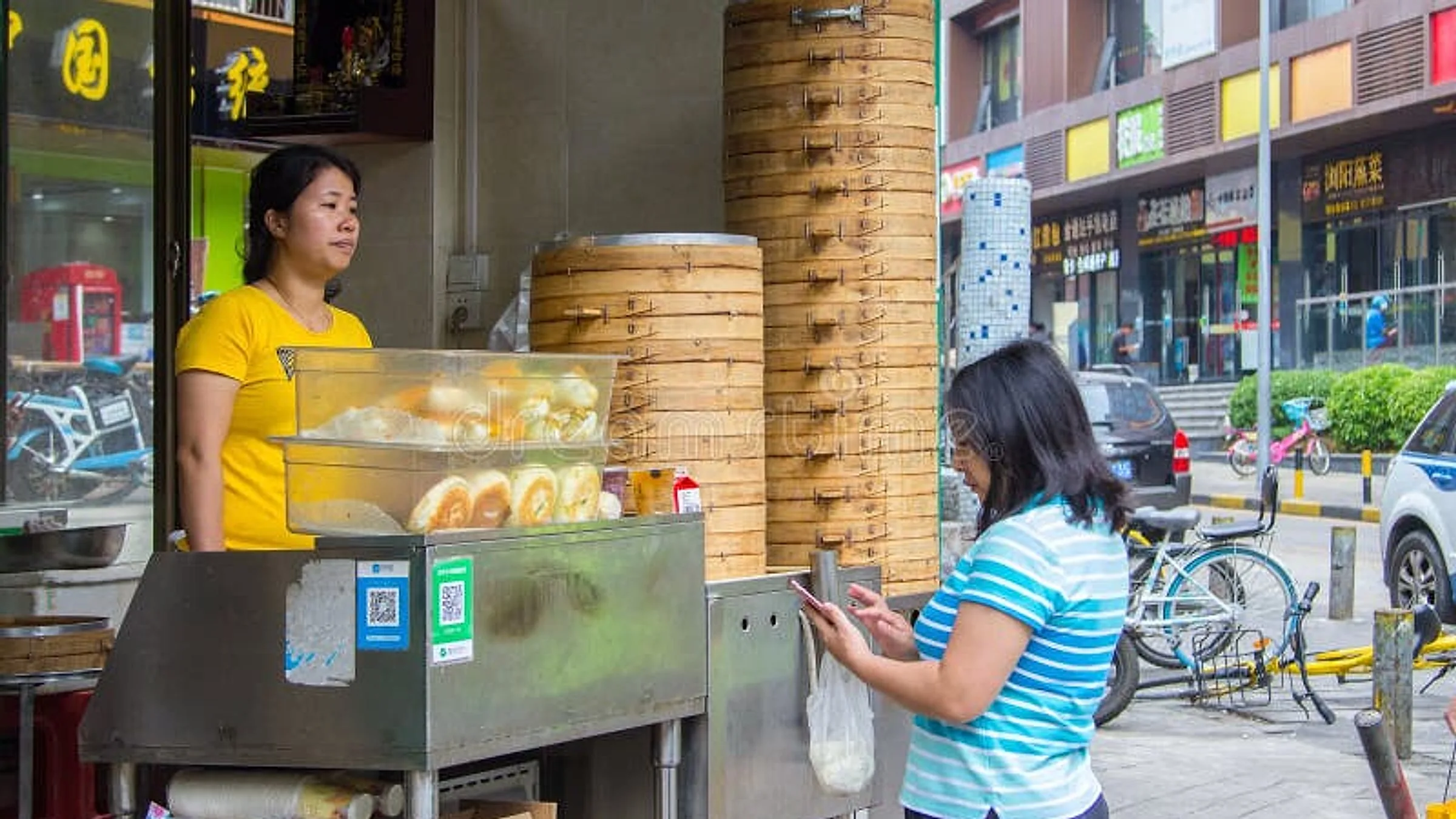
Cartões de crédito estrangeiros raramente são aceites nas barracas de rua. O pagamento móvel é universal e os comerciantes preferem-no (sem taxas bancárias, liquidação instantânea). Configure o Alipay antes de chegar — leva 5 minutos e evita inúmeras complicações com o manuseio de dinheiro.
Se tiver restrições alimentares (vegetariano, halal, sem glúten, alergias a frutos secos), consulte o nosso guia de restrições alimentares. E para frases essenciais para pedir comida, consulte as nossas frases para pedir comida em chinês.
Onde reservar
Você precisará de uma base para regressar. Escolha um hotel no distrito gastronómico:
- Hotéis nas zonas de hutong de Pequim — a melhor comida de rua por perto
- Procurar todos os hotéis na China
Divulgação de afiliados: alguns links acima são links de afiliados. Podemos ganhar uma comissão sem qualquer custo extra para si. Consulte a nossa Divulgação de afiliados para obter detalhes.
Planeie a sua viagem — ferramentas verificadas
Estas ferramentas gratuitas são construídas com dados reais e verificados mensalmente e ajudam-no a saltar a fase de tentativa e erro no planeamento da sua viagem à China:
- Calculadora de orçamento de 5 dias em 6 cidades da China — Preços reais de 2026 para 5 dias em Pequim, Xangai, Guangzhou, Chengdu, Xi’an ou Hangzhou. Níveis económico / gama média / conforto, detalhados linha a linha.
- Comparação de OTAs na China 2026 — Trip.com vs Booking.com vs Agoda vs Klook em 5 tipos de reserva. Inventário, preços, suporte a cartões estrangeiros, serviço em inglês, veredito por OTA.
Verificado em agosto de 2026 pela Equipe editorial da TravelHubChina. Reverificamos preços e detalhes de políticas mensalmente para que os dados não se desatualizem.
Passo a passo
-
Escolha uma cidade e uma zona gastronómica
Comece em Pequim (Wangfujing Snack Street, Niujie), Xi'an (Bairro Muçulmano 回民街), Chengdu (Jinli, Kuanzhai Alley) ou Xangai (Yu Garden, Wujiang Road). A maioria das cidades tem um mercado noturno a menos de 2 km de um grande ponto turístico — o Baidu Maps, com '美食街' (rua gastronómica), encontra-os.
-
Escolha a sua faixa de orçamento
Barracas de rua: ¥3-15 por prato (0,40–2 USD). Praças de comida interior: ¥20-50 por prato (3–7 USD). Restaurantes com lugar sentado: ¥60-200 por pessoa (8–28 USD). Para quem visita pela primeira vez, comece pelas barracas de rua — a comida é confecionada à sua frente e as filas de locais são o seu sinal de qualidade.
-
Encontre bancas onde os locais fazem fila
Procure bancas com uma fila de clientes chineses (a rotação é alta e a comida é fresca). Bancas vazias = suspeitas. As quatro regras de segurança alimentar deste guia: cozinhar à sua frente, sem tabuleiros mornos, sem moscas, descascar toda a fruta você mesmo.
-
Peça 2 a 3 pratos de assinatura
Pequim: jianbing (¥5-10, crepe de pequeno-almoço) ou chuan'er (¥3-5 por espetada). Xi'an: rou jia mo (¥10-15) e massa biangbiang (¥20-30). Chengdu: massa dan dan (¥15-25) ou massa de água doce. Xangai: xiaolongbao (¥20-40 por 8 bolinhos). Use o método de 'apontar para o que os outros comem' se não houver menu em inglês.
-
Pague com Alipay ou WeChat Pay
A maioria das bancas aceita apenas pagamento móvel. Configure o Alipay (ligado a Visa/Mastercard) ou o WeChat Pay antes de partir. O dinheiro ainda funciona em alguns restaurantes interior. O pagamento por código QR é universal: abra a aplicação, digitalize o QR do comerciante, introduza o valor e pague.
Perguntas frequentes
-
A comida de rua chinesa é segura para estrangeiros?
Sim — a comida de rua chinesa está entre as mais seguras da Ásia se seguir três regras: (1) coma onde os locais fazem fila (rotação alta = fresco), (2) coma apenas comida confecionada à sua frente (jianbing, chuan'er, rou jia mo — todos seguros), (3) evite vegetais crus, fruta sem casca e água da torneira. Os 20 pratos deste guia são todos cozinhados a alta temperatura e servidos de imediato. Leve sais de reidratação oral (ORS) e loperamida de qualquer farmácia chinesa (药店 yàodiàn) por ¥10-20 como reserva. -
Os vendedores de comida de rua aceitam cartões de crédito?
Não — praticamente nenhuma barraca de rua aceita cartões de crédito. Configure o Alipay (ligue o seu Visa/Mastercard) ou o WeChat Pay antes de partir. Ambas as aplicações funcionam com cartões estrangeiros em 2026. O dinheiro (RMB) é aceite em praças de comida interior e restaurantes com lugar sentado. Guarde ¥100-200 em notas pequenas para bancas que aceitam apenas dinheiro. -
E se eu tiver restrições alimentares?
Vegetariano: procure 素 (sù) no menu ou pergunte '有素菜吗?' (yǒu sùcài ma — tem pratos vegetarianos?). Halal: dirija-se a uma zona muçulmana Hui (Niujie em Pequim, Bairro Muçulmano de Xi'an) e procure sinais 清真 (qīngzhēn). Sem glúten: a maioria dos pratos à base de arroz (massa de arroz, congee, jianbing sem a crepe) é segura. Leve sempre um cartão de tradução com a sua alergia em chinês.
Guias relacionados
- Comida e dieta
Guia do pato laqueado: como comê-lo, melhores restaurantes, história
Um guia prático do pato laqueado (北京烤鸭) para visitantes estrangeiros - a história, como comê-lo da maneira tradicional, os 7 melhores restaurantes de Pequim, preços e como identificar um pato de qualidade.
9min de leitura
- Comida e dieta
Guia de culinária de Sichuan: 15 pratos essenciais para estrangeiros
Um guia prático da culinária de Sichuan (川菜) para visitantes estrangeiros - os 15 pratos essenciais, o que torna a comida de Sichuan apimentada e entorpecente (麻辣), onde comer em Chengdu e como pedir sem falar chinês.
12min de leitura
- Comida e dieta
Guia cantonês de Dim Sum: 12 pratos essenciais + etiqueta do chá
Um guia prático do dim sum cantonês (点心) para visitantes estrangeiros - os 12 pratos essenciais, como pedir no carrinho, etiqueta do chá, onde comer em Guangzhou e Hong Kong e a famosa tradição 饮茶 (yum cha).
11min de leitura
- Comida e dieta
Comida chinesa por cidade: 8 cidades, 24 pratos icônicos
Um guia de comida regional chinesa por cidade - as 8 cidades mais gastronômicas para visitantes estrangeiros, os 3 pratos icônicos de cada uma e onde encontrá-los. Pequim, Xangai, Chengdu, Guangzhou, Hong Kong, Xi'an, Hangzhou, Chongqing.
14min de leitura
- Comida e dieta
Como Comer Bem na China por Menos de ¥50 por Dia (2026)
Guia de comida económica verificado 2026: 苍蝇馆子, 沙县小吃, cantinas universitárias e o plano de 3 refeições por ¥30-50/dia em 7 cidades.
9min de leitura
- Comida e dieta
Guia de hotpot chinês: 4 estilos + como comê-lo
Um guia prático de hotpot chinês (火锅) para visitantes estrangeiros — os 4 principais estilos (Sichuan, Chongqing, Pequim, cantonês), como comê-lo, os 20 ingredientes essenciais e onde experimentá-lo em cada cidade.
11min de leitura