
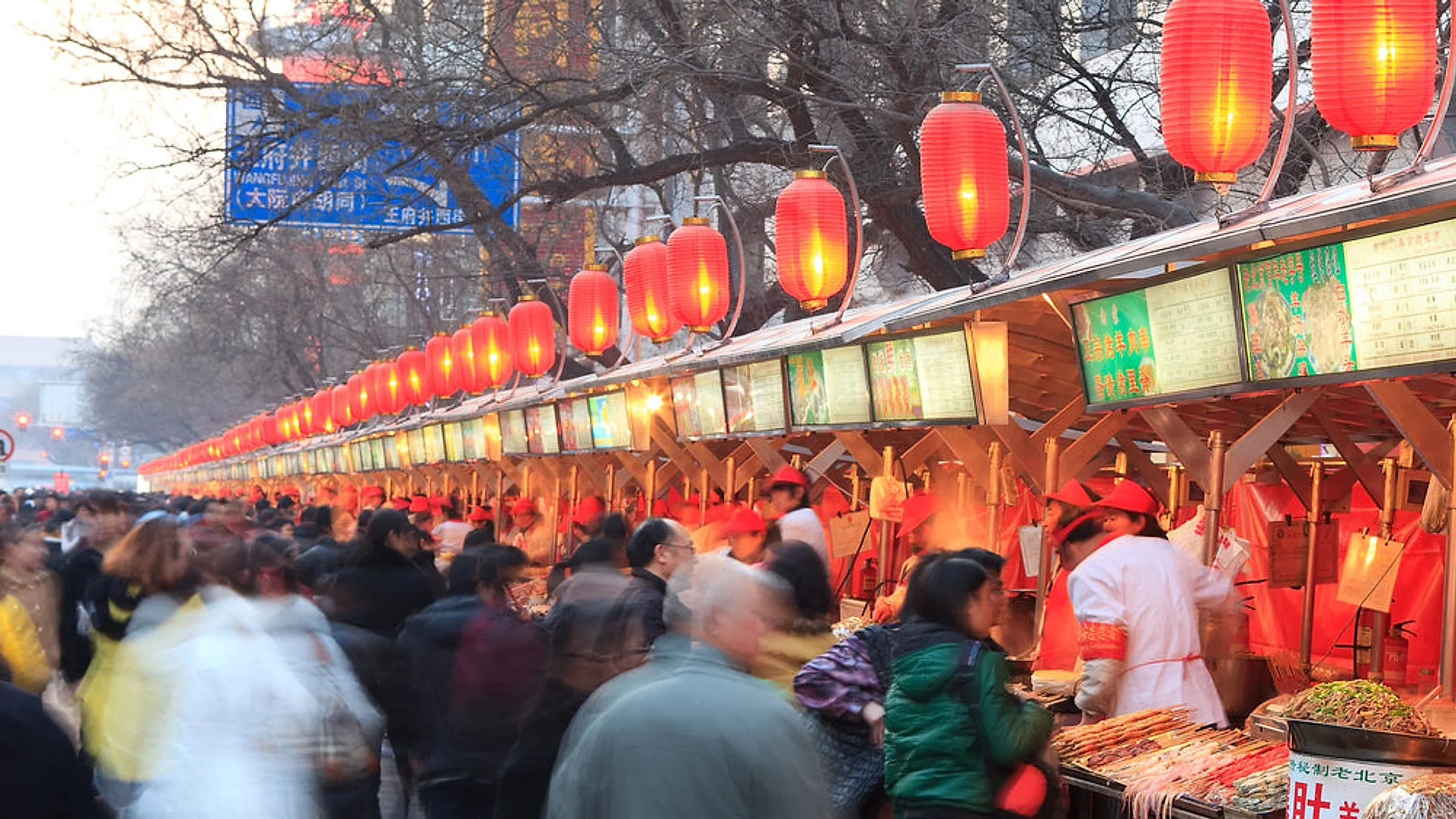
Street Food in China: 20 Safe Dishes for First-Timers
20 iconic Chinese street foods with pinyin, English names, what they taste like, regional origin, average price in USD, and which ones are safe for first-time visitors. Plus food-safety rules.
Chinese street food is one of the safest in Asia if you follow three rules: eat where locals queue, eat food cooked to order in front of you, and avoid anything that’s been sitting out for hours. The classic first-timer dishes — jianbing (savory crepe), rou jia mo (Chinese hamburger), gua bao (pork belly bun), xiaolongbao (soup dumplings), and chuan’r (skewered lamb) — are all cooked at high heat and served immediately, making them low-risk and delicious. This guide covers 20 iconic street foods, the regional capitals where each one shines, average prices in USD, and the four food-safety rules that prevent the dreaded “Delhi belly” in China. For a city-by-city breakdown of which regional cuisines to prioritize, see our China food by city guide.
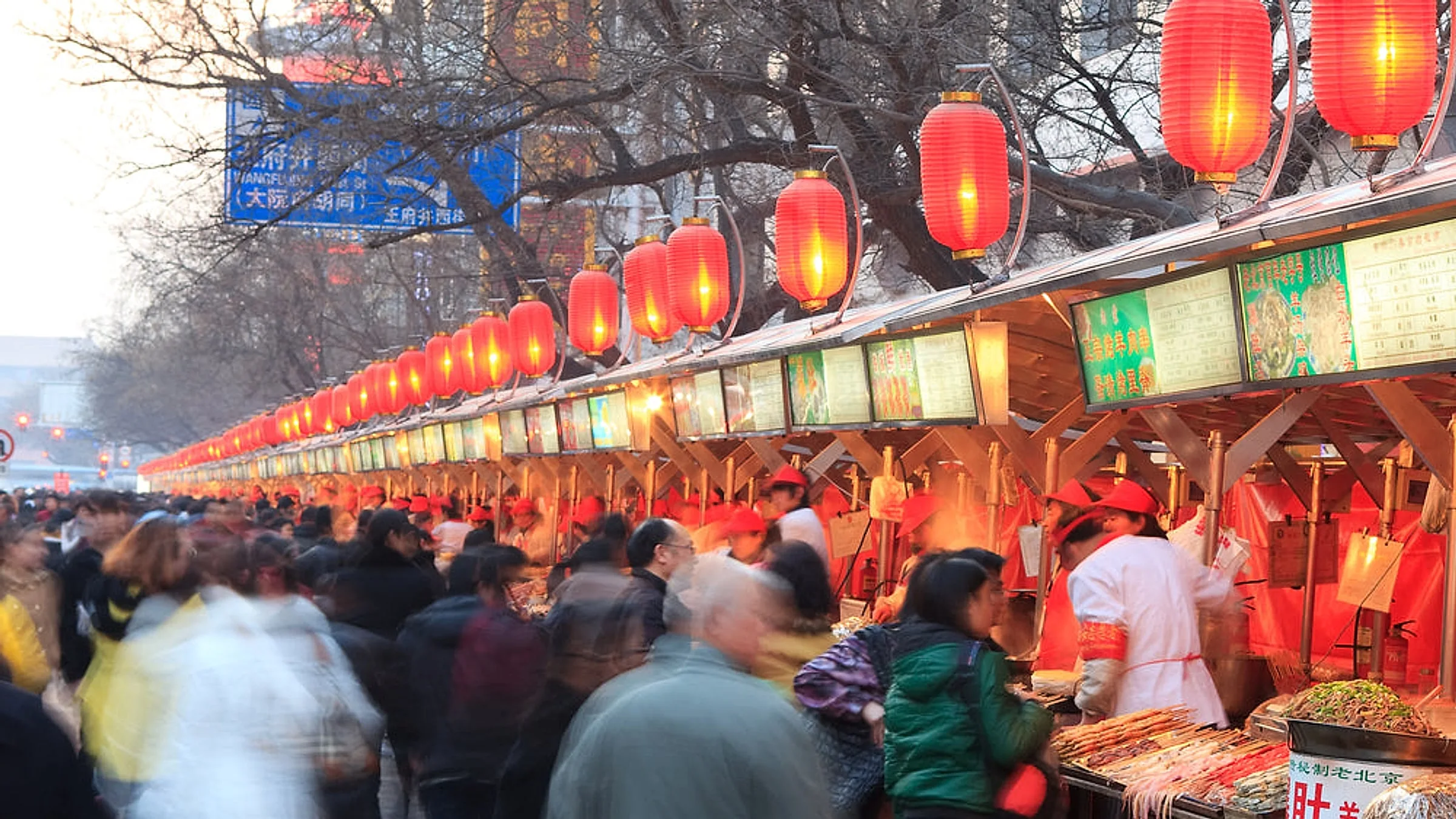
The 4 food-safety rules that prevent stomach trouble
- Eat where locals queue. If 10 Chinese diners are waiting at a stall, the turnover is high and the food is fresh. Empty stalls = suspicious.
- Watch the food being cooked. Boiling broth, sizzling grills, fresh frying = good. Cold displays, lukewarm trays, flies on the food = bad.
- Avoid raw vegetables, unpeeled fruit, and tap water. Stick to cooked vegetables, fruit you peel yourself (bananas, mandarins), and bottled or boiled water.
- Carry oral rehydration salts (ORS) and loperamide. Available at any Chinese pharmacy (药店, yàodiàn) for ¥10–20. If you do get a 24-hour stomach bug, you’ll be back on your feet the next day.
The 20 must-try street foods
Northern China (Beijing, Tianjin, Xi’an, Shandong)
1. Jianbing (煎饼, jiānbing) — savory mung-bean crepe The most popular breakfast street food in northern China. A thin crepe made from mung-bean-and-wheat batter is spread on a griddle, an egg cracked on top, hoisin and chili sauce brushed on, then a crispy wonton cracker, scallions, cilantro, and pickles rolled inside. Cut in half and eaten with hands. Price: ¥8–15 ($1.10–2.10). Find it: virtually every Beijing subway exit has a jianbing stall in the morning.
2. Rou jia mo (肉夹馍, ròu jiā mó) — Chinese “hamburger” A dense, flat bun (mo) stuffed with braised pork that’s been stewed for hours with star anise, ginger, and rock sugar. Xi’an’s most famous street food — historians trace it back to the Qin dynasty. Price: ¥10–18 ($1.40–2.50). Find it: Xi’an’s Muslim Quarter (回民街) has 30+ stalls.
3. Chuan’r (串儿, chuàn’er) — cumin-lamb skewers Cubes of lamb threaded on bamboo skewers, grilled over charcoal, and dusted heavily with cumin, chili powder, salt, and sesame. The defining street food of Xinjiang and now ubiquitous nationwide. Price: ¥3–8 ($0.40–1.10) per skewer. Find it: Urumqi, Beijing’s Niujie area, and any night market.
4. Jiaoquan (焦圈, jiāoquān) and douzhi (豆汁儿, dòuzhīr) — Beijing’s heritage breakfast Jiaoquan are crispy, ring-shaped fried dough sticks. Douzhi is fermented mung-bean milk with a distinctive sour taste — an acquired flavor that locals love and most foreigners find challenging. Price: ¥2–5 ($0.30–0.70) for a bowl. Find it: old Beijing breakfast spots near Tiananmen and Dashilan.
5. Bingtanghulu (冰糖葫芦, bīngtáng húlu) — candied hawthorn Skewered hawthorn fruits coated in hard, glossy sugar syrup. Crunchy outside, sour-sweet inside. Originally a northern winter treat, now sold year-round. Price: ¥5–10 ($0.70–1.40) per skewer. Find it: Wangfujing Snack Street, Beijing.
Eastern China (Shanghai, Hangzhou, Suzhou, Nanjing)
6. Xiaolongbao (小笼包, xiǎolóngbāo) — soup dumplings The crown jewel of Shanghai street food. A delicate pork dumpling filled with gelatinized broth that melts into soup when steamed. The trick: bite a small hole, sip the soup first, then eat the dumpling. Price: ¥20–50 ($2.80–7.00) for a basket of 8. Find it: Jia Jia Tang Bao, Din Tai Fung, Yang’s Fry Dumpling — every Shanghai street has at least one. For a broader Cantonese-tea-house look at dim sum, see our Cantonese dim sum guide.
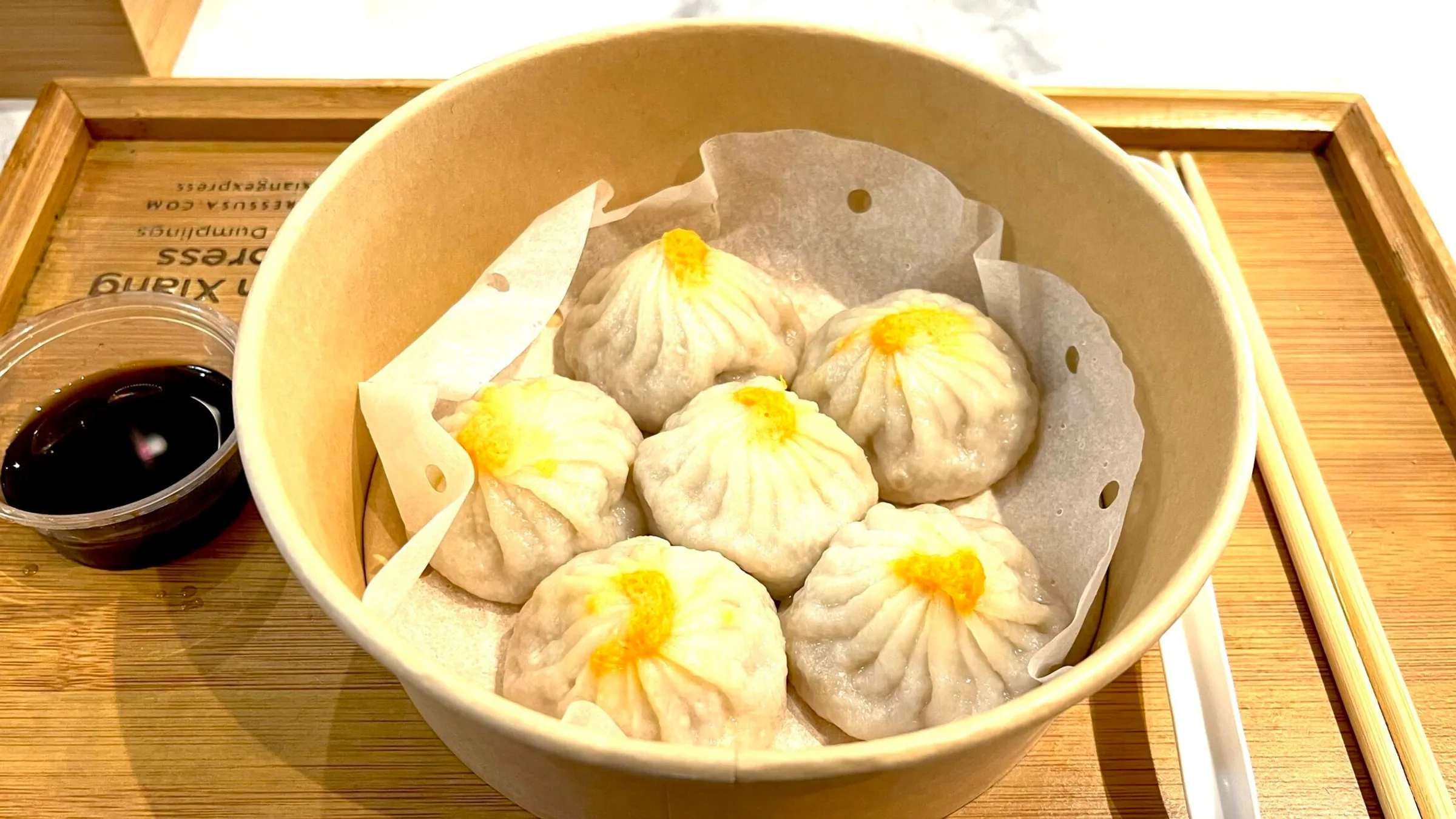
7. Shengjian bao (生煎包, shēngjiān bāo) — pan-fried pork buns The Shanghai cousin of xiaolongbao, but pan-fried instead of steamed. Crispy bottom, soft top, juicy pork filling. Price: ¥8–15 ($1.10–2.10) for 4 buns. Find it: Xiao Shao Xing, Da Hu Chun.
8. Cong you ban mian (葱油拌面, cōng yóu bàn miàn) — scallion-oil noodles Thin wheat noodles tossed in oil that’s been infused with scallions until fragrant, mixed with soy sauce. A Shanghai breakfast staple. Price: ¥10–20 ($1.40–2.80). Find it: any Shanghai breakfast stall.
9. Ci fan tuan (粢饭团, cī fàn tuán) — sticky rice roll A Shanghai breakfast classic: sticky rice wrapped around a crispy youtiao (fried dough stick), pickled vegetable, and sometimes a salted duck egg yolk. Price: ¥5–10 ($0.70–1.40). Find it: Shanghai street stalls before 9 AM.
10. Xiaochi (小吃, xiǎochī) — assorted Shanghai snacks The Xiaochi category includes crab-shell pastries, mochi rice balls, scallion pancakes, and more. Price: ¥3–10 ($0.40–1.40) each. Find it: Yu Garden’s surrounding bazaar.
Southern China (Guangzhou, Shenzhen, Hong Kong, Macau)
11. Cheung fun (肠粉, cháng fěn) — rice noodle rolls Wide, slippery rice noodles rolled around shrimp, beef, pork, or char siu, drizzled with sweet soy sauce. The Cantonese breakfast standard. Price: ¥10–25 ($1.40–3.50). Find it: any Guangzhou congee shop or cha chaan teng.
12. Dan tat (蛋挞, dàn tà) — egg tart A flaky pastry shell filled with smooth, just-set custard. Macau’s most famous snack, equally iconic in Hong Kong. Price: ¥8–15 ($1.10–2.10) for 2 tarts. Find it: Lord Stow’s Bakery (Macau), any Hong Kong bakery.
13. Wonton noodles (云吞面, yúntún miàn) Springy egg noodles in a clear, savory broth with shrimp-and-pork wontons. The Cantonese version uses thin, alkaline noodles. Price: ¥25–50 ($3.50–7.00). Find it: Mak’s Noodle, Tsim Chai Kee (Hong Kong), any Guangdong noodle shop.
14. Char siu rice (叉烧饭, chāshāo fàn) — BBQ pork over rice Sweet, sticky Cantonese BBQ pork sliced over jasmine rice with a drizzle of the cooking juices. Price: ¥25–45 ($3.50–6.30). Find it: any Hong Kong cha chaan teng or Cantonese BBQ shop.
Western China (Chengdu, Chongqing, Xi’an, Yunnan)
15. Mapo tofu (麻婆豆腐, mápó dòufu) — spicy bean-curd stew The signature Sichuan dish: silken tofu in a spicy sauce of fermented bean paste, ground pork, Sichuan peppercorns, and chili oil. Numbing (麻) and spicy (辣) at the same time. Price: ¥15–35 ($2.10–4.90). Find it: any Chengdu restaurant, Chen Mapo Tofu is the original.
16. Dan dan noodles (担担面, dàndàn miàn) — Sichuan spiced noodles Wheat noodles in a spicy sesame sauce topped with minced pork, peanuts, and scallions. Price: ¥12–25 ($1.70–3.50). Find it: any Sichuan restaurant.
17. Guo kui (锅盔, guōkuī) — crispy baked flatbread A round, baked wheat flatbread that’s crispy outside, soft inside, often stuffed with spicy meat or just garlic. Price: ¥5–15 ($0.70–2.10). Find it: Shaanxi province, especially Xi’an.
18. Crossing-the-bridge noodles (过桥米线, guòqiáo mǐxiàn) — Yunnan rice noodles A bowl of boiling-hot chicken broth, separate plates of raw sliced pork, vegetables, and rice noodles that you add to the broth to cook at the table. Price: ¥25–50 ($3.50–7.00). Find it: Yunnan’s capital Kunming, every street has 5+ shops.
19. Grilled eggplant (烤茄子, kǎo qiézi) — a street-barbecue classic Whole eggplant grilled soft, split open, topped with garlic, chili, soy, and cilantro. Price: ¥15–25 ($2.10–3.50). Find it: night markets in Xi’an, Chengdu, Chongqing.
20. Lai tang yuan (赖汤圆, lài tāngyuán) — glutinous rice balls Black sesame or peanut-filled sticky rice balls in sweet ginger soup. A Chengdu classic dessert. Price: ¥8–15 ($1.10–2.10). Find it: any Chengdu snack street, Lai Tang Yuan is the original shop.
The 5 dishes most travelers regret trying
- Stinky tofu (臭豆腐, chòu dòufu) — fermented tofu with a powerful smell. Some travelers love it, most first-timers gag.
- Chicken feet (鸡爪, jīzhuǎ) — dim sum-style chicken feet, often served cold. Texturally challenging for Western palates.
- Century egg (皮蛋, pídàn) — duck egg preserved in alkaline clay for months. Tastes like sulfur; the gray-black color shocks newcomers.
- Sea cucumber (海参, hǎishēn) — slippery and chewy; a delicacy in fancy restaurants but rarely a hit on the street.
- Balut (毛蛋, máodàn) — fertilized duck or chicken embryo, boiled and eaten from the shell. Found in southern China, not for the squeamish.
Verified: “Whether dumplings, shumai, har gow, braised lion’s head, or cold beef, these Chinese foods won over many diners with their exquisite craftsmanship and delicious taste, showcasing the unique charm of Chinese food culture” — Xinhua, Bern Asian Street Food Festival, May 2025, accessed 2026-07-24
How to pay at street stalls
Most street stalls accept:
- Alipay — see our setup guide
- WeChat Pay — see our setup guide
- Cash (CNY) — small notes (¥5, ¥10, ¥20) are useful. See our cash guide
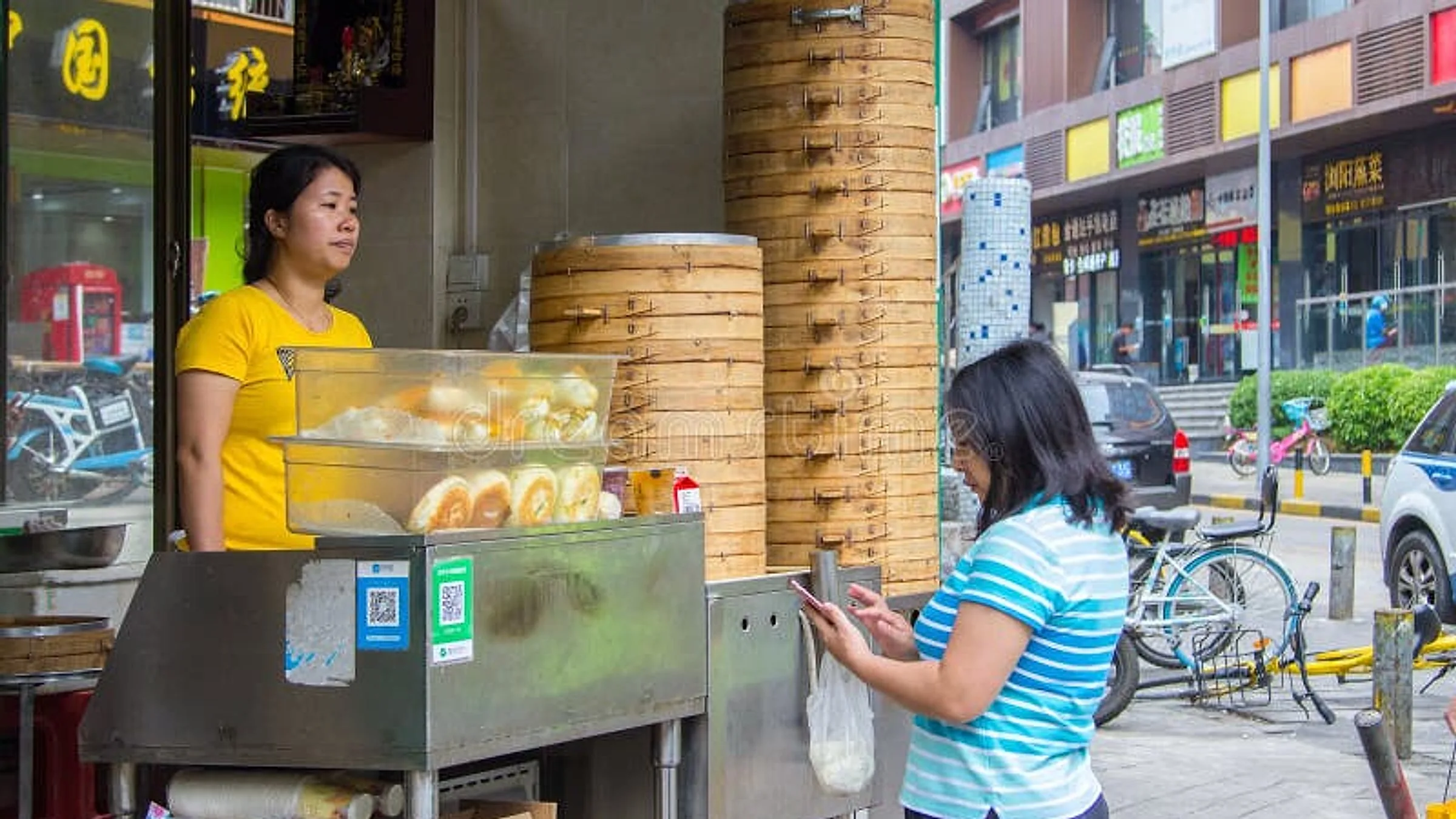
Foreign credit cards are rarely accepted at street stalls. Mobile payment is universal and the merchants prefer it (no bank fees, instant settlement). Set up Alipay before you arrive — it takes 5 minutes and saves countless cash-handling hassles.
If you have dietary restrictions (vegetarian, halal, gluten-free, nut allergies), see our dietary restrictions guide. And for must-know ordering phrases, see our Chinese food ordering phrases.
Where to book
You’ll need a base to return to. Pick a hotel in the food district:
- Hotels in Beijing hutong areas — best street food nearby
- Browse all China hotels
Affiliate disclosure: Some links above are affiliate links. We may earn a commission at no extra cost to you. See our Affiliate Disclosure for details.
Plan your trip — verified tools
These free tools are built on real, monthly-verified data and help you skip the trial-and-error phase of China trip planning:
- China 6-City 5-Day Budget Calculator — Real 2026 prices for 5 days in Beijing, Shanghai, Guangzhou, Chengdu, Xi’an, or Hangzhou. Budget / mid-range / comfort tiers, broken down line by line.
- China OTA Comparison 2026 — Trip.com vs Booking.com vs Agoda vs Klook across 5 booking types. Inventory, pricing, foreign card support, English service, per-OTA verdict.
Verified August 2026 by TravelHubChina Editorial. We re-check prices and policy details monthly so the data doesn’t drift.
Step by step
-
Pick a city and a food neighborhood
Start in Beijing (Wangfujing Snack Street, Niujie), Xi'an (Muslim Quarter 回民街), Chengdu (Jinli, Kuanzhai Alley), or Shanghai (Yu Garden, Wujiang Road). Most cities have a night market within 2 km of a major tourist site — Baidu Maps '美食街' (food street) finds them.
-
Choose your budget tier
Street stalls: ¥3-15 per dish ($0.40-2). Indoor food courts: ¥20-50 per dish ($3-7). Sit-down restaurants: ¥60-200 per person ($8-28). For first-timers, start with street stalls — the food is cooked to order in front of you and locals queueing is your quality signal.
-
Find stalls where locals queue
Look for stalls with a line of Chinese diners (turnover is high, food is fresh). Empty stalls = suspicious. The four food-safety rules from this guide: cook in front of you, no lukewarm trays, no flies, peel all fruit yourself.
-
Order 2-3 signature dishes
Beijing: jianbing (¥5-10 breakfast crepe) or chuan'r (¥3-5 per skewer). Xi'an: rou jia mo (¥10-15) and biangbiang noodles (¥20-30). Chengdu: dan dan noodles (¥15-25) or sweet-water noodles. Shanghai: xiaolongbao (¥20-40 for 8 dumplings). Use the 'point to what others are eating' method if there's no English menu.
-
Pay with Alipay or WeChat Pay
Most stalls only take mobile payment. Set up Alipay (linked to Visa/Mastercard) or WeChat Pay before you go. Cash still works at some indoor restaurants. QR-code payment is universal: open your app, scan the merchant's QR, type the amount, pay.
FAQ
-
Is Chinese street food safe for foreigners?
Yes — Chinese street food is among the safest in Asia if you follow three rules: (1) eat where locals queue (high turnover = fresh), (2) only eat food cooked to order in front of you (jianbing, chuan'r, rou jia mo — all safe), (3) avoid raw vegetables, unpeeled fruit, and tap water. The 20 dishes in this guide are all cooked at high heat and served immediately. Carry ORS (oral rehydration salts) and loperamide from any Chinese pharmacy (药店 yàodiàn) for ¥10-20 as a backup. -
Do street food vendors accept credit cards?
No — virtually no street stalls take credit cards. Set up Alipay (link your Visa/Mastercard) or WeChat Pay before you go. Both apps work with foreign cards in 2026. Cash (RMB) is accepted at indoor food courts and sit-down restaurants. Keep ¥100-200 in small notes for cash-only stalls. -
What if I have dietary restrictions?
Vegetarian: search for 素 (sù) on the menu or ask '有素菜吗?' (yǒu sùcài ma — do you have vegetarian dishes?). Halal: head to a Hui Muslim area (Beijing Niujie, Xi'an Muslim Quarter) and look for 清真 (qīngzhēn) signs. Gluten-free: most rice-based dishes (rice noodles, congee, jianbing without the crepe) are safe. Always carry a translation card with your allergy in Chinese.
Related guides
- Food & Dietary
Cantonese Dim Sum Guide: 12 Essential Dishes + Tea Etiquette
A practical guide to Cantonese dim sum (点心) for foreign visitors — the 12 essential dishes, how to order from the cart, tea etiquette, where to eat in Guangzhou and Hong Kong, and the famous 饮茶 (yum cha) tradition.
11min read
- Food & Dietary
Chengdu Night Markets: Where to Eat After Dark (2026 Local's Guide)
Complete guide to Chengdu's best night markets and evening food streets: 玉林 Yulin, 建设路 Jianshe Road, 奎星楼街 Kuixinglou, 锦里 Jinli, 宽窄巷子 Kuanzhai Alley, and the in-park night markets. Includes what to eat at each, opening hours, how to avoid tourist traps, average prices, and the 12 specific dishes to try.
8min read
- Food & Dietary
Peking Duck Guide: How to Eat It, Best Restaurants, History
A practical guide to Peking duck (北京烤鸭) for foreign visitors — the history, how to eat it the traditional way, the 7 best restaurants in Beijing, prices, and how to spot a quality duck.
9min read
- Food & Dietary
Sichuan Cuisine Guide: 15 Essential Dishes for Foreigners
A practical guide to Sichuan (川菜) cuisine for foreign visitors — the 15 essential dishes, what makes Sichuan food spicy-numbing (麻辣), where to eat in Chengdu, and how to order without speaking Chinese.
12min read
- Food & Dietary
Beijing Hutong Food Tour: The 8 Best Stops for a 3-Hour Walk
A curated 3-hour Beijing hutong food walk covering 8 specific stops: from 豆汁儿 (the legendary fermented mung bean drink) to 卤煮 (old Beijing's working-class stew) to 炒肝 (stir-fried liver) to 北京烤鸭 (Peking duck) hutong-style. Includes the exact addresses, what to order at each, how to find the authentic (non-touristy) places, and a printable walking map.
8min read
- Food & Dietary
Chengdu's Three Famous Snacks: Dan Dan Noodles, Zhong Dumplings, Long Chao Shou (2026)
Complete guide to Chengdu's iconic snack trio: 担担面 (dan dan noodles), 钟水饺 (Zhong dumplings), and 龙抄手 (Long chao shou). Includes each dish's history, where to find the original restaurants, how to order, what they taste like, average prices, and how these local dishes differ from their national imitations.
7min read