

China Tourist Visa for US Citizens (L-Visa): 2026 Complete Guide
Apply for a China L-visa in 2026: documents, fees, processing time, US/UK/Canada-specific costs, and the new rule that drops flight + hotel bookings.
A China tourist visa — officially called the L-visa — is a short-stay entry permit for foreign travelers who aren’t eligible for any of China’s visa-free options. It costs $140 for US citizens (£130 for UK, CAD 132.75 for Canada), takes 4 working days to process, and as of 2024 you no longer need to submit flight or hotel bookings with your application. Citizens of 50+ countries can skip this entirely using visa-free entry, but if your passport isn’t on the list, the L-visa is your route in.
This guide walks through the exact documents, fees, processing times, and embassy-specific quirks for the most common applicants.
Who needs an L-visa in 2026
You need a tourist visa if you want to enter mainland China and:
- Your passport is not on the 30-day visa-free list (50 countries) — see the full country list.
- You don’t have a third country in your itinerary, so the 240-hour transit doesn’t apply.
- You plan to stay more than 10 days (the transit maximum).
- You want to visit Tibet, Xinjiang, Inner Mongolia, Jilin, Gansu, Qinghai, or Ningxia (excluded from transit).
- You want to work, study, or do journalism (you need a Z, X, or J visa, not L).
The L-visa is a single-purpose tourist visa. It does not allow paid work, formal study, or journalism. If a consular officer suspects you’re planning any of these, they can downgrade the application or refuse.
What you need: the 2026 document checklist
The application has tightened in some ways and loosened in others. Here is the current standard set, based on the Chinese embassy’s official guidance:
- Passport — original, valid for at least 6 months beyond your entry date, with at least 2 blank visa pages. Bring a photocopy of the data page.
- Visa Application Form — completed online via the Chinese Visa Application Service Center (CVASC) or the Ministry of Foreign Affairs portal. Print, sign, and date. Every field must be filled truthfully — incomplete forms are returned.
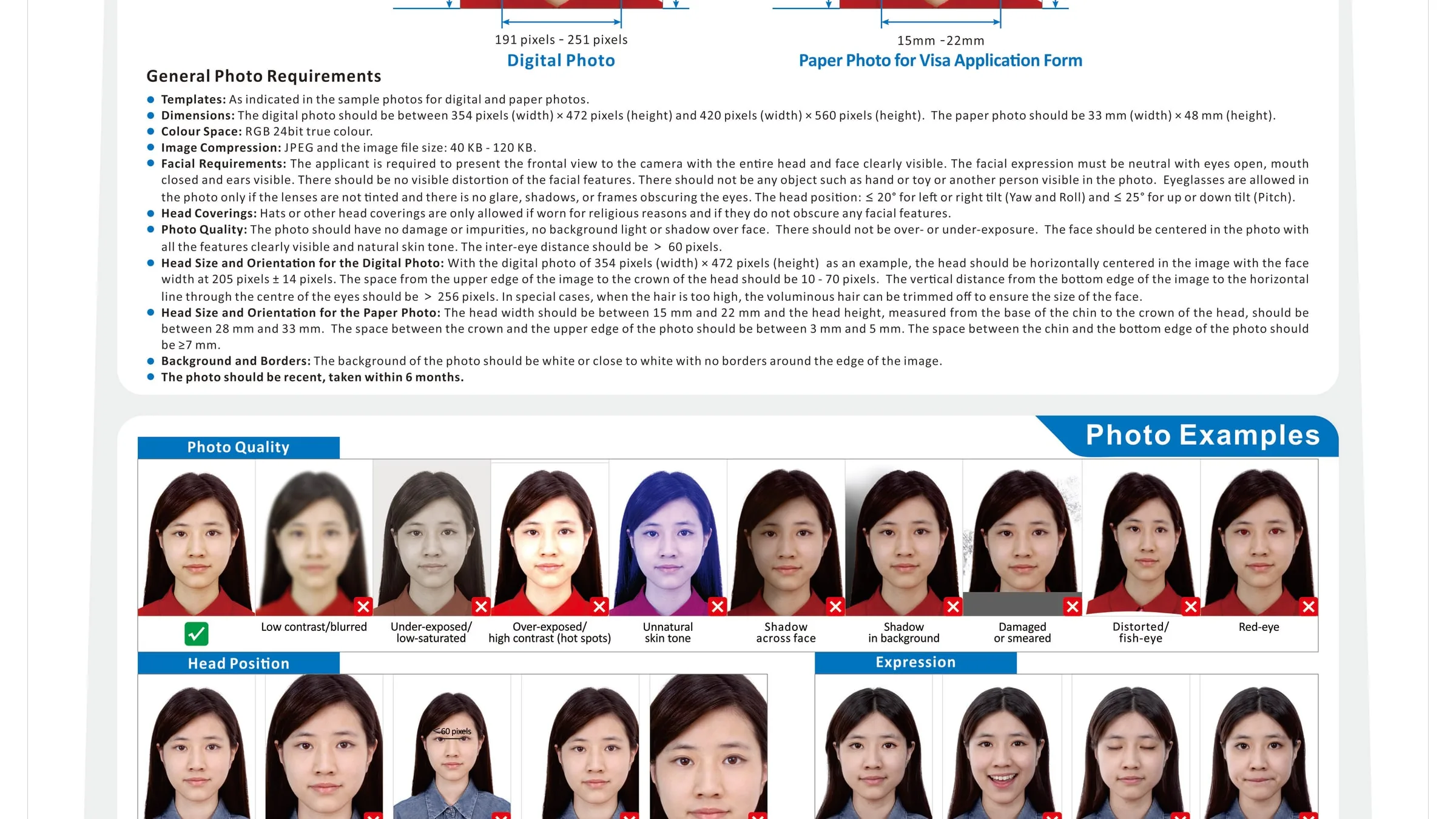
- Recent passport photo — color, white background, 33mm × 48mm, taken within the last 6 months. No hats, no glasses.
 4. Proof of legal stay — required only if you’re applying in a country other than your citizenship (e.g., a US resident applying from Canada). Bring your US green card, student visa, or work permit.
5. Round-trip ticket booking + hotel reservation, OR an invitation letter from China. As of January 1, 2024, US applicants no longer need to submit these — but the embassy still recommends carrying them in case of review. For other nationalities, check your specific embassy page. The invitation letter must come from a Chinese individual or entity and include applicant details, visit dates, places to be visited, and the inviter’s contact information plus signature or company stamp.
4. Proof of legal stay — required only if you’re applying in a country other than your citizenship (e.g., a US resident applying from Canada). Bring your US green card, student visa, or work permit.
5. Round-trip ticket booking + hotel reservation, OR an invitation letter from China. As of January 1, 2024, US applicants no longer need to submit these — but the embassy still recommends carrying them in case of review. For other nationalities, check your specific embassy page. The invitation letter must come from a Chinese individual or entity and include applicant details, visit dates, places to be visited, and the inviter’s contact information plus signature or company stamp.
Verified: “From Jan. 1, 2024, tourist visa applicants (L-Visa) within the US will no longer be required to submit round-trip air ticket booking record, proof of hotel reservation, itinerary or invitation letter.” — Travel China Guide, citing Chinese Embassy US, accessed 2026-07-24
Additional documents that can be requested
The consular officer has discretion to ask for:
- Employment verification — a letter from your employer on letterhead confirming your job, salary, and approved leave.
- Bank statements — typically 6 months of statements showing consistent balance (often $5,000+ for solo travelers).
- Property or asset proof — to demonstrate strong ties to your home country.
- Travel history — copies of previous visas or stamps.
For minors (under 14), both parents must sign the application and provide a birth certificate plus copies of both parents’ passport data pages. Adopted children of Chinese parents have additional requirements — contact the embassy directly.
Step-by-step application process
Step 1: Determine your consular jurisdiction
China does not have a single global application portal. You must apply at the embassy, consulate, or Chinese Visa Application Service Center (CVASC) that covers the state, province, or country where you legally reside. In the US, for example, the Chinese Embassy in Washington DC covers the federal area plus Virginia and Maryland; consulates in New York, Los Angeles, Chicago, and San Francisco cover their respective regions.
Check the jurisdiction map on your local Chinese embassy’s website before booking anything. Submitting to the wrong office is a common reason for delays.
Step 2: Complete the online application form
Go to the CVASC portal for your country (e.g., visaforchina.cn in most regions, or the MFA’s cova.mfa.gov.cn). The form takes 15–20 minutes. You’ll need:
- Passport details
- Travel dates and proposed entry city
- China contact (hotel name or inviter)
- Employment information
- Previous Chinese visa history (if any)
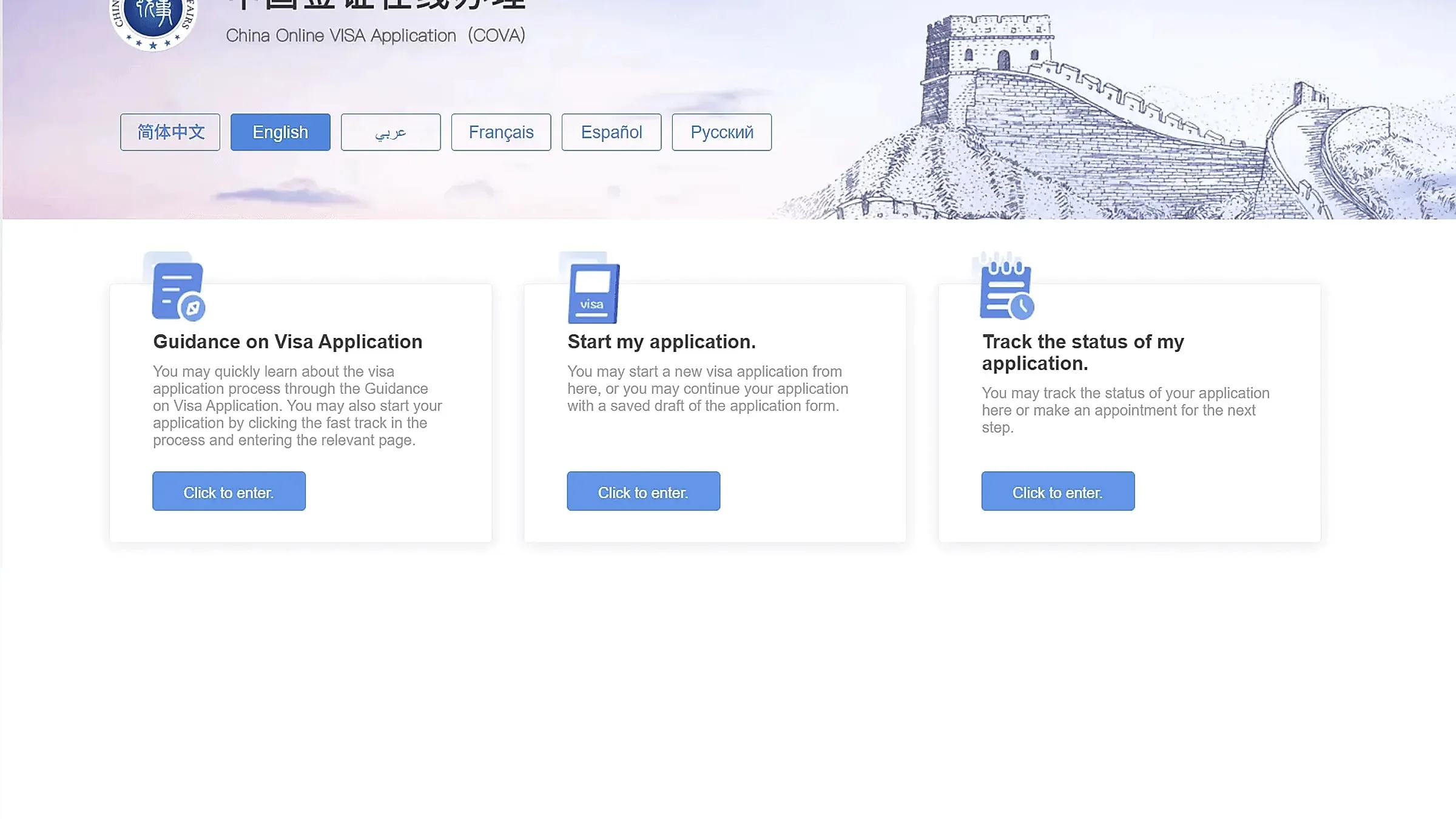
Print the confirmation page. Don’t mail the form — most embassies no longer accept mailed applications and will return them.
Step 3: Book an appointment (where required)
Many CVASC offices now require appointments, especially after 2023. Walk-in slots are limited. Book 2–4 weeks ahead during peak season (April–May, September–October, and around Lunar New Year). Processing starts the next business day after your drop-off date.
Step 4: Submit in person
Applicants aged 14–70 generally must appear in person. You can also authorize a visa agency or another person to drop off the application on your behalf. Children under 14 and seniors over 70 can have someone submit for them with proper authorization.
At the counter, the agent will:
- Check your documents
- Collect biometrics (fingerprints, photo) — required for most first-time applicants
- Take your passport
- Issue a payment receipt with a pickup date
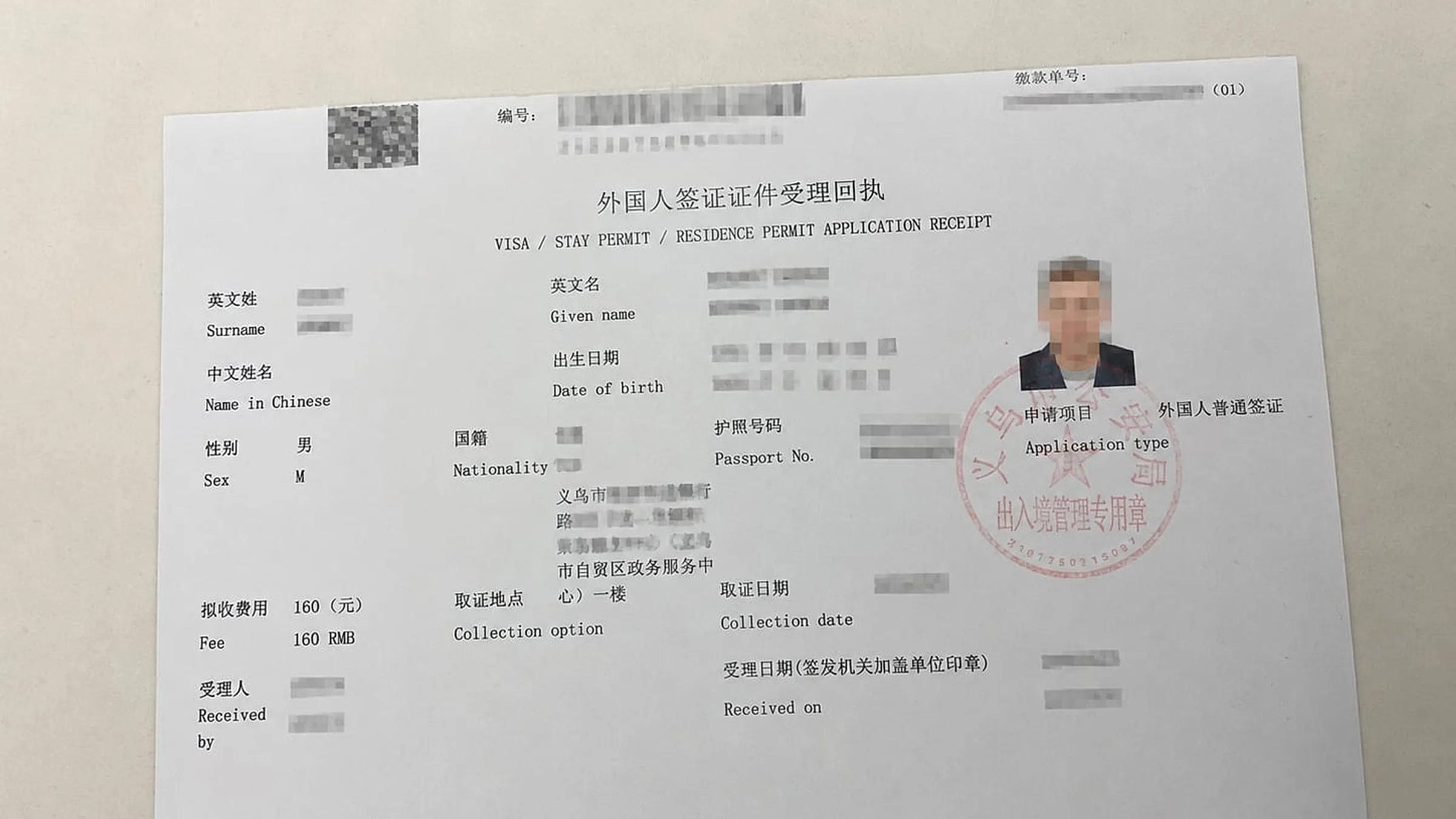
Step 5: Pay and wait
Pay the visa fee at submission. Standard processing is 4 working days. Express service (3 working days) costs an extra $25. Rush service (2 working days, available in some posts for genuine emergencies) costs $37. Processing starts the next business day after submission; Friday submissions are processed starting Monday.
Step 6: Collect your passport
Most embassies no longer mail passports back. You (or your authorized agent) must pick up in person. Bring the receipt and your ID. Some CVASCs offer courier return for an extra $20–30.
Fees by country (single-entry, 2026)
| Country | Single entry | Double entry | 6-month multi | 12-month+ multi |
|---|---|---|---|---|
| United States | $140 | $140 | $140 | $140 |
| Canada | CAD 132.75 | CAD 132.75 | CAD 132.75 | CAD 132.75 |
| United Kingdom | £130 | £130 | £130 | £130 |
| Australia | AUD 94.50 | AUD 117.50 | AUD 139.50 | AUD 184.50 |
| Other nationalities | ~$30–$80 (varies by reciprocity) |
Source: Travel China Guide L-visa fee table.
US, Canadian, UK, and Australian citizens can get a 10-year multiple-entry L-visa. Most other nationalities get single or double-entry visas valid for 6 months. The multiple-entry option is the best value if you plan to return to China within a few years.
Express service: $25 extra per application. Service fees at third-party agencies (VisaHQ, etc.) are separate from the embassy fee and add $50–$300 per application.
Common rejection reasons and how to avoid them
- Incomplete application form — every field must be filled. “N/A” or blanks are common rejection triggers.
- Photo doesn’t meet specs — wrong background, wrong size, too old, glasses on. Embassy photo services are cheap and worth it.
- Weak ties to home country — unemployed applicants, very young travelers, or those with no property/family documentation get extra scrutiny. Bring a letter explaining your situation.
- Inconsistent information — passport data page, application form, and photo must match exactly.
- Previous overstay or visa violation in China — the system remembers. Even a single day overstay 5 years ago can delay your application for weeks.
If rejected, you can reapply immediately with stronger documents. There’s no formal appeal process, but a polite cover letter explaining the gap or attaching missing evidence often helps.
The “two-inch photo” trap: 49×35mm vs 33×48mm (P0.5)
Chinese visa application photos have two competing standards, and this catches ~10% of first-time foreign applicants:
| Standard | Size | Where it’s used |
|---|---|---|
| MFA official spec (33mm × 48mm) | The “correct” photo for Chinese tourist L-visa | Embassies of China in US, UK, Canada, Australia, EU |
| Chinese photo studio “two-inch” standard (49mm × 35mm) | The default size Chinese photo studios print | China domestic photos, US immigration photos |
Chinese photo studios (including the ones in chinatown) typically print “two-inch” photos at 49mm × 35mm because that matches the Chinese domestic standard. Embassies of China in the US/UK/Canada often reject these 49×35mm photos and ask the applicant to redo them at 33×48mm. Some embassies (notably in Australia) accept either, but most don’t.
The fix before you fly to apply:
- Don’t go to a Chinese photo studio and ask for “two-inch” visa photos — you’ll get 49×35mm, which may be rejected
- Do go to:
- The Chinese embassy’s in-house photo service (most embassies have one in the same building for $5-15) — guaranteed correct
- A US/UK/CA passport-photo service (UPS Store, AAA, Post Office, Boots, Timpson) and explicitly ask for “Chinese visa photo, 33×48mm” — most will have the template
- A pharmacy or photo shop with a Chinese visa template (CVS, Walgreens in the US; Snappy Snaps in the UK; PhotoMaton in France)
- Verify before you submit: the photo must be 33mm wide × 48mm tall, with the head 15-22mm from the top of the frame and 28-33mm from chin to crown. A ruler is enough to check.
If you already have 49×35mm photos (e.g. from a Chinese photo studio or from a previous successful application): bring them, but be prepared to retake at the embassy if they’re rejected. The rejection doesn’t count against your application, but it adds 30-60 minutes at the embassy photo service. Budget extra time.
Why the confusion exists: The “two-inch” name comes from the historical Chinese photo size (about 49×35mm, or “2-inch × 1.4-inch”). The MFA later standardized to 33×48mm to align with international passport-photo conventions. Chinese photo studios never fully updated. The 33×48mm spec is the official one; 49×35mm is a legacy holdover.
Extending or changing your L-visa inside China
If you fall in love with China and want to stay longer, you can apply for an extension at the local Exit-Entry Administration of the Public Security Bureau. Requirements:
- Apply at least 7 days before your current visa expires.
- Bring passport, application form, current visa, accommodation registration, and travel itinerary.
- Extension is granted at the officer’s discretion; maximum extension is the original stay duration (e.g., 30 more days if your original visa was a 30-day L).
- Fee: CNY 160 (~USD 22).
You cannot extend a tourist visa indefinitely. For longer stays, you need to apply for a residence permit from outside China on the appropriate visa type (work, study, family reunion).
Quick decision tree: do you even need an L-visa?
- Is your country on the 50-country 30-day visa-free list? → No L-visa needed. Just bring your passport and a return ticket. See China visa-free countries 2026.
- Is your country on the 57-country 240-hour transit list AND does your itinerary include a third country? → No L-visa needed. Use the 240-hour transit.
- Are you doing a long trip (more than 10 days) or visiting restricted provinces like Tibet? → You need an L-visa. Use the steps above.
- Are you transiting for less than 24 hours staying in your arrival city? → 24-hour direct transit, no visa needed for any nationality.
The L-visa process is bureaucratic but not difficult. Most travelers who follow the document checklist exactly and apply through their jurisdiction’s CVASC get approved on the first try. Start the application at least 4 weeks before your trip, and you’ll have your passport back in time.
Where to book
Once your visa is approved, the next step is booking. Here are the most useful links:
- Book your flight to China — long-haul flights from US/EU/AU
- Find a hotel that accepts foreigners — pick from a vetted list
Affiliate disclosure: Some links above are affiliate links. We may earn a commission at no extra cost to you. See our Affiliate Disclosure for details.
Related: China Visa-Free Countries 2026 (50+ List)
Related: China 240-Hour Visa-Free Transit: Complete 2026 Guide
Related: China 240-Hour Visa-Free Transit: Complete 2026 Guide
Plan your trip — verified tools
These free tools are built on real, monthly-verified data and help you skip the trial-and-error phase of China trip planning:
- China 240-Hour Visa-Free Transit Checker — 57 countries, 24 provinces, 65 ports. See if you qualify for 10-day visa-free transit, which cities you can visit, and the 5-step process.
- China 6-City 5-Day Budget Calculator — Real 2026 prices for 5 days in Beijing, Shanghai, Guangzhou, Chengdu, Xi’an, or Hangzhou. Budget / mid-range / comfort tiers, broken down line by line.
Verified August 2026 by TravelHubChina Editorial. We re-check prices and policy details monthly so the data doesn’t drift.
Step by step
-
Check whether you qualify for visa-free entry
About 50 countries can enter China visa-free for 30 days — most of the EU, UK, Australia, New Zealand, South Korea, Japan, Malaysia, Thailand, Brazil, Argentina. Another 50+ countries qualify for the 240-hour visa-free transit. The full list is on your Chinese embassy website.
-
Visit the official China Visa Application Service Center for your country
Go to visaforchina.cn and pick your jurisdiction (e.g., Washington DC, London, Toronto, Sydney). The site lists the exact documents, fees, and processing times for your nationality.
-
Gather the required documents
You will need: (1) a passport valid for at least 6 months with 2 blank pages, (2) a completed visa application form, (3) one recent passport-style photo, (4) proof of financial means (recent bank statement or employer letter). As of January 2024, you do NOT need flight or hotel bookings.
-
Book an appointment at the visa center
Most centers require an online appointment 2-4 weeks ahead. Peak seasons (April-May, September-October, Christmas) book up faster. Bring all original documents plus one photocopy of each.
-
Submit your application and pay the fee
Fees vary by nationality: US citizens $140, UK £130, Canada CAD 184.25, EU €90. Standard processing is 4 working days; express (2-3 days) is available for an extra $25-50.
-
Pick up your passport with the visa stamp
Bring your receipt. The visa is typically a 10-year multiple-entry L-visa for US citizens (or matching validity for your country), valid for stays up to 30 or 60 days per entry. Check the visa carefully for spelling and date errors before leaving the center.
FAQ
-
Do I need a visa to visit China in 2026?
It depends on your passport. Citizens of about 50 countries (most of Europe, Australia, New Zealand, South Korea, Japan, Malaysia, Thailand) can enter visa-free for 30 days. US, UK, Canadian, and Indian passport holders still need to apply for an L-visa unless they qualify for the 240-hour visa-free transit. -
How much does a China tourist visa (L-visa) cost?
Fees vary by nationality: US citizens pay $140, UK citizens £130, Canadian citizens CAD 184.25, and EU citizens €90. There is also a service fee of ¥20-30 depending on the visa service center. Processing is 4 working days standard, or 2-3 days for an extra rush fee. -
How long does it take to process a China L-visa?
Standard processing is 4 working days at most Chinese consulates. Express service (2-3 working days) is available for an additional $25-50 depending on the embassy. Apply at least 3 weeks before travel to leave a buffer for document issues or appointment backlogs. -
Do I need to book flights and hotels before applying for a China visa?
No. As of January 2024, China dropped the round-trip ticket and hotel booking requirement for tourist visa applications. You only need a valid passport, the visa application form, a recent photo, and proof of employment or financial means (bank statement or employer letter). -
Which countries can enter China without a visa?
About 50 countries can enter visa-free for 30 days (most of Europe, Australia, New Zealand, South Korea, Japan, Malaysia, Thailand, Brazil, Argentina). Another 50+ countries qualify for the 240-hour visa-free transit if you are passing through to a third country. The official list is on the Chinese embassy website for your jurisdiction. -
How much does a China tourist visa cost for US citizens?
The L-visa fee for US citizens is $140 (single-entry or multiple-entry, valid 10 years, 30-90 days per stay). This is the standard rate charged by the Chinese embassy in Washington DC, as well as consulates in San Francisco, Los Angeles, Houston, Chicago, and New York. There is no separate service fee for L-visas (unlike some visa categories that require a $20-30 VFS service charge). Rush processing (2-3 working days instead of 4) costs an extra $25-50. Total budget: $140-190 including rush. Payable by money order, cashier's check, or cash at most consulates; some accept credit card for an additional $5 processing fee. The visa is valid for 10 years for US passport holders — longest validity of any Chinese visa category for Americans. -
How to apply for a China L-visa as an American?
Step-by-step for US citizens: (1) Determine your consular jurisdiction (the 5 Chinese consulates in the US — Washington DC, San Francisco, Los Angeles, Houston, Chicago, New York — are based on your state of residence). (2) Complete the online application at visaforchina.cn. (3) Book an appointment 2-4 weeks ahead (peak seasons: April-May, Sept-Oct, Christmas). (4) Bring to the appointment: passport (6+ months validity, 2 blank pages), printed application form, one 49×35mm photo (NOT 33×48mm — this is the most common rejection reason), proof of financial means (bank statement showing $100/day × trip length, or employer letter on company letterhead). (5) Pay $140 + optional $25-50 rush. (6) Wait 4 working days. (7) Collect passport with 10-year multiple-entry L-visa. No flight or hotel bookings needed (since January 2024). Total time: 1-2 hours for the appointment, then 4 days to wait.
Related guides
- Visa & Entry
China 240-Hour Visa-Free Transit: Complete 2026 Guide
China's 240-hour (10-day) visa-free transit lets 57 countries travel across 24 provinces without a visa. Updated 2026 rules, eligible ports, and step-by-step entry.
9min read
- Visa & Entry
China Visa-Free Countries 2026 (50+ List)
50 countries get 30-day visa-free entry to China in 2026. Plus 29 mutual visa-exemption countries. Full lists, expiration dates, and how to check if you qualify.
8min read
- Visa & Entry
China Entry Guide 2026: 9 Visa Types, Customs, Health Declaration, and 5-Step Arrival Process for Foreigners
China has 9 visa types + 2 visa-free schemes in 2026. This is the master guide: which visa is right for your trip, how to apply, what to declare at customs, the health declaration (still required 2026), the 5-step arrival process, and 7 common rejection reasons. Plus a country-by-country matrix showing which scheme applies to your passport.
16min read
- Visa & Entry
China Border Agent Checklist 2026: Documents That Get You Through (And 5 That Get You Sent Back)
Four ways to legally enter mainland China in 2026: the unilateral 30-day visa-free (50 countries), the 240-hour (10-day) transit visa-free (57 countries, 65 ports, 24 provinces), the L tourist visa (any nationality), and Hainan-only 30-day. Every path requires: passport 6+ months validity, onward/return ticket, hotel booking covering first 3 nights, sufficient funds proof, and a 24-hour health declaration QR code submitted online before arrival. 5 common failure modes that get foreigners sent to secondary inspection (or denied entry): round-trip ticket (US→CN→US doesn't qualify as transit), wrong port, no onward ticket to a third country, missing hotel address, and 240-hour clock misunderstanding (starts 00:00 next day, not at entry).
12min read
- Visa & Entry
China Hotel Registration for Foreigners: The 24-Hour Police Check-In Rule Nobody Tells You About (2026)
Every foreigner staying in China must register at a police station within 24 hours — it's a legal requirement under Article 39 of the Exit-Entry Administration Law. Hotels handle this automatically when you check in with your passport. Airbnb, vacation rentals, and staying with friends do NOT — you must register manually. Failure to register can result in ¥2,000-10,000 fines, visa revocation, or detention at a train station checkpoint. Step-by-step guide to registering at a Public Security Bureau (PSB), the actual 临时住宿登记表 form, what to bring, and how to handle the Airbnb case.
8min read
- Visa & Entry
China Travel FAQ 2026: 50 Questions Every First-Timer Asks
The definitive 2026 China travel FAQ covering 50 questions first-timers ask: visa-free rules, payment apps, internet access, language barriers, safety, food, transit, hotels, and what to do in emergencies. Updated for 2026 rules with current visa-free countries, Alipay limits, and high-speed rail booking.
14min read