
Forbidden City
北京故宫 · Bìjìng Gùgōng
Quick answer
Foreign passport required at entry. Online booking required 1-7 days in advance via the official Palace Museum website (dpm.org.cn), which now accepts international passports. Same-day walk-up tickets are no longer guaranteed for foreign visitors.
Why visit
- 1 Walk through 980 surviving buildings across 72 hectares — the largest wooden palace complex in the world
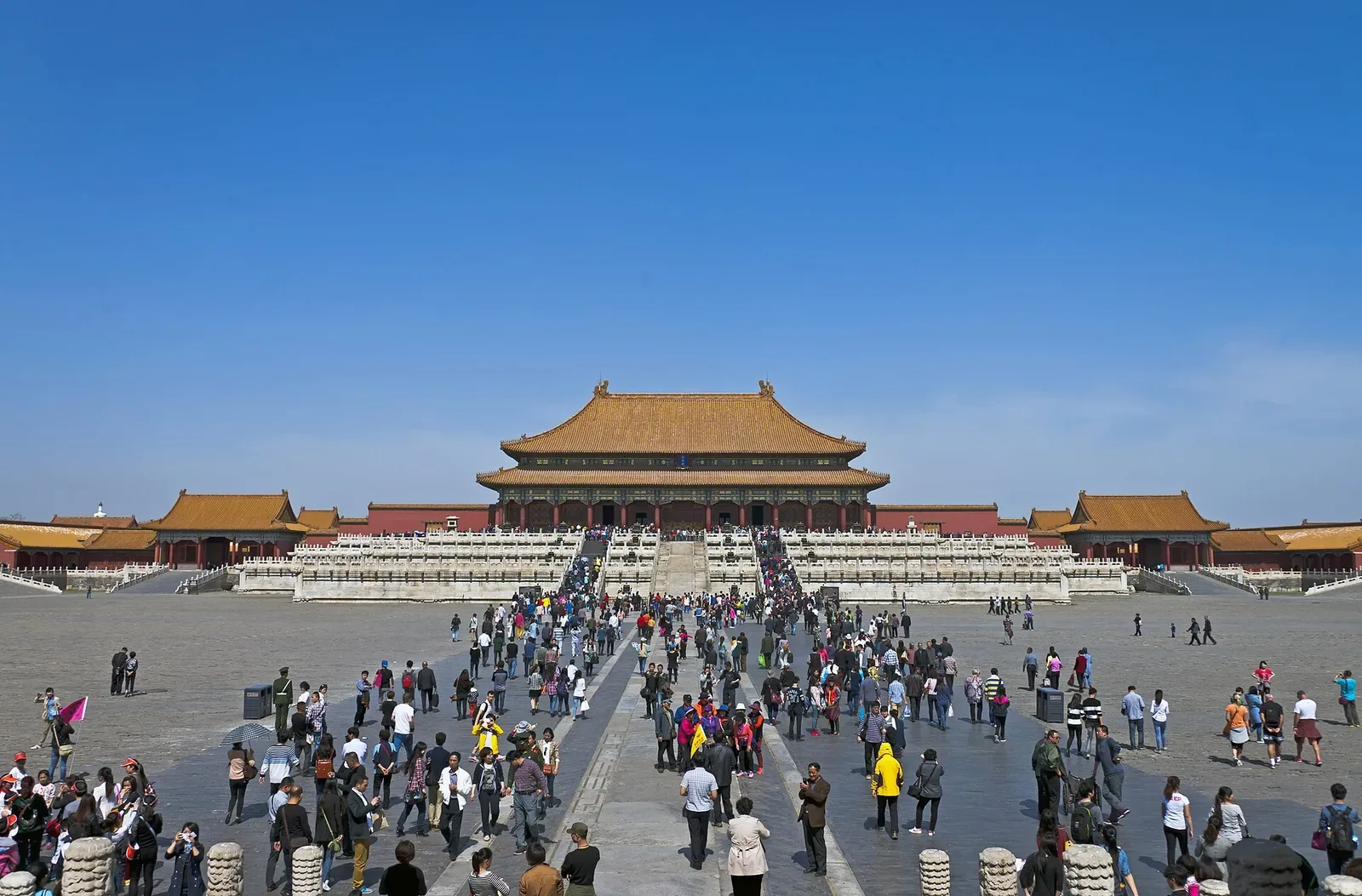
- 2 Hall of Supreme Harmony (太和殿) — the emperor's coronation hall, largest wooden hall in China
- 3 Corner tower (角楼) at sunset — the most photographed structure in Beijing
- 4 Imperial Garden (御花园) at the northern end — Ming-dynasty cypresses and rockeries
- 5 Treasure Gallery and Clock Gallery — both included with combo ticket, easily skipped on first visit
- 6 Cross over the moat at Wumen (午门 south gate) — the only entry for tourists
Essential tips for foreigners
- Book online 1-7 days ahead at dpm.org.cn — the official website accepts international passports. Walk-up tickets are no longer guaranteed for foreigners.
- Enter through the south gate (午门 Wumen) only. Exit via the north gate (神武门 Shenwumen) or east gate (东华门 Donghuamen).
- Bring your passport — checked twice (once at the gate, once for entry). The e-ticket must match the passport used to book.
- Wear comfortable shoes — the complex is huge and you'll walk 5-8 km on stone paths.
- Closed Mondays. If Monday is a national holiday, it's open but extremely crowded — arrive at 8:00 AM.
- The audio guide (¥20 deposit) is genuinely good — 90 minutes of clear English content covering 30 key stops.
- Sunset on the corner tower (角楼) is the best photo — go to the north moat walkway, not the tower itself.
Suggested route
- 08:00 15 min Arrive at Wumen (south gate) 30 min before opening, show passport and e-ticket QR code
- 08:30 2 hours Enter through the central passageway (emperor's entrance) and walk the central axis north
- 10:30 1 hour Detour east to the Treasure Gallery (珍宝馆) and Clock Gallery (钟表馆) — both with combo ticket
- 11:30 45 min Lunch at the on-site restaurant near Hall of Literary Glory (文渊阁) or pack snacks
- 12:15 1.5 hours Visit the western side halls (Ceremonial halls, library, calligraphy gallery) — much less crowded
- 13:45 45 min Walk through the Imperial Garden (御花园) and exit via Shenwumen (north gate)
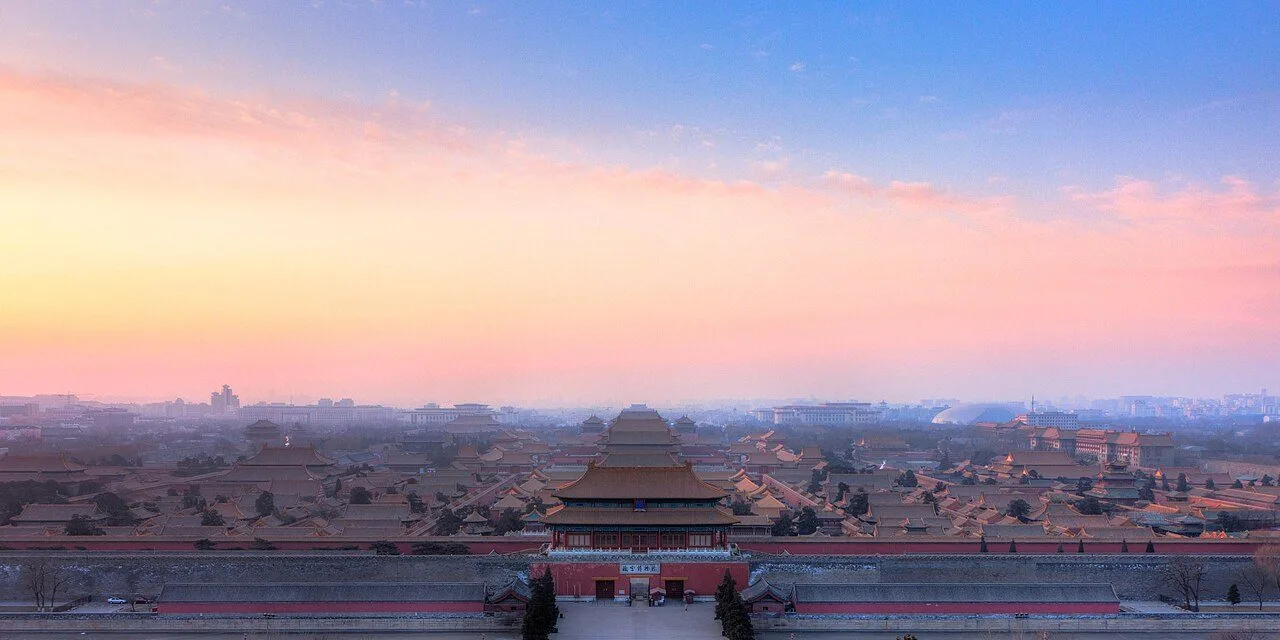
- 14:30 1.5 hours Cross the street to Jingshan Park (景山公园) for the panoramic view of the Forbidden City from above — best light late afternoon
The palace that ruled China for 500 years
The Forbidden City was the imperial palace of the Ming and Qing dynasties from 1420 to 1912 — home to 24 emperors and the political center of China for nearly 500 years. It sits in the heart of Beijing, just north of Tiananmen Square, covering 72 hectares with 980 surviving buildings arranged along a strict north-south axis. Every detail — from the yellow glazed roof tiles (imperial yellow, forbidden to commoners) to the nine-by-nine grid of nail heads on the main gates (the supreme yang number, reserved for the emperor) — was designed to express cosmic order and absolute authority.
For most foreign tourists, the Forbidden City is the single most important stop in Beijing. It is the largest wooden palace complex in the world, a UNESCO World Heritage site since 1987, and the most intact example of traditional Chinese imperial architecture. The experience of walking the central axis — through the Gate of Supreme Harmony, past the Hall of Supreme Harmony, ending at the Imperial Garden — is something no museum or replica can match.
What the foreigner experience looks like in 2026
The visitor experience has been streamlined for foreign tourists in recent years. The official website (dpm.org.cn) now accepts international passports and Visa/Mastercard, and the booking process takes about 5 minutes. The audio guide is in clear English, with 90 minutes of well-paced content covering the 30 most important stops. English signage is consistent throughout the complex, and the major halls have multilingual information panels.
The main change from a few years ago: same-day walk-up tickets are no longer guaranteed for foreigners. You should book 1-7 days in advance online. The Treasure Gallery and Clock Gallery — both genuinely worth visiting for the imperial jewelry and 18th-century mechanical clocks — are included in the ¥80 combo ticket, so there’s no reason to skip them.
Cultural context and etiquette
The Forbidden City was designed as a miniature of the cosmic order. The central axis aligns with the city’s north-south axis and the emperor’s throne aligned with Polaris — the celestial pivot. The complex is divided into two parts: the Outer Court (前朝) for ceremonies and governance, and the Inner Court (内廷) where the emperor lived with his consorts and concubines. The buildings step down in size as you move deeper into the complex, with the largest and most ornate structures reserved for the most public functions.
A few etiquette points: speak quietly inside the halls (they’re used as museums now), don’t touch the artifacts or sit on the marble thrones, and don’t photograph with flash in the Treasure Gallery. The traditional Chinese belief that visitors should use the side gates and reserve the central passageway for the emperor still holds cultural resonance — though today the central entrance is open to all visitors as a symbol of the people’s access to their history.
What most travelers miss
Two things. First, the western and eastern side halls, where the actual imperial library, calligraphy gallery, and ceremonial halls sit. Most tourists stick to the central axis and miss the quieter, more intimate spaces. Second, the Imperial Garden (御花园) at the northern end. Most visitors rush through it on the way to the exit, but the ancient cypresses (some 500+ years old, planted by Ming emperors) and Ming-dynasty rockeries make it one of the most peaceful spots in central Beijing.
Final tip
The Forbidden City rewards slow walking. The walls are red because the emperor was associated with the south and fire. The roof tiles are yellow because yellow was the imperial color. Every detail has meaning. Take the audio guide, walk the central axis first, then spend an extra hour in the side halls and the garden. Three to four hours is the right visit length; anything less and you’ll miss the soul of the place.
Best photo spots
-
Corner tower (角楼) from the north moat walkway · Sunset, 5-7 PM (varies by season)
The single most photographed view in Beijing. The moat reflects the tower in summer; in winter, snow on the roof tiles makes it even more dramatic. Get there 30 min before sunset for the best light.
-
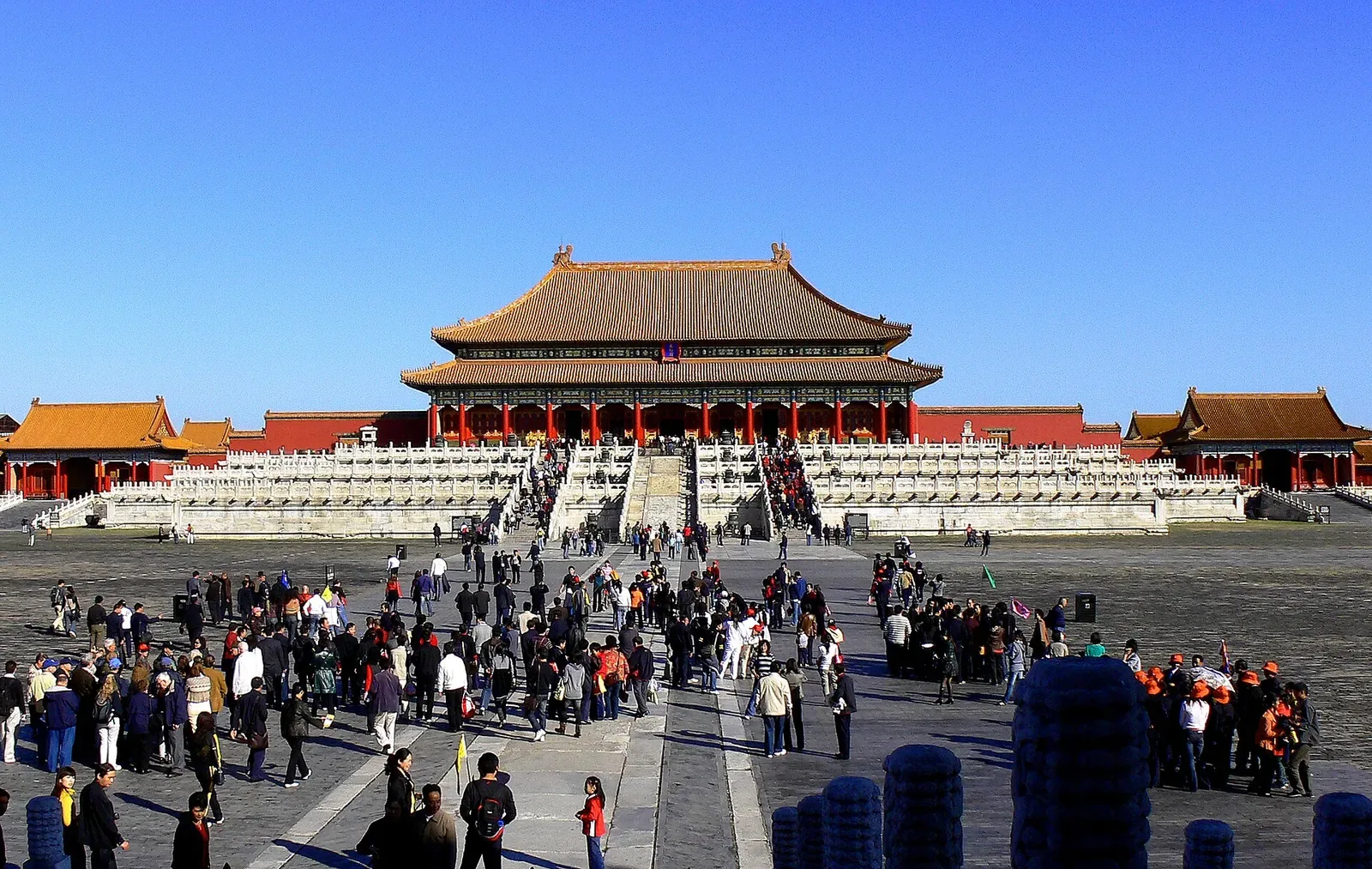
Hall of Supreme Harmony (太和殿) from the central axis · Morning, 9-10 AM
Looking north from the inner gate, the Hall of Supreme Harmony sits on its three-tier marble terrace. The morning sun lights up the yellow glazed-tile roof.
-
Long Corridor (长廊) on the western side · Afternoon, 2-4 PM
Painted beams and columns along the covered walkway. The afternoon light comes in at a low angle, making the colors pop. Best for portraits with a traditional Chinese backdrop.
-
Imperial Garden (御花园) cypress grove · Late morning, 10-11 AM
Ancient cypresses (some 500+ years old, planted by Ming-dynasty emperors) frame the traditional pavilions. The trees cast dramatic shadows in late morning.
-
Wumen (午门) gate from outside · Morning, 8-9 AM
The U-shaped south gate with five arched entrances. Most tourists photograph it from inside, but the exterior view at opening time (before the crowds) is the classic postcard shot.
Where to eat nearby
-
Forbidden City Restaurant (故宫餐厅)
Chinese (Imperial-inspired set menus) · ¥80-150/person · Inside the complex, near Hall of Literary Glory (文渊阁)
-
Bianyifang (便宜坊)
Beijing roast duck (Peking duck, 600-year-old recipe) · ¥150-250/person · 10 min walk east, near Wangfujing
-
Donghuamen Night Market (东华门夜市)
Beijing street food (scorpions, lamb skewers, dumplings) · ¥30-80/person · 5 min walk east of the east gate, opens 16:00-22:00
-
The Peking Duck (便宜坊烤鸭店 Wangfujing branch)
Peking duck · ¥200-300/person · 15 min walk east, Wangfujing main street
Frequently asked questions
How much does the Forbidden City cost for foreigners in 2026?
¥60 for foreign adults during peak season (Apr 1 - Oct 31), ¥40 in off-peak (Nov 1 - Mar 31). The combo ticket (¥80) includes the Treasure Gallery and Clock Gallery. Children under 1.2m are free. The audio guide is ¥20 deposit (refundable).
Do I need to book Forbidden City tickets in advance?
Yes. The Palace Museum requires advance booking 1-7 days before your visit via dpm.org.cn (the official website, which accepts international passports and credit cards) or the 智慧故宫 WeChat mini-program. Same-day walk-up tickets are no longer guaranteed for foreign visitors since 2024.
Can I use Alipay to buy Forbidden City tickets?
The official website accepts international Visa and Mastercard directly — this is the easiest method for foreigners. You can also pay at the gate with Alipay or WeChat Pay, but booking online with a credit card is more reliable and avoids the queue.
What is the best time of year to visit the Forbidden City?
April-May and September-October offer the best weather (15-25°C) and clear skies. Avoid Chinese national holidays (May 1-3, Oct 1-7) when the palace becomes impassable. Winter visits are uncrowded but cold (-5 to 10°C).
How long does it take to see the Forbidden City?
3-4 hours for the main halls and central axis. 5-6 hours if you also visit the Treasure Gallery, Clock Gallery, and Imperial Garden thoroughly. Most foreign tourists spend 3-4 hours and feel satisfied.
Is the Forbidden City wheelchair accessible?
Yes. The complex is largely flat with paved paths, and free wheelchair loans are available at the entrance. Some halls have steps; ask staff for the ramped side entrance. The Treasure Gallery has step-free access.
What's the difference between Wumen and Donghuamen gates?
Wumen (午门) is the south gate — the only entrance for tourists. Donghuamen (东华门) is the east gate — exit only. Shenwumen (神武门) is the north gate — also exit only. Most visitors enter south and exit north, then walk to Jingshan Park for the panoramic view.
Can I take photos inside the Forbidden City?
Yes, photography is allowed throughout the outdoor areas and most halls. Flash photography is restricted inside the Treasure Gallery to protect the artifacts. Tripods are generally OK in outdoor areas but not inside the halls.
Are there restaurants inside the Forbidden City?
Yes — there are 3 on-site restaurants and several snack kiosks. The main restaurant is near the Hall of Literary Glory (文渊阁). Food is mid-priced (¥50-100/person) and acceptable; most foreign visitors eat before or after the visit at better options nearby.
Is there a dress code for the Forbidden City?
No formal dress code, but wear comfortable walking shoes. The complex is mostly outdoors with limited shade in summer (temperatures reach 38°C / 100°F in July-August). In winter, bring a warm coat — temperatures drop below -5°C (23°F) in January.