
Terracotta Army Guide: Xi'an UNESCO Site, Tickets & Plan
Terracotta Army in Xi'an: 8,000+ life-sized warriors from 210 BC, UNESCO since 1987. Tickets (¥120), Bus 306 transport, 3 pits, and how to plan your visit.
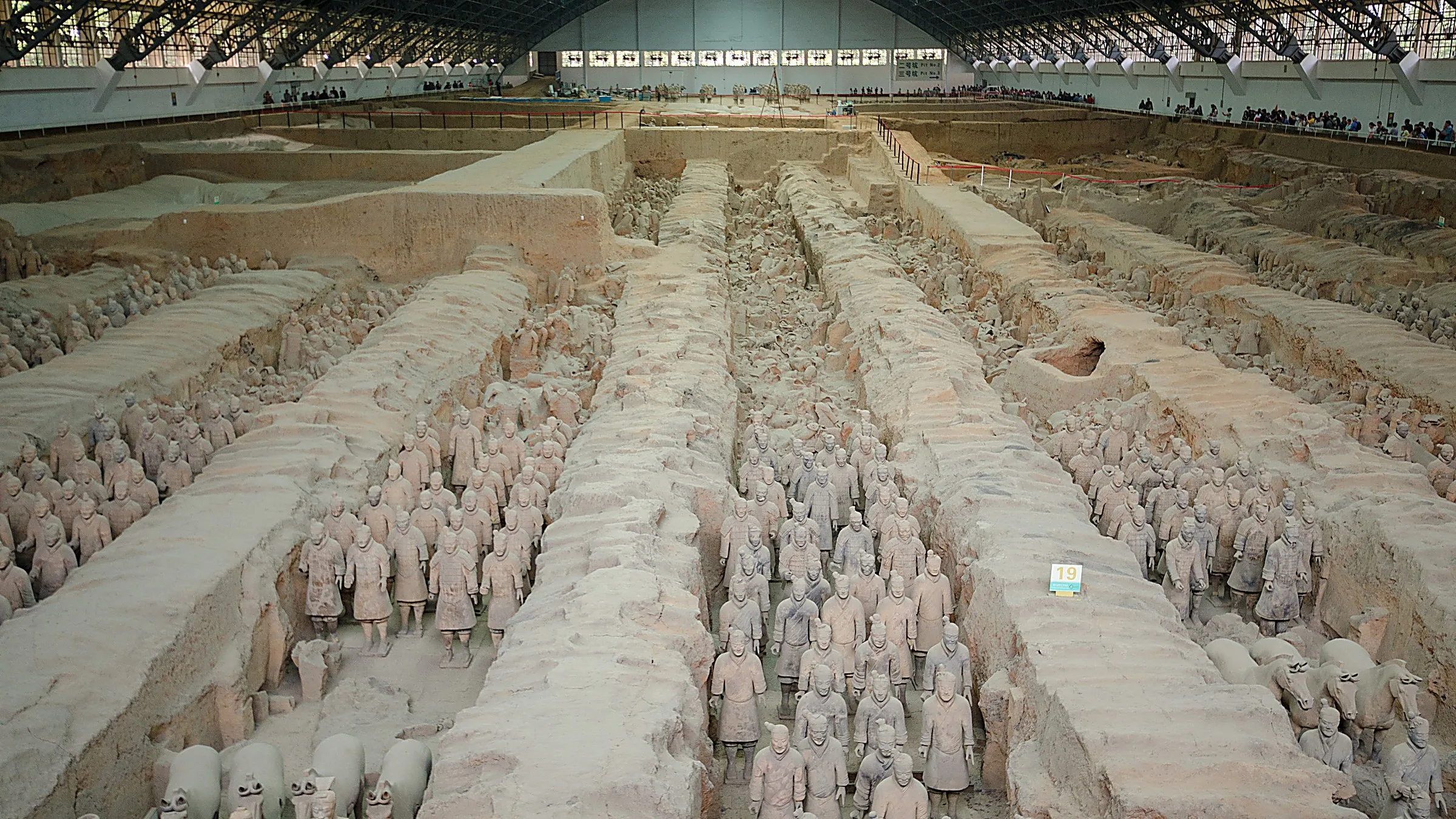
The Terracotta Army (兵马俑, Bīngmǎyǒng) is a collection of 8,000+ life-sized clay warriors buried in 210 BC to guard the tomb of Qin Shi Huang, the first emperor of unified China. The army was discovered in 1974 by local farmers digging a well, and was listed as a UNESCO World Heritage Site in 1987. It is located 40 km east of Xi’an, the ancient capital of China, and is the most-visited attraction in Shaanxi province. Most travelers fit the army into our China classic 2-week route as a Beijing-Xi’an-Lhasa-Shanghai loop.
The site has 3 main excavation pits (the fourth, Pit 0, is an unexcavated zone in research), a separate exhibition hall for the bronze chariots, and the still-unexcavated Qin Shi Huang Mausoleum mound 2 km to the west. A combined ticket covers all areas.
How to plan your visit
1-day Xi’an plan (most common)
This plan covers the Terracotta Army, the Xi’an City Wall, and the Muslim Quarter in one day. Most day-trip visitors follow this:
- 7:30 AM - Bus 306 from Xi’an Railway Station east square
- 8:30 AM - Arrive at Terracotta Army, buy ticket, take shuttle to Pit 1
- 8:45 AM - 11:30 AM - Visit all 3 pits, Bronze Chariots hall
- 11:30 AM - 12:30 PM - Lunch at the on-site restaurant (or bring your own)
- 12:30 PM - 1:30 PM - Optional: shuttle to Qin Shi Huang Mausoleum
- 1:30 PM - 2:30 PM - Bus 306 back to Xi’an Railway Station
- 3:00 PM - 5:30 PM - Xi’an City Wall (walk or bike 2 hours, sunset from the wall)
- 6:00 PM - 8:30 PM - Muslim Quarter (Huimin Jie) dinner + street snacks. The Hui Muslim Quarter is the easiest place in China to find halal food in a single block, but ordering the right dishes still takes prep — see our China Muslim travel and halal guide for what to ask and what to skip.
2-day Xi’an plan (relaxed)
Add a second day for the Shaanxi History Museum (free, but reservation required) and the Big Wild Goose Pagoda. Day 1: Terracotta Army + City Wall. Day 2: Shaanxi History Museum + Big Wild Goose Pagoda + Muslim Quarter. For a full week of Shaanxi (with Mount Hua and Hukou Waterfall), see our 4-day Xi’an itinerary.
With a guide or self-guided
Official English guides can be hired at the visitor center for ¥200-300 per group (up to 6 people, 1.5-2 hours). The English audio guide is ¥30 and worth it. The Alipay mini-program “秦始皇帝陵博物院” offers a free AI translation guide with a downloadable map. Self-guided visits are possible; the path is well-marked and English signage is comprehensive.
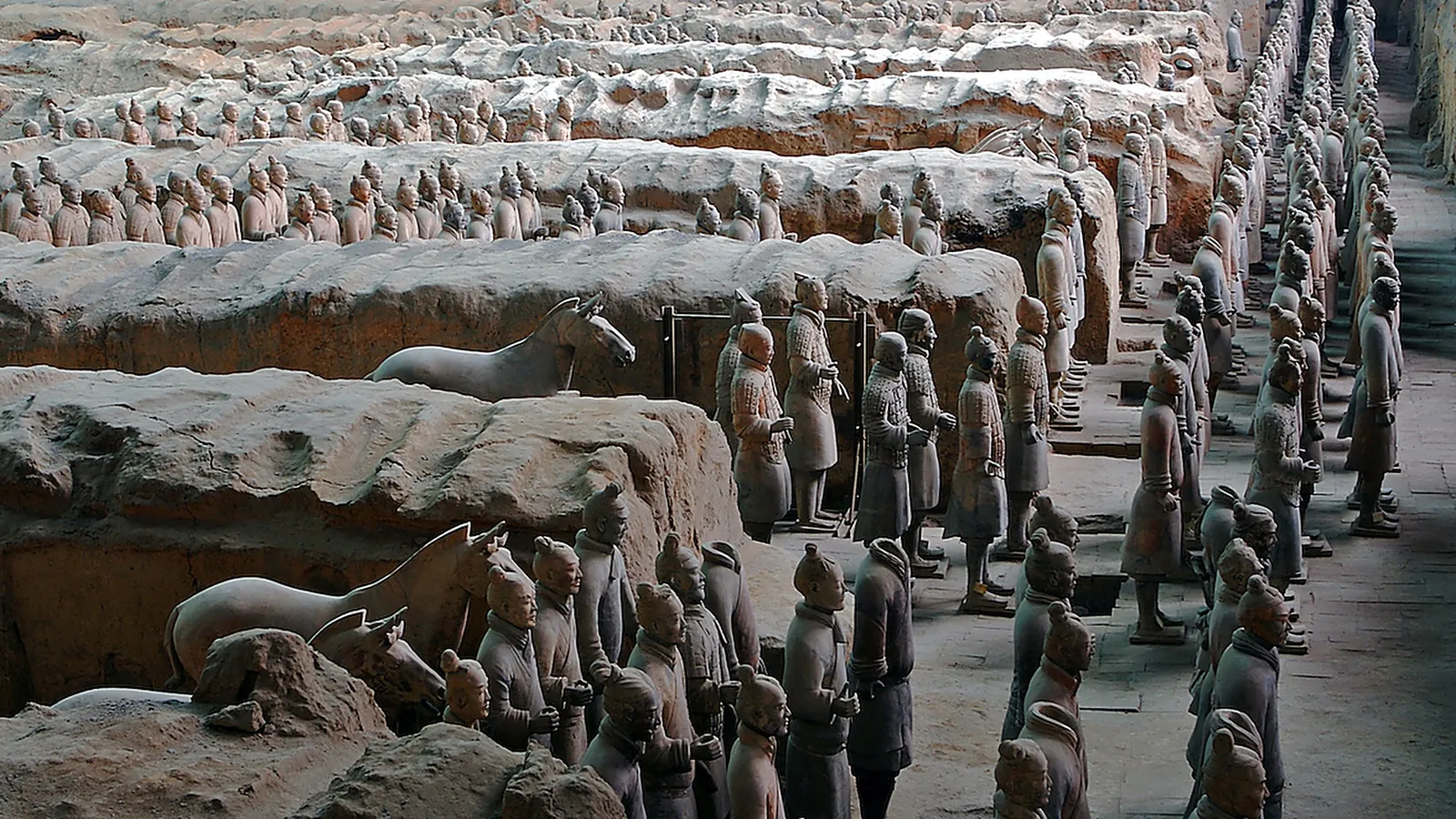
Photo: Wikimedia Commons / CC BY-SA. Source

Tickets, booking, and payment
| Item | Peak (Mar 16 - Nov 15) | Off-peak (Nov 16 - Mar 15) |
|---|---|---|
| Combined ticket | ¥120 | ¥100 |
| English audio guide | ¥30 | ¥30 |
| Official guide (per group) | ¥200-300 | ¥200-300 |
| Shuttle to mausoleum | Free with ticket | Free with ticket |
| Bus 306 from Xi’an | ¥7 | ¥7 |
| Photography in pits | Free | Free |
How to book:
- At the gate - passport required. Combined ticket at the visitor center, no advance booking needed in off-peak. Peak season (April-May, October) can see lines of 30-60 min at the gate.
- Trip.com - combined ticket + Bus 306 shuttle ¥150-180, or guided day-tour package ¥400-600.
- Alipay - search “秦始皇帝陵博物院” mini-program. Same-day tickets usually available; advance booking 1-7 days.
What is NOT included in the ticket:
- 3D / IMAX film (¥30, optional)
- Qin Shi Huang Mausoleum shuttle (free, but the bus to the unexcavated burial mound has limited hours)
- Bus 306 from Xi’an (separate ¥7)
Free entry: Children under 1.2m. Seniors over 65 (with passport). Students with valid Chinese student ID. Foreign student cards are not generally accepted for the discount.
Getting there and around
By Bus 306 (recommended): Departs from the east square of Xi’an Railway Station, every 5-10 minutes, 6:30 AM - 7:00 PM. Cost ¥7 one-way, 1 hour travel time. The bus is clearly marked in English (“Tourism Bus”). Last return bus from Terracotta Army is 19:00.
By private car or taxi: Taxi from central Xi’an ¥200-250 one-way, 1 hour. Didi (China’s Uber, accepts foreign Visa/Mastercard via Alipay) costs ¥180-220. Round-trip day rate with a driver: ¥600-800.
By tour bus: Trip.com, Klook, and most Xi’an hotels sell day tours. Standard tour ¥400-600 per person including hotel pickup, transport, ticket, English guide, and lunch. Small-group tour (max 6) ¥600-900.
By HSR: Xi’an North Railway Station to Lintong Station (临潼站) - 30 min, ¥10. Then taxi 10 min to the Terracotta Army visitor center. Faster than Bus 306, but the taxi ride adds ¥30-40.
Inside the site: Free shuttle bus between the visitor center and Pit 1, every 2-3 minutes. The 3 pits and the Bronze Chariots hall are connected by a covered walkway, 10-15 min walk end-to-end.
What to bring
- 2L of water minimum - the site is exposed to the sun between buildings, and the on-site water vendors charge ¥10-15 per bottle.
- Sun protection - UV index in Xi’an summer reaches 9. Hat, sunscreen, polarized sunglasses.
- Comfortable walking shoes - the visitor circuit is 3-4 km. The pits are mostly flat but with stairs between levels.
- Light jacket - the pit hangars are air-conditioned in summer and unheated in winter, making the inside temperature very different from outside.
- Cash ¥100-200 - small vendors and the on-site restaurant prefer cash. Most accept Alipay.
- Power bank - 3-4 hours of photo-taking drains a phone. Bring a 20,000 mAh pack.
- Headphones - for the audio guide. Available for purchase at the visitor center (¥10) if you forget.
The 5 photo spots that matter
- Pit 1 south-end viewing platform - the iconic view. Rows of warriors stretching 230m to the north end of the hangar, vaulted roof overhead. Best 8:30-9:30 AM with side light from the eastern windows.
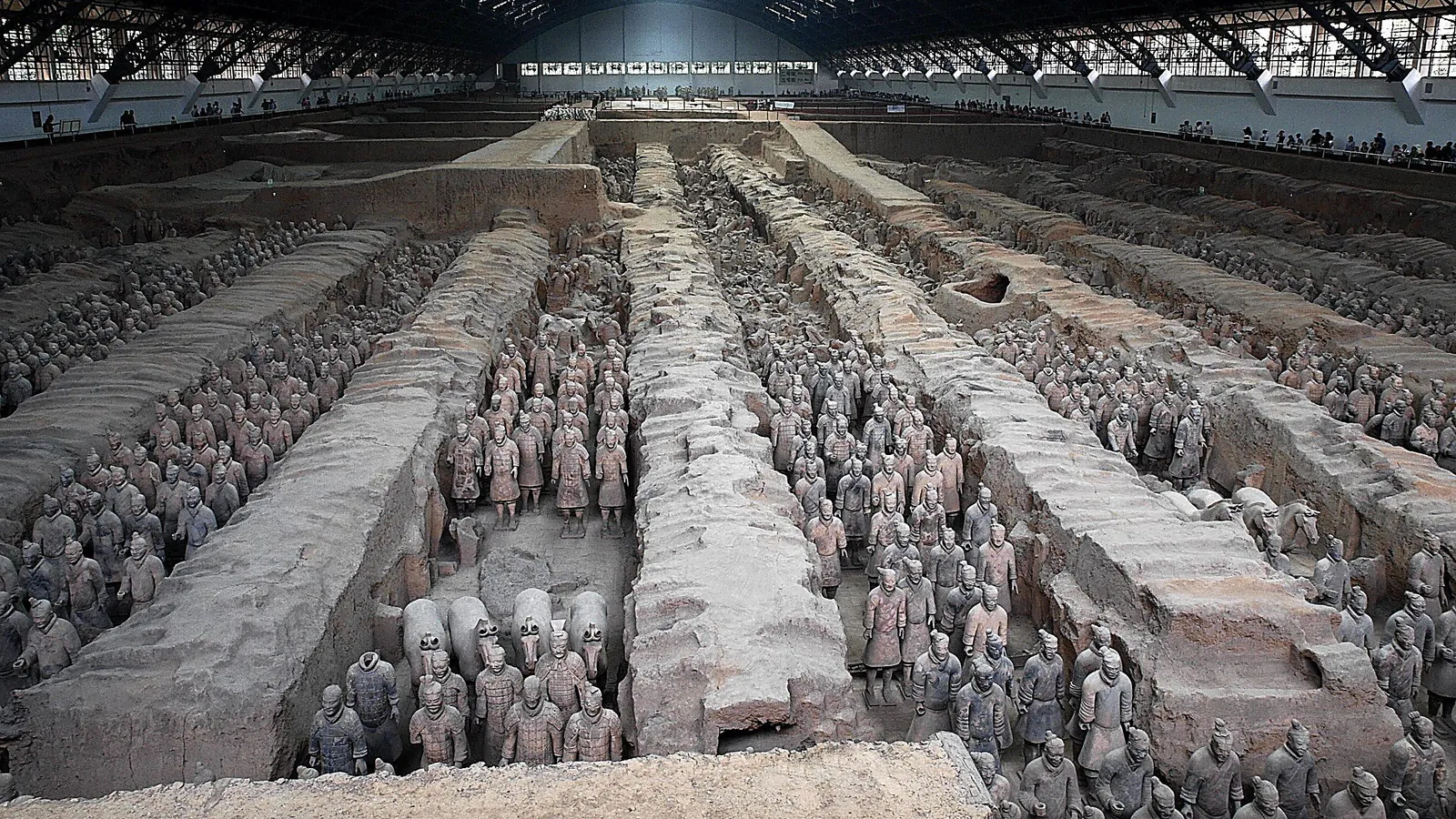
Photo: Wikimedia Commons / CC BY-SA. Source 2. Pit 1 elevated central platform - looking down the eastern trench. 4 rows of warriors in battle formation, each row a different role. Best 10:00-11:00 AM with overhead light. 3. Pit 2 cavalry and horse section - the only pit with original horses, including a kneeling archer with detailed armor. Eye-level view of the warriors. 4. Pit 3 command post - small but intimate. The 68 warriors here have the most detailed armor. You can see the original paint traces in the lighting.

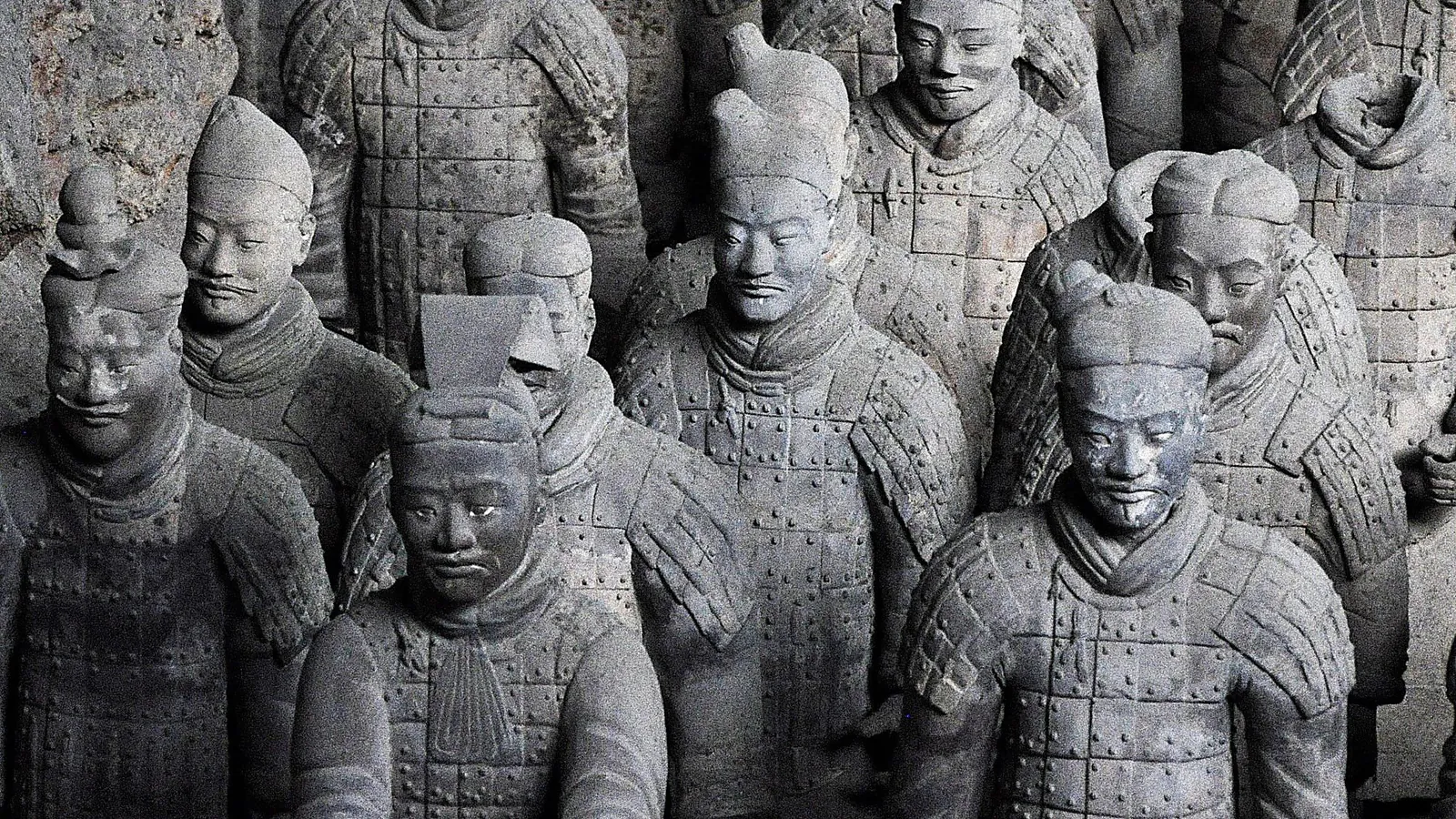
Photo: Wikimedia Commons / CC BY-SA. Source 5. Bronze Chariots hall - the bronze half-life-size chariots with gold and silver inlay. Photography is allowed but no flash. Best with low ISO for the gold details.

Common mistakes to avoid
- Going on a Chinese national holiday. 30,000+ visitors per day on October 1-7. The viewing platforms at Pit 1 are shoulder-to-shoulder. The shuttle bus line is 30-45 min. Come on a weekday in shoulder season (April, May, September) instead.
- Taking an unmarked “tourist shuttle” from Xi’an Railway Station. Drivers approach tourists at the east square, charge ¥100-200 per person, and run unreliable schedules. The official Bus 306 is clearly marked and costs ¥7.
- Skipping Pit 2. Most visitors spend 60% of their time at Pit 1 and skip or rush Pit 2. Pit 2 has the most variety and the most photogenic warriors at eye level.
- Skipping the Bronze Chariots hall. The 2 bronze chariots are inside the visitor center, easy to walk past. They are among the most important bronze artifacts ever found in China - do not miss them.
- Touching the warriors. Strictly forbidden. The original paint (still visible on some warriors) is fragile. Guards are present in the pits.
- Using flash photography. Flash is forbidden in all pits and the Bronze Chariots hall. Hand-held low-light photos work better anyway.
- Forgetting the on-site film. A 20-min documentary about the discovery and excavation is shown in the on-site theater, included with the ticket. Watch it before walking the pits for context.
Where to stay
- Xi’an city center (钟楼/鼓楼 area) - best for first-time visitors. Walking distance to the Muslim Quarter, Bell Tower, Drum Tower, and easy metro access. Budget: Hanting Express, 7 Days Inn (¥150-300). Mid-range: Atour Hotel, Jano Hotel (¥400-700). Luxury: Sofitel Xi’an (¥1,000-1,800).
- Xi’an South Gate area (永宁门) - closer to the bus departure point for the Terracotta Army, quieter than the Bell Tower area. Mid-range: Wyndham Grand Plaza (¥600-900), Jin Jiang Inn (¥200-350).
- Lintong (临潼区) - closest to the Terracotta Army, 10 min by taxi. Mostly mid-range resort hotels. Best for an overnight after a late afternoon visit. Budget: Hanting Express Lintong (¥200-300). Mid-range: Qinling Hot Spring Hotel (¥500-800).
Best season and what to expect
April-May (best for spring): Temperatures 18-26°C, light winds, wildflowers. Crowds are moderate (15,000-20,000 per day). The Terracotta Army hangars are well-ventilated; bring a light layer for the air-conditioned interior. For the country-wide view of the same window, see our best time to visit China guide.
June-August (summer): Hot (32-38°C) with intense sun. Crowds are heavy (20,000-25,000 per day) but the pits are indoors and cooler. Avoid the open-air walkways between pits 11:00-14:00. Bring 3L of water, a hat, and sunscreen.
September-October (best for autumn): Temperatures 15-22°C, clear skies, comfortable walking. Crowds are extreme during Chinese National Day (Oct 1-7) - up to 30,000 per day. Visit the second or third week of October for the best balance of weather and crowd levels.
November-March (winter): Cold (0-10°C), possible snow. Crowds are small (5,000-8,000 per day). The pits are unheated; bring warm clothes. Some smaller excavation areas close for the winter. Best for serious visitors who want quiet viewing.
Plan your trip - verified tools
These free tools are built on real, monthly-verified data and help you skip the trial-and-error phase of China trip planning:
- China 240-Hour Visa-Free Transit Checker - 57 countries, 24 provinces, 65 ports. See if you qualify for 10-day visa-free transit, which cities you can visit, and the 5-step process.
- China 6-City 5-Day Budget Calculator - Real 2026 prices for 5 days in Beijing, Shanghai, Guangzhou, Chengdu, Xi’an, or Hangzhou. Budget / mid-range / comfort tiers, broken down line by line.
Verified August 2026 by TravelHubChina Editorial. We re-check prices and policy details monthly so the data doesn’t drift.
Step by step
-
Take Bus 306 (Tourism Bus) from Xi'an Railway Station
Bus 306 departs from the east square of Xi'an Railway Station, 6:30 AM - 7:00 PM, every 5-10 minutes. Cost ¥7 one-way. Travel time 1 hour. The bus is clearly marked (Tourism Bus, in English). Avoid unmarked 'private shuttle' buses that approach tourists in the square - they overcharge and have unreliable schedules. Get off at the last stop (Terracotta Army / Bingmayong), which is the main visitor center.
-
Buy the combined ticket (¥120)
Buy at the visitor center. Passport required. Combined ticket covers all 3 pits, the Bronze Chariots exhibition hall, and shuttle bus to the Qin Shi Huang Mausoleum site. There is no foreigner surcharge - same price as Chinese citizens. Pay with Alipay, WeChat, or cash. Skip the resale touts outside - the official counter is at the right side of the visitor center.
-
Take the free shuttle to Pit 1 (5 minutes)
From the visitor center, a free shuttle bus takes you 1.5 km to the main entrance of Pit 1. Shuttles run every 2-3 minutes 8:00-17:00. The walking path is 25 minutes and exposed to the sun - the shuttle is much more comfortable, especially in summer. Return shuttle from the last pit back to the visitor center is also free.
-
Start at Pit 1 - the largest, most impressive
Pit 1 is 230m long, 62m wide, and contains about 6,000 warriors in battle formation. The viewing circuit takes you on elevated platforms with overhead views, then a ground-level walk-through between the excavation trenches. Allow 45-60 minutes. The south-end viewing platform is the iconic photo spot - rows of warriors stretching to the north end of the hangar.
-
Move to Pit 2 - the variety pit
Pit 2 is smaller (96m x 84m) but contains the most variety: kneeling archers, standing archers, cavalry with horses, chariot teams, and the rare general figure. This is the most photogenic pit because you can see the warriors at eye level. Allow 30-40 minutes. The excavation continues here; you will see archaeologists at work behind glass.
-
Visit Pit 3 - the command headquarters
Pit 3 is small (22m x 20m) and held the army's command staff. Only 68 warriors, but the figures are more detailed and have a separate hall. The pit explains the command structure of the army. Allow 15-20 minutes. Many visitors skip Pit 3 - do not, it gives the most context for the army's purpose.
-
Tour the Bronze Chariots and Horses exhibition
Inside the visitor center, a separate hall holds the two bronze chariots discovered in 1980 near the mausoleum. They are half-life-size, made of 3,000+ bronze pieces, with gold and silver decorations. The chariots are among the most important bronze artifacts ever found in China. Allow 20-30 minutes. The hall is air-conditioned, a relief in summer.
-
Return to Xi'an by 5:00 PM
Last return bus to Xi'an is 19:00. Allow 30 min for the shuttle + walk to the bus stop. Most visitors return 3:00-4:00 PM and reach Xi'an Railway Station by 5:00 PM. If you are continuing to the Xi'an City Wall or Muslim Quarter, plan for 3-4 more hours in the city. From the Terracotta Army, a taxi back to the city center costs ¥200-250 (negotiate before getting in).
-
Pair with Xi'an City Wall + Muslim Quarter
After returning to central Xi'an, walk or taxi 2 km south to the South Gate (Yongningmen) of the Xi'an City Wall (¥54, includes bike rental). Walk or bike 2 hours on the wall for sunset, then descend to the Muslim Quarter (Huimin Jie) for street food dinner. The full day (Terracotta Army + City Wall + Muslim Quarter) is the classic Xi'an 1-day plan.
FAQ
-
How much is the Terracotta Army ticket in 2026?
The combined ticket is ¥120 in peak season (March 16 - November 15) and ¥100 in off-peak. It covers all 3 excavation pits, the Bronze Chariots and Horses exhibition hall, and the Qin Shi Huang Mausoleum site. There is no foreigner surcharge. English audio guide rental is ¥30 at the visitor center; the Alipay mini-program offers a free AI translation guide if you prefer a phone-based option. -
Can I visit the Terracotta Army as a day trip from Xi'an?
Yes - the site is 40 km east of Xi'an city center, 1 hour by Bus 306 (Tourism Bus) from Xi'an Railway Station for ¥7 one-way. Allow 3-4 hours for the visit and 2 hours of round-trip transport. Most visitors depart 8:00 AM and return 3:00-4:00 PM. Day-trip packages with transport, ticket, and lunch run ¥400-600 per person on Trip.com. -
How many warriors are in the Terracotta Army?
Estimates are 8,000+ life-sized infantry, cavalry, chariots, and horses, of which roughly 2,000 have been excavated and restored. Pit 1 alone has about 6,000 warriors in battle formation. Each warrior has a unique face - archaeologists believe no two are alike. The figures originally held real bronze weapons; many were looted or destroyed during the late Qin dynasty and early Han. -
Is the Terracotta Army worth visiting?
Yes, even for travelers with no special interest in archaeology. The scale (6,000 warriors in Pit 1 alone) is what makes the site. Stand on the viewing platform at the south end of Pit 1 for the first sight - the rows of warriors disappear into the distance. Combine with the Xi'an City Wall and Muslim Quarter for a 1-day Xi'an experience. Most visitors spend 3 hours at the site, many return a second time. -
What is the best time of year to visit the Terracotta Army?
April-May and September-October. Spring is 18-26°C with wildflowers in the surrounding hills. Autumn is 15-22°C with clear skies and comfortable walking. Avoid Chinese National Day (Oct 1-7) and the first week of May when visitor numbers can hit 30,000 per day. Summer (June-August) is hot (32-38°C) with no shade between the pits - bring a hat and 2L of water. Winter visits are quiet (5,000-8,000 per day). -
Do I need a guide at the Terracotta Army?
Strongly recommended. The English audio guide (¥30) is worth it for the historical context. Official Chinese-English guides can be hired at the visitor center for ¥200-300 per group (up to 6 people, 1.5-2 hours). Free Alipay AI translation guide is available via the official mini-program. Independent exploration is possible but you will miss stories about specific warriors, the original paint technology, and the bronze weapons. -
Are the Terracotta Warriors original or replicas?
All warriors on display are original, 2,200-year-old fired clay. The replicas sold in the gift shop are modern copies - the originals are too fragile and too culturally significant to sell. A few rare original fragments (a finger, a buckle) have been sold at auction, and repatriation disputes continue. The site is also still actively excavated: about 20-30 new warriors are uncovered each year. -
How long should I spend at the Terracotta Army?
3 hours is the minimum. The full circuit is Pit 1 (45 min) - walk-through viewing platforms and overhead gantry - then Pit 2 (30 min) for variety, then Pit 3 (15 min) for the command HQ. Add 30 min for the Bronze Chariots and Horses exhibition hall. Add another 60-90 min for the Qin Shi Huang Mausoleum (the unexcavated burial mound 2 km west) and the on-site theater film.
Related guides
- Scenic & Nature
Big Wild Goose Pagoda Guide: Xi'an's 1,300-Year Tang Pagoda
Big Wild Goose Pagoda (Dayan Ta) in Xi'an: 64m Tang-dynasty brick pagoda from 652 AD, UNESCO since 2014 as part of the Silk Roads network. Tickets (¥50), climb times, and the free North Square musical fountain (9 PM nightly).
8min read
- Scenic & Nature
Famen Temple Guide: Xi'an Day Trip, Finger-Bone Relic, Tickets
Famen Temple (Famen Si) day trip from Xi'an: 110 km west in Fufeng County, the finger-bone relic of the Buddha, Tang underground palace museum. Tickets ¥120, transport options, and whether it's worth the day.
7min read
- Scenic & Nature
China's Top 3 Scenic Wonders Compared: Zhangjiajie vs Huangshan vs Jiuzhaigou (2026)
Zhangjiajie (sandstone pillars), Huangshan (sea of clouds + granite peaks), Jiuzhaigou (turquoise lakes + waterfalls). Decision guide covering which fits your time, budget, fitness level, photography goals, and travel style. Prices, distances from Shanghai/Beijing, best seasons compared.
12min read
- Scenic & Nature
Forbidden City Guide: Beijing Imperial Palace, Tickets & Plan
The Forbidden City in Beijing: 72 hectares, 980 buildings, 1.4 million artifacts, Ming and Qing dynasties, UNESCO since 1987. Tickets (¥60), WeChat booking.
12min read
- Scenic & Nature
Great Wall of China Guide: Mutianyu, Badaling, Jinshanling Compared
Great Wall of China: 21,196 km. Mutianyu (best first-timers), Badaling (most crowded), Jinshanling (hiking) compared. Tickets, transport, best season.
12min read
- Scenic & Nature
Huangshan (Yellow Mountain) Guide: Sunrise, Sea of Clouds, Trails (2026)
Huangshan (黄山, Yellow Mountain) in Anhui is a UNESCO World Heritage site famous for its sea of clouds, twisted pines, and granite peaks. This guide covers the 2-3 day plan, ticket prices (¥190-310), cable cars, sunrise timing, and Hongcun village.
12min read