
Best Time to Visit China 2026: By Region
When to go to China in 2026 — month-by-month weather, festival calendars, and crowd forecasts. Best times for Beijing, Shanghai, Chengdu, Guilin, Tibet, Hong Kong, and Harbin. Plus the holiday traps to avoid.
China is so vast that “the best time to visit” depends entirely on where you’re going. Beijing in July is a humid 35°C furnace; the same week in Lhasa is a pleasant 22°C. Harbin in February is a -25°C ice city; Sanya in Hainan is 25°C beach weather. The right answer is always regional, never national.
For city-specific planning, see our 3-day Beijing itinerary (best April-May + September-October), 5-day Shanghai itinerary (best April-May + October-November), 3-day Chengdu panda itinerary (best March-May + September-November), and Hong Kong on a budget (best October-December).
This guide breaks down the best time to visit each major region in 2026, including the specific weeks to avoid (Chinese holidays) and the specific weeks to aim for (shoulder seasons with great weather and low crowds).
The 60-second summary
If you only have time for one paragraph:
- April–May and September–October are the best months for most of China — warm but not hot, clear skies, fall foliage in October, cherry blossoms in April.
- Avoid the 4 mega-holidays — Chinese New Year (late Jan / mid Feb), Qingming (early April), Labor Day (May 1–5), National Day (Oct 1–7). Tourist sites are 3–5x more crowded; hotels cost 50–100% more.
- June + July + August = peak summer in lowland China (hot, humid, school-holiday crowds) but excellent for high-altitude escapes (Yunnan, Tibet, western Sichuan, northern Xinjiang) where summer is the only comfortable time.
- December–February = northern China off-season (cold but cheap, low crowds) but excellent for Hainan, Hong Kong, and the Harbin Ice Festival.
Month-by-month snapshot
| Month | Best regions | Worst regions | Holiday? |
|---|---|---|---|
| January | Hainan, Hong Kong, Harbin (ice festival starts) | Most of northern China (very cold) | New Year (Jan 1) |
| February | Hainan, Hong Kong, Yunnan | Most of China (Chinese New Year) | CNY (variable) |
| March | Southern China (early bloom), Yunnan | Northern China still cold | None |
| April | All of China (cherry blossoms, mild) | Beijing (crowded for Qingming) | Qingming (Apr 4–6) |
| May | All of China (best month for many) | Beijing (crowded for Labor Day) | Labor Day (May 1–5) |
| June | Yunnan, Guizhou, Tibet, Xinjiang | Lowland China (rainy, hot) | Dragon Boat Festival (variable) |
| July | Yunnan, Tibet, northern Xinjiang, Qinghai | Most of China (peak heat + rain) | School holidays |
| August | Yunnan, Inner Mongolia (grassland), Tibet | Most of China (peak heat + rain) | School holidays |
| September | All of China (best month) | Crowded for early National Day | Mid-Autumn (variable) |
| October | All of China (autumn foliage) | National Day week (Oct 1–7, 3x crowds) | National Day (Oct 1–7) |
| November | Southern China, Hainan | Northern China (early cold) | None |
| December | Hainan, Hong Kong, Harbin (peak ice) | Northern China (very cold) | None |
The 4 Chinese holidays to AVOID (or plan around)
These 4 holidays cause 70% of the year’s worst overcrowding. If you can avoid them, you’ll have a vastly better experience.
1. Chinese New Year / Spring Festival (春节)
When: Late January to mid-February (lunar calendar, 2026 = February 17). About 7–10 days off work for most urban Chinese.
Why avoid:
- 400+ million Chinese travel home to visit family — the largest annual human migration on Earth (Chunyun)
- All major tourist sites are 3–5x more crowded with domestic tourists
- Hotels in tier-2 and smaller cities often close or triple in price
- Many restaurants, shops, and tourist businesses shut down for the week
- Train tickets sell out weeks in advance; flights are 200–400% more expensive
What to do instead: Go to Hainan, Hong Kong, Macau, or any international-tourist destination. Sanya (Hainan) during CNY is 25°C and almost empty of Chinese tourists (they’re all in their hometowns). The Harbin Ice and Snow Festival runs through February — go then.
2. Qingming Festival (清明节) — Tomb Sweeping Day
When: April 4–6, 2026 (3-day holiday).
Why avoid:
- Beijing, Xi’an, Nanjing, and other historical cities see huge family gatherings at ancestral sites
- The Forbidden City, Great Wall, and Terracotta Warriors are at peak domestic tourism
- The cherry blossoms in Beijing are stunning but bring 4x the normal crowd
What to do instead: Western China is less affected. Go to Sichuan, Yunnan, Xinjiang, or Tibet. Or visit coastal cities (Shanghai, Xiamen, Qingdao) where most locals are at home rather than sightseeing.
3. Labor Day / May Day (五一)
When: May 1–5, 2026 (5-day holiday, the longest spring break).
Why avoid:
- Mid-spring weather is perfect, so everyone travels
- Domestic tourism peaks; international tourism is also busy
- Major sites are packed; advance booking is essential
- Prices spike 30–60% on hotels and transport
What to do instead: Travel BEFORE May 1 (April 15–28) or AFTER May 5 (May 6–15) for the same weather with 1/3 the crowds. Late April and early-to-mid May are arguably China’s best weeks overall, just avoid the May 1–5 window.
4. National Day / Golden Week (国庆节)
When: October 1–7, 2026 (7-day holiday).
Why avoid:
- The single worst week of the year for tourism in China
- Every major site has hour-long queues
- Trains, flights, and hotels sell out weeks in advance
- 800+ million Chinese travel during this week
- Hotel prices are 100–200% above normal
What to do instead: Travel September 15–30 (autumn foliage, low crowds) or October 8–20 (post-holiday, fall colors still visible). Late September and mid-October have the same October weather with 1/5 the crowds.
Region-by-region breakdown
Beijing (北) — capital, history, four-season extremes
Best months: April, May, September, October (mid) OK months: March, June, August, November Avoid: July (hot), December–February (very cold), and all 4 mega-holidays
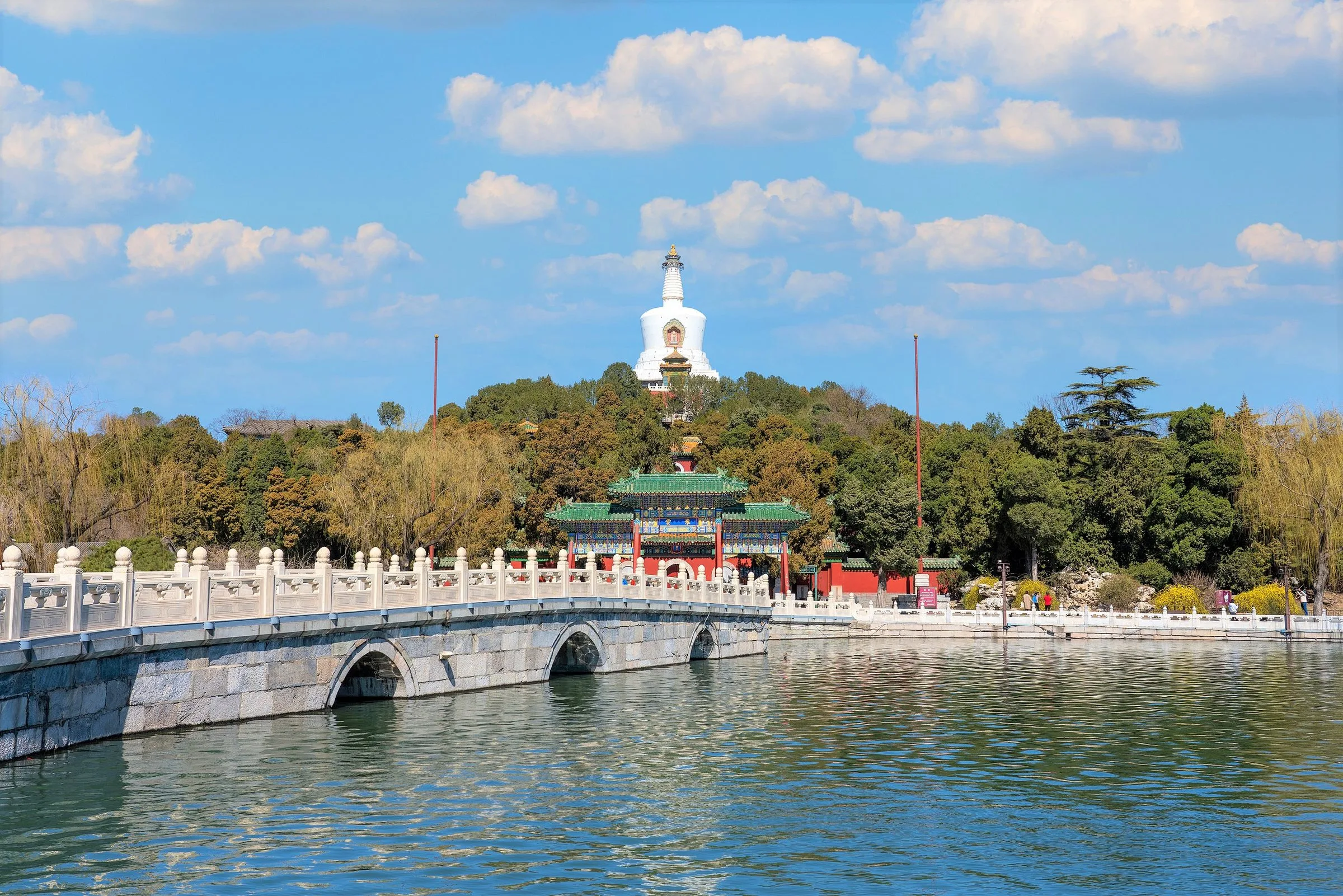
Beijing has a continental climate: hot dry summers, cold dry winters, and short glorious springs and autumns. The sweet spot is the last week of April through mid-May and mid-September through mid-October. The Forbidden City in late October, with the last of the ginkgo leaves in Beihai Park, is unforgettable.
Cherry blossoms in Beijing: peak in early-to-mid April at Yuyuantan Park. Avoid the Qingming week (Apr 4–6) — the park is unmanageable.
Crowds reality: The Forbidden City caps daily visitors at 80,000. During National Day week, slots sell out 5–7 days in advance. Book early.
Shanghai (沪) — modern coast, humid subtropical
Best months: March–May, October–November OK months: September, December Avoid: June–August (very hot + humid), and the 4 mega-holidays
Shanghai’s biggest weather issue is the humidity, which makes 30°C feel like 38°C. The city is best in April–May (cherry blossoms in Gucun Park, mild) and October–November (autumn, fewer typhoons). December is cold but manageable and uncrowded.
Special events: Shanghai International Film Festival (June), Shanghai Tourism Festival (September–October).
Xi’an (陕) — Terracotta Warriors, history
Best months: April, May, September, October OK months: March, June, August, November Avoid: July (hot, 35°C+), December–February (cold)
Xi’an is similar to Beijing but slightly warmer and less dry. April–May and September–October are ideal. The Terracotta Warriors site has partial indoor + outdoor sections; cold or hot days matter less because you can pace inside.
Special events: Xi’an Tang Culture Week (April), Chinese New Year lantern festival (variable, but spectacular here).
Chengdu (川) — pandas, Sichuan food, gateway to western China
Best months: March–May, September–November OK months: December, February Avoid: June–August (hot + humid; this is the “Sichuan summer” stereotype)
Chengdu is famously misty and humid. It’s also at the edge of the Sichuan Basin, so air quality can deteriorate in winter. The April–May window for panda viewing and tea-house weather is ideal. October–November is the second-best window.
Chengdu is the gateway to Jiuzhaigou, Emei Shan, and the panda reserves — for those, autumn is decisively the best.
Guilin / Yangshuo (桂) — karst mountains, Li River
Best months: April–May, September–October OK months: March, June, November Avoid: June–August (very hot + heavy rain; the rivers flood and views are obscured)
The Li River cruise (Guilin → Yangshuo) is at its best in April–May when the water is clear and the rice paddies are flooded (the iconic “mirror” reflections require this) and in September–October for clear skies and pleasant temperatures. Avoid summer monsoon (June–August): heavy rain obscures the views and the river levels fluctuate dangerously.
Special event: Longji Rice Terraces “Mirror” season: mid-April to mid-May.
Yunnan (滇) — Kunming, Dali, Lijiang, Shangri-La
Best months: Year-round in different parts of the province
- Kunming: March–November
- Dali: March–November
- Lijiang: April–June, September–November
- Shangri-La: May–October (high altitude)
- Yuanyang Rice Terraces: November–April (water-filled mirror season)
Yunnan is so climatically diverse that you can find good weather any time of year, depending on which part you visit. December–February is best for the southern rice terraces (Yuanyang, Honghe Hani), and June–August is best for Shangri-La and the high-altitude northwest (when lower regions are too hot).
Special event: Torch Festival of the Yi people (June 24) in Dali and Chuxiong.
Tibet / Lhasa (藏) — high altitude, low oxygen
Best months: April–May, September–October OK months: June, August, November Avoid: December–March (very cold, many roads closed, flights often cancelled due to weather)
Tibet’s high altitude (Lhasa is 3,650 m / 12,000 ft) means even summer nights are cool. Summer (June–August) is the only time most of the high-altitude areas are accessible but is also the most popular, with corresponding crowds. April–May and September–October are the best compromise.
Permit required: Foreigners need a Tibet Travel Permit, arranged through a tour agency. Plan 2–3 weeks ahead.
Harbin (黑) — ice city, Ice and Snow Festival
Best months: December–February (only!) Avoid: All other months (Harbin has nothing distinct outside the ice festival window)
Harbin is the only Chinese city that inverts the normal season logic — it becomes a destination in winter specifically because of the cold. The Harbin International Ice and Snow Festival runs from late December through February. Daytime temperatures hover around -15°C to -25°C; you’ll need serious cold-weather gear.
Special event: Harbin Ice and Snow Festival (December 20 – late February).
Hong Kong / Macau (港/澳) — subtropical, year-round
Best months: October–December (cooler, dry, less humid) OK months: January–March, May Avoid: June–August (very hot, humid, typhoon risk July–September)
Hong Kong and Macau are at their best in autumn and early winter. October–December sees the lowest humidity, the clearest skies, and the most pleasant hiking weather. Avoid July–September for typhoon season — flights get cancelled, attractions close, and humidity is brutal.
Sanya / Hainan (琼) — tropical beach
Best months: November–March (dry season, 25°C) Avoid: June–September (typhoon season, hot + humid)
Hainan is China’s only tropical destination. The dry season (November–March) is when you want to go — 25°C, low humidity, no typhoons. The wet season (May–October) is when locals go to Sanya for summer break, so beaches are crowded with Chinese tourists and the weather is unstable.
The “shoulder season” cheat sheet
The absolute best time to visit most of China is during a shoulder season — meaning the weather is great but it’s not a Chinese holiday. The 2026 best shoulder windows:
- April 10–28 (avoiding Qingming Apr 4–6)
- May 6–25 (after Labor Day, before the worst summer heat)
- September 1–25 (autumn begins, before National Day)
- October 8–25 (post-National Day, fall foliage)
- November 1–20 (cool, dry, very few tourists)
These windows give you the best weather with 50–70% fewer crowds. If you can be flexible on your trip timing, target one of these.
How Chinese weather actually works (so you can plan)
China is roughly the size of the continental US. The climate zones are extreme:
- Northeast (Harbin, Shenyang, Changchun): continental, -25°C to 30°C, dry
- North (Beijing, Tianjin, Xi’an): continental, -10°C to 35°C, dry
- East (Shanghai, Hangzhou, Suzhou): subtropical, 0°C to 38°C, humid summers
- South (Guangzhou, Shenzhen, Guilin): subtropical to tropical, 5°C to 35°C, very humid
- Southwest (Chengdu, Chongqing): humid subtropical, 2°C to 38°C, foggy winters
- Yunnan highlands (Kunming, Dali, Lijiang): spring-like year-round, 5°C to 25°C
- Tibet / Qinghai (Lhasa, Xining): alpine, -10°C to 22°C, dry, intense UV
- Northwest (Xinjiang, Gansu): arid continental, -15°C to 35°C, huge day-night swings
- Tropical (Hainan, Hong Kong): tropical, 15°C to 33°C, typhoon risk June–September
The biggest mistake first-time visitors make is assuming China is “all the same” — weather-wise, northern China in winter and southern China in winter are completely different trips.
Booking tips by season
Spring (April–May)
Book popular hotels 60+ days out for the May 1–5 window. April is shoulder season — booking 30 days out is usually fine. Tour packages in April and May are 20–40% cheaper than summer peak.
Summer (June–August)
This is peak season for most of China. Book everything 90+ days in advance for the best rates. The exception: high-altitude areas (Yunnan, Tibet, northern Xinjiang) which are at their best — also book early for these.
Autumn (September–October)
The single hardest season to book in China because of the perfect weather. The Great Wall, Forbidden City, and Terracotta Warriors are at their busiest from late September through National Day week. Book 90+ days out. Avoid National Day week (Oct 1–7) if at all possible.
Winter (November–March)
The cheapest and least crowded season for most of China. Hotels are 30–50% off peak rates. The exceptions: Harbin (peak for ice festival), Sanya/Hainan (peak for warm weather escape), and Hong Kong (peak around Christmas/New Year). Northern Chinese destinations are still beautiful in winter with snow — they just require more preparation.
Common timing questions
When is the cheapest time to visit China?
November through early March (excluding Chinese New Year and Harbin ice festival) is the cheapest period. Hotel rates drop 30–50%. Crowds thin. The tradeoff: northern China is cold, and some attractions in remote areas have limited hours or close entirely.
When is the best time for the Great Wall?
April, May, September, October for the best combination of weather and crowd avoidance. The Mutianyu section is the easiest access. For photos, late October with the autumn foliage is iconic. The wall does not close for winter — Mutianyu and Jinshanling are open year-round, just with snow and fewer services.
When should I book flights?
60–90 days in advance for the cheapest fares. Avoid booking during Chinese New Year, Labor Day, and National Day — the prices spike dramatically in the 30 days before. The cheapest fares to China are typically January (excluding CNY) and September (after the back-to-school rush).
When is the panda-viewing season?
The Chengdu Research Base of Giant Panda Breeding is open year-round. The best time to see pandas in outdoor enclosures is September through March (cooler weather). In summer (June–August), the pandas are kept in indoor air-conditioned enclosures with limited outdoor viewing. For baby pandas, August–October is peak (cubs are typically born in July–August).
When can I see the Terracotta Warriors without huge crowds?
November through February (winter off-season) sees the lowest crowds. The Warriors are indoors, so weather doesn’t matter. Avoid Labor Day, National Day, and Chinese New Year weeks.
When is the rice-terrace “mirror” season?
The Longji Rice Terraces (Guilin, Guangxi) and Yuanyang Rice Terraces (Yunnan) flood their paddies for planting in April–May, creating the iconic mirror-reflection effect. The terraces are also beautiful with green rice in June–August and golden rice in September–October. Yuanyang is a separate climate: best in November–April for the water-filled mirror effect, with mist rising from the terraces at sunrise.
When is cherry blossom season?
Mid-March to mid-April across most of China. Wuhan University (Hubei) is the most famous, but Beijing’s Yuyuantan Park and Shanghai’s Gucun Park are equally spectacular. Avoid the Qingming Festival week (Apr 4–6) for crowd reasons.
The 4-line answer
- Best months for most of China: April, May, September, mid-to-late October.
- Worst weeks: Chinese New Year week, Qingming (Apr 4–6), Labor Day (May 1–5), National Day (Oct 1–7).
- Shoulder season is king: 1–2 weeks before or after the holidays have the same weather with 1/3 the crowds.
- Book 60–90 days in advance for April–May and September–October; book 30 days out is fine for November–March.
China rewards travelers who plan around the calendar. Visit during the shoulder weeks, avoid the mega-holidays, and the same itinerary costs 30% less and feels 300% more relaxed.
Where to book
Once you've picked the right season, here are the next logistics to lock down:
- Search China flights — book 60-90 days out for shoulder-season fares
- Find hotels in your target city for your travel window — check shoulder-season rates
Affiliate disclosure: Some links above are affiliate links. We may earn a commission at no extra cost to you. See full disclosure .
Plan your trip — verified tools
These free tools are built on real, monthly-verified data and help you skip the trial-and-error phase of China trip planning:
- China 240-Hour Visa-Free Transit Checker — 57 countries, 24 provinces, 65 ports. See if you qualify for 10-day visa-free transit, which cities you can visit, and the 5-step process.
- China 6-City 5-Day Budget Calculator — Real 2026 prices for 5 days in Beijing, Shanghai, Guangzhou, Chengdu, Xi’an, or Hangzhou. Budget / mid-range / comfort tiers, broken down line by line.
Verified August 2026 by TravelHubChina Editorial. We re-check prices and policy details monthly so the data doesn’t drift.
- q: “What is the best month to visit China overall?” a: “April-May and September-October are the two best windows. April has pleasant 15-25°C weather across most of China, blooming flowers, and the lowest rainfall. October is similar but with autumn foliage. Avoid July-August (35°C+ heat, typhoons on the coast) and late January-February (extreme cold in the north, Spring Festival crowds).”
- q: “When is the cheapest time to visit China?” a: “November through March (excluding the 2 weeks around Chinese New Year) is the cheapest. Hotel rates drop 30-50%, flights from the US/EU are 20-30% cheaper, and attractions are uncrowded. The trade-off: northern China is cold (Beijing: -5 to 5°C in January), but southern China (Guangzhou, Shanghai, Hainan) remains mild year-round.”
- q: “What is the best time to visit Beijing specifically?” a: “Late September to early November is the best time for Beijing. Temperatures are 10-20°C, humidity is low, autumn foliage lights up the Fragrant Hills and Forbidden City, and the summer crowds have gone. Spring (April-May) is the second-best window. Avoid June-August (hot, humid, and the Forbidden City is packed).”
- q: “Should I avoid Chinese New Year when traveling to China?” a: “Yes, unless you specifically want to experience it. The 7-day Chinese New Year holiday (late Jan or early Feb) sees hundreds of millions of Chinese traveling, hotel prices double, trains sell out 2 weeks ahead, and many shops/restaurants close. If your dates are flexible, shift 1-2 weeks before or after the holiday. The 2026 holiday is February 17-23.”
- q: “When is the rainy season in China and how bad is it?” a: “The rainy season varies by region: south China (Guangzhou, Guilin, Hong Kong) has the heaviest rain from April to September, peaking June-August. The Yangtze basin (Shanghai, Wuhan, Chongqing) has the Meiyu plum-rain season in mid-June to mid-July. The north (Beijing, Xian) gets most rain in July-August but in short bursts. Plan indoor backup activities during peak rain months.”
Step by step
-
Identify which region you are visiting
Different regions peak in different months. Northern China (Beijing, Xi'an): April-May or September-October. Southern China (Shanghai, Guilin): April-May or October-November. Yunnan: year-round in different parts. Hainan: November-March for the dry season. Tibet: April-May or September-October.
-
Avoid the 4 Chinese mega-holidays
Skip Chinese New Year (Feb 17, 2026), Qingming (Apr 4-6), Labor Day (May 1-5), and National Day Golden Week (Oct 1-7). Hotels cost 50-200% more, sites are 3-5x more crowded, and transport sells out weeks ahead. Most painful: Oct 1-7 with 800+ million Chinese traveling.
-
Target a shoulder season window for fewer crowds
Best 2026 windows: April 10-28 (after Qingming), May 6-25 (after Labor Day), September 1-25 (autumn begins), October 8-25 (post-National Day), November 1-20 (cool, dry, very few tourists). These have great weather with 50-70% fewer crowds. Book 60-90 days out for May, summer, and October dates.
-
Match events and permits to your travel window
Cherry blossoms in Beijing: early-to-mid April (avoid Qingming week). Li River mirror season: mid-April to mid-May. Harbin Ice Festival: late December through February. Tibetan travel permits need 2-3 weeks advance arrangement through a tour agency.
FAQ
-
What is the worst time to visit China?
Chinese New Year (Spring Festival, Feb 17, 2026) is the worst - 400+ million Chinese travel, attractions triple in crowds, and many small-city hotels close. National Day Golden Week (Oct 1-7) is the second worst, with 800+ million Chinese on the move and hotel prices 100-200% above normal. Avoid both windows if you can. -
Is October a good time to visit China?
Yes, but skip National Day week (Oct 1-7). October 8-25 has the same autumn foliage and pleasant weather (15-22 C in Beijing) with 1/5 the crowds. Beijing's ginkgo leaves peak in late October; the Great Wall and Forbidden City are at their most photogenic. Book 90+ days out for this popular window. -
When is cherry blossom season in Beijing?
Late March to mid-April at Yuyuantan Park (Yu Yantan), the most famous spot. Peak bloom is usually 1-2 weeks in early-to-mid April. Avoid the Qingming week (Apr 4-6) - the park becomes unmanageable with 4x normal crowds. Go on a weekday morning before 9 AM for the best photos and quietest experience.
Related guides
- Itineraries
China by Season 2026: The Complete Guide to Spring, Summer, Fall & Winter Travel
The complete season-by-season China travel guide for 2026 — what makes each season unique (spring flowers, summer escapes, fall foliage, winter snow), where to go in each season, what to avoid (Chinese New Year, Golden Week), seasonal events (cherry blossoms, Harbin Ice Festival, autumn leaves, gorges), regional seasonal calendars (north vs south vs west), and 4 ready-made season-specific itineraries.
- Itineraries
China Group Tours in 2026: Complete Guide (Worth It? Best Operators, Costs, and How to Avoid the Traps)
Comprehensive 2026 guide to China group tours: top 6 tour operators (Intrepid, G Adventures, EF, China Highlights, Wild China, Backroads) with prices, group sizes, and reviews. Plus: pros and cons vs independent travel, top 5 sample itineraries (14-day Grand Tour, photography, food, family, adventure), how to avoid shopping trap stops, and whether Tibet, Xinjiang, and Silk Road tours are worth the premium.
10min read
- Itineraries
China Vacation Packages 2026: Complete Guide to All-Inclusive Tours, Costs, and Best Operators
Compare the best China vacation packages for 2026 by tour type, budget, and traveler profile. Includes pricing for 6 budget tiers, top 8 operators (Trip.com, Intrepid, G Adventures, EF Tours, China Highlights, Wild China, Backroads, Audley), what's included vs excluded, and the 5-step booking process. Plus: how to avoid shopping trap stops, 14-day vs 7-day vs 21-day packages, and whether a guided package is worth it for first-time China visitors.
11min read
- Itineraries
China Cool 2026: 8 Best Summer Escapes from the Heat (Foreigners' Guide)
China Cool is the 2026 trending travel movement — escaping the summer heat to China's mountain and forest retreats averaging 18-26°C. 8 hand-picked destinations with transport, stay, and food tips for foreign visitors.
11min read
- Itineraries
China's 15 Hidden Gem Cities: The 2026 Reverse Tourism Guide for Foreigners
Skip Beijing and Shanghai. China's 15 hidden gem cities for 2026 — verified lesser-known destinations (Wuyuan, Fenghuang, Songpan, Dali, Wuyi, Tengchong, Jianshui, etc.) with how to get there, what to do, where to stay, and food. Reverse tourism trend up 187% YoY in 2026.
14min read
- Itineraries
China Honeymoon 2026: The Ultimate Romantic Travel Guide (Itineraries, Cost, Visas)
China is the surprise 2026 honeymoon destination — cheaper than Bali/Maldives, less crowded than Paris, with hidden romantic gems. 4 ready-made itineraries (7 / 14 / 21 / 30 days) covering Yunnan, Sichuan, Jiangnan, and Tibet-Yunnan grand circuits. 2026 visa rules, costs, best seasons, and how to avoid the 5 most common honeymoon mistakes in China.
16min read