
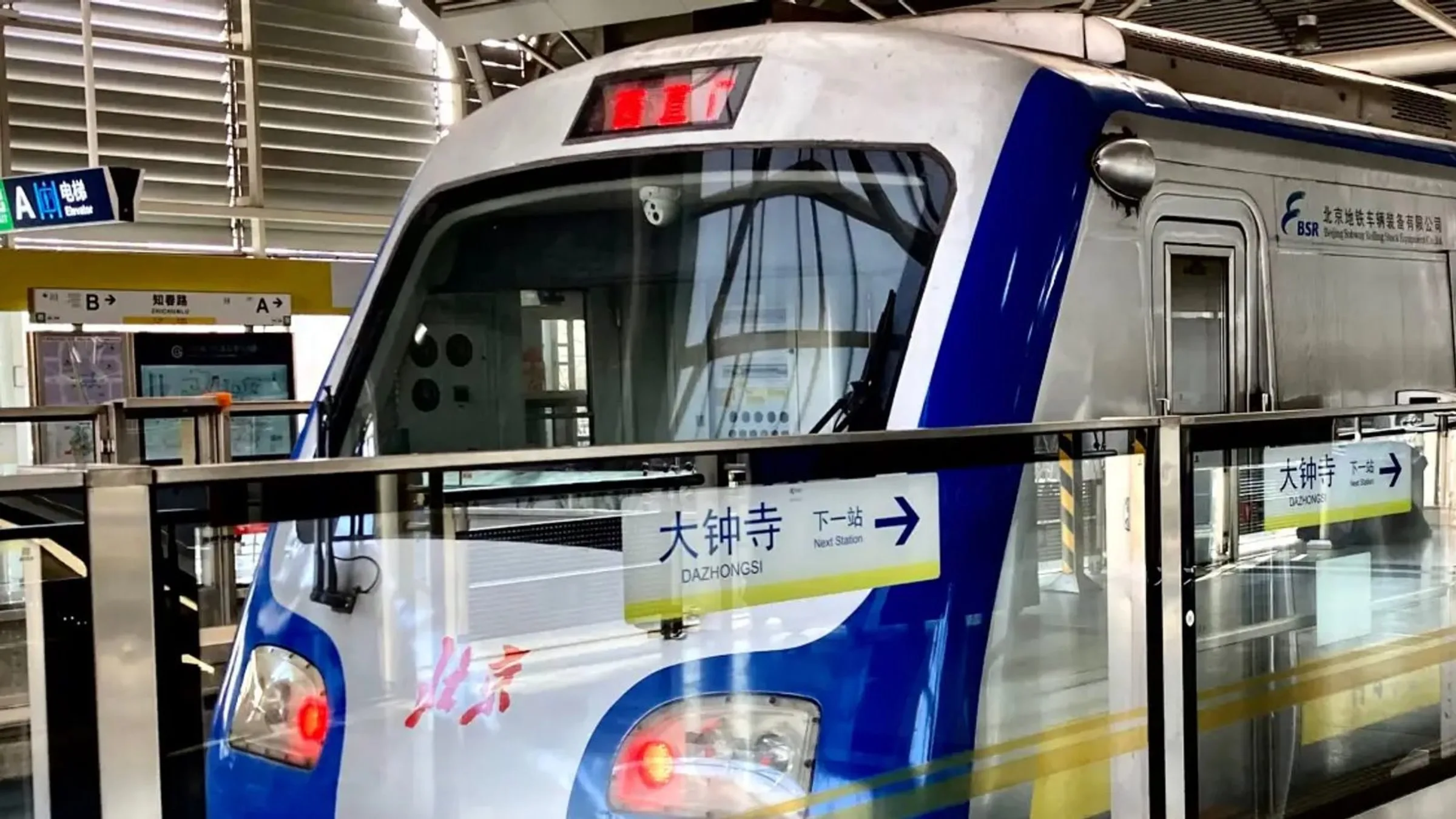
China Metro in English: 10 Cities with English Signs
Navigate Chinese metros in English in 2026: 10 cities with full English signage, how to pay (Alipay scan or Visa tap), line maps, hours, and tips for first-timers.
The metro is the cheapest, fastest, and most foreigner-friendly way to get around China’s big cities. All 10 tier-1 and tier-2 cities with metro systems have full English signage, English announcements on most lines, and at least two ways to pay without a Chinese transit card. A typical ride in Beijing or Shanghai is ¥3–9 (~$0.40–1.30), versus ¥50–100 for a DiDi. Since September 2024, Beijing has also let you tap your foreign Visa card directly at the turnstile, with Shanghai and Guangzhou rolling out the same.
This guide covers the 10 most-visited cities’ metro systems, the three ways to pay, and the station layout you’ll encounter in any of them.
The 10 cities with foreigner-friendly metros
As of 2026, these 10 cities have full English metro systems (announcements, signs, ticket machines):
| City | Lines | Stations | Hours | English | Tap-to-pay |
|---|---|---|---|---|---|
| Beijing | 27 | 490+ | 5:00–23:30 | Full | Visa/Mastercard tap (since 2024) |
| Shanghai | 21 | 510+ | 5:00–22:30 | Full | Alipay/WeChat scan; Visa tap at select stations |
| Guangzhou | 16 | 290+ | 6:00–23:00 | Full | Alipay/WeChat scan |
| Shenzhen | 16 | 300+ | 6:00–23:00 | Full | Alipay/WeChat scan |
| Chengdu | 13 | 350+ | 6:00–22:30 | Full | Alipay/WeChat scan |
| Hangzhou | 12 | 250+ | 6:00–22:30 | Full | Alipay/WeChat scan |
| Xi’an | 8 | 200+ | 6:00–23:00 | Full | Alipay/WeChat scan |
| Nanjing | 11 | 200+ | 6:00–23:00 | Full | Alipay/WeChat scan |
| Suzhou | 8 | 200+ | 6:00–22:30 | Full | Alipay/WeChat scan |
| Wuhan | 12 | 280+ | 6:00–22:30 | Full | Alipay/WeChat scan |
Total: 144+ lines, 3,000+ stations, all with English signs. Every major tourist destination in China has a modern metro with the same basic layout.
Source: China Briefing transportation FAQ.
How to pay: the three methods
Method 1: Alipay/WeChat Pay QR scan (recommended)
This is the easiest method for any tourist with Alipay or WeChat Pay set up.
For Alipay:
- Open Alipay
- Tap the search bar at the top
- Type “Metro” or “Transit” (or the Chinese equivalent)
- Tap the mini-program that appears (often called “Metro QR Code” or similar)
- Allow location access
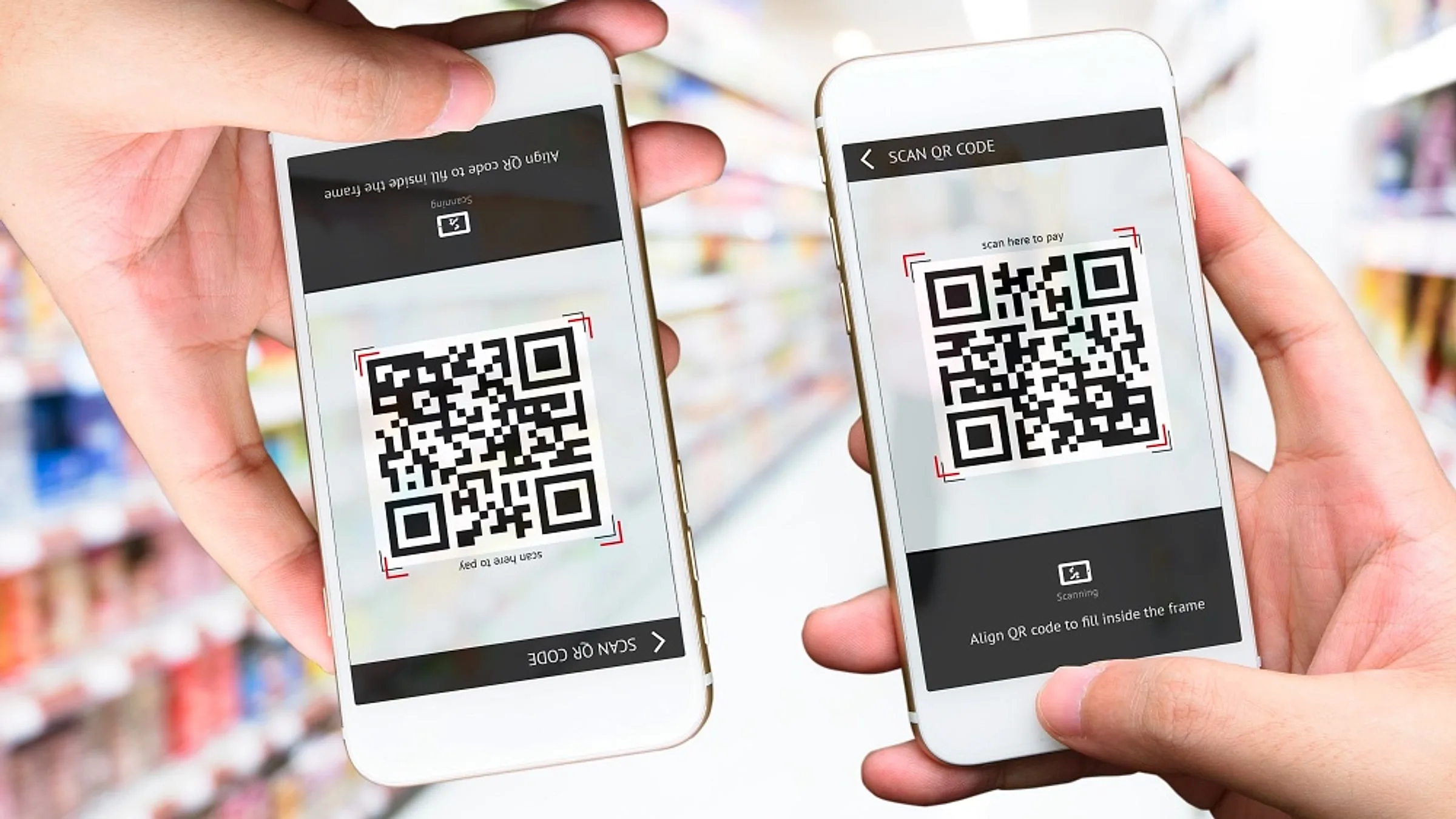
- A QR code appears — scan it at the turnstile’s QR reader
- Walk through
For WeChat Pay:
- Open WeChat
- Tap the search icon (magnifying glass)
- Type the metro system name (e.g., “Beijing Metro” or “北京地铁”)
- Tap the official mini-program
- Allow location access
- A QR code appears — scan at the turnstile
Fare: ¥3–9 typical, deducted from your linked card automatically.
Pros: No cash, no ticket machine, no language barrier. The system just works.
Cons: Requires Alipay or WeChat Pay set up with a foreign card (see Alipay for foreigners).
Method 2: Foreign card tap-to-pay
Since September 2024, Beijing Subway has let you tap a foreign Visa or Mastercard contactless card directly at the turnstile. The card reader has a symbol that looks like a WiFi icon, often with a small “(Tap)” label. The fare is deducted from your card at the wholesale exchange rate.
Where it works:
- Beijing: All stations since September 2024 (150+ countries’ Visa cards accepted)
- Shanghai: Most stations since 2025
- Guangzhou: Select stations as of 2026
- Other cities: Limited or planned
Pros: No app needed. Just tap.
Cons: Limited city coverage, small per-transaction fee possible (depends on card), no transfer discounts, may not work at all stations.
Source: Visa China Central Axis payment program.
Method 3: Ticket machine (single journey)
Every metro station has ticket machines with English interface. Buy a single-journey ticket using cash or a Chinese bank card.
How:
- Find the ticket machine (look for the green or blue “Ticket” or “售票” sign)
- Switch to English on the screen (usually a button on the main page)
- Select your destination station
- Insert cash (¥5, ¥10, ¥20 notes work) or tap a Chinese bank card
- Take the token (small plastic coin) and the receipt
- Tap the token at the entry turnstile
- On exit, insert the token into the exit turnstile
Pros: Works everywhere. No app or setup needed.
Cons: Cash required (international cards usually don’t work at the machines). Need exact change or the right notes. Need to keep the token for the return trip or you’ll pay again.
The station layout: same in every city
All Chinese metro stations follow a similar layout:
- Street level: Entrances marked with the green “M” sign (in English-friendly cities, also a “Metro” or “地铁” sign)
- Concourse level (B1): Ticket machines, ticket counters, security check (X-ray bag scan), turnstiles
- Platform level (B2 or B3): Tracks and platform
To enter:
- Find the entrance (look for the green “M” logo)
- Walk down the escalator
- Pass through the security X-ray (bags through scanner, no need to take out laptop)
- Choose your payment method
- Pass through the turnstile
- Find your platform (look for the line name and direction on overhead signs in English)
- Wait for the train, board
To exit:
- Tap out at the turnstile (Alipay, token, or card)
- Walk up the escalator
- Find the correct exit (each station has 2–8 exits labeled A, B, C, D, etc., with the major street or landmark on the sign)
The line and station signs
Each metro line is identified by a number (Line 1, Line 2…) and a color. Stations are identified by their Chinese name (汉字), pinyin (romanization), and English translation.
For example, in Beijing:
- 故宫 (Gùgōng) — “The Forbidden City” — the iconic red palace
- 天安门东 (Tiān’ānmén Dōng) — “Tiananmen East”
- 国贸 (Guómào) — “China World Trade Center” — the CBD
- 西单 (Xīdān) — “Xidan” — major shopping district
The signs in stations show both Chinese characters (large) and pinyin/English (smaller). Direction indicators on the platform are in both languages: “开往……” (toward) and “To …”.
Transfers
If your journey requires changing lines, look for the transfer signs (换乘, huànchéng) in English. Transfer corridors are usually well-signed in English in tier-1 cities. Allow 5–10 minutes for the transfer.
In some stations, the transfer is just a short walkway to a parallel platform. In others, it’s a 5-minute hike through underground tunnels.
Hours of operation
Most metros run from 5:30 or 6:00 AM to 10:30 or 11:30 PM. The exact times are listed in English on station entrance signs.
- First train: Usually arrives at terminal stations at 6:00 AM
- Last train: Departs terminal stations at 10:30–11:00 PM
- Last entry to platforms: 15 minutes before last train
If you’re out late (after 11 PM), take a DiDi. Don’t plan to rely on the metro for late-night transport.
Fares
Most Chinese metros use a distance-based fare system:
- 3–4 km: ¥3
- 5–8 km: ¥4–5
- 9–12 km: ¥5–6
- 13–20 km: ¥6–8
- 20+ km: ¥8–10
Some cities have a flat fare (e.g., some smaller metros charge ¥2–3 for any distance). The maximum fare in any Chinese city is ¥10.
Source: China Briefing transportation FAQ.
Transfers between lines are usually free if you stay within the metro system (i.e., you don’t exit and re-enter). The Alipay/WeChat Pay system tracks this automatically.
What you can and can’t bring
Allowed:
- Luggage (suitcases, backpacks) up to standard carry-on size
- Food and drinks in sealed containers
- Strollers and wheelchairs
- Folded bicycles
Not allowed:
- Large gas canisters
- Weapons (anything that could be a weapon)
- Flammable materials
- Pets (except guide dogs)
- E-bikes and motorbikes
- Anything over 20 kg without special permission
Security X-ray at the entrance is standard. You’ll put your bag through the scanner, walk through a metal detector, and be on your way.
Beijing specifics
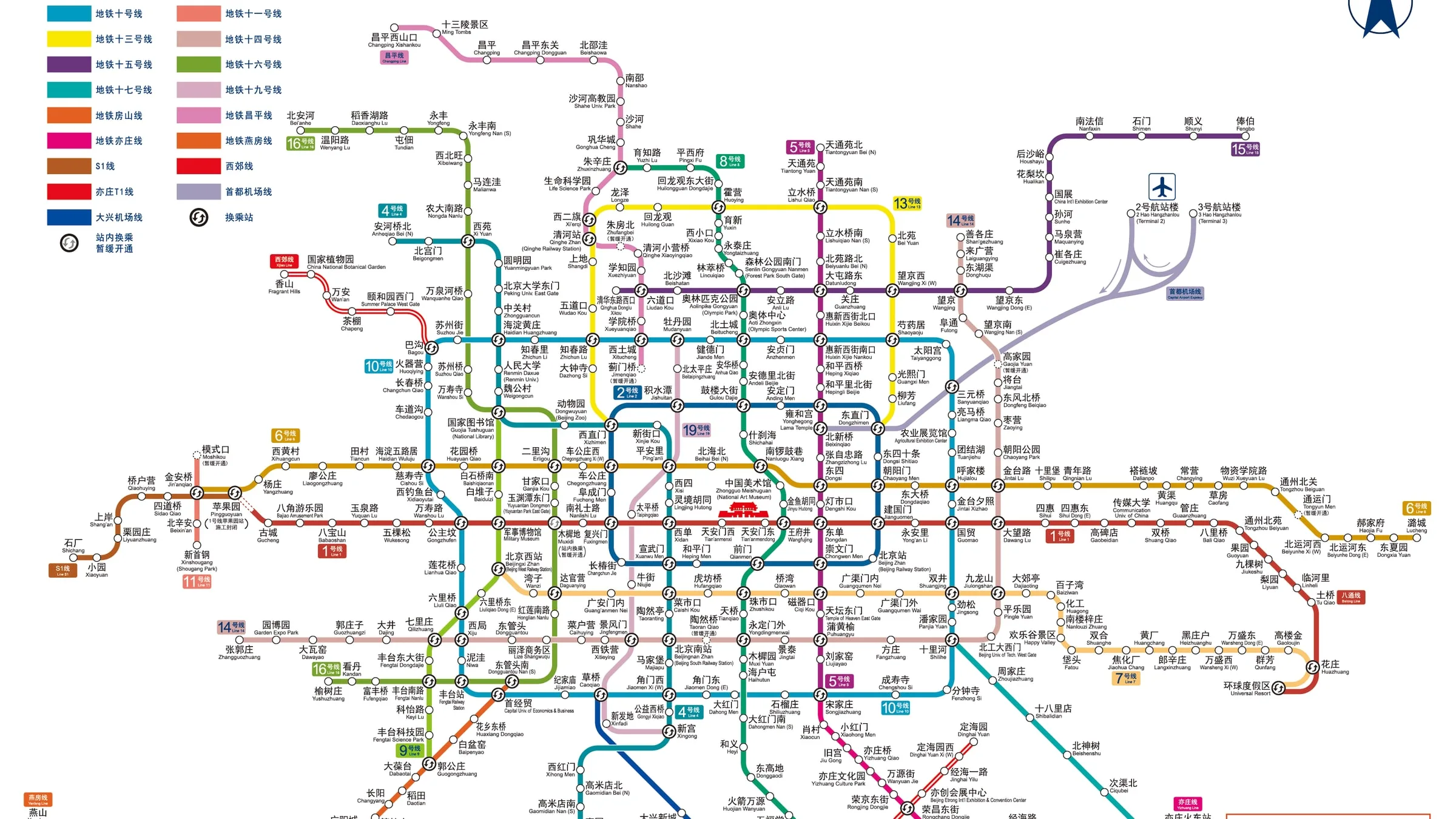
Beijing’s metro is the largest in the world by length (836 km, 27 lines). Notable details:
- Lines 1, 2, 4, 5, 6, 7, 8, 9, 10, 13, 14, 15, 16, 17, 19, Changping, Daxing, Fangshan, Yizhuang, S1, Xijiao, Capital Airport, Daxing Airport are the main lines.
- Forbidden City (故宫, Gùgōng) on Line 1 is the closest station to the palace.
- Tiananmen East and Tiananmen West stations on Line 1 serve Tiananmen Square.
- Beijing South Railway Station on Line 4 connects to HSR.
- Beijing Capital Airport is reached via the Capital Airport Express.
- Beijing Daxing Airport is reached via the Daxing Airport Express.
- Tap-to-pay with Visa cards is available at all stations since 2024.
- Fare cap: ¥9 per ride (distance-based, but capped).
Shanghai specifics
Shanghai’s metro is the second largest by ridership. Notable details:
- Line 1, 2, 3, 4, 7, 8, 9, 10, 11, 12, 13, 14, 15, 16, 17, 18 plus the Pujiang Line and Maglev.
- People’s Square (人民广场) on Lines 1, 2, 8 is the central hub.
- Shanghai Hongqiao Railway Station on Lines 2, 10, 17 connects HSR, the airport, and the metro.
- Shanghai Pudong Airport is reached via Line 2 or the Maglev (the famous 431 km/h train).
- The Bund (外滩) is closest to East Nanjing Road station (Line 2, 10).
- Disneyland is on Line 11.
- Fare cap: ¥7 per ride (after a certain distance, fare caps at ¥7).
Other city highlights
- Guangzhou: Line 1 runs north-south. Line 3 connects to Baiyun Airport. The Canton Tower is on Line 3 (Canton Tower Station).
- Shenzhen: Line 1 connects Luohu (border with Hong Kong) to the airport. Line 4 connects to the northern districts.
- Chengdu: Line 2 connects Tianfu Square to the Panda Base via a transfer to Line 3. Line 10 connects to Shuangliu Airport.
- Hangzhou: Line 1 runs east-west, connecting the train station to West Lake area. Line 19 connects to the airport.
- Xi’an: Line 2 runs north-south along the city wall. Bell Tower and Drum Tower are on Line 2.
- Suzhou: Line 1 connects to Shanghai Metro Line 11, so you can take the metro from Suzhou to Shanghai Disney.
Common mistakes
- Wrong direction. Most lines have two directions. Look at the destination station shown on the platform display, not just the line number.
- Missing the last train. If you’re out past 10:30 PM, take a DiDi. The metro shuts down and you don’t want to be stranded.
- Going through the wrong gate. Some stations have separate gates for different payment methods (Alipay scan gate, token gate, card tap gate). Check the symbol before you walk up.
- Not validating your exit. If you don’t tap out, the system thinks you’re still in the station. On your next entry, you may be charged the maximum fare for the previous trip.
Safety and etiquette
Chinese metros are safe. Violent crime is rare. The main safety concerns are pickpocketing in crowded stations and rush-hour platform crush (especially Beijing Line 1, Shanghai Line 2).
Etiquette:
- Stand right, walk left on escalators
- Let passengers exit first before boarding
- No smoking anywhere in the station or trains
- No eating in the train cars (technically illegal, though often unenforced)
- No phone calls in quiet cars
- Priority seats (优先座) are for elderly, pregnant, disabled passengers. Don’t use them.
If you accidentally take a priority seat and an elderly person boards, stand up and offer your seat. The local expectation is for younger/able passengers to do this without prompting.
For the airport-to-city connection, see DiDi for foreigners. For longer trips, see high-speed rail.
Where to book
Metro is the cheapest way around. Use it to reach your hotel:
- Find a hotel near a metro station — Trip.com lets you filter by neighborhood
- Beijing subway-friendly hotels — most central options
Affiliate disclosure: Some links above are affiliate links. We may earn a commission at no extra cost to you. See our Affiliate Disclosure for details.
Plan your trip — verified tools
These free tools are built on real, monthly-verified data and help you skip the trial-and-error phase of China trip planning:
- China 6-City 5-Day Budget Calculator — Real 2026 prices for 5 days in Beijing, Shanghai, Guangzhou, Chengdu, Xi’an, or Hangzhou. Budget / mid-range / comfort tiers, broken down line by line.
- China OTA Comparison 2026 — Trip.com vs Booking.com vs Agoda vs Klook across 5 booking types. Inventory, pricing, foreign card support, English service, per-OTA verdict.
Verified August 2026 by TravelHubChina Editorial. We re-check prices and policy details monthly so the data doesn’t drift.
Step by step
-
Plan your route with Apple Maps or Amap (high-de maps)
Google Maps does not work in mainland China. Apple Maps works in major cities, but the most accurate is Amap (download the 高德 app). Enter your start and end points, and it shows the metro route, transfers, and total fare.
-
Get a ticket or set up contactless payment
For a single ride, use the vending machine at the station entrance (English UI available). For multi-day use, set up Alipay or WeChat Pay to scan at the turnstile — the same QR you use for everything else in China works for the metro in 30+ cities.
-
Enter the station: tap your card or scan the QR
To use Alipay/WeChat Pay: open the app, tap the Pay or scan icon, and hold the QR over the turnstile sensor. To use a single-ride ticket: tap the token or QR-printed ticket on the turnstile. The gates open within 1-2 seconds.
-
Follow the English signs to your platform
All 10 tier-1 and tier-2 cities with metros have full English signage. Look for the line number and direction (e.g., "Line 2 → Pudong Airport"). Transfer signs are in English. Listen for the English announcement on most lines.
-
Exit: tap or scan again at the turnstile
On exit, tap the same card or scan the same QR. Alipay/WeChat Pay auto-deducts the correct fare (typically ¥3-9, about $0.40-1.30). Single-ride tickets are swallowed by the turnstile — keep them if you have a return journey.
FAQ
-
Which Chinese cities have full English metro signage?
As of 2026, all 10 tier-1 and tier-2 cities with metros have full English signage and announcements: Beijing, Shanghai, Guangzhou, Shenzhen, Chengdu, Chongqing, Wuhan, Nanjing, Hangzhou, Tianjin. Station names, exit numbers, transfer signs, and platform announcements are all in English. -
Can I pay the metro with a foreign credit card?
Yes, but it depends on the city. Since September 2024, Beijing lets you tap a foreign Visa card directly at the turnstile. Shanghai, Guangzhou, Shenzhen, Chengdu, and others are rolling out the same. If direct tap is not yet available, use the Alipay or WeChat Pay QR-code scan — they work at every turnstile in every city. -
What is the cheapest way to ride the metro in China?
A single-ride ticket from the vending machine is the most expensive option (¥3-9 per ride). For multiple rides, use Alipay or WeChat Pay to scan at the turnstile — fares are the same as single tickets but you do not need to queue. There is no formal multi-day tourist pass; the cheapest option is just to tap and go. -
Do Chinese metros run 24 hours a day?
No. Most Chinese metros run from around 5:30 AM to 10:30-11:30 PM, with the last train at around 11 PM. Beijing, Shanghai, and Shenzhen extend hours on weekends and holidays. A few lines (e.g., Shanghai Maglev, Beijing Capital Airport Express) have different schedules. Plan ahead if you have an early flight.
Related guides
- Transport
Save Money on China Transport 2026: HSR vs Flight
Verified 2026 HSR vs flight cost table for 8 routes, 12306 vs Trip.com trade-off, 4 city-transport modes, and 4 money-saving tricks.
10min read
- Transport
China High-Speed Rail 2026: The Foreigner's Complete Guide to 12306, HSR, and Sleeper Trains
China has the world's largest HSR network (50,000+ km, 11,000+ trains/day). The 12306 official booking site is now foreigner-friendly. This guide covers: how to register on 12306 with a foreign passport, buy tickets, ride 350 km/h HSR, sleeper trains, station navigation, food, and the 2026 mobile app changes. Save 30-50% vs domestic flights on most routes under 1,500 km.
13min read
- Itineraries
First Time in China 2026 Guide
First-time China 2026: visa-free entry, Alipay + WeChat Pay setup, the apps to install at home, common scams, and 30-50% savings. Verified 2026.
14min read
- Transport
China Airport Transfer Guide 2026: PEK, PKX, PVG, SHA, CAN, CTU, XIY
The complete 2026 guide to getting from China's 7 major international airports to city center: official taxis, DiDi, airport express trains, Maglev, shuttle buses, and pre-booked private cars. Includes price ranges, hours of operation, which scams to avoid at the airport, and the 3 must-do things before you board.
12min read
- Transport
China High-Speed Rail: How to Book, Board, Survive
Book China high-speed rail (HSR) tickets in 2026: 12306 vs Trip.com, seat classes, popular routes, station tips, and the exact boarding process for foreigners.
9min read
- Tools & Resources
How Much Does a Trip to China Cost in 2026? Complete Budget Guide by Travel Style
Real 2026 prices for a trip to China: 3 budget tiers (backpacker $80-150/day, mid-range $200-350, comfort $500+) with line-item breakdown for accommodation, food, transport, attractions, and visas. Plus 5 sample 7-14 day itineraries with total cost, 15 money-saving tips, and the full payment methods guide (Alipay, WeChat Pay, cash, credit card).
11min read