
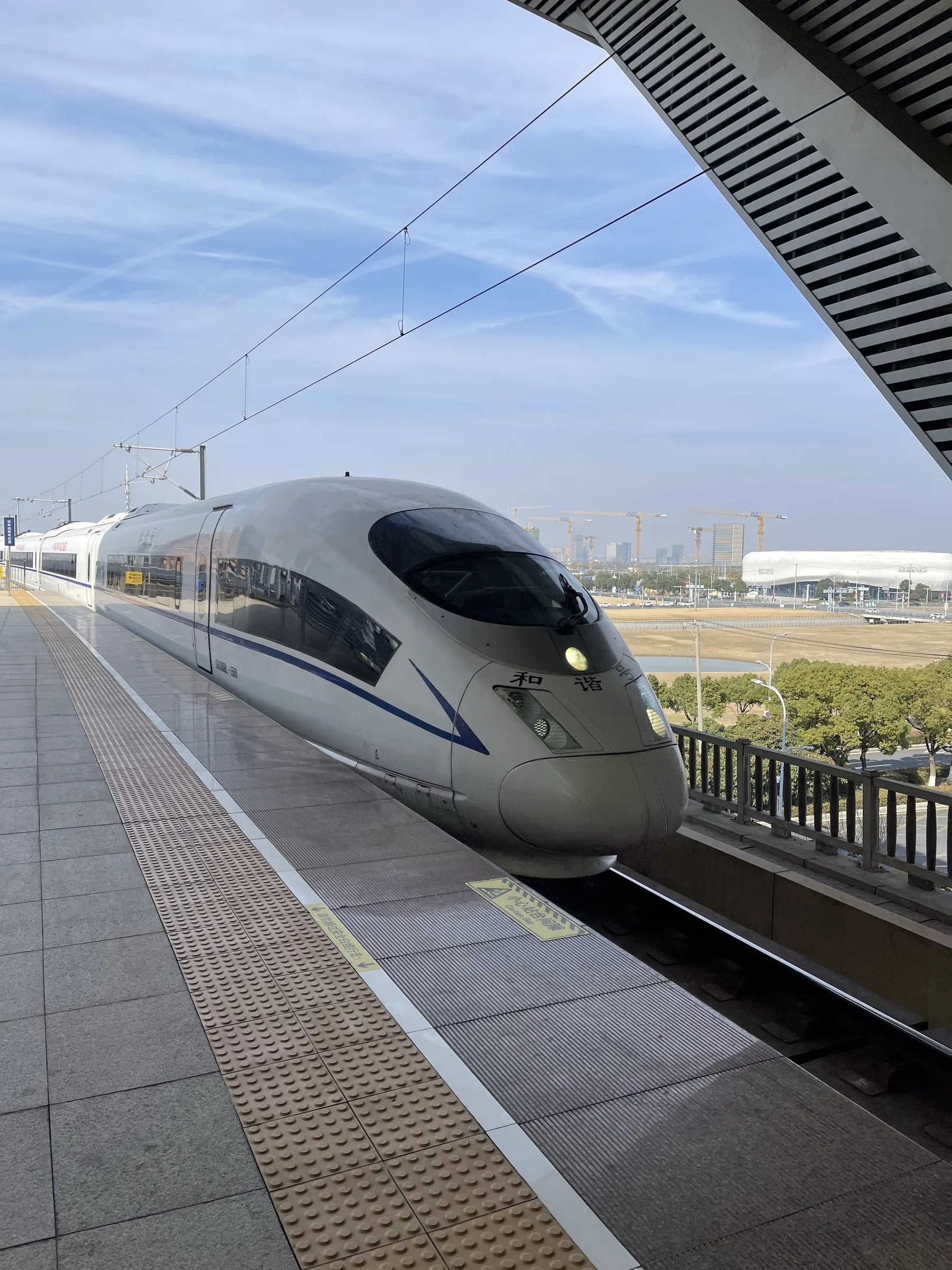
China High-Speed Rail: How to Book, Board, Survive
Book China high-speed rail (HSR) tickets in 2026: 12306 vs Trip.com, seat classes, popular routes, station tips, and the exact boarding process for foreigners.
China’s high-speed rail (HSR) is the world’s largest bullet-train network — over 50,000 km of track connecting 550+ cities, with trains running at 300–350 km/h. Beijing to Shanghai takes 4.5 hours (down from 12+ on the old trains). Tickets are cheap by Western standards ($80–110 second-class for the Beijing–Shanghai route), punctuality is over 99%, and the trains are genuinely comfortable. Booking for foreigners is easier than it used to be: 12306 (the official platform) now has full English support, and Trip.com offers a foreigner-friendly booking flow with international credit cards.
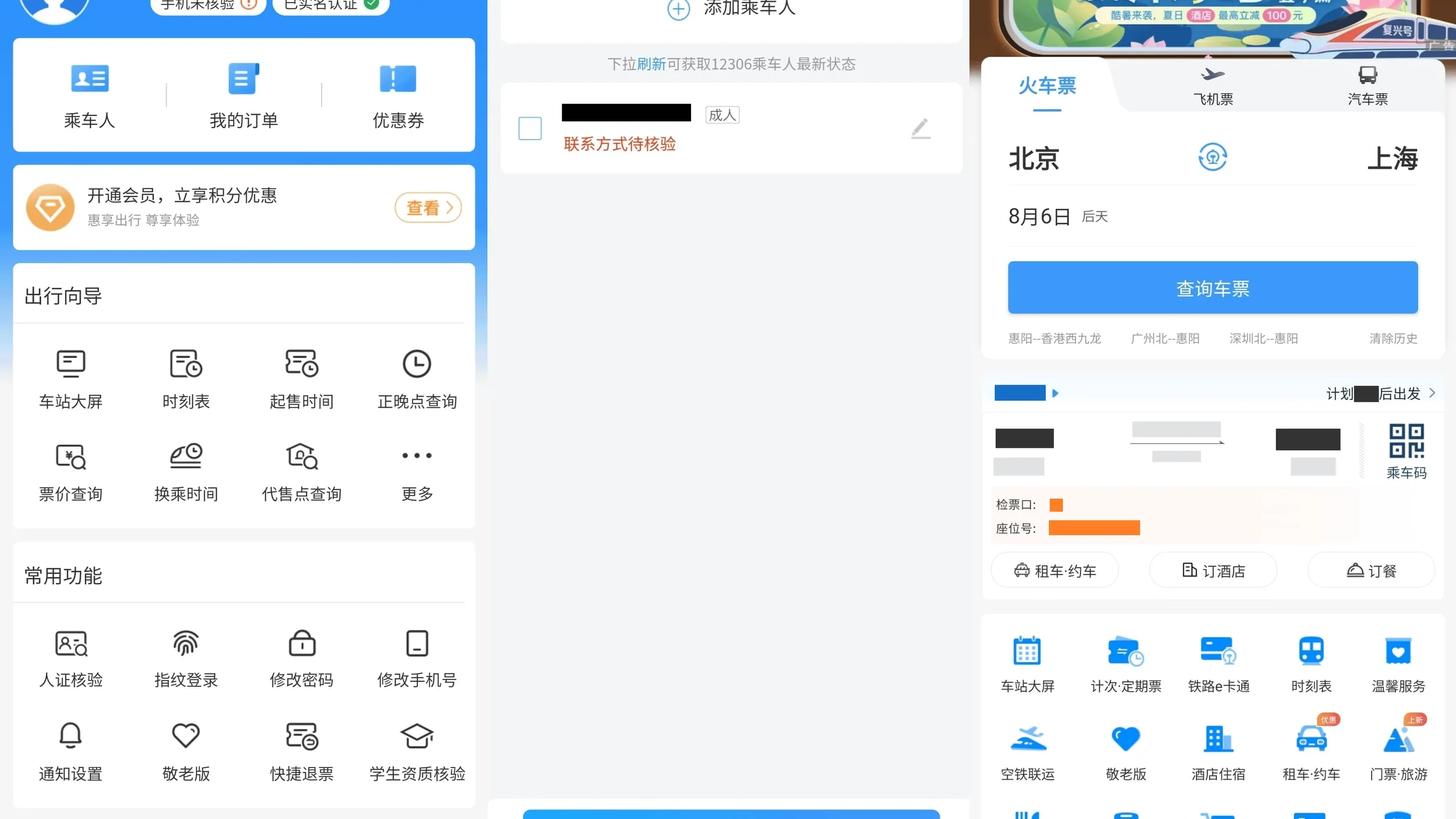
This guide covers the entire process — booking, station navigation, boarding, seat choices, and the things that trip up first-timers.
Why high-speed rail beats flying for most China routes
For trips under 1,000 km, HSR wins on almost every dimension:
- Time: door-to-door often faster. Total HSR time includes 30 minutes at the station; total flight time includes 90 minutes at the airport (security, boarding, deplaning, baggage).
- Price: second-class HSR is $30–$110. Same-distance flights run $100–$300.
- Punctuality: HSR > 99% on-time. Flights average 70–85% on-time in China.
- City-center to city-center: HSR stations are downtown. Beijing Capital Airport is 25 km from the city; Beijing South Railway Station is 5 km.
- Comfort: spacious seats, power outlets at every seat, free Wi-Fi, clean restrooms, food cart service.
Source: Travel China Guide HSR overview.
For trips over 1,500 km, flights start to win on time, especially Shanghai–Chengdu, Beijing–Guangzhou, Shanghai–Urumqi.
Popular routes that are worth the HSR
| Route | Distance | Time | Second-class price |
|---|---|---|---|
| Beijing → Shanghai | 1,318 km | 4.5–6 h | $76–$95 |
| Beijing → Xi’an | 1,216 km | 4.5 h | $70 |
| Shanghai → Hangzhou | 202 km | 45 min–1 h | $10–$15 |
| Shanghai → Suzhou | 25–100 km | 25–40 min | $5–$10 |
| Shanghai → Guangzhou | 1,213 km | 6.5 h | $115 |
| Guangzhou → Shenzhen | 102 km | 0.5–1 h | $11 |
| Chengdu → Chongqing | 308 km | 1.5 h | $25 |
| Xi’an → Chengdu | 658 km | 3 h | $55 |
| Beijing → Hong Kong (West Kowloon) | 2,439 km | 8.5 h | $215 |
Source: Travel China Guide ticket price table.
Train types: what G, D, and C mean
Chinese HSR uses letter prefixes on train numbers:
- G trains (高铁, gāotiě): Fastest. Up to 350 km/h. Long-distance, between major cities. White/silver Fuxing or Hexie trains. The default choice for distances over 200 km.
- D trains (动车, dòngchē): 200–250 km/h. Mix of HSR and conventional track. Often used for overnight routes with sleeper cars.
- C trains (城际, chéngjì): Intercity. 160–200 km/h. Short routes (under 300 km), usually in city pairs like Beijing–Tianjin or Shanghai–Suzhou. Green trains.
If you see a train number like G7 or D312, the letter is the type. Just pick G for any long-distance route.
Seat classes
- Second class (二等座): 5 seats per row (3+2). Spacious for economy. Power outlet. This is what 90% of Chinese travelers use.
- First class (一等座): 4 seats per row (2+2). More legroom, foldable table, quieter. ~50% more expensive than second class.
- Business class (商务座): 2 seats per row. Lie-flat recline, free meals, lounge access. ~3–4x second-class price. Worth it for 6+ hour routes.
- Sleeper (卧铺): Only on overnight D trains. Soft sleeper (4 bunks per cabin) is the best; hard sleeper (6 bunks) is cheapest.
For most tourists, second class is the right choice. The seats are genuinely comfortable, you have a power outlet, and the price difference vs. first class isn’t worth the extra cost for trips under 4 hours.
Booking: 12306 vs Trip.com
12306 — the official platform
12306.cn is the official China Railway booking site. It handles every train, every seat, every route. As of 2024, it has full English support on the web and mobile app.
Pros:
- Cheapest prices (no service fees)
- Real-time seat availability
- Official refund/change handling
- Cancellations get a full refund minus a small fee (5% if 24+ hours before, 10% within 24 hours, 20% within 4 hours, no refund after departure)
Cons:
- English is functional but the app has occasional translation gaps
- Payment requires Alipay, WeChat Pay, or a Chinese bank card (international cards now accepted via “International Card” option as of 2024)
- No English customer support
- First-time registration requires passport + email + phone number
Source: Trip.com 12306 guide.
Trip.com — the foreigner-friendly option
Trip.com (owned by China’s Ctrip, the country’s biggest travel platform) is the easiest option for non-Chinese speakers. Full English site, English customer support 24/7, accepts international Visa/Mastercard, PayPal, Apple Pay.
Pros:
- Best English interface
- International credit cards accepted
- 24/7 English chat support
- Includes free cancellation on most tickets (vs. 12306’s 5%+ fee)
- Easi e-ticket integration
Cons:
¥10–30 ($1.50–4) service fee per ticket- Same prices as 12306 for the actual fare
- Sometimes shows a slightly different seat inventory than 12306
For first-timers, start with Trip.com. The price difference is small, the user experience is dramatically better, and if something goes wrong you can chat with an English-speaking human.
For repeat users comfortable with 12306, the official platform saves a few dollars per ticket.
Booking step-by-step (Trip.com)
- Go to trip.com or open the app
- Click “Trains” at the top
- Enter origin and destination in English (e.g., “Beijing” and “Shanghai”). City names work; if not found, try the Chinese pinyin (“Beijing” works, “Peking” doesn’t).
- Select date and number of passengers
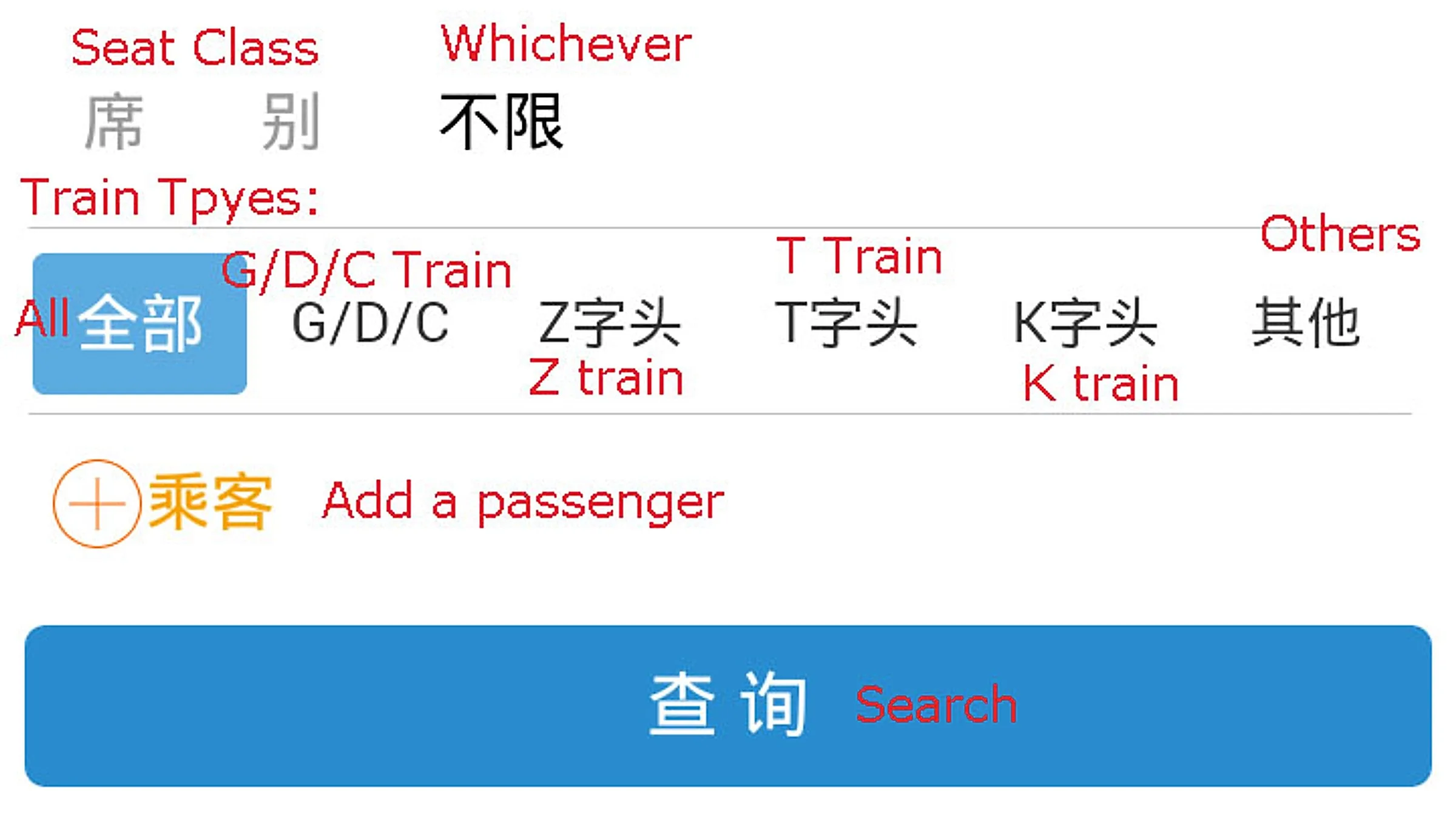
- Click “Search” — shows all available G/D/C trains
- Pick your train based on time, duration, and price
- Select seat class (Second Class for most people)
- Add passenger info — name exactly as on passport, passport number, date of birth, email, phone
- Pay with Visa/Mastercard/PayPal/Apple Pay
- Receive e-ticket in the app and by email
- Save the QR code — this is your boarding pass
Booking step-by-step (12306)
- Go to 12306.cn and click the English button in the top right
- Register with email, phone number, password
- Activate via the email link
- Search trains like Trip.com
- Add passenger with passport details
- Select seat (system assigns, you choose class)
- Pay with Alipay, WeChat Pay, or “International Card” (Visa/Mastercard via 12306’s processor)
- E-ticket is saved in your 12306 account; show QR at the turnstile
The e-ticket system: no paper needed
Since 2020, China has been almost entirely paperless for HSR. You don’t need to print or collect a ticket. At the station:
- Walk to the security check (X-ray bag scan)
- Pass security
- Find your waiting room (waiting hall 候车室, hòuchē shì) — number is on your e-ticket
- Show your passport and the e-ticket QR at the turnstile
- The turnstile scans your passport and opens
- Find your platform (number on the ticket and on overhead signs in pinyin + Chinese)
- Board — seats are unassigned in second class unless your ticket says otherwise; first class is assigned
- The conductor scans your passport on board for verification
The whole process from station entrance to seat takes 10–15 minutes if you arrive 30 minutes before departure.
Popular HSR stations and how to navigate them
Major HSR stations are large but well-signed in English. Layouts are consistent across cities:
- B1 (basement): Metro connection, taxi stand, often long-distance bus
- 1F: Ticket counters (rarely needed for e-tickets), some shops
- 2F: Departure level — security, waiting halls
- 3F–4F: Sometimes retail or restaurants
Look for the blue signs with white Chinese characters and English subtitles. “进站” means “enter station” (arrival), “出站” means “exit station” (departure for non-ticket holders).
Tip: Beijing South, Shanghai Hongqiao, and Guangzhou South are the three largest — all connected to metro, all with English signage. Allow 45 minutes for first-time navigation.
Practical tips for the actual train ride
Luggage rules
You can bring up to 20 kg of luggage per adult for free. The dimensions of each item should not exceed 130 cm (length + width + height). Oversized luggage is rare on HSR — most travelers use backpacks and small suitcases. There’s no checked baggage on HSR; everything goes on the overhead rack or at the end of the car.
Source: China Briefing transportation FAQ.
Food and drink
A food cart comes through 1–2 times per journey selling instant noodles (¥15–25), boxed rice meals (¥35–50), tea, coffee, beer, and snacks. Payment: cash or Alipay/WeChat Pay. The food is mediocre; the instant noodles are an authentic Chinese train experience.
You can also bring your own food. Most travelers stock up at the station convenience store or bring snacks from the hotel breakfast.
Wi-Fi on board
Most G trains have free Wi-Fi. Connect to the train’s SSID, then register with your phone number. Speed is enough for messaging; not great for video calls.
Quiet cars
Some G trains have a “quiet car” (静音车厢, jìngyīn chēxiāng). No phone calls, no video audio without headphones, no loud conversations. Seat numbers are marked. If you value peace, book this.
Bathrooms
Each car has a Western toilet at one end and a squat toilet at the other (with one or two exceptions on newer Fuxing trains). The Western one usually has a queue. Bring tissues — public restrooms in China don’t always have toilet paper.
When to book
Tickets go on sale 15 days before departure at 6:00 AM Beijing time. Popular routes and holiday periods (Lunar New Year, National Day week, May Day) sell out within minutes.
Booking windows for peak periods:
- Lunar New Year (Jan/Feb): Sell out 15 days ahead. Book the moment tickets open.
- National Day week (Oct 1–7): Same.
- May Day (May 1–5): Same.
- Summer weekends (Jun–Aug): Sell out 1–3 days ahead for major routes.
- Regular weekdays: Same-day booking usually works.
Set an alarm for 6:00 AM Beijing time 15 days before you want to travel. Open the booking app. Be ready to click immediately.
Refunds and changes
Cancellations are handled through the platform you booked on. 12306’s fee structure:
- More than 8 days before departure: Free
- 48 hours to 15 days before: 5% fee
- 24 to 48 hours before: 10% fee
- Less than 24 hours before: 20% fee
- After departure: No refund
Trip.com is more flexible — many tickets come with free cancellation up to 24 hours before, even for non-refundable fares. Check the specific fare rules when booking.
Changes (different train, different seat class) are usually possible up to 30 minutes before departure, with the same fee structure as refunds.
Source: Trip.com 12306 refund policy.
Common mistakes
- Booking from the wrong station. Beijing has 7+ train stations, Shanghai has 4+. Each city has a “main” HSR station (Beijing South 北京南站, Shanghai Hongqiao 上海虹桥站) but trains may leave from others. Confirm the station name when booking.
- Showing up at the wrong waiting hall. Your ticket specifies the waiting hall number. Each waiting hall serves 4–8 platforms. Get to the right one or you’ll miss your train.
- Missing the boarding window. Doors close 1–3 minutes before departure. Be at the platform 5 minutes before, not 1.
- Not bringing your passport. Your passport IS your ticket. Without it, you can’t board.
When to fly instead
For these routes, flight is faster than HSR:
- Beijing–Guangzhou (2,298 km, 8 hours by HSR vs. 3 hours by flight)
- Shanghai–Chengdu (1,950 km, 12+ hours by HSR vs. 3.5 hours by flight)
- Beijing–Urumqi (3,400 km, 30+ hours by HSR vs. 5 hours by flight)
- Shanghai–Hong Kong (1,427 km, 7 hours by HSR vs. 2.5 hours by flight)
See domestic flights guide for the flight booking strategy.
For everything else, the train wins. The 4.5-hour Beijing–Shanghai trip is faster door-to-door than the 2-hour flight once you factor in airport commutes, security, and boarding.
For the metro experience once you arrive in a Chinese city, see China metro in English.
Plan your trip — verified tools
These free tools are built on real, monthly-verified data and help you skip the trial-and-error phase of China trip planning:
- China 6-City 5-Day Budget Calculator — Real 2026 prices for 5 days in Beijing, Shanghai, Guangzhou, Chengdu, Xi’an, or Hangzhou. Budget / mid-range / comfort tiers, broken down line by line.
- China OTA Comparison 2026 — Trip.com vs Booking.com vs Agoda vs Klook across 5 booking types. Inventory, pricing, foreign card support, English service, per-OTA verdict.
Verified August 2026 by TravelHubChina Editorial. We re-check prices and policy details monthly so the data doesn’t drift.
Related: Beijing 3-day itinerary
Step by step
-
Decide your route and book on Trip.com
For most routes under 1,500 km, HSR beats flying. Beijing-Shanghai: 4.5 hours ($80-110 second class). Shanghai-Hangzhou: 1 hour. Beijing-Xi'an: 4.5-5.5 hours. Trip.com is the foreigner-friendly booking app: Visa/Mastercard accepted, full English UI, shows official 12306 prices with no markup. Booking opens 15 days before departure.
-
Choose your seat class
Second class ($80-110 on Beijing-Shanghai) — 5 seats per row (2+3), 17-inch legroom, foldable tray, power outlet. Best value. First class ($130-160) — 4 seats per row (2+2), 25-inch legroom, more recline. Business class ($260-320) — 1+1 lie-flat seats, meal service, lounge access. For most travelers, second class is the right choice.
-
Create your account with passport details
On Trip.com, sign up with email, then go to Profile → Travellers and add your passport details. Your name must match your passport exactly (given name + family name order). On the official 12306 app, you need a Chinese phone number for full registration and Alipay/WeChat Pay.
-
Pay and download your ticket
On Trip.com: pay with Visa/Mastercard ($0 booking fee, official prices). You get a QR code or 6-digit ticket number in the app. On 12306: pay with Alipay or WeChat Pay — the ticket appears in the app and a passport scan at the gate opens the barrier. Save the QR screenshot to your phone as backup.
-
Arrive 45-60 minutes early and follow signs
Beijing South, Shanghai Hongqiao, and other major HSR stations are large. Allow 15-20 minutes to find your waiting room (check the electronic boards for your train number). Bring your passport — it is your ticket. Security is fast (5-10 minutes). Trains depart exactly on time.
FAQ
-
Can foreigners book high-speed rail tickets in China?
Yes. Foreigners can book on the official 12306 website and app (full English support since 2019), through Trip.com (international credit cards, English interface), or at any station ticket window with a passport. Booking opens 15 days before departure. -
What is the best app to book HSR tickets, 12306 or Trip.com?
For most foreigners, Trip.com is easier: it accepts Visa/Mastercard, has English UI, and shows the official 12306 prices with no markup. 12306 is the official source and sometimes has tickets Trip.com does not, but requires a Chinese phone number for full registration and a UnionPay card or Alipay. -
How early should I arrive at the train station in China?
Plan for 45-60 minutes for big stations (Beijing South, Shanghai Hongqiao) and 30 minutes for smaller ones. You need to clear security (similar to airports), find your waiting room by checking the electronic boards, and line up at the gate about 10-15 minutes before departure. Trains depart exactly on time. -
Do I need a Chinese ID to board a high-speed train?
No. Your passport is your ID for HSR. At the station gate, you scan your passport (or insert it into the reader for non-biometric passports), and the gate opens. Onboard, conductors will check your passport if they do checks (rare on HSR). -
What is the difference between second class and first class on China HSR?
Second class has 5 seats per row (2+3 layout), 17-inch legroom, a foldable tray, and a power outlet. First class has 4 seats per row (2+2), 25-inch legroom, more recline, and a footrest. Business class is 1+1 with a lie-flat seat, meal service, and dedicated lounge access. Beijing–Shanghai second class is about $80-110; first class is $130-160; business is $260-320. -
How much are China high speed rail tickets?
Ticket prices are distance-based and very affordable by Western standards. Sample prices (2026, second class): Beijing–Shanghai (1,318 km): ¥553 / $77. Beijing–Xi'an (1,219 km): ¥515 / $72. Shanghai–Hangzhou (159 km): ¥73-87 / $10-12. Beijing–Tianjin (137 km): ¥54-55 / $7.50. Shanghai–Suzhou (84 km): ¥39-40 / $5.50. Price tiers (per km, second class): ¥0.42 ($0.06) base rate. First class is typically 1.6x second class price. Business class is 3.2x second class. Standing tickets (if you really need last-minute) are sold at second-class price but you don't get a seat. Children under 1.2m: free (no ticket). Children 1.2-1.5m: half-price. Children above 1.5m: full price. Foreigners pay the same prices as Chinese citizens — no surcharge. For total budget on Beijing–Shanghai: round trip second class = $154. Round trip first class = $245. Round trip business = $490. -
Where can I see a China high speed rail map?
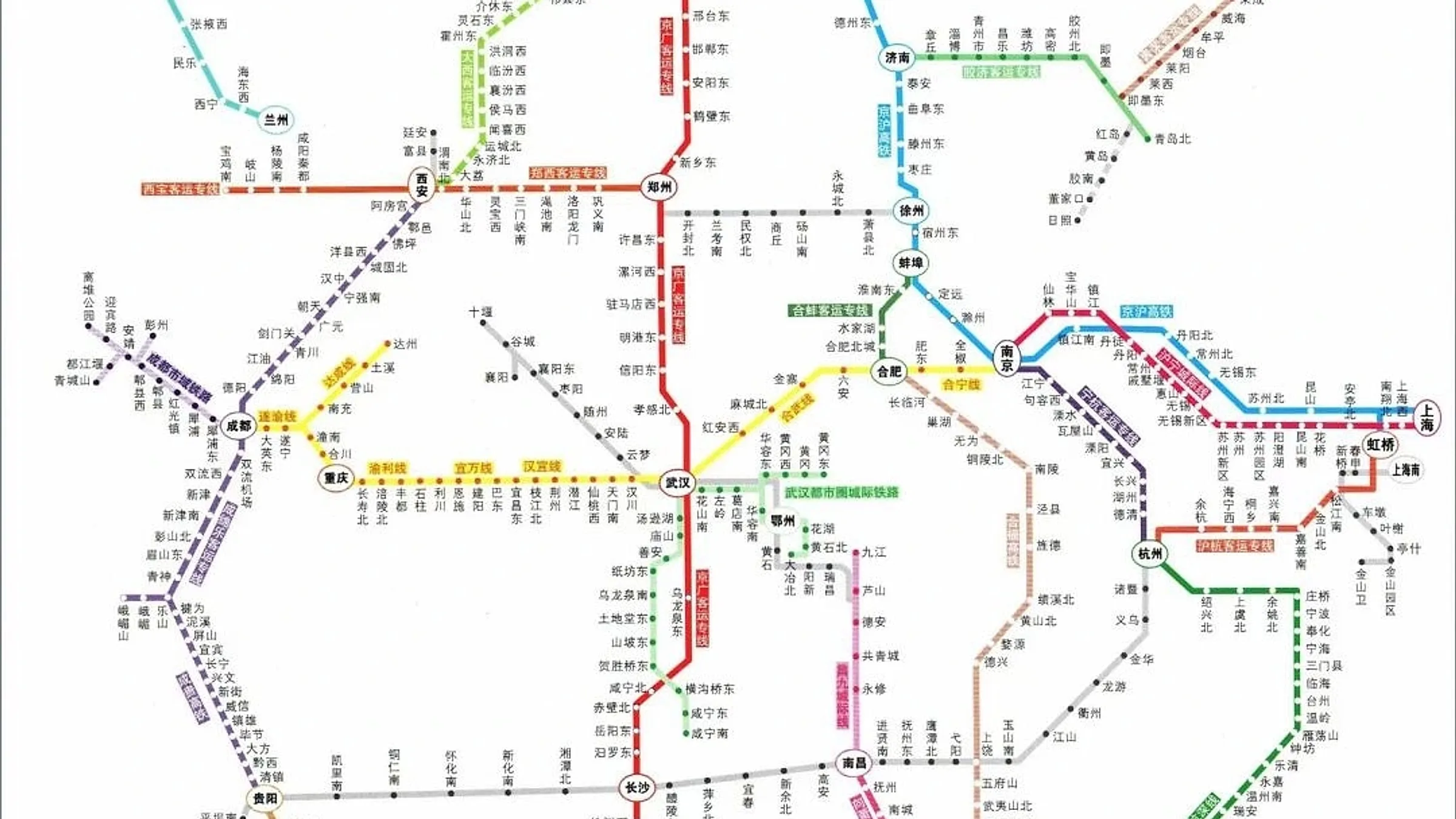
The official 2026 HSR map covers over 50,000 km of track connecting 550+ cities across China. Major corridors: (1) Beijing–Shanghai HSR (1,318 km, 4.5 hours) — the flagship line, 350 km/h. (2) Beijing–Guangzhou HSR (2,298 km, 8 hours) — the world's longest HSR line when opened, 350 km/h. (3) Shanghai–Kunming HSR (2,252 km, 11 hours) — east-to-west backbone. (4) Lanzhou–Urumqi HSR (1,776 km, 11 hours) — connects to Central Asia. (5) Beijing–Harbin HSR — northeast corridor. (6) Coastal HSR — Shanghai to Shenzhen via Fujian coast. Where to find the official map: 12306.cn has an interactive route map under the Railway Network section. The 2026 China Railway Network Map is also published annually by China State Railway Group. For travelers: most foreign tourists use only 5-6 of these lines (Beijing–Shanghai, Beijing–Xi'an, Shanghai–Hangzhou, Shanghai–Suzhou, Beijing–Guangzhou segments). Trip.com shows your specific route on a real-time map at booking.
Related guides
- Transport
China High-Speed Rail 2026: The Foreigner's Complete Guide to 12306, HSR, and Sleeper Trains
China has the world's largest HSR network (50,000+ km, 11,000+ trains/day). The 12306 official booking site is now foreigner-friendly. This guide covers: how to register on 12306 with a foreign passport, buy tickets, ride 350 km/h HSR, sleeper trains, station navigation, food, and the 2026 mobile app changes. Save 30-50% vs domestic flights on most routes under 1,500 km.
13min read
- Transport
Domestic Flights in China: When Cheaper Than Train
When to fly vs. take the train in China 2026: route distance, time-vs-price, booking platforms, airport experience, baggage rules, and the cheapest airlines.
7min read
- Transport
Save Money on China Transport 2026: HSR vs Flight
Verified 2026 HSR vs flight cost table for 8 routes, 12306 vs Trip.com trade-off, 4 city-transport modes, and 4 money-saving tricks.
10min read
- Transport
China Airport Transfer Guide 2026: PEK, PKX, PVG, SHA, CAN, CTU, XIY
The complete 2026 guide to getting from China's 7 major international airports to city center: official taxis, DiDi, airport express trains, Maglev, shuttle buses, and pre-booked private cars. Includes price ranges, hours of operation, which scams to avoid at the airport, and the 3 must-do things before you board.
12min read
- Transport
Didi vs Uber in China 2026: How Foreigners Ride-Hail (Step-by-Step)
No Uber in China — and no Uber-DiDi partnership to book through (the only link is Uber's 2016 stake in DiDi). DiDi is the app that actually dispatches cars for foreigners: English UI, foreign Visa/Mastercard, airport pickups. 2026 setup, fares, and the Hong Kong exception.
9min read
- Tools & Resources
Trip.com for Foreigners: The Complete 2026 Guide
Complete 2026 Trip.com guide for foreign travelers: registration, payment methods, coupons, 6-tier loyalty, refunds, price-match, and 5 places where Trip.com is the wrong choice. Verified 2026-09-06.
9min read