
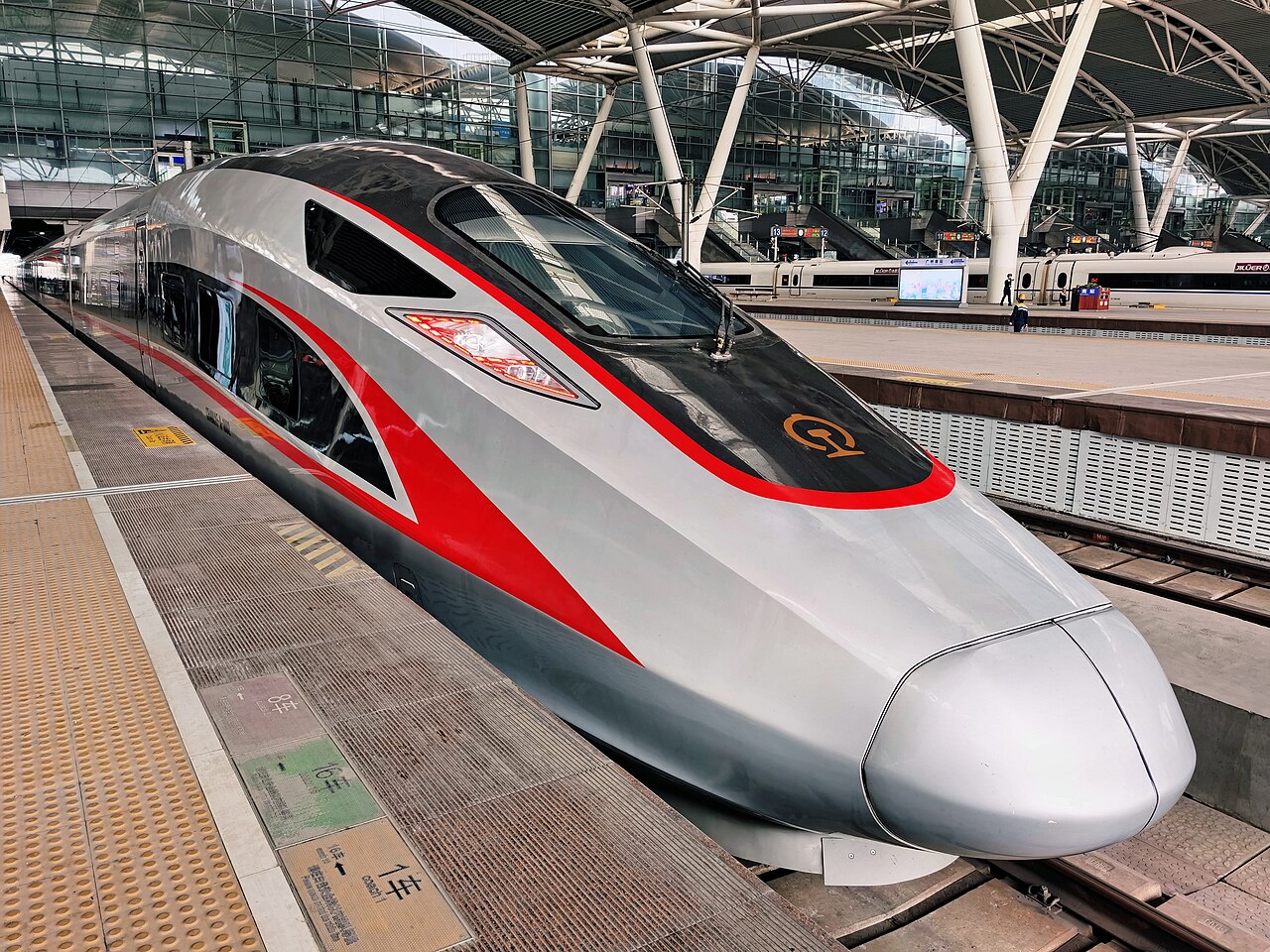
China High-Speed Rail 2026: The 12306 Guide
The world's largest HSR network: 50,000+ km and 11,000+ trains a day. The 12306 site now accepts foreign passports and has an English UI.
China has the world’s largest HSR network — over 50,000 km of track, more than the rest of the world combined. The official 12306 booking site is now foreigner-friendly. Foreign passports have worked since 2019, and in 2024, 12306 added an English UI.
This guide covers everything you need to ride the HSR like a local: registering on 12306 with a foreign passport, the 4 train types, seat classes, station navigation, sleeper trains, food, and the 5 most common mistakes.
Save 30-50% vs domestic flights on most routes under 1,500 km. HSR is also faster door-to-door (city center to city center, no airport transfer). And it’s far more reliable — on-time >98% vs ~70% for Chinese domestic flights.
Why HSR is the Best Way to Travel China
Reach: 50,000+ km of HSR, 11,000+ trains per day, 95% of major cities Speed: 300-350 km/h (G trains, faster than most US/Europe trains) Reliability: >98% on-time (vs ~70% for domestic flights) Cost: 30-50% cheaper than flights on most routes Comfort: Modern trains, clean, quiet, food cart Experience: Watch China change 1,000 km in 4 hours
The 5 routes every foreigner should ride:
- Beijing → Shanghai (1,318 km, 4.5 hours, 553 RMB / $78)
- Shanghai → Hangzhou (159 km, 1 hour, 73 RMB / $10)
- Beijing → Xi’an (1,176 km, 4.5 hours, 515 RMB / $73)
- Chengdu → Chongqing (308 km, 1.5 hours, 154 RMB / $22)
- Shanghai Maglev (431 km/h, world’s fastest commercial train, 50 RMB / $7)
The 4 Train Types (By Speed)
G (高铁 / Gāotiě) — 300-350 km/h
The flagship, fastest trains. G trains only stop at HSR-built stations (modern, with security, escalators, English signage). Routes: Beijing-Shanghai, Beijing-Xi’an, Shanghai-Hangzhou, all major city pairs. Most trains are 8 or 16 cars, 1,200-2,400 seats.
- Top speed: 350 km/h (Beijing-Shanghai runs at 350 km/h for most of the route)
- Faster than: Most US passenger trains, comparable to TGV France / Shinkansen Japan
- Coming 2026: CR450 enters service at 400 km/h (250 mph)
- Best for: City-to-city 100-2,000 km
- Cost: 0.45-0.55 RMB per km (2nd class)
D (动车 / Dòngchē) — 200-250 km/h
Also HSR but slower. D trains stop at more stations, including some older stations that have been retrofitted. D trains are often the only HSR option for less-busy routes.
- Top speed: 250 km/h
- Stops at: HSR stations + some older stations
- Best for: Routes where G is sold out, or for slightly cheaper tickets on same route
- Cost: 0.35-0.45 RMB per km (2nd class) — about 10% cheaper than G
C (城际 / Chéngjì) — 200-350 km/h, Intercity
Short intercity routes (under 300 km). Most common: Beijing-Tianjin (120 km, 30 min), Shanghai-Suzhou (100 km, 25 min), Guangzhou-Shenzhen (140 km, 1 hour).
- Top speed: 200-350 km/h
- Best for: Short city pairs
- Cost: 30-50 RMB for typical intercity routes
- Feature: No seat reservation, sit anywhere, frequent departures (every 15-30 min)
Regular trains (Z, T, K) — Sleeper trains
Slower but longer-distance, with sleeper berths. Used for 1,500+ km routes or overnight travel.
- Z (直达 / Zhídá): Direct express, 160 km/h, sleeper
- T (特快 / Tèkuài): Fast train, 160 km/h, sleeper, fewer stops
- K (快速 / Kuàisù): Fast, 120 km/h, sleeper, most stops
Sleeper train berths:
- Hard sleeper (硬卧): 6 berths per compartment (3 tiers), cheapest, ~200-400 RMB, no door
- Soft sleeper (软卧): 4 berths per compartment (2 tiers), more space, door that locks, ~350-700 RMB
- Soft seat (软座): Reclining seat, cheapest, common on short routes, ~100-200 RMB
Best for foreigners: Soft sleeper (4 berths, door, more privacy). The 4-berth configuration means you only share with 3 others (vs 5 in hard sleeper). Some people book all 4 berths for full privacy.
How to Register on 12306 (2 Minutes)
Option 1: 12306 website (recommended for first-timers)
- Go to 12306.cn/en (English UI since 2024)
- Click Register in the top right
- Enter:
- Username (your email)
- Password (8+ chars, mix of letters and numbers)
- Passport number (exactly as on passport)
- Name (exactly as on passport, in English)
- Email (verification code will be sent)
- Country/Region (select your country)
- Verify email — check inbox for 6-digit code, enter within 10 minutes
- Account ready — same login works on 12306 app, website, station windows
Option 2: 12306 app
Same registration, but typing passport info on phone is harder. Use website first, then app.
For foreign phone verification (optional)
If you have a Chinese phone number: link it for faster SMS verification If not: use email verification (works fine, just slightly slower)
What if registration fails?
- Passport name mismatch: type exactly as on passport (no accents, no special characters)
- Email already used: each email can register once; use another
- Passport not recognized: try without the country code prefix
- Still fails: skip and use Trip.com instead (no 12306 account needed)
How to Book a Ticket (5 Methods)
Method 1: 12306 website (cheapest, direct)
- Login at 12306.cn/en
- From / To: city name in pinyin (Beijing = beijing, Shanghai = shanghai, Xi’an = xian, Chongqing = chongqing)
- Date: DD/MM/YYYY format (or use the calendar widget)
- Search → see all trains with times, durations, seat availability
- Pick a train: G preferred for fastest, D if G sold out
- Pick a seat class: 2nd class (recommended), 1st class (more space), Business (premium)
- Add passenger: your foreign passport + name (saved from registration)
- Pay: Alipay, WeChat Pay, or bank card (Visa/Mastercard)
- Confirmation emailed with e-ticket QR code
Method 2: 12306 mobile app
Same as website. Use the QR code in the app at the station gate.
Method 3: Trip.com (easiest for foreigners, +3-5% fee)
- Download the Trip.com app or visit trip.com — same 12306 ticket pool, English seat maps, foreign cards.
- Search “Trains” → enter route, date
- Free cancellation 30+ min before (vs 12306’s 30 min flat fee)
- Pay with foreign credit card (Visa, Mastercard, Amex)
- Get e-ticket QR code in Trip.com app
- Use Trip.com app at station gate
Best for: English-only speakers, no Chinese phone, first-timers
Method 4: Station ticket window (with passport)
- Go to any station ticket window (售票口)
- Bring your passport
- Tell them your route in pinyin or write it on paper
- They’ll print a paper ticket
- Pay cash or scan Alipay/WeChat Pay
Best for: Last-minute, no internet, station already there
Method 5: Hotel/travel agent
Some hotels (especially mid-range +) can book HSR tickets for you. Some travel agents in tourist areas offer this. Adds 30-100 RMB fee but convenient.
2026 Pricing (By Distance and Class)
| Distance | 2nd Class | 1st Class | Business |
|---|---|---|---|
| 100-200 km | 50-80 RMB / $7-12 | 80-130 RMB / $12-19 | 150-250 RMB / $21-36 |
| 200-500 km | 80-180 RMB / $12-26 | 130-300 RMB / $19-43 | 250-550 RMB / $36-78 |
| 500-1,000 km | 180-400 RMB / $26-57 | 300-700 RMB / $43-100 | 550-1,300 RMB / $78-185 |
| 1,000-2,000 km | 350-700 RMB / $50-100 | 600-1,200 RMB / $85-170 | 1,100-2,200 RMB / $155-310 |
| 2,000+ km | 600-1,000 RMB / $85-140 | 1,000-1,700 RMB / $140-240 | 1,800-3,200 RMB / $255-455 |
Class differences:
- 2nd class: 5 seats per row (3+2), reclines slightly, most foreigners’ choice
- 1st class: 4 seats per row (2+2), more legroom, ~50% more expensive
- Business class: 2-3 seats per row, lie-flat seats, meal service, 3-4x more expensive
Sleeper classes:
- Hard sleeper: 200-500 RMB, 6 berths, no door
- Soft sleeper: 350-800 RMB, 4 berths, door that locks (recommended for foreigners)
- Deluxe soft sleeper: 800-1,500 RMB, 2 berths, private (rare, on premium Z trains)
The 2026 12306 Updates (What Changed)
- English UI on 12306 website and app (2024)
- Foreign passport login since 2019
- E-ticket QR code instead of paper ticket (since 2020)
- Alipay/WeChat Pay integration (since 2018)
- Mobile app with full English (2024)
- CR450 trains entering service late 2026 (400 km/h)
- New Beijing-Shanghai route via second HSR line (Qinhuangdao-Shenyang, opening 2026)
- Yunnan HSR expansion completed (Kunming-Vientiane cross-border line)
Major HSR Routes (City Pairs Most Foreigners Use)
| Route | Distance | G Train Time | 2nd Class | Frequency |
|---|---|---|---|---|
| Beijing ↔ Shanghai | 1,318 km | 4.5-5 hours | 553 RMB | 15-20/day |
| Beijing ↔ Xi’an | 1,176 km | 4.5-5 hours | 309-515 RMB | 15-20/day |
| Shanghai ↔ Hangzhou | 159 km | 45 min - 1 hour | 73-87 RMB | 60+/day |
| Shanghai ↔ Suzhou | 84 km | 25-30 min | 39-50 RMB | 80+/day |
| Shanghai ↔ Nanjing | 295 km | 1.5-2 hours | 140-200 RMB | 30+/day |
| Shanghai ↔ Huangshan | 471 km | 2.5-3 hours | 188-300 RMB | 10-15/day |
| Shanghai ↔ Wuyuan | 380 km | 1.5-2 hours | 200-280 RMB | 5-10/day |
| Beijing ↔ Tianjin | 137 km | 30 min - 1 hour | 55-65 RMB | 60+/day |
| Beijing ↔ Datong | 354 km | 1.5-2 hours | 110-150 RMB | 15-20/day |
| Beijing ↔ Pingyao | 510 km | 1.5-2 hours | 100-200 RMB | 10-15/day |
| Guangzhou ↔ Shenzhen | 140 km | 1 hour | 75-90 RMB | 50+/day |
| Guangzhou ↔ Guilin | 502 km | 2-2.5 hours | 140-200 RMB | 20-25/day |
| Chengdu ↔ Chongqing | 308 km | 1.5-2 hours | 154-180 RMB | 30+/day |
| Chengdu ↔ Jiuzhaigou | 260 km | 1.5-2 hours | 100-200 RMB | 10-15/day |
| Kunming ↔ Dali | 322 km | 2 hours | 145-180 RMB | 20-30/day |
| Kunming ↔ Lijiang | 526 km | 3 hours | 220-280 RMB | 10-15/day |
| Lhasa (no HSR, sleeper Z only) | — | — | — | — |
Station Navigation (The 4 Steps)
1. Arrive 45-60 min before departure
Chinese stations are huge, with multiple entrances, security, ticket gates, and platforms. First-time: 60 min. Regular: 45 min.
2. Security check
Required for all passengers: passport scan + bag X-ray. No lighters, no large liquids (100 ml+), no power banks over 100 Wh, no sharp objects. Liquids > 100 ml: declare or dispose. Allow 5-10 min in security line.
3. Find your ticket gate (检票口)
Look at the big board (usually above the main concourse) for your train number, departure time, and gate number (检票口). Gates are numbered, often with English (Gate 1, Gate 2, etc.). Gate opens 15-20 min before departure, closes 5 min before. If you can’t find your train on the board, ask station staff (look for the ”?” info desk).
4. Board through the gate
Two ways to board:
- (1) Scan passport at the ticket gate (paper ticket not required for foreign passport holders since 2020)
- (2) Scan e-ticket QR code (in 12306 app, Trip.com app, or email)
Gate opens automatically. Walk to your platform. Boarding starts 5-10 min before departure. Train doors close 1-2 min before — HURRY if late.
Onboard: What to Expect
Seats (2nd class)
- Layout: 5 seats per row (3+2), A B C (aisle) D F (window)
- Reclines: 25-30° backward
- Tray table: folds down from seatback
- Power outlet: under seat or between seats (2-prong Chinese + USB)
- WiFi: free on most G trains (slow, basic browsing only)
Food and Drink
- Bring your own: most foreigners do. Buns, sandwiches, fruit, instant noodles
- Dining car: usually car 4-5, full meals 30-60 RMB, snacks 10-30 RMB
- Trolley service: passes through cars every 1-2 hours, snacks + water 5-15 RMB
- Hot water dispenser: at the end of each car, free — bring instant noodles or tea
- No free water: bring your own or buy
- No alcohol: not allowed to drink or sell onboard (strictly enforced)
Bathroom
- Western or squat toilets at the end of each car
- Toilet paper: bring your own (often not provided)
- Hot water for hand washing: at the end of the car
Luggage
- Storage: overhead racks (small bags) + end-of-car luggage racks (large bags)
- No size limit for stored luggage but must fit
- Keep valuables on you: passport, phone, wallet, laptop
Sleeper Train Specifics
- Soft sleeper (4-berth): doors that lock, more privacy, common for overnight trips 1,000+ km
- Hot water: in every car, for tea/noodles
- Sleeper attendant: sells snacks, water, instant noodles
- Lights out: usually 22:00 or 23:00, soft sleeper stays lit for reading
- Wake-up call: attendant may knock 30 min before arrival
- Bring: toilet paper, water bottle, snacks, headphones, eye mask
The 5 Most Common Mistakes (and How to Avoid)
1. Wrong station for transfers
Major transfer cities have 2-3 stations (e.g., Beijing has Beijing South, Beijing West, Beijing North; Shanghai has Shanghai Hongqiao, Shanghai Station, Shanghai South). Foreigners most often confuse:
- Beijing South (北京南): 0.5h from Tiananmen, HSR hub
- Beijing West (北京西): 1h from Tiananmen, sleeper Z hub
- Shanghai Hongqiao (虹桥): HSR + airport, 30 min from Bund
- Shanghai Railway Station (上海站): regular trains, central
Fix: Check your ticket CAREFULLY. Book transfers with 60-90 min buffer (walk + new security). Same-station transfers: 30 min usually OK.
2. Missing the 5-min boarding cutoff
HSR trains depart ON TIME. Gates close 5 min before departure. Train doors close 1-2 min before. If you’re late, the train leaves without you.
Fix: Arrive 45-60 min early. Use the station map (English available on the wall) to find your gate. Allow 10-15 min for security + walking.
3. Going to the wrong platform
Platforms are numbered. Some stations have 20+ platforms. The platform number is on your ticket and on the big board.
Fix: Look at the big board for your train number (e.g., G1, G7, D312). Note the platform number (e.g., 3, 12, 18). Walk to the correct platform. Ask station staff if unsure.
4. Bringing forbidden items
Banned in security: lighters, large liquids (>100 ml), power banks >100 Wh, sharp objects, perfume >100 ml.
Fix: Leave lighters at hotel. Liquids in carry-on must be under 100 ml each, total under 1L. Power banks must be under 100 Wh (most are, check the label). Avoid bringing knives, scissors, sprays.
5. Silent phone (missing announcements)
Stations and trains play announcements. If your phone is silent, you’ll miss:
- Platform changes (rare but happens)
- Track number changes (more common)
- Delays or cancellations
Fix: Keep phone on, sound on. Listen for your train number. Chinese announcements are repeated in English on most major routes.
The Shanghai Maglev (Bonus)
The Shanghai Maglev (磁悬浮) is the world’s fastest commercial train at 431 km/h (268 mph). It runs from Pudong International Airport to Longyang Road Station (where you transfer to Line 2 metro to central Shanghai).
- Distance: 30 km
- Time: 7 minutes 20 seconds (the trip, not including transfers)
- Cost: 50 RMB / $7 one way, 80 RMB / $11 round trip
- Hours: 06:45-21:30 (every 15-20 min)
- Best for: Airport transfer, tourist experience, bragging rights
- Reality check: not faster than a taxi in rush hour, similar to metro time
Tip: Take the Maglev one direction (e.g., airport → city) for the experience, then use regular metro back. Don’t book round trip if you might miss the return time.
Practical Tips
Best time to book
- Peak season (April-May, September-October, Chinese New Year): book 15-30 days ahead
- Shoulder season (March, June, November): 7-15 days ahead
- Off-peak (December-February except CNY, July-August): 1-7 days ahead is usually fine
- Last minute: sleeper trains often have availability same-day, HSR often sold out
Saving money
- 2nd class only: 99% of foreigners use 2nd class
- Off-peak travel: prices don’t change, but availability is better
- Sleeper for overnight: saves 1 night hotel
- Group of 3: 3 people in 2nd class + 1 in 1st class is cheaper than 4 in 2nd class on some routes (counter-intuitive, but 1st class has 4 seats and 2nd class has 5 — no wait, 1st class is 2x2=4 seats and 2nd class is 3+2=5 seats, so 1st class for 4 is similar to 2nd class for 4)
Connectivity on board
- Free WiFi: most G trains, but slow (browsing OK, video buffering)
- Cell signal: generally good in eastern China, spotty in western mountains
- eSIM: Airalo / Holafly recommended for China trips
Luggage
- Carry-on: 1 large + 1 small bag standard
- Checked luggage: NOT available on HSR (all luggage is carry-on, stored in racks)
- No weight limit (unlike airlines), but must fit in luggage racks
- Lost luggage: not common on HSR, but report to attendant immediately
Frequently Asked Questions
Is 12306 the only way to book HSR?
12306 is official. Alternatives: Trip.com, Ctrip (携程), Qunar (去哪儿), China Highlights. Trip.com is the foreigner-friendliest.
Can I book a round-trip HSR ticket?
Yes, 12306 allows round-trip booking. Or book one-way each direction. Round-trip is sometimes slightly cheaper, but not always.
What if I miss my train?
No refund, no exchange. The ticket is void. You have to buy a new one. This is why arriving 45-60 min early is critical. Some flexible tickets (商务座 / Business class) allow same-day changes, but the rules are strict.
Can I get a refund?
Yes, with time-based fees:
- 8+ days before departure: 5% fee
- 4-8 days: 10% fee
- 2-4 days: 20% fee
- 30 min-2 days: 30% fee
- Less than 30 min: no refund
Trip.com is more flexible (free cancellation 30+ min before, no questions).
Can I change the date or train?
Yes, with same time-based fees as refunds. Through 12306: My Orders → Change. Through Trip.com: Manage Booking → Change.
Is there a student/youth discount?
Yes, but only for Chinese citizens with student IDs. Foreign students: no discount on 12306. Some student ID cards from Chinese universities (joint programs) get a discount.
Can I take a pet on HSR?
No. Only certified guide dogs for visually impaired passengers. No other animals.
What’s the luggage storage at the station?
Most major stations have luggage storage lockers (行李寄存) near the ticket gates. Cost: 10-30 RMB per bag per day. Useful for layovers of 4+ hours.
Source
- 12306 Official — Foreign Passport Registration Guide (12306.cn/en)
- Travel China Guide — How to Use 12306 with Foreign Passport
- CNN Travel — Inside China’s 50,000 km high-speed rail network
- China-Briefing — China’s HSR Expansion 2026
- Trip.com — China Train Booking Guide for Foreigners
Last updated: 2026-08-24. China HSR is the most foreigner-friendly in the world — register on 12306, book 15 days ahead in peak, and enjoy 350 km/h rides that cost less than a museum ticket in Europe.
Step by step
-
Register on 12306 with your foreign passport (2 minutes)
Go to 12306.cn (English UI: 12306.cn/en). Click 'Register'. Enter: passport number, name EXACTLY as on passport, email, password. If you have a Chinese phone number, link it (faster verification). If not, use email verification (1-3 minutes for email code). Verify email. Account ready. The same account works on 12306 website, 12306 app, and station ticket windows.
-
Book your first ticket (5 minutes)
From/To: city name in pinyin (Beijing = beijing, Shanghai = shanghai, Xi'an = xian). Trip.com shows the same routes with English names. Pick date (DD/MM/YYYY format). See list of trains: G (high-speed), D (also HSR), C (intercity). Pick a time that works. Pick a seat class: 2nd class (cheapest, 5 seats per row), 1st class (4 seats per row, more space), Business (2-3 seats, premium). Pay: Alipay, WeChat Pay, bank card. Confirmation emailed.
-
Get to the station 45-60 min before departure
Chinese stations are large. First-time: arrive 60 min early. Regular: 45 min. Allow 15 min for security, 5-10 min to find the ticket gate, 5 min boarding. Station security: passport scan + bag X-ray (no lighters, no large liquids). Then find your ticket gate (检票口) on the big board. Gate opens 15-20 min before departure. Closes 5 min before. Trains depart ON TIME — Chinese HSR is famous for on-time performance (>98%).
-
Board using passport or e-ticket QR code
Two ways to board: (1) Scan passport at the ticket gate (paper ticket not required for foreign passport holders since 2020), (2) Scan e-ticket QR code (in 12306 app, Trip.com app, or email). Gate opens automatically. Walk to platform. Boarding starts 5-10 min before departure. Train doors close 1-2 min before departure (HURRY if you're late). Find your seat by car number (车) and seat number (座). On 2nd class: 5 seats per row, 3+2 layout, seats A B C (aisle) and D F (window).
-
Save your boarding station correctly for transfers
Major transfer stations have 2-3 stations (e.g., Beijing has Beijing South, Beijing West, Beijing North). Foreigners most often confuse Beijing South (北京南, 0.5h from Tiananmen, HSR hub) vs Beijing West (北京西, 1h from Tiananmen, sleeper Z hub). Shanghai has Shanghai Hongqiao (虹桥, HSR, 30 min from Bund) vs Shanghai Railway Station (上海站, regular trains, central). Check your ticket CAREFULLY. Book transfers with 60-90 min buffer (walk + new security). Same-station transfers: 30 min usually OK.
FAQ
-
Can foreigners use 12306 to book high-speed rail tickets in China?
Yes. The official 12306 site and app accept foreign passports since 2019. In 2024, 12306 added an English UI. Register with passport number, name (matching passport exactly), email, and Chinese phone number (or use the email-only mode with email verification). Verification takes 1-3 minutes. Booking is identical to Chinese users: pick route, date, train, seat class, pay with Alipay, WeChat Pay, or bank card. Confirmation is sent to your email. Foreign passport holders can also book at any station ticket window (bring passport) or via Trip.com (no Chinese phone required). -
What's the difference between G, D, C, Z, T, K trains in China?
China has 4 main train types by speed: G (高铁, 300-350 km/h, the fastest, HSR-only stations), D (动车, 200-250 km/h, also HSR, sometimes slower stations), C (城际, intercity 200-350 km/h, short routes like Beijing-Tianjin). For night travel: Z (直达, direct express, 160 km/h, sleeper), T (特快, 160 km/h, faster with fewer stops, sleeper), K (快速, 120 km/h, slowest, sleeper, many stops). For most city-to-city trips under 1,500 km, G trains are best. For 1,500+ km or overnight, sleeper Z/T trains. For cross-country 3,000+ km routes, sleeper Z trains save a hotel night. -
How fast are China high-speed trains and how do they compare to planes?
G trains run at 300-350 km/h (186-217 mph). The new CR450 trains entering service 2026 will run 400 km/h (250 mph). The Beijing-Shanghai HSR (1,318 km) takes 4.5-5 hours by G train, vs 2.5 hours by plane (including airport time). For trips under 1,500 km, HSR is often faster door-to-door than flying: city center to city center vs airport to airport (2 hours each). The Shanghai Maglev (431 km/h) is the world's fastest commercial train. For trips over 2,000 km, flying wins on time but HSR is 30-50% cheaper. HSR is also far more reliable (on-time >98%) than Chinese domestic flights (~70%). -
How much do China HSR tickets cost in 2026?
By distance: 0-500 km: 50-200 RMB / $7-28. 500-1,000 km: 200-450 RMB / $28-65. 1,000-2,000 km: 350-700 RMB / $50-100. 2,000+ km: 600-1,000 RMB / $85-140. By class: 2nd class is the standard (cheapest), 1st class is 50-60% more, Business class is 3-4x more. Sleeper Z/T trains: hard sleeper 200-500 RMB, soft sleeper 350-800 RMB (depending on distance). For comparison: domestic flights average 1.5-3x HSR prices. Example: Beijing-Shanghai (1,318 km): G train 2nd class 553 RMB / $78, 1st class 933 RMB / $132, Business 1,748 RMB / $248. Beijing-Xi'an (1,176 km): G train 2nd class 309-515 RMB / $44-74. Hangzhou-Shenzhen (1,500 km): G train 2nd class 538 RMB / $76. -
Can I use Trip.com instead of 12306 for booking HSR tickets?
Yes, and for most foreigners, Trip.com is easier. Trip.com handles: (1) no Chinese phone number required, (2) English interface, (3) foreign credit card payment, (4) e-ticket QR code that works at station gates, (5) free cancellation 30+ min before departure, (6) 24/7 English customer service. The downsides: (1) 3-5% higher price (Trip.com commission), (2) need to use the Trip.com app at the gate, (3) some features (student discount, disabled discount) only on 12306. For most first-time visitors and English speakers, Trip.com is the way to go. For repeat visitors who want the lowest price, 12306 + Alipay is best. -
What about sleeper trains? Are they foreigner-friendly?
Sleeper trains (Z/T/K) are for foreigners who want a Chinese experience and save a hotel night. The 3 classes: Hard sleeper (硬卧, 6 berths per compartment, cheapest, can be cramped, ~200-400 RMB), Soft sleeper (软卧, 4 berths per compartment, more comfortable, door that locks, ~350-700 RMB), Soft seat (软座, reclining seat, cheapest, common on short routes, ~100-200 RMB). Soft sleeper is best for foreigners — door locks, 4 berths means more space, more privacy. The routes: Beijing-Shanghai Z train (1,318 km, 12-15 hours, 400-500 RMB soft sleeper), Beijing-Xi'an (1,176 km, 11-13 hours, 350-450 RMB), Shanghai-Guilin (1,500 km, 22-25 hours, 500-700 RMB). For most routes under 1,500 km, G trains are faster and more comfortable. For 2,000+ km or overnight, sleeper Z trains are cost-effective. -
What is the 12306 mobile app and do I need it?
The 12306 app is the official China Railway booking app. In 2024, it added English UI. The app: (1) book HSR tickets, (2) buy tickets with Alipay/WeChat Pay/bank card, (3) show e-ticket QR code at station gate, (4) track train status, (5) change/cancel tickets, (6) manage multiple trips. The app is mandatory for station entry — you scan the QR code at the gate, no paper ticket needed. For first-timers: register on 12306 website first (easier with bigger screen), then download the app to manage tickets. Foreign passport holders can also use the e-ticket QR code on Trip.com app at the gate. The 12306 app is in English but has occasional translation gaps. Trip.com is more foreigner-friendly but requires their own app.
Related guides
- Transport
China High-Speed Rail: How to Book, Board, Survive
Book China high-speed rail tickets in 2026: 12306 vs Trip.com, seat classes, popular routes, station tips and the exact boarding process for foreigners.
9min read
- Transport
Save Money on China Transport 2026: HSR vs Flight
Verified 2026 HSR vs flight cost table for 8 routes, 12306 vs Trip.com trade-off, 4 city-transport modes, and 4 money-saving tricks.
10min read
- Transport
China Airport Transfers 2026: Taxis, Trains, DiDi
Getting from PEK, PVG, CAN, CTU and 3 more Chinese airports to the city in 2026: taxis, DiDi, express trains, Maglev and private cars.
12min read
- Itineraries
First Time in China 2026 Guide
First-time China 2026: visa-free entry, Alipay + WeChat Pay setup, the apps to install at home, common scams, and 30-50% savings. Verified 2026.
14min read
- Transport
Didi vs Uber in China 2026: How Foreigners Ride-Hail
Uber-DiDi partnership 2026: there is none. Use DiDi’s own app instead — English UI, foreign Visa/Mastercard, airport pickups, and the Hong Kong exception.
9min read
- Tools & Resources
China Daily Budget 2026: Beijing, Shanghai + 5 More
Verified 2026 per-person daily budget for 7 China cities in 4 travel styles. Line-item breakdown and 4 city-specific cost traps to avoid.
10min read