

China Honeymoon Itinerary (2026): Beijing, Xi'an, Guilin & Shanghai
A 10-day China honeymoon route through Beijing, Xi'an, Guilin/Yangshuo and Shanghai, pairing culture and scenery with luxury hotels.
Most “China honeymoon” articles online are recycled 7-day Beijing-Xi’an-Shanghai itineraries with the word “romantic” sprinkled on top. They list the Forbidden City next to “Peking duck for two” and call it a couple’s trip. This one is different: it is a 10-day route built around what couples actually want — sunset views, walkable old streets, one or two luxury hotels that justify the splurge, and a slow middle leg (Guilin/Yangshuo) where the trip stops being a checklist — one of the most popular honeymoon places in China for foreign couples planning a 2026 honeymoon trip.
Is China a good honeymoon destination?
Yes — for the right couple. China pairs 4,000 years of cultural sites, the most iconic karst landscape in Asia (Guilin/Yangshuo) and luxury hotels at 50-70% below European or Japanese pricing. The trade-offs are real too: a 12-15 hour flight from Europe or the US, Chinese holidays to plan around, and very limited English outside the four main cities. For couples who value cultural depth over beach-resort ease, it is one of the strongest honeymoon destinations in Asia.
If you only have 60 seconds, here is the short answer couples actually search for: China is one of the strongest honeymoon destinations in Asia because it pairs 4,000 years of cultural depth (Forbidden City, Terracotta Warriors, Great Wall) with the most dramatic natural scenery in the region (Guilin/Yangshuo karst, Zhangjiajie pillars, Jiuzhaigou lakes) at luxury-hotel prices 50-70% below Tokyo, Bali, or the Maldives. The 2026 visa rules are friendly: 50+ countries enter visa-free for 30 days (UK, South Korea, Japan, Australia, New Zealand, most EU), US/Canadian couples need a $140 L-visa (4 working days), and 240-hour visa-free transit covers Shanghai/Beijing stopovers. The classic 10-day route — Beijing → Xi’an → Yangshuo → Shanghai — covers the four strongest honeymoon places in China in one loop. Couples with 7 days should pick Beijing + Yangshuo + Shanghai. Couples with 14 days can add Chengdu (pandas) or Huangshan (Yellow Mountain). The best months are April 10 – May 20 (cherry blossom + Yangshuo’s best weather) and September 15 – October 31 (clear skies + post-summer pricing). Plan $8,000–15,000 USD for two at the mid-to-luxury tier, or $4,000–6,000 at the practical mid-range. The single best value hotel is the Sofitel Legend Xi’an ($130-210/night for a 1953 UNESCO-listed building). The single most romantic experience is the Impression Sanjie Liu open-air light show on the Li River (¥238 / $33, directed by Zhang Yimou). For beach honeymoons, swap Yangshuo for Sanya (Hainan) — Hawaii latitude, year-round 24-30°C, visa-free island entry. For ancient-town romance, swap Yangshuo for Lijiang (Yunnan) — 800-year-old cobblestone alleys + the Amandayan hotel. Both alternatives are covered in the cluster at the bottom of this page.

Best honeymoon destinations in China at a glance: Beijing (culture + Great Wall sunrise), Xi’an (history + Terracotta Warriors), Guilin/Yangshuo (scenery + karst peaks), Shanghai (skyline + French Concession). The full 10-day route below covers all four.
The four cities at a glance — anchor hotel, must-do and what to skip for each:
-
Beijing — imperial culture + Great Wall sunrise (3 nights). The Forbidden City at golden hour, the Great Wall at sunrise from a private driver, the Michelin-three-star vegetarian King’s Joy for dinner, and the 80th-floor bar at China World Summit Wing at sunset.
- Anchor hotel: Peninsula Beijing (¥2,500–3,500 / $350–490/night) for the imperial luxury; Rosewood Beijing (¥2,000–3,000 / $280–420) for a more modern take.
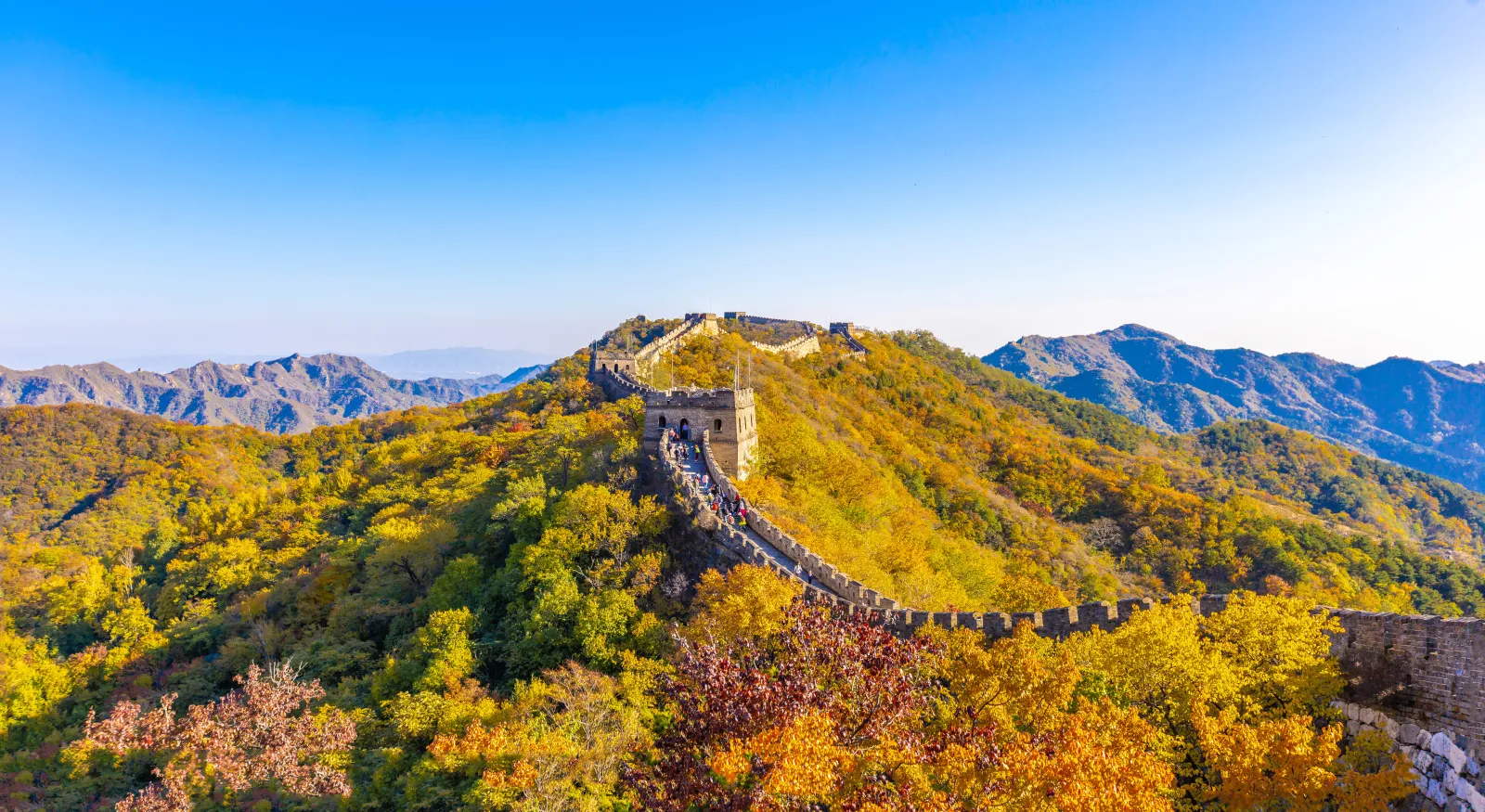
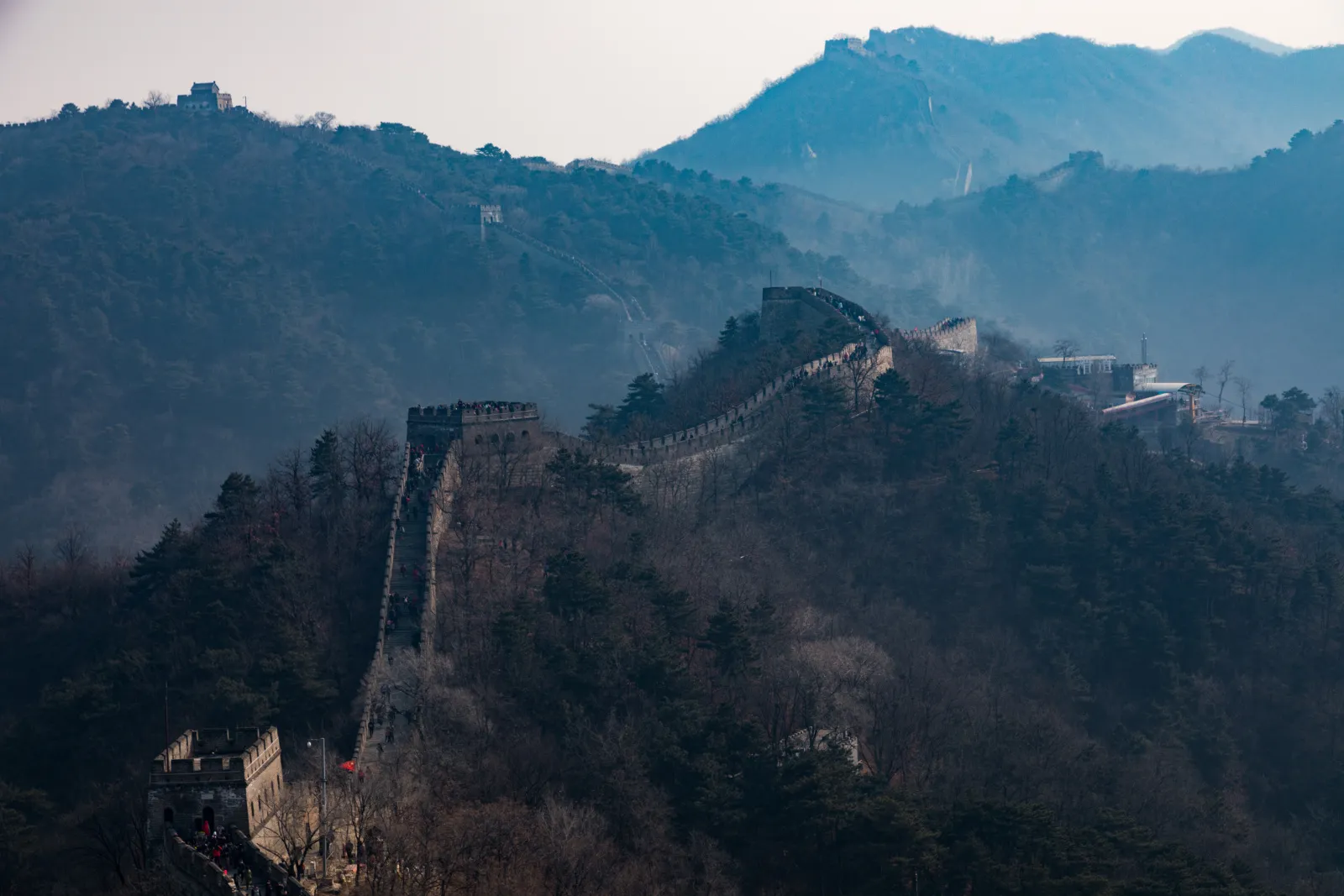
- Must-do: Mutianyu Great Wall at sunrise by private driver (¥800 / $112 round-trip), Da Dong Peking duck, the Jingshan Park rooftop view.
- Skip: Wangfujing snack street at peak hours (overcrowded) and the tourist-menu Peking duck near Tiananmen.
-
Xi’an — Terracotta Warriors + Muslim Quarter lanterns (2 nights). The 2,200-year-old Terracotta Army, the lantern-lit Muslim Quarter at sunset, and the only UNESCO-listed hotel building in Xi’an: Sofitel Legend, a 1953 Soviet-style former State Guest House now restored.
- Anchor hotel: Sofitel Legend Xi’an (¥900–1,500 / $126–210/night) for the heritage; Wyndham Grand Xi’an (¥600–900 / $84–126) for value.
- Must-do: Hire a tandem bike at the South Gate of the City Wall at sunrise (¥90 / $12.60 for 2 hours; the 14 km loop is empty 6:30–8 AM).
- Skip: the South Gate dumpling banquet tour trap — go to Tong Sheng Xiang for yangrou paomo and biang biang noodles instead.
-
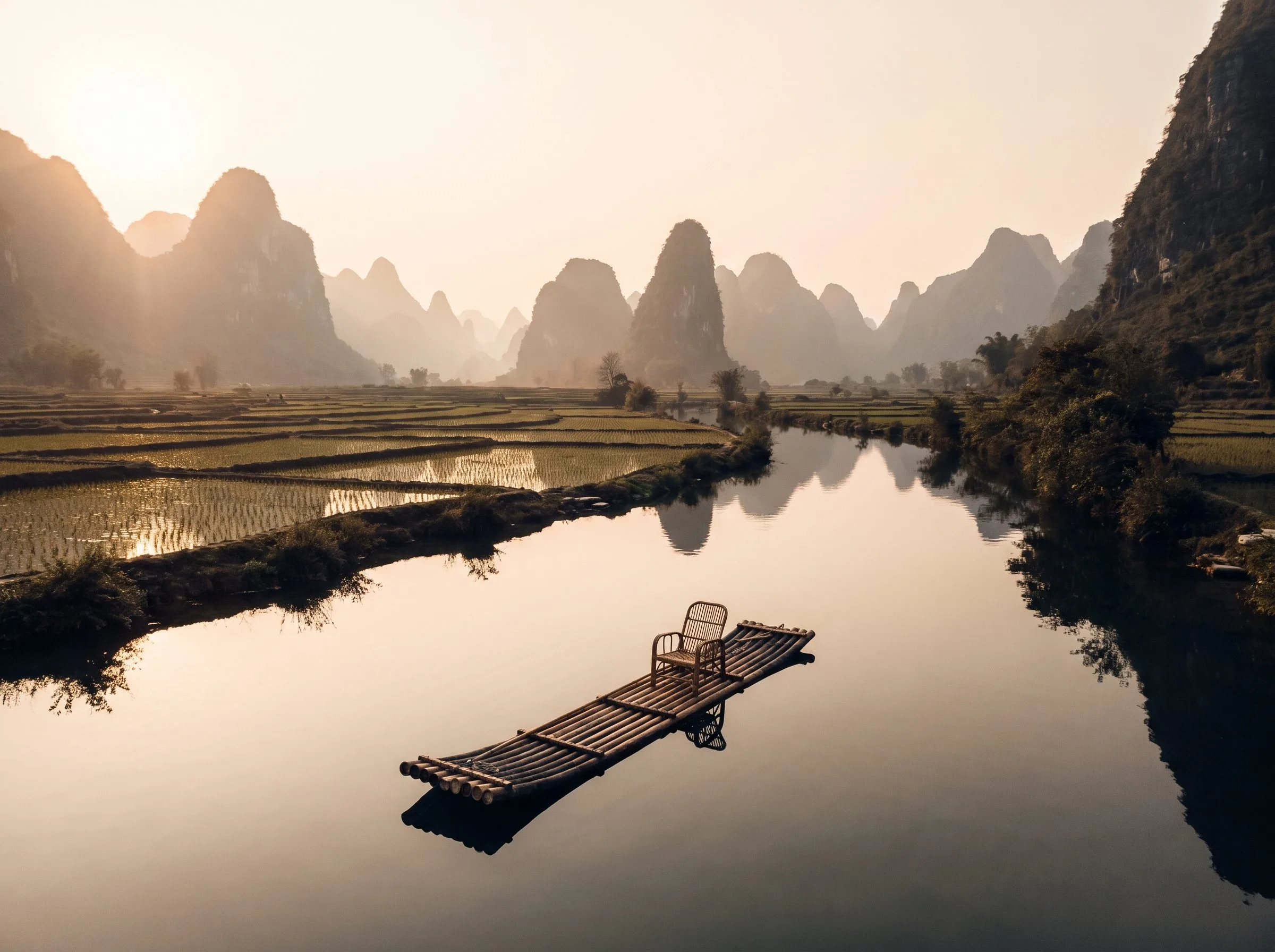
Guilin / Yangshuo — the karst landscape leg (2 nights). The leg most couples remember 10 years later. The Li River cruise (Guilin → Yangshuo, 4 hours, ¥215–450 / $30–63 per person) passes the Nine Horse Fresco Hill, the Yellow Cloth Shoal (the ¥20 / US$3 banknote scene) and Xingping ancient town. Stay 2 nights in Yangshuo for the slow morning, the Impression Sanjie Liu outdoor show directed by Zhang Yimou, and a cooking class with a local chef.
- Anchor hotel: Banyan Tree Yangshuo Riverside Suite (¥1,500–2,500 / $210–350/night) on the riverfront karst; Yangshuo Mountain Retreat (¥500–800 / $70–112) for a boutique B&B.
- Must-do: the 4-star Li River cruise with sit-down lunch (book via Trip.com 5+ days ahead), West Street at dusk, the Yangshuo Park sunrise.
- Skip: the 1-star cruise (overcrowded, box-meal lunch) — the 3-star boat is the practical minimum.
-
Shanghai — Bund night skyline + French Concession (3 nights). The Peninsula Shanghai high tea, the Bund night skyline from a heritage rooftop bar, the Ultraviolet 22-course tasting menu (the only 3-Michelin-star restaurant in mainland China, ¥6,000+ / $850+ per person, book 2–3 weeks ahead), and a slow morning walk through the French Concession.
- Anchor hotel: Peninsula Shanghai on the Bund (¥3,000+ / $420+/night) for the view; The Middle House in the French Concession (¥1,500–2,500 / $210–350) for a walkable, quieter base.
- Must-do: Ultraviolet (book 2–3 weeks ahead via the concierge), the Yu Garden morning walk, Tianzifang lane shopping.
- Skip: the Bund at peak sunset (overcrowded) — the Waldorf Astoria rooftop or the Peninsula terrace instead.
Looking for the big picture first? This page is the canonical China honeymoon hub: it covers the 10-day day-by-day route, all 8 best destinations, 5 trip lengths from 7 to 30 days, real cost tiers by budget, and the visa-free rules. For the rest of the cluster, jump to best time to go, cost breakdown by tier, or the China vs Bali vs Maldives comparison.
Is China good for a honeymoon? Yes — 4,000+ years of cultural sites, iconic karst landscapes, and luxury hotels at 50-70% below European pricing. The trade-off is a 12-15 hour flight from Europe/US and the need to plan around Chinese holidays. For couples who value cultural depth, this is one of the best honeymoon destinations in Asia.
The math: 10 days, 2 people, mid-to-luxury tier, plan $8,000–15,000 USD total ($4,000–7,500 per person) excluding international flights. UK and Korean passport holders both enter China visa-free for 30 days in 2026 (one of the few countries with visa-free honeymoon entry), so newlyweds land in Beijing and start exploring the same day. US, Canadian, and Australian passport holders need a tourist L-visa — $140, 4 working days, apply 30 days before.
The route runs Beijing (3 nights) → Xi’an (2 nights) → Guilin/Yangshuo (2 nights) → Shanghai (3 nights), with a high-speed train linking the first three legs and a flight from Guilin to Shanghai. You can also do this route in reverse (Shanghai → Yangshuo → Xi’an → Beijing) if Shanghai flights are cheaper.
When is the best time for a China honeymoon?
April 10 – May 20 and September 15 – October 31 are the two windows. April–May gives you Beijing cherry blossom season and Yangshuo’s best weather; September–October gives clear karst visibility, a mild Shanghai start and post-summer pricing after the August peak.
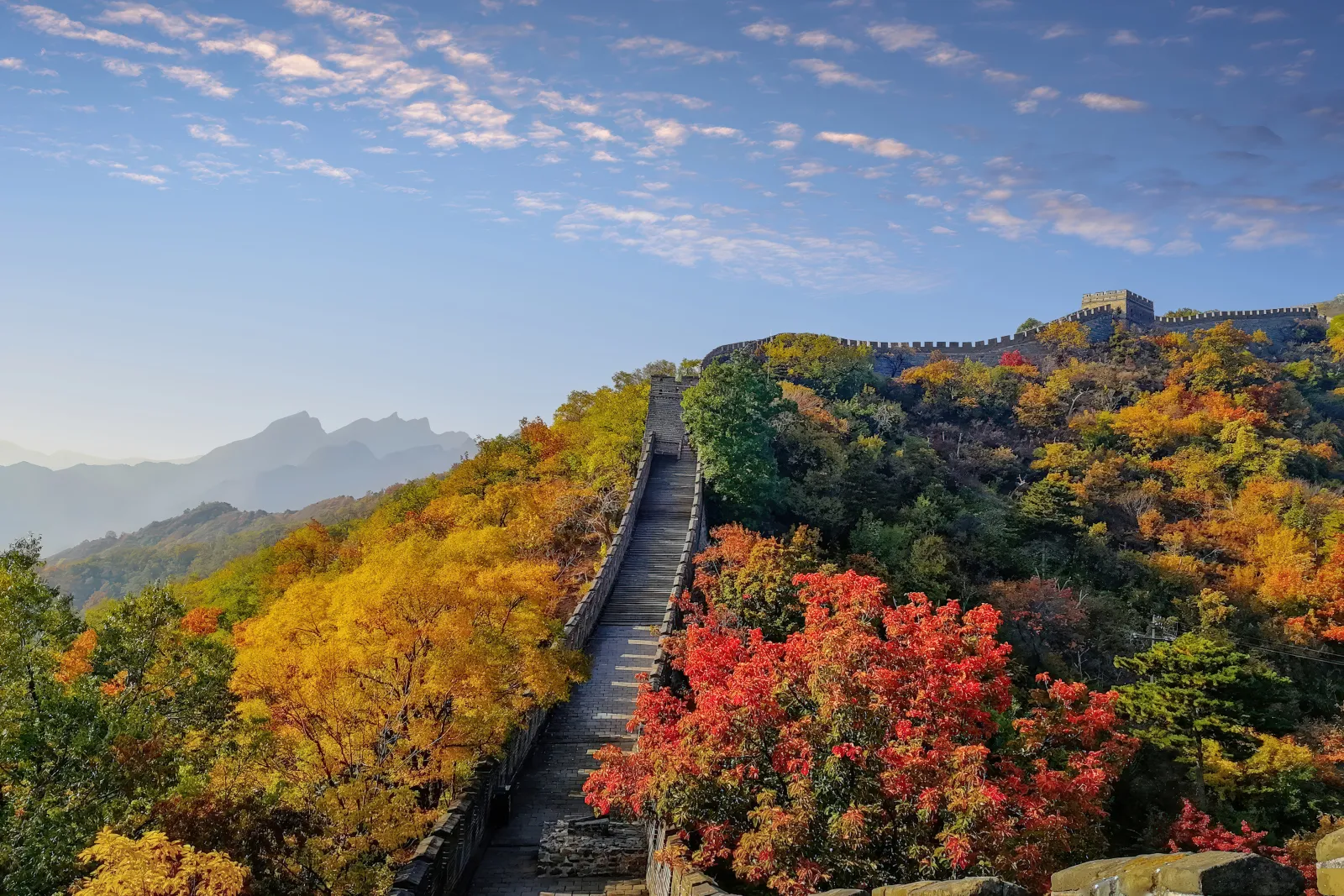
April–May and September–October are the answer. Cherry blossom season in mid-April makes Beijing’s Yuyuantan Park and Shanghai’s Tongji University crowd-free, and the October Golden Week crowds thin out after the 7th. Avoid Chinese New Year (late January/early February — variable dates), the first week of October, and the late-July typhoon risk window for Shanghai.
Temperature wise, expect 18–26°C in April, 22–32°C in May, and 16–24°C in October. Pack one light layer for Guilin evenings (the karst basin cools down faster than Shanghai).
Best time by region — if your route is not the classic four-city one, the calendar works differently:
| Region | Best months | Avoid |
|---|---|---|
| Yunnan | April–May, September–October | None — mild year-round |
| Sichuan mountains | May–October | November–April (snow) |
| Jiangnan (Shanghai/Hangzhou) | April–May, September–November | July–August (35°C+ humidity) |
| Tibet / Lhasa | May–October | November–April (cold, −2°C average) |
| Sanya / Hainan | October–April | July–September (typhoons) |
| Beijing / Datong | April–May, September–October | January–February (−10°C) |
The cheapest months are November to early December and March: hotel rates drop 30–50% versus the May or October golden weeks, crowds thin out, and the weather stays mild in southern China. Avoid Chinese New Year (late January / early February) and the National Day holiday (October 1–7), when prices double.
Four regional routes if the classic four-city loop is not your trip
Most couples want one region, not ten cities. These four routes are built around a single theme each, and they are the alternatives we see booked most often:
| Yunnan 7 days | Sichuan 14 days | Jiangnan 21 days | Tibet–Yunnan 30 days | |
|---|---|---|---|---|
| Style | Mountain + lake | Mountain + panda | Ancient towns | Spiritual + mountain |
| Places | Kunming, Dali, Lijiang | Chengdu, Jiuzhaigou, Emeishan | Shanghai, Hangzhou, Wuyuan, Huangshan | Lhasa, Shigatse, Lijiang, Dali |
| Difficulty | Easy | Medium | Easy | Hard (altitude) |
| Budget per couple | ¥16,000–24,000 ($2,300–3,400) | ¥35,000–50,000 ($5,000–7,000) | ¥60,000–100,000 ($8,500–14,000) | ¥100,000–180,000 ($14,000–25,000) |
| Best season | Apr–May, Sep–Oct | May–Oct | Apr–May, Sep–Nov | May–Oct |
| Visa | 240-hour visa-free | L-visa | L-visa | L-visa |
Yunnan 7 days is the most popular route for first-timers and shorter honeymoons: two days in Kunming (the Spring City, plus the Stone Forest UNESCO karst formations 90 minutes away), the high-speed rail to Dali for the Erhai Lake bike ride and the old town, then on to Lijiang for the Jade Dragon Snow Mountain, Yulong village and Black Dragon Pool, and a slow final morning before you fly out. Budget ¥16,000–26,000 ($2,300–3,700) per couple at 4-star: ¥1,500–2,500 ($210–350) domestic flights, ¥7,000–12,000 ($1,000–1,700) hotels, ¥3,000–4,000 ($420–560) food, ¥1,500–2,000 ($210–280) HSR and local transport, ¥1,500–2,000 ($210–280) attraction tickets, and ¥1,500–3,000 ($210–420) for special experiences.
Sichuan 14 days adds pandas and high mountain scenery: Chengdu’s panda base and Sichuan cooking, then Jiuzhaigou and Huanglong, Emeishan for the Golden Summit, and Dujiangyan and Qingcheng Mountain at the end. Budget ¥30,000–45,000 ($4,200–6,400) per couple: ¥2,000–3,000 ($280–420) flights, ¥14,000–22,000 ($2,000–3,150) hotels, ¥6,000–8,000 ($850–1,150) food, ¥3,000–4,000 ($420–560) transport, ¥2,000–3,000 ($280–420) tickets, and ¥3,000–5,000 ($420–700) for special experiences.
Jiangnan 21 days is the old-towns route: Shanghai modern and traditional, Suzhou’s classical gardens (the high-speed rail from Shanghai Hongqiao takes 25 minutes), Hangzhou’s West Lake, the ancient villages of Wuyuan, and finally Huangshan. Budget ¥43,500–70,000 ($6,200–10,000) per couple: ¥2,000–3,000 ($280–420) flights, ¥20,000–35,000 ($2,850–5,000) hotels including one summit night, ¥10,000–14,000 ($1,400–2,000) food, ¥5,000–7,000 ($700–1,000) transport, ¥3,500–5,000 ($500–700) tickets, and ¥3,000–6,000 ($420–850) for special experiences.
Tibet–Yunnan 30 days is the long spiritual circuit: three days acclimatizing in Lhasa (3,650m), optional Everest views from Shigatse (a 6-7 hour, 400 km drive from Lhasa), the scenic route down into Yunnan, then Lijiang, Dali and Kunming. It is the most expensive and the most demanding — budget ¥75,000–124,000 ($10,700–17,700) per couple: ¥5,000–8,000 ($700–1,150) flights, ¥30,000–50,000 ($4,200–7,150) hotels, ¥12,000–18,000 ($1,700–2,550) food, ¥15,000–25,000 ($2,100–3,550) transport because a private car is essential, ¥5,000–8,000 ($700–1,150) tickets, and ¥8,000–15,000 ($1,150–2,150) for special experiences such as Everest viewpoints and family homestays.
Pace: plan 2–3 days per city for real depth rather than rushing through five cities in seven days. Two cities in seven days with three to four days in each is the sweet spot — one day for the old town and cultural sites, one for nature or a day trip, one for slow time together.
The 5 mistakes that ruin a China honeymoon
1. Underestimating distance. China is the fourth largest country in the world by area — Yunnan alone is 1,000 km across. The 7-day Yunnan route covers 3 cities, the 14-day Sichuan route 3–4, the 30-day Tibet–Yunnan route 5–6. Trying to do 6+ cities in 7 days means spending the whole trip in transit. Fix: one region per trip, flights for the long jumps (Yunnan to Sichuan is a 1,500 km HSR trip or a 2-hour flight), HSR for the short ones.
2. Missing weather variation. Mountain areas swing 10–15°C between day and night even in summer. Yunnan averages 15–25°C year-round but is rainier June–August; Jiangnan (Shanghai) hits 32–38°C with high humidity in July–August; Lhasa at 3,650m makes altitude sickness real. Fix: bring layers — a light jacket or fleece for evenings and a rain jacket for June–August. For Tibet, spend 2–3 days acclimatizing in Lhasa before going higher.
3. Booking too late in peak. Peak season (April–May, September–October) books 3–4 months ahead for international flights, 1–2 months for HSR, and 2–4 weeks for boutique hotels. The 240-hour visa-free requires an onward ticket within 240 hours of arrival — book that before leaving home. Remote hotels (Jiuzhaigou, Wuyuan, the Emeishan summit) have 5–15 rooms in total and sell out 1–2 months ahead in peak. Fix: flights and HSR 3–4 months ahead, hotels 1–2 months, special experiences such as hanfu photoshoots or panda volunteering 1–2 months.
4. Ignoring altitude. Altitude sickness affects 30–50% of visitors above 3,000m. Symptoms are headache, nausea, fatigue and insomnia; severe cases need emergency descent. Fix: spend 2–3 days in Lhasa doing light activity (the Potala Palace is 1–2 hours maximum), drink 4–5 liters of water a day, and avoid alcohol for the first 3 days. If symptoms are severe, descend to Kunming or Chengdu. On the Tibet–Yunnan route, fly Lhasa → Kunming rather than driving.
5. Not budgeting for a private driver-guide. China’s remote areas have limited public transport — Jiuzhaigou, Wuyuan, the Emeishan summit and the Tibet–Yunnan grand circuit all require private cars. A one-day private car in remote areas runs ¥600–1,200 ($85–170); across a 14–30 day trip the private car runs ¥8,000–25,000 ($1,150–3,550). Skipping it means missing more than half the experience. Fix: budget the private car as a major line item, hire through guesthouses (most reliable) or Trip.com, and confirm the driver’s English level, the car type (4 seats or minivan), and what happens if weather cancels. The budgets above already include private cars for the relevant days.
Visa options by trip length
| Visa | Stay | Cost | Best for |
|---|---|---|---|
| 240-hour visa-free (57 countries) | 10 days | $0 | Yunnan 7-day, Hangzhou–Wuyuan 7-day, Beijing–Datong 5-day |
| L-visa (single entry, tourist) | 30 days | $140–180 | Sichuan 14-day, Jiangnan 21-day |
| M-visa (multiple entry) | 90 days | $180–250 | Tibet–Yunnan 30-day, repeat visits |
Both spouses need separate applications, though a joint interview is possible. Some embassies ask for a marriage certificate to prove the purpose of the trip — bring the original or a certified copy. Apply 2–3 months ahead. For the full country list see our 240-Hour Visa-Free Complete Guide and the China Tourist Visa Guide.
If you love it and want to stay longer: most embassies grant a one-month extension on an L-visa ($50–100). The 240-hour visa-free cannot be extended — 10 days is the maximum — so for a longer stay you need the M-visa, which allows 90 days and multiple entries.
Day 1–3: Beijing (3 nights)
Day 1: Arrival + Forbidden City
Land at PEK. Immigration is fast for 30-day visa-free (15–30 min). Take the airport express to Dongzhimen (¥25 / US$3, 30 min) and check into a hotel in the Dongcheng or Chaoyang district.
Drop bags, then walk the Forbidden City (¥60 / $8.50) in the late afternoon — the light at 4 PM through the Hall of Supreme Harmony is the moment. Pre-book online; closed Mondays. Two hours is enough on a couple’s trip; skip the Treasure Gallery and just walk the central axis together.
Climb Jingshan Park (¥2 / US$0.28) for the rooftop view, then dinner at Da Dong (大董, multiple branches near Wangfujing) for the modern Peking duck — a whole duck feeds two, ¥300–500 ($42–70), reservation via Trip.com. After dinner, walk the Wangfujing snack street slowly. The candied hawthorn is the taste of the trip.
Day 2: Mutianyu Great Wall + China World Summit Wing sunset
Full day to Mutianyu (¥40 / $5.50 entry, ¥100 / $14 cable car, ¥100 / $14 toboggan down). Hire a private driver (¥800 / $112 round-trip) — the bus is 2 hours each way and you will not enjoy the Wall after a 2-hour commute. Take the cable car up, walk the flat restored section to Tower 20 (~30 min, no stairs), and ride the toboggan down together. Back in Beijing by 5 PM.
Drop the bags at the hotel and head to the China World Summit Wing (国贸三期, 国贸大酒店) — the 80th-floor bar at the China World Trade Center tower, 330m up. Cocktails run ¥120–180 ($17–25) each, but the golden-hour view over central Beijing is worth the splurge. Open to non-guests; no reservation required but come before 6 PM for the sunset.
Dinner at King’s Joy (京兆尹, 雍和宫) for a vegetarian tasting menu (¥580 / $81 per person, book 3–5 days ahead via Trip.com or the concierge) — it’s the only Michelin-three-star vegetarian restaurant in Asia.
Day 3: Temple of Heaven sunrise + Summer Palace + hutong night
Set the alarm for 5:30 AM and walk to Temple of Heaven (¥35 / $5) by 6 AM. The retired locals doing tai chi in the cypress groves is the real scene. One hour, no crowds, golden light through the Echo Wall.
After a slow hotel breakfast, take a DiDi to the Summer Palace (¥60 / $8.50 combined ticket, or ¥30 / US$4 for the gardens only). Skip the Suzhou Street (tourist trap); walk the Long Corridor, the Seventeen-Arch Bridge, and the boat ride across Kunming Lake (¥40 / $5.50 for a 10-minute rowboat, ~1.5 hours total). Lunch at the on-site restaurant is overpriced; DiDi back to the hutongs for lunch at Din Tai Fung (鼎泰豐) for xiaolongbao.
Afternoon: Nanluoguxiang (南锣鼓巷) for a slow walk, then a private rickshaw tour of the surrounding hutongs — bookable through the concierge at any Peninsula or Rosewood hotel for ¥400–600 ($56–84) for 2 hours. Dinner at TRB (前海, 什刹海) for French cuisine in a converted Ming-dynasty temple. Tasting menu ¥800 / $112 per person.

Day 4–5: Xi’an (2 nights)
Day 4: Terracotta Warriors + Tang Dynasty show
High-speed train from Beijing West to Xi’an North (G-series, 4h 30m–5h 30m, ¥623 / $87 second-class, every 20–30 min from 7 AM to 7 PM). Book through Trip.com 3+ days ahead. Arrive Xi’an by 1 PM, check into a hotel inside the City Wall (¥400–800 / $56–112 per night for a 4-star like the Sofitel Legend Xi’an, a 1953 Soviet-style former State Guest House now restored — the only UNESCO-listed hotel building in Xi’an, ¥900–1,500 / $126–210 per night).
Afternoon: hire a private car + guide to the Terracotta Warriors (¥120 / $17 entry, ¥300 / $42 for an English guide through the official site, book 24h ahead). Spend 2.5–3 hours. The Bronze Chariot and Horse exhibition is the highlight.
Back in the old town by 7 PM, dinner at Tong Sheng Xiang (同盛祥) for yangrou paomo (lamb stew with flatbread, ¥40 / US$6) and biang biang noodles (¥20 / US$3). Walk through the lantern-lit Muslim Quarter slowly — it’s the most romantic 1 km in China after sunset.
Evening: Tang Dynasty show (¥298 / $42 standard, ¥398 / $56 VIP) at the Shaanxi Grand Opera House. The dance, music, and costumes are touristy in a charming way. Book through Klook for skip-the-line entry.
Day 5: City Wall bike at sunrise + Bell Tower
Hire a tandem bike at the South Gate (永宁门) of the City Wall (¥45 / $6.30 for 2 hours, or ¥90 / $12.60 for a tandem). Ride the 14 km loop at sunrise — the wall is empty between 6:30 and 8 AM, and the view east over the old town rooftops is the best photography moment of the trip. The full loop takes 2 hours at a leisurely pace with photo stops.
After breakfast at the hotel, walk the Bell Tower (¥40 / $5.50) and the Drum Tower next door (¥40 / $5.50). Then check out and take a high-speed train to Guilin North (G-series, 6h–7h, ¥450 / $63 second-class) or fly to Guilin Liangjiang (2h, ¥400–800 / $56–112). The train is more romantic; the flight saves a day for Yangshuo.
Day 6–7: Guilin/Yangshuo (2 nights)
Day 6: Li River cruise + West Street
Pick up a 4-star Li River cruise (漓江, ¥215–450 / $30–63 per person, 4 hours Guilin to Yangshuo) from Zhujiao Pier (竹江码头) at 9 AM. The boat passes the Nine Horse Fresco Hill, the Yellow Cloth Shoal (¥20 / US$3 banknote scene), and Xingping ancient town. The 4-star boats (¥450 / US$63) have a sit-down lunch and an open-air top deck; the 3-star boats (¥215 / US$30) are crowded and the lunch is a box meal. Book the 4-star via Trip.com at least 5 days ahead.
Arrive Yangshuo by 2 PM. Check into Banyan Tree Yangshuo (¥1,500–2,500 / $210–350 per night) — a 5-star resort in a 1960s sugar mill on the Li River, with private balconies overlooking karst peaks. It’s the most consistently rated luxury property in Guangxi and the only one with an in-suite plunge pool option. Couples on a tighter budget: Yangshuo Mountain Retreat (阳朔山畔度假酒店, ¥600–900 / $84–126 per night) on the Yulong River, smaller, quieter, with a Michelin-recommended restaurant.
Late afternoon: cycle the Yulong River rice paddies — bike rental ¥30 (US$4)/day from any of the West Street shops, the loop is 8 km flat. Stop at the Xinglong bamboo-raft crossing (¥120 / $17 for a 30-minute pole-raft ride for two).
Evening: Impression Sanjie Liu (印象·刘三姐) outdoor light show directed by Zhang Yimou — 600 performers on the Li River, 70 minutes, ¥238 / $33 per person. Sit in the VIP area (¥350 / $49) for the unobstructed view. The show runs nightly in good weather; book via Klook.
Dinner at the Cloud 9 restaurant inside the Yangshuo Mountain Retreat (Yunnan/Guangxi fusion, ¥300 / $42 for two with wine) or at Demi Restaurant in West Street (modern Italian, ¥500 / $70 for two).
Day 7: Xingping sunrise + departure to Shanghai
Sunrise at Xianggong Hill (相公山, ¥60 / $8.50 entry, 20 min climb) — the classic karst panorama shot. Bring a tripod if you have one. After sunrise, a slow walk through Xingping ancient town (¥20 / US$3 entry) for the 1,700-year-old stone streets and the river boat dock that appears on the ¥20 (US$3) note.
Mid-morning: drive to Guilin Liangjiang airport (1.5 hours) for a flight to Shanghai (2 hours, ¥600–1,000 / $84–140). On arrival, check into a Bund-side hotel for the next three nights.
Day 8–10: Shanghai (3 nights)
Day 8: The Bund + Yu Garden + French Concession
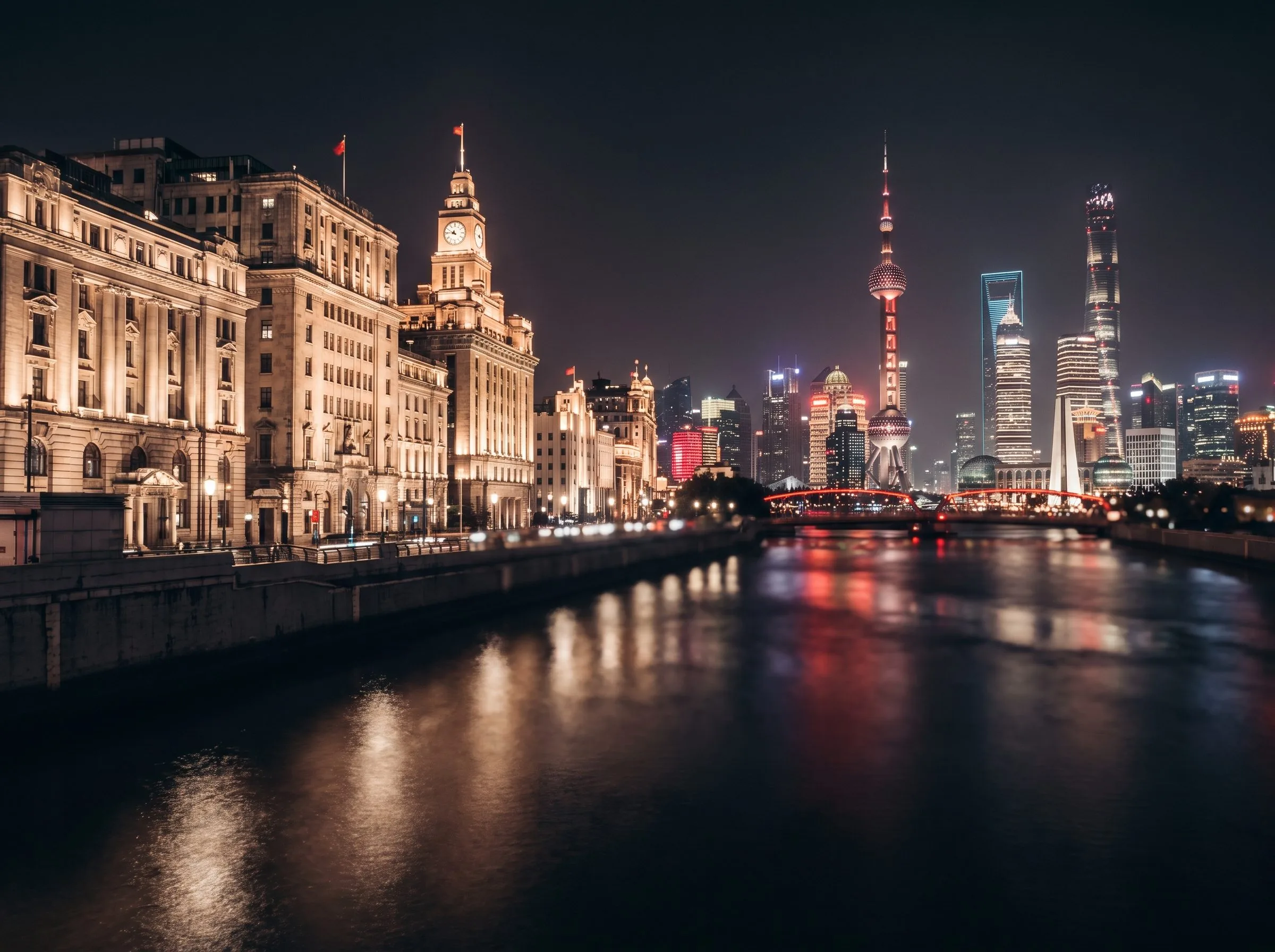
Sleep in. Breakfast at the hotel. Late morning, walk the Bund (外滩) from north to south — 1.5 km, 30 minutes, free. The colonial-era facades on the west side and the Pudong skyline on the east are the most-photographed city view in China.
Lunch at Fu 1088 (福1088, ¥300 / $42 per person, modern Shanghainese in a 1930s villa) or Jesse Restaurant (吉士酒家) for classic local. Walk west into the French Concession — Fuxing Park → Sinan Mansions → Wukang Road → Anfu Road → Tianzifang. Allow 2 hours. Coffee at Manner Coffee (original shop at 268 Nanshan Road, ¥20 / US$3/cup).
Afternoon: Yu Garden (¥40 / $5.50, closed Mondays) and the bazaar. Try the century-old Nanxiang Xiaolongbao (南翔小笼包, upstairs seating, ¥30–50 / US$4–7/steamer).
Evening: Huangpu River night cruise (¥120–180 / $17–25, 1 hour) for the illuminated Pudong skyline. Book via Klook. Dinner at M on the Bund (¥500 / $70 per person) for Western cuisine with the best window view in Shanghai, or at Lost Heaven (花马天堂, Yunnan) for something more atmospheric.
Day 9: Zhujiajiao day trip + Peninsula high tea
Full day to Zhujiajiao water town (朱家角, ¥80 / $11 combined entry, 1 hour from central Shanghai via Metro Line 17). The 1,700-year-old canals and stone bridges are an antidote to skyscraper fatigue. Take a gondola (¥150 / $21 for 15 min, 6 people per boat — share with another couple or two). Lunch at one of the canal-side restaurants for zharou (braised pork belly, ¥6 / US$0.83 per piece) and zongzi (sticky rice dumplings, ¥6 / US$0.83).
Evening: afternoon tea at The Peninsula Shanghai (¥388 / $54 per person, daily 2:30–5:30 PM, reservation essential) — the lobby is the most beautiful in Shanghai. Then dress up for dinner at Ultraviolet by Paul Pairet (10 seats, ¥6,000+ / $850 per person, book 3 months in advance). Ultraviolet is the world’s most experimental restaurant; the multisensory experience is worth the price once in a lifetime. If booked out, try Mr & Mrs Bund (French, ¥600 / $84 per person) or 8½ Otto e Mezzo Bombana (Italian, 3 Michelin stars, ¥800 / $112 per person).
Day 10: Pudong + departure
Morning: Shanghai Tower (¥180 / $25, 118th-floor observation deck, tallest in China at 632m). Pre-book online to skip the ticket line. Coffee at the on-site café 118.
Then a slow walk through the Power Station of Art (¥0, free, Shanghai’s contemporary art museum in a converted power plant, 2 hours if you like modern Chinese art) or a final pass through the French Concession for last-minute shopping. Lunch at Din Tai Fung (鼎泰豐) in Shanghai IFC Mall for one last xiaolongbao lunch.
Departure: take the Maglev from Longyang Road to Pudong Airport (¥50 / US$7, 7 minutes at 431 km/h, the fastest public transport in commercial service) or a DiDi (¥120 / $17, 50 min).
Where should we stay in Shanghai for a honeymoon?
Three areas work, depending on your style: the Bund (¥3,000+ / $420+ per night — the view is the splurge), the French Concession (¥1,500–2,500 / $210–350 — quieter, walkable, café-lined, and the strongest mid-luxury pick), or Pudong (¥2,000+ / $280+ — the skyline view from the room). For a three-night stay the French Concession is the best base for couples who want to walk everywhere; the Bund is the best base for couples who want one iconic skyline view from their room. The table below covers all four cities on the route.
| City | Budget (¥300–600 / $42–84) | Mid (¥800–1,500 / $112–210) | Luxury (¥1,800+ / $252+) |
|---|---|---|---|
| Beijing | Hotel Cote Cour (¥600 / US$83 courtyard hotel, Dongcheng) | Rosewood Beijing (¥1,800 / US$250, Chaoyang CBD) | The Peninsula Beijing (¥2,500 / US$347, Wangfujing) |
| Xi’an | Jin Jiang Inn (¥300 / US$42, inside City Wall) | Sofitel Legend Xi’an (¥1,200 / US$167, UNESCO-listed 1953 building) | Sofitel Legend Xi’an (Grand Heritage Suite ¥1,500 / US$208) |
| Yangshuo | Yangshuo Mountain Retreat (¥600 / US$83, Yulong River) | Banyan Tree Yangshuo (¥1,800 / US$250, Li River) | Banyan Tree Yangshuo (Riverside Suite ¥2,500 / US$347) |
| Shanghai | URBN Boutique (¥800 / US$111, Jing’an, converted 1970s post office) | The Middle House (¥1,500 / US$208, Jing’an, Piero Lissoni design) | The Peninsula Shanghai (¥3,000 / US$417, Bund view) |
Beyond the four route cities, honeymoon-friendly properties sort into five tiers:
| Tier | Brand | Where | Cost per night |
|---|---|---|---|
| 5-star luxury | Aman, Banyan Tree, Six Senses, Mandarin Oriental | Lijiang, Hangzhou, Sanya, Shanghai | ¥3,000–10,000 / $420–1,400 |
| 5-star international | Hilton, Marriott, InterContinental, Shangri-La | All major cities | ¥1,500–3,000 / $210–420 |
| Boutique 4-star | Local Chinese chains (Jin Jiang, Hanting, Atour) | All major cities | ¥500–1,200 / $70–170 |
| Boutique heritage | Converted courtyard, stilted house or old-town guesthouse | Pingyao, Fenghuang, Lijiang, Dali | ¥300–800 / $40–115 |
| Resort / hot spring | Mountain resort with a hot spring | Huangshan, Tengchong, Emeishan | ¥1,000–2,500 / $140–350 |
For a honeymoon the working rule is: book 5-star luxury or boutique heritage for 1–2 special nights, and 4-star international for the rest.
How much does a China honeymoon cost in 2026?
Plan $8,000–$15,000 USD total for a 10-day China honeymoon for two at the mid-to-luxury tier ($4,000–$7,500 per person, excluding international flights). The biggest savings are the hotels — chains that charge $600/night in Tokyo or $400/night in Bangkok are $200–350/night in Beijing and Shanghai.
- Hotels: 9 nights × ¥1,200 (US$167) average = ¥10,800 ($1,512)
- High-speed trains: Beijing → Xi’an (¥1,246 / US$173), Xi’an → Guilin (¥900 / US$125), plus Maglev return = ¥2,200 ($308)
- Flights: Guilin → Shanghai, 2 tickets = ¥1,400 ($196)
- Entry tickets & shows: ¥2,000 ($280) (Forbidden City, Terracotta, Tang Dynasty, Impression Liu, Yu Garden, Shanghai Tower, etc.)
- Food (2 people, ¥400 / US$56/day avg): ¥4,000 ($560)
- Local transport (DiDi + metro): ¥800 ($112)
- 1 splurge meal (Ultraviolet or TRB): ¥1,600 ($224)
- Misc: ¥1,200 ($168)
- Total: ¥24,000 / $3,360 per couple (mid-tier)
Luxury tier (¥3,000 / US$417/night hotels, Ultraviolet, two long-distance flights) easily reaches ¥60,000 / $8,400 per couple. Hostel/backpacker tier is doable for ¥12,000 / $1,680 per couple with budget hotels and sleeper trains, but the romance does thin out at that budget.
What are the best places to honeymoon in China?
The strongest four are Beijing (Forbidden City, Mutianyu Great Wall sunrise), Xi’an (Terracotta Warriors, Muslim Quarter), Guilin/Yangshuo (Li River cruise, Banyan Tree on the riverfront karst) and Shanghai (Peninsula high tea, the Bund night skyline) — and the five below are the alternatives when that classic route does not fit.
If the Beijing-Xi’an-Yangshuo-Shanghai route doesn’t fit — you’ve already seen the Wall, you want a beach, you only have 7 days, or you prefer slow mornings to fast ones — these five alternatives are the strongest one- or two-destination honeymoons in China. Each has a specific angle the main itinerary doesn’t cover.
-
Sanya, Hainan (5–7 nights) — The “Hawaii of China.” Year-round 24–30°C, white-sand beaches, Mandarin Oriental Sanya (¥3,200 / $450 per night, 1.2 km private beach on Dadonghai Bay) and The Sanya Edition (¥4,200 / $580 per night, oceanfront villas in Yalong Bay). Best for couples who want a beach honeymoon without leaving China. Hainan has a separate visa-free island entry for 61 countries for up to 30 days — confirm your passport qualifies before booking. Pairs well with a 3-day Wuzhizhou Island + Yanoda Rainforest add-on. Skip July–September (typhoon risk window for the south coast). See the full Honeymoon in Sanya guide.
-
Lijiang + Shangri-La, Yunnan (5–7 days) — The most romantic old-town experience in China. 800-year-old Lijiang Old Town (UNESCO, free entry, walk the cobblestone alleys and canals before 9 AM to avoid the day-trippers), Jade Dragon Snow Mountain at 4,500m elevation (¥100 / $14 entry, ¥60 / $8.40 cable car, snow year-round), and the Amandayan hotel (¥2,000 / $280 per night, the only Aman in Yunnan, traditional Nakhi courtyard architecture). Best for couples who like slow mornings, cobblestone alleys, and Tibetan foothills. Add a Shangri-La leg (2 days) for the Songzanlin Monastery if altitude doesn’t bother you. Best months April–May and October–November; avoid winter (Yunnan altitude plus cold mornings = 0–8°C). See the full Honeymoon in Lijiang guide.
-
Hangzhou + Wuzhen (4–5 days) — “Paradise on Earth” in classical Chinese literature. West Lake (UNESCO) at sunrise — walk the Su Causeway or the Bai Causeway, both free, 1.5–2 hours — the Lingyin Temple and Flying Peak complex (¥75 / $10.50 entry), the Longjing tea plantations (free entry, ¥80–150 / US$11–21 for a tea ceremony and tasting), and the Aman Fayun resort ($320 per night) tucked into a tea-plantation valley 20 minutes from town. Four Seasons Hangzhou at West Lake (¥2,000–3,000 / $280–420) is the mid-luxury lake-view alternative. Best for couples who value culture plus slow pace over high-adrenaline scenery. Pair with Shanghai (1-hour HSR) for a 7-day route. Skip Leifeng Pagoda at peak hours — the view from Jingci Temple across the lake is the better photograph. See the full Honeymoon in Hangzhou guide.
-
Dali, Yunnan (4–5 days) — The slow-boat, slow-coffee town of Yunnan. Erhai Lake (75 km cycling loop, flat, with views of Cangshan Mountain; the 50 km loop road is one of the most scenic drives in China, ¥200–300 / US$28–42 / day for an e-bike rental), the Dali Old Town (smaller and quieter than Lijiang), the Cangshan Mountain cable car (¥282 / $40 round-trip, panoramic view over the lake), and the Linden Centre (¥1,800 / $250 per night, a restored Bai-ethnic compound, the most atmospheric boutique hotel in Yunnan). Six Senses Qingchuan Mountain (¥3,000+ / $420+ per night) is the luxury option. Best months March–May and September–November; avoid the summer monsoon (June–August, persistent rain). Skip the Three Pagodas main-gate entrance (¥121 / US$17) — the view from the Cangshan cable car is the better value. See the full Honeymoon in Dali guide.
-
Emei Mountain + Leshan, Sichuan (4–5 days) — The most romantic mountain + Buddha experience. Mount Emei’s Golden Summit (3,079m, sunrise above the clouds, ¥160 / $22 entry, ¥50 / $7 cable car), the Love Locks Plank Road (couples hang locks and throw the key into the abyss — the “inseparable eternal love” tradition), and the Leshan Giant Buddha (UNESCO, 71m tall, ¥80 / $11 entry, 40 min from Emei). Best for couples who want a more active, off-the-beaten-path honeymoon.
A practical tip: pick 1–2 of these as your primary destination and add a 2-night Shanghai bookend (for the Bund night view) rather than try to cram 3 regions into one trip. The honeymoon you’ll remember is the slow one, not the rushed one.
Which trip length is right for you?
Ten days is the sweet spot, but it is not the only option. Here are the four lengths most couples actually book, with what each costs per couple at the mid-to-luxury tier:
| Length | Route | Cost per couple | Best for |
|---|---|---|---|
| 7 days | Beijing (3) → Xi’an (2–3) → Shanghai (2) — one culture leg plus one city finish | $5,500–8,500 | Couples with limited leave; you will drop either Xi’an or Yangshuo |
| 10 days | Beijing (3) → Xi’an (2) → Guilin/Yangshuo (2) → Shanghai (3) — the classic four-city route detailed below | $8,000–15,000 | The sweet spot: long enough to feel like a real trip, short enough to plan around a 2–3 week window |
| 14 days | The classic route plus a Sanya beach finish (fly Shanghai → Sanya, 3h, ¥500–1,200 / $70–168) | $14,000–22,000 | Couples who want both culture and a beach; also the standard two-week version |
| 10 days, Yunnan-only | Lijiang (3) → Dali (3) → Kunming → Shanghai (4) | $9,000–16,000 | Nature-and-culture couples who would rather slow down than collect cities |
The 7-day version runs Beijing → Xi’an by HSR (4h 30m–5h 30m, ¥623 / $87 second-class), then Xi’an → Shanghai by HSR (6h–7h, ¥450 / $63) or flight (2h, ¥600–1,200 / $84–168). The Yunnan-only alternative swaps the eastern cities for the southwest: drive Lijiang → Dali (3h 30m, ¥600 / $84 by private car, or ¥150 / $21 by public bus), then train Dali → Kunming (2h, ¥145 / $20 second-class) and fly Kunming → Shanghai (3h 30m, ¥500–1,200 / US$69–167).
What a China honeymoon costs by tier
For a 10-day mid-to-luxury China honeymoon for two, plan $8,000–15,000 USD total ($4,000–7,500 per person, excluding international flights). The same trip at other tiers:
| Tier | Per couple | Per person | What’s included |
|---|---|---|---|
| Budget (hostels, 2nd-class HSR, street food) | $2,500–3,500 | $1,250–1,750 | 3-star Beijing ($80/night) + Sofitel Legend Xi’an standard ($130) + Yangshuo Mountain Retreat ($80) + The Middle House standard ($180); 2nd-class HSR; no Ultraviolet splurge |
| Mid (4-star hotels, 1st-class HSR, 1 splurge meal) | $6,000–8,000 | $3,000–4,000 | 4-star throughout, business-class HSR, one Michelin meal, private driver to the Great Wall and Terracotta Warriors |
| Mid-luxury (Peninsula / Sofitel Legend / Banyan Tree) | $8,000–15,000 | $4,000–7,500 | The canonical 10-day route: anchor hotels, 1st-class HSR, the Ultraviolet splurge, the Impression Sanjie Liu show |
| Luxury (Aman + Peninsula + private guides) | $15,000–25,000 | $7,500–12,500 | Amandayan + Peninsula + Sofitel Legend + Ultraviolet; a WildChina private guide 4–5 hours a day |
The biggest savings are the hotels — international chains that charge $600/night in Tokyo or $400/night in Bangkok are $200–350/night in Beijing and Shanghai. The biggest surprise cost is internal flights on domestic carriers with foreign cards: $100–150 per person for Guilin → Shanghai. For city-by-city tier pricing see China Honeymoon Cost 2026.
Three ways to book a China honeymoon package
A “China honeymoon package” for foreign couples is a 7–14 day itinerary that bundles 3–4 cities, 2–3 internal transport legs, one splurge meal, and the visa and entry logistics. Ranked by value:
- DIY + Trip.com (best value, most flexible) — book anchor hotels individually, the HSR and flight legs via Trip.com, the splurge meals through each restaurant’s concierge. This is what most foreign couples do. You keep all the optionality, the cost runs 30–40% below a tour operator, and you can swap the Yangshuo leg for Chengdu or Sanya without penalty. The concierge at each anchor hotel (Peninsula, Sofitel Legend, Banyan Tree, Aman) can pre-arrange private drivers, the Tang Dynasty show, and the Li River cruise.
- China Highlights or WildChina custom tour (best for time-poor couples) — one point of contact, full itinerary handling, an English-speaking guide, internal flights and HSR bundled. $12,000–20,000 for the same 10-day route: a 30–50% premium over DIY for the same hotels and flights, paid for the time saved.
- Trip.com bundled hotel + flight (best for short trips) — works well for Shanghai + Sanya or Beijing only. It does not bundle the four-city classic cleanly, because the HSR legs do not package with the hotels. Combined flight + hotel packages run 10–15% cheaper than booking the two separately, which makes this the cheapest way to fly into China and land with a car and a room already arranged.
What to splurge on (the three things that define a honeymoon): the Bund-view room at Peninsula Shanghai (¥3,000+ / $420+), the 4-star Li River cruise (¥450 / $63 per person), and the Tang Dynasty show in Xi’an (¥398 / US$55 VIP). If the room is what you actually care about, our China luxury hotel guide covers the full Peninsula / Aman / Bvlgari / Rosewood tier and when booking direct beats Virtuoso. What to skip: travel insurance with honeymoon “extras” (marketed at $200–500 but providing nothing beyond standard medical), the “honeymoon cake” upcharge at the airport (¥200–500 / US$28–69 for a small cake), and the in-room flower bath setups (¥800 / $112 for what you can do with $30 of flowers from the corner market).
Avoid the “foreigner-only tour” rip-off
The most common honeymoon mistake in China is booking a “foreigner-only” tour group, which costs 30–100% more than the equivalent local booking for the same itinerary. The problem is structural: tour operators charge foreign customers differently from local customers, and the “foreigner-only” framing is just the label they put on the higher price.
How the scam works: at the entrance of major attractions (Forbidden City, Mutianyu Great Wall, Terracotta Warriors, Zhangjiajie, Lijiang Old Town), “freelance” guides approach foreign-looking couples and quote ¥800–1,500 (US$111–208)/day. They lead you to a tea house, jade market, or souvenir store where the guide takes a 20–40% commission on whatever you buy. The guide is unlicensed — illegal under Chinese tourism law — the price is 2–3x what a Chinese couple would pay, and the content quality is lower than a licensed guide’s.
The verified 2026 alternatives:
| Option | Price for 2 people | What you get | Risk |
|---|---|---|---|
| Unlicensed freelance guide at the gate | ¥600–1,500 (US$83–208)/day | Unlicensed, no quality control, leads to commission shops | HIGH — illegal, scam risk, no recourse |
| Hotel concierge private guide (5-star: often free, 4-star: usually possible) | ¥800–1,500 (US$111–208)/day | Licensed through a partner agency, with the hotel as quality backstop | Low — the hotel is accountable |
| Trip.com private guide | $80–200/day | Licensed, English-fluent, 48h free cancel, license shown in the booking email | Low — 24/7 English support |
| China Highlights / WildChina honeymoon | $200–400/day per person | Top-tier licensed guides, fully customized | Very low — premium operator |
| Self-guided + museum audio guide | $10–15 total | Forbidden City, Summer Palace and Terracotta Warriors all have English audio (¥35–60 / US$5–8 rental) | None — best for the standard highlights |
The rule: if a “guide” approaches you at the gate, walks you to a tea house within 20 minutes, or quotes a flat ¥1,500 (US$208)/day rate with no breakdown, walk away. Book through the hotel concierge, Trip.com, or China Highlights instead — you will pay the same or less and get a verified, licensed guide. The shortage is real: only about 8.4% of China’s ~660,000 licensed tour guides speak English (roughly 56,000 people), so finding a good English speaker in advance is much easier than finding one at the gate. For the full list of workarounds — including Airbnb Experiences, GuruWalk free tours, GetYourGuide and self-guided apps — see the China English-Speaking Tour Guide Guide 2026.
For occasional Chinese help rather than a full guide, an Italki language exchange with a Chinese student costs nothing but a coffee: 30–60 minutes of conversation practice, plus restaurant ordering and haggling help.
Honeymoon-specific experiences worth booking
These sit outside the standard sightseeing route and are the ones couples most often regret skipping:
| Experience | Where | Price per couple |
|---|---|---|
| Hanfu photoshoot (hair, makeup, 50+ photos, 1–2 hours) | Xi’an, Hangzhou, Luoyang | ¥400–1,500 / $55–215 |
| Private hot pot dinner with chef (2–3 hours, custom menu) | Chengdu, Chongqing | ¥800–1,500 / $115–215 |
| Couples spa (1–3 hours) | Chengdu, Hangzhou, Sanya | ¥600–2,000 / $85–285 |
| Hot spring bath (1–2 hours) | Huangshan, Tengchong, Emeishan | ¥400–1,500 / $55–215 |
| Private boat ride | West Lake Hangzhou, Erhai Dali, Li River Guilin | ¥600–1,500 / $85–215 |
| Mountain-top tea ceremony (1–2 hours) | Emeishan summit, Wuyi Mountain | ¥500–1,000 / $70–140 |
| Sunset proposal setup (private dining, professional photos) | Any city | ¥3,000–15,000 / $420–2,100 |
| Bamboo rafting in a national park (1–2 hours) | Wuyuan, Shaxi | ¥200–500 / $30–70 |
| Hot air balloon (1 hour) | Yangshuo, Guilin | ¥1,500–2,500 / $210–350 |
| Private calligraphy class for two (2 hours) | Beijing hutong, Xi’an | ¥400–800 / $55–115 |
Visa-free entry for honeymooners
UK and Korean passport holders both enter China visa-free for up to 30 days in 2026 under mutual visa exemption agreements.
- UK: 30-day mutual exemption, valid for tourism, family visits, business. Single entry or multiple — no embassy visit required. Source: National Immigration Administration.
- South Korea: 30-day mutual exemption, same terms.
If you are extending to 30+ days or want to add Mongolia, Vietnam, or a Tibet side-trip, apply for a tourist L-visa in advance (£64 for UK, ₩55,000 for KR, 4 working days).
For transit-only honeymooners (e.g., UK → Shanghai → Bali → UK), the 240-hour visa-free transit is also available at Shanghai Pudong, but it requires a confirmed onward ticket to a third country within 240 hours. Most couples skip this in favor of the 30-day rule.
Booking essentials before you go
- eSIM data: see our eSIM guide so you’re online from minute one — plans run $0.10–$0.50/day with instant email delivery, so buy and install before you fly. For WhatsApp, Google and Instagram, set up a VPN: an eSIM does not bypass the Great Firewall.
- Alipay/WeChat setup: see our Alipay guide — get this done before arrival
- HSR bookings: reserve Beijing → Xi’an and Xi’an → Guilin on Trip.com 5+ days ahead
- VPN if needed: see our VPN guide for Google/Instagram/WhatsApp
- Travel insurance: confirm it covers honeymoon activities (bamboo rafting, Yangshuo cycling, Ultraviolet allergy disclosure)
Can I use a credit card for everything on a China honeymoon? No — bring multiple payment methods. International Visa and Mastercard work at hotels, airports and large restaurants, but most cafés, street vendors and rail tickets need Alipay or WeChat Pay (both accept foreign cards in 2026). Set up both apps before flying and carry ¥2,000–3,000 (US$278–417) in cash as backup for rural areas.
Is China safe for honeymooners? China is safer than most Western countries for foreign tourists: violent crime against visitors is extremely rare and petty crime is uncommon. The real risks are practical rather than criminal — traffic (cross at designated crossings), tap water (drink bottled only), and food allergies (carry a translation card). Use only DiDi, never unmarked taxis, and avoid unlicensed “tea ceremony” or “art student” scams near tourist sites. Keep passports in the hotel safe. The exception is altitude: above 3,000m, Lhasa in particular, altitude sickness affects 30–50% of visitors and is the one health risk worth planning around.
Book this honeymoon trip
Everything in this 10-day route — the 4 hotels, 2 long-distance train legs, 1 internal flight, every attraction ticket, and the Yangshuo day trip — can be booked on these three platforms. Click through to compare prices for your dates.
All 4 cities + HSR + flights
The single best platform for this itinerary: book Peninsula Beijing, Sofitel Legend Xi'an, Banyan Tree Yangshuo, and Peninsula Shanghai in one cart, plus the Beijing→Xi'an HSR, Guilin→Shanghai flight, and Forbidden City/Terracotta Warriors/Yu Garden tickets. English interface, foreign cards accepted.
Hotels from $90/night · HSR from $78
Book these specific hotels directly (click to compare live prices)
The 4 main hotels on this 10-day route (plus the 2 Yangshuo options) — each link opens a results page for that specific hotel on Trip.com, same price, free cancellation on most rooms, English interface, foreign cards accepted.
Beijing (Day 1–3):
- The Peninsula Beijing — Trip.com · $420/night
- Rosewood Beijing — Trip.com · $252/night
- Hotel Cote Cour — Trip.com · $84/night
Xi’an (Day 4–5):
Yangshuo (Day 6–7):
Shanghai (Day 8–10):
- The Peninsula Shanghai — Trip.com · $420/night
- The Middle House Shanghai — Trip.com · $210/night
- URBN Boutique Shanghai — Trip.com · $112/night
Is China cheaper than Bali or Maldives for a honeymoon?
Yes — significantly cheaper at the mid-range, comparable at the top end.
If you have already considered (or are cross-shopping) the three classic honeymoon destinations in Asia, here is a side-by-side honest comparison. Every couple is different — the right answer depends on whether you want culture, beach, or both.
| Dimension | China (this itinerary) | Bali | Maldives | Thailand (Phuket / Krabi) |
|---|---|---|---|---|
| Best for | Couples who want culture + scenery + food in one trip | Beach + yoga + villa culture | Pure overwater-bungalow luxury | Beach + nightlife + value |
| Length sweet spot | 10-14 days (multi-city) | 7-10 days (single-base) | 5-7 days (single-resort) | 7-10 days (beach-hopping) |
| Flight from the US or EU | 12-15 hours, $700-1,500 | 18-22 hours, $900-1,800 | 18-22 hours, $1,200-2,500 | 18-22 hours, $900-1,500 |
| Visa | 30-day visa-free for 50+ countries (UK, KR, JP, AU/NZ, most EU); US/CA need L-visa | 30-day visa-free for 160+ countries | 30-day visa-free on arrival for all | 60-day visa-free for 90+ countries |
| Mid-range 7-day cost (per couple) | $4,000-6,000 (with internal HSR) | $4,500-7,000 | $8,000-15,000 (resort-bound) | $3,500-5,500 |
| Luxury 7-day cost (per couple) | $12,000-20,000 (Aman + Banyan Tree + Ultraviolet) | $10,000-18,000 | $20,000-40,000 (Soneva / Cheval Blanc) | $8,000-14,000 |
| Romance hook | 4,000 years of culture, the most dramatic karst landscape in Asia, ultra-luxury hotels at 50% of Japanese/European prices | Ubud rice terraces + private villa + spa | Overwater villa + reef snorkeling | Beach + island-hopping + Thai spa |
| Risk | Long internal flights, English signage limited outside 4 main cities | Traffic in Seminyak / Canggu, rainy season Nov-Mar | Resort-isolation (you don’t leave the property), expensive food/drinks | Beach crowds in peak (Dec-Feb), monsoon May-Oct |
| Best month | April-May, September-October | April-October | November-April (dry season) | November-March |
| Internal logistics | 1-2 HSR legs + 1 short flight; use our planner to sort | Private driver, no real public transport | Speedboat from Malé | Ferry + songthaew |
The honest summary of the trade-off: for comparable 5-star experiences a China honeymoon runs 40-60% cheaper than Bali or the Maldives, and it is 70% less crowded than Paris or Rome even at peak — because the volume of visitors is spread across 4,000 years of sites and one continent’s worth of scenery instead of one resort. The catch is distance and variety: getting there takes 12-15 hours from the US or EU, and high-speed rail reaches 95% of Chinese cities, so a couple can move between four of them in a fortnight without ever flying domestically more than once.
When to pick China over the others: you want more than a beach (culture, food, scenery, multiple cities), you’re OK with 1-2 internal travel days, and you want the most dramatic backdrop for wedding photos that isn’t the same overwater villa every other couple has.
When to pick one of the others: you want to spend 80% of your trip in swimwear (Maldives), you want a Bali villa + Ubud spa (Bali), or you want Thailand’s value and food scene (Phuket). All three are great — none of them let you wake up to a 14th-century Forbidden City or a 4,500m Jade Dragon Snow Mountain.
Build your own China honeymoon
Reading is fine — building is better. These three tools turn this itinerary into a real trip you can book today.
Plan your trip — verified tools
These free tools are built on real, monthly-verified data and help you skip the trial-and-error phase of China trip planning:
- China 240-Hour Visa-Free Transit Checker — 57 countries, 24 provinces, 65 ports. See if you qualify for 10-day visa-free transit, which cities you can visit, and the 5-step process.
- China 6-City 5-Day Budget Calculator — Real 2026 prices for 5 days in Beijing, Shanghai, Guangzhou, Chengdu, Xi’an, or Hangzhou. Budget / mid-range / comfort tiers, broken down line by line.
Verified August 2026 by TravelHubChina Editorial. We re-check prices and policy details monthly so the data doesn’t drift.
Sources
- [1] National Immigration Administration — Mutual Visa Exemption · National Immigration Administration · Jul 25, 2026
- [2] Hainan Provincial Government — Visa-Free Island Entry · Government of the PRC · Aug 5, 2026
- [3] China Highlights — China Honeymoon Tours · China Highlights · Jul 25, 2026
- [4] Trip.com — Yangshuo Hotels · Trip.com · Jul 25, 2026
- [5] Wanderluxe — China Honeymoon Travel Guide 2026 · wanderluxe.co · Aug 5, 2026
- [6] The Knot — Best Honeymoon Destinations in Asia · theknot.com · Aug 5, 2026
- [7] Aman — Amandayan Lijiang · aman.com · Aug 5, 2026
- [8] WildChina — China Honeymoon Custom Tours · WildChina · Aug 5, 2026
Step by step
-
Choose the 10-day route: Beijing → Xi'an → Yangshuo → Shanghai
The classic route covers culture + scenery + luxury: 3 nights Beijing (Forbidden City, Mutianyu Great Wall, Da Dong duck), 2 nights Xi'an (Terracotta Warriors, Muslim Quarter lanterns, Sofitel Legend Xi'an), 2 nights Yangshuo (Li River cruise, Banyan Tree Yangshuo, Impression Sanjie Liu show), 3 nights Shanghai (Peninsula high tea, Bund night skyline, Ultraviolet splurge meal). Reverse the route if Shanghai flights are cheaper.
-
Book luxury hotels 2-3 months ahead: Peninsula, Sofitel Legend, Banyan Tree, Bvlgari
Anchor hotels for each leg: Beijing — Peninsula Beijing (¥2,500-3,500 / $350-490/night). Xi'an — Sofitel Legend Xi'an (¥900-1,500 / $126-210/night, a 1953 Soviet-style former State Guest House, UNESCO-listed). Yangshuo — Banyan Tree Yangshuo Riverside Suite (¥1,500-2,500 / $210-350/night). Shanghai — Peninsula Shanghai on the Bund (¥3,000+ / $420+/night) or The Middle House in the French Concession (¥1,500-2,500 / $210-350/night). 2-3 months ahead for peak months (April-May, September-October).
-
Book HSR Beijing → Xi'an + flight Yangshuo → Shanghai + Li River cruise
Beijing to Xi'an: G-series HSR, 4h 30m-5h 30m, ¥623 / $87 second-class or ¥1,000+ / $140+ first-class, every 20-30 min from 7 AM to 7 PM. Book via Trip.com 3+ days ahead. Yangshuo to Shanghai: 1h 50m flight from Guilin Liangjiang (¥400-800 / $56-112 per person, business-class ¥2,000 / US$278+). The 4-star Li River cruise Guilin → Yangshuo (¥215-450 / $30-63 per person) is a separate booking — reserve via Trip.com 5+ days ahead.
-
Reserve splurge meals (Da Dong, Ultraviolet) + Tang Dynasty show 5+ days ahead
Da Dong Beijing (modern Peking duck, ¥300-500 / US$42–69 for a whole duck, reserve via Trip.com). King's Joy Beijing (Michelin-three-star vegetarian, ¥580 / $81 per person, book 3-5 days ahead). TRB Beijing (French in Ming temple, ¥800 / $112 tasting menu). Tang Dynasty show Xi'an (¥298 / US$41 standard, ¥398 / US$55 VIP, book via Klook). Ultraviolet Shanghai (¥6,000+ / $850+ per person tasting menu, the only 3-Michelin-star restaurant in mainland China — book 2-3 weeks ahead via concierge).
-
Apply for L-visa or confirm 30-day visa-free eligibility + print hotel confirmations
UK and Korean passport holders enter visa-free for 30 days in 2026 (no application needed). US, Canadian, Australian passport holders need an L-visa: $140 per person, 4 working days, apply 30 days before travel at a Chinese consulate. Print the first 2-3 nights' hotel confirmation + return ticket — immigration will ask for the hotel name and address in Chinese at the airport. Set up Alipay Tour Pass before arrival for scan-to-pay.
FAQ
-
What are the best places to honeymoon in China?
The four strongest honeymoon destinations in China for foreign couples are: Beijing (Forbidden City + Mutianyu Great Wall sunrise + the Peninsula Beijing for the imperial luxury), Xi'an (Terracotta Warriors + Muslim Quarter lantern walks + Sofitel Legend Xi'an, a 1953 Soviet-era State Guest House), Guilin/Yangshuo (Li River cruise + Banyan Tree Yangshuo on the riverfront karst), and Shanghai (Peninsula Shanghai high tea + the Bund night skyline). A 10-day route covers all four with one long-distance HSR leg and one short flight. Yangshuo is the leg most couples remember 10 years later — the karst landscape is genuinely otherworldly, and the Banyan Tree Riverside Suite is the single best splurge hotel on the itinerary. -
Is China a good honeymoon destination?
Yes — for the right couple. The case for a China honeymoon: 4,000+ years of cultural sites, the most iconic karst landscape in Asia (Guilin/Yangshuo), and luxury hotels at 50-70% below European or Japanese pricing (Peninsula Beijing $350/night vs $850 in Tokyo, Banyan Tree Yangshuo $280 vs $600 in Bali). The trade-offs: a 12-15 hour flight from Europe or the US, the need to plan around Chinese holidays (avoid Golden Week, Spring Festival, and Tomb-Sweeping Day), and very limited English-language signage outside the 4 main cities. For couples who value cultural depth over beach-resort ease, China is one of the strongest honeymoon destinations in Asia. -
How many days do you need for a China honeymoon?
10 days is the sweet spot for a China honeymoon — long enough to feel like a real trip and slow down in Yangshuo, short enough that you can plan it around a 2-3 week vacation window. 7 days is the minimum and feels rushed (you'll skip either Yangshuo or Xi'an). 14 days is the upper end and lets you add Chengdu (pandas, Sichuan food) or a Huangshan (Yellow Mountain) side trip. The 10-day split is 3 nights Beijing, 2 nights Xi'an, 2 nights Yangshuo, 3 nights Shanghai, with one HSR leg (Beijing → Xi'an) and one short flight (Guilin → Shanghai). UK and Korean passport holders enter China visa-free for 30 days in 2026, so a 10-day honeymoon fits cleanly with a buffer. -
How much does a China honeymoon cost in 2026?
Plan $8,000–$15,000 USD total for a 10-day China honeymoon for two at the mid-to-luxury tier ($4,000–$7,500 per person, excluding international flights). The breakdown at the mid tier: hotels $1,500 (¥10,800 over 9 nights at $150/night avg), HSR + 1 internal flight $500, attraction tickets + shows $280, food for two $560 ($40/day avg), local transport $115, one splurge meal (Ultraviolet Shanghai or a Pen Club chef's table) $225. The biggest savings are the hotels — international chains that charge $600/night in Tokyo or $400/night in Bangkok are $200-350/night in Beijing and Shanghai. The biggest surprise cost is internal flights on domestic carriers with foreign cards: $100-150 per person for Guilin → Shanghai. -
When is the best time for a China honeymoon?
April 10 – May 20 and September 15 – October 31 are the two windows. April-May gives you Beijing cherry blossom season (Yuyuantan Park, mid-April) and Yangshuo's best weather (22-26°C, low humidity). September-October gives you clear Yangshuo karst visibility, Shanghai's mild start, and post-summer pricing drop after the August peak. Avoid: late January to mid-February (Chinese New Year, 2-week blackout), the first week of October (Golden Week, 1.2 billion domestic travelers), and the late-July to early-September typhoon window for Shanghai and the coast. November to March is doable but cold in Beijing (-5 to 5°C) and gloomy in Shanghai. -
Where should we stay in Shanghai for a honeymoon?
Three areas work, depending on your style: the Bund (¥3,000+ / $420+ per night, the view is the splurge — pick The Peninsula Shanghai or the Waldorf Astoria Shanghai on the Bund), the French Concession (¥1,500–2,500 / $210–350 per night, quieter, walkable, surrounded by cafés and boutiques — The Middle House is the strongest mid-luxury pick), or Pudong (¥2,000+ / $280+ per night, the skyline view from the room — the Ritz-Carlton Pudong or the Park Hyatt). For a 3-night Shanghai honeymoon stay, the French Concession is the best base for couples who want to walk everywhere; the Bund is the best base for couples who want one iconic skyline view from their room. -
Is Sanya good for a honeymoon?
Sanya (Hainan) is the best beach honeymoon in China — year-round 24–30°C weather, the same latitude as Hawaii, and visa-free entry for most Western passport holders. The two best hotels: Mandarin Oriental Sanya (¥3,200 / $450 per night, 1.2 km private beach on Dadonghai Bay) and The Sanya Edition (¥4,200 / $580 per night, oceanfront villas in Yalong Bay). Plan 5–7 days minimum: the beaches (Yalong Bay, Dadonghai), the Wuzhizhou Island day trip (¥138 / $19 entry + ¥180 / US$25 ferry, coral reef snorkeling), and the Yanoda Rainforest (¥175 / $24, 45 min from Sanya). Hainan has a separate visa-free island entry for 61 countries for up to 30 days — confirm your passport qualifies before booking. Skip Sanya in typhoon season (July–September). -
Is Lijiang good for a honeymoon?
Lijiang (Yunnan) is the most romantic ancient town in China for couples who like cobblestone streets, mountain views, and slow mornings. Two core experiences: the 800-year-old Lijiang Old Town (UNESCO-listed, free entry, walk the cobblestone alleys and canals before 9 AM to avoid the day-trippers) and the Jade Dragon Snow Mountain (¥100 / $14 entry, ¥60 / $8.40 cable car, snow year-round above 4,500m). Stay 2–3 nights minimum. Splurge: Amandayan (¥2,000 / $280 per night, the only Aman in Yunnan, traditional Nakhi courtyard architecture). Mid: Lijiang Old Town Inn (¥400 / $56, traditional courtyard B&B). Best months: April–May and October–November. Avoid winter (Yunnan altitude + cold mornings = 0–8°C). -
Are there all-inclusive honeymoon packages to China?
Yes — three reliable operators offer all-inclusive China honeymoon packages: WildChina (luxury, 12–14 days, $12,000–18,000 per couple, includes private guides, all internal transport, and high-end hotels), Wendy Wu Tours (mid-luxury, 10–12 days, $6,000–9,000 per couple, group or private options), and Intrepid Travel (small group, 14 days, $4,000–6,000 per couple). All three handle L-visa invitation letters, dietary restrictions, and the small details (private airport transfers, English-speaking guides in each city). For a fully DIY honeymoon, plan 6–8 weeks ahead and book HSR + luxury hotels through Trip.com — the savings are 30–50% vs. an operator package, but you handle all logistics yourself. -
Is China cheaper than Bali or Maldives for a honeymoon?
Yes — significantly cheaper at the mid-range, comparable at the top end. A 7-day mid-range Bali honeymoon (private Ubud villa + Seminyak beachfront hotel + spa + private driver) runs $4,500-7,000 per couple vs $4,000-6,000 for the equivalent tier in China (Sofitel Legend Xi'an + Banyan Tree Yangshuo + The Middle House Shanghai). A 7-day Maldives mid-range runs $8,000-15,000 because the overwater-bungalow math is brutal once you add transfers + food + drinks. At the luxury tier, China has the edge too: a week at Aman + Peninsula + Ultraviolet is roughly $12,000-20,000 per couple, vs $20,000-40,000 for the Soneva / Cheval Blanc tier in the Maldives. China wins on culture + food + variety; Bali wins on beach + villa + spa accessibility; Maldives wins on the 'do nothing in overwater paradise' trip. The honest answer: pick China if you want more than a beach for the same money. -
What is the cheapest way to honeymoon in China?
The 3 cheapest legitimate routes, all under $3,500 per couple for 7-10 days: (1) Hostel + sleeper-train + street-food — doable for $1,500-2,000 per couple but honeymoon romance thins out at this budget. (2) 3-star hotels + 2nd-class HSR + skipping the splurge meal — this is the practical sweet spot at $2,500-3,500 per couple: 3-star Beijing hotel ($80/night) + Sofitel Legend Xi'an standard room ($130) + Yangshuo Mountain Retreat ($80) + The Middle House standard ($180), 2nd-class HSR throughout, no Ultraviolet. (3) Hong Kong + Sanya package — the most cost-efficient beach honeymoon, $3,000-4,500 for 7 days: Hong Kong 2 nights ($250/night mid) + Sanya 5 nights ($150-250/night beach resort), one short flight ($200 round-trip). All three work in 2026 with visa-free entry for UK/Korean/Japanese/Australian/NZ/EU/most passports. -
Can I honeymoon in China if my partner does not speak Chinese?
Yes, with two caveats. In the 4 main cities (Beijing, Xi'an, Shanghai, Chengdu) the 4-star+ hotels, top restaurants, all major attractions, the HSR network, and the DiDi ride-hailing app all have functional English. The Peninsula, Rosewood, Aman, Sofitel Legend, Banyan Tree, and Mandarin Oriental all have English-fluent concierge teams who can pre-arrange dinner reservations, theatre tickets, and private cars. Caveat 1: outside the 4 main cities, English drops off fast — even Sanya and Lijiang have very limited English at restaurants and markets. Download Amap (高德地图) in English for navigation (the English UI launched January 2025) and set up Alipay Tour Pass before arrival so you can scan-to-pay at every shop. Caveat 2: at city exit/entry, the 240-hour transit and 30-day visa-free rules need you to have your hotel name, address, and return ticket ready in print — the immigration officer will ask. Print your first 2-3 nights' hotel confirmation and have it in your carry-on.
Related guides
- Stays & Hotels
China Honeymoon Cost 2026: Real Prices by Tier, City
A 7-10 day China honeymoon costs $5,000-12,000 per couple, flights excluded: budget $1,800-3,500, mid $4,500-8,000, luxury $10,000+.
- Itineraries
7-Day China Itinerary 2026: Beijing, Xi'an & Shanghai
The standard 7-day China itinerary: Beijing 3 days, Xi'an 2, Shanghai 2, linked by high-speed rail. ¥6,000-8,000 per person.
9min read
- Itineraries
2-Week China Itinerary 2026: 4 Cities by Bullet Train
Fourteen-day China itinerary across Beijing, Xi'an, Chengdu and Shanghai — linked by high-speed rail rather than flights.
12min read
- Stays & Hotels
Honeymoon in Lijiang: 5-6 Romantic Days (2026 Guide)
Lijiang honeymoon for 2026: the 800-year UNESCO old town, Jade Dragon Snow Mountain at 4,500 m and Amandayan — with a 5-6 day plan and visa-free entry.
- Stays & Hotels
Honeymoon in Sanya: 5-7 Romantic Days in Hainan (2026 Guide)
Sanya is China's best beach honeymoon: 24-30°C year-round, Yalong Bay and Dadonghai as bases, and a 61-country visa-free Hainan entry. Budget $4,500-9,000.
- Stays & Hotels
Honeymoon in Dali: 4-5 Romantic Days in Yunnan (2026)
Dali honeymoon for 2026: 75 km of Erhai Lake cycling, Cangshan Mountain, Bai culture and the Linden Centre — with a 4-5 day plan and visa-free entry.

