
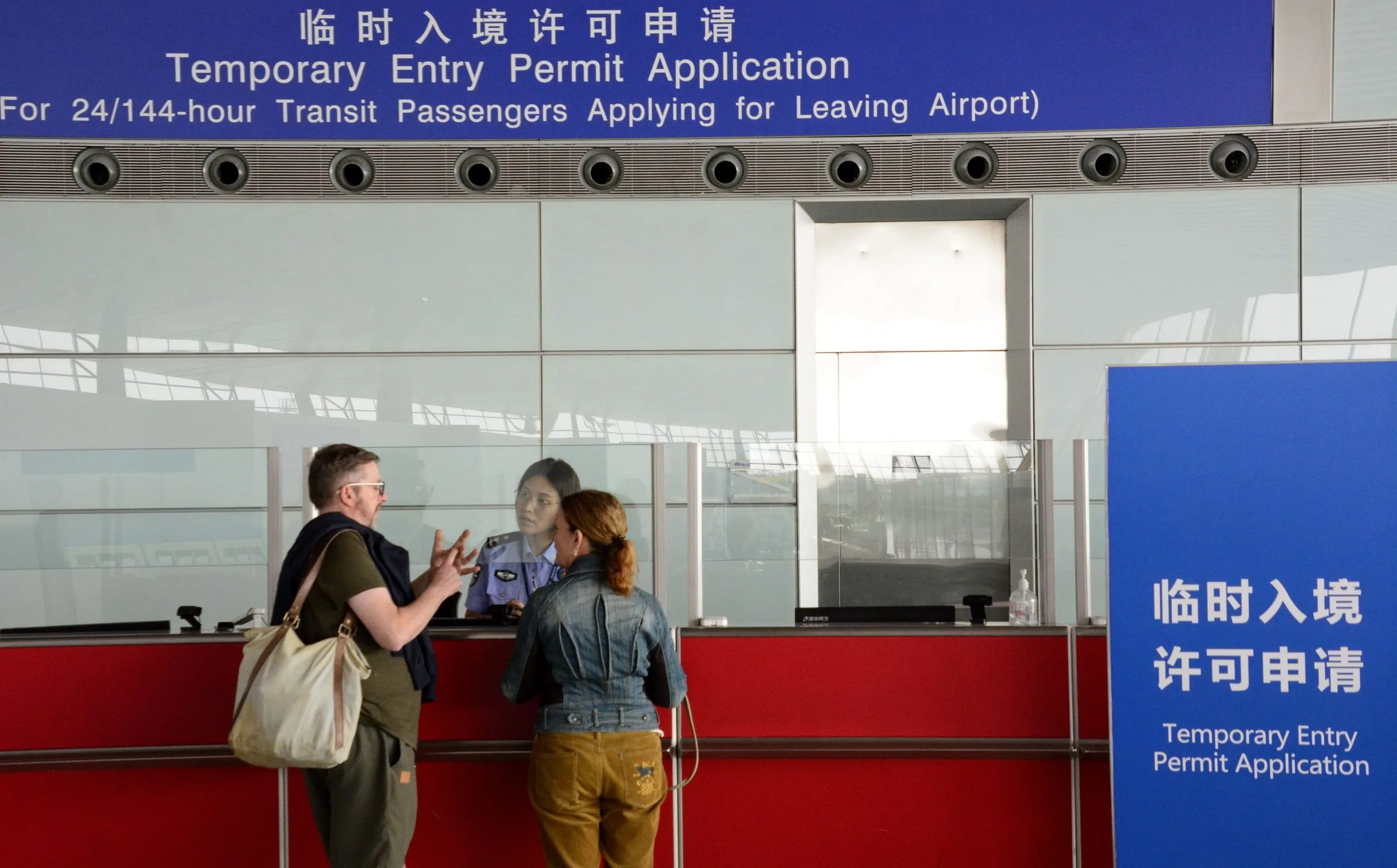
China 144-Hour Visa-Free Transit 2026: 57 Countries, 24 Provinces
China's 144-hour visa-free transit policy for 2026: 57 eligible countries, 24 provinces, the 65 approved ports, and the 5-step application process. Updated for the 2026 merger with the 240-hour policy.
China’s 144-hour visa-free transit was a major tourism breakthrough when it was expanded in 2024, and on December 17, 2024 it was merged into a larger 240-hour (10-day) policy. Most travelers no longer need to think about 144 hours as a separate rule — but the legacy city-by-city boundaries still show up in older airline systems, older travel agent advice, and some cruise port procedures.
This guide explains what 144-hour actually meant, which cities still see it referenced in 2026, and how to handle the transition to the new 240-hour system.
The short answer: just use 240 hours
If you are a citizen of one of the 57 eligible countries and have a confirmed onward ticket to a third country, you can now stay in China for up to 10 days (240 hours) and travel across 24 provinces. The 72-hour and 144-hour policies still exist on paper for older port procedures, but the 240-hour rule supersedes them in every major entry point.
In other words: if you qualify for 144 hours, you now qualify for 240 hours. Use the 240-hour procedure. The full guide is at China 240-hour visa-free transit.
The rest of this article explains the historical 144-hour system, which cities it covered, and the few edge cases where it still applies.
What the 144-hour policy actually was
Before December 17, 2024, the 144-hour visa-free transit was China’s flagship short-stay policy. It started as a 72-hour pilot in Shanghai and Beijing in 2013, expanded to 144 hours in 2016, and by 2024 covered 37 entry ports spread across 18 provinces. As of mid-2024, foreign travelers from 54 countries could enter through these ports and stay up to 144 hours (6 days) in the surrounding administrative area.
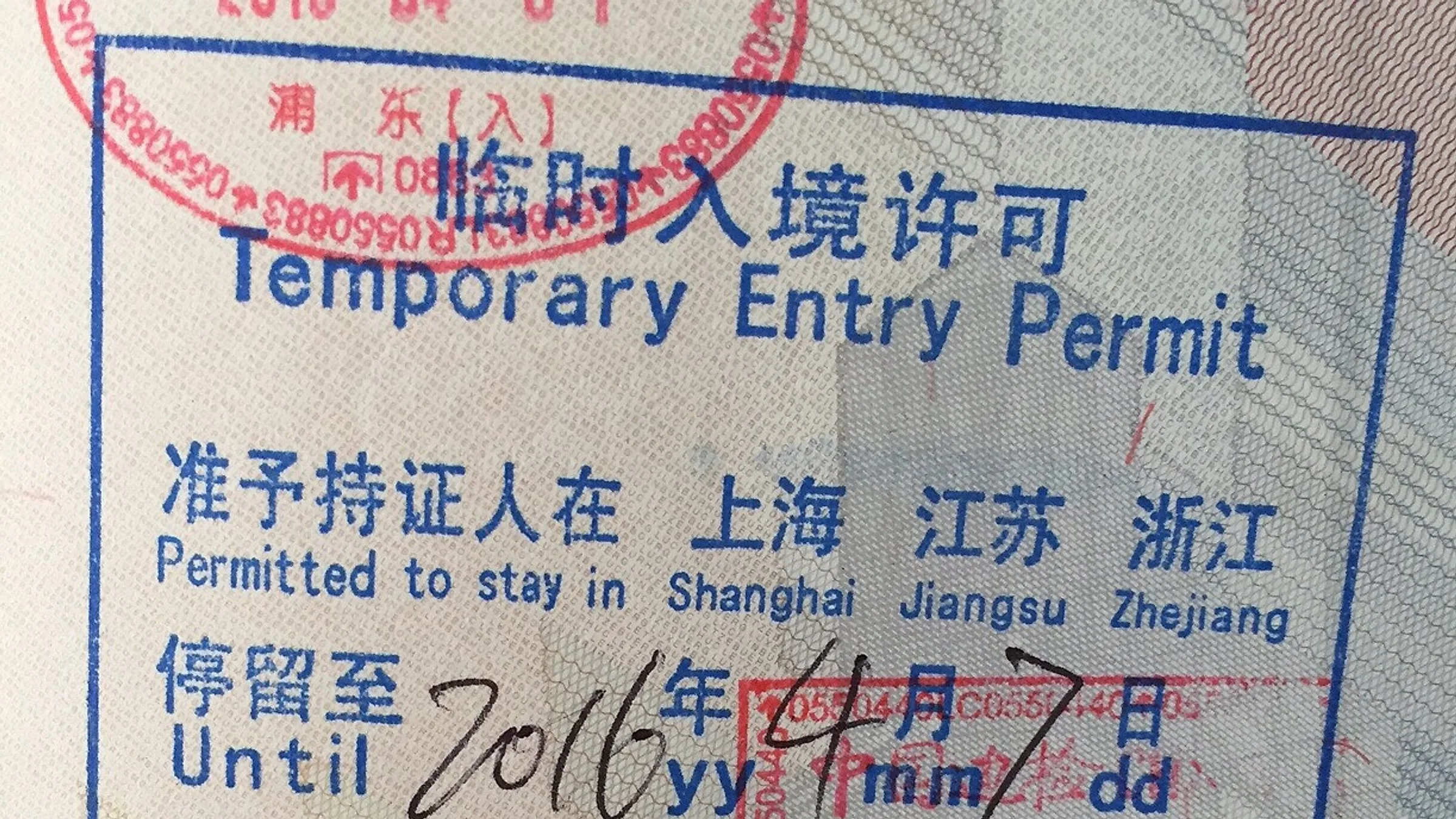
The 144-hour policy was always geographically restricted to a specific city or province cluster. For example:
- Entering through Beijing Capital Airport allowed travel only within Beijing, Tianjin, and Hebei.
- Entering through Shanghai allowed travel within Shanghai, Jiangsu, and Zhejiang.
- Entering through Guangzhou allowed travel only within Guangdong province.
- Entering through Chengdu allowed travel only within Chengdu city.
This restriction was the main pain point. A 6-day Beijing-and-Shanghai trip was technically not allowed on 144 hours because they were in different permitted areas. Travelers had to backtrack to the original entry city.
The 240-hour fix in 2024
The State Council, on the recommendation of the National Immigration Administration (NIA), replaced the 144-hour rule with the 240-hour policy on December 17, 2024. The new policy:
- Extends stay to 10 days (240 hours) for citizens of 57 eligible countries.
- Allows cross-province travel within 24 permitted provinces.
- Adds 21 new entry ports, bringing the total to 60 (later expanded to 65 in 2025).
- Consolidates the 72-hour and 144-hour rules into a single framework.
The 144-hour list had 54 countries. The 240-hour list kept those 54 and added Indonesia (June 2025), then Vietnam and Kyrgyzstan (August 20, 2026) — 57 countries in total.
Verified: “China’s 144-hour visa-free transit policy has been expanded to three more entry ports, taking the number of Chinese ports covered by the policy to 37 in total… Foreign citizens from 54 countries including the US, Canada and the UK who enter China through the designated entry ports and who hold valid international travel documents and connecting tickets to a third country within 144 hours, will be allowed to stay in designated areas for tourism, business, and visiting relatives.” — Global Times / Xinhua, July 15, 2024, accessed 2026-07-24
Legacy 144-hour entry ports still in use
The following airports and ports were core 144-hour gateways. All of them now operate under the 240-hour rule, but their original city-pair restrictions are still referenced in airline training materials, visa-agency advice, and immigration signage:
- Beijing Capital International Airport (PEK) — covered Beijing, Tianjin, Hebei
- Beijing Daxing International Airport (PKX) — same coverage
- Shanghai Pudong International Airport (PVG) — covered Shanghai, Jiangsu, Zhejiang
- Shanghai Hongqiao International Airport (SHA) — same coverage
- Guangzhou Baiyun International Airport (CAN) — covered Guangdong
- Chengdu Shuangliu International Airport (CTU) — covered Chengdu
- Xi’an Xianyang International Airport (XIY) — covered Xi’an and Xianyang
- Hangzhou Xiaoshan International Airport (HGH) — covered Shanghai/Jiangsu/Zhejiang
- Nanjing Lukou International Airport (NKG) — covered Jiangsu
- Shenyang Taoxian International Airport (SHE) — covered Liaoning
- Dalian Zhoushuizi International Airport (DLC) — covered Liaoning
- Qingdao Liuting International Airport (TAO) — covered Shandong
- Xiamen Gaoqi International Airport (XMN) — covered Xiamen
- Tianjin Binhai International Airport (TSN) — covered Beijing/Tianjin/Hebei
- Chongqing Jiangbei International Airport (CKG) — covered Chongqing
- Kunming Changshui International Airport (KMG) — covered Kunming
- Wuhan Tianhe International Airport (WUH) — covered Hubei
- Zhengzhou Xinzheng International Airport (CGO) — covered Henan (added 2024)
- Lijiang Sanyi International Airport (LJG) — covered Yunnan cities
- Mohan Railway Port — China-Laos Railway entry from Laos
If you entered through any of these on or after December 17, 2024, you have 240 hours and can travel anywhere in the 24-province permitted area — not just the original city.
Where 144-hour is still relevant in 2026
Three situations where the legacy 144-hour rule still matters:
1. Cruise port procedures
Cruise passengers entering through Shanghai, Tianjin, Dalian, Qingdao, or other coastal ports may still see 144-hour signage at the terminal. The cruise-specific 15-day visa-free policy (effective May 15, 2024) supersedes this for organized tour groups, but individual transit passengers on cruise layovers still see 144-hour wording in the boarding materials.
2. Older airline check-in scripts
Some non-Chinese airlines, especially regional carriers in Southeast Asia, still train check-in agents on the 144-hour wording. If they refuse boarding on a 240-hour itinerary, ask to speak to a supervisor or show the NIA’s official announcement on your phone.
3. Hong Kong and Macau high-speed rail stations
The West Kowloon Station in Hong Kong is an entry port under the 240-hour rule, and the Hong Kong–Zhuhai–Macao Bridge port is also approved. If you’re transiting between Hong Kong and mainland China on a 240-hour permit, your “third country” status resets each time you cross — you can do Hong Kong → Guangzhou → Hong Kong → onward flight and only need to be careful that the first entry and final exit satisfy the third-country rule.
Eligible countries (57 as of 2026)
Europe (40): Austria, Belgium, Czech Republic, Denmark, Estonia, Finland, France, Germany, Greece, Hungary, Iceland, Italy, Latvia, Lithuania, Luxembourg, Malta, Netherlands, Norway, Poland, Portugal, Slovakia, Slovenia, Spain, Sweden, Switzerland, Monaco, Russia, United Kingdom, Ireland, Cyprus, Bulgaria, Romania, Ukraine, Serbia, Croatia, Bosnia and Herzegovina, Montenegro, North Macedonia, Albania, Belarus.
Americas (6): United States, Canada, Brazil, Mexico, Argentina, Chile.
Oceania (2): Australia, New Zealand.
Asia (7): South Korea, Japan, Singapore, Brunei, United Arab Emirates, Qatar, Indonesia.
Practical steps if you find yourself on a 144-hour itinerary
- Verify your eligibility using the country list above. If your country is listed, you can use 240 hours instead — same paperwork, more time, more freedom.
- Tell the check-in agent “Transit Without Visa, 240 hours.” This avoids the legacy confusion. Most Chinese airlines (Air China, China Eastern, China Southern, Xiamen Airlines) handle 240 hours smoothly because their staff are retrained on the 2024 policy.
- Bring your onward ticket printed or on your phone with the seat assignment visible. The third-country rule is enforced at the immigration counter, not the airline counter.
- Plan to stay in the 24-permitted provinces. If your itinerary includes Tibet, Xinjiang, Inner Mongolia, Jilin, Gansu, Qinghai, or Ningxia, you need a full tourist visa instead.
The 240-hour replacement is a strict superset of the old 144-hour rules: every 144-hour route is a valid 240-hour route, plus you get two extra days and province-hopping. If you see “144 hours” on an old blog post or airline form, mentally translate it to 240 hours and use the full 240-hour guide for the latest entry procedure.
For the complete 30-day visa-free country list and how it differs from transit, see China visa-free countries 2026. For step-by-step tourist visa application, see China tourist visa guide.
Where to book
Use your 144-hour visa-free transit for a quick stopover. Here are the most useful booking links:
- Book a connecting flight through China — long layover? Add a stopover
- Find Beijing or Shanghai hotel for your stopover — convenient 1-2 night stays
Affiliate disclosure: Some links above are affiliate links. We may earn a commission at no extra cost to you. See our Affiliate Disclosure for details.
Related: China Visa-Free Countries 2026 (50+ List)
Related: China 240-Hour Visa-Free Transit: Complete 2026 Guide
Related: China Tourist Visa (L-Visa) for Foreigners: Step-by-Step
Plan your trip — verified tools
These free tools are built on real, monthly-verified data and help you skip the trial-and-error phase of China trip planning:
- China 240-Hour Visa-Free Transit Checker — 57 countries, 24 provinces, 65 ports. See if you qualify for 10-day visa-free transit, which cities you can visit, and the 5-step process.
- China 6-City 5-Day Budget Calculator — Real 2026 prices for 5 days in Beijing, Shanghai, Guangzhou, Chengdu, Xi’an, or Hangzhou. Budget / mid-range / comfort tiers, broken down line by line.
Verified August 2026 by TravelHubChina Editorial. We re-check prices and policy details monthly so the data doesn’t drift.
Step by step
-
Confirm your passport is on the 54-country eligibility list
Includes most of EU, UK, US, Canada, Australia, NZ, Japan, South Korea, Brazil, Argentina, and 30+ others. Indonesia was added in June 2025, and Vietnam and Kyrgyzstan in August 2026 — the current 240-hour list is 57 countries.
-
Book a confirmed onward ticket to a third country within 144 hours
The ticket must be to a country other than your origin. Print the confirmation — immigration officers routinely ask. A confirmed seat assignment is required (not just a reservation).
-
Apply for any required third-country visa before departure
If your onward destination (e.g., Vietnam, Russia) requires a pre-arranged visa for your passport, get it before you leave home. The 144-hour China permit does not cover the third country.
-
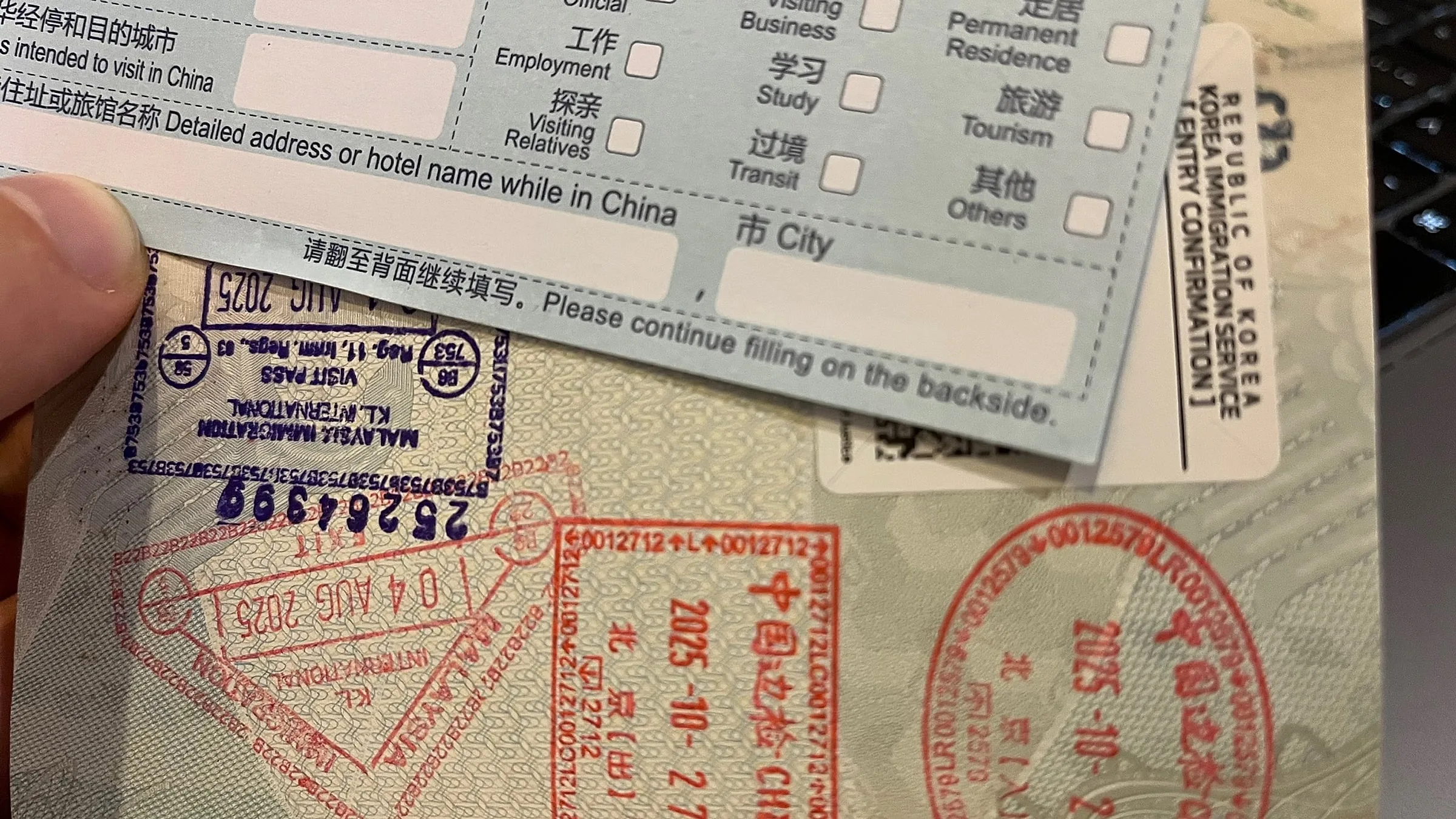
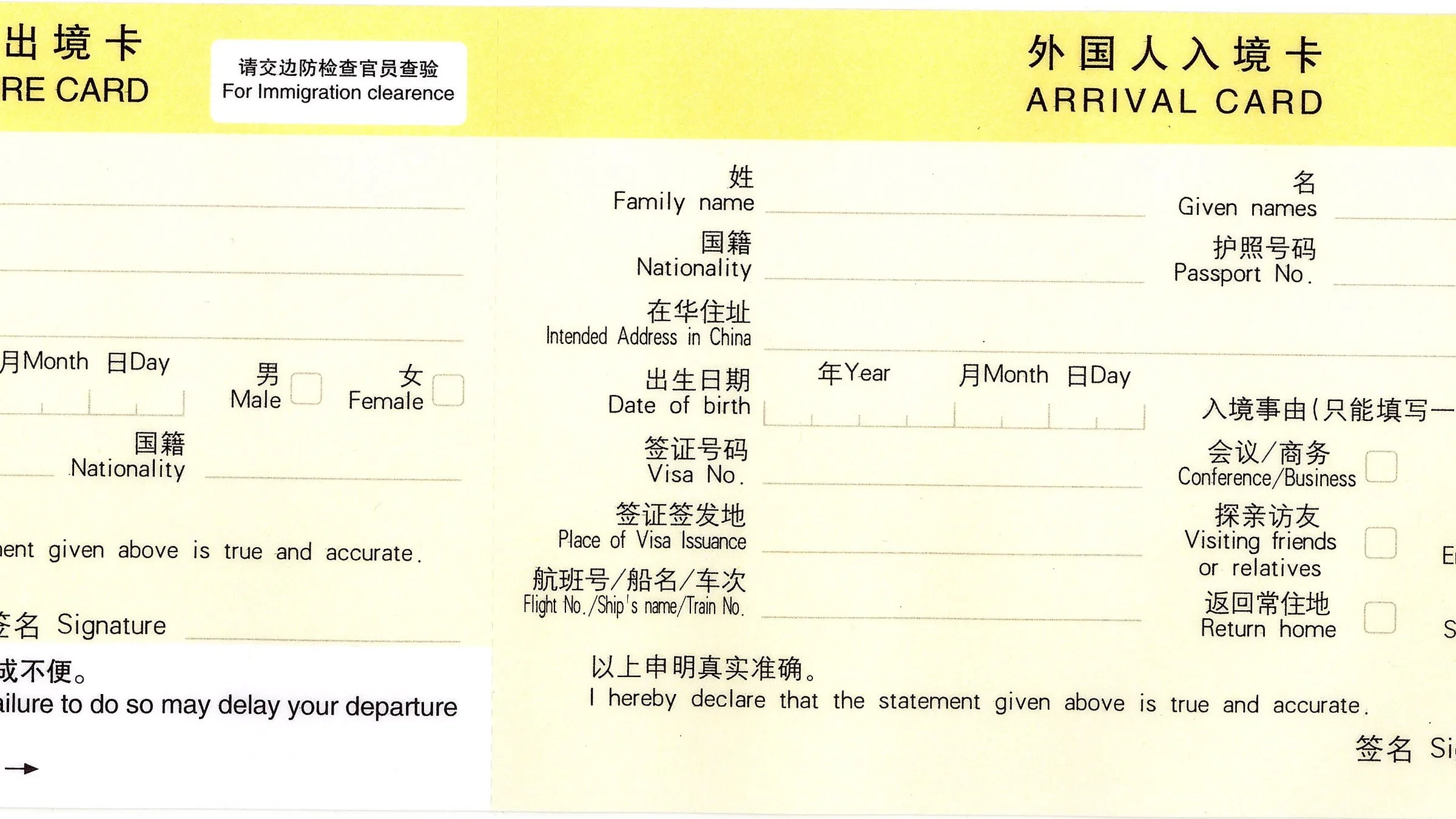
Fill out the Arrival Card on the plane
Crew hand out the card during descent. Have your hotel address in Chinese characters and your onward flight number ready. Filling it on the plane saves 10-15 minutes at the immigration desk.
-
Show onward ticket + hotel booking at the immigration desk
Process takes 5-15 minutes at major airports. The officer stamps your passport with the permitted area (e.g., Shanghai + Jiangsu + Zhejiang) and the 144-hour window. Countdown starts at 00:00 the day after arrival.
FAQ
-
What is the difference between 144-hour and 240-hour visa-free transit?
The 240-hour policy (expanded December 2024) replaced the older 144-hour policy at most ports and gives you 10 days instead of 6. It also allows travel between more provinces. The 144-hour policy is still in effect at a few smaller ports; if you arrive at a major airport, expect 240 hours. -
Which cities are covered by the 144-hour visa-free transit?
The 144-hour (6-day) transit is still active at some smaller ports: Chengdu (for certain flights), Kunming, and a few other southwestern cities. At Beijing Capital, Shanghai Pudong, Guangzhou, and Shenzhen, the policy has been upgraded to 240 hours. Always confirm with your airline before booking. -
Can I leave the designated province on a 144-hour visa-free transit?
No. The 144-hour policy restricts you to a specific province or city cluster (e.g., Shanghai + Jiangsu + Zhejiang, or Beijing + Tianjin + Hebei). The newer 240-hour policy is more flexible and allows cross-province travel between most approved regions.
Related guides
- Visa & Entry
China 240-Hour Visa-Free Transit: Complete 2026 Guide
China's 240-hour (10-day) visa-free transit lets 57 countries travel across 24 provinces without a visa. Updated 2026 rules, eligible ports, and step-by-step entry.
9min read
- Visa & Entry
China Visa-Free Countries 2026 (50+ List)
50 countries get 30-day visa-free entry to China in 2026. Plus 29 mutual visa-exemption countries. Full lists, expiration dates, and how to check if you qualify.
8min read
- Visa & Entry
China Tourist Visa for US Citizens (L-Visa): 2026 Complete Guide
Apply for a China L-visa in 2026: documents, fees, processing time, US/UK/Canada-specific costs, and the new rule that drops flight + hotel bookings.
9min read
- Visa & Entry
China Entry Guide 2026: 9 Visa Types, Customs, Health Declaration, and 5-Step Arrival Process for Foreigners
China has 9 visa types + 2 visa-free schemes in 2026. This is the master guide: which visa is right for your trip, how to apply, what to declare at customs, the health declaration (still required 2026), the 5-step arrival process, and 7 common rejection reasons. Plus a country-by-country matrix showing which scheme applies to your passport.
16min read
- Visa & Entry
China Border Agent Checklist 2026: Documents That Get You Through (And 5 That Get You Sent Back)
Four ways to legally enter mainland China in 2026: the unilateral 30-day visa-free (50 countries), the 240-hour (10-day) transit visa-free (57 countries, 65 ports, 24 provinces), the L tourist visa (any nationality), and Hainan-only 30-day. Every path requires: passport 6+ months validity, onward/return ticket, hotel booking covering first 3 nights, sufficient funds proof, and a 24-hour health declaration QR code submitted online before arrival. 5 common failure modes that get foreigners sent to secondary inspection (or denied entry): round-trip ticket (US→CN→US doesn't qualify as transit), wrong port, no onward ticket to a third country, missing hotel address, and 240-hour clock misunderstanding (starts 00:00 next day, not at entry).
12min read
- Visa & Entry
China Hotel Registration for Foreigners: The 24-Hour Police Check-In Rule Nobody Tells You About (2026)
Every foreigner staying in China must register at a police station within 24 hours — it's a legal requirement under Article 39 of the Exit-Entry Administration Law. Hotels handle this automatically when you check in with your passport. Airbnb, vacation rentals, and staying with friends do NOT — you must register manually. Failure to register can result in ¥2,000-10,000 fines, visa revocation, or detention at a train station checkpoint. Step-by-step guide to registering at a Public Security Bureau (PSB), the actual 临时住宿登记表 form, what to bring, and how to handle the Airbnb case.
8min read