
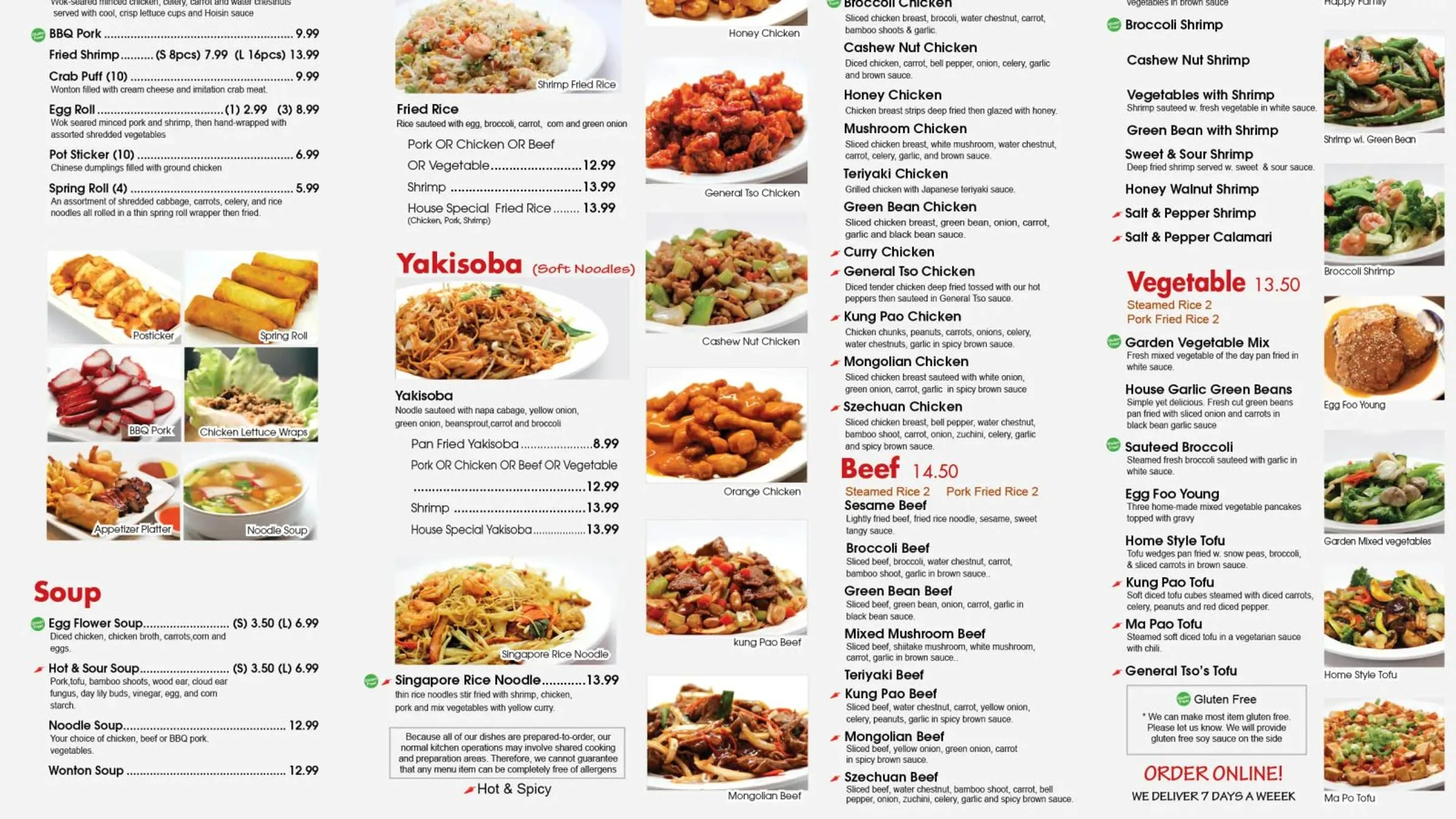
20 Chinese Phrases to Order Food (Pinyin + Audio)
The 20 must-know Mandarin phrases for ordering food in China, with pinyin, English translation, audio tips, and a printable phrase card. Includes restaurant, street food, and dietary phrases.
Yes, you can survive in Chinese restaurants with just 20 phrases. Mandarin has four tones that change meaning — “mā” (mother) vs. “mǎ” (horse) — so pronunciation matters more than grammar. Below are the 20 phrases that get you through 95% of restaurant and street-food situations in China, grouped by scenario, with pinyin, English meaning, and a tone-by-tone pronunciation guide. Print or screenshot this page before you fly. Pair with a translation app for anything not on this list, and a city-by-city food map to know which iconic dishes to order in each region.

How to read pinyin (5-second primer)
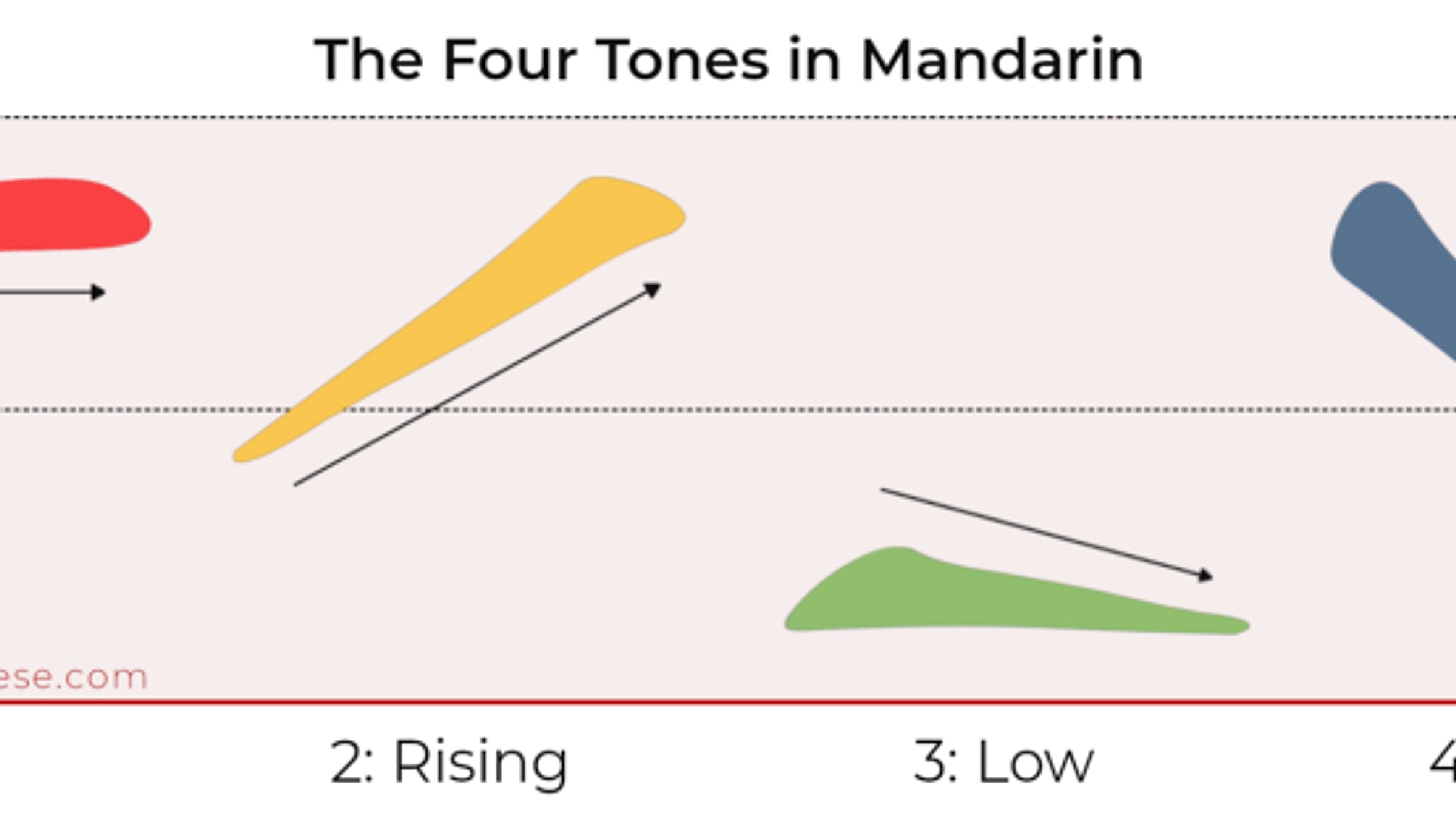
Pinyin spells Chinese words in the Latin alphabet. Each syllable has a tone mark (ā á ǎ à) or no mark. The four tones are:
- Tone 1 (ā) — high, flat (“aaaah”)
- Tone 2 (á) — rising (“ah?” like asking a question)
- Tone 3 (ǎ) — falling then rising (“oh-ah”)
- Tone 4 (à) — sharp falling (“ah!” like a command)
A common mistake: foreigners default to Tone 1. Chinese speakers will still understand you, but they may smile. Listen to the Pleco app or Google Translate speaker to get the tones right.
Phrase 1-5: Entering the restaurant
1. 你好,两位 (nǐ hǎo, liǎng wèi) — “Hello, two people” Use this at the door. The number is liǎng wèi (two people) — change to yī wèi (one), sān wèi (three), sì wèi (four). They’ll seat you.
2. 菜单,谢谢 (cài dān, xiè xie) — “Menu, please” “cài dān” is the menu. Larger restaurants have English menus; smaller ones don’t.
3. 现在点菜吗? (xiàn zài diǎn cài ma?) — “Can I order now?” The server will likely ask this. “xiàn zài” means “right now” and “diǎn cài” means “order food.”
4. 你们有什么特色菜? (nǐ men yǒu shén me tè sè cài?) — “What are your specialties?” “tè sè cài” (special dishes) is the magic phrase that gets you the best things the kitchen makes.
5. 我可以看一下吗? (wǒ kě yǐ kàn yī xià ma?) — “Can I take a look?” Use this to see the menu, the kitchen, the bathroom, etc.
Phrase 6-10: Ordering dishes
6. 我要这个 (wǒ yào zhè ge) — “I want this one” Point at the menu. The simplest possible way to order.
7. 不要辣 (bú yào là) — “Not spicy” Critical. “là” means spicy. Most Sichuan and Hunan dishes are very spicy; this phrase saves your stomach.
8. 少辣 (shǎo là) — “A little spicy” If you want some heat but not overwhelming.
9. 不要香菜 (bú yào xiāng cài) — “No cilantro” Cilantro is everywhere. This phrase is necessary if you’re in the ~15% of people who can’t stand it.
10. 一份 (yī fèn) — “One portion (of this)” For ordering specific quantities. “yī fèn” = one, “liǎng fèn” = two.
Phrase 11-15: Specific dishes and drinks
11. 一杯啤酒 (yī bēi pí jiǔ) — “One beer” “yī bēi” is “one cup/glass.” The local beer in most cities is whatever the cheapest option on the menu is (often 青岛啤酒/Qīngdǎo Píjiǔ, Tsingtao).
12. 茶,谢谢 (chá, xiè xie) — “Tea, please” In most Chinese restaurants, tea is free or very cheap (¥5–10/pot). They’ll bring it without asking.
13. 米饭 (mǐ fàn) — “Steamed rice” If you want a bowl of rice to go with your dishes. Most meals come with rice automatically, but not always.
14. 饺子 (jiǎo zi) — “Dumplings” The universal “I want dumplings” phrase. “jiǎo” rhymes with “jow” in “jowl.”
15. 包子 (bāo zi) — “Steamed buns” “Bāo” rhymes with “cow” (sort of). Stuffed with pork, vegetables, or red bean paste.
Phrase 16-20: Dietary needs and emergencies
16. 我吃素 (wǒ chī sù) — “I’m vegetarian” The most important phrase for any vegetarian in China. See our dietary restrictions guide for more. For the Buddhist vegetarian restaurants that anchor this cuisine in cities like Hangzhou, see our Lingyin Temple guide — the Lingyin vegetarian refectory is one of the best in eastern China.
17. 我对___过敏 (wǒ duì ___ guò mǐn) — “I’m allergic to ___” The blank can be 花生 (huā shēng, peanuts), 海鲜 (hǎi xiān, seafood), 麸质 (fū zhì, gluten), 牛奶 (niú nǎi, milk). Critical phrase for allergy sufferers. For a full dietary card, see our dietary restrictions guide.
18. 买单 (mǎi dān) — “Check, please” Literally “buy the bill.” You can also just raise your hand and make a “writing” gesture. Service charge isn’t a thing in most Chinese restaurants.
19. 好吃! (hǎo chī!) — “Delicious!” Two of the most rewarding syllables in Mandarin. Servers love hearing this. “hǎo” is high and flat (Tone 3, slightly falling then rising); “chī” is also Tone 1. Hǎo chī.
20. 谢谢,很好吃 (xiè xie, hěn hǎo chī) — “Thanks, very tasty” Wrap up the meal with appreciation. “hěn” (very) is Tone 3 — your tone will be slightly off but no one minds.
Bonus phrases for street food
21. 好吃,怎么做的? (hǎo chī, zěn me zuò de?) — “Delicious, how do you make it?” Use at street stalls to start a conversation with vendors. Many will be charmed that a foreigner wants to learn.
22. 可以微信支付吗? (kě yǐ Wēi Xìn zhī fù ma?) — “Can I pay with WeChat?” If you haven’t set up WeChat Pay, ask if they accept it before ordering.
23. 多少钱? (duō shǎo qián?) — “How much?” Use at any market or street stall. They’ll hold up fingers or show you the price on a calculator.
24. 太贵了! (tài guì le!) — “Too expensive!” Standard haggling opener at markets. “guì” is expensive; “pián yi” is cheap.
25. 打包 (dǎ bāo) — “Takeaway / to-go” Useful when you can’t finish a meal. They’ll wrap it in plastic containers or bags.
Pronunciation cheat sheet for the tones
| Tone | Mandarin | English analogy |
|---|---|---|
| 1 (flat) | mā | ”maaa” (singing) |
| 2 (rising) | má | ”ma?” (question) |
| 3 (fall-rise) | mǎ | ”oh-ah” (doubt) |
| 4 (sharp fall) | mà | ”ma!” (command) |
The most-mistaken word is probably 你好 (nǐ hǎo, hello). The “nǐ” is Tone 3 (fall-rise) and “hǎo” is also Tone 3. Most foreigners say “nee haow” with even tones — Chinese still understand, but practice the dip.
Apps that help with pronunciation
- Pleco (iOS/Android) — the best Chinese dictionary; includes audio, handwriting recognition, and example sentences. Free with paid add-ons.
- Google Translate (iOS/Android) — type or speak, hear the result. Works with VPN in China. See our VPN guide.
- HelloChinese (iOS/Android) — gamified Mandarin learning app for absolute beginners.
- Forvo (web) — native-speaker pronunciation of any word in any language.
Verified: “Pleco is the definitive Chinese dictionary for iOS and Android, with audio pronunciation, handwriting recognition, OCR, flashcards, and document reader” — Pleco.com, accessed 2026-07-24
The phrase card to print
Save or screenshot this for your phone:
RESTAURANT ESSENTIALS (中餐馆)
1. 你好,两位  nǐ hǎo, liǎng wèi — Hello, two people
2. 菜单      cài dān — Menu
3. 我要这个  wǒ yào zhè ge — I want this
4. 不要辣    bú yào là — Not spicy
5. 少辣      shǎo là — A little spicy
6. 茶        chá — Tea
7. 米饭      mǐ fàn — Rice
8. 我吃素    wǒ chī sù — I'm vegetarian
9. 好吃      hǎo chī — Delicious
10. 买单     mǎi dān — Check, please
The minimum you can get by with is 4 phrases (你, 这个, 好吃, 买单). But with all 25, you’ll have full conversations and make friends. For food safety and what dishes to try, see our street food guide and dietary restrictions guide.
What to watch out for: Chinglish menu translations
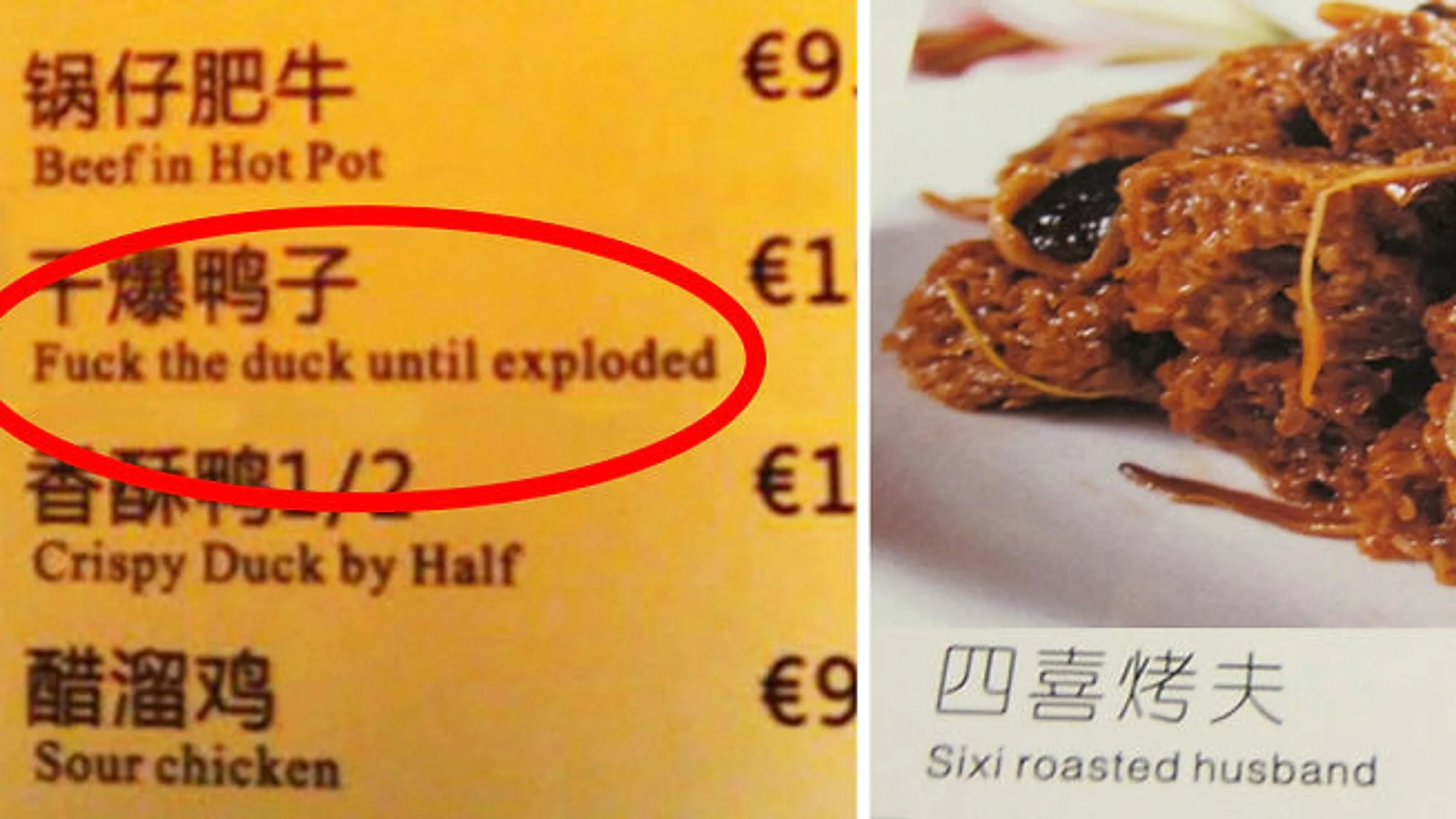
Even when a Chinese restaurant has an English menu, the translation is often machine-generated or done by a non-native speaker. The result is the kind of menu you’ll see viral on social media — “Fuck the duck until exploded” (干爆鸭子, gān bào yā zi, which actually means “stir-fried duck until crispy”) or “Sixi roasted husband” (四喜烤夫, sì xǐ kǎo fū, a vegetarian wheat-gluten dish whose name is a homophone pun on 烤麸).
How to avoid ordering the wrong thing:
- Ask the server directly — point at the menu and say “zhè shì shén me?” (这是什么?, what is this?). They will tell you what’s actually in the dish.
- Look at the Chinese characters first — many menus put the Chinese name in smaller font next to the English. Type the characters into Google Translate camera mode for a clearer result.
- Photo menus beat text menus — most mid-range Chinese restaurants have plastic display dishes near the entrance. Point at the actual dish, not the translation.
- When in doubt, ask “lái yī fèn ___ kě yǐ ma?” (来一份___可以吗?, can I get one portion of ___?) — substituting the Chinese name into the phrase.
Where to book
Pick a hotel near the food areas you’ll explore:
- Hotels in Shanghai’s French Concession — best food district
- Browse all China hotels
Affiliate disclosure: Some links above are affiliate links. We may earn a commission at no extra cost to you. See our Affiliate Disclosure for details.
Plan your trip — verified tools
These free tools are built on real, monthly-verified data and help you skip the trial-and-error phase of China trip planning:
- China 6-City 5-Day Budget Calculator — Real 2026 prices for 5 days in Beijing, Shanghai, Guangzhou, Chengdu, Xi’an, or Hangzhou. Budget / mid-range / comfort tiers, broken down line by line.
- China OTA Comparison 2026 — Trip.com vs Booking.com vs Agoda vs Klook across 5 booking types. Inventory, pricing, foreign card support, English service, per-OTA verdict.
Verified August 2026 by TravelHubChina Editorial. We re-check prices and policy details monthly so the data doesn’t drift.
Step by step
-
Open the menu and find the picture you want
Most Chinese restaurant menus have photos — flip to the picture section. If there is no picture, use Pleco (camera translation) to point your phone at the Chinese characters. Aim for dishes with photos showing the actual cooked result.
-
Point at the picture or item and say "这个" (zhè ge, "this one")
Gǐ zhè ge (吃这个) means "eat this one" in a casual way. Pointing + this phrase works in 90% of restaurants. The waiter will nod and write it down.
-
Specify quantity: "一个" (yī gè, "one") or "两个" (liǎng gè, "two")
Hold up fingers if pronunciation is hard. 一个 = one (yi ge), 两个 = two (liang ge), 三个 = three (san ge). For noodles/rice, one portion is usually enough; share 2-3 dishes per person for a full meal.
-
Set spice level: "不要辣" (bù yào là, "no spice") or "微辣" (wēi là, "mild")
Sichuan and Hunan food is spicy by default. 不要辣 = no spice, 微辣 = mild (tolerable), 中辣 = medium, 特辣 = extra spicy. If unsure, start with 微辣 — you can always add chili oil from the table condiment tray.
-
Ask the price: "多少钱?" (duō shǎo qián?, "how much?")
Most restaurants have set prices on the menu. This phrase is useful for markets, street food, and small eateries without menus. Numbers: 一 = 1, 二 = 2, 三 = 3, 十 = 10, 百 = 100, 千 = 1000. 一百 = 100, 五十五 = 55.
-
Pay: scan the QR code with Alipay/WeChat Pay, or say "买单" (mǎi dān, "check please")
Most restaurants now use QR-code payment — just scan the table QR with Alipay/WeChat. For sit-down restaurants, ask for the check (买单) — the waiter brings a paper or QR-code receipt. Tip is NOT customary in China (the service charge is built in).
FAQ
-
What are the 4 essential Mandarin phrases to order food in China?
The 4 phrases that get you by in any Chinese restaurant: 你好 (nǐ hǎo, hello), 这个 (zhè ge, this one), 不要辣 (bú yào là, no spice), and 买单 (mǎi dān, check please). With 10 more phrases covering numbers, prices, and dietary needs, you can order anything from a menu. Pointing at the picture + 'zhè ge' works in 90% of restaurants. Use Pleco's camera translation for any Chinese characters you cannot read. -
How do I say 'no spice' or set the spice level in Chinese?
Say 不要辣 (bú yào là, 'no spice') or 微辣 (wēi là, 'mild') to set the spice level. The full scale: 不要辣 = no spice, 微辣 = mild (tolerable), 中辣 = medium, 特辣 = extra spicy. Sichuan and Hunan food is spicy by default — if unsure, start with 微辣. You can always add chili oil from the table condiment tray if it is too mild. Most restaurants will accommodate without complaint. -
Can I pay with a credit card at Chinese restaurants?
Most sit-down restaurants in China now use QR-code payment via Alipay or WeChat Pay — just scan the table QR with your phone. For the few that still take cards, Alipay's Tour Card feature accepts foreign Visa/Mastercard and works at almost any shop, restaurant, or attraction. International chain hotels, upscale restaurants, and major shopping malls accept foreign credit cards directly. Tip is NOT customary in China — the service charge is built into the price. -
How do I ask for the check in Chinese?
Say 买单 (mǎi dān, 'check please') to ask for the bill. In a sit-down restaurant, the waiter will bring a paper or QR-code receipt. For QR-code payment restaurants, you scan the code, enter the amount, and pay through Alipay or WeChat — no waiter interaction needed. For street food and small eateries, just ask 多少钱 (duō shǎo qián, 'how much?') and pay the displayed price. Most restaurants have set prices on the menu. -
What if I have dietary restrictions in China?
For allergies, show a written card in Chinese: 'I am allergic to peanuts' (我对花生过敏, wǒ duì huā shēng guò mǐn). For vegetarian, say 我吃素 (wǒ chī sù) — but be aware that many 'vegetarian' dishes in China use pork lard or chicken stock. For halal, ask 'no pork, no lard, no alcohol?' in English and look for the green crescent or 清真 (qingzhen) sign. For gluten-free, China is naturally rice-and-noodle based, but soy sauce contains wheat — specify 'no soy sauce' (不要酱油, bú yào jiàng yóu).
Related guides
- Food & Dietary
Cantonese Dim Sum Guide: 12 Essential Dishes + Tea Etiquette
A practical guide to Cantonese dim sum (点心) for foreign visitors — the 12 essential dishes, how to order from the cart, tea etiquette, where to eat in Guangzhou and Hong Kong, and the famous 饮茶 (yum cha) tradition.
11min read
- Food & Dietary
China Food by City: 8 Cities, 24 Iconic Dishes
A guide to Chinese regional food by city — the 8 most foodie-worthy cities for foreign visitors, the 3 iconic dishes in each, and where to find them. Beijing, Shanghai, Chengdu, Guangzhou, Hong Kong, Xi'an, Hangzhou, Chongqing.
14min read
- Food & Dietary
Street Food in China: 20 Safe Dishes for First-Timers
20 iconic Chinese street foods with pinyin, English names, what they taste like, regional origin, average price in USD, and which ones are safe for first-time visitors. Plus food-safety rules.
10min read
- Food & Dietary
Chinese Hotpot Guide: 4 Styles + How to Eat It
A practical guide to Chinese hotpot (火锅) for foreign visitors — the 4 main styles (Sichuan, Chongqing, Beijing, Cantonese), how to eat it, the 20 essential ingredients, and where to try it in each city.
11min read
- Food & Dietary
Peking Duck Guide: How to Eat It, Best Restaurants, History
A practical guide to Peking duck (北京烤鸭) for foreign visitors — the history, how to eat it the traditional way, the 7 best restaurants in Beijing, prices, and how to spot a quality duck.
9min read
- Food & Dietary
Sichuan Cuisine Guide: 15 Essential Dishes for Foreigners
A practical guide to Sichuan (川菜) cuisine for foreign visitors — the 15 essential dishes, what makes Sichuan food spicy-numbing (麻辣), where to eat in Chengdu, and how to order without speaking Chinese.
12min read