Chengdu Food Guide: 20 Dishes to Eat
Chengdu food guide: 20 dishes with 2026 prices, where to eat each one and how to order — mapo tofu, hotpot, rabbit head and the snacks locals queue for.
Chengdu is not a city you visit for one restaurant. It is a city where the food is the schedule: noodles at eight, a long lunch, skewers at four, hotpot at nine. The cuisine is officially listed as one of China’s four great schools, and it is the only one built around a single sensory trick — 麻辣 (málà), the pairing of chilli heat with the electric buzz of Sichuan peppercorn.
This guide covers the twenty dishes worth your time, what each costs in 2026, and where to eat it. Prices are for ordinary local restaurants, not the polished places around Taikoo Li.
The four dishes you already know
Almost every “Sichuan” dish served abroad comes from this group. They are also the four most likely to disappoint you at home and surprise you here, because the difference is in the oil, the peppercorn and the fact that nothing is sweetened for a foreign palate.
麻婆豆腐 — Mapo tofu
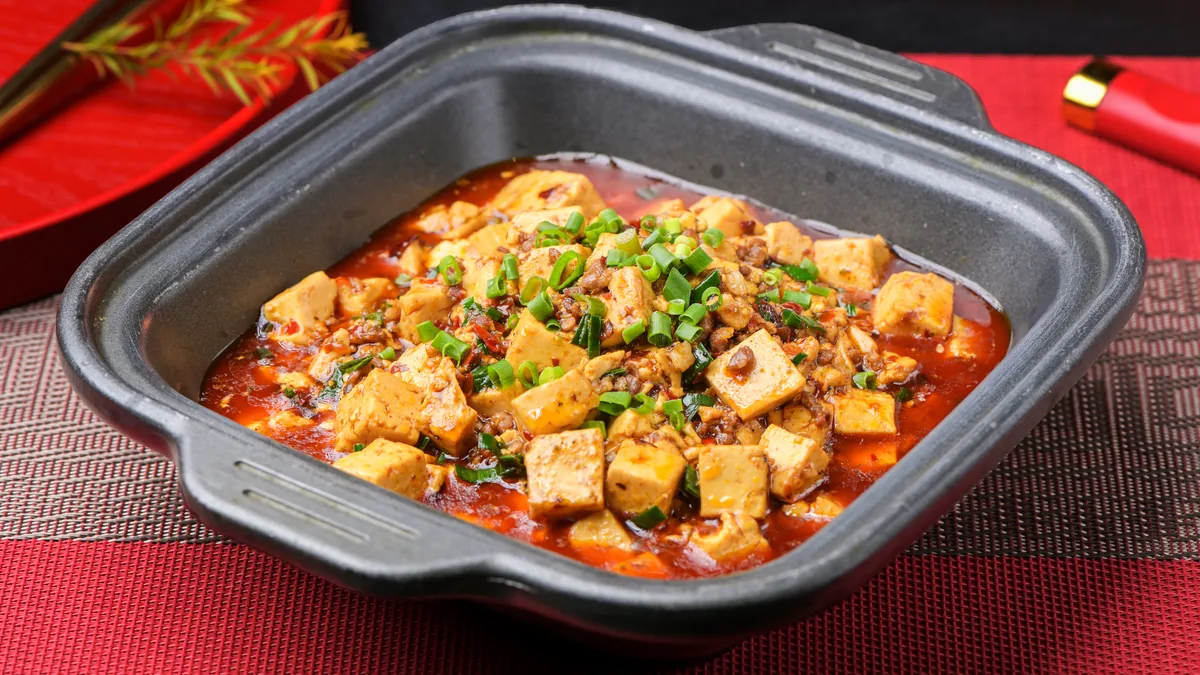
Tofu cubes in a red oil slick of doubanjiang, fermented black bean and ground beef, finished with a dusting of raw Sichuan peppercorn that makes your lips hum. Created in 1862 by the wife of a restaurant owner at Wanfu Bridge — she was nicknamed 陈麻婆, “pockmarked Chen’s old lady”, and the name stuck. Order it 微辣 if you are unsure. ¥38-58 in a restaurant, ¥15-22 for the lunch set version.
Four addresses, in ascending order of comfort:
| Place | Why | Price |
|---|---|---|
| 陈麻婆豆腐 (Chen Mapo Tofu), Wanfu Bridge | The 1862 original, 7th-generation family. Numbing and aromatic above all. | ¥35-50 |
| 小名堂 (Xiao Ming Tang) | Office-worker canteen food; solid, cheap, no English. | ¥40-60 /meal |
| 皇城老妈 (Huangcheng Laoma), Qintai Road | Courtyard setting, more refined, less aggressive heat. | ¥80-120 /meal |
| 成都映象 (Chengdu Yixiang) | Milder, plated for visitors, comfortable room. | ¥100-150 /meal |
宫保鸡丁 — Kung pao chicken
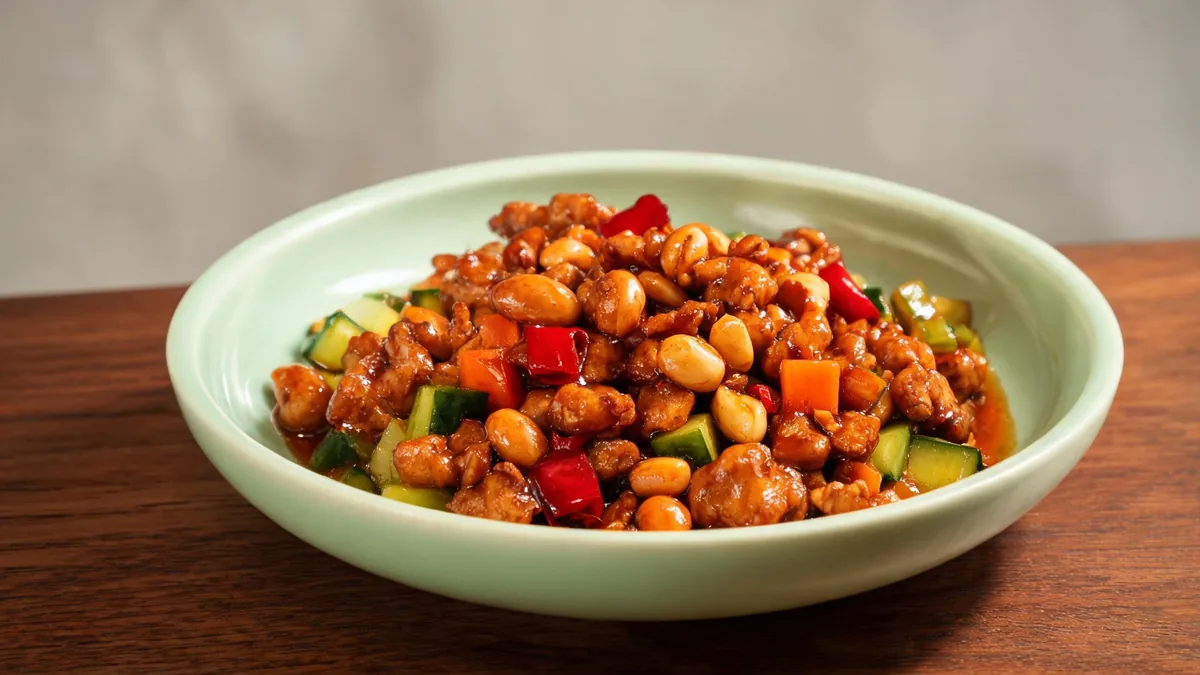
Diced chicken, peanuts, dried chillies, a sauce of vinegar, sugar and soy that should taste sharp-sweet-savoury in that order. Named after Ding Baozhen, a Qing governor-general of Sichuan whose honorary title was 宫保 (palace guardian). The Western version adds celery and too much sugar; the Chengdu version uses cucumber or leek and lets the vinegar lead. ¥42-68.
担担面 — Dan dan noodles
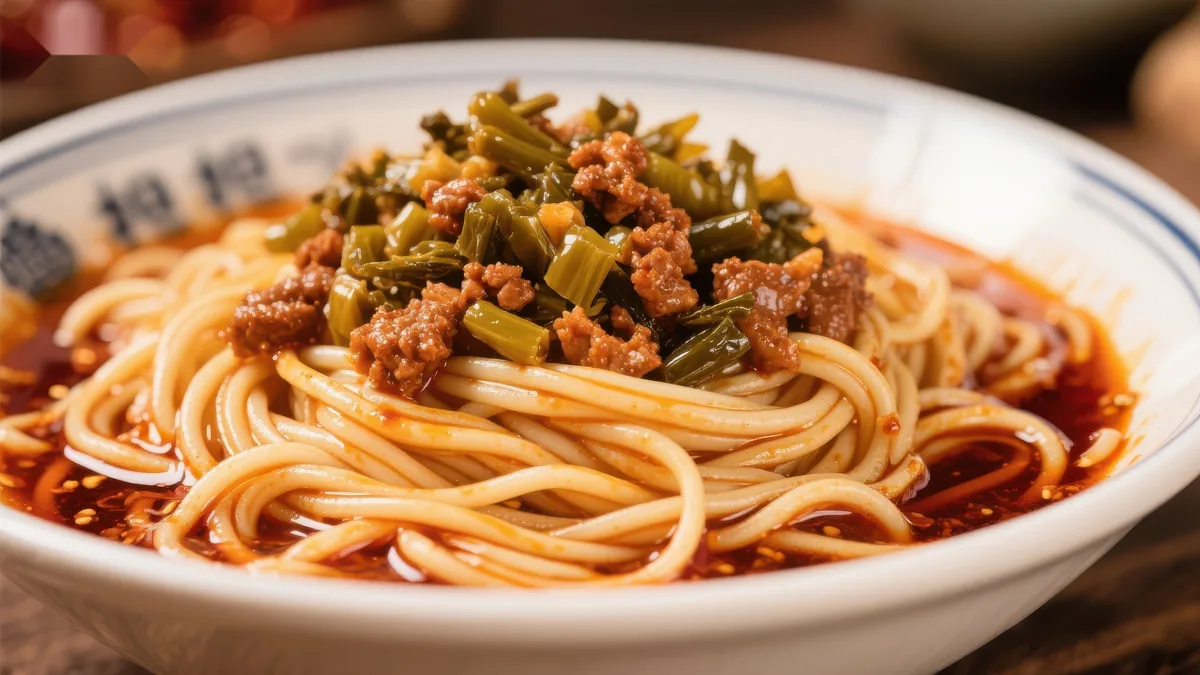
Named for the carrying pole (担担) street vendors used to haul two baskets — one of noodles, one of sauce — through the alleys. A small bowl, no soup: noodles, minced pork, preserved vegetable, sesame paste, chilli oil, ground peppercorn. Mix hard before the first bite or the last third will be twice as salty as the first. ¥10-16 per bowl. Two bowls is a normal breakfast.
回锅肉 — Twice-cooked pork
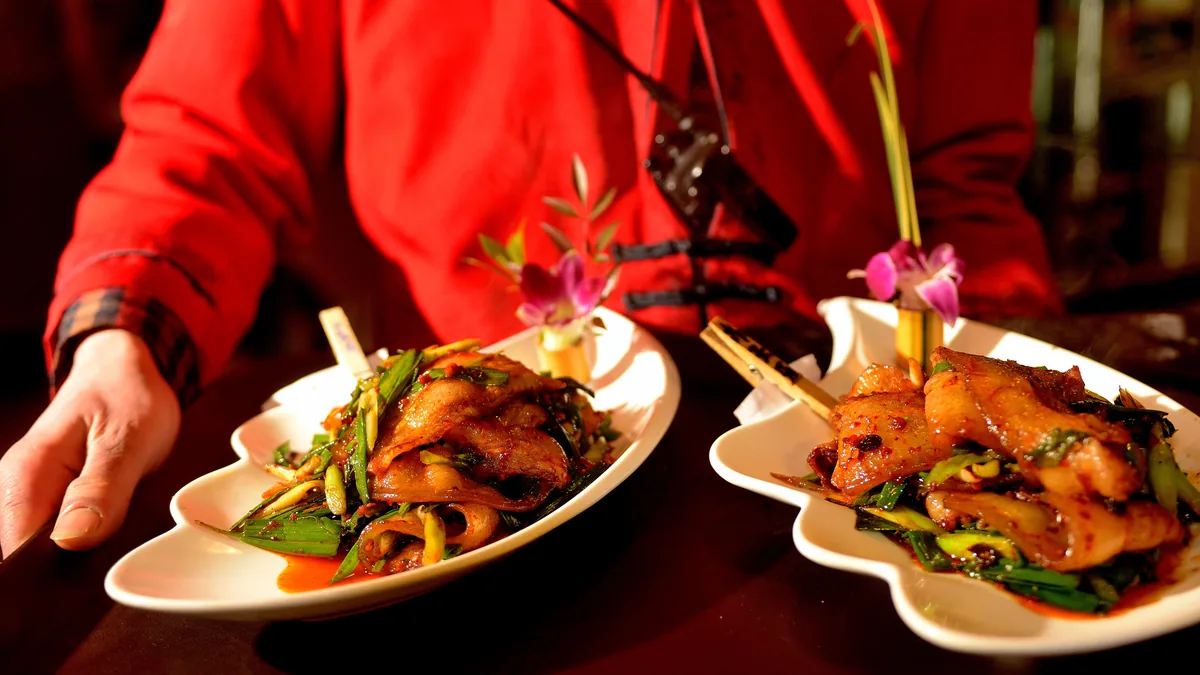
The dish every Sichuan household cooks. Pork belly is boiled whole with ginger, chilled, sliced thin, then stir-fried with doubanjiang and leek until the fat turns translucent and curls at the edge — the 灯盏窝 (“lamp-cup”) shape cooks judge it by. It is the best single dish to order if you want to understand what separates Sichuan home cooking from restaurant cooking. ¥38-58.
Hotpot, skewers and the wet dishes
Sichuan’s second family of food is built around a pot of bubbling oil. The difference between the four dishes below is mostly about who does the cooking and how you pay.
火锅 — Sichuan hotpot
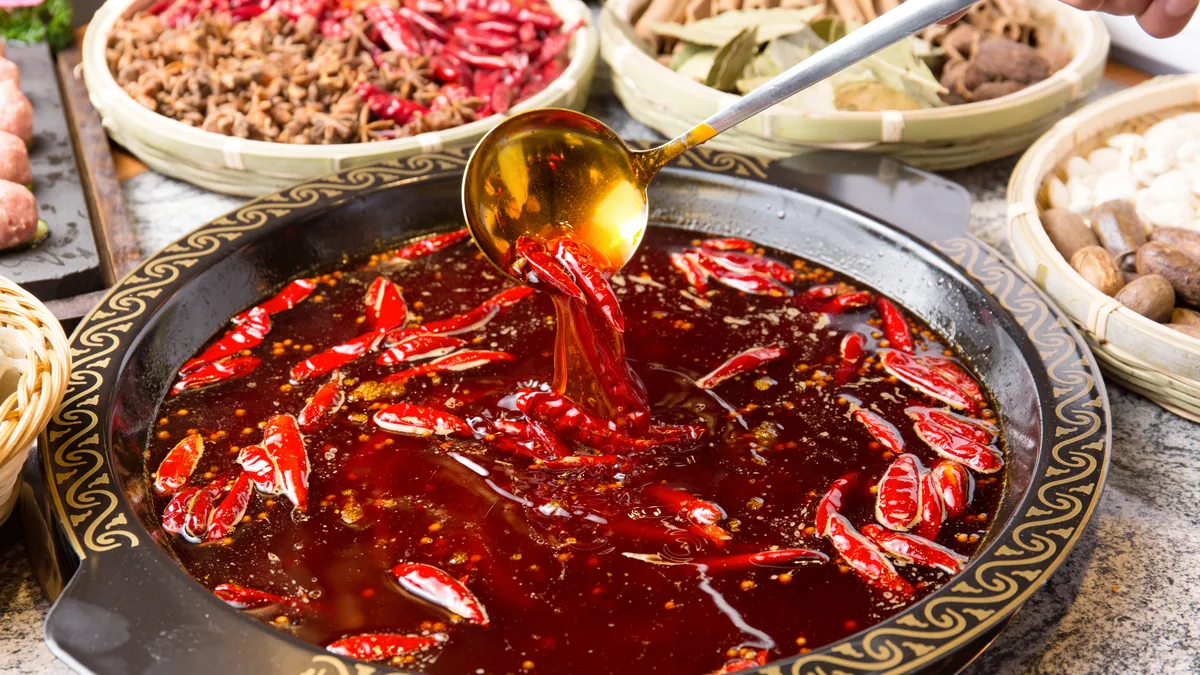
Chengdu hotpot uses 清油 (qīngyóu) — rapeseed oil and green peppercorn — where Chongqing uses beef tallow. That makes the Chengdu version lighter and more herbal, and it is why locals can eat it weekly. Order a 鸳鸯锅 (split pot) if you are with people who do not want chilli. ¥90-150 per person with drinks; the broth charge is ¥35-60 on top.
Your dip is not a choice to agonise over: 香油 (sesame oil) plus minced garlic plus coriander, with a spoon of 蚝油 if you want salt. Dip, do not drown.
If you are asking which Chengdu hotpot to recommend and what it costs: start with 蜀九香 (Shu Jiuxiang) for the classic nine-grid pot, or 小龙坎 (Xiaolongkan) if it is your first time; the price column below is what you will actually pay. Seven addresses locals use, rather than the ones in every guidebook:
| Place | Known for | Price |
|---|---|---|
| 小龙坎 (Xiaolongkan), Chunxi Road | The Chengdu chain; 冰球鹅肠 (goose intestine on ice) | ¥120-180 |
| 大龙燚 (Dalongyi) | More fragrant than hot; beef balls | ¥100-150 |
| 蜀九香 (Shu Jiuxiang) | Textbook 9-grid pot, running since 2000 | ¥100-140 |
| 皇城老妈 (Huangcheng Laoma), Qintai Rd | Old-school, herbal broth, courtyard | ¥120-160 |
| 川西坝子 (Chuanxi Bazi) | Upscale, induction burners, no open flame | ¥150-200 |
| 牛华绿叶 (Niuhua Lüye), Fangqin St | Skewer hotpot, casual, cheaper | ¥60-100 |
| 钢管厂五区 (Gangguangchang Wuqu), Xuedao St | No English, legendary 鸭肠 (duck intestine) | ¥80-130 |
Chengdu and Chongqing both claim hotpot, and they are not the same dish:
| Chengdu | Chongqing | |
|---|---|---|
| Broth | Rapeseed oil, 30+ spices | Beef tallow |
| Sensation | Numbing and aromatic | Aggressive heat |
| Pot | Often 9-grid (分区) | One undivided broth |
| Order | Walk in at 17:30 or 21:00 | Queue from 17:00 |
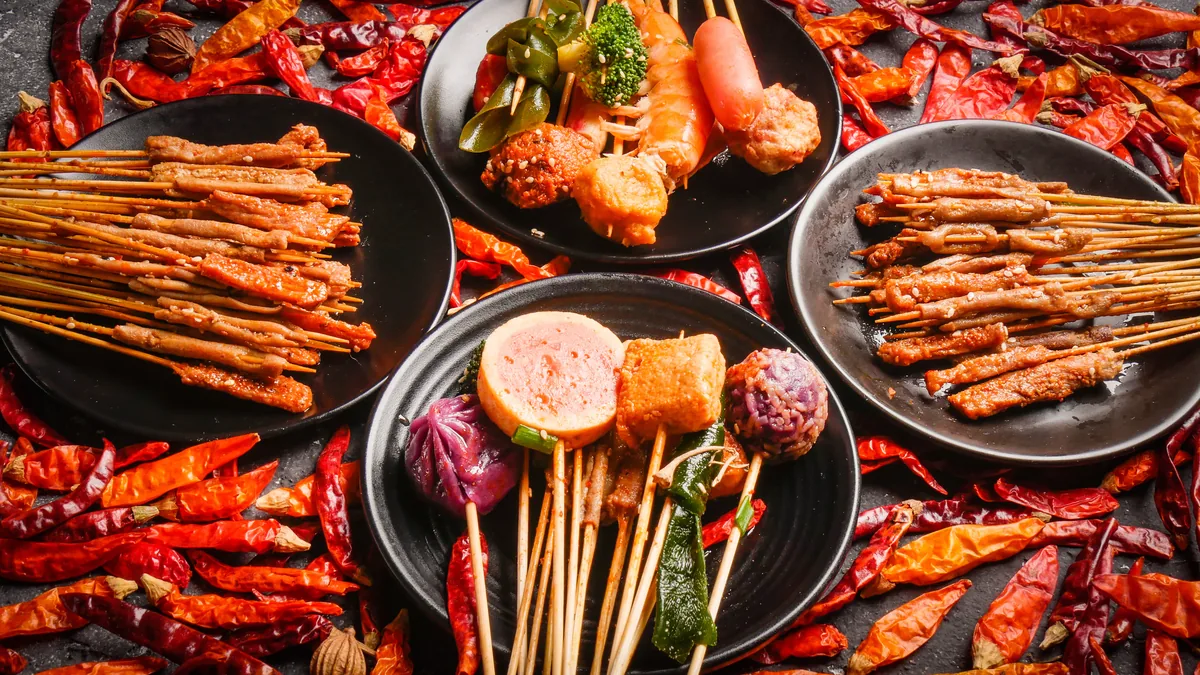
串串香 — Chuan chuan skewers
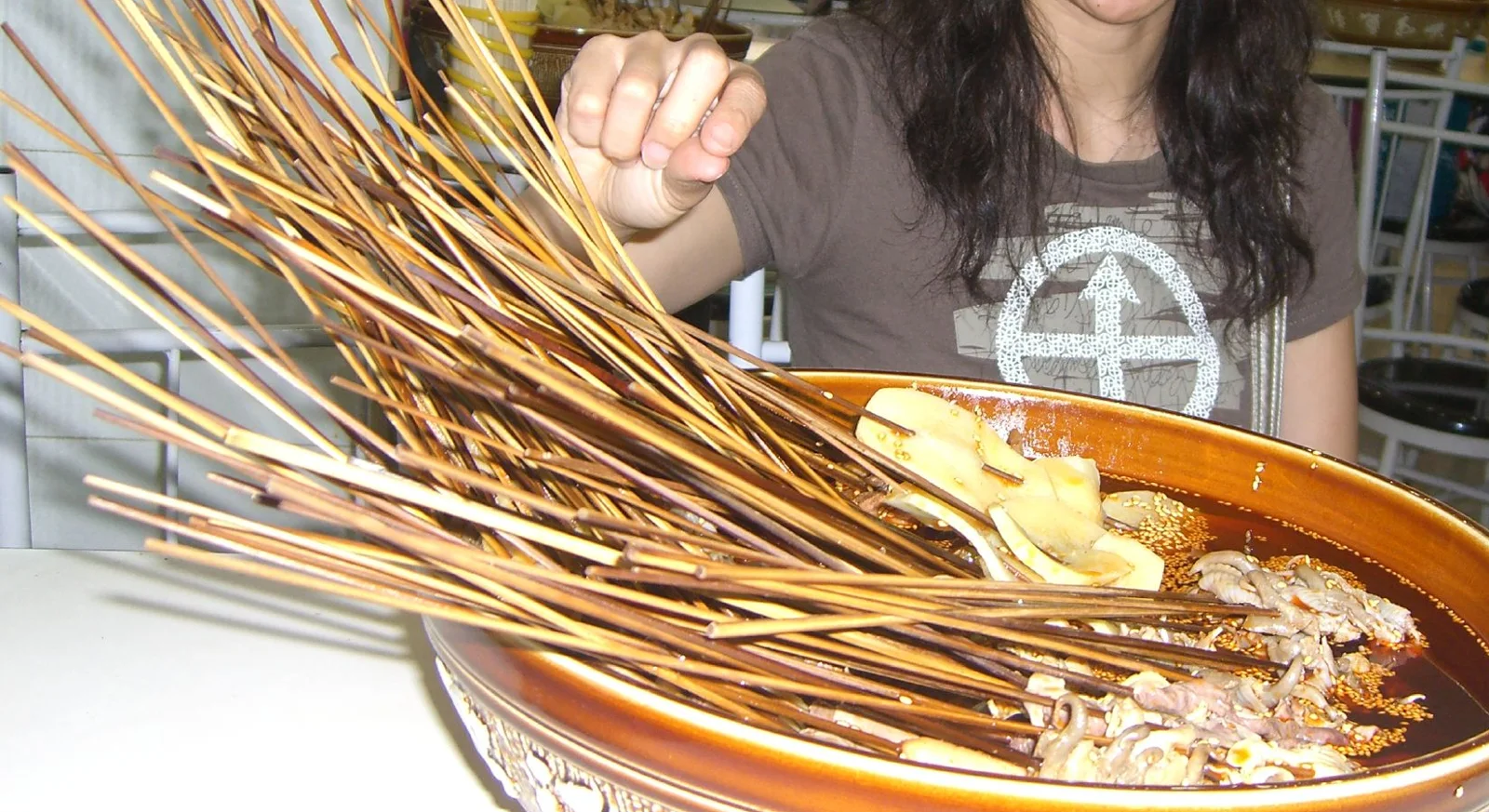
Skewers of anything — beef, tripe, quail egg, lotus root, potato — cooked in a shared pot and paid per stick. It is hotpot without the ordering decisions, and it is cheaper: ¥0.6-1.2 per skewer, roughly ¥50-80 per person. The ritual is the count at the end: the staff weigh or tally your empty sticks at the table.
冒菜 — Mao cai
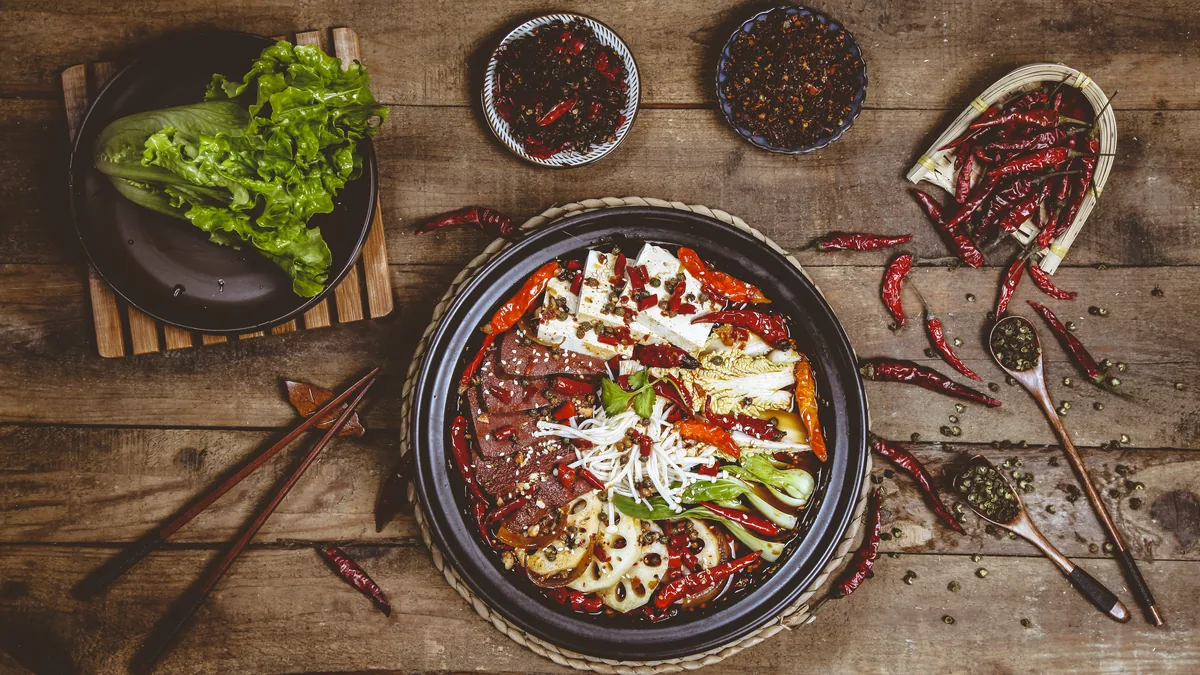
Hotpot for one person, cooked in the kitchen and brought to you. You pick vegetables and meat from a refrigerated case by weight, hand over the basket, and it comes back in a bowl of red broth. ¥30-50. This is the best solo meal in the city — no minimum order, no table of strangers, no two-hour sitting.
钵钵鸡 — Bobo chicken
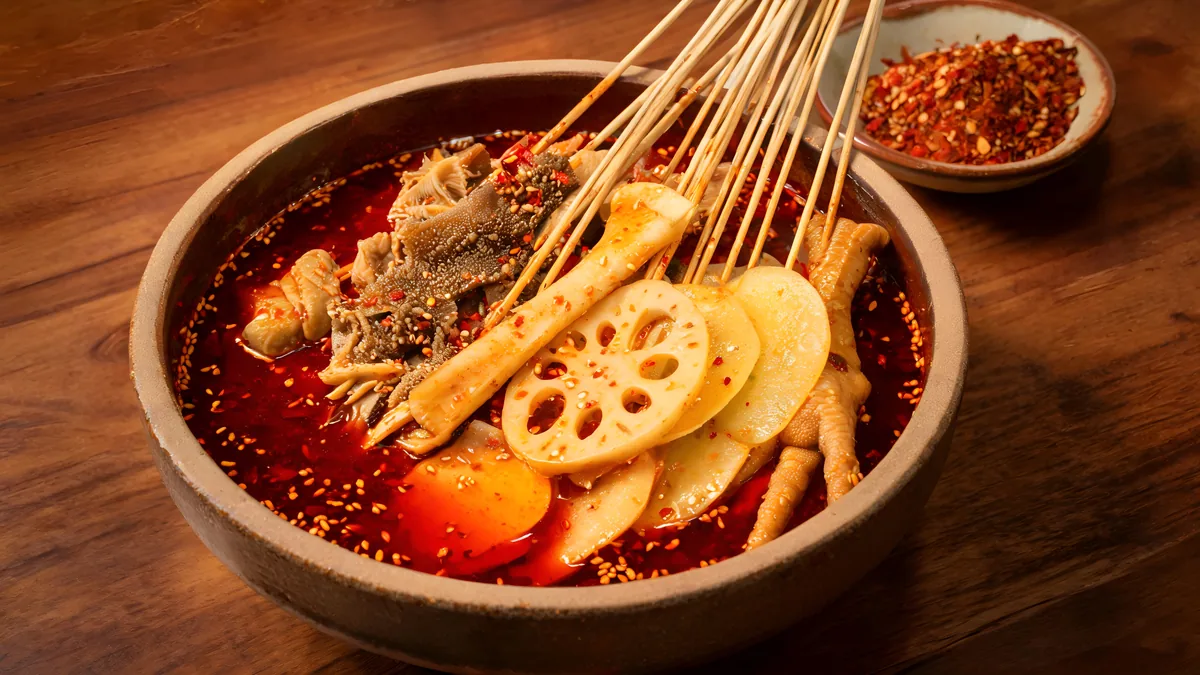
Everything on a skewer, served cold, standing in a bowl of chilli oil and sesame. From Leshan originally, now everywhere in Chengdu as an afternoon snack. ¥1-3 per skewer, ¥20-30 for a decent plate. Order by pointing; you pay by the stick.
Cold dishes and the ones that scare people
夫妻肺片 — Fuqi feipian
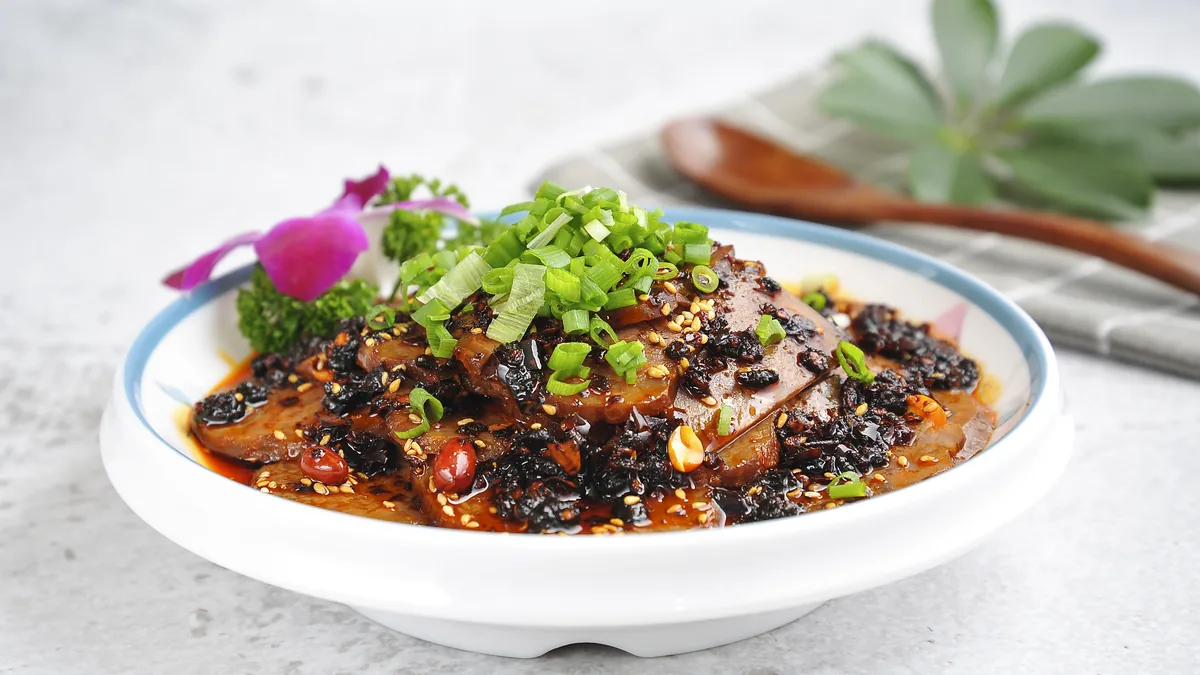
Sliced beef, tripe and tongue in chilli oil with crushed peanut and sesame. The name means “husband-and-wife offal slices”, from a 1930s Chengdu couple, Guo Chaohua and Zhang Tianzheng, who sold it from a stall. Despite 肺 in the name, lung has not been in the dish for decades. ¥32-48 as a starter.
口水鸡 — Saliva chicken
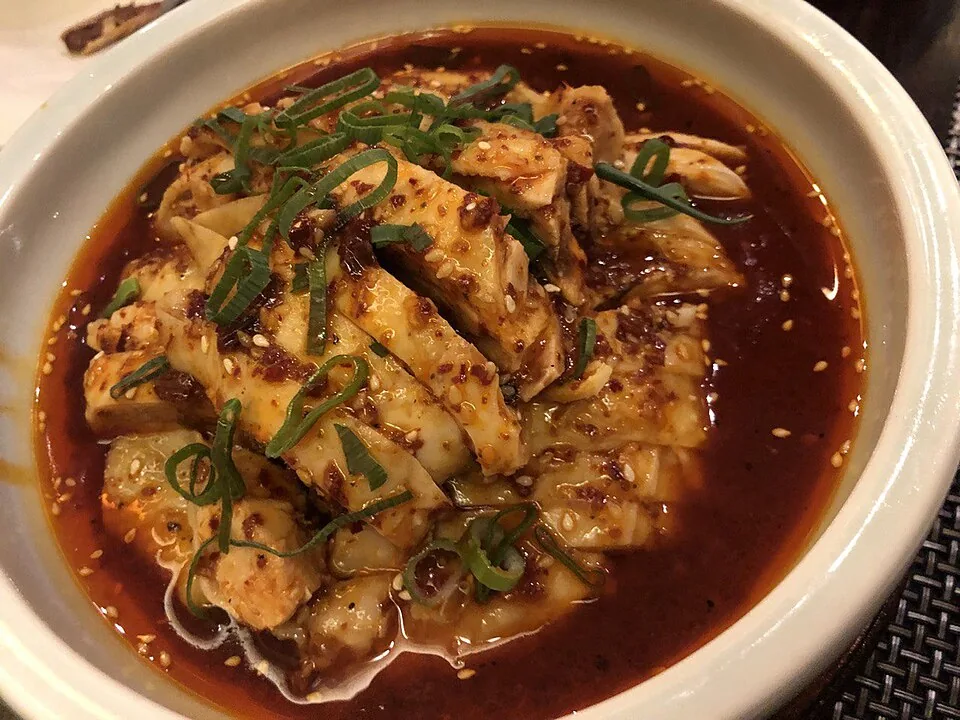
Cold poached chicken in a sauce of chilli oil, vinegar, sesame and sugar, named for the effect it has on you before you eat it. Order it as a cold starter before hotpot; the acid resets your palate between courses. ¥28-45.
兔头 — Rabbit head
Chengdu’s most Instagrammed dare. Braised in chilli and five-spice, served at room temperature, eaten with your hands: cheek first, then tongue, then the brain through the back of the palate. ¥12-18 each. If you only try one challenging thing in Chengdu, this is the one worth doing — it tastes like a very good braise, because it is one.
Snacks, which is what Chengdu is actually about
Chengdu’s snack culture is a legacy of teahouses: small, cheap, eaten standing, designed to go with conversation rather than to end it. The classic 小吃 (xiǎochī) trio below is sold in the same shops and is best ordered together.
钟水饺 — Zhong dumplings
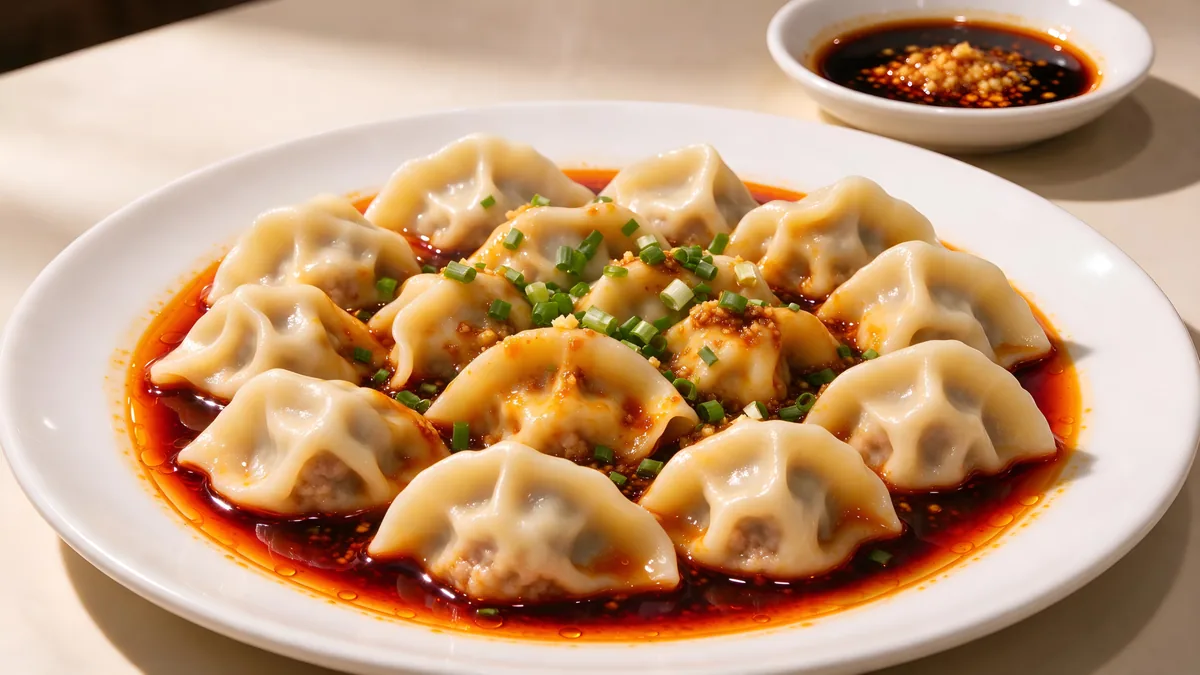
Pork dumplings, no vegetables in the filling, dressed with sweetened soy, garlic water and chilli oil. No soup. Named after Zhong Xiesen, who sold them in the 1890s. ¥12-20. The sweetness is the point — it is the one Chengdu dish where sugar is not a mistake.
龙抄手 — Long chao shou wontons
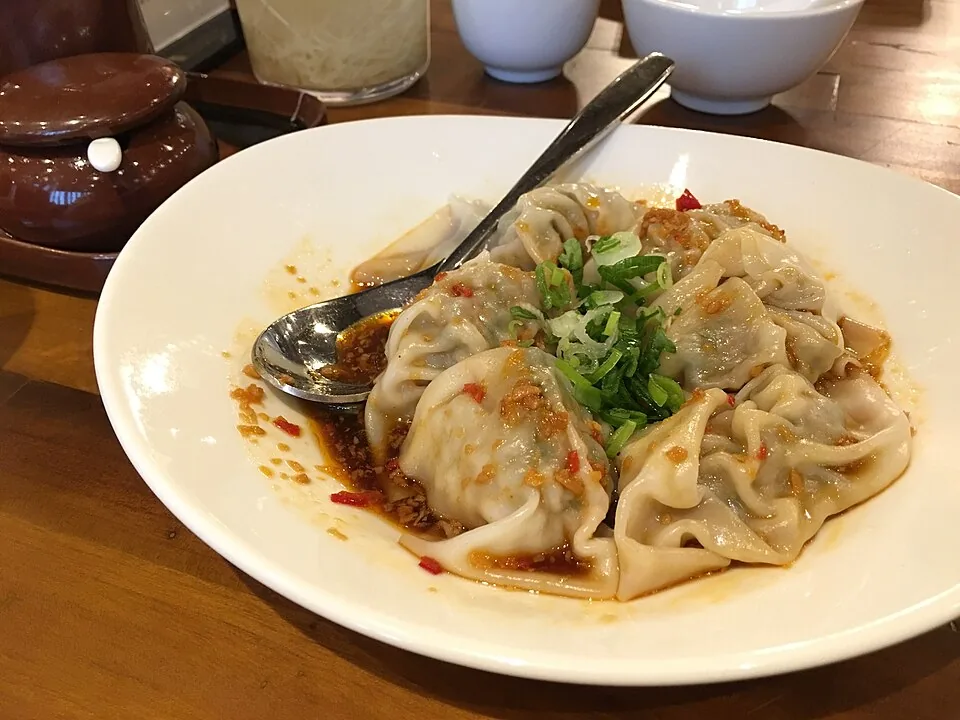
Thin-skinned pork wontons in a clear bone broth, or in chilli oil if you order 红油抄手. The name dates from 1941, when the founder picked 龙 for its homophone 浓 (“rich”) after a good batch of broth. ¥12-20. Order both this and the Zhong dumplings — they are meant to be eaten together.
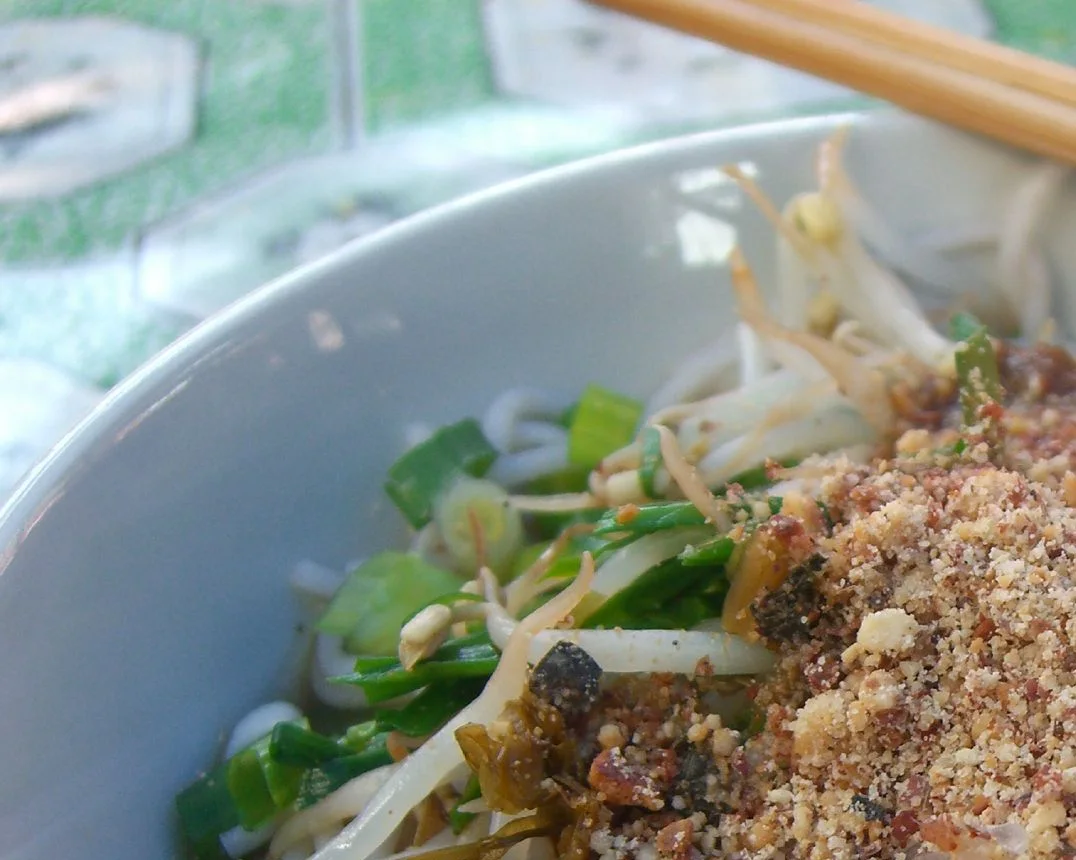
甜水面 — Sweet water noodles
Thick, chewy noodles the width of a chopstick, dressed with sweetened soy, chilli oil, garlic and crushed peanut. Three or four strands is a portion. ¥8-14. It is the most under-ordered dish in the city and the one most likely to become a favourite.
蛋烘糕 — Dan hong gao
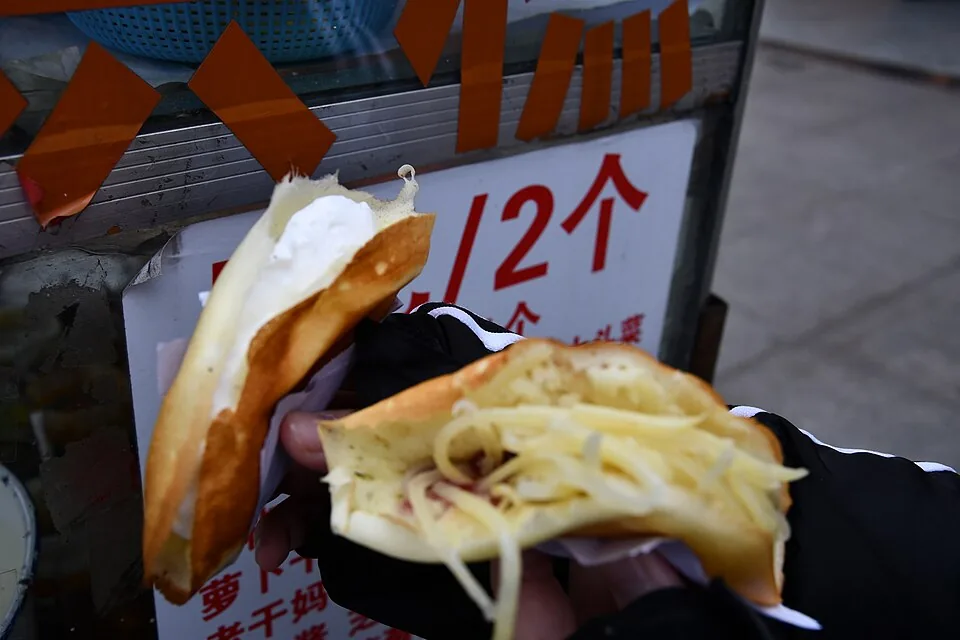
A small griddle cake, crisp at the edge and custardy in the middle, folded around a filling you choose: red bean, cream, pork floss, or a savoury jam. ¥5-10. Sold from carts and windows all over the city, mostly in the afternoon.
糖油果子 — Sweet oil fruit
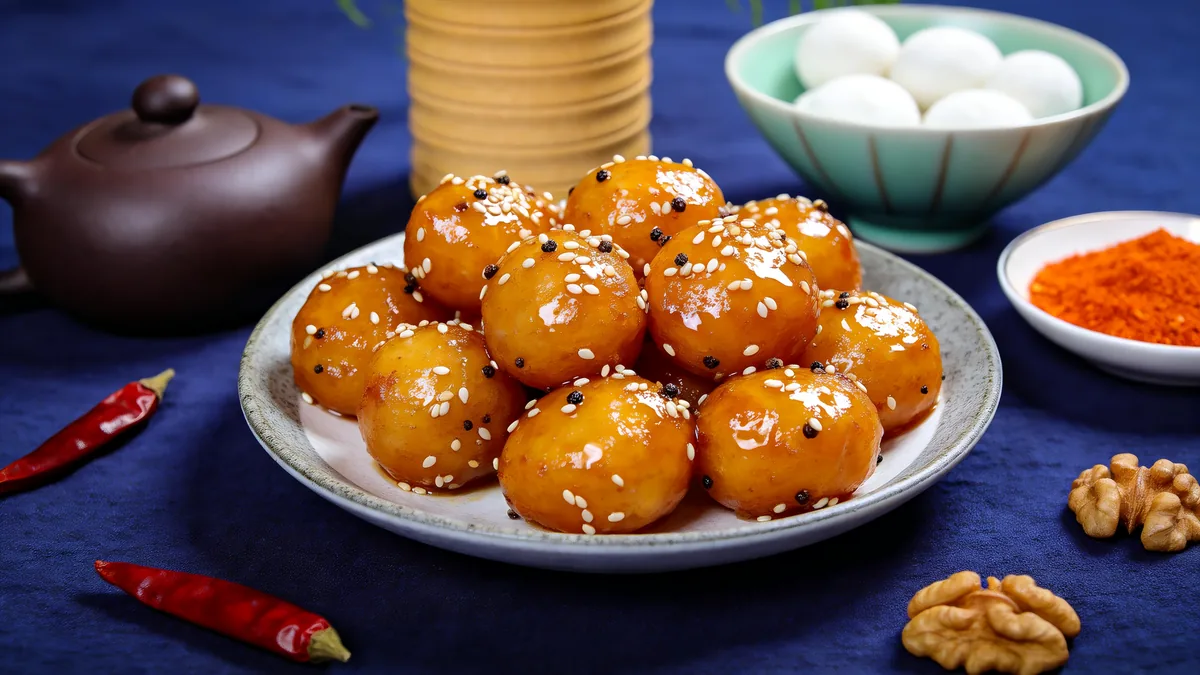
Glutinous rice dough fried in brown sugar until it turns amber and glassy, then rolled in sesame. Three or four to a stick. ¥5-8. Eat it hot; cold it turns into a chewy stone.
冰粉 — Bing fen
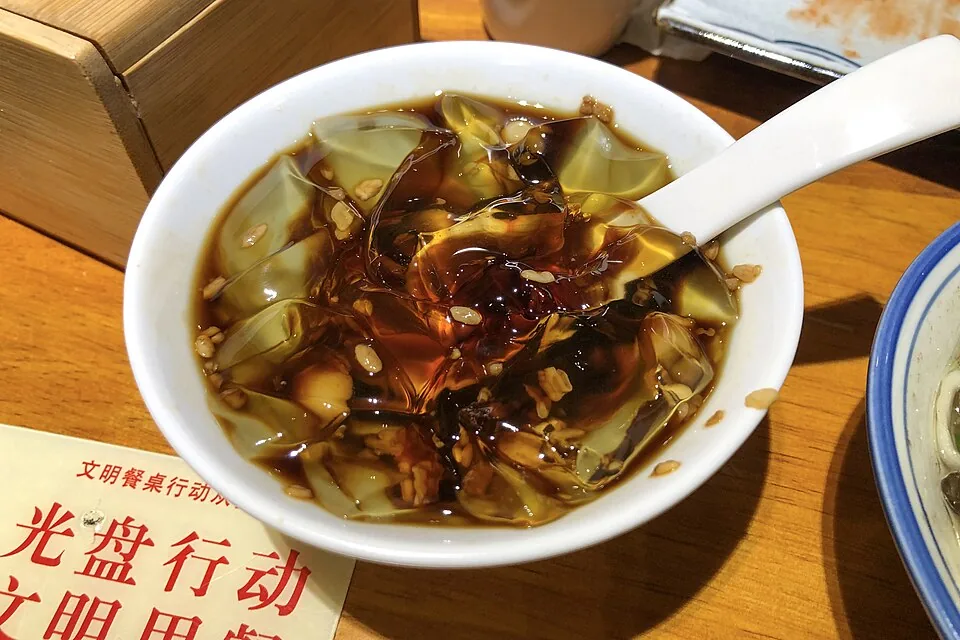
Ice jelly — a cold, translucent gel made from the seeds of a fig species — served with brown sugar syrup, crushed peanut, raisin and sometimes fruit. ¥8-15. The single best thing to order after hotpot.
水煮鱼 — Boiled fish in chilli oil
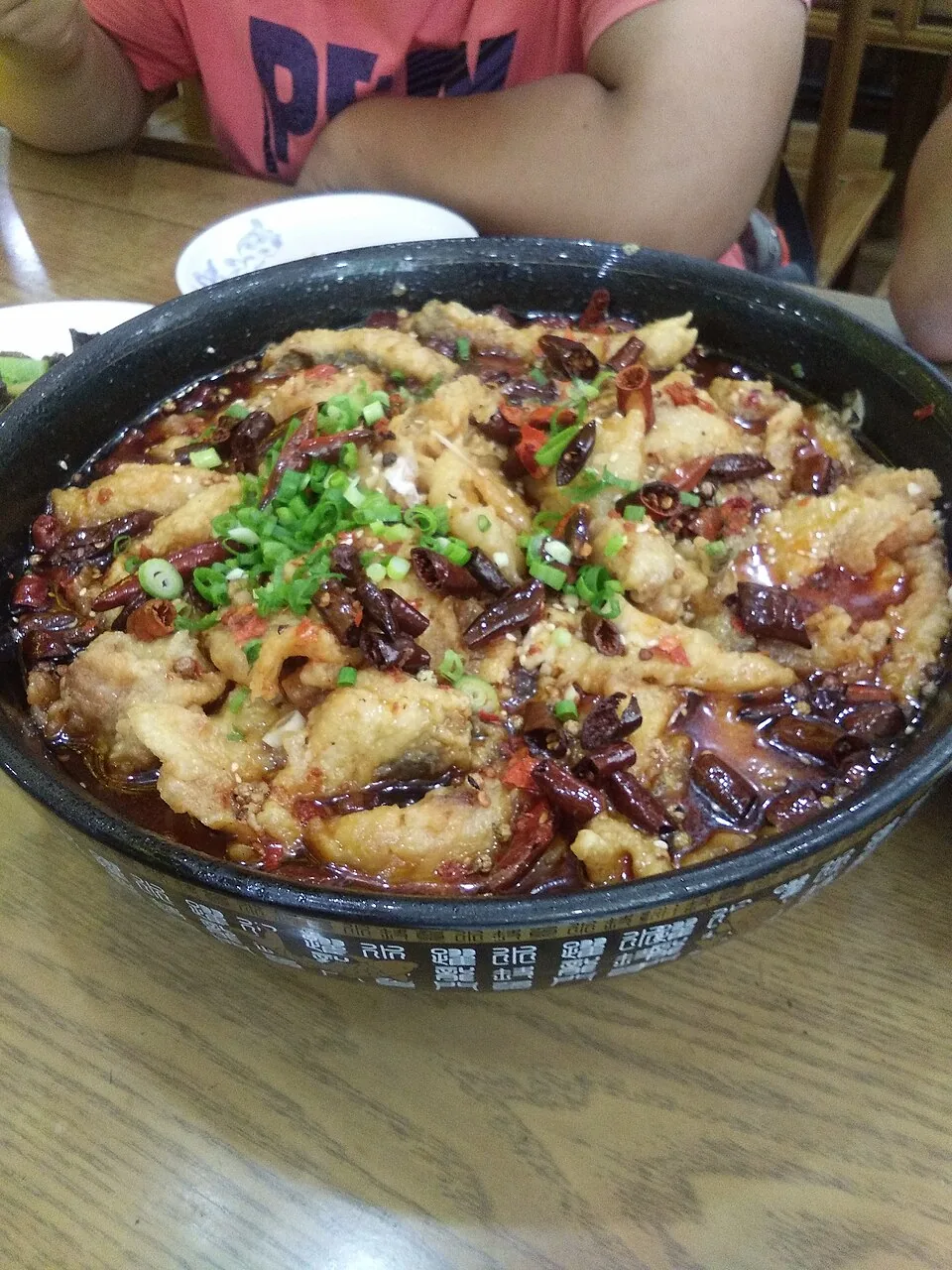
White fish fillets poached in a shallow bath of chilli oil with bean sprouts, then covered with a layer of dried chillies and peppercorn that the kitchen heats oil over at the table. It looks like a dare and eats like a gentle, fragrant soup — the fish itself is barely spiced, the oil is the seasoning. ¥58-88 for a portion that feeds two.
锅盔 — Guokui
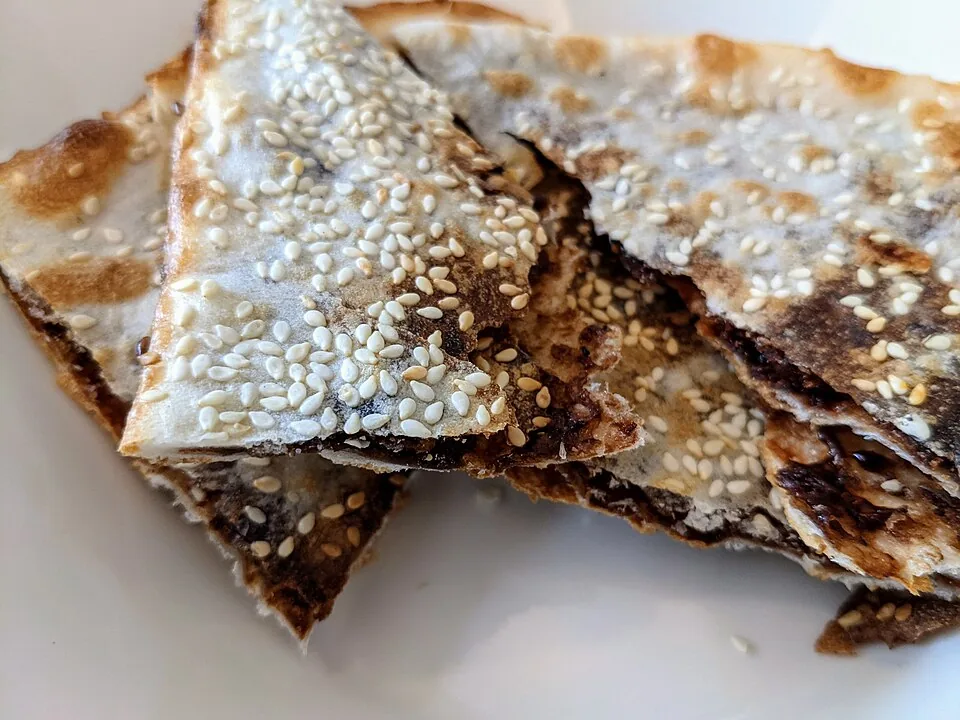
A layered flatbread, pressed into a clay oven until the outside shatters and the inside stays soft. Chengdu’s version is smaller and chewier than Xi’an’s — often split and filled with beef or 凉粉 (liángfěn, cold bean jelly). ¥8-15. The best portable breakfast in the city.
赖汤圆 — Lai tangyuan
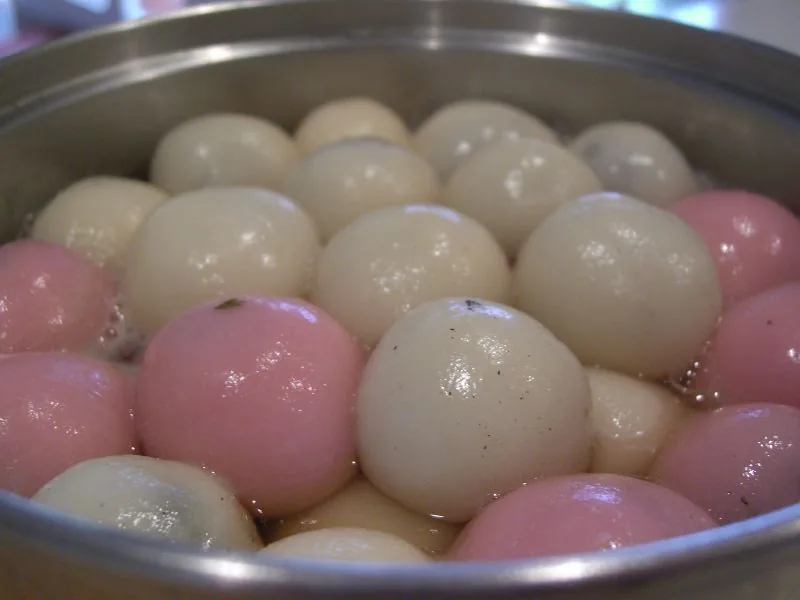
Glutinous rice balls with a filling of black sesame and sugar that turns to liquid when boiled, served in the cooking water. Named after Lai Yuanxin, who sold them from a pole-carried stall in the 1890s. ¥10-18. Order it in winter, or after a hotpot that went too far.
Breakfast, the meal visitors skip
Chengdu eats breakfast standing up, between 07:00 and 09:00, and it is the cheapest good meal of the day. The default is a bowl of 面 (miàn, noodles) — 杂酱面 (zhàjiàngmiàn, minced pork and bean sauce) or 牛肉面 (niúròumiàn, beef) for ¥10-15. Alongside it: 包子 (bāozi, steamed buns) by the steamer, 豆浆 (dòujiāng, unsweetened soy milk), and 油条 (yóutiáo, fried dough sticks) for dipping.
Two things surprise people. First, breakfast is not a separate menu — the noodle shop that opens at seven is the same shop serving the same noodles at noon. Second, 稀饭 (xīfàn, rice porridge) with pickles is a real breakfast, not a poverty meal; it is what you eat the morning after hotpot.
What Chengdu food costs, at a glance
| Dish | Chinese | Price (2026) | Where |
|---|---|---|---|
| Mapo tofu | 麻婆豆腐 | ¥38-58 | Chen Mapo Tofu, Qinghua Road |
| Kung pao chicken | 宫保鸡丁 | ¥42-68 | Any 川菜馆 (Sichuan restaurant) |
| Dan dan noodles | 担担面 | ¥10-16 | Noodle shops, all day |
| Twice-cooked pork | 回锅肉 | ¥38-58 | Home-style restaurants |
| Hotpot | 火锅 | ¥90-150 /person | Yulin, Jianshe Road |
| Chuan chuan | 串串香 | ¥0.6-1.2 /stick | Kuixinglou, Yulin |
| Mao cai | 冒菜 | ¥30-50 | Everywhere, lunch only |
| Bobo chicken | 钵钵鸡 | ¥1-3 /stick | Afternoon stalls |
| Fuqi feipian | 夫妻肺片 | ¥32-48 | Cold-dish counters |
| Saliva chicken | 口水鸡 | ¥28-45 | Cold-dish counters |
| Rabbit head | 兔头 | ¥12-18 /each | Wangping Street, night stalls |
| Zhong dumplings | 钟水饺 | ¥12-20 | Namesake shops |
| Long chao shou | 龙抄手 | ¥12-20 | Namesake shops |
| Sweet water noodles | 甜水面 | ¥8-14 | Snack shops |
| Dan hong gao | 蛋烘糕 | ¥5-10 | Street carts |
| Sweet oil fruit | 糖油果子 | ¥5-8 | Street carts |
| Bing fen | 冰粉 | ¥8-15 | Dessert stalls |
| Boiled fish | 水煮鱼 | ¥58-88 | Sichuan restaurants |
| Guokui | 锅盔 | ¥8-15 | Street carts, mornings |
| Lai tangyuan | 赖汤圆 | ¥10-18 | Snack shops |
Where to eat it
Chengdu’s food geography is simple once you stop going to the tourist streets. Jinli and Kuanzhai Alley are for photographs; the eating is elsewhere.
Yulin is the neighbourhood for a long evening: hotpot, skewers, wine bars, and the highest density of restaurants that locals actually return to. Jianshe Road is the snack street — 20 metres of stalls selling rabbit head, skewers and griddle cakes from about 17:00. Kuixinglou is where chuan chuan is done properly, in converted courtyard houses. Wangping Street is the rabbit-head street, and it is exactly as specific as that sounds.
| District | What it is | Go if |
|---|---|---|
| 玉林 Yulin | University-area late-night eating, outdoor tables | You want the cheap, local version |
| 建设路 Jianshe Rd | 1 km of grilled skewers and craft beer | You want beer with your food |
| 奎星楼街 Kuixinglou | 200 m of sit-down restaurants, more polished | You want a table and a proper meal |
| 锦里 Jinli | Rebuilt ancient street, snack vendors, performers | It is your first night in Chengdu |
| 宽窄巷子 Kuanzhai | Restored Qing alleys, pricier, calmer | You want the photogenic version |
| 武侯祠 Wuhou Ci | Seasonal stalls inside the temple grounds | It is a summer weekend |
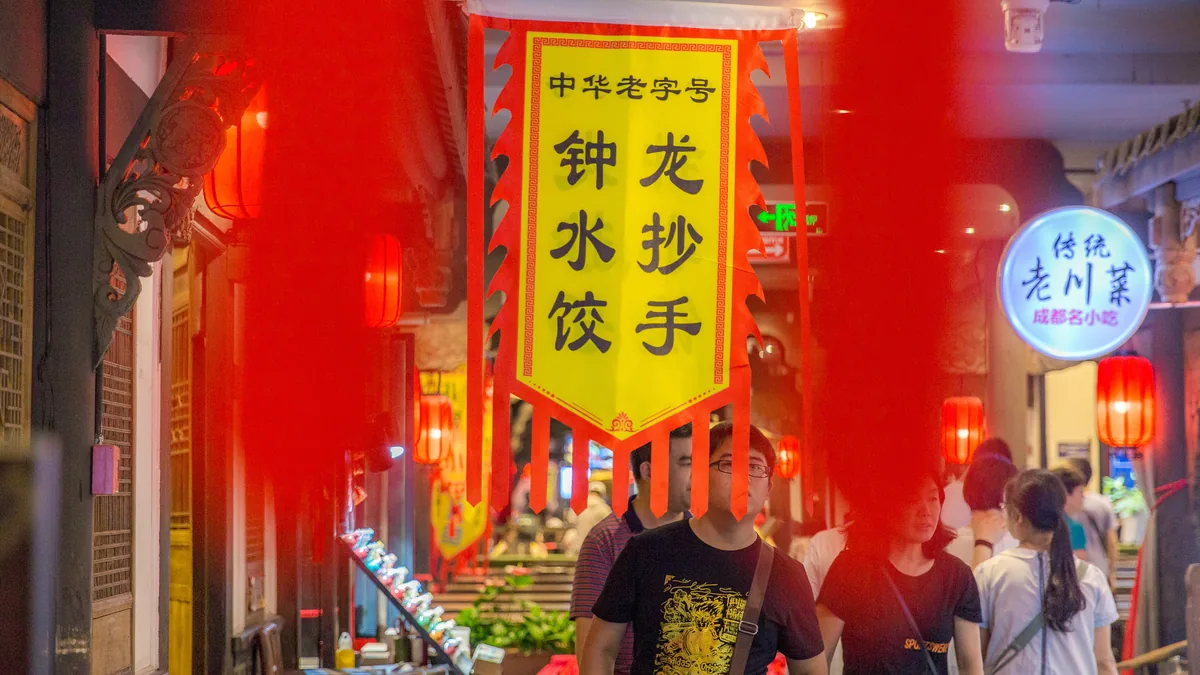
For the classic sit-down dishes, look for the old names rather than the highest-rated places on a map app: Chen Mapo Tofu for mapo tofu, Zhong Shuijiao for the dumplings, Long Chao Shou for the wontons. They are chains now, they are full of tourists, and they are still the reference version.
How to order without speaking Chinese
Three sentences cover most of it. 这个 (zhège, “this one”) while pointing at a photo or another table. 微辣 (wēilà, “mild”) before the order, not after. 买单 (mǎidān, “bill”) at the end — never expect the bill to arrive unasked, and never tip.
Menus are increasingly QR-code only. If there is no English version, the camera translation in a map app is good enough for dish names, and the photographs in the menu are reliable. If a place has a picture menu on the wall, order from the wall: those are the dishes the kitchen is set up to cook fast.
Planning the rest of the trip
Chengdu rewards two full days of eating and one of recovery. Pair this guide with the China food by city overview to see how Sichuan sits against Cantonese, Xi’an and Shanghai cooking, and with the Sichuan cuisine guide if you want the 15-dish version of what you just read.
For the city itself — pandas, teahouses, day trips to Leshan — start with the Chengdu city guide. If you are still working out how to order anywhere in China, the Chinese food ordering guide covers the phrases and the etiquette that apply nationwide.
Sources
FAQ
-
How spicy is Chengdu food really?
Spicier in aroma than in heat. Sichuan cooking is 麻辣 (málà) — numbing from Sichuan peppercorn plus chilli heat. Most restaurants will make a dish 微辣 (wēilà, mild) if you ask, and hotpot is ordered as a split pot so one half is clear broth. If you cannot eat chilli at all, say 不要辣 (bùyào là) and expect a puzzled look — a little chilli is considered seasoning, not a choice. -
How much does a day of eating in Chengdu cost?
¥120-200 per person if you eat where locals eat: ¥10-15 for a bowl of noodles at breakfast, ¥30-50 for a two-dish lunch, ¥15-25 for street snacks in the afternoon, ¥60-100 for dinner. Add ¥90-150 if dinner is hotpot. Western-facing restaurants in Taikoo Li run two to three times that. -
Do I need to book restaurants in Chengdu?
For hotpot on a Friday or Saturday, yes — popular chains take a queue number from about 17:00 and the wait can pass 90 minutes. Everything else is walk-in. The famous snack shops (Zhong dumplings, Long chao shou) are counter service and never take bookings. -
Is Chengdu food safe for vegetarians?
Easier than most of China, but not automatic. Buddhist restaurants near Wenshu Monastery are fully vegetarian. Elsewhere ask for 素 (sù) and watch for 肉末 (ròumò, minced meat) in mapo tofu and 高汤 (gāotāng, meat stock) in vegetable dishes. Many tofu and mushroom dishes are made with stock by default. Strictly vegan food is harder: 素 means no meat, not necessarily no egg or dairy; ask for 全素 (quánsù, fully plant-based) and check the broth, since most hotpot bases use animal fat. -
What should I avoid ordering as a first-timer?
Nothing on this list is a trap, but three things surprise visitors: 兔头 (rabbit head) is served cold with the skull intact and eaten by hand; 夫妻肺片 is offal, usually beef tripe and tongue, not lung; and 脑花 (brain) is exactly what it says. Order them if you are curious — just know what arrives. -
Can I eat Chengdu street food safely?
Yes, with two habits. Eat where the turnover is fast — a stall with a queue is cooking fresh; a stall with pre-plated food sitting out is not. And stick to cooked food: noodles, dumplings, skewers, griddle cakes. Avoid cut fruit and cold salads from carts. -
How do I pay at small restaurants?
WeChat Pay or Alipay, both linked to a foreign card. Cash is accepted but many stalls have no change for a ¥100 note. Menus are usually a QR code on the table; if there is no English menu, photograph the dishes at the next table and point.
Related guides
- Food & Dietary
Beijing Food Guide: 13 Dishes to Eat
Beijing food guide: 13 dishes, 2026 prices and where to eat each — Peking duck, copper-pot lamb, zhajiangmian, baodu, luzhu and the breakfast locals queue for.
13min read
- Food & Dietary
Guangzhou Food Guide: 19 Dishes to Eat
Guangzhou food guide: 19 dishes with 2026 prices and where to eat each — dim sum at yum cha, roast goose, white cut chicken, wonton noodles and claypot rice.
12min read
- Food & Dietary
Hangzhou Food Guide: 10 Dishes to Eat
Hangzhou food guide: 10 dishes, 2026 prices and where to eat — Dongpo pork, West Lake vinegar fish, Longjing shrimp, beggar's chicken and Kuiyuanguan noodles.
11min read
- Food & Dietary
Street Food in China: 20 Safe Dishes for First-Timers
20 street foods from ¥0.50-3 each, plus the four food-safety rules that stop first-timers getting stomach trouble.
10min read
- Food & Dietary
Sichuan Cuisine Guide: 15 Dishes for Foreigners
Sichuan cuisine guide: the 15 essential dishes, why the food is spicy-numbing (麻辣), and where to eat in Chengdu.
12min read
- Food & Dietary
How to Eat Well in China for Under ¥50 a Day (2026)
Verified 2026 budget food playbook: 苍蝇馆子, 沙县小吃, university canteens, and the ¥30-50/day 3-meal plan across 7 cities.
9min read