China Travel with Allergies: Vegan, Halal, GF Guide
How to manage dietary restrictions in China: vegetarian (素食), vegan, halal (清真), gluten-free, and severe allergies. Key Chinese phrases, restaurant apps, and survival cards in 6 languages.
Traveling in China with dietary restrictions is harder than in Japan or Taiwan but far easier than it was 5 years ago. Vegetarian restaurants (素食, sùshí) have multiplied in tier-1 cities, halal (清真, *qīngzhēn) restaurants are easy to find thanks to China’s 25-million Hui Muslim population, and the HappyCow app lists 1,500+ vegetarian/vegan spots in mainland China. For gluten-free, nut, dairy, and severe allergies, the situation is more challenging — most Chinese kitchens share cooking surfaces and oils, and cross-contamination is the norm. Your best tools: a written translation card in Mandarin (English-to-Chinese) showing your specific restrictions, the HappyCow app for finding safe restaurants, and the Chinese phrase “我对___过敏” (I’m allergic to ___) for emergency situations. This guide covers every major restriction, the apps and translation cards that work, and the regional Chinese cuisines that are naturally friendly to each diet.
The 5 main dietary restrictions in China
1. Vegetarian (素食, sùshí) and vegan (纯素, chúnsù)
The challenge: Chinese “vegetarian” can be ambiguous. Many Chinese vegetarians are “ovo-lacto” (eggs and dairy okay). Pure vegans (no eggs, no dairy, no animal products) need to be specific.
Key phrases in Mandarin:
- 我吃素 (wǒ chī sù) — “I eat vegetarian”
- 我是纯素食者 (wǒ shì chúnsù shízhě) — “I’m a vegan” (no eggs, no dairy)
- 不要鸡蛋 (búyào jīdàn) — “no eggs”
- 不要牛奶/奶制品 (búyào niúnǎi/nǎi zhìpǐn) — “no milk/dairy”
- 不要葱蒜 (búyào cōng suàn) — “no onion/garlic” (some Buddhist vegetarians avoid these)
How to find vegetarian restaurants:
- HappyCow (happycow.net) — 1,500+ listings in mainland China. Filter by “vegan,” “vegetarian,” “Chinese Buddhist,” “Western.” App works in China with VPN.
- Trip.com — search “素食餐厅” (vegetarian restaurant)
- Dianping (大众点评) — China’s Yelp. Search “素食” in the app. Has English interface when phone is set to English.
- Meituan (美团) — similar to Dianping, restaurant search and reviews
Top vegetarian cities in China:
- Beijing — 200+ vegetarian/vegan restaurants. Wujian Ping (五道口) and Xicheng districts are hubs
- Shanghai — 300+ options. Vegetarian Lifestyle (枣子树) and Sufuma (素满庐) are chains
- Chengdu — Buddhist vegetarian tradition. Pure Heart (净心) and Tianhuaxiang (天华香)
- Hong Kong — best vegetarian city in Greater China, with 500+ options and a strong Buddhist tradition
- Hangzhou — Buddhist heritage, near the famous Lingyin Temple
Naturally vegetarian Chinese dishes to know:
- Mapo tofu (麻婆豆腐) — but traditionally contains ground pork. Ask for 素麻婆 (sù mápó) for the vegetarian version
- Stir-fried bok choy with garlic (蒜蓉白菜)
- Eggplant with garlic sauce (鱼香茄子)
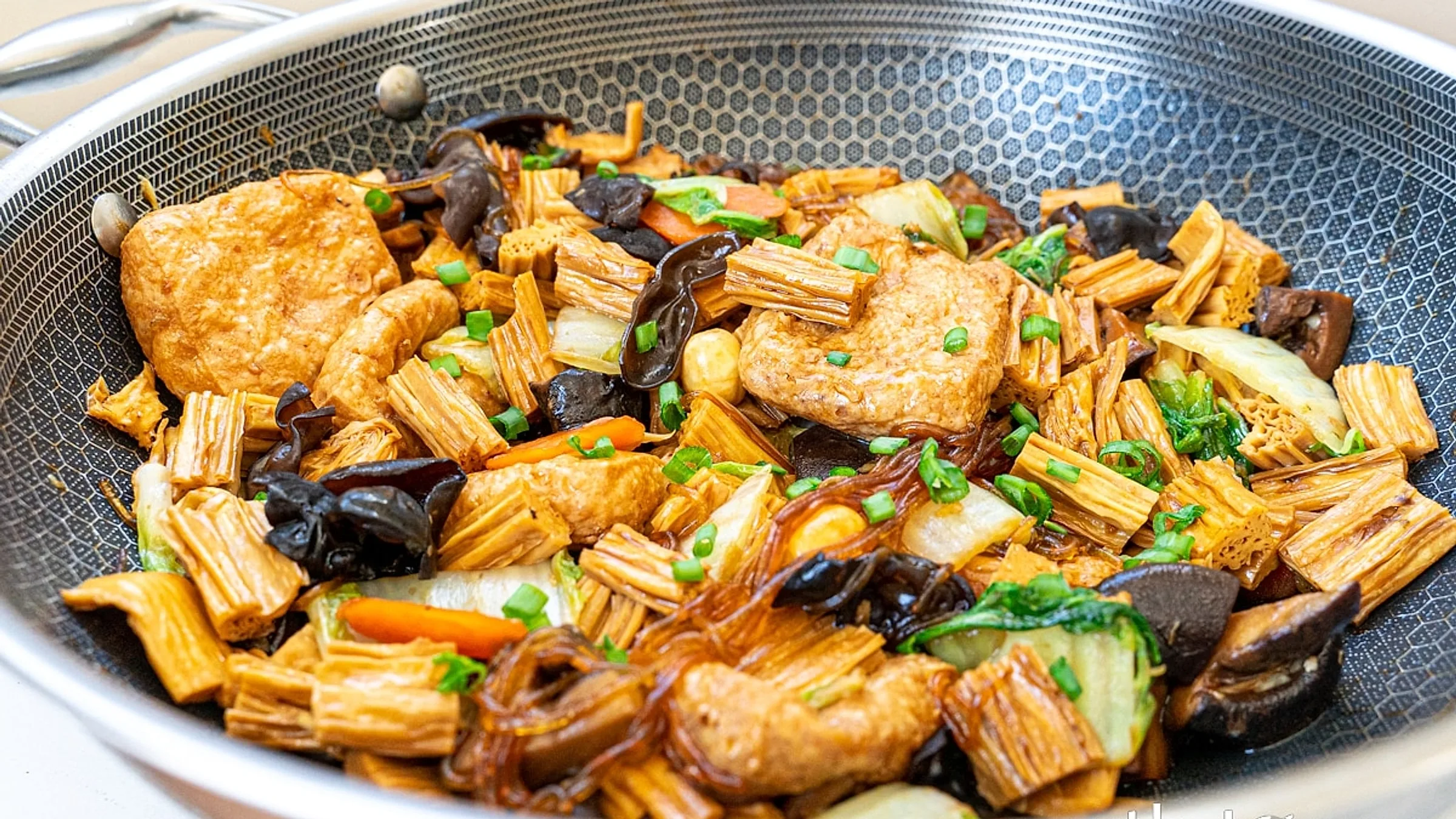
- Buddha’s delight (罗汉斋, luóhàn zhāi) — mixed vegetables and tofu, traditionally Buddhist
- Cold cucumber salad (拍黄瓜)
- Hot and sour soup (酸辣汤) — verify it’s the eggless, meatless version
- Scallion pancakes (葱油饼) — vegan, but often cooked on the same griddle as meat dishes
Naturally vegan dishes:
- Most vegetable stir-fries
- Plain rice, plain noodles (no egg noodles — ask for 米线, mǐxiàn, rice noodles)
- Tofu dishes (avoid ones with ground pork or oyster sauce)
- Sticky rice balls (汤圆, tāngyuán) — sweet dessert
Cross-contamination warning: Chinese restaurant kitchens typically use one wok for everything. Even if you order a “vegetable” dish, the wok was probably used for meat an hour ago. Strict vegans should eat at dedicated vegetarian restaurants only.
2. Halal (清真, qīngzhēn)
The easy part: China has 25+ million Hui Muslims and 16,000+ registered halal restaurants. Quality is high and the food is genuine. Every major city has a Muslim Quarter (回民街, huímín jiē) with authentic halal food.
Where to find halal food:
- Muslim Quarter, Xi’an (回民街) — the most famous. 200+ halal stalls and restaurants in a few blocks
- Niujie (牛街), Beijing — the city’s main Hui neighborhood, with 30+ halal restaurants
- Shanghai’s Old City and Hongqiao areas
- Chengdu — has a Hui population with great halal spots
- Urumqi, Xinjiang — Uyghur cuisine is halal by default. Lamb skewers, naan, and pilaf are staples
What to look for:
- A green or blue “清真” (qīngzhēn) sign with Arabic-style script
- “清真” (halal) on the Dianping app
- Look for a halal certificate on the wall — restaurants are inspected by local Islamic associations
Halal Chinese specialties:
- Lamb skewers (羊肉串, yángròu chuàn) — Xinjiang-style, cumin-and-chili
- Naan bread (馕, náng) — Xinjiang, long-distance staple
- Beef noodles (牛肉面, niúròu miàn) — Lanzhou-style, the most famous halal dish
- Yangrou paomo (羊肉泡馍, yángròu pàomó) — Xi’an specialty, lamb soup with crumbled flatbread
- Halal hotpot (清真火锅)
The challenge: Halal is binary in China — it’s about who slaughtered the animal, not what the animal ate. If you also need grass-fed, organic, or other specific halal certifications, you’ll need to ask the restaurant.
3. Gluten-free
The challenge: China is wheat country. Noodles, dumplings, bao, pancakes, and many sauces (soy sauce, oyster sauce) contain wheat or gluten. Cross-contamination is widespread.
Naturally gluten-free Chinese foods:
- Rice and rice porridge (米粥, mǐzhōu)
- Steamed rice (米饭, mǐfàn)
- Rice noodles (米粉, mǐfěn) — verify 100% rice, not mixed
- Hot pot ingredients (most meats, vegetables, eggs) — but verify the broth is gluten-free
- Grilled fish, grilled meats
- Stir-fried vegetables (no soy sauce — ask for “不要酱油”)
Phrases:
- 我对麸质过敏 (wǒ duì fūzhì guòmǐn) — “I’m allergic to gluten”
- 我不能吃小麦 (wǒ bù néng chī xiǎomài) — “I can’t eat wheat”
- 不要面条 (búyào miàntiáo) — “no noodles”
- 不要酱油 (búyào jiàngyóu) — “no soy sauce” (most Chinese soy sauce contains wheat)
- 我有乳糜泻 (wǒ yǒu rǔmí xiè) — “I have celiac disease” (medical phrase for emergencies)
Apps and tools:
- Find Me Gluten Free app — has listings in major Chinese cities
- Meituan / Dianping — search “无麸质” (gluten-free) but expect few results
- Hotel breakfast buffets at international brands (Marriott, Hilton, Shangri-La) often have gluten-free sections
Brutal truth: Gluten-free in China is much harder than vegetarian. Plan to cook some of your own meals (your hotel room’s kettle is your friend) and stock up on fruit, nuts, and rice-based snacks. Carry gluten-free snacks from home as backup.
4. Nut allergies (peanut, tree nut)
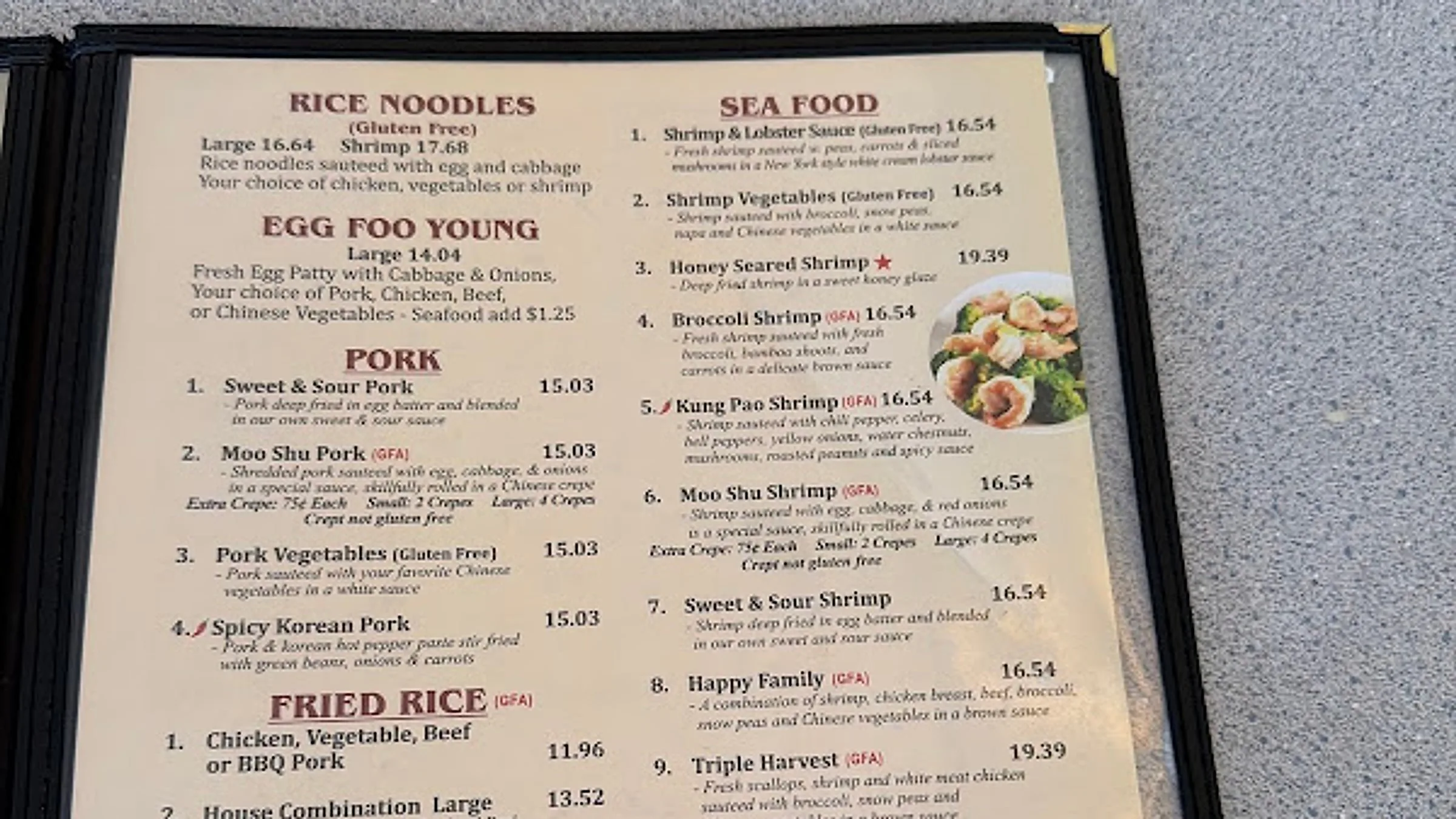
The big risk: Peanuts (花生, huāshēng) and tree nuts are extremely common in Chinese cooking. Kung pao chicken, dan dan noodles, mapo tofu, and most Sichuan dishes contain peanuts. Many sauces use peanut oil.
Phrases:
- 我对花生过敏 (wǒ duì huāshēng guòmǐn) — “I’m allergic to peanuts”
- 我对坚果过敏 (wǒ duì jiānguǒ guòmǐn) — “I’m allergic to tree nuts”
- 不要花生油 (búyào huāshēng yóu) — “no peanut oil”
What to avoid:
- Kung pao chicken (宫保鸡丁)
- Dan dan noodles (担担面)
- Cold dishes with crushed peanuts
- Most desserts (sesame paste, peanut butter flavor)
- Eight treasure tea (八宝茶) — usually contains nuts
Critical: Carry two EpiPens (or equivalent) at all times. Show your translation card at every restaurant. Don’t rely on the kitchen to “just remove the peanuts” — most cooks will still use peanut oil in the wok.
5. Dairy allergy / lactose intolerance
The easy part: Traditional Chinese cuisine is almost entirely dairy-free. Milk, cheese, butter, and yogurt are not native ingredients and are rare in restaurants (except Western, Korean, and high-end hotels).
What to watch:
- Western food (pizza, pasta, cake)
- Baked goods at international hotel breakfasts
- Butter in some Shanghai-style “Western” desserts
- Yogurt drinks at convenience stores
- Some Hong Kong-style dim sum uses milk in the custard tarts (蛋挞) and milk tea (奶茶)
Milk alternatives:
- Soy milk (豆浆, dòujiāng) — widely available, often unsweetened
- Oat milk — only at Starbucks, Manner Coffee, and high-end cafés
- Almond milk — rare
- Coconut milk — common in southern Chinese curries and desserts
Translation cards: the single most useful thing you can carry
Buy or print a dietary-restriction translation card in advance. We recommend:
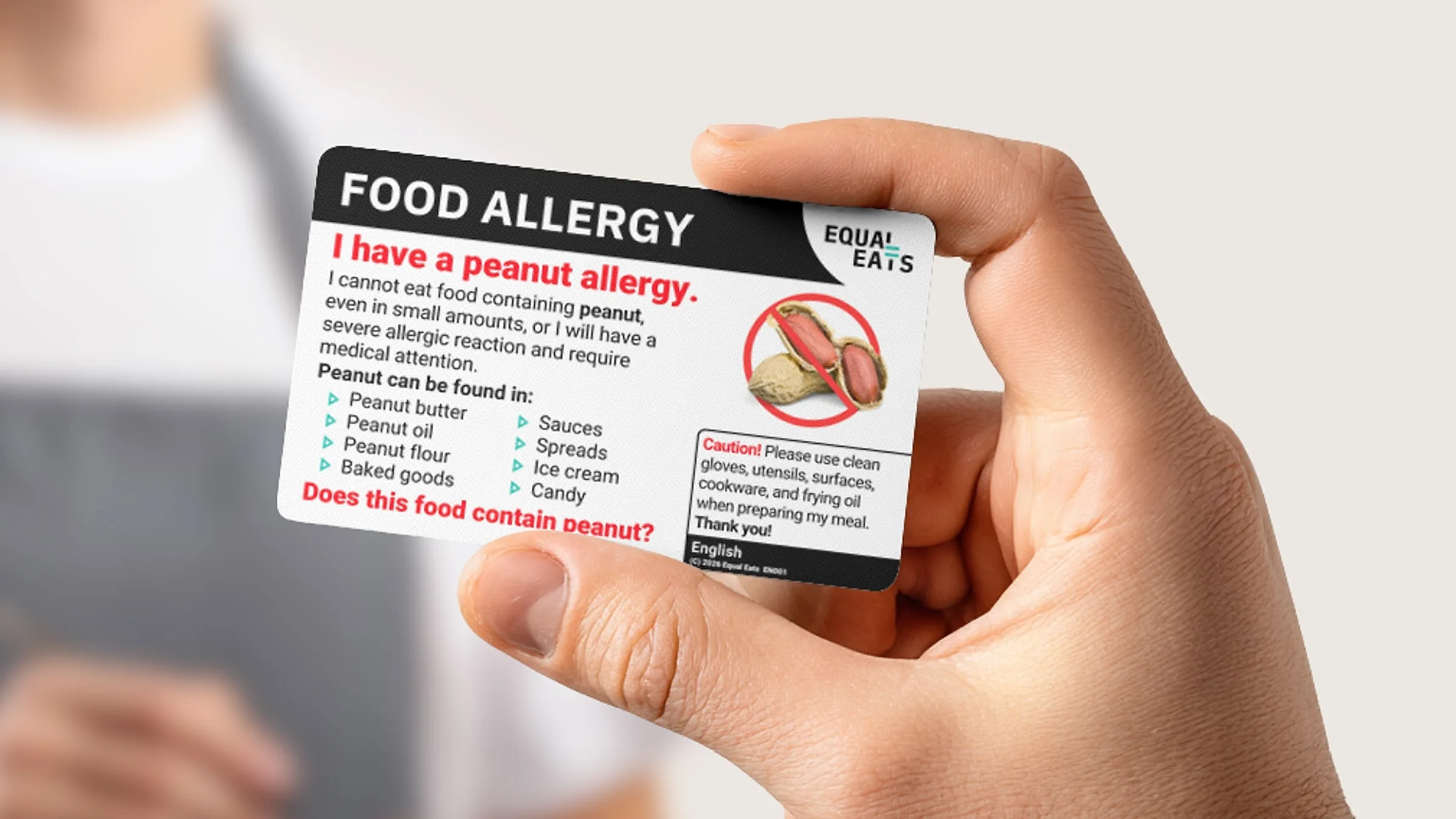
- Crucial Specialty ($10) — durable plastic card, English-to-Mandarin, covers 8 allergens. Available on Amazon.
- Select Wisely ($15) — foldable, covers 14 allergens plus vegetarian/vegan/halal options.
- DIY printout — write your restrictions in clear Mandarin characters and English. Show it to the server.
Sample card format:
我是一名纯素食者。
我对以下食物过敏:
- 所有肉类
- 鸡蛋
- 牛奶
- 花生
我吃这些食物会有严重的过敏反应,
可能导致住院。
请帮我确认食物中没有这些成分,
并且不要用同一口锅或油烹饪。
谢谢!

I am a strict vegan.
I am severely allergic to:
- All meat
- Eggs
- Milk
- Peanuts
Eating these could send me to the hospital.
Please ensure my food contains none of these
and is not cooked in the same pan or oil.
Thank you!
Emergency phrase for severe allergic reactions
If you have an anaphylactic reaction:
- 救命 (jiùmìng) — “Help!”
- 我过敏了 (wǒ guòmǐn le) — “I’m having an allergic reaction”
- 叫救护车 (jiào jiùhùchē) — “Call an ambulance”
- 救护车电话 120 (jiùhùchē diànhuà yāo èr líng) — “Ambulance number 120”
Hospital note: Public hospitals in China (公立医院, gōnglì yīyuàn) have emergency rooms (急诊, jízhěn) and can administer epinephrine. Tier-1 city international hospitals (Beijing United Family, Shanghai’s Jiahui, Parkway) have English-speaking staff and accept international insurance. Save the address of the nearest international hospital to your hotel in advance.
Verified: “HappyCow lists 1,500+ vegetarian and vegan restaurants in mainland China, with the highest concentration in Beijing, Shanghai, Hong Kong, and Chengdu” — HappyCow, accessed 2026-07-24
Apps to download before you arrive
- HappyCow — vegetarian/vegan restaurant finder. Works in China with VPN
- Dianping / Meituan — Chinese Yelp, has English mode
- Pleco — the best Chinese-English dictionary, has a “restaurant” section with example phrases
- Google Translate — works with VPN in China
- Baidu Maps — has restaurant filters and reviews, in English
For must-know ordering phrases in Chinese, see our ordering food in Chinese guide. For safe and must-try street food dishes, see our China street food guide. For finding restaurants that accept foreign cards and Alipay, see our Alipay setup guide.
Where to book
Plan your trip around the right areas (and right hotels):
- Hotels in Beijing’s Sanlitun / embassy district — most dietary-friendly restaurants
- Browse all China hotels
Affiliate disclosure: Some links above are affiliate links. We may earn a commission at no extra cost to you. See our Affiliate Disclosure for details.
Plan your trip — verified tools
These free tools are built on real, monthly-verified data and help you skip the trial-and-error phase of China trip planning:
- China 6-City 5-Day Budget Calculator — Real 2026 prices for 5 days in Beijing, Shanghai, Guangzhou, Chengdu, Xi’an, or Hangzhou. Budget / mid-range / comfort tiers, broken down line by line.
- China OTA Comparison 2026 — Trip.com vs Booking.com vs Agoda vs Klook across 5 booking types. Inventory, pricing, foreign card support, English service, per-OTA verdict.
Verified August 2026 by TravelHubChina Editorial. We re-check prices and policy details monthly so the data doesn’t drift.
Step by step
-
Identify your restriction (vegetarian / vegan / halal / gluten-free / allergy) and print a Mandarin translation card (Equal Eats free PDF or Crucial Specialty card, 6 languages)
Identify your restriction (vegetarian / vegan / halal / gluten-free / allergy) and print a Mandarin translation card (Equal Eats free PDF or Crucial Specialty card, 6 languages)
-
Download HappyCow (1,500+ vegan/veg China listings) and Dianping (Da Zhong Dian Ping, English interface, China's Yelp) for restaurant discovery before you fly
Download HappyCow (1,500+ vegan/veg China listings) and Dianping (Da Zhong Dian Ping, English interface, China's Yelp) for restaurant discovery before you fly
-
Memorize 3 key phrases: wo chi su (I eat vegetarian), wo shi chun su shi zhe (I'm vegan), wo dui ___ guo min (I'm allergic to ___)
Memorize 3 key phrases: wo chi su (I eat vegetarian), wo shi chun su shi zhe (I'm vegan), wo dui ___ guo min (I'm allergic to ___)
-
Map your itinerary cities to dietary hubs: Beijing Wudaokou + Niujie, Shanghai French Concession, Xi'an Huimin Jie (Muslim Quarter), Chengdu Chunxi, Hong Kong (best vegetarian city in Greater China)
Map your itinerary cities to dietary hubs: Beijing Wudaokou + Niujie, Shanghai French Concession, Xi'an Huimin Jie (Muslim Quarter), Chengdu Chunxi, Hong Kong (best vegetarian city in Greater China)
-
Pack backup snacks (energy bars, nuts, dried fruit) for travel days; at restaurants, ask about shared-wok cross-contamination; choose dedicated vegetarian or qing zhen (halal) spots when possible
Pack backup snacks (energy bars, nuts, dried fruit) for travel days; at restaurants, ask about shared-wok cross-contamination; choose dedicated vegetarian or qing zhen (halal) spots when possible
FAQ
-
Is it easy to travel in China as a vegetarian?
Yes, much easier than 5 years ago. Tier-1 cities (Beijing, Shanghai, Shenzhen, Chengdu, Hangzhou) have dedicated vegetarian restaurants: 200+ in Beijing, 300+ in Shanghai, 500+ in Hong Kong. The HappyCow app lists 1,500+ vegetarian/vegan spots in mainland China. Use the phrase wo chi su (I eat vegetarian) or wo shi chun su shi zhe (I'm vegan) to confirm. Naturally vegetarian dishes: Buddha's delight (luo han zhai), mapo tofu (ask for su ma po, the no-pork version), and stir-fried bok choy with garlic. -
Where can I find halal food in China?
China has a 25-million Hui Muslim population with halal (qing zhen) restaurants across the country. The best halal districts: Xi'an's Huimin Jie (Hui Min Jie, Muslim Street, the most famous), Beijing's Niujie (Niu Jie), Lanzhou (the home of Lanzhou niurou mian, hand-pulled beef noodles), Yinchuan, and Urumqi (Uyghur cuisine). Look for the green Arabic-style sign with the word qing zhen. Hui noodles, lamb skewers (yang rou chuan), and beef noodle soup are universally halal. Cross-reference with HappyCow or Dianping for verified listings. -
What should I do if I have a severe food allergy in China?
Three steps: (1) Print or screenshot a Mandarin allergy card before flying — services like Crucial Specialty (USD 25) and SelectWisely sell cards translated into Mandarin, or use a free Equal Eats PDF. (2) Memorize the phrase wo dui ___ guo min (I'm allergic to ___) for emergencies. (3) Tell the server in writing before ordering; cross-contamination is the norm in shared-wok kitchens, so choose dedicated restaurants when possible. For severe allergies, carry two EpiPens and know the ambulance number (120 in mainland China, 999 in Hong Kong).
Related guides
- Food & Dietary
China with Dietary Restrictions 2026: Vegetarian, Vegan, Halal, Kosher, Gluten-Free & Allergy Guide
Travel China with dietary restrictions in 2026 — vegetarian (素食), vegan, halal (清真), kosher, gluten-free, peanut/soy/shellfish/sesame allergies. 30 FAQ, 8 sources, 5 city profiles (Beijing, Shanghai, Xi'an, Chengdu, Hong Kong), 20 essential Mandarin phrases, and the 8 regional cuisines ranked by restriction-friendliness.
- Food & Dietary
Cantonese Dim Sum Guide: 12 Essential Dishes + Tea Etiquette
A practical guide to Cantonese dim sum (点心) for foreign visitors — the 12 essential dishes, how to order from the cart, tea etiquette, where to eat in Guangzhou and Hong Kong, and the famous 饮茶 (yum cha) tradition.
11min read
- Food & Dietary
China Food by City: 8 Cities, 24 Iconic Dishes
A guide to Chinese regional food by city — the 8 most foodie-worthy cities for foreign visitors, the 3 iconic dishes in each, and where to find them. Beijing, Shanghai, Chengdu, Guangzhou, Hong Kong, Xi'an, Hangzhou, Chongqing.
14min read
- Food & Dietary
Street Food in China: 20 Safe Dishes for First-Timers
20 iconic Chinese street foods with pinyin, English names, what they taste like, regional origin, average price in USD, and which ones are safe for first-time visitors. Plus food-safety rules.
10min read
- Food & Dietary
Chinese Hotpot Guide: 4 Styles + How to Eat It
A practical guide to Chinese hotpot (火锅) for foreign visitors — the 4 main styles (Sichuan, Chongqing, Beijing, Cantonese), how to eat it, the 20 essential ingredients, and where to try it in each city.
11min read
- Food & Dietary
20 Chinese Phrases to Order Food (Pinyin + Audio)
The 20 must-know Mandarin phrases for ordering food in China, with pinyin, English translation, audio tips, and a printable phrase card. Includes restaurant, street food, and dietary phrases.
8min read