
How to use this guide
Connectivity in China has three separate problems that are usually treated as one: getting a working data connection, reaching the services you normally use, and keeping a phone number that can receive the verification codes Chinese apps send. Solving only the first leaves you online but unable to book a train or pay for a taxi. This hub separates the three and gives each its own guide.
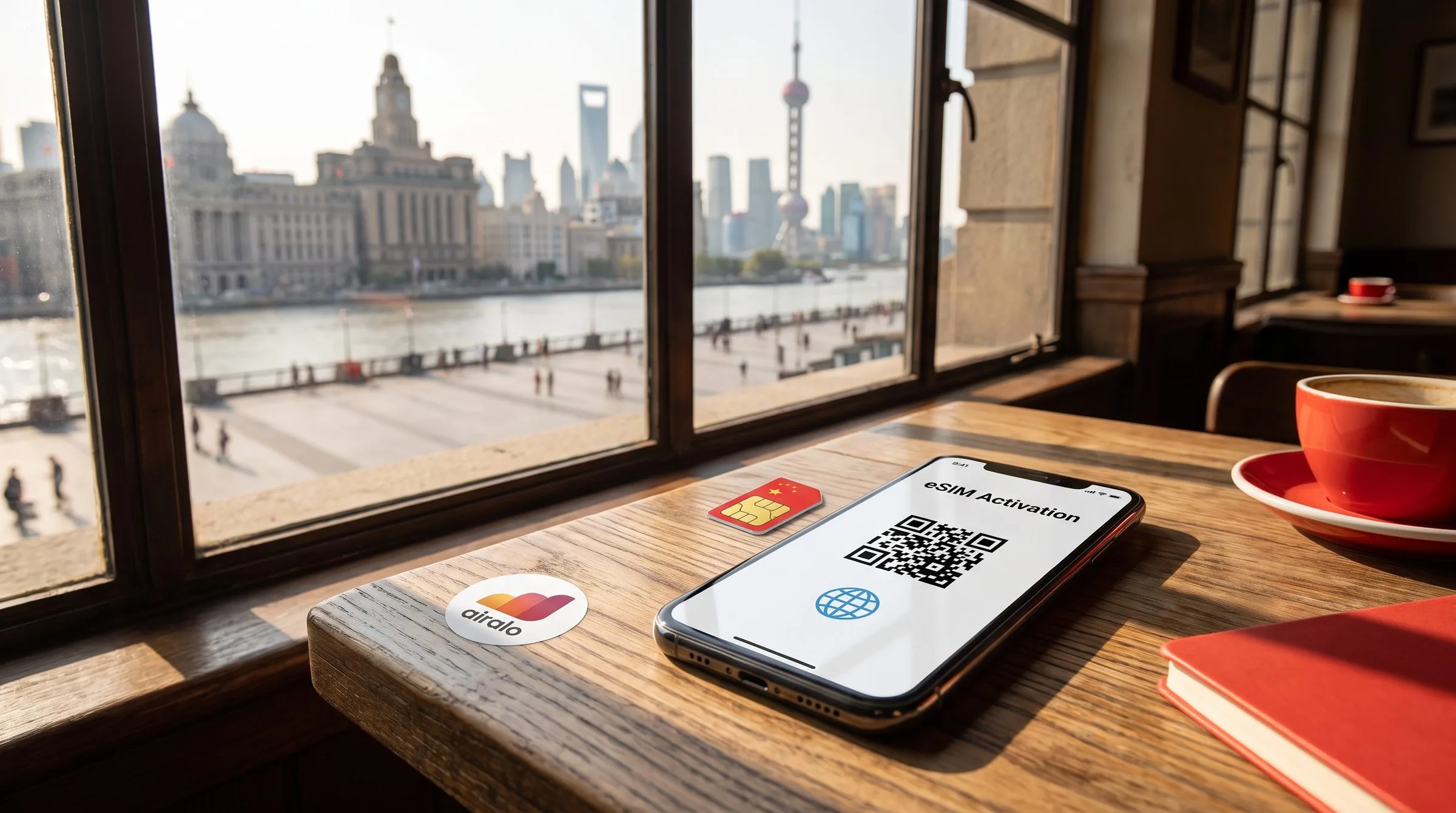
The data decision comes first. An eSIM bought before departure, a local SIM bought on arrival, and roaming on your home carrier behave differently for app verification, hotspot use and top-ups. The comparison guides cover what each option actually changes, including the cases where a data-only eSIM is not enough. Read them before you commit, because switching after arrival usually means re-verifying every app you already set up.
The second layer is access to the services themselves, and the third is the practical kit: maps, translation, and the offline fallbacks for days when a connection fails. The guides here are written for a phone you will actually carry, not a theoretical setup, and each one states which part of the problem it solves.
Pick your starting point
| If you are… | Start with | Why |
|---|---|---|
| You need data immediately on landing | eSIM and local SIM comparison | This is the only decision that has to be made before you fly. |
| You need app verification codes | Number and verification guides | A data-only plan often cannot receive the SMS that booking and payment apps require. |
| You rely on maps and translation daily | App and offline-fallback guides | Navigation apps have local equivalents and different offline behaviour. |
| You are already in China and something stopped working | Troubleshooting guide by symptom | Connection, access and verification failures look identical until you separate them. |
Start here
Begin with the most recently refreshed guides here, then use the topic groups below for the specific service you are setting up.
- 01 VPNs for China 2026: What Is Blocked, What Still Works
VPNs for China in 2026: what works without one (about 80% of the internet), what stays blocked, and the legal position since 2023.
- 02 Best VPN for China 2026: 5 VPNs Ranked, Tested Monthly
Best VPN for China 2026: ExpressVPN, Astrill, NordVPN, Mullvad and Surfshark tested monthly — who connects from China, and who needs extra setup.
- 03 Internet in China 2026: What Works, What Doesn't (Apps, VPN & eSIM)
What works for internet in China in 2026: which apps load, do you need a VPN, and which eSIM or SIM to get — plus what to set up before you fly.
Build a custom itinerary for any China city in 30 seconds
Pick your city, days, pace, and must-visit attractions. Get a day-by-day plan with timings, transport, and lunch spots — no signup, no email required.
Apps
China Esim
Esim
Meituan
Vpn
VPNs for China 2026: What Is Blocked, What Still Works
VPNs for China in 2026: what works without one (about 80% of the internet), what stays blocked, and the legal position since 2023.
10 min · Nov 2026

Best VPN for China 2026: 5 VPNs Ranked, Tested Monthly
Best VPN for China 2026: ExpressVPN, Astrill, NordVPN, Mullvad and Surfshark tested monthly — who connects from China, and who needs extra setup.
4 min · Nov 2026
Compare & Decide
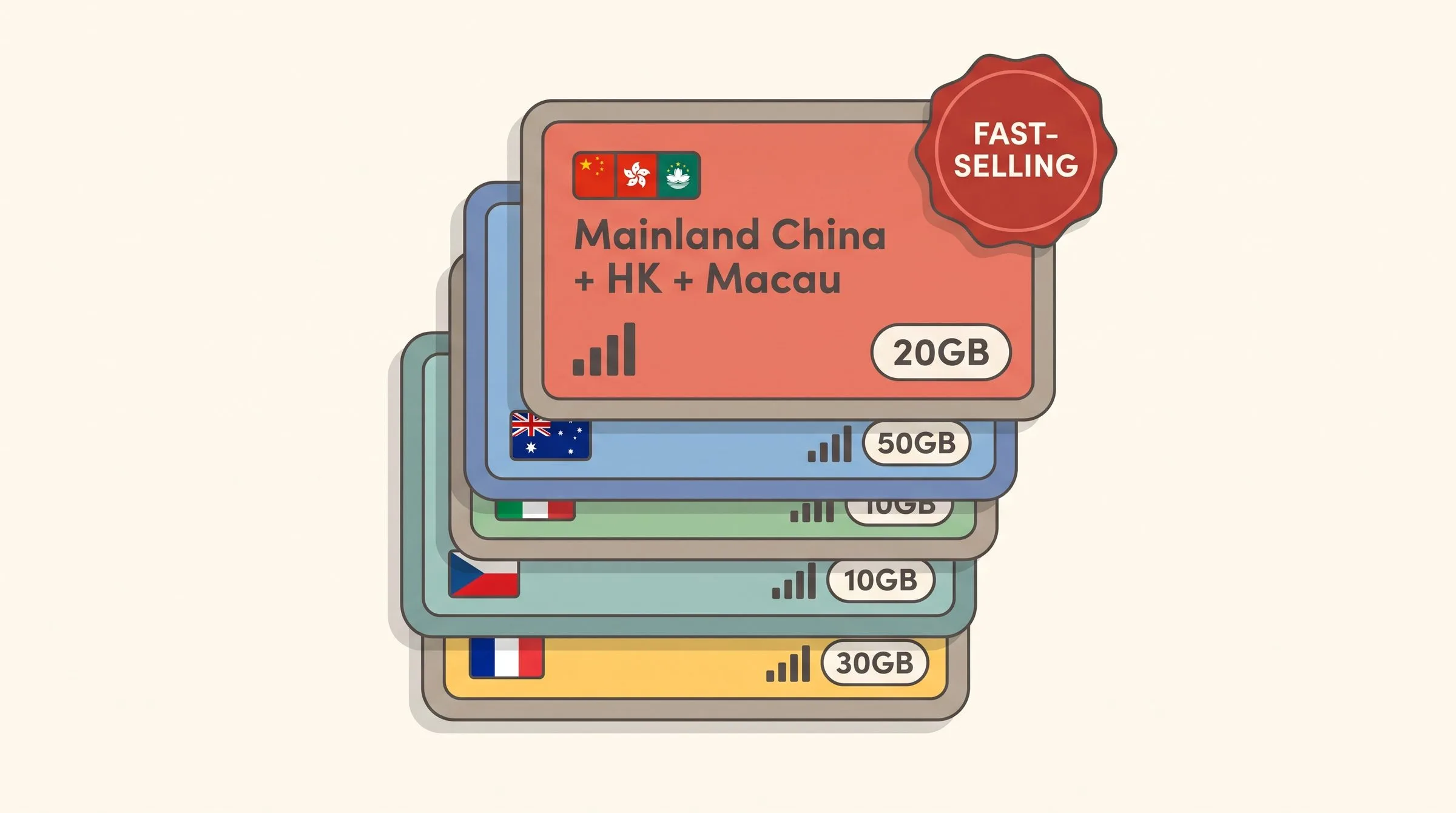
Trip.com eSIM Review 2026: Top 5 Plans by Real Sales
Trip.com eSIM review 2026: the 5 China plans worth buying, with real prices, sale counts and coverage. Mainland China, HK and Macau only.
9 min · Oct 2026

Best eSIM for China 2026: Trip.com vs Airalo & More
Best eSIM for China 2026 compared: Trip.com, Airalo and Holafly on price, coverage and setup. Mainland China, Hong Kong and Macau only.
8 min · Oct 2026
Frequently Asked Questions
-
Do I need a VPN to use the internet in China?
Yes. Google, Instagram, WhatsApp, Facebook, X (Twitter), YouTube, and most Western news sites are blocked. A working VPN installed before arrival is essential. See /articles/china-vpn-2026/. -
What is the best eSIM for China in 2026?
Airalo, Holafly, and Nomad all work. Airalo is cheapest ($5-9 for 5GB), Holafly offers unlimited data ($27-32 for 5 days), and Nomad has the strongest 4G/5G coverage. China Unicom and China Mobile eSIMs are also available at airport counters. See /articles/best-esim-china-2026/. -
Can I use a normal SIM card in China?
Yes, but you need a foreign-pasport-registered China Mobile or China Unicom SIM. Available at airport counters (passport required) for ¥100-300 with data plan. eSIM is more convenient if your phone supports it. See /articles/best-esim-china-2026/. -
Which apps should I download before going to China?
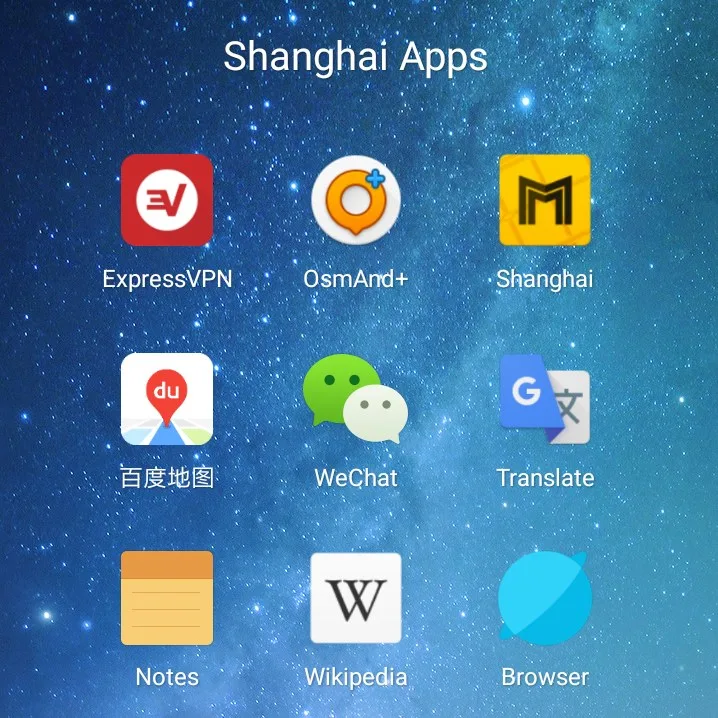
Essential: Alipay, WeChat, Didi (ride-hailing), Baidu Maps or Apple Maps, Pleco (dictionary), Trip.com (bookings), Dianping (reviews). Optional: Meituan, Xiaohongshu, Bilibili, Spotify (with VPN). See /articles/essential-apps-china/. -
Will WhatsApp work in China with a VPN?
Yes, but only with a reliable VPN. Connection is often slow or drops during peak hours. Telegram and Signal face the same issue. Many travelers switch to WeChat for in-China communication and save WhatsApp for after returning. See /articles/china-vpn-2026/.