
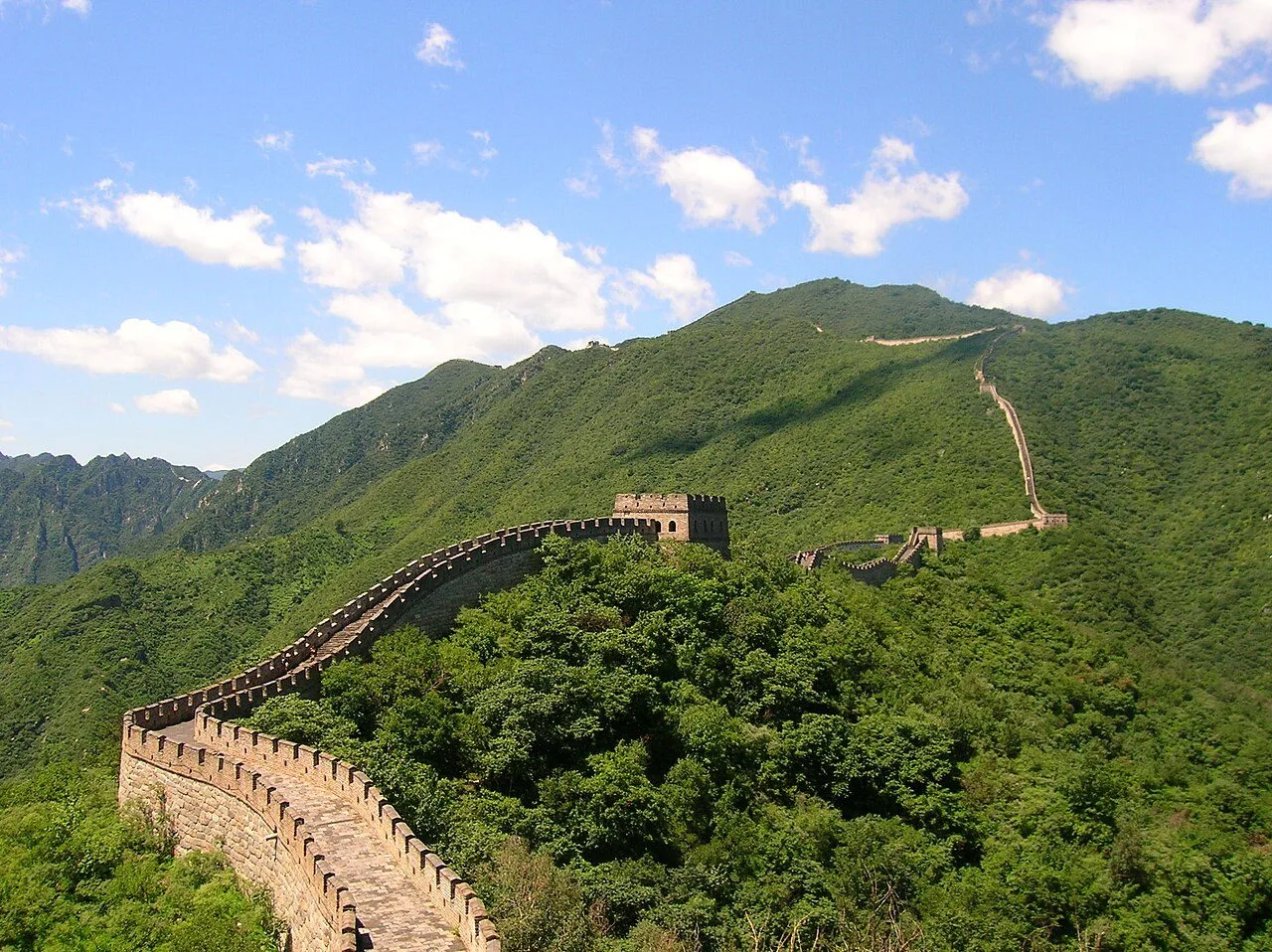
Mutianyu Great Wall
慕田峪长城 · Mùtiányǔ Chángchéng
Quick answer
Passport required at gate. Walk-up tickets accepted — no advance booking required. Buy at the entrance ticket window with your foreign passport.
Why visit
- 1 Walk the 1.4 km fully-restored section with 22 watchtowers, far less crowded than Badaling
- 2 Cable car both ways (¥120 round trip) — the easiest way up; no climbing required
- 3 Toboggan ride down (¥100) — kids love it, adults secretly love it too
- 4 Tower 14 is the highest point — panoramic views of the wall snaking along mountain ridges
- 5 Best photo light: late afternoon (4-6 PM) when the sun lights up the watchtowers
Essential tips for foreigners
- No advance booking required — buy at the entrance ticket window with your foreign passport. The whole process takes about 5 minutes.
- Cable car both ways (¥120) is the easiest option. Toboggan down (¥100) is a fun alternative for families.
- Bring water and sunscreen — the wall is mostly unshaded, and Beijing summer easily hits 38°C (100°F).
- Wear comfortable shoes with grip — the wall surface is uneven stone, and you'll walk 5-7 km.
- Avoid weekends and Chinese national holidays (May 1-3, Oct 1-7) — the wall becomes a 4-hour queuing nightmare.
- Photography tip: arrive for the 7:30 AM opening and you'll have the wall almost to yourself for the first 30 minutes.
Suggested route
- 08:30 15 min Arrive at Mutianyu entrance, buy ticket at window with your passport (5 min)
- 08:45 20 min Take cable car up to Tower 6 or Tower 14 (depending on which side you walk)
- 09:05 2 hours Walk east along the wall toward Tower 20 (less crowded, better preserved)
- 11:00 45 min Lunch at Wall Restaurant near Tower 14 (Peking duck, noodles, ¥50-80/person)
- 11:45 1.5 hours Walk west back toward Tower 6, take the toboggan down (kids love it)
- 13:15 1.5 hours Return to entrance, bus 867 back to Dongzhimen
Why Mutianyu is the best Great Wall section for most foreign tourists
Standing on a restored watchtower at Mutianyu, you can see the wall snake along mountain ridges for as far as the horizon stretches — with no tour bus swarms and no aggressive souvenir hawkers. This is what most foreign tourists actually picture when they imagine the Great Wall, and it’s only 90 minutes from Beijing.
Mutianyu is the most foreigner-friendly section for three reasons: the wall is fully restored (not crumbling like Jiankou), it’s 90% less crowded than Badaling, and English signage is consistent throughout. The cable car makes the climb accessible to anyone, and the toboggan ride down is a kid favorite.
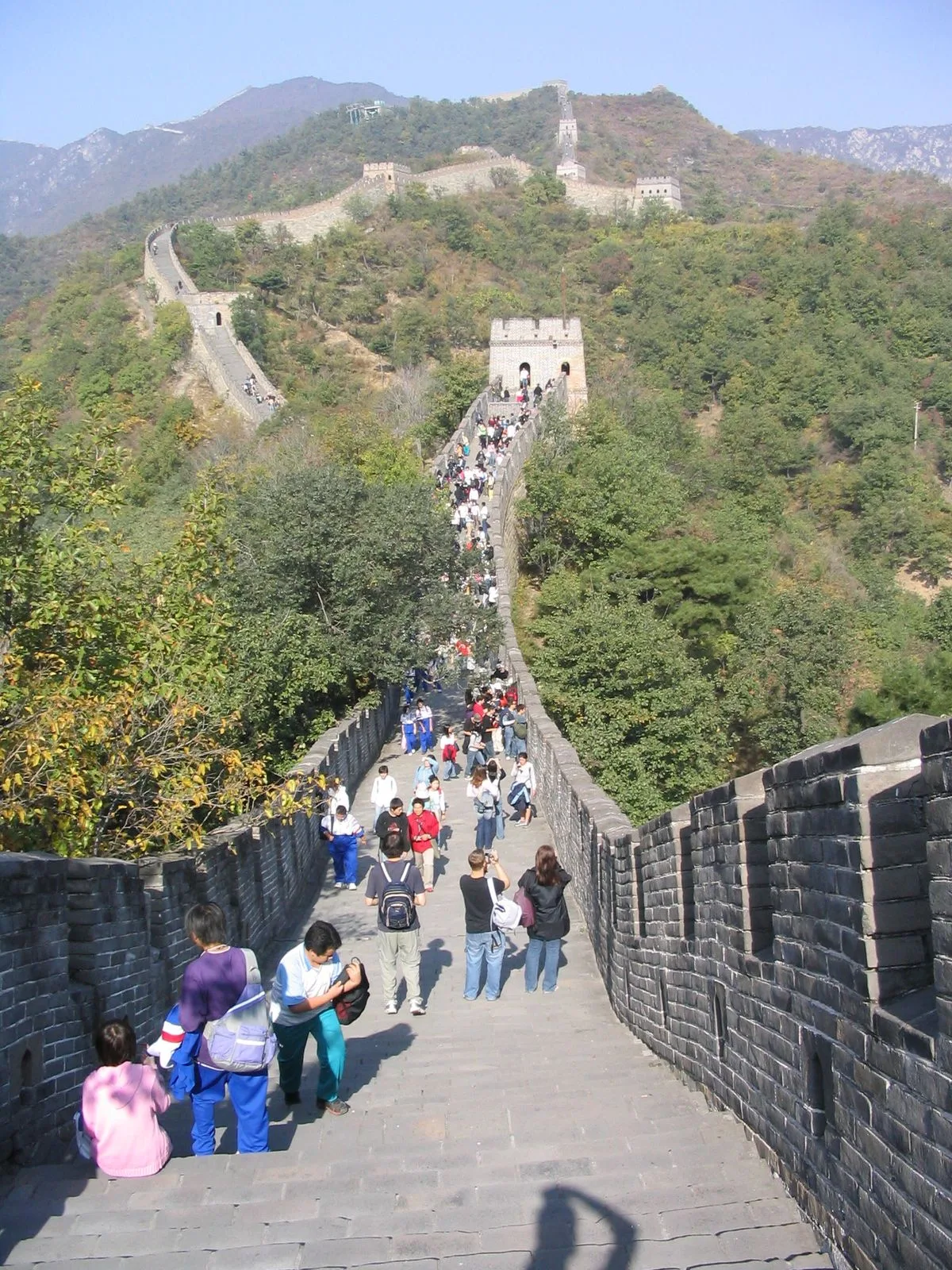
Photo: Wikimedia Commons / CC BY-SA. Source

The wall in brief
- Length: 2.25 km of restored wall (1.4 km fully accessible to the public)
- Watchtowers: 22 along the restored section
- Highest point: Tower 14, about 1,000m above sea level
- Built: Northern Qi dynasty (550-557 AD), extensively rebuilt in the Ming dynasty (1569)
- UNESCO status: Part of “The Great Wall” inscription (1987)
- Time to walk the full restored section: 2-3 hours
A brief history
The Northern Qi dynasty built the original wall here in the 6th century as part of a northern defensive line. The Ming dynasty — then facing renewed threats from Mongol incursions — rebuilt and extended the wall in 1569 under General Qi Jiguang, who made Mutianyu one of his strongholds. The current restoration work began in the 1980s and was completed in 2006.
Unlike Badaling, which was heavily restored and commercialized in the 1950s for state visits, Mutianyu retains the look and feel of an actual military fortification. The watchtowers here are genuine Ming-era structures, with their narrow firing slits and multi-story defensive layouts.
What you’ll see
The restored section runs east-west along a mountain ridge. Tower 6 sits at the western end (cable car and toboggan), and Tower 20 anchors the eastern end. Tower 14 is the midpoint and the highest point. Between Tower 14 and Tower 20 is the most scenic stretch — fewer people, more dramatic terrain, better photo light in the afternoon.
The wall surface is original Ming-era brick and stone, uneven and worn in places. Wear closed-toe shoes with good grip; the steps are steep and there are no handrails on some stretches.
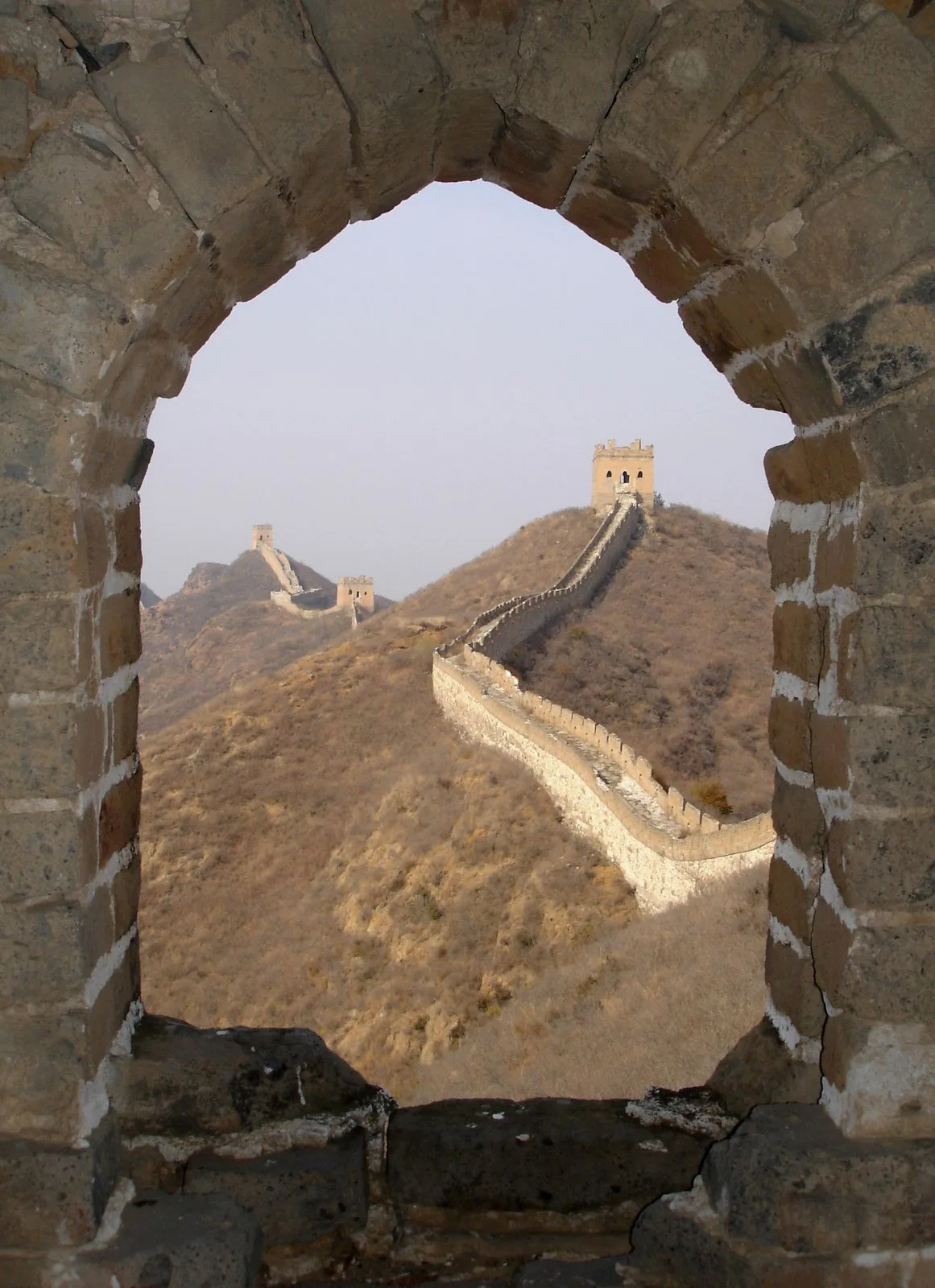
Photo: Wikimedia Commons / CC BY-SA. Source

Getting there
From Beijing city center
By bus (cheapest, recommended): Take subway Line 2 or Line 13 to Dongzhimen station. Exit B, walk to the bus stop outside the Dongzhimen transport hub. Take bus 867 directly to Mutianyu. The ride is 1.5 hours and costs ¥30 one-way. Buses run from 7:00 AM (first departure) to 17:00 (last return).
By Didi/taxi: A Didi from central Beijing costs ¥400-600 one-way and takes 1.5 hours. The driver will drop you at the main entrance parking lot. For the return, you can pre-book a return Didi or ask the parking attendant to call one — but expect 15-30 min wait time.
By car rental: Take the Jingcheng Expressway north from the city center to the Bohai exit, then follow signs to Mutianyu. The drive is about 1.5 hours in good traffic. Parking is ¥10/day.
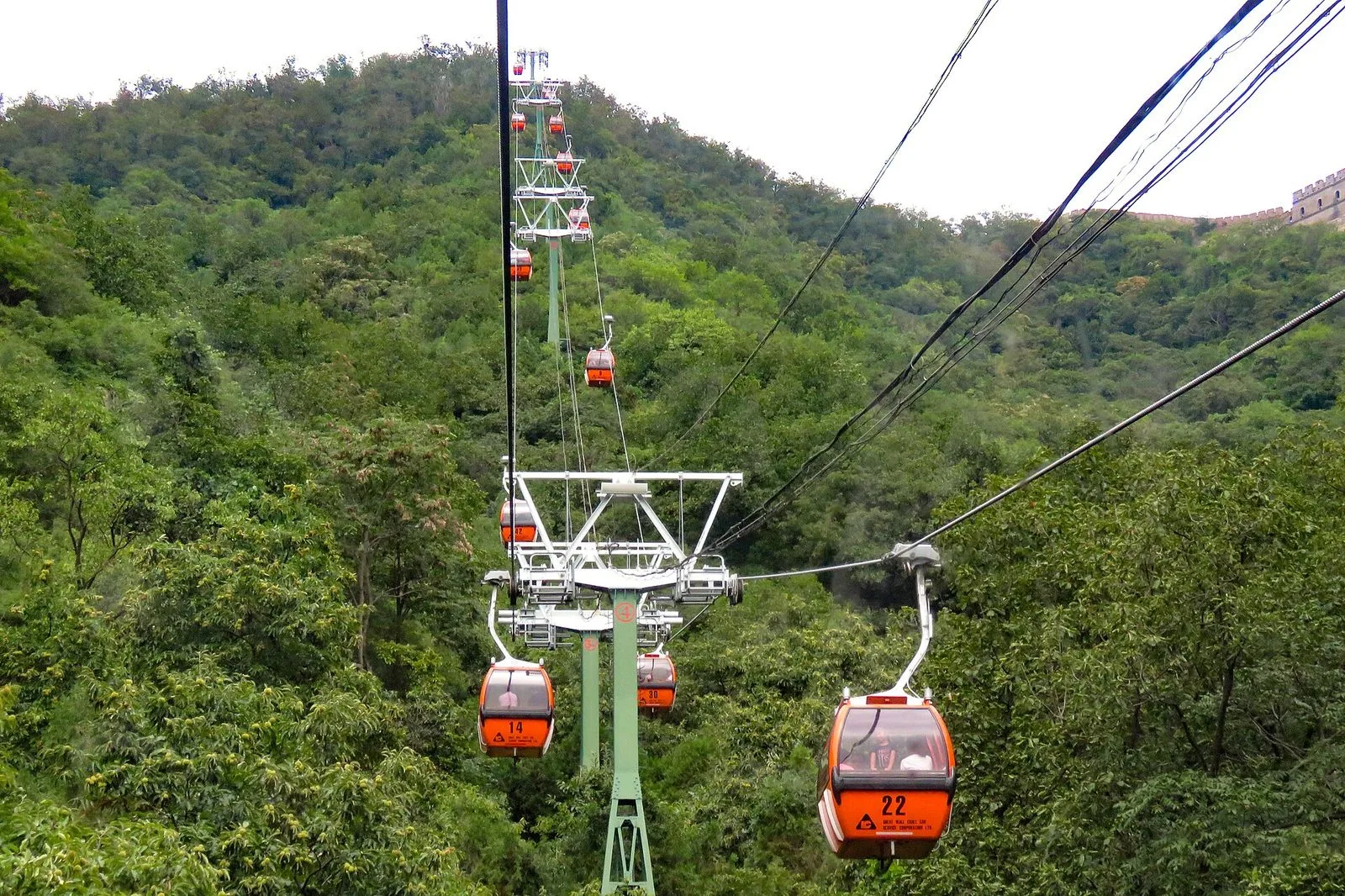
Photo: Wikimedia Commons / CC BY-SA. Source

At the entrance
The entrance area has been modernized and is foreigner-friendly. You’ll see clear English signs directing you to:
- Ticket window (left of main entrance) — pay here
- Cable car station (right of main entrance) — board here
- Toboggan station (left after cable car exit) — optional alternative
- Visitor center (behind ticket office) — restrooms, lockers, free WiFi
The whole process from arrival to being on the wall takes about 30 minutes.
When to visit
The wall is open year-round, but the experience varies significantly by season:
- Spring (April-May): Best weather for hiking. Temperatures 15-25°C. Wildflowers bloom in the lower valleys. Weekdays are quiet, weekends are busy.
- Summer (June-August): Hot (30-38°C) and humid. Mornings are best. The forested sections provide some shade.
- Autumn (September-October): Best for photography. Clear mountain views, red leaves on the lower slopes. Avoid the first week of October (National Day Golden Week) — it’s chaos.
- Winter (November-March): Cold (-5 to 10°C) but uncrowded. The wall looks stunning with snow. Some sections may be closed for safety.
Practicalities for foreign visitors
- Payment: The entrance ticket window accepts Alipay, WeChat Pay, and cash. We recommend setting up Alipay with your international Visa or Mastercard before your trip (see our Alipay for foreigners guide).
- Restrooms: Available at the entrance, at Tower 6, and at the cable car stations. The newer facilities are clean.
- Lockers: Available at the entrance for small bags (¥10-20). Large luggage is not recommended — the wall is not stroller-friendly for large bags.
- Photography: Allowed everywhere except inside the watchtowers (which are sometimes closed). Tripods are generally OK; flashes are fine.
- Drones: Strictly prohibited.
What to do nearby
If you have a full day, combine Mutianyu with one of these nearby stops:
- Huai Rou District: Known for its film studios and “Great Wall film set” — a smaller replica wall used in Chinese historical dramas
- Miyun Reservoir: A 30-minute drive further into the mountains, popular with locals for weekend getaways
- Back to Beijing: If you’re done by 14:00, you can comfortably return to the city and visit the Summer Palace or Olympic Park in the afternoon
Final tip
Mutianyu rewards going slow. The wall has been here for 1,400 years — it will still be here tomorrow. Take your time, sit on a watchtower for 10 minutes, watch the shadows move across the ridges, and let the scale of it sink in.
Best photo spots
-
Tower 14 (highest point) · Late afternoon, 4-6 PM
Panoramic view of the wall snaking along multiple mountain ridges. Best at golden hour.
-
Tower 20 (eastern end of restored section) · Mid-morning, 9-11 AM
Best preserved watchtower, much less crowded than Tower 14. The wall drops away dramatically on both sides.
-
Eastern watchtower viewpoint (between Tower 6 and Tower 1) · Any time, but the wall is widest here for dramatic compositions
Wide-angle shot of the wall in both directions. Trees frame the stone.
-
From the cable car ascending · Morning, 8-10 AM
Looking down at the forested valleys. The cable car is the only way to get this aerial perspective without a drone.
-
Toboggan arrival point · Afternoon, 2-4 PM
Capture the joyful chaos of kids (and adults) on the toboggan. The track curves through the forest.
Where to eat nearby
-
The Schoolhouse Restaurant
Western + Chinese · ¥80-150/person · 5 min drive from Mutianyu entrance
-
Wall Restaurant (near Tower 14)
Chinese (Peking duck, noodles, dumplings) · ¥50-100/person · On the wall, near the cable car exit
-
Mutianyu Snack Kiosk
Chinese snacks · ¥20-40/person · Near entrance and at multiple points along the wall
Frequently asked questions
How much does Mutianyu Great Wall cost for foreigners in 2026?
Mutianyu costs ¥65 for foreign adults (¥45 in winter, Nov-Mar). Cable car both ways is ¥120 extra. Toboggan down is ¥100. Children under 1.2m are free. The cable car is highly recommended — climbing the 1,000+ steps in summer heat is brutal.
Do I need to book Mutianyu tickets in advance?
No advance booking required for foreign passport holders. Walk-up tickets are sold at the entrance. Avoid weekends for shorter queues. During peak season (April-October), arrive before 9 AM to beat the crowds.
Is Mutianyu better than Badaling Great Wall for foreign tourists?
Yes, for most foreign tourists. Mutianyu is 90 minutes from Beijing (vs 60 for Badaling), but has fewer crowds, better-preserved wall, and consistent English signage. Badaling is more tourist-trap with souvenir hawkers and tour groups.
How do I get to Mutianyu Great Wall from Beijing by public transport?
Take bus 867 from Dongzhimen subway station (Lines 2/13). The bus runs 7:00-17:00, takes about 1.5 hours, costs ¥30. Buses are direct — no transfers. Taxis run ¥400-600 one-way from city center.
Can I use Alipay to buy Mutianyu tickets?
Yes. The entrance ticket window accepts Alipay (with international Visa/Mastercard linked), WeChat Pay, and cash. Most on-site restaurants also accept international cards via Alipay.
What is the best time of year to visit Mutianyu?
April-May and September-October offer the best weather — mild temperatures (15-25°C), clear mountain views, and minimal rain. Avoid Chinese national holidays (May 1-3, Oct 1-7) when the wall is extremely crowded.
How long does it take to walk the entire Mutianyu Great Wall?
Walking the full 1.4 km restored section takes 2-3 hours including photo stops. The entire 2.25 km stretch (restored + wild wall) takes 4-5 hours and requires good fitness.
Is Mutianyu Great Wall wheelchair accessible?
Partially. The cable car is wheelchair-friendly, and Tower 6 area has accessible viewing platforms. The wall itself has steep sections and stone steps, so manual wheelchair users will need assistance. Free wheelchair loans are available at the visitor center.
Are drones allowed at Mutianyu Great Wall?
No. Drones are prohibited at all Great Wall sections, including Mutianyu. The Great Wall is a UNESCO World Heritage Site, and drone permits are extremely rare.
Can I bring food and water to the wall?
Yes, but there are also 5 on-site restaurants and snack kiosks on the wall. Prices are reasonable (¥30-60 per meal). We recommend bringing a water bottle — there are refill stations at the entrance and Tower 6.