
Terracotta Army
秦始皇兵马俑 · Qínshǐhuáng Bīngmǎyǒng
Quick answer
Foreign passport required at the gate. Foreign visitors can buy same-day tickets at the on-site ticket window (no Chinese phone number needed). The official online system requires a Chinese ID and is therefore effectively closed to passport holders; use Trip.com or a hotel concierge for advance booking.
Why visit
- 1 Stand before 8,000+ life-sized warriors — every face is unique, no two are alike
- 2 Pit 1 is the showstopper: 230m long with six columns of infantry in battle formation
- 3 Pit 2 has the most variety: kneeling archers, generals, cavalry, and the only painted warrior on display
- 4 Bronze Chariot and Horse Hall (铜车马展厅) — the emperor's actual funeral chariots, half-scale, remarkably preserved
- 5 Free shuttle to Lishan Garden (骊山园) — the emperor's actual unexcavated burial mound, walking through forest
Essential tips for foreigners
- Foreigners must buy tickets at the window with your passport — the official online system requires a Chinese ID. Same-day tickets are reliably available outside of Golden Week.
- Take Bus 306 (Tourism Bus 5 / 游5) from the East Square of Xi'an Railway Station — ¥7, 1 hour, the cheapest and most foreigner-friendly public route. The bus is painted green and clearly marked "Terracotta Warriors / Huaqing Pool".
- Arrive at 8:30 sharp if you want Pit 1 almost to yourself. By 10:00 the tour buses arrive and the experience becomes a queue. Weekdays are dramatically quieter than weekends.
- Wear comfortable shoes — you'll walk 5-6 km across three pits and the Lishan Garden. The floors are concrete and unforgiving.
- Skip the on-site tour-guide touts at the parking lot — they follow you aggressively and overcharge. If you want a guide, pre-book via Trip.com for ¥200-300 with pickup, or hire one at the official visitor center inside (¥200 flat for 1-4 people).
- Don't trust anyone selling "signed copies" of books by the farmers who discovered the army in 1974. It is a well-known scam at the parking lot.
Suggested route
- 07:30 20 min Take a Didi or taxi from your Xi'an hotel to Xi'an Railway Station East Square (西安火车站东广场)
- 08:00 1 hour Board the green Bus 306 (Tourism Bus 5) at the marked stop — confirm with the driver "Bingmayong?" (兵马俑?)
- 09:00 30 min Arrive at the visitor center, buy your ¥120 ticket at the window with passport, walk through the main gate
- 09:30 1.5 hours Pit 1 — the main event. Walk the full length of the viewing platform (north to south), allow 1.5 hours
- 11:00 45 min Pit 2 — the most varied. Don't miss the kneeling archer and the painted warrior at the back of the pit
- 11:45 30 min Pit 3 — the command HQ. Small but the most detailed work
- 12:15 30 min Bronze Chariot and Horse Hall — the actual half-scale funeral chariots, the most important archaeological find here
- 12:45 1 hour Lunch at the on-site restaurant or at one of the noodle shops just outside the south gate (better value)
- 13:45 1.5 hours Free shuttle bus to Lishan Garden (骊山园) — the emperor's actual unexcavated burial mound, 30-40 min walk through forest
- 15:15 1.5 hours Return shuttle, board Bus 306 back to Xi'an Railway Station (last return bus ~19:00, don't miss it)
The army that guards China’s first emperor
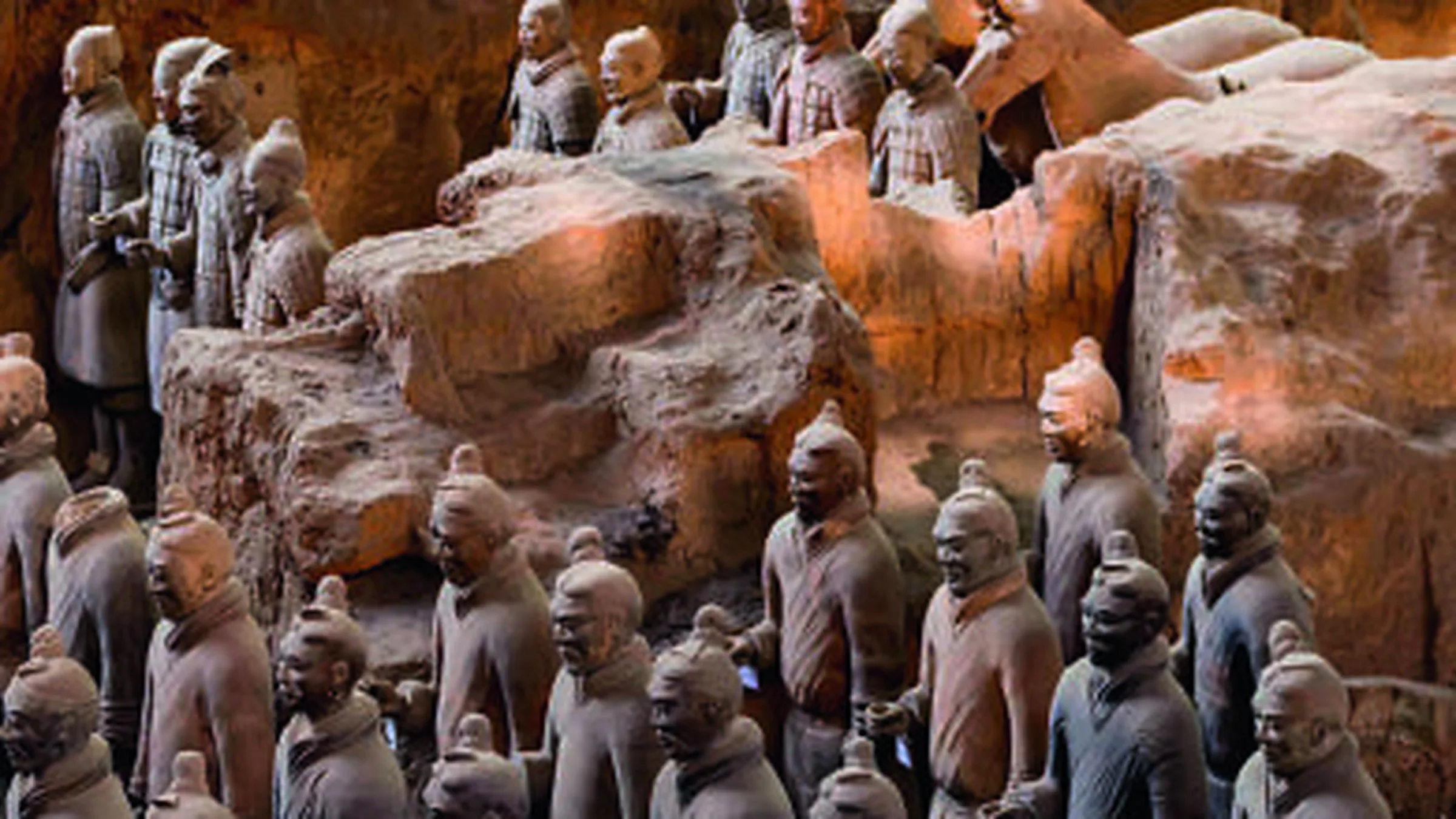
In 1974, a group of farmers digging a well outside the village of Xiyang in Lintong District, about 40 km east of Xi’an, struck something solid in the dirt. What they had found was an army — more than 8,000 life-sized terracotta warriors, buried for 2,200 years to guard the tomb of Qin Shi Huang, the first emperor of a unified China. The discovery is widely considered the most important archaeological find of the 20th century, and the site has been a UNESCO World Heritage site since 1987.
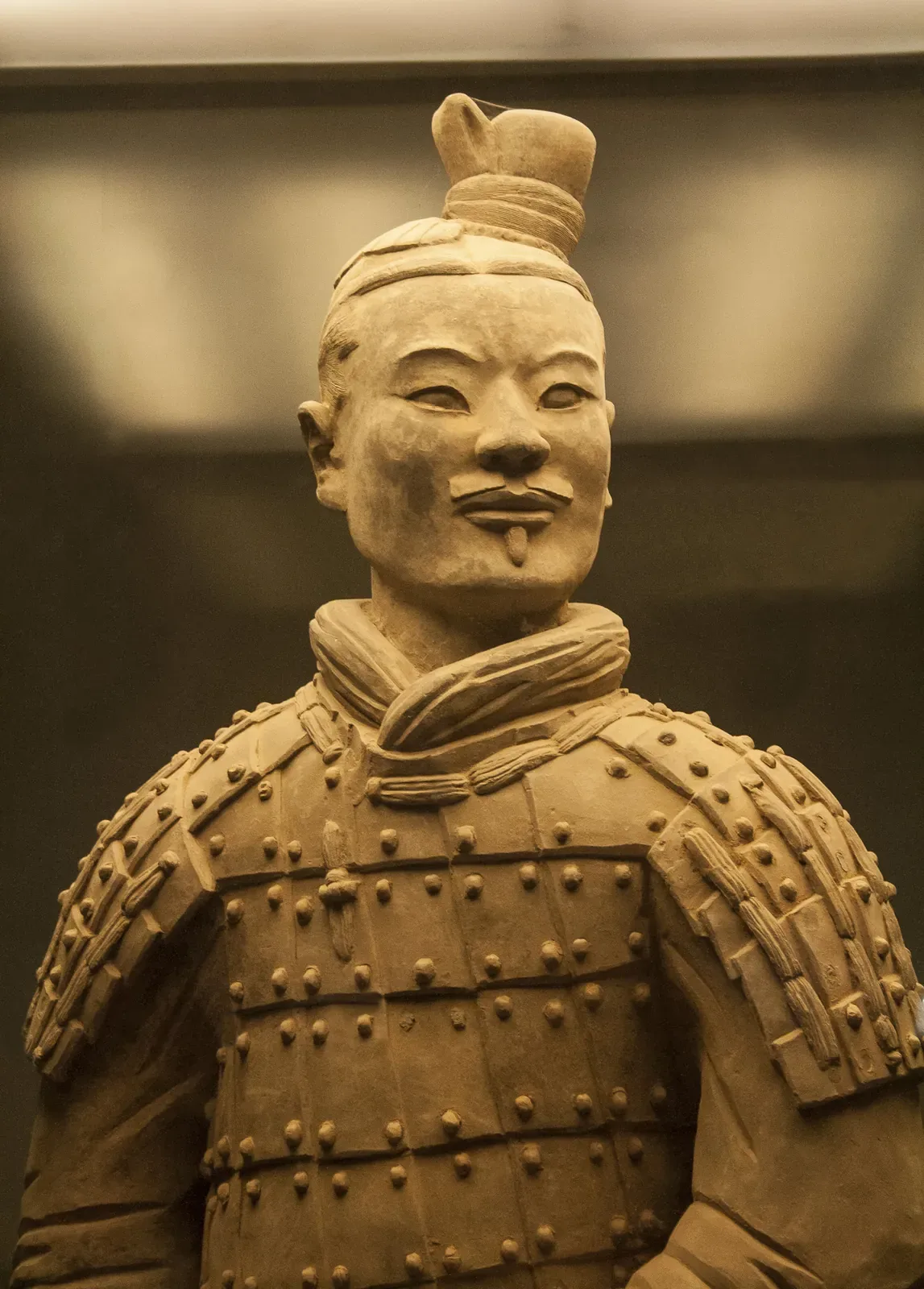
For most foreign tourists, the Terracotta Army is the single most important stop in Xi’an — and Xi’an itself is the most underrated major city in China for Western visitors. The warriors are not a museum reproduction or a partial exhibit: they are the actual funerary army, still standing where the emperor ordered them placed over two millennia ago. Every face is unique (archaeologists have confirmed no two warriors share the same features), every weapon was a real weapon, and the original paintwork is now being revealed through ongoing excavation.
What the foreigner experience looks like in 2026
The site is one of the most foreigner-friendly in China, despite its relative remoteness. Foreign visitors can buy tickets at the on-site window with a passport — no Chinese phone number, no advance booking, no pre-registration required. The signs and audio guide are in English (plus Japanese, Korean, French, German, and Russian), the entire site is wheelchair-accessible, and the official 秦始皇帝陵博物院 WeChat mini-program is the only modern feature that does not work well for foreign tourists (it requires a Chinese phone number to register).
The main practical change in recent years: the site has installed strict capacity caps to combat overcrowding, with a daily limit of 65,000 visitors and a 13,700 simultaneous in-pit cap. In practice this means that on most weekdays and off-season days, walk-up tickets work fine. During Chinese national holidays (May 1-5, Oct 1-7) the cap can be reached by mid-morning — at that point, Trip.com is the only foreigner-friendly way to secure a ticket.
The three pits, in order
Most visitors see the three pits in the order 1 → 2 → 3, which is the natural narrative (battle line → tactical units → command HQ) but also the order tour buses follow. The reverse order (3 → 2 → 1) is dramatically less crowded and is what experienced Chinese guides recommend, especially for repeat visitors.
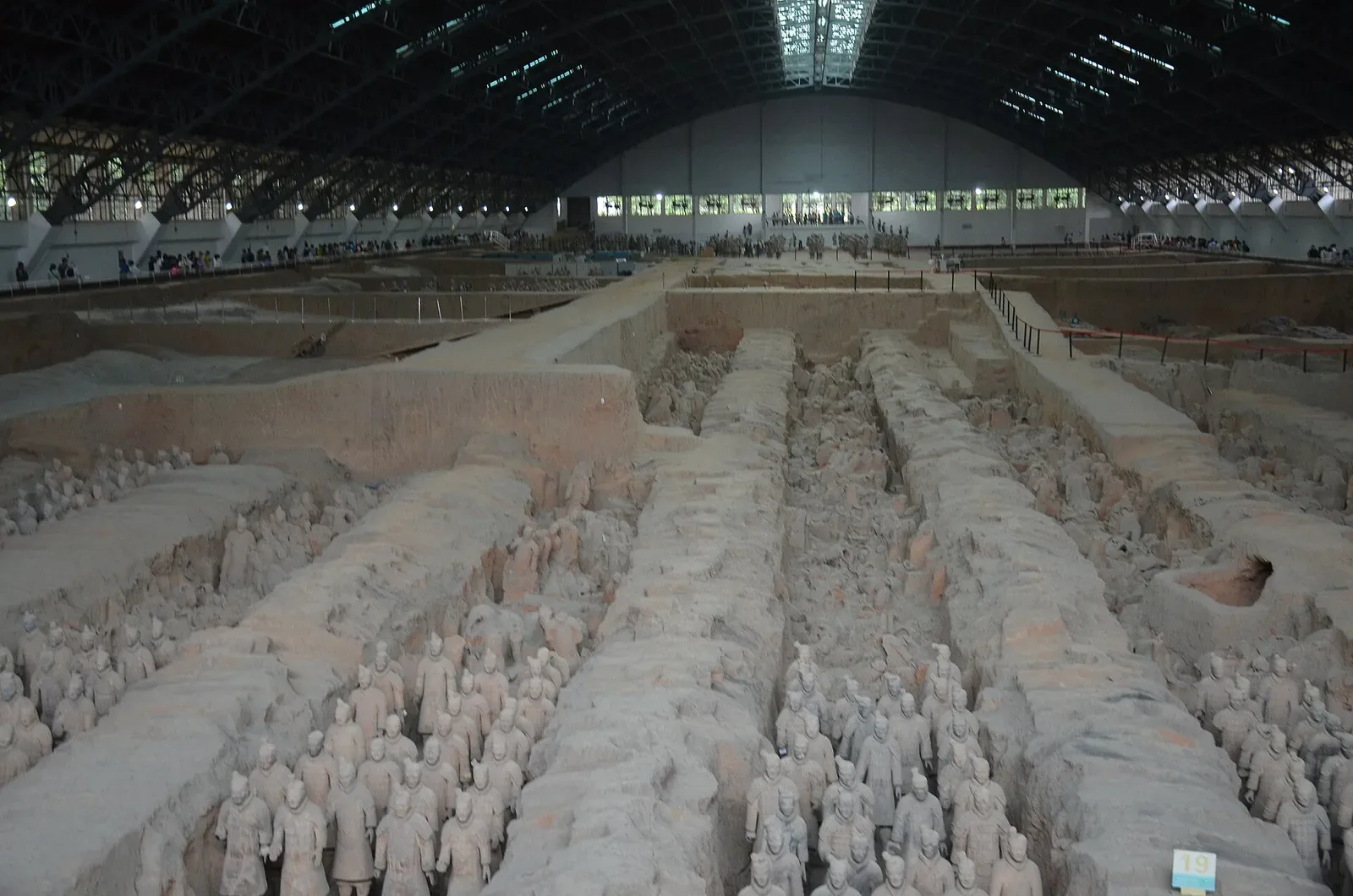
Pit 1 (一号坑) is the showstopper: 230 meters long, 62 meters wide, with an estimated 6,000 warriors and horses arranged in long battle columns. Discovered first, in 1974, and still the largest ongoing excavation. The viewing platform runs the full length, and the eastern windows throw strong morning light across the columns of soldiers — this is the image on every brochure and the photo you came for.
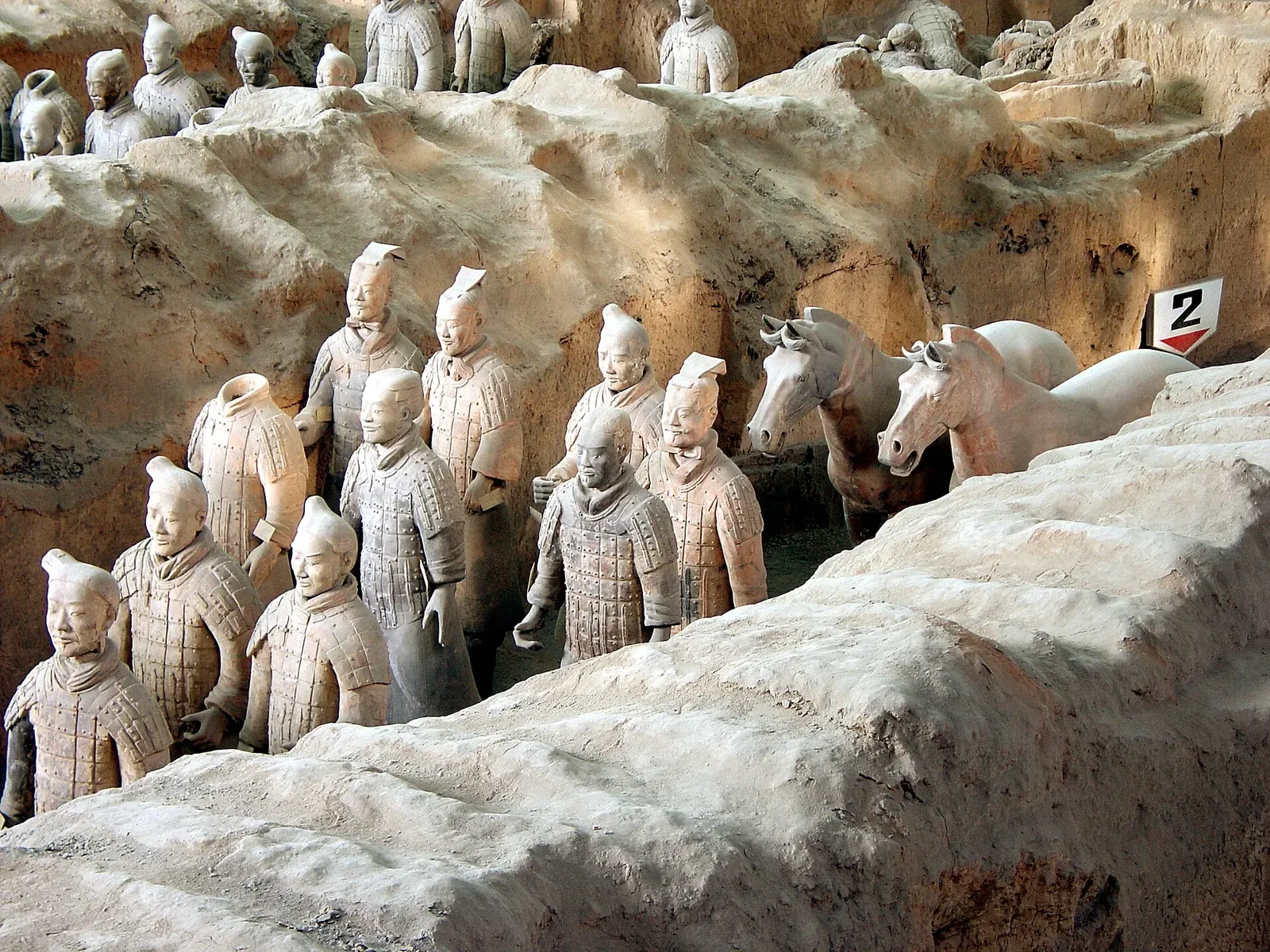
Pit 2 (二号坑) is the most varied and the most rewarding for a second visit. About 1,300 warriors in four separate units: kneeling archers, standing archers, generals with distinctive headdresses, cavalry with saddled horses, and the war chariot. The famous kneeling archer figure is here, as is the only warrior on public display with original paint still visible (most of the original lacquer and pigment flaked off within minutes of exposure in 1974 — modern conservation is still catching up).
Pit 3 (三号坑) is the smallest, with only 68 figures, and was the command headquarters. Less photogenic but with the most detailed facial work and a clearer sense of the original paintwork (some figures show traces of crimson, pink, and blue pigment).
The Bronze Chariot and Horse Hall (铜车马展厅) sits in a separate building near Pit 1’s north end. Two half-scale bronze chariots, with horses and charioteers, found in 1980 in a side pit about 20 meters from the main tomb mound. They are the most significant bronze artifacts ever discovered in China and well worth the 30 minutes.
Lishan Garden and the actual tomb
Most tourists stop at Pit 3 and head back to the bus. The serious move is to take the free shuttle bus (included in your ticket) to Lishan Garden (骊山园), about 2 km west, where the actual burial mound of Qin Shi Huang sits. The mound itself is 76 meters tall, pyramid-shaped, and completely unexcavated — Chinese archaeologists detected high mercury levels in the soil around the mound in the 1970s (consistent with ancient descriptions of “rivers of mercury” in the tomb) and have kept it sealed ever since.
The walk around the mound is about 2 km through pine forest, with information panels in English explaining the satellite pits (smaller tombs for the emperor’s relatives, attendants, and sacrificed concubines — yes, sacrificed). It is the quietest, most atmospheric part of the visit, and the one most tour groups skip.
Getting there from Xi’an
The cheapest and most foreigner-friendly route is Bus 306 (游5 / Tourism Bus 5) from the East Square of Xi’an Railway Station. The bus is green, runs 7:00-19:00, takes about 1 hour, and costs ¥7. It is the only direct public bus and is well-marked in English. Do not board the unofficial “Tourism Bus” agents who approach you at the station — they charge 3-4x and stop at souvenir shops en route.
If Bus 306 is not convenient, take Metro Line 9 to Huaqingchi Station (华清池站) and transfer to Bus 307 or a local Didu minibus. This adds 15-20 minutes and one transfer.
A Didi or taxi from central Xi’an (Bell Tower area) costs ¥120-180 and takes 40-60 minutes depending on traffic. The driver will recognize “兵马俑” (Bīngmǎyǒng) — show the characters on your phone.
When to visit
The site is open year-round, but the experience varies sharply by season:
- Spring (April-May): Best weather (15-25°C), wildflowers in the surrounding fields, weekdays quiet, weekends busy.
- Summer (June-August): Hot (35-38°C) and humid. Tour buses are at their peak. Mornings are bearable; afternoons are exhausting. The indoor pits are air-conditioned but you walk between them outdoors.
- Autumn (September-October): Best for photography. Clear skies, red leaves on the Lishan hillside. Avoid the first week of October (National Day Golden Week) — it is genuinely a 4-hour queue.
- Winter (November-March): Cold (0-5°C) but uncrowded. The Bronze Chariots look especially dramatic under low winter light. The pits are not heated, so dress warmly.
Practicalities for foreign visitors
- Payment: The ticket office accepts Alipay (with international Visa/Mastercard linked), WeChat Pay, and cash. On-site restaurants and souvenir shops all take mobile payment. See our Alipay for foreigners guide.
- Restrooms: Available at the visitor center, between pits, and at the Lishan Garden shuttle stop. All modern, all clean.
- Lockers: Available at the visitor center for small bags (¥10-20). Large luggage is not recommended — you will walk a lot.
- Photography: Allowed throughout. Flash is permitted. Tripods tolerated for casual use. Drones strictly prohibited.
- Tour guides: Pre-book via Trip.com (¥200-300, includes pickup) for a half-day with English-speaking guide. Avoid the parking-lot touts — they overcharge, follow you aggressively, and try to lead you to commission shops.
What to do nearby
If you have a full day, combine the Terracotta Army with one of these nearby stops:
- Huaqing Palace (华清宫): Tang-dynasty imperial hot springs, about 5 km west of the Terracotta Army. Famous as the site of Emperor Xuanzong and Yang Guifei’s love story. Same day, same Didi ride.
- Mount Li (骊山): The forested mountain above Huaqing Palace. Cable car to the top, panoramic views of the Wei River valley. 2-3 hours.
- Xi’an city center (Bell Tower, Muslim Quarter, City Wall): Back in central Xi’an, plan the rest of the day here. See our 4-day Xi’an itinerary.
Final tip
The Terracotta Army rewards slow walking. The pits are large and the viewing platforms are long — resist the urge to rush. Stand in front of one warrior for a full minute, look at the face, and remember that 2,200 years ago a real craftsman made this from clay for a real emperor. The single most striking thing about the site is not the scale but the individuality: every face is different, every pose is deliberate, every soldier was once a person. Three hours is the minimum; four lets you actually absorb it.
Best photo spots
-
Pit 1 viewing platform, north end · Morning, 9:30-11:00
The classic postcard shot: looking down the long axis of the pit with rows of warriors stretching into the distance. Morning light from the eastern windows creates dramatic shadows between the columns.
-
Pit 2, kneeling archer figure (跪射俑) · Any time
The most-photographed single warrior — kneeling, right knee on the ground, left knee raised, intricate detail on the armor and hair. No flash needed; the lighting is preserved at display level.
-
Pit 2, rear display (将军俑 / general figure) · Any time
The general figure is taller and more ornately dressed than the soldiers. His distinctive headdress and detailed armor make him stand out — easy to photograph through the glass partition.
-
Bronze Chariot and Horse Hall (铜车马展厅) · Any time
Two half-scale bronze chariots with horses and charioteers, found in 1980, considered some of the most important bronze artifacts ever discovered in China. Displayed under glass with overhead lighting.
-
Lishan Garden burial mound (骊山园) · Afternoon, 2:00-4:00
The unexcavated pyramid-shaped tomb mound of Qin Shi Huang himself, surrounded by forest. The mound is 76m tall and remains sealed due to high mercury levels in the soil — a haunting, atmospheric site.
Where to eat nearby
-
Visitor Center Restaurant (游客中心餐厅)
Chinese (Shaanxi-style set menus) · ¥60-100/person · On-site, near the main entrance
-
Lintong Old Street Noodle Shops (临潼老街面馆)
Shaanxi noodles (biangbiang, youpo che mian, saozi noodles) · ¥25-50/person · 10 min walk south of the museum, in the town of Lintong
-
A Xiang Tuo Rou (阿祥坨坨肉)
Shaanxi home cooking (meatballs in broth, hand-pulled noodles) · ¥40-70/person · 15 min walk from the south gate, Lintong old town
-
Defachang Restaurant (德发长饺子馆)
Xi'an dumplings (jiaozi) — 200+ varieties · ¥80-150/person · Back in central Xi'an, near the Bell Tower (return-trip meal)
Frequently asked questions
How much does the Terracotta Army cost for foreigners in 2026?
¥120 per adult foreign visitor, year-round. This is the same price Chinese citizens pay. Children 16 and under (with valid ID or passport) and seniors 65+ (with passport) enter free. The official on-site ticket office accepts cash, Alipay, and WeChat Pay. Trip.com sells the same ticket for ¥130-150 with free cancellation — useful for advance peace of mind during Golden Week.
Do I need to book Terracotta Army tickets in advance?
No booking is required for foreigners in normal periods. Show up with your passport, buy at the on-site ticket window, and walk in. During Chinese national holidays (May 1-5, Oct 1-7) the site caps daily attendance at 65,000 — at that point, Trip.com is the only foreigner-friendly way to secure a ticket. The official WeChat mini-program requires a Chinese phone number to register and will not work for most foreign tourists.
How do I get to the Terracotta Army from Xi'an city center by public transport?
Take bus 306 (also called Tourism Bus 5 / 游5) from the East Square of Xi'an Railway Station. The bus is green, runs 7:00-19:00, takes about 1 hour, and costs ¥7. It is the only direct public bus — do not board the unofficial "Tourism Bus" that may approach you at the station, which is more expensive and slower. The return bus leaves from the same parking lot you arrived at. Alternatively, Metro Line 9 to Huaqingchi Station + Bus 307 works but adds a transfer.
What is the best time of year to visit the Terracotta Army?
April-May and September-October are the best months — comfortable temperatures (15-25°C) and reasonable crowd levels. Avoid Chinese national holidays at all costs: May 1-5 and October 1-7 are genuinely 4-hour-queue miserable. Summer (June-August) is hot (35-38°C) and very crowded; the indoor pits are air-conditioned but the walk between pits is not. Winter is uncrowded but cold (0-5°C).
How long does it take to visit the Terracotta Army?
3-4 hours for a meaningful visit. Plan 1.5 hours for Pit 1 (the largest and most photogenic), 45 minutes for Pit 2 (the most varied, with the famous kneeling archer), 30 minutes for Pit 3 (the smallest, the command HQ), 30 minutes for the Bronze Chariot Hall, and 30-45 minutes for the free shuttle to the Lishan Garden burial mound. Most foreign tourists spend about 3 hours and feel satisfied.
Can I use Alipay to buy Terracotta Army tickets?
Yes, the on-site ticket office accepts Alipay (with your international Visa/Mastercard linked) and WeChat Pay. The site is one of the most foreigner-friendly in China for payment — both major foreign card networks work at every counter. See our Alipay for foreigners guide for setup.
Is the Terracotta Army wheelchair accessible?
Yes. The pits have ramps and elevators connecting the viewing platforms, the Bronze Chariot Hall is fully accessible, and the Lishan Garden is mostly flat with paved paths. Free wheelchair loans are available at the visitor center — bring your passport. The only non-accessible part is the original excavation ramp inside Pit 1 (visible from the walkway, not a major loss).
What's the difference between Pit 1, Pit 2, and Pit 3?
Pit 1 is the largest (230m long, 62m wide) and most impressive: an estimated 6,000 infantry in battle formation, the photo you'll see on every brochure. Pit 2 is the most varied: kneeling archers, generals with distinctive hats, cavalry horses, and the only warrior with original paint still visible. Pit 3 is the smallest (about 520 sqm) and was the command HQ — only 68 warriors, but the most detailed facial work. Plan your route: Pit 1 → Pit 2 → Pit 3 → Bronze Chariot Hall.
Can I take photos inside the Terracotta Army pits?
Yes, photography is allowed throughout the museum, including the pits and the Bronze Chariot Hall. Flash is permitted (it does not damage anything — these are ceramic, not paintings). Tripods are technically restricted but tolerated for casual use. Drones are strictly prohibited. The best photo light is in the morning, when the eastern-facing windows of Pit 1 cast long shadows across the columns of warriors.
Are there restaurants inside the Terracotta Army site?
Yes, there are about 8 on-site restaurants and snack kiosks clustered near the visitor center and the Lishan Garden shuttle stop. Food is mid-priced (¥50-100/person) and acceptable but unremarkable. The most foreigner-friendly option is the visitor center restaurant, which has English menu pictures. We recommend eating before or after the visit in Xi'an city center, where the food is far better and cheaper — biangbiang noodles, rou jia mo, and yangrou paomo are local Xi'an specialties.
Is there a dress code for the Terracotta Army?
No formal dress code. Wear comfortable walking shoes with good grip (the floors are polished concrete and can be slippery if wet). In summer (June-August) bring a hat and water — there is limited shade between the pits. In winter bring a warm coat — Xi'an winter temperatures drop below 0°C (32°F) and the pits are not heated.