
Great Wall of China Guide: Mutianyu, Badaling, Jinshanling Compared
Great Wall of China: 21,196 km. Mutianyu (best first-timers), Badaling (most crowded), Jinshanling (hiking) compared. Tickets, transport, best season.
The Great Wall of China (长城, Chángchéng) runs 21,196 km across 15 provinces from the Bohai Sea in the east to the deserts of Xinjiang in the west. The wall is not a single structure: it is a system of walls, watchtowers, signal beacons, and natural barriers built from the 7th century BC and most heavily rebuilt during the Ming dynasty (1368-1644). UNESCO listed the wall as a World Heritage Site in 1987.
For visitors, “the Great Wall” almost always means the Ming-era sections within 1-3 hours of Beijing. The three most-visited sections are Mutianyu, Badaling, and Jinshanling. Each has a different personality, and choosing the wrong one is the most common mistake first-time visitors make. Most Beijing itineraries pair the wall with the Forbidden City on day 1 — see our 3-day Beijing itinerary for a worked example.
How to choose your section
Mutianyu (recommended for first-timers)
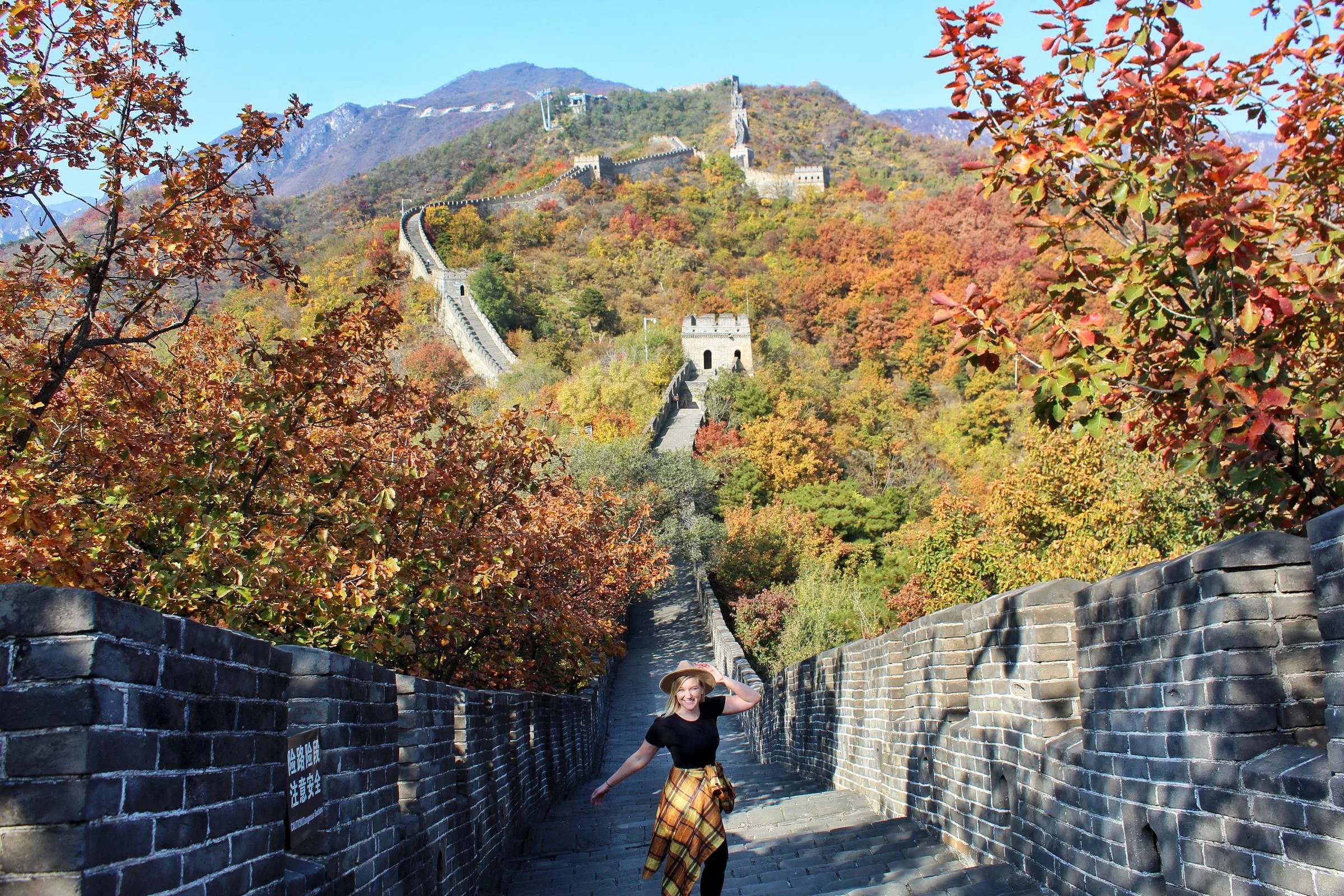
Mutianyu (慕田峪) sits 70 km northeast of central Beijing, in Huairou District. It is the best-preserved section, the most photogenic, and the least crowded of the three. The restored wall is 2.5 km long with 22 watchtowers, snaking along a forested ridge at 500-1,000m elevation. Cable car and toboggan descent are both available. Foreign tour operators favor Mutianyu because it is rarely over 5,000 visitors per day even in peak season.
Badaling (most crowded, but most accessible)
Badaling (八达岭) is 60 km northwest of Beijing, the closest section, and the one most Chinese first-time visitors see — for first-time foreign visitors the bigger Beijing context is in our first-time Beijing guide. It is heavily restored, fully accessible (paved ramps, elevators), and has the most visitor infrastructure. The tradeoff is crowds: Badaling hits 50,000+ visitors per day on weekends and Chinese national holidays. Cable car, slide, and elevator all available. Choose Badaling if you have a half-day only, are traveling with a stroller or wheelchair, or want the “postcard view” of the wall snaking up a steep mountain face.
Jinshanling (hiking, restored meets wild)
Jinshanling (金山岭) is 130 km northeast of Beijing, just inside Hebei province. It is the most popular serious hike on the wall: 10 km from Jinshanling to Simatai, 4-5 hours one-way, passing 25 watchtowers. The wall-and-hike combo is hard to fit into a short Beijing stop; see our 2-day Beijing layover plan if time is tight. The first 5 km from Jinshanling is fully restored; the middle 3 km is wild (unrestored, crumbling, no handrails); the last 2 km into Simatai is partially restored. This is the most-photographed hike in China.
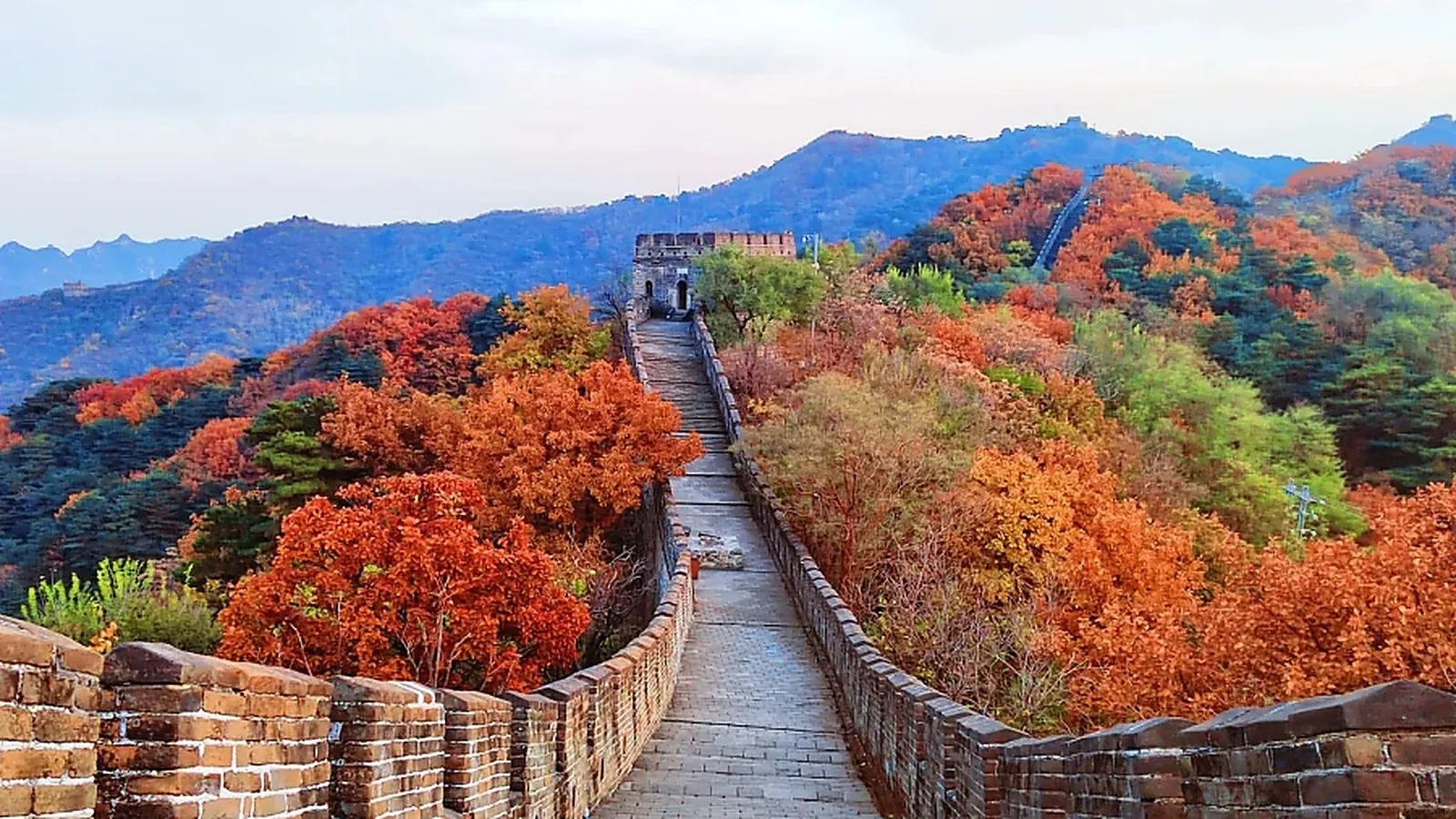
Photo: Wikimedia Commons / CC BY-SA. Source
.jpg)
Tickets, booking, and payment
| Section | Entry | Cable car (round trip) | Toboggan | Notes |
|---|---|---|---|---|
| Mutianyu | ¥45 | ¥120 | ¥100 | Most popular, foreign-friendly |
| Badaling | ¥40 peak / ¥35 off-peak | ¥140 | ¥100 | Closest to Beijing, most crowded |
| Jinshanling | ¥65 | ¥80 (one-way) | N/A | Hiking section, no toboggan |
| Simatai | ¥40 | ¥100 (cable car; check status) | N/A | Often closed for restoration |
| Gubei Water Town | ¥150 combined | N/A | N/A | Hot springs + night wall view |
How to book:
- At the gate - passport required, Alipay/WeChat Pay or cash. No foreigner surcharge. Same price as Chinese citizens.
- Trip.com - English booking, accepts Visa/Mastercard. Day-tour packages to Mutianyu run ¥350-500 per person including transport, entry, and cable car.
- Alipay - search the “长城” mini-program for Mutianyu or Badaling. E-ticket loads into your Alipay wallet.
Free entry: Children under 1.2m. Seniors over 65 (with passport). Students with valid Chinese ID get 50% off; foreign student cards are not generally accepted.
Closures: Toboggan closes for rain, ice, or high winds. Cable car closes in fog (visibility below 50m) and in electrical storms. Wall itself closes when snow on steps exceeds 5 cm.
Getting there and around
From Beijing by bus: Direct shuttle buses to Mutianyu leave from Dongzhimen Transport Hub (东直门交通枢纽). Mutianyu bus 867 express: 8:00 AM departure, 2 hours, ¥30 one-way. Return bus departs Mutianyu 16:30. Book at Dongzhimen the morning of, or pre-book via Trip.com. Badaling buses also leave from Deshengmen (德胜门) - 1 hour, ¥12 one-way, every 15 minutes 6:00-12:00.
From Beijing by private car: Didi or pre-booked private car costs ¥600-800 round-trip to Mutianyu, ¥500-700 to Badaling, ¥900-1,200 to Jinshanling. Allow 2 hours each way on a good day; weekend traffic can extend to 3 hours.
From Beijing by tour: Trip.com, Klook, and most Beijing hotels sell day tours. Standard Mutianyu tour ¥350-500 (transport + entry + cable car, no guide). Small-group tour with English guide ¥600-900.
Inside Mutianyu: Free shuttle bus from the parking lot to the cable car base, 5 minutes. The wall is one-way walking only on most sections; descend by the same path or take cable car/toboggan.
What to bring
- Comfortable hiking shoes with grip - the steps are uneven granite, slippery when wet. Sneakers are acceptable on Mutianyu but not on Jinshanling.
- 2L of water minimum - vendors on the wall charge ¥10-15 per bottle, and there are no refill stations.
- Sun protection - UV index at 1,000m elevation reaches 8 in summer. Hat, sunscreen, polarized sunglasses.
- Light jacket - even in summer, the wall at 1,000m is 5-8°C cooler than Beijing city. Autumn mornings are 5-10°C.
- Cash ¥200 - small vendors, some shuttle buses, and the toboggan operator prefer cash. Most accept Alipay.
- Power bank - no outlets on the wall. A 20,000 mAh pack covers 2-3 phone charges.
- Motion-sickness pills - only relevant if you are taking the 99-bend road at a different mountain (Mutianyu has no such road).
Hike difficulty cheat sheet
The 4 main Great Wall hiking routes. Distances are along the wall itself (not round-trip access distance); round-trip often requires returning the same way or arranging a taxi pickup at the other end.
| Route | Distance | Time | Elevation | Difficulty |
|---|---|---|---|---|
| Mutianyu restored walk (慕田峪) | 2.5 km on wall | 1-2 h | +200 m (cable car covers most) | Easy — paved path, restored battlements, handrails |
| Jinshanling → Simatai (金山岭→司马台) | 10 km point-to-point | 4-5 h | +500 m | Moderate — mix of restored + unrestored, some steep sections, no shade |
| Gubeikou → Jinshanling (古北口→金山岭) | 12 km point-to-point | 5-6 h | +600 m | Moderate-Strenuous — half restored, half wild, watch for loose bricks |
| Jiankou (箭扣, unrestored wild wall) | 8 km loop | 4-5 h | +800 m | Strenuous — steep, unrestored, no handrails, scramble sections; guide required |
Best for backpackers: the Jinshanling-to-Simatai hike is the classic — it has the most scenic restored/unrestored mix, manageable difficulty, and the option to end at Simatai (taxi pickup). The 10-km hike takes 4-5 hours with photo stops. Bring 2 L of water and a packed lunch; there is no resupply on the wall. For a 1-day ambitious challenge, the Jiankou loop is unforgettable but requires a guide and 6+ hours.
Drone rules (strict around Beijing sections, looser at Jiankou/Jinshanling)
Drone flights are banned at Badaling and Mutianyu under Beijing Municipal Order (首都机场净空保护区 covers all six Beijing-municipality Great Wall sections, including Mutianyu, Huanghuacheng, and Jiankou partially). The ban exists because of Beijing Capital International Airport (PEK) and Daxing Airport flight paths, and because the Great Wall is a national security site (parts of the wall are still a military buffer zone). Penalties at Mutianyu/Badaling: drone confiscation, ¥5,000–20,000 fine, and for foreign passport holders a Public Security Bureau filing that can affect future Chinese visa applications.
Where drones are tolerated (still legally grey): Jinshanling and Simatai (in Hebei province, outside Beijing municipality) have no formal ban, but the local Public Security Bureau has confiscated drones at the trailhead in 2023–2024. Jiankou (the unrestored “wild wall”) is the most drone-friendly section because it is not commercially operated — but a 2022 helicopter rescue triggered a renewed push for enforcement, so do not count on tolerance. For all sections: never fly over wall watchers, never fly over military installations, and keep below 120m AGL if you do fly.
The 5 photo spots that matter
- Mutianyu watchtower 14 - the most-photographed view on the wall. Stand on the platform facing west, the wall climbs 3 ridges into the distance, the forest is red and gold in autumn. Best 9:00-10:00 AM with side light.
- Mutianyu watchtower 6 - 400 steps west of tower 14. The wall climbs a near-vertical ridge here, the steepest section in the area. Best for action shots of hikers.
- Badaling north slope - the iconic postcard view of the wall snaking up a 45° slope to a watchtower. Best 2:00-3:00 PM with backlighting on the wall face.
- Jinshanling watchtower 15 - the most-photographed wild section. Crumbling brick, pine trees growing out of the wall, no other tourists. Best at sunrise.
- Gubei Water Town night view of Simatai - the wall is lit up after dark (lights on 18:30-22:00). View from the town below or the cable car.
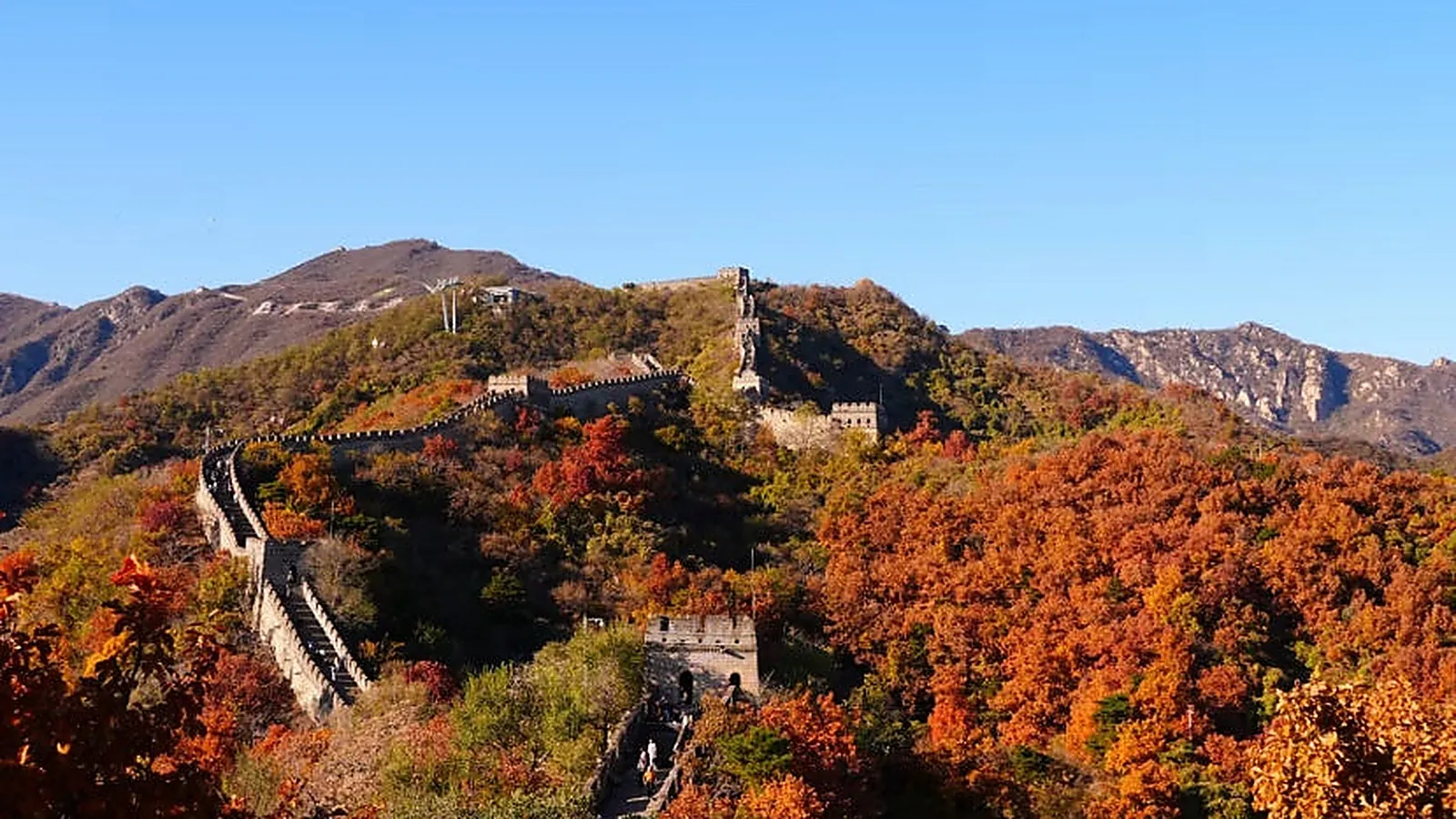
Photo: Wikimedia Commons / CC BY-SA. Source
.jpg)
Common mistakes to avoid
- Going to Badaling on a Saturday in October. 50,000+ visitors, 2-hour cable car queue, no breathing room on the wall. Switch to Mutianyu or Jinshanling, or come on a weekday.
- Trusting the toboggan to be open. The toboggan at Mutianyu closes for rain, ice, fog, and wind above 6 on the Beaufort scale. The first 4 days of my last 6 visits had the toboggan closed at some point. Plan for the cable car as backup.
- Walking the Jinshanling-Simatai hike without a plan to exit. Simatai west is 5 km from the nearest road; the only way back is by Simatai cable car (often closed) or a 90-minute walk. If the cable car is closed, you are walking 90 minutes to Gubei Water Town.
- Showing up after 1:00 PM and expecting the wall to yourself. The morning tour buses arrive 9:00-11:00 AM; afternoon sees the tail end of the morning crowd and the early-arriving afternoon tour buses. The wall is most empty 7:30-9:00 AM.
- Wearing new shoes. The stone steps have been polished by 600 years of boots; the grip is poor in rain. Wear shoes you have already broken in.
- Not bringing enough water. There is one vendor on the Mutianyu wall (between towers 10 and 11) and zero on the Jinshanling hike. ¥10 per bottle, and prices double on weekends.
- Forgetting the toboggan shoe cover. If you wear open sandals, the operator will sell you cheap plastic covers (¥10) or refuse entry. Closed shoes are safest.
Where to stay
- Gubei Water Town (古北水镇) - 1 km from Simatai, 15 km from Jinshanling. Rebuilt water town with hot springs, the night-lit wall view, and traditional courtyard inns. Budget: Gubei Water Town Youth Hostel (¥250-400). Mid-range: Brickyard Retreat (¥800-1,200), Boutique by AVIC (¥600-900). 1-night packages with wall entry + hot spring ¥800-1,500 per person.
- Huairou District (怀柔区) - closer to Mutianyu, 60-90 min from central Beijing. Mid-range: Yanqi Lake Hotel (¥500-700), Sunrise Kempinski (¥900-1,500). Budget: Holiday Inn Express Huairou (¥350-500).
- Beijing downtown + day trip - most common option. Stay in Dongcheng or Chaoyang district and do a 1-day shuttle tour. Budget hotels ¥200-400, mid-range ¥500-900, luxury ¥1,200+.
Best season and what to expect
April-May (best for green): Temperatures 15-25°C, forested ridges in fresh green, wildflowers on the wall. Crowds: moderate on weekends, light on weekdays. Cable cars and toboggan open 8:00-17:00. This is the second-best season for foreign visitors.
June-August (summer): Hot and humid at the base (28-35°C), cooler on the wall (22-28°C). Crowds are heavy on weekends, especially July-August school holidays. Avoid 12:00-14:00 for the wall itself; take lunch in the village. The toboggan closes occasionally in afternoon thunderstorms.
September-October (best for autumn colors): The single best month is the first 3 weeks of October. Temperatures 10-20°C, foliage red and gold, clear skies. Crowds: extreme on weekends and during Chinese National Day (Oct 1-7) when Badaling hits 50,000+ per day. Weekday visits in mid-October are perfect. Bring a light jacket for early morning.
November-March (winter): Cold (-2 to 8°C), possible snow. The wall is most atmospheric in snow but the toboggan and some cable cars close in ice. Crowds are small (1,000-3,000 per day at Mutianyu). Cable car may have reduced hours; check before going. Many smaller sections close entirely.
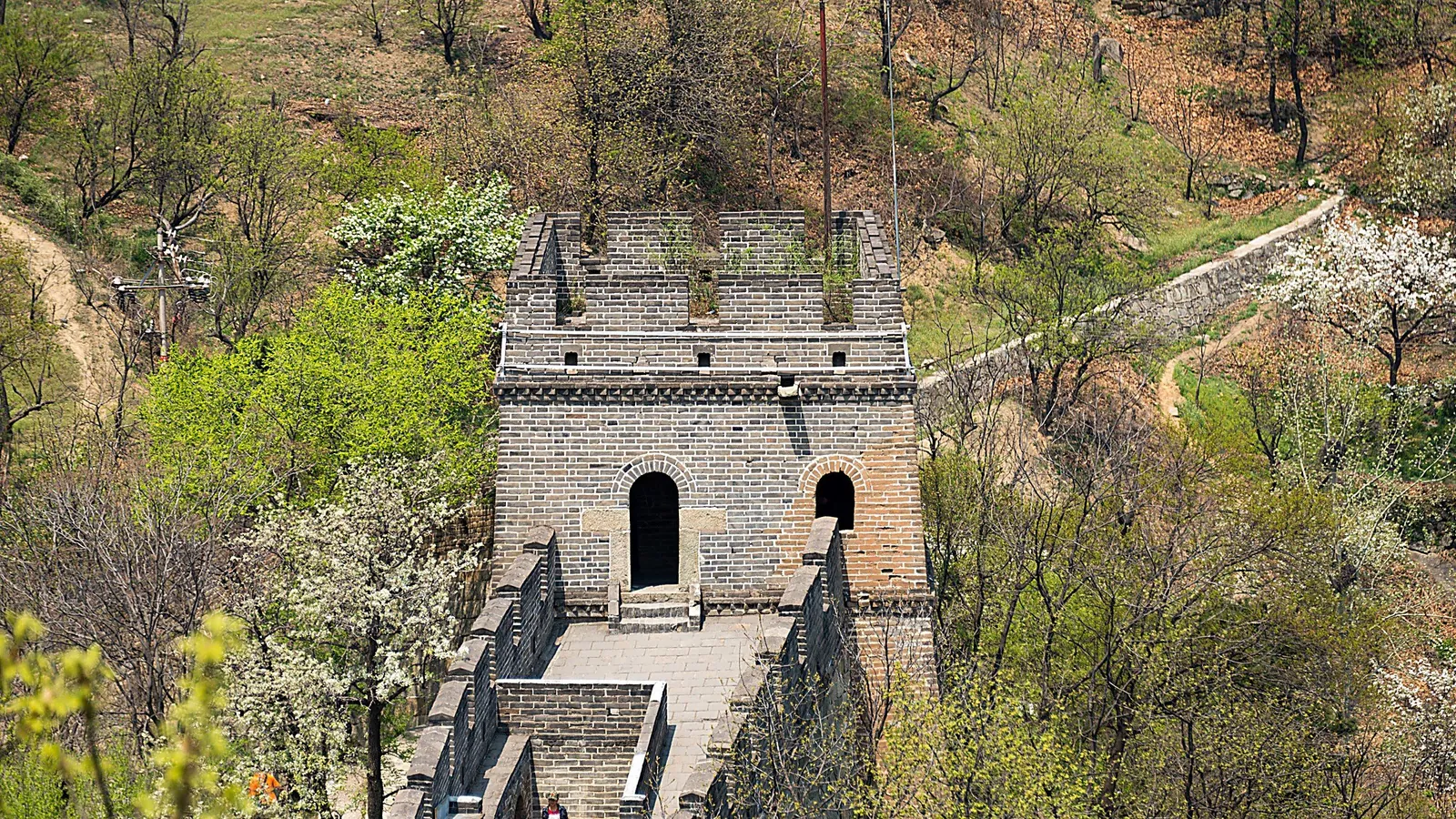
Photo: Wikimedia Commons / CC BY-SA. Source

Plan your trip - verified tools
These free tools are built on real, monthly-verified data and help you skip the trial-and-error phase of China trip planning:
- China 240-Hour Visa-Free Transit Checker - 57 countries, 24 provinces, 65 ports. See if you qualify for 10-day visa-free transit, which cities you can visit, and the 5-step process.
- China 6-City 5-Day Budget Calculator - Real 2026 prices for 5 days in Beijing, Shanghai, Guangzhou, Chengdu, Xi’an, or Hangzhou. Budget / mid-range / comfort tiers, broken down line by line.
Verified August 2026 by TravelHubChina Editorial. We re-check prices and policy details monthly so the data doesn’t drift.
Step by step
-
Decide which section to visit
Mutianyu for first-timers (best balance of scenery, infrastructure, and crowd levels). Badaling for a half-day trip with children (closest to Beijing, 60 km, fully accessible). Jinshanling for a serious hike (5-6 hours round trip, restored wall meets wild wall). Gubei Water Town for an overnight (Jinshanling + a hot-spring resort, ¥150 combined ticket). Avoid Simatai for short visits - it is undergoing multi-year restoration and the cable car is closed.
-
Book a day-trip shuttle or private transfer from Beijing
Direct shuttle buses to Mutianyu leave from Dongzhimen Transport Hub (东直门枢纽). Mutianyu bus 867 express: 8:00 AM departure, 2 hours, ¥30 one-way. Return bus departs Mutianyu 4:00 PM. Book at Dongzhimen the morning of, or pre-book a seat on Trip.com. Private car via Didi costs ¥600-800 round-trip; Trip.com day tours run ¥350-500 per person including entry and cable car.
-
Arrive before 9:00 AM to beat the crowds
Mutianyu opens 7:30 AM (8:30 AM in winter). Weekday mornings are quiet; arrive 9:00-10:00 AM and you will share the wall with 200-500 people. After 11:00 AM tour buses arrive and crowds can hit 3,000-5,000. Badaling is the inverse - the first 2 hours after opening are the worst; arrive 2:00-4:00 PM if you want smaller crowds and warmer sunset light.
-
Buy entry and cable car at the gate
Entry ¥45 (Mutianyu), cable car up ¥100, toboggan down ¥100. Pay with Alipay, WeChat Pay, or cash. No foreigner surcharge. Foreign passport required at the ticket window. The cable car takes 6 minutes to the wall's 14th watchtower. The toboggan is a 600m stainless-steel slide that winds down through the forest - fun for kids and adults, no age limit but weight 30-110 kg.
-
Walk west on the wall toward Jiankou
From watchtower 14, walk west for the best-preserved stretch. The 2.5 km restored section has 22 watchtowers, paved steps, and panoramic views over forested ridges. Allow 2 hours one-way at a relaxed pace. The wall climbs to 1,000m elevation; the steepest section is between towers 6 and 8 (about 400 steps). Cable car exit is back at tower 14.
-
Descend by toboggan or cable car
Toboggan descent is the most fun option - you control your speed on a hand-brake slide, takes 8-10 minutes. Cable car descent is 6 minutes and includes views over the valley. Walkers can take a forest trail back to the entrance (30-40 minutes, mostly downhill). Toboggan closes for rain or ice.
-
Eat lunch at the village below the wall
A 200m walk from the entrance is Mutianyu Village with 20+ restaurants serving northern Chinese food. Try the local trout (虹鳟鱼, ¥80-120) and the Great Wall-themed dumplings. Lunch sets run ¥40-60. The village is more authentic than the food court at Badaling. Allow 45-60 minutes for lunch. For a more food-focused Beijing day, see our Beijing hutong food tour guide.
-
Return to Beijing by 5:00 PM
Last cable car up is 16:00 (15:00 in winter). Toboggan closes at 16:30. Last return shuttle to Beijing departs 16:30 from the parking lot; confirm the time the day of. If you are staying overnight at Gubei Water Town, shuttle buses run hourly from Mutianyu to Gubei (¥25, 1 hour) until 19:00.
-
Pair with an overnight in Gubei Water Town (optional)
Gubei Water Town (古北水镇) is a 15-minute drive from Simatai and 1 hour from Mutianyu. It is a rebuilt water town with hot springs, the Simatai Great Wall night view (¥150 combined ticket), and traditional inns. Stay 1 night for sunrise over the wall without the day-trip crowds. 1-night packages with hot spring and wall ticket run ¥800-1,500 per person.
FAQ
-
Which section of the Great Wall is best for first-time visitors?
Mutianyu, 70 km northeast of Beijing, is the recommended section for first-time foreign visitors. It is fully restored, less crowded than Badaling, and offers a 2.5 km walkable stretch with 22 watchtowers. Cable car and toboggan descent are both available. Badaling is the closest and most famous but receives 50,000+ visitors per day on weekends and Chinese national holidays. -
How much does the Great Wall cost in 2026?
Entry fees by section: Mutianyu ¥45, Badaling ¥40 (peak) / ¥35 (off-peak), Jinshanling ¥65, Simatai ¥40, Gubei Water Town ¥150 (combined). Cable car at Mutianyu is ¥120 round-trip, toboggan descent ¥100. A day trip from Beijing with transport, tickets, and cable car runs ¥400-700 per person through Trip.com or ¥250-400 DIY with public bus. -
Can I do the Great Wall as a day trip from Beijing?
Yes, Mutianyu and Badaling are both reachable as a day trip from central Beijing. Allow 2-3 hours each way by car, or 1.5-2 hours by direct shuttle bus from Dongzhimen Transport Hub. Most visitors depart 7:00-8:00 AM and return 5:00-7:00 PM. The wall closes at 17:00 (16:30 in winter); last cable car is usually 16:00. -
When is the best time to visit the Great Wall?
April-May for green foliage and comfortable temperatures (15-25°C). September-October for autumn colors - the section at Mutianyu turns red and gold and is the most-photographed season. Avoid Chinese National Day (Oct 1-7) and the first week of May when Badaling hits 50,000+ visitors per day. Winter visits (December-February) are quiet and snow-covered but cable cars can close in ice. -
Is the Great Wall safe for kids and seniors?
Mutianyu is the most kid-friendly section: paved paths, handrails on the steepest sections, and the toboggan slide down is a hit with children aged 5-12. Badaling has the most infrastructure (paved ramps, cable car, elevators) and is suitable for strollers and wheelchairs (some sections). Jinshanling and Simatai involve uneven stone steps and steep climbs - not recommended for kids under 8 or anyone with knee or balance issues. -
What is the difference between a restored and wild section?
Restored sections (Mutianyu, Badaling) have rebuilt battlements, smooth stone steps, handrails, and full visitor infrastructure. Wild or unrestored sections (Jiankou, Gubeikou) are crumbling, overgrown, and unmaintained - sometimes requiring 4-5 hour one-way hikes over loose rock. Most foreign visitors stay on the restored sections. Wild sections are only recommended for experienced hikers with a registered local guide. -
Can foreigners hike from Jinshanling to Simatai?
Yes, the 10 km Jinshanling-to-Simatai hike is the most famous Great Wall trek. It is 4-5 hours one-way, passes 25 watchtowers, and transitions from restored wall at Jinshanling to wild wall in the middle section. Entry is at Jinshanling (¥65), exit at Simatai. A shuttle bus back to the Jinshanling parking lot costs ¥20. Bring 2L of water, sun protection, and allow until 4:00 PM to finish. -
How long is the Great Wall in total?
The Great Wall system runs 21,196 km, including all sections built from the 7th century BC (Warring States period) through the Ming dynasty (1368-1644). The figure was confirmed by China's State Administration of Cultural Heritage in 2012 after a 5-year survey. The Ming-era walls (the iconic stone-and-brick sections) account for about 8,850 km. Only 9% of the wall is open to visitors today.
Related guides
- Scenic & Nature
Forbidden City Guide: Beijing Imperial Palace, Tickets & Plan
The Forbidden City in Beijing: 72 hectares, 980 buildings, 1.4 million artifacts, Ming and Qing dynasties, UNESCO since 1987. Tickets (¥60), WeChat booking.
12min read
- Scenic & Nature
Huangshan (Yellow Mountain) Guide: Sunrise, Sea of Clouds, Trails (2026)
Huangshan (黄山, Yellow Mountain) in Anhui is a UNESCO World Heritage site famous for its sea of clouds, twisted pines, and granite peaks. This guide covers the 2-3 day plan, ticket prices (¥190-310), cable cars, sunrise timing, and Hongcun village.
12min read
- Scenic & Nature
Zhangjiajie Scenic Guide: Avatar Mountains, Pillars, and Hikes (2026)
Zhangjiajie National Forest Park in Hunan is a UNESCO site with 3,000+ sandstone pillars, the Avatar Hallelujah Mountains, glass bridges, and Tianmen Mountain's 99-bend road. This guide covers the 4-day plan, ticket prices (¥225-435), foreigner booking via Alipay, cable cars, and photo spots.
12min read
- Scenic & Nature
Temple of Heaven Guide: Beijing's Most Photogenic Park
Temple of Heaven in Beijing: 273 hectares, Ming Dynasty (1420), UNESCO since 1998. The Hall of Prayer for Good Harvests is China's most-photographed building. ¥35 entry, free dawn tai chi, subway access.
- Scenic & Nature
Big Wild Goose Pagoda Guide: Xi'an's 1,300-Year Tang Pagoda
Big Wild Goose Pagoda (Dayan Ta) in Xi'an: 64m Tang-dynasty brick pagoda from 652 AD, UNESCO since 2014 as part of the Silk Roads network. Tickets (¥50), climb times, and the free North Square musical fountain (9 PM nightly).
8min read
- Scenic & Nature
China's Top 3 Scenic Wonders Compared: Zhangjiajie vs Huangshan vs Jiuzhaigou (2026)
Zhangjiajie (sandstone pillars), Huangshan (sea of clouds + granite peaks), Jiuzhaigou (turquoise lakes + waterfalls). Decision guide covering which fits your time, budget, fitness level, photography goals, and travel style. Prices, distances from Shanghai/Beijing, best seasons compared.
12min read