
Beijing Food Guide: 13 Dishes to Eat
Beijing food guide: 13 dishes, 2026 prices and where to eat each — Peking duck, copper-pot lamb, zhajiangmian, baodu, luzhu and the breakfast locals queue for.
Beijing does not eat the way its postcards suggest. The duck is real, and it is worth the money — but the food Beijingers actually queue for is lamb, wheat and offal, eaten fast at a formica table with a bowl of vinegar on the side. The city’s cooking is built on fermented bean paste, vinegar and garlic rather than chilli, which makes it the mildest of China’s great regional kitchens and, for many visitors, the most immediately likable.
This guide covers the thirteen dishes worth your time, what each costs in 2026, and where to eat it — plus the three-hour hutong walk that strings the street food together. Prices are for ordinary local restaurants, not the polished places around Sanlitun.
The 13 dishes that define Beijing
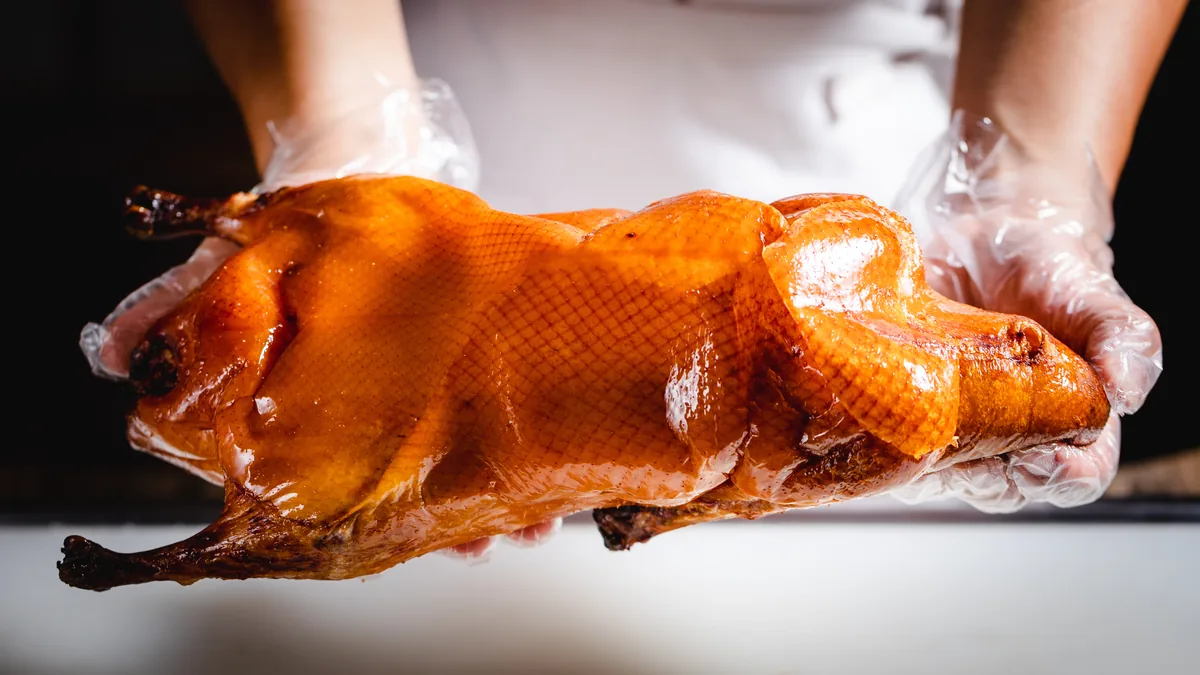
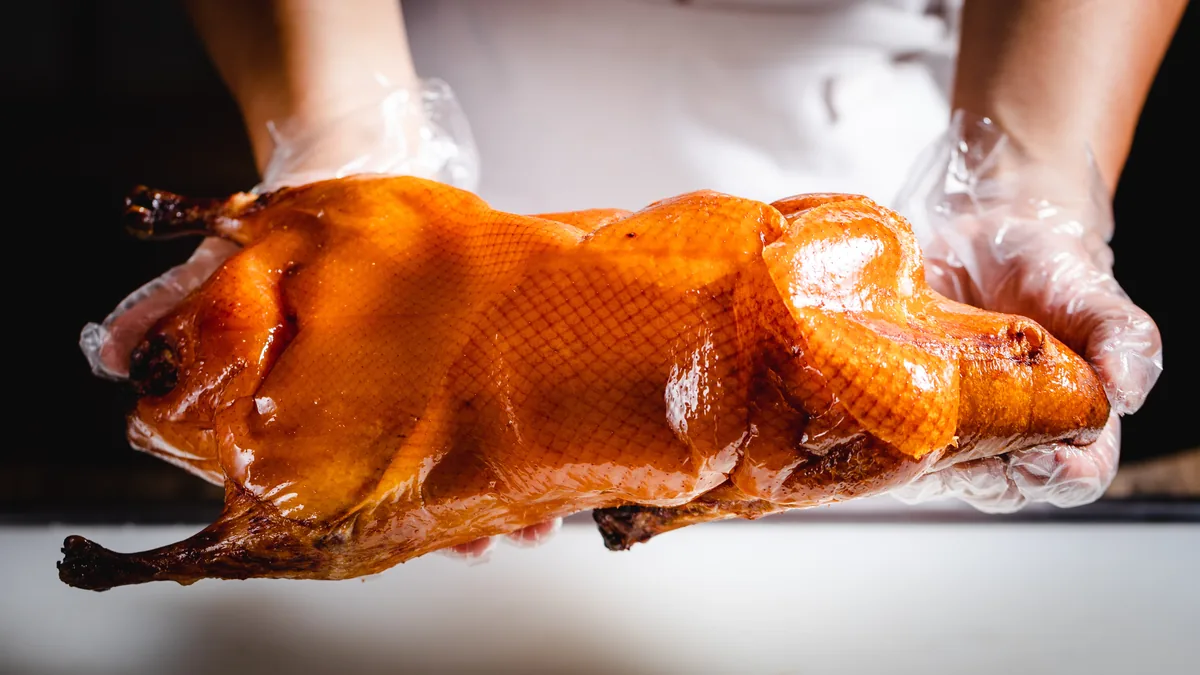
1. 北京烤鸭 — Peking duck
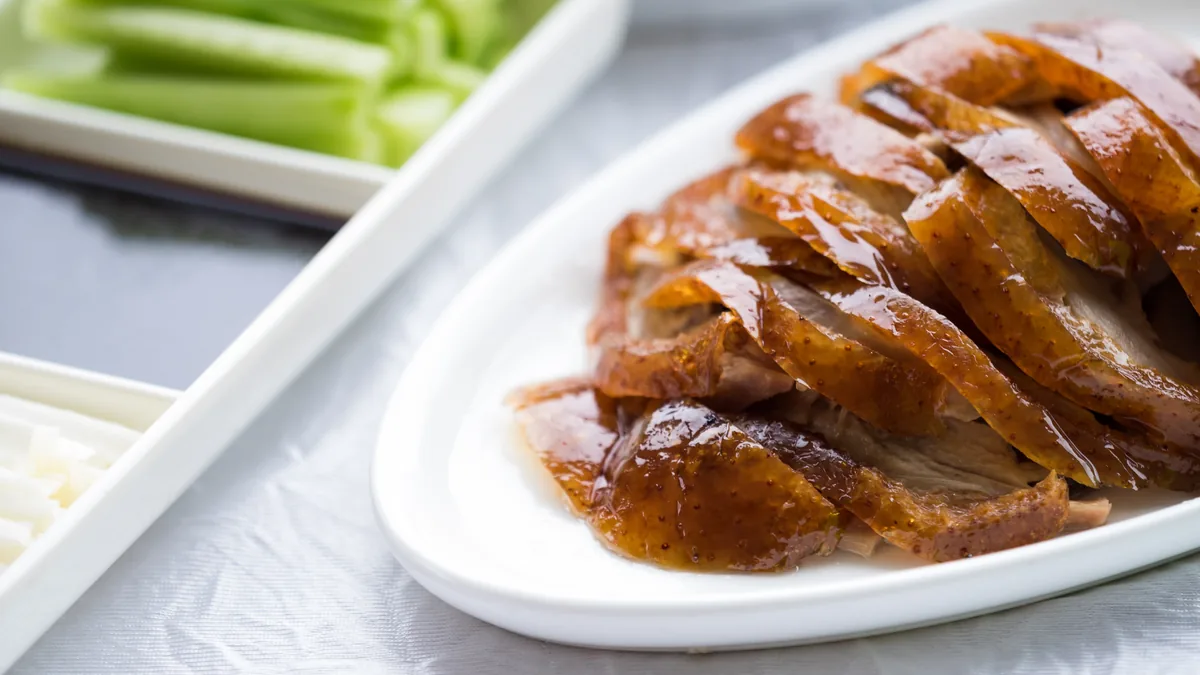
The dish that made the city famous: a whole duck, air-dried, glazed and roasted until the skin goes glassy and the fat renders away, carved at the table and eaten in thin pancakes with scallion, cucumber and sweet bean sauce. ¥200-400 for a whole duck serving 2-3. Full detail, including the seven restaurants worth booking, is in the next section.
2. 涮羊肉 — Copper-pot lamb
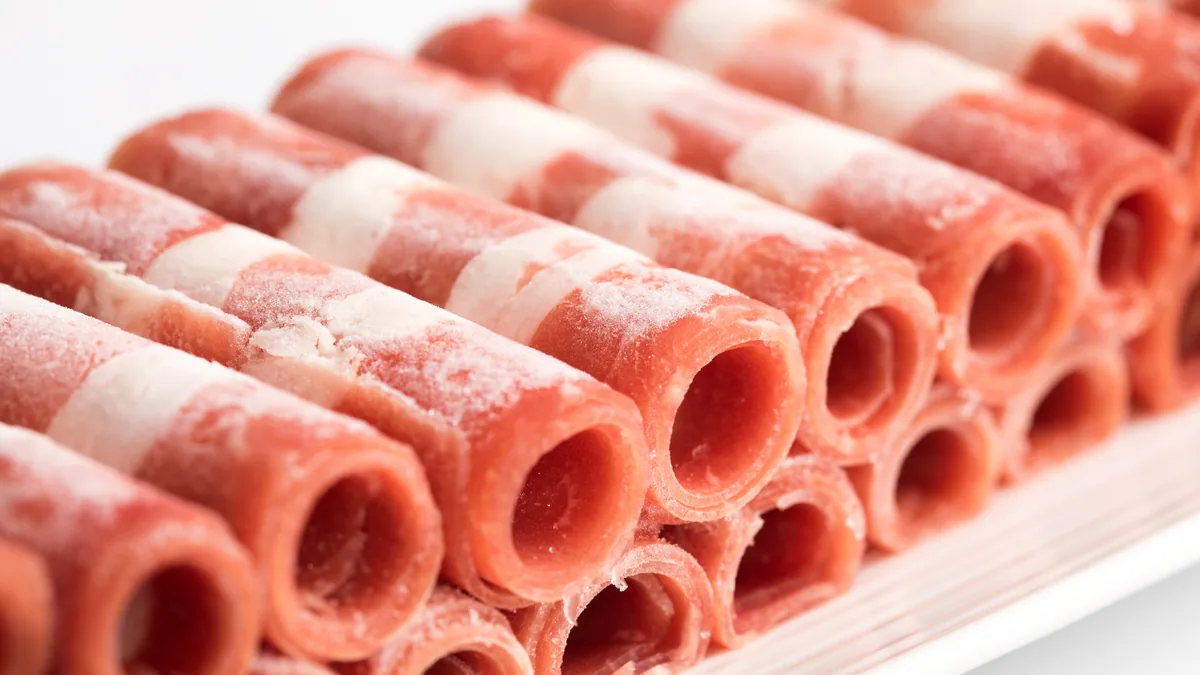
Beijing’s cold-weather meal: a charcoal chimney pot of clear broth, paper-thin lamb rolls dipped for ten seconds, then dragged through sesame paste (麻酱) with fermented bean curd and coriander. It is the opposite of Sichuan hotpot — no chilli, no spice, all about the lamb and the sauce. ¥80-150 per person. Order lamb, cabbage, frozen tofu and hand-pulled noodles; skip the fish balls.
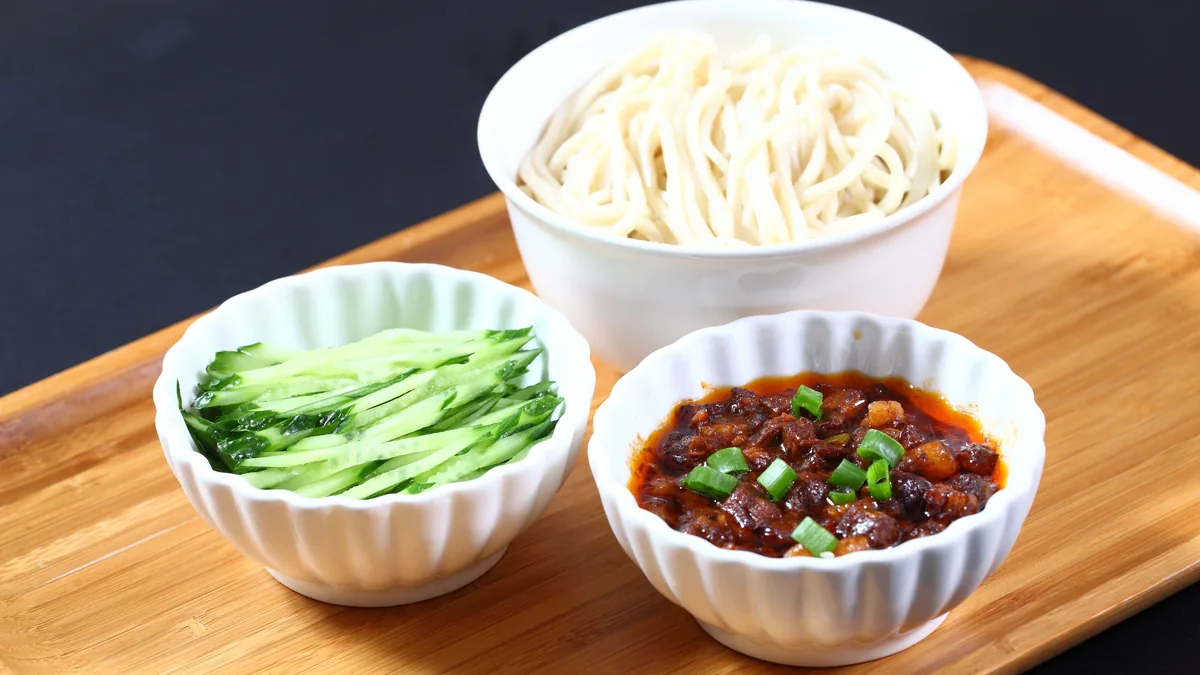
3. 炸酱面 — Zhajiangmian
Wheat noodles under a dark sauce of fermented soybean paste fried with minced pork, cooled by raw cucumber, radish and soybean sprouts. Mixed at the table, never pre-tossed. ¥18-35 a bowl. The best versions are in old neighbourhood shops with four tables and no English menu.
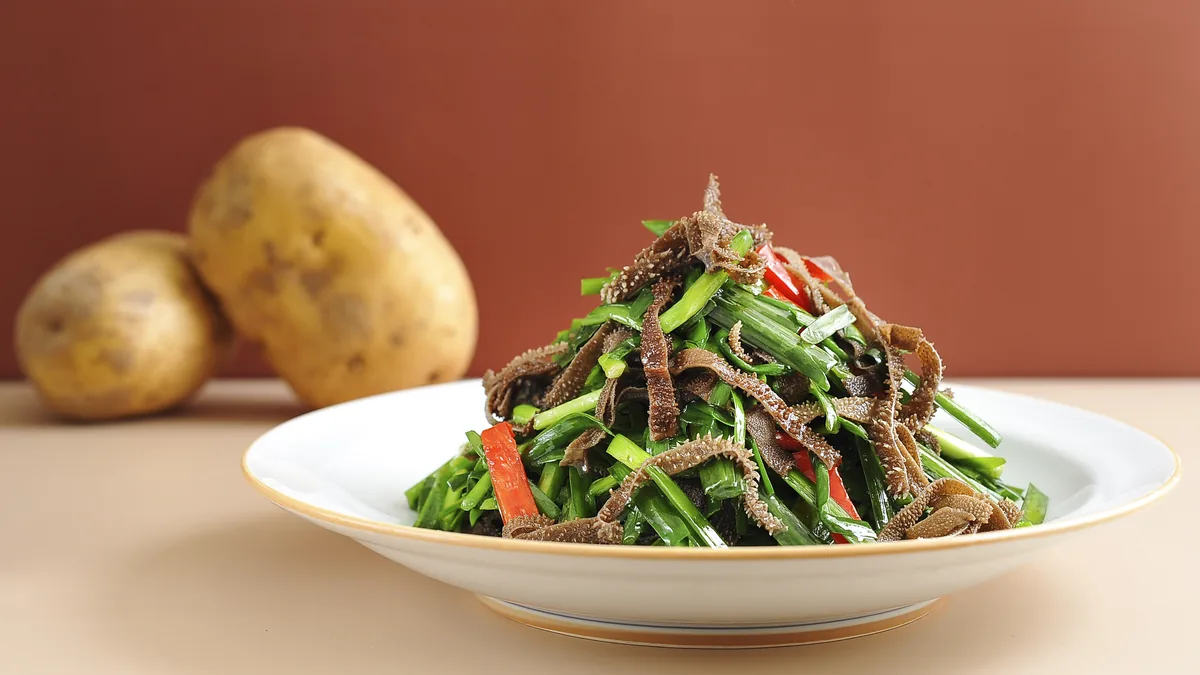
4. 爆肚 — Baodu
Tripe — usually lamb or beef — plunged into boiling water for 30-60 seconds and served with sesame sauce. The whole dish lives or dies on that timing: it should arrive tender and almost creamy, never chewy. ¥30-50 a plate, which is roughly 100g.
5. 卤煮 — Luzhu
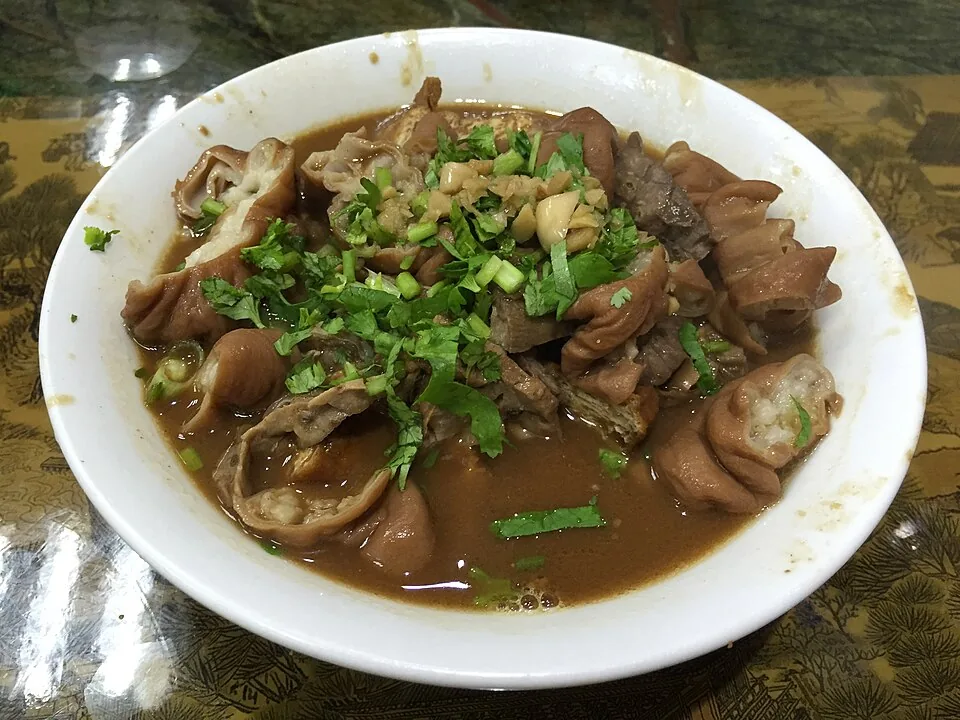
A working-class stew of pork intestine, lung and liver with firm tofu, fried tofu puffs and wheat buns, simmered in a dark broth of fermented bean paste and finished with raw garlic juice. ¥25-35 a bowl and it is a full meal. Ask for 小碗 (small bowl) if you are unsure.
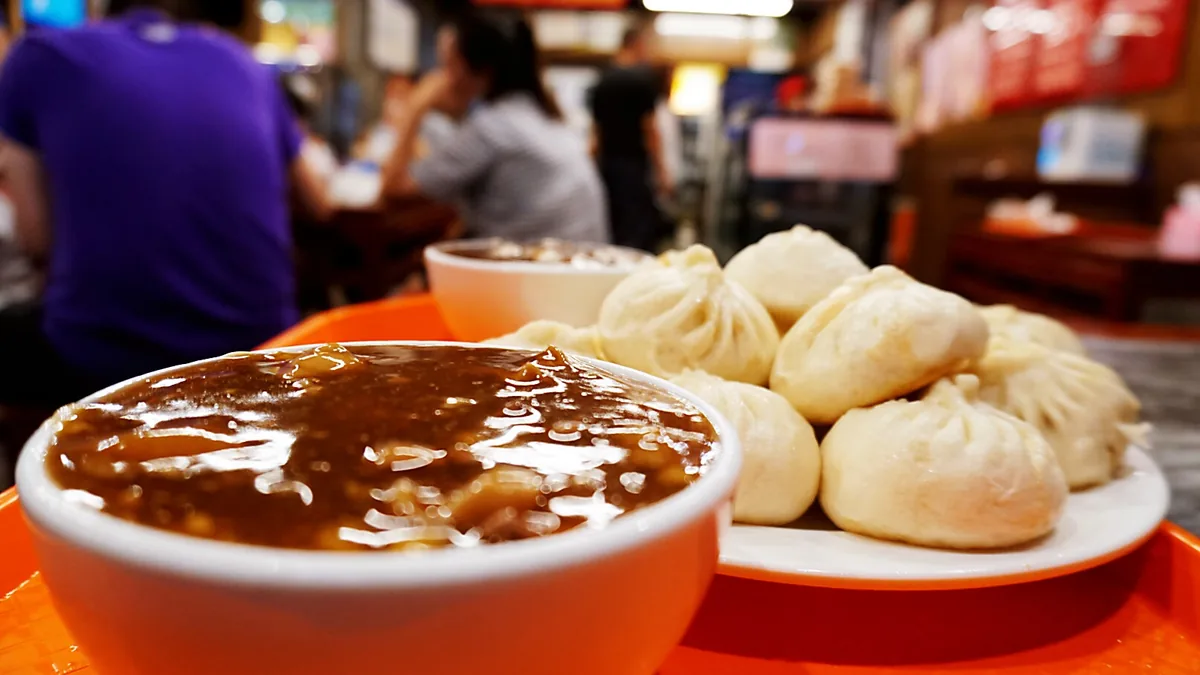
6. 炒肝 — Chaogan
Despite the name, this is mostly intestine rather than liver: chopped pork offal in a glossy starch-thickened sauce with garlic and yellow bean paste. Eaten at breakfast with steamed buns for dipping. ¥20-30 a portion, enough for two.
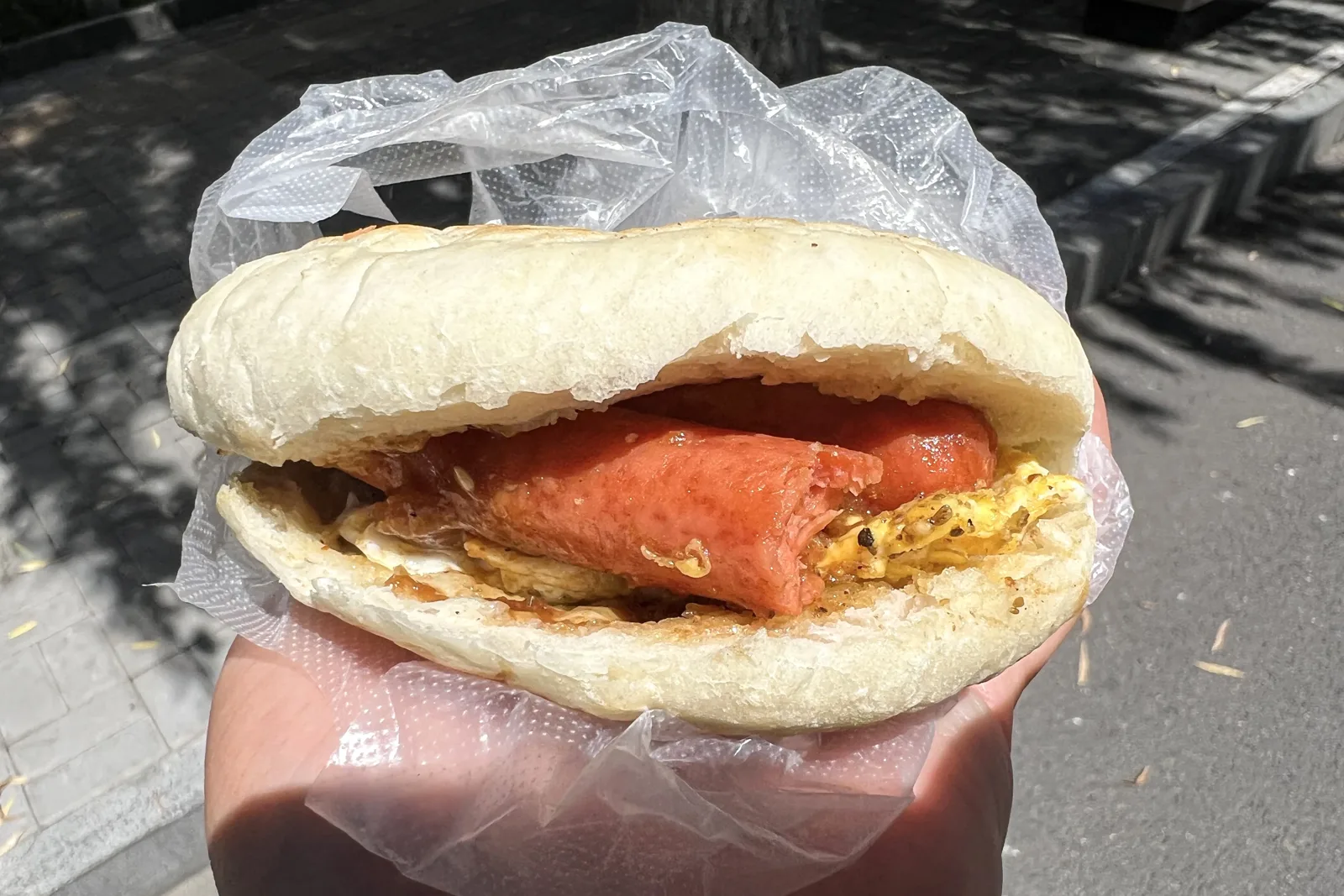
7. 褡裢火烧 — Dalian huoshao
Long rectangular pan-fried pockets of pork and onion, crisp underneath and chewy on top, served with vinegar and mashed garlic. The most universally likable item on this list — if you eat one Beijing street food, make it this. ¥8-12 for four.
8. 豆汁儿 — Douzhir
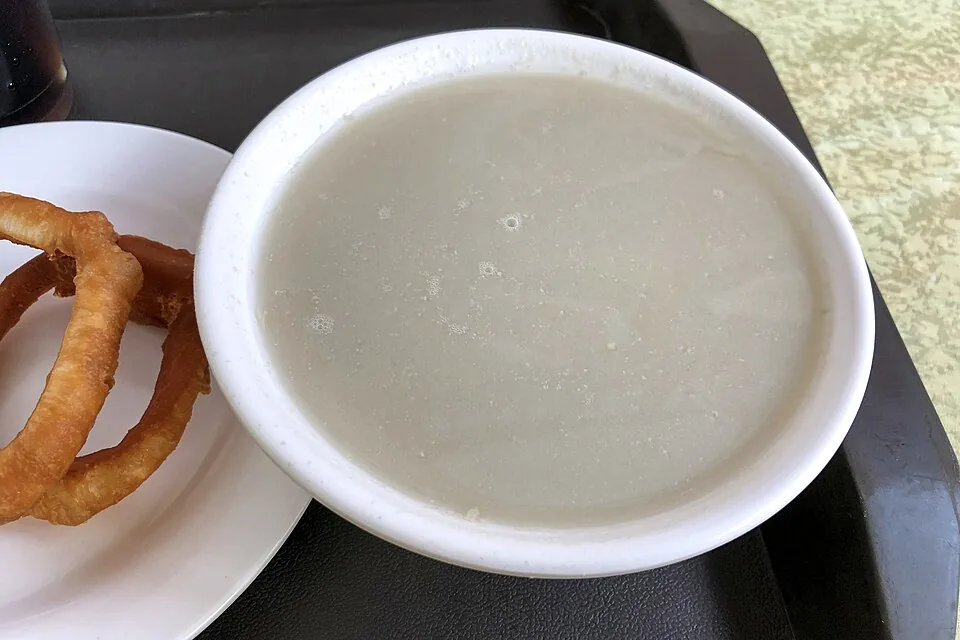
Fermented mung bean liquid, served warm and grey-green, sour in a way that no other Chinese food prepares you for. This is the test: locals drink it daily, most visitors manage three sips. ¥3-5 a bowl at Huguosi Snacks.
9. 焦圈 — Jiaoquan
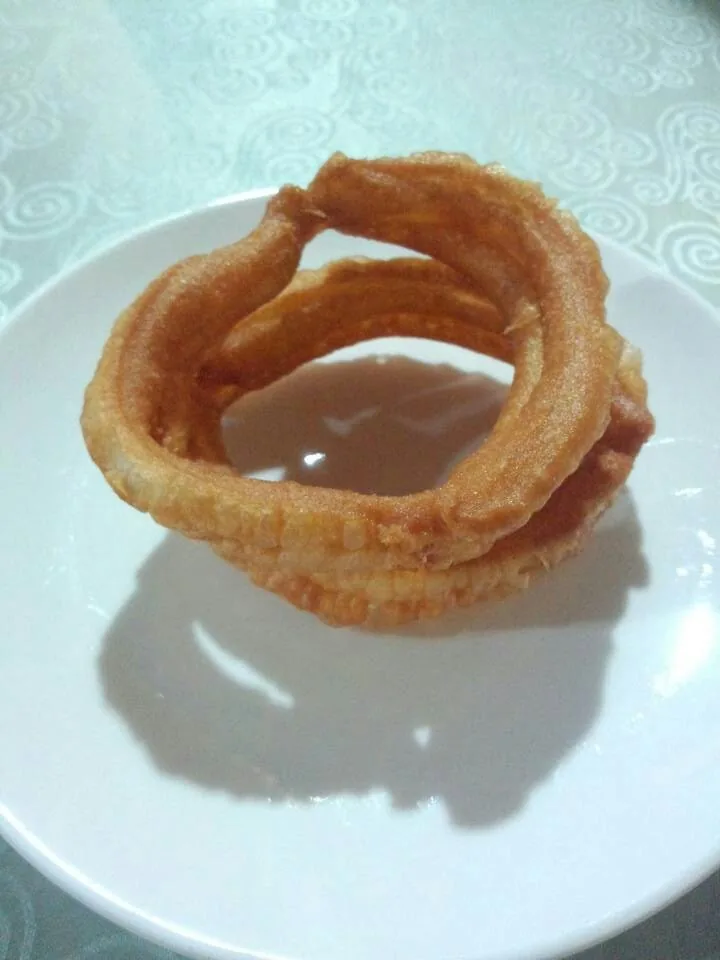
The correct partner for douzhir: crisp fried dough rings, faintly salty, built to be dunked. ¥3-5 a portion. Also good with soy milk if the douzhir defeats you.
10. 艾窝窝 — Aiwowo
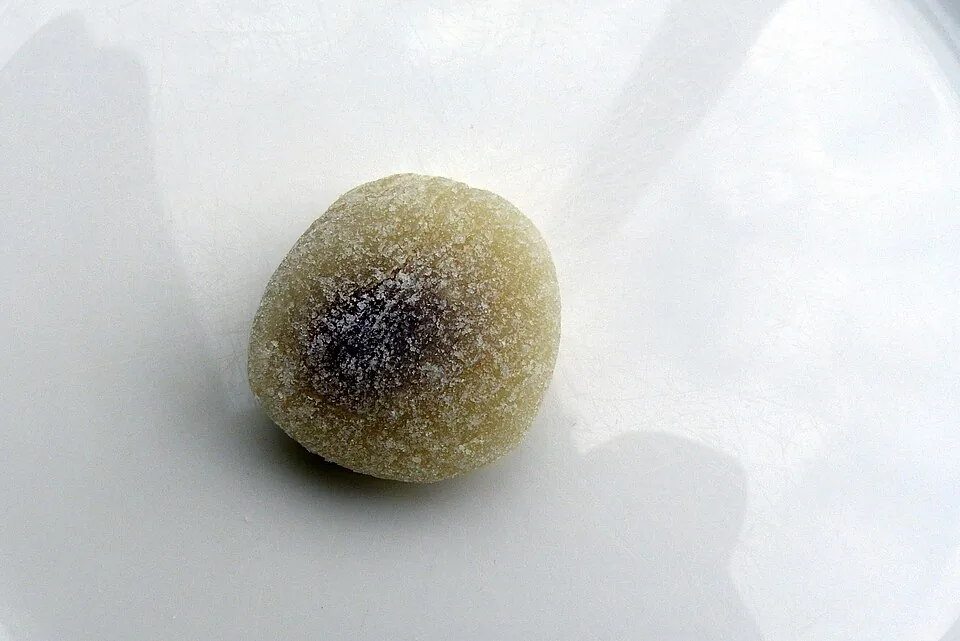
A glutinous rice ball filled with red bean paste and dusted with rice flour so it does not stick, made by hand since the Ming dynasty. Sweet, cheap and universally liked. ¥3-5 each.
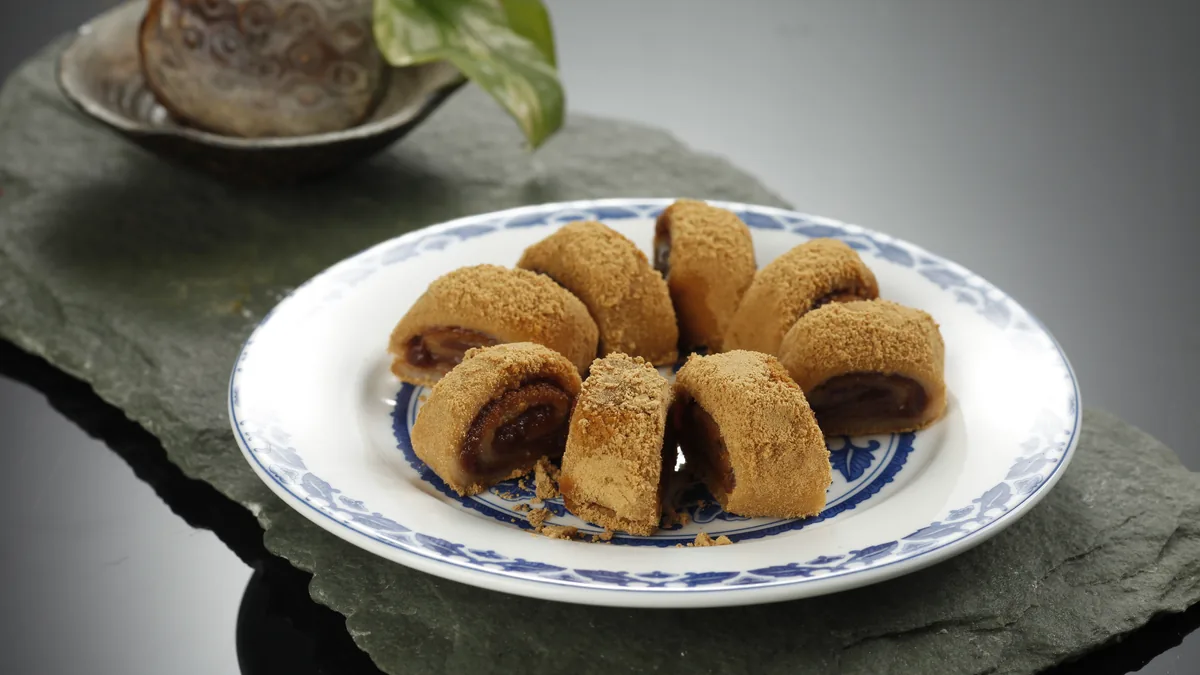
11. 驴打滚 — Ludagun
“Rolling donkey” — glutinous rice rolled around red bean paste and coated in toasted soybean flour. Soft, nutty and not too sweet; the best version in the city is at Niujie. ¥3-6 a piece.
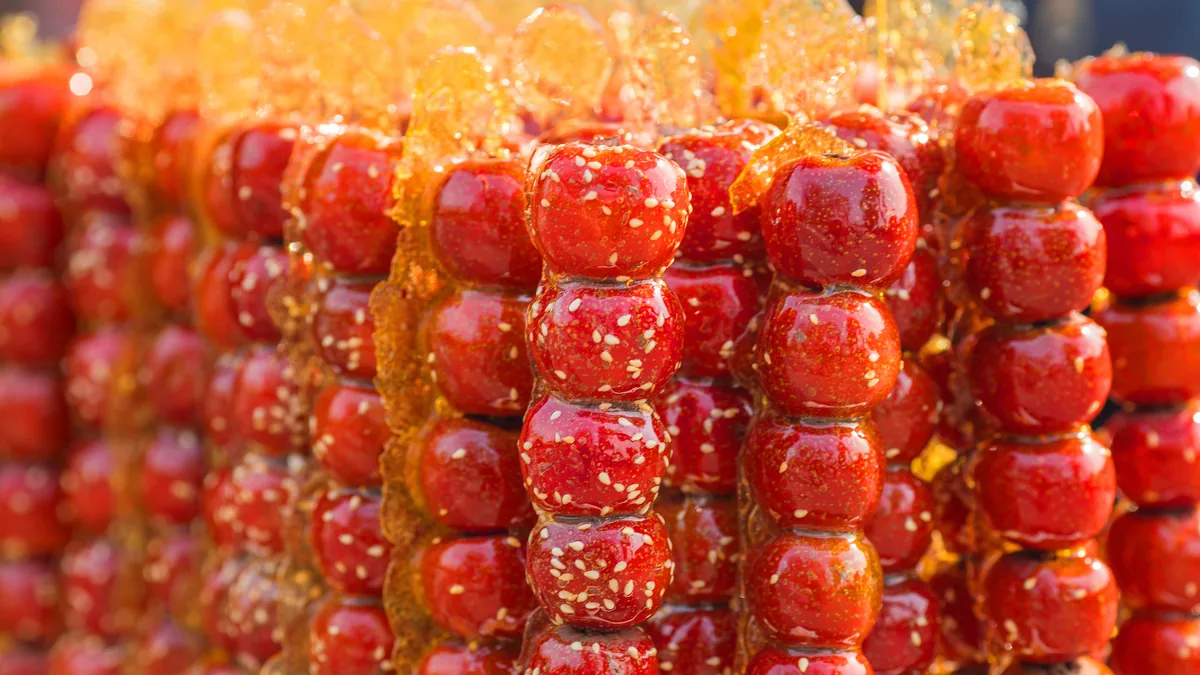
12. 糖葫芦 — Tanghulu
Hawthorn berries on a bamboo skewer under a shell of hard sugar. Sweet, sour, loud when it cracks. ¥5-10 a skewer from any cart in the hutongs; the Wangfujing version costs double and tastes the same.
13. 奶酪 — Nailao
Milk curd set into a silky pudding and served cold with almond or walnut — the traditional version of the milk tea the city now drinks by the litre. ¥15-20 at Nailao Wei on Gulou East Street.
Peking duck, done properly
Peking duck has been in Beijing’s kitchens since the Yuan dynasty (1271-1368) and was refined through the Ming and Qing. The two methods that survive are the closed oven (焖炉, the duck sealed in with sorghum stalks and roasted in its own fat for about 30 minutes) and the hung oven (挂炉, the duck hung over jujube wood for about 25 minutes). Bianyifang, founded in 1416, is the oldest restaurant in the world still doing the first; Quanjude, founded in 1864, made the second famous.
How to eat it in six steps
- Skin first, with sugar. The first plate is skin only, cut into rectangles, dipped in white sugar. This is the imperial way and the reason the skin is the prize.
- Take a pancake. 春饼 are paper-thin, about 15cm across, kept warm in a bamboo steamer.
- Spread the sauce thin. 甜面酱 — sweet fermented wheat paste, sold abroad as hoisin — goes on with the back of a spoon. A little is plenty.
- Add scallion and cucumber. Thin strips of both, for crunch.
- Add two or three slices of meat with skin attached.
- Roll, fold the bottom, eat with your hands. Plan on eight to ten pancakes per person.
The seven restaurants worth booking
| Restaurant | Since | Style | Whole duck |
|---|---|---|---|
| 全聚德 Quanjude (Qianmen flagship) | 1864 | Hung oven, the classic experience | ¥300-500 |
| 便宜坊 Bianyifang (Dongdan) | 1416 | Closed oven, locals’ pick for authenticity | ¥200-400 |
| 大董 Da Dong (Tuanjiehu) | 1985 | Modern, leaner duck, refined plating | ¥400-800 |
| 鸭缘 Duck de Chine (Sanlitun) | — | Courtyard setting, excellent bird | ¥300-500 |
| 京雅堂 Jing Yaa Tang | — | Most photogenic room in the city | ¥400-700 |
| 长城烤鸭店 Duck Chang (Wangfujing) | — | Mid-price, popular with locals | ¥200-350 |
| 京尊烤鸭店 Jingzun (Chaoyang) | — | No English, no decor, best value | ¥150-250 |
How to spot a tourist trap
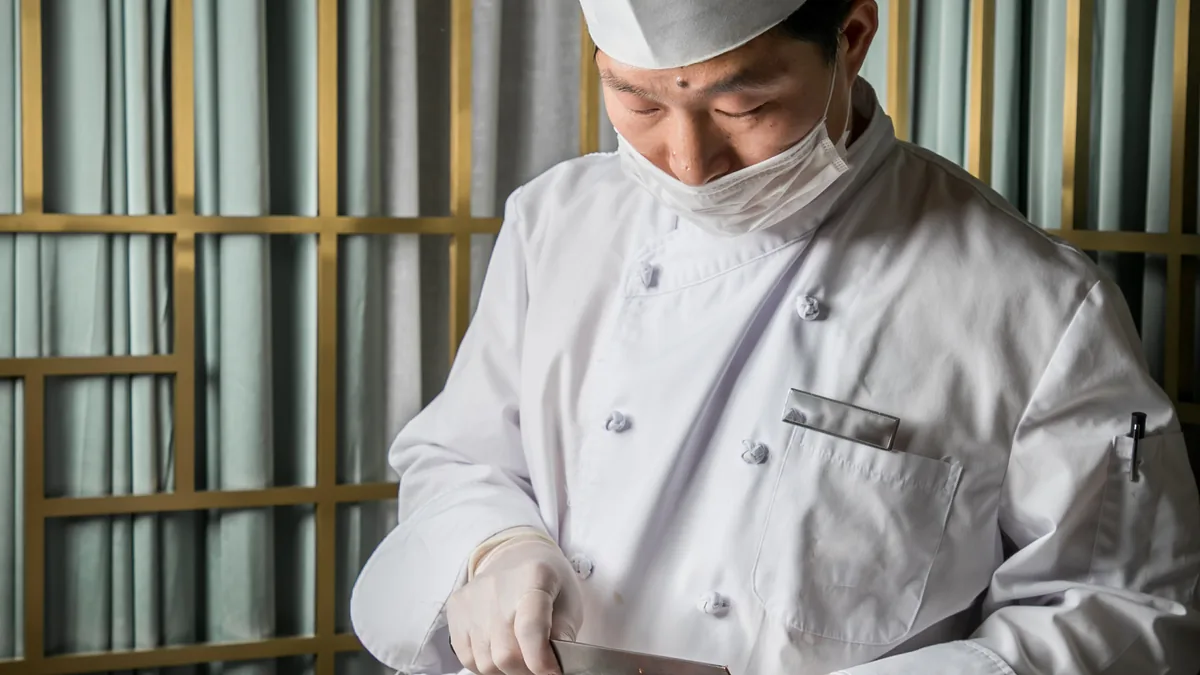
Five tells: photos of the duck on a multilingual menu; staff pulling you in from the street; the duck priced “per half” (no Beijing restaurant sells half a duck); staged “traditional” décor; and an empty room at 19:00. The reliable counter-signals are a busy room of Chinese families, carving done at the table by a uniformed chef, and a 45-60 minute wait after ordering — a duck that arrives in ten minutes was cooked yesterday.
When to book, and when to come
Duck is good year-round, best from October to November when the new season’s birds are fattest, and at Lunar New Year when banquet bookings spike. Avoid the 1-3 May and 1-7 October national holidays: the rooms are full, the ducks are rushed and prices climb. Book one to two days ahead for dinner, ask your hotel concierge if the phone is a problem, and expect a 45-60 minute wait after ordering.
Breakfast is the best meal in Beijing
Between 6am and 9am the city eats better than at any other hour, and it costs about ¥20. The pattern is a starch, a fried thing and a bowl of something fermented: 豆汁儿 with 焦圈 and pickled mustard greens; 炒肝 with 包子; soy milk with 油条; 煎饼 griddled to order on the pavement.
Go to 护国寺小吃 (Huguosi Snacks), 93 Huguosi Street in Xicheng — a canteen-style counter where you point at what you want and pay at the till. It is the single easiest place for a foreigner to eat a full traditional Beijing breakfast, and it opens early enough that you will be surrounded by people who have eaten there for thirty years. Go before 9am; by 10 the trays are empty and the room is being mopped.
Where to eat: six neighbourhoods
| Area | What it is good for | Getting there |
|---|---|---|
| 前门 / 大栅栏 Qianmen | Duck institutions, 褡裢火烧, old-shop snacks | Line 2 Qianmen |
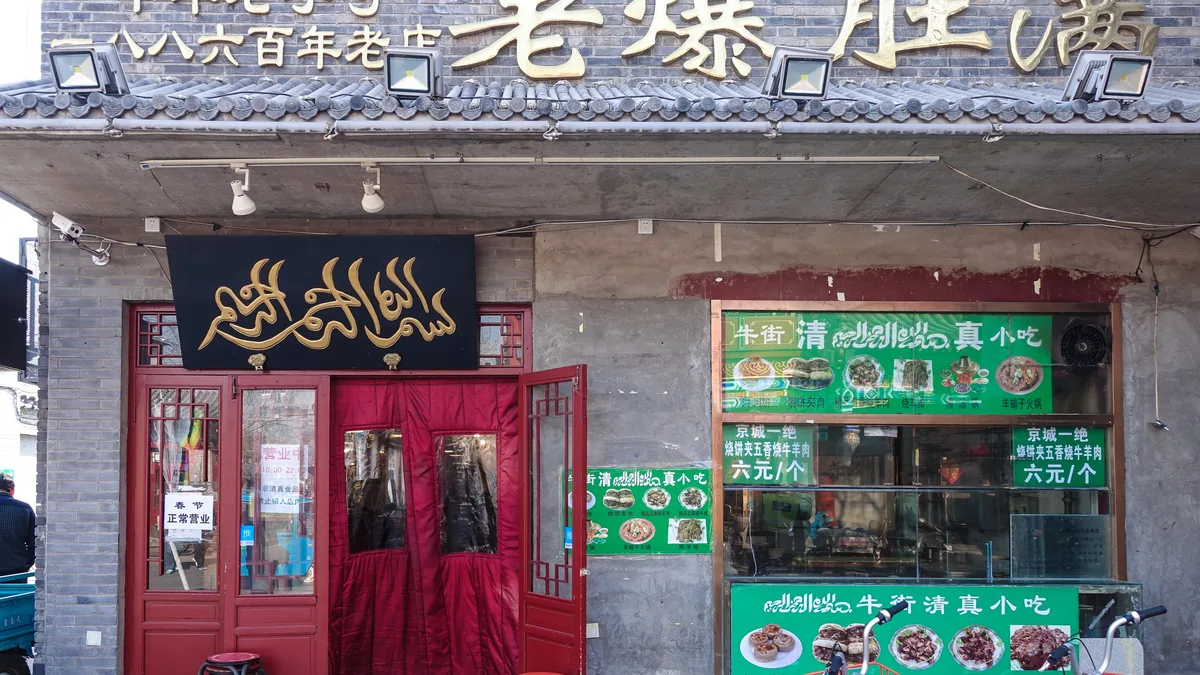
| 牛街 Niujie | The Muslim quarter — beef, lamb, 驴打滚, 艾窝窝 | Line 4 Niujie |
| 簋街 Guijie (Ghost Street) | Late-night 麻辣小龙虾 and hotpot, open until 4am | Line 5 Beixinqiao |
| 护国寺 / 新街口 Huguosi | Traditional breakfast and snack canteens | Line 4 Ping’anye Jie |
| 什刹海 / 南锣鼓巷 Shichahai | Hutong snacking, 糖葫芦, tourist-heavy after 11am | Line 8 Shichahai |
| 三里屯 Sanlitun | Modern dining, foreign-card friendly, 3x the price | Line 10 Tuanjiehu |
For anything off the main streets, use Baidu Maps rather than Google Maps — it has an English interface, works in the alleys, and carries opening hours that Google does not.
The old shops, dish by dish
| Dish | Shop | Where |
|---|---|---|
| 豆汁儿 + 焦圈 | 护国寺小吃 Huguosi Snacks | 护国寺街 93号, Xicheng |
| 豆汁儿 (specialist) | 老磁器口豆汁店 | 天坛路, Dongcheng |
| 炒肝 | 炒肝赵记 | 安定门内大街, near Andingmen |
| 炒肝 (alternative) | 天兴居 Tianxingju | 鲜鱼口街, Qianmen |
| 爆肚 | 爆肚冯 Baodu Feng | 安定门内大街 |
| 卤煮 | 小肠陈 Xiao Chang Chen | 南横街, near Caishikou |
| 卤煮 (northern) | 北新桥卤煮老店 | 雍和宫大街, near Yonghegong |
| 褡裢火烧 | 褡裢火烧 (original) | 门框胡同 11号, Qianmen |
| 艾窝窝 / 驴打滚 | 清真白记小吃 | 牛街 Niujie |
| 奶酪 | 奶酪魏 Nailao Wei | 鼓楼东大街, Gulou |
| Hutong duck | 利群 Liqun | 寿长街, courtyard, wood-fired |
The 3-hour hutong food walk
Eight stops, 2.5-3km, ¥120-180 per person. Start at Drum Tower metro (Line 8, exit C), finish at Shichahai (Line 8, exit A2). Weekday late morning is the only sensible window — weekends between 11am and 2pm are two to three times busier.
| Time | Stop | Order | Price |
|---|---|---|---|
| 0:00 | Drum Tower metro, exit C | — | — |
| 0:05 | 护国寺小吃 | 豆汁 + 焦圈 + 辣菜 | ¥15 |
| 0:30 | 炒肝赵记 (Andingmen Nei Dajie) | 炒肝 + 火烧 | ¥15 |
| 0:55 | 爆肚冯 (Andingmen Nei Dajie) | 爆肚 | ¥40 |
| 1:20 | 褡裢火烧 (Qianmen, or 门框胡同 11) | Four pockets | ¥12 |
| 1:50 | 北新桥卤煮老店 (Yonghegong Dajie) | 卤煮 | ¥30 |
| 2:15 | 护国寺小吃 again | 艾窝窝 | ¥8 |
| 2:30 | Any street cart | 糖葫芦 | ¥8 |
| 2:45 | 奶酪魏 (Gulou Dong Dajie) | 奶酪 / 京味奶茶 | ¥18 |
| 3:00 | Shichahai metro, exit A2 | — | — |
Two dishes need a warning before you order them. 豆汁儿 is genuinely sour and most visitors cannot finish a bowl — order one between two, not one each. And 卤煮 is offal in a thick broth; if intestine is not something you enjoy, take the 爆肚 stop instead and spend the time on 褡裢火烧.
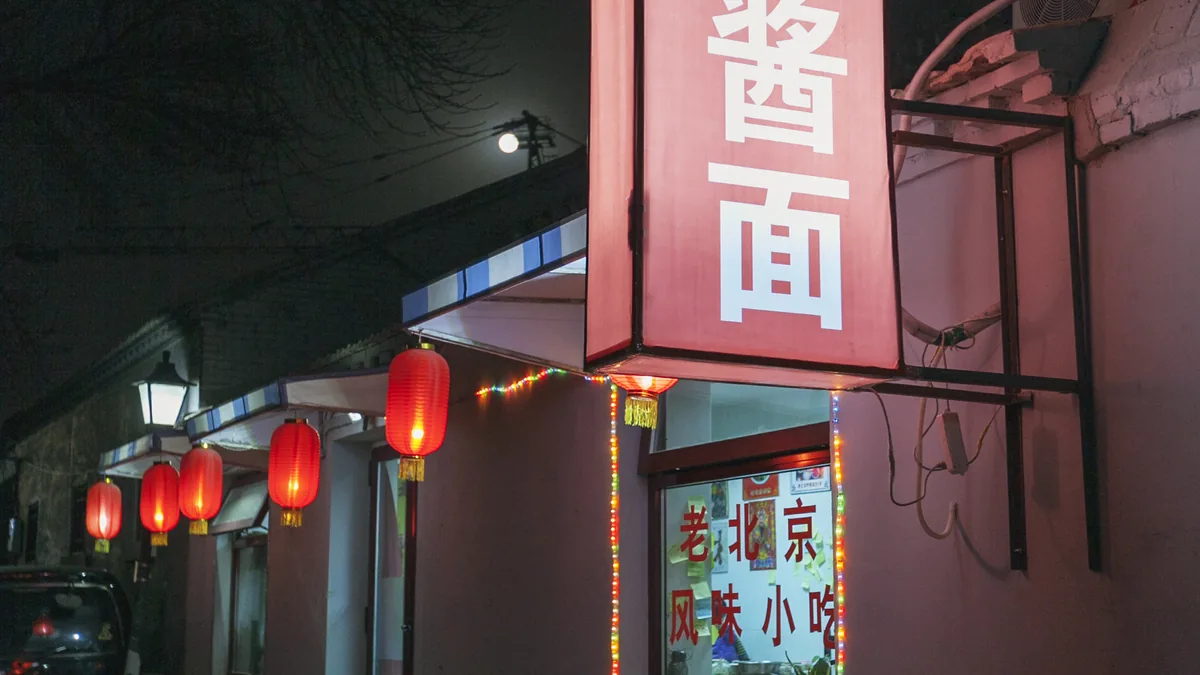
If you only have one evening rather than three hours, walk Yandai Xiejie from the Drum Tower to Shichahai after dark: the lanterns are lit, the snack carts are out, and it is 400m of the exact thing people come to Beijing for.
What a day of eating costs
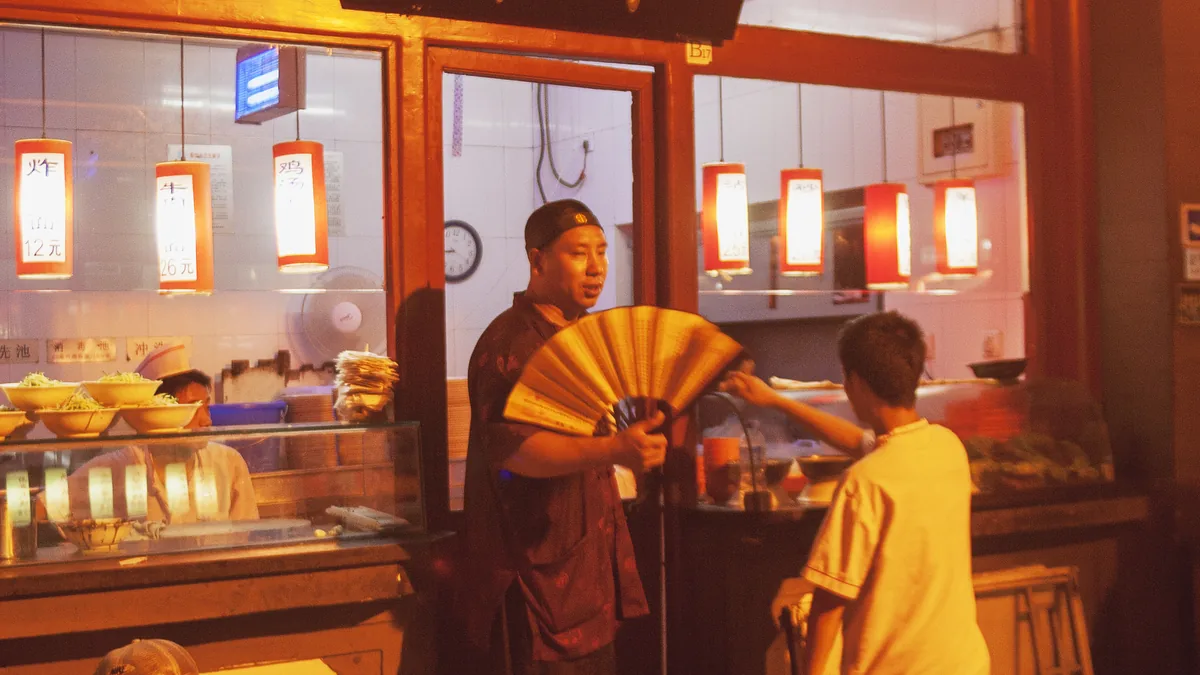
Beijing is one of the cheapest big cities in China to eat well, as long as you eat where the city eats. A realistic day: breakfast ¥10-20 (douzhir, jiaoquan, a bun), lunch ¥25-45 (a bowl of zhajiangmian or luzhu plus a cold dish), afternoon snacks ¥15-25 (tanghulu, aiwowo, a coffee you will regret), dinner ¥60-120 (zhajiangmian and two dishes at a neighbourhood restaurant) — or ¥80-150 if dinner is copper-pot lamb, and ¥150-300 per person if it is Peking duck. Total without duck: ¥110-210. Add the duck and the day lands near ¥300.
The one place prices jump is the modern dining belt around Sanlitun, where the same dishes cost two to three times as much and are rarely better. The other trap is hotel breakfast: ¥120 for a buffet that is worse than the ¥15 canteen on the corner.
Ordering, paying and the tourist version
Almost every restaurant now uses a QR code on the table; photograph the dishes at the next table if the menu defeats you, and say 这个 (zhège, “this one”) while pointing. Useful phrases: 不要辣 (no chilli), 小碗 (small bowl), 买单 (the bill), 打包 (to take away). WeChat Pay and Alipay both accept foreign cards and are accepted everywhere, including carts; cash works but change is a problem for anything above ¥50.
The tourist/non-tourist split in Beijing is unusually easy to read. Authentic: elderly customers, a queue of regulars, plastic stools, no English menu, nothing on the menu above ¥50, food arriving in three minutes. Touristy: an English photo menu, a host waving you inside, a TripAdvisor sticker, and a duck at ¥128 that arrives suspiciously fast. The rule of thumb that has never failed: the plainer the room, the better the food.
What to skip
- Duck within 300m of Wangfujing. The street’s duck restaurants trade on foot traffic, not on cooking.
- “Imperial banquet” set menus. Long, expensive and almost never what the court ate.
- Fake 糖葫芦 with a soft sugar coating. Good tanghulu cracks; soft sugar means it was made hours ago.
- Anything sold as “Beijing hotpot” with a red broth. That is Sichuan; Beijing’s is clear.
For the national picture — how Beijing’s food sits alongside Chengdu, Xi’an and Guangzhou — see our China food by city guide, and for eating safely on the street anywhere in the country, the China street food guide. If you are planning the rest of the trip, the 3-day Beijing itinerary and the Beijing hutong history guide cover what to do between meals, and the Beijing city page covers where to stay. Our ordering food in Chinese guide has the full phrase list.
Plan your trip — verified tools
These free tools are built on real, monthly-verified data and help you skip the trial-and-error phase of China trip planning:
- China Budget Calculator — Real 2026 prices for 5 days in Beijing, Shanghai, Guangzhou, Chengdu, Xi’an, or Hangzhou. Budget / mid-range / comfort tiers, broken down line by line.
- China OTA Comparison 2026 — Trip.com vs Booking.com vs Agoda vs Klook across 5 booking types. Inventory, pricing, foreign card support, English service, per-OTA verdict.
Verified November 2026 by the TravelHubChina editorial team. We re-check prices and policy details monthly so the data doesn’t drift.
Sources
- [1] Beijing Municipal Bureau of Culture and Tourism — Food · Beijing Municipal Bureau of Culture and Tourism · Nov 14, 2026
- [2] Quanjude — History of Peking Duck · quanjude.com.cn · Nov 14, 2026
- [3] Da Dong Roast Duck — Official · dadongdadong.com · Nov 14, 2026
- [4] China Highlights — Beijing Food Guide · China Highlights · Nov 14, 2026
- [5] The Beijinger — Hutong Food Guide · The Beijinger · Nov 14, 2026
FAQ
-
What food is Beijing actually famous for?
Peking duck (北京烤鸭) is the headline, but the everyday cuisine is built on lamb, wheat and offal: copper-pot lamb hotpot (涮羊肉), zhajiangmian noodles (炸酱面), quick-seared tripe (爆肚), offal stew (卤煮) and liver in starch sauce (炒肝). Beijing cooking is salty, savoury and faintly sour — fermented bean pastes, vinegar and garlic do the work that chilli does in Sichuan. -
How much does a Peking duck meal cost in 2026?
¥200-400 for a whole duck that serves 2-3 people at an ordinary good restaurant, ¥300-500 at the traditional institutions (Quanjude, Bianyifang), ¥400-800 at the modern fine-dining names (Da Dong, Duck de Chine). Budget ¥150-300 per person once sides and drinks are added. The duck is always sold whole — there is no half-duck option in Beijing. -
Do I need to book Peking duck in advance?
Yes for dinner, especially Friday and Saturday. Quanjude and Da Dong take bookings one to two days ahead by phone, through your hotel concierge, or in their WeChat mini-program. Lunch walk-ins often work. The duck roasts for 45-60 minutes after you order, so the kitchen needs notice either way. -
Is Beijing street food safe for foreigners?
Yes. The offal dishes are simmered for hours at high heat, which removes most risk; the real variable is turnover. Eat where there is a queue and food is being cooked in front of you, skip anything pre-plated and sitting out, and avoid cut fruit from carts. Carry oral rehydration salts and loperamide (¥10-20 at any pharmacy) as insurance. -
Can vegetarians eat well in Beijing?
With effort. The signature dishes are almost all meat or offal. Reliable vegetarian options: 艾窝窝 (rice cakes), 驴打滚 (glutinous rice rolls), 糖葫芦 (candied hawthorn), 烤红薯 (roasted sweet potato) and most 包子 (steamed buns) — plus Buddhist restaurants, which are fully vegetarian. Say 素 (sù) and watch for meat stock in vegetable dishes. -
What is the one Beijing food most foreigners skip — and should they?
豆汁儿 (dòuzhīr), a fermented mung bean drink served hot at breakfast. It tastes sour and slightly fizzy, and most visitors dislike the first mouthful. Try one bowl at Huguosi Snacks for ¥3-5 with 焦圈 (fried dough rings) — the point is the experience, not the flavour. -
How do I order and pay without speaking Chinese?
Menus are usually a QR code on the table, often with a picture menu behind the counter. Point at what the next table has, or photograph it and show the staff. Pay with WeChat Pay or Alipay linked to a foreign card; cash is accepted but small stalls rarely have change for a ¥100 note.
Related guides
- Food & Dietary
Chengdu Food Guide: 20 Dishes to Eat
Chengdu food guide: 20 dishes with 2026 prices, where to eat each one and how to order — mapo tofu, hotpot, rabbit head and the snacks locals queue for.
12min read
- Food & Dietary
Hangzhou Food Guide: 10 Dishes to Eat
Hangzhou food guide: 10 dishes, 2026 prices and where to eat — Dongpo pork, West Lake vinegar fish, Longjing shrimp, beggar's chicken and Kuiyuanguan noodles.
11min read
- Food & Dietary
Guangzhou Food Guide: 19 Dishes to Eat
Guangzhou food guide: 19 dishes with 2026 prices and where to eat each — dim sum at yum cha, roast goose, white cut chicken, wonton noodles and claypot rice.
12min read
- Food & Dietary
Street Food in China: 20 Safe Dishes for First-Timers
20 street foods from ¥0.50-3 each, plus the four food-safety rules that stop first-timers getting stomach trouble.
10min read
- Food & Dietary
How to Eat Well in China for Under ¥50 a Day (2026)
Verified 2026 budget food playbook: 苍蝇馆子, 沙县小吃, university canteens, and the ¥30-50/day 3-meal plan across 7 cities.
9min read
- Food & Dietary
China Food by City: 8 Cities, 24 Iconic Dishes
Eight foodie cities and three signature dishes each: Peking duck in Beijing, xiaolongbao in Shanghai, mapo tofu in Chengdu, dim sum in Guangzhou.
14min read

