
Guangzhou Food Guide: 19 Dishes to Eat
Guangzhou food guide: 19 dishes with 2026 prices and where to eat each — dim sum at yum cha, roast goose, white cut chicken, wonton noodles and claypot rice.
Guangzhou is the origin point of Cantonese cooking — one of China’s eight great regional traditions and the one that travelled furthest. It is also the mildest: no chilli, very little heat, and a kitchen philosophy built on freshness, steam and soy. If Sichuan is a cuisine of transformation, Cantonese is a cuisine of restraint, and that makes it the easiest entry point for a first-time visitor to China.
The city’s food splits into two halves. Mornings belong to yum cha — tea and dim sum, four hours of it if you let it run. The rest of the day belongs to roast meats, rice in claypots and bowls of noodles, eaten fast at formica tables with a plate of chilli oil you barely touch.
This guide covers the nineteen dishes worth your time, what each costs in 2026, and where to eat it. Prices are for ordinary local restaurants and teahouses, not hotel dining rooms.
The 12 dim sum dishes that define yum cha
Order three or four baskets per person, plus a pot of tea. That is the whole method — the classic phrase for it is 一盅两件, “one pot, two pieces”.
The five dumplings
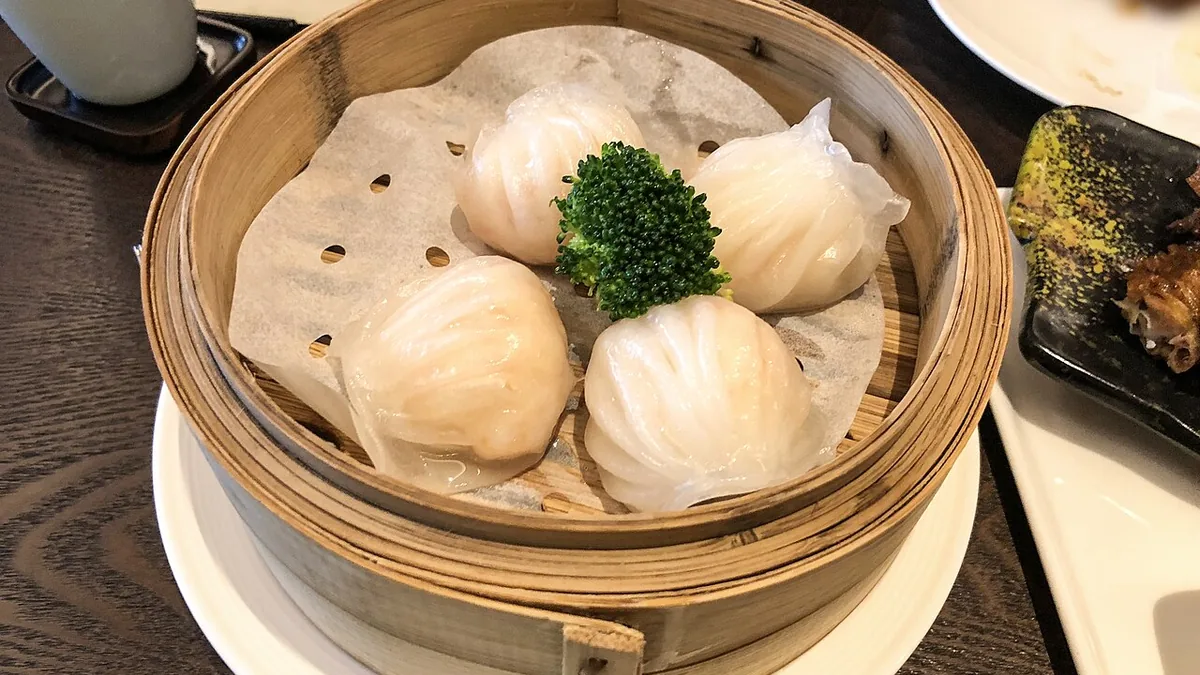
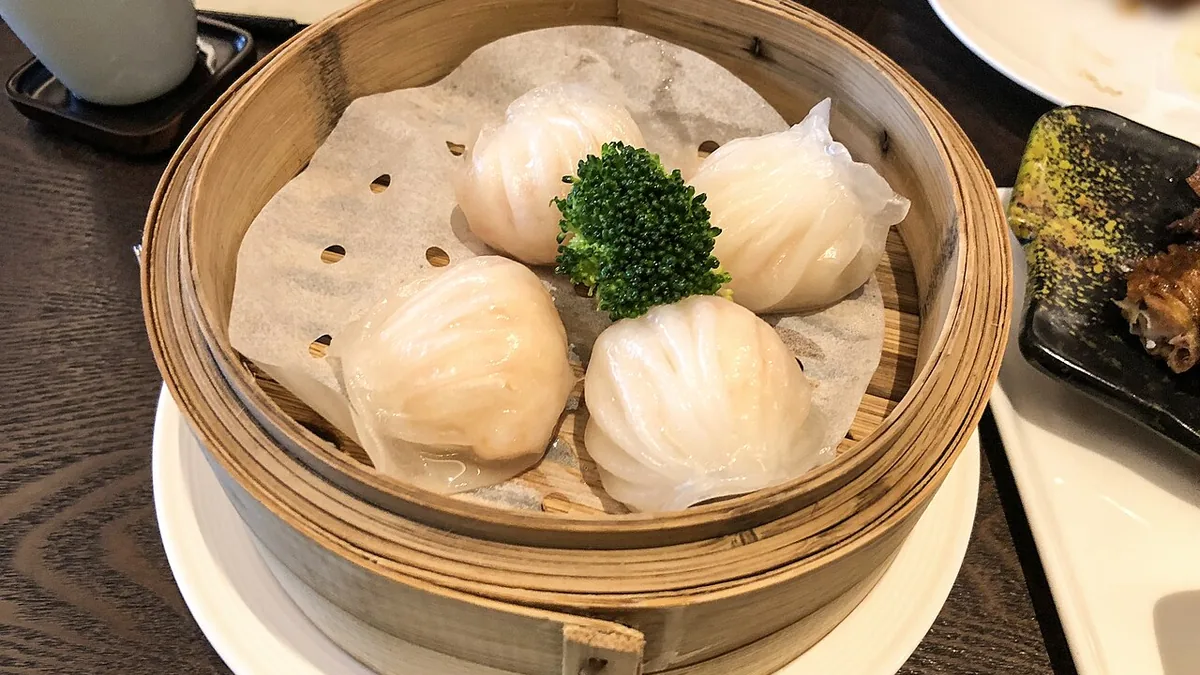
1. 虾饺 Har gow (¥25-40). The test of any kitchen: a translucent wheat-starch wrapper pleated at least ten times, holding whole shrimp, steamed four minutes and no longer. If the wrapper is thick or the shrimp rubbery, leave.
 *
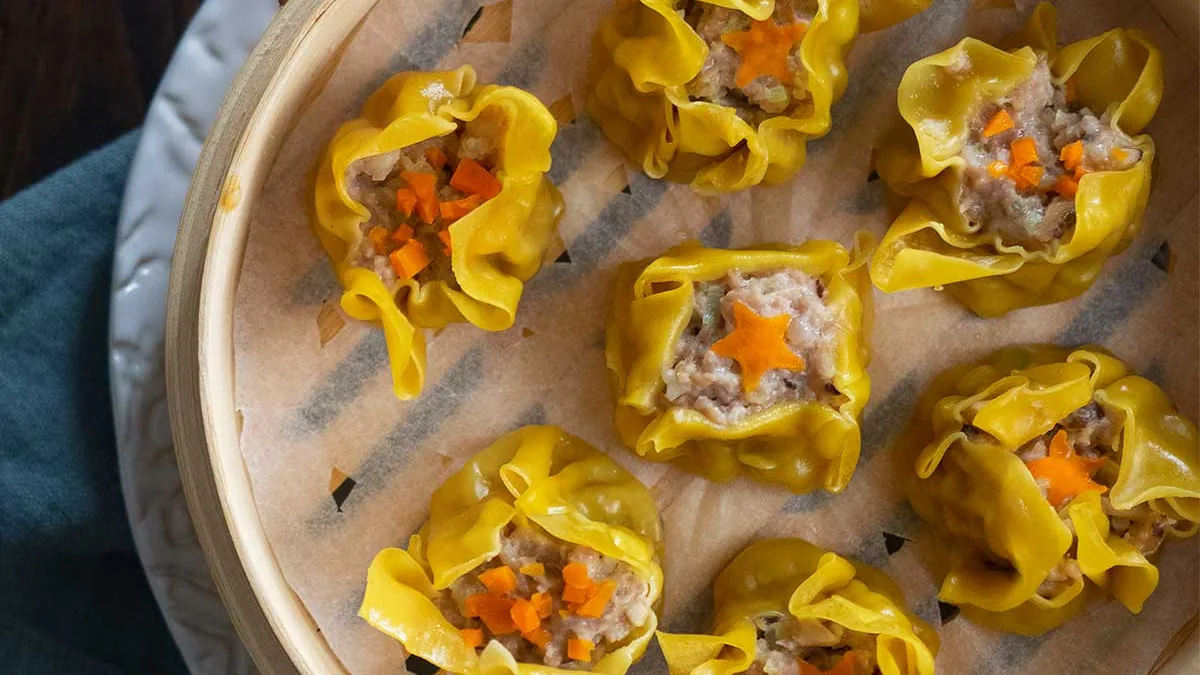
2. 烧卖 Siu mai (¥20-35). Open-topped pork and shrimp dumplings in a yellow wrapper, crowned with a dot of crab roe or a pea. Denser and saltier than har gow, and the one dish children will finish first.
 *
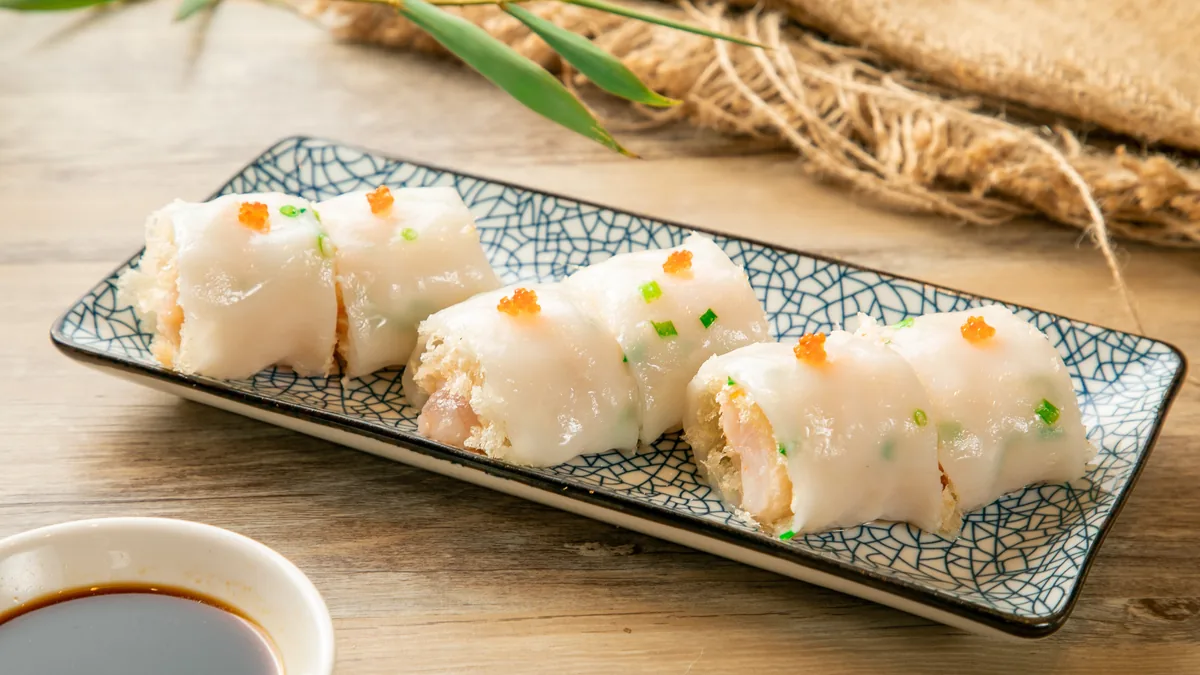
3. 肠粉 Cheung fun (¥25-40). A sheet of steamed rice batter rolled around shrimp, beef or char siu, drizzled at the table with sweetened soy. The plain version — just noodle and soy — is the connoisseur’s order.
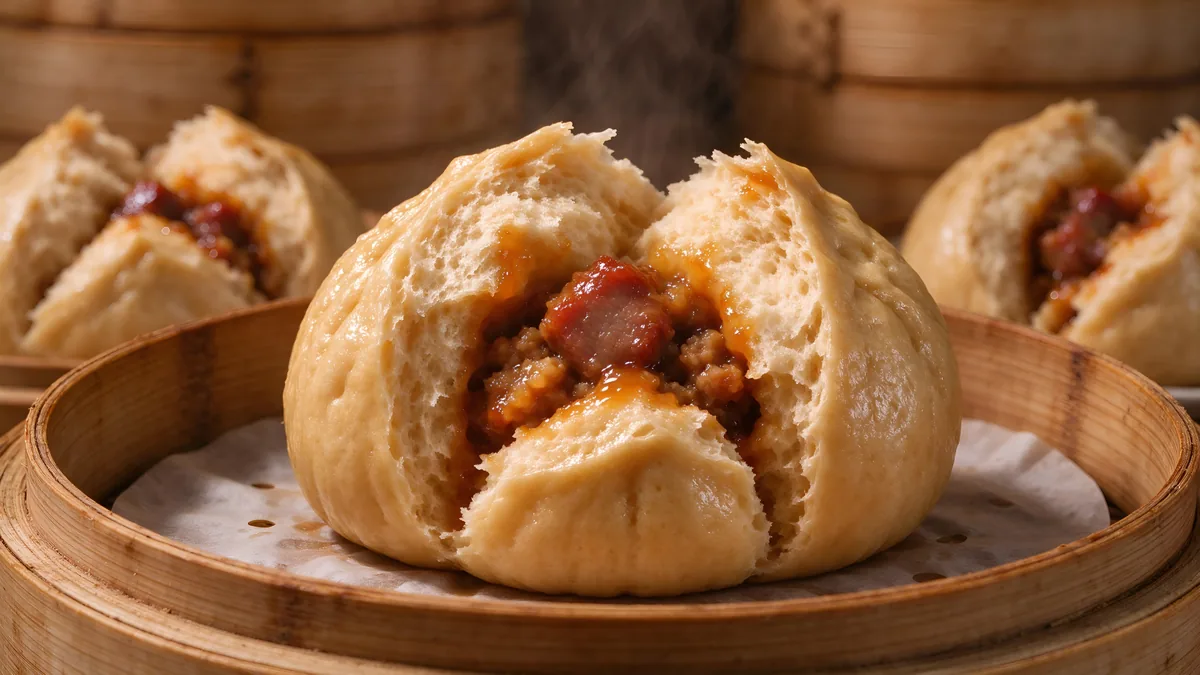
4. 叉烧包 Char siu bao (¥20-30). Steamed white bun, split at the top, filled with sweet barbecue pork in a glossy gravy. The proper version tears open like a flower rather than collapsing.
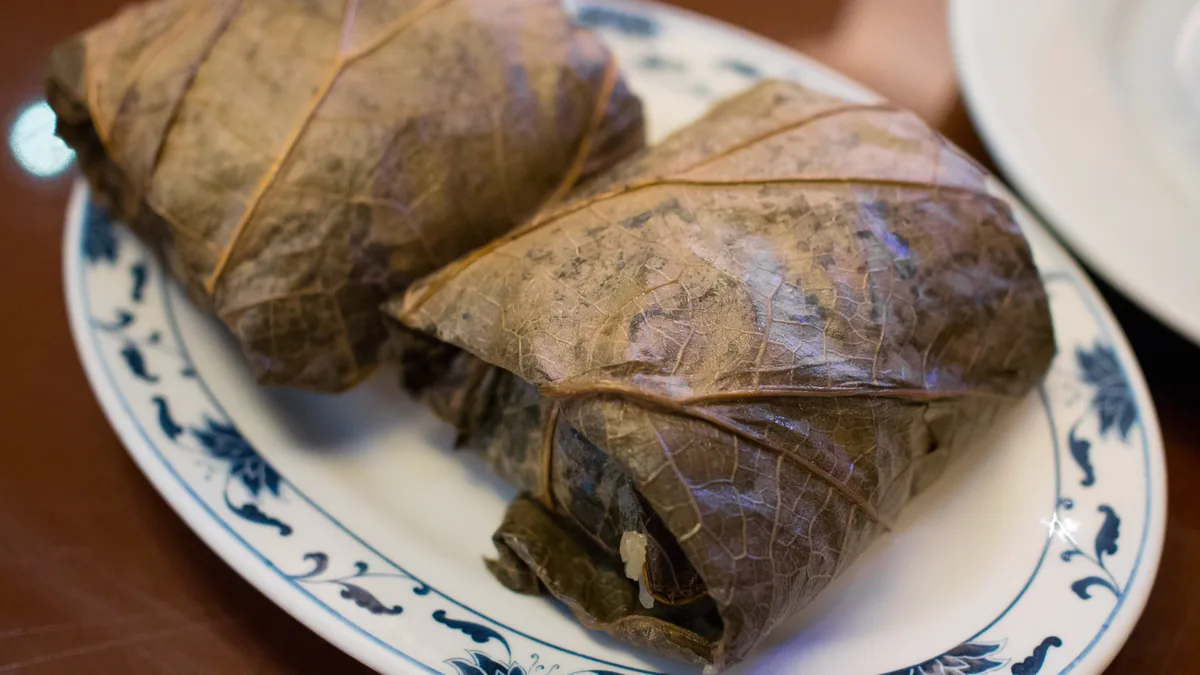
5. 糯米鸡 Lo mai gai (¥25-40). Glutinous rice, chicken, shiitake and salted egg yolk wrapped in a lotus leaf and steamed. It arrives as a parcel; unwrap it fully before eating. One per person is enough — it is the heaviest thing on the table.
 *
The three steamed savouries
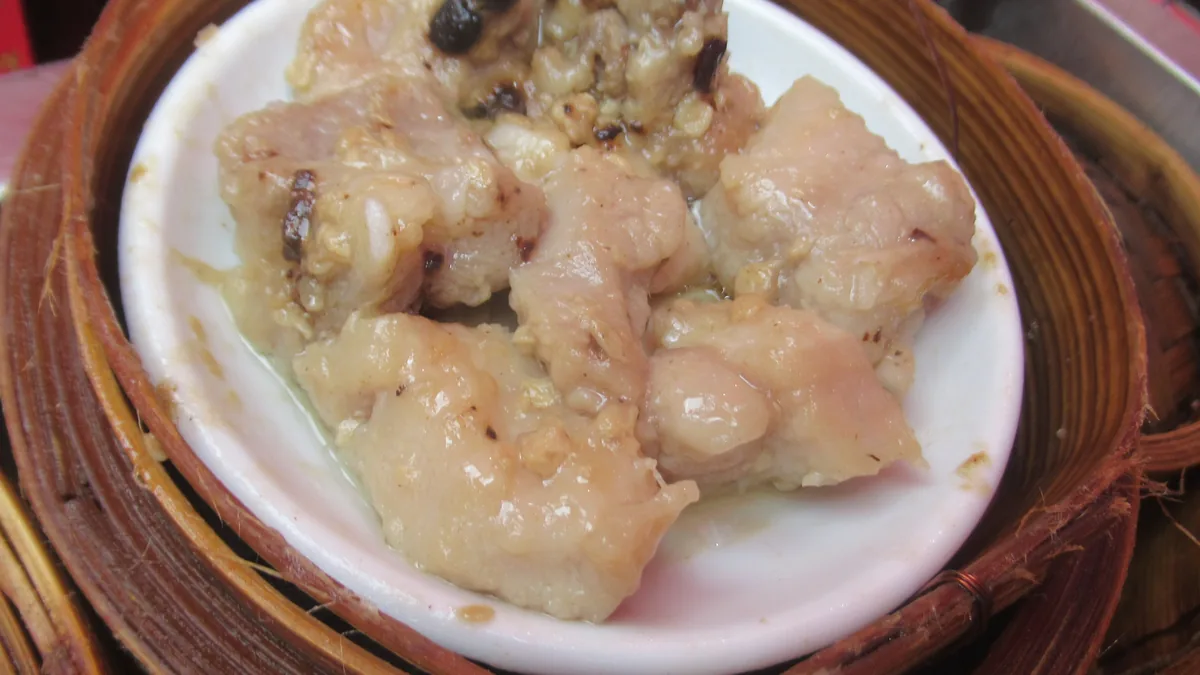
6. 豉汁排骨 Spare ribs with black bean (¥25-40). Chopped pork ribs steamed with fermented black beans, garlic and ginger. The sauce is the point; order rice to finish it.
 *
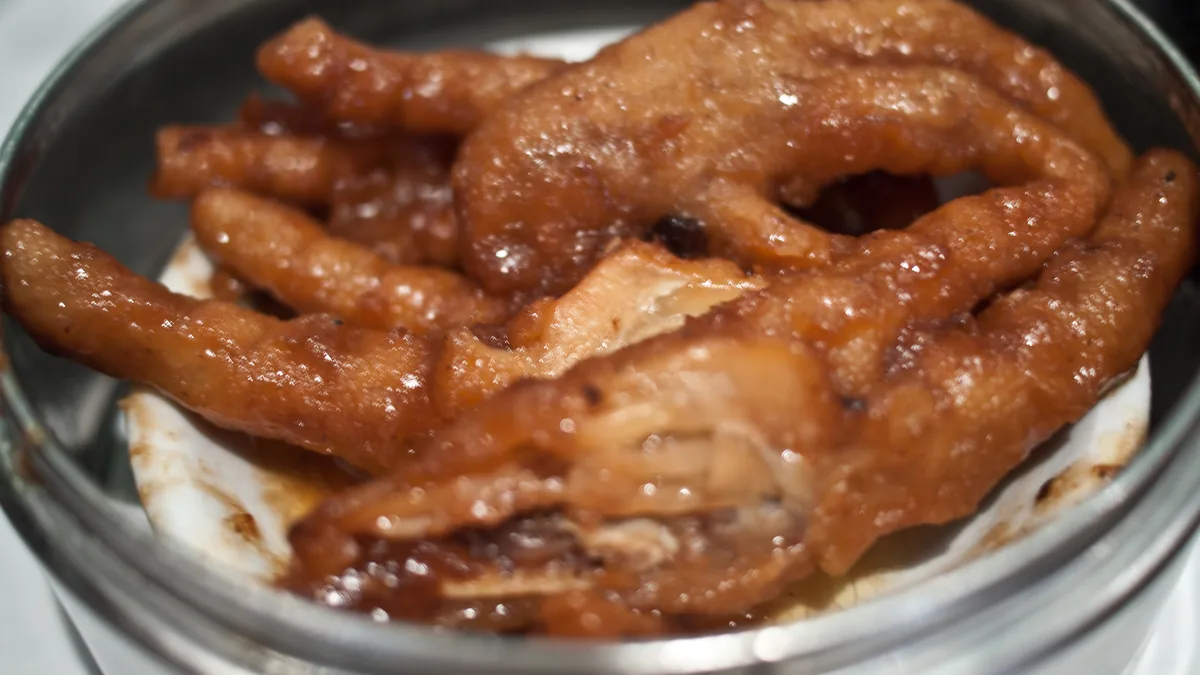
7. 凤爪 Phoenix claws (¥20-30). Chicken feet, deep-fried then braised then steamed until the skin turns to jelly. Mostly cartilage and skin, glazed in sweet bean sauce. Visitors either love them or cannot, and there is no middle position.
 *
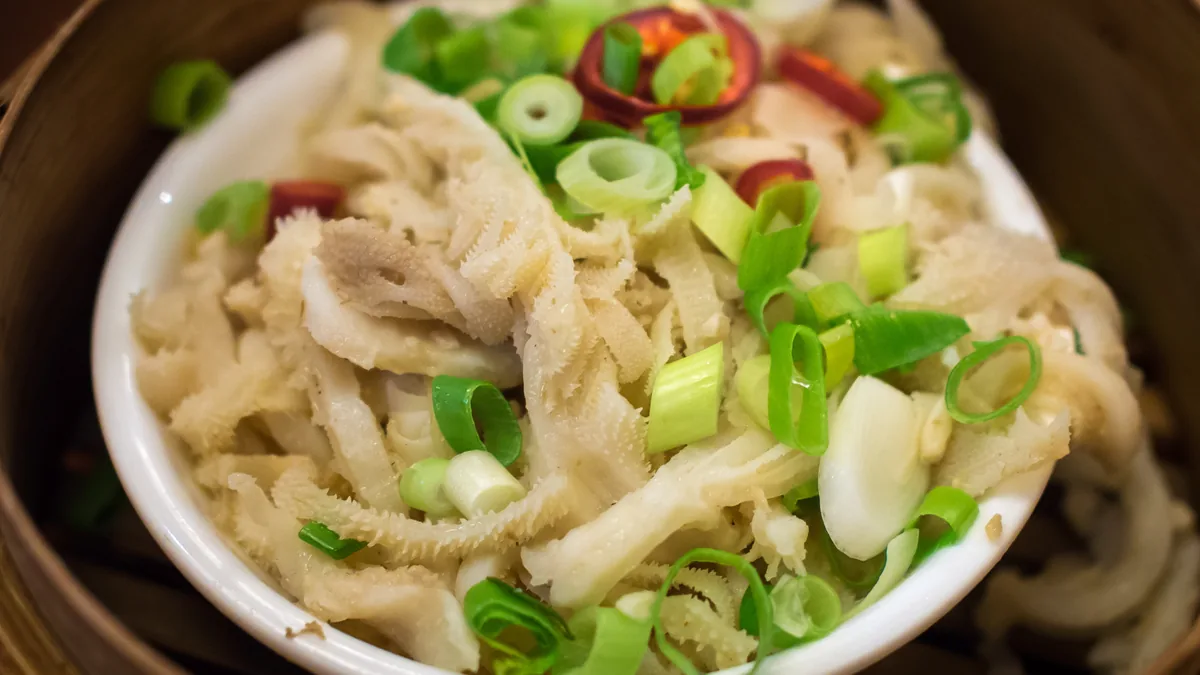
8. 牛肚 Beef tripe (¥25-35). Steamed with ginger and scallion, chewy in a way that is deliberate. The most old-fashioned item on a modern menu, and the one that tells you the kitchen still cooks for locals.
 *
Three sweets and a fried cake
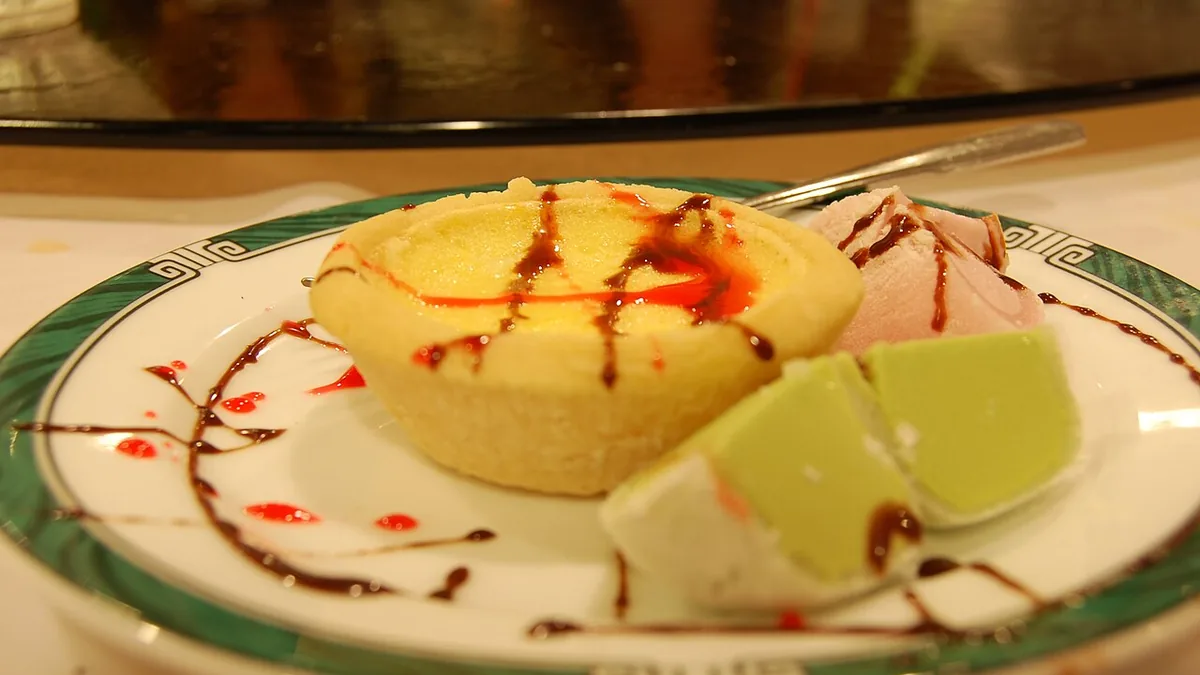
9. 蛋挞 Egg tart (¥20-30 for three). Two schools: flaky puff pastry (the Portuguese line, via Macau) or shortcrust (the Hong Kong line). Both are served warm, and a cold egg tart is a bad egg tart.
 *
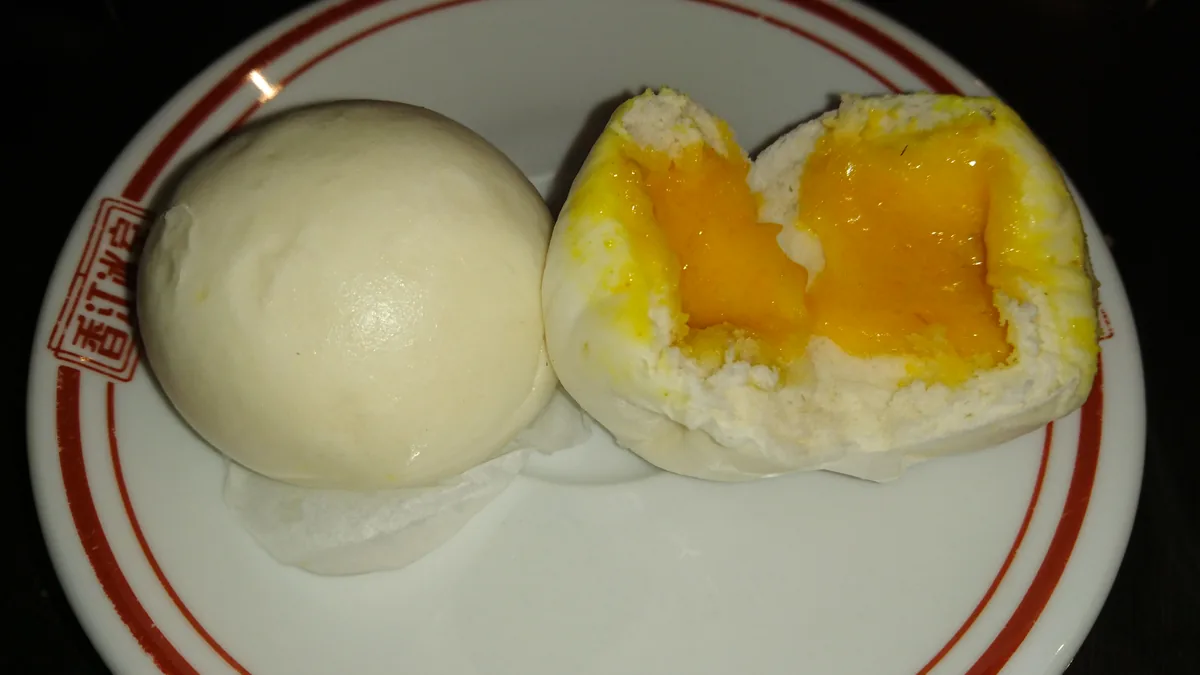
10. 流沙包 Salted egg custard bun (¥20-30 for three). The modern classic: a steamed bun holding molten salted-yolk custard that erupts on the first bite. Eat it over the plate, and give it two minutes — it comes out of the steamer at scalding temperature.
 *
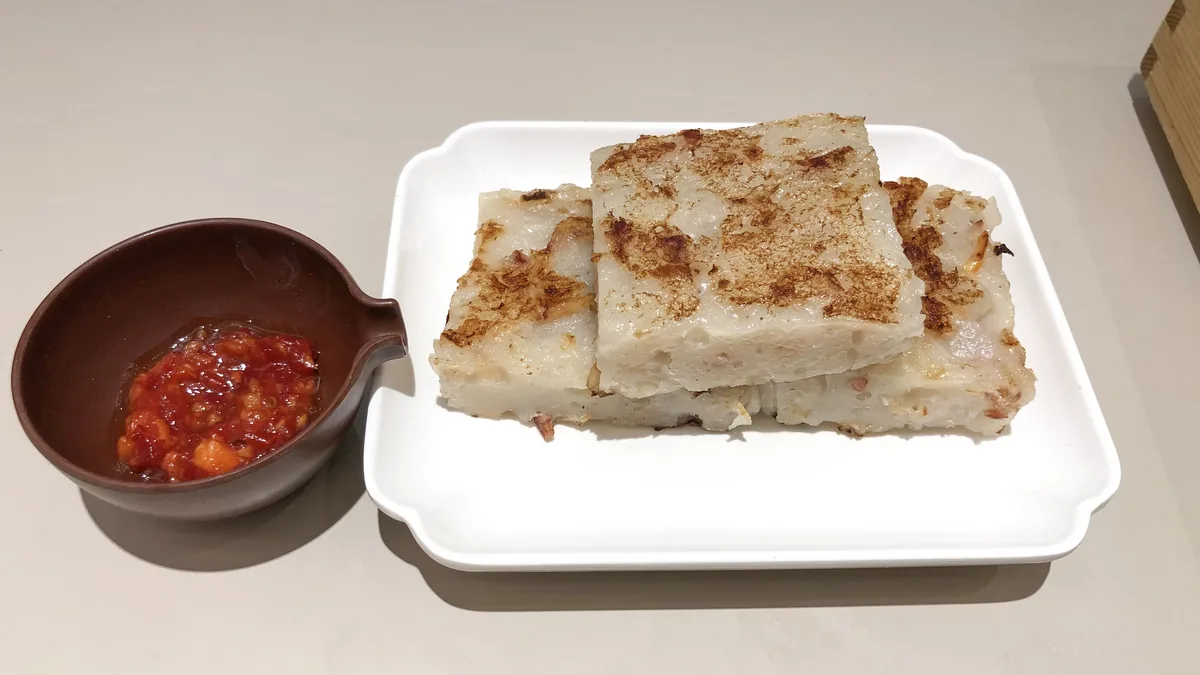
11. 萝卜糕 Turnip cake (¥20-30). Not a sweet, despite where it sits on the menu: daikon and rice flour, pan-fried in slabs until the outside crisps. Savoury, slightly sweet, and the best thing on the table with chilli oil.
 *
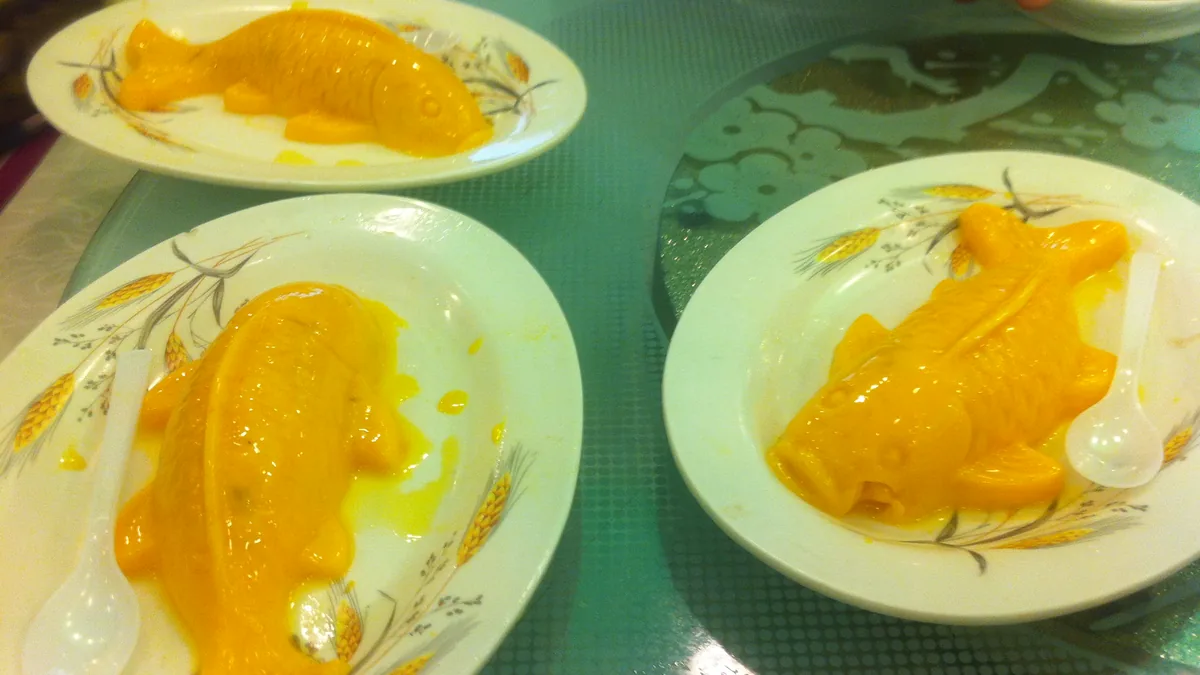
12. 芒果布丁 Mango pudding (¥20-30). Cold, set, usually shaped into a fish or a heart. A Cantonese invention of the 1980s rather than an ancient dish, and the safest order for anyone who finds the rest of the table too adventurous.
 *
Beyond dim sum: roast meats, rice and noodles
Dim sum is breakfast and brunch. The rest of Guangzhou’s menu is a different kitchen: the 烧腊 roast-meat counter hanging in the window, the claypot station, the noodle boiler.
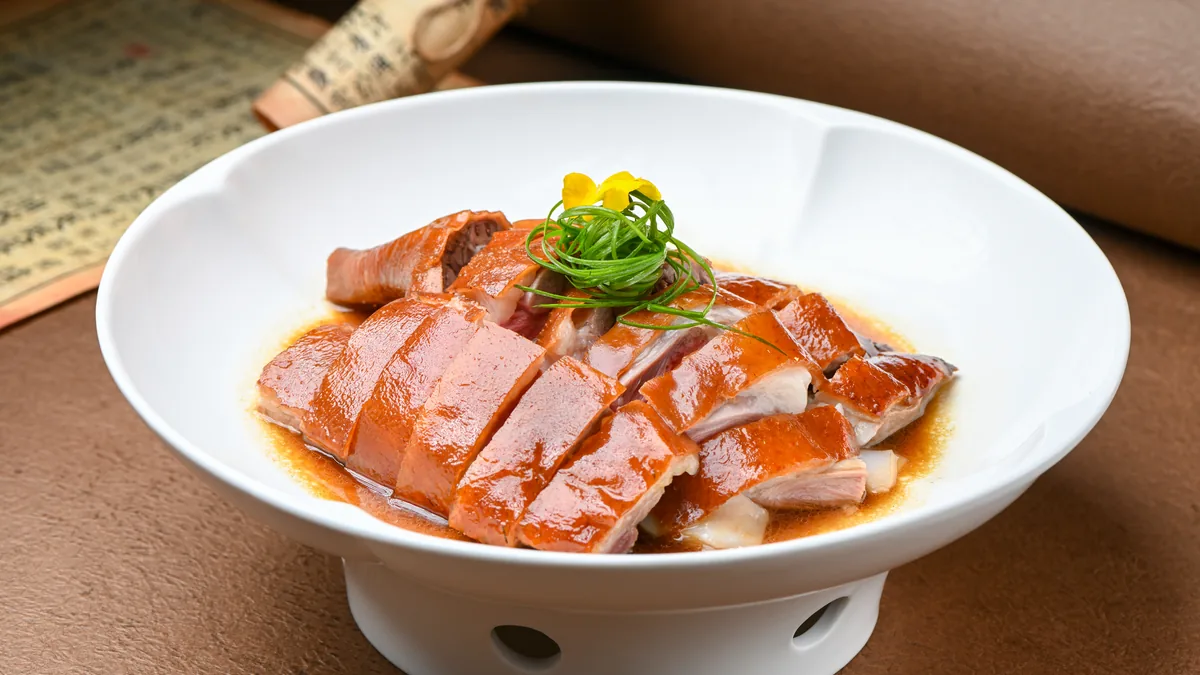
烧鹅 Roast goose
Guangzhou’s signature roast. The bird is air-dried, rubbed inside with five-spice and fermented bean paste, then roasted until the skin lacquers to a dark red. Ordered by weight and chopped through the bone, served with a plum sauce (酸梅酱) that cuts the fat. ¥50-80 for a quarter, ¥100-160 for a half. Ask for 下庄 (lower quarter) if you want the juicier leg end, 上庄 for the breast.
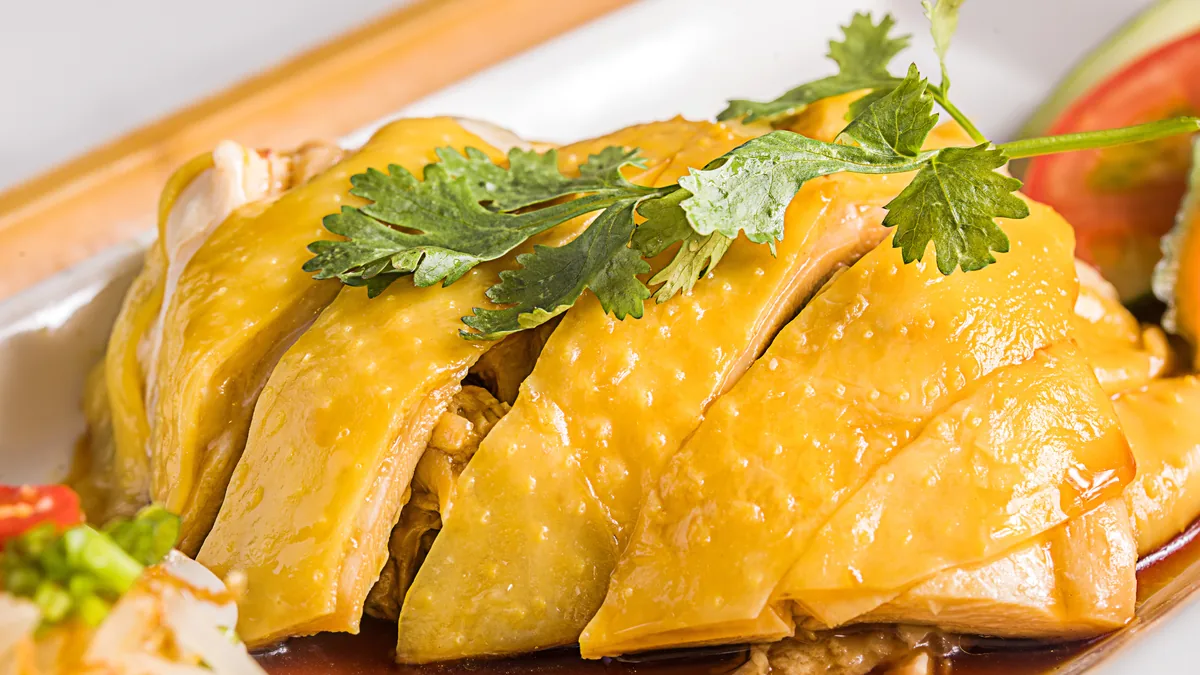
白切鸡 White cut chicken
The most Cantonese dish there is: a whole chicken poached at a bare simmer — never boiled — then plunged into ice water so the skin sets firm and yellow. Chopped through the bone, served at room temperature with ginger-scallion oil and soy. If the meat is cold from the fridge, send it back. ¥60-100 for a half bird.
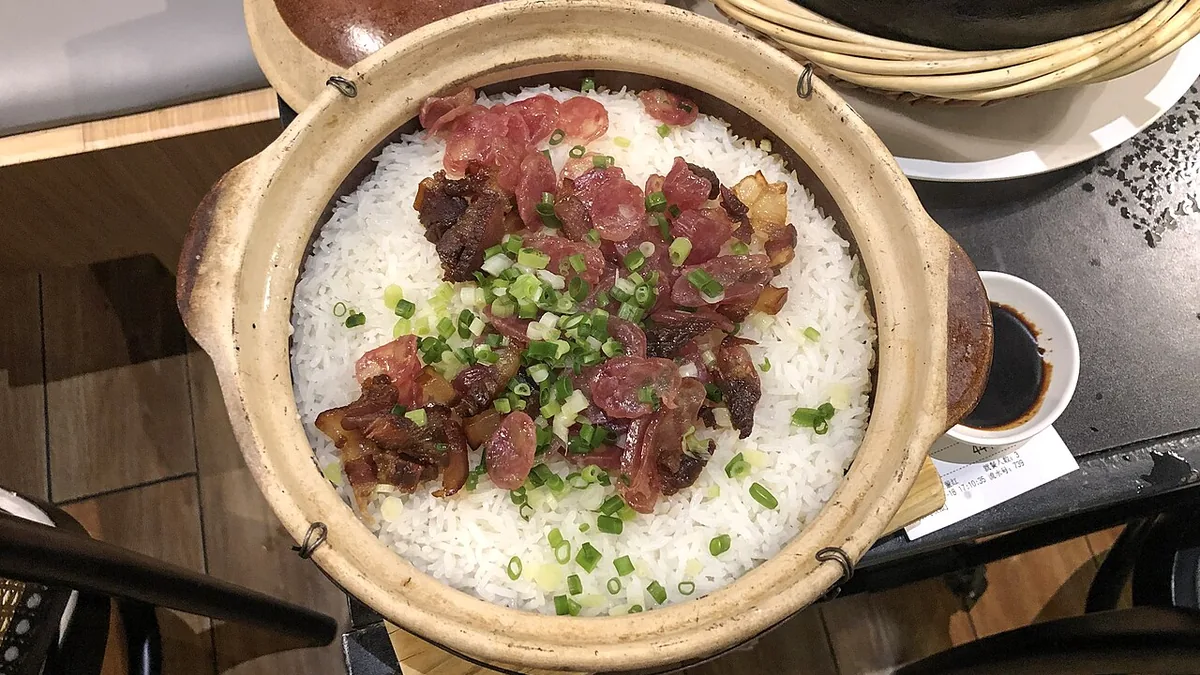
腊味煲仔饭 Claypot rice
Rice cooked to order in a glazed claypot with cured sausage, liver sausage and preserved pork laid on top, so the fat renders down through the grains. The prize is 饭焦, the crisp layer at the bottom — scrape it up. Sweet soy is poured at the table. ¥25-45, and it takes 20 minutes, which is the point.
 *
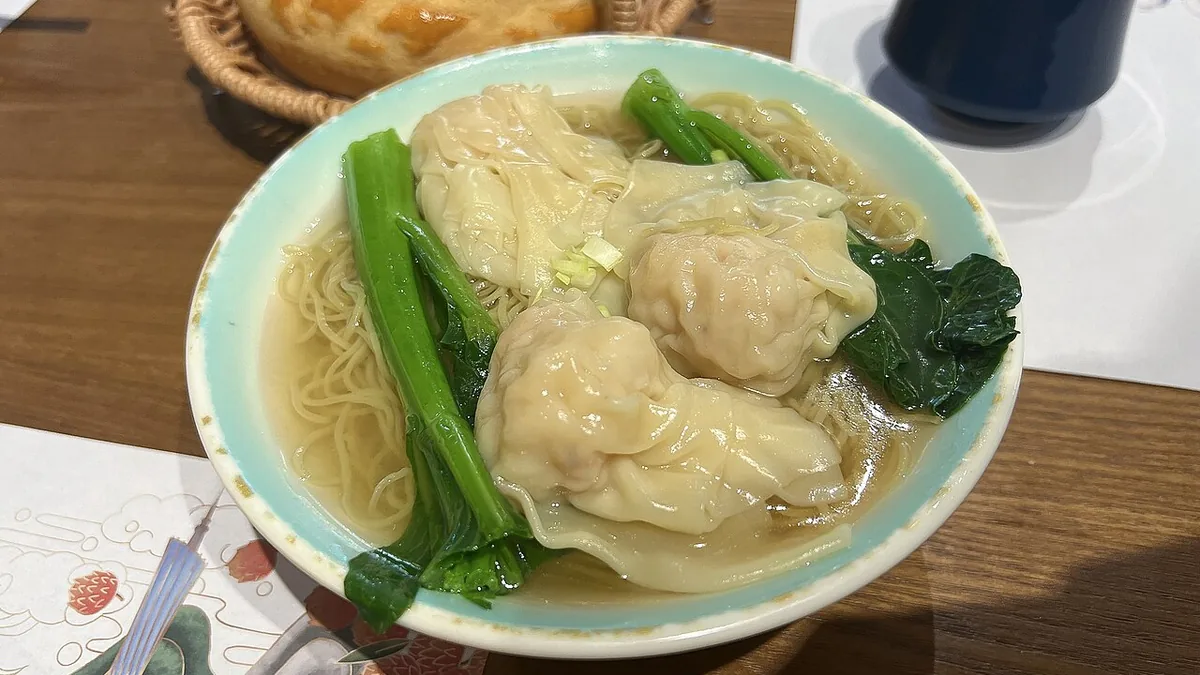
云吞面 Wonton noodles
Thin egg noodles made with a bamboo pole, whole-shrimp wontons, and a clear broth finished with dried flounder for depth. The bowl is deliberately small — it is a snack, not a meal. ¥15-25. Order 细蓉 for the small portion that locals actually eat at 4pm.
 *
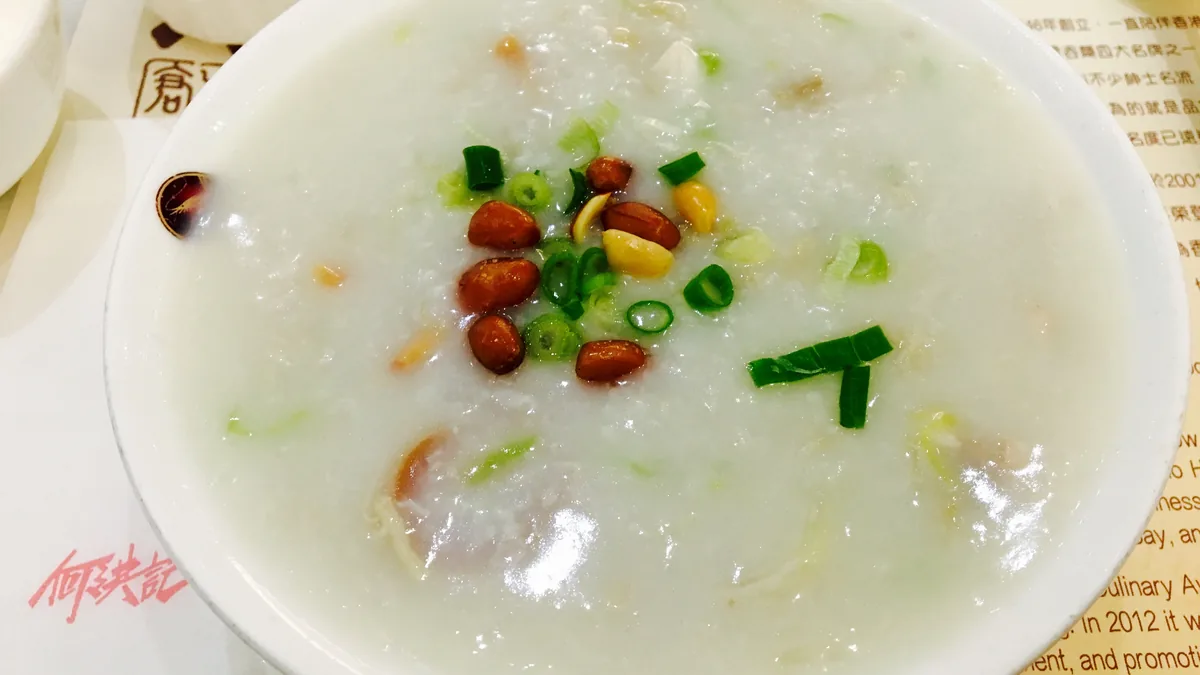
艇仔粥 Boat congee
One of two dishes Guangzhou would riot over if it disappeared. 艇仔粥 came off the Pearl River houseboats: a thin rice congee topped at the last second with fish slices, squid, shredded omelette, peanuts, spring onion and a few pieces of fried dough, so each ingredient keeps its own texture. ¥12-20 a bowl, eaten at breakfast.
 *
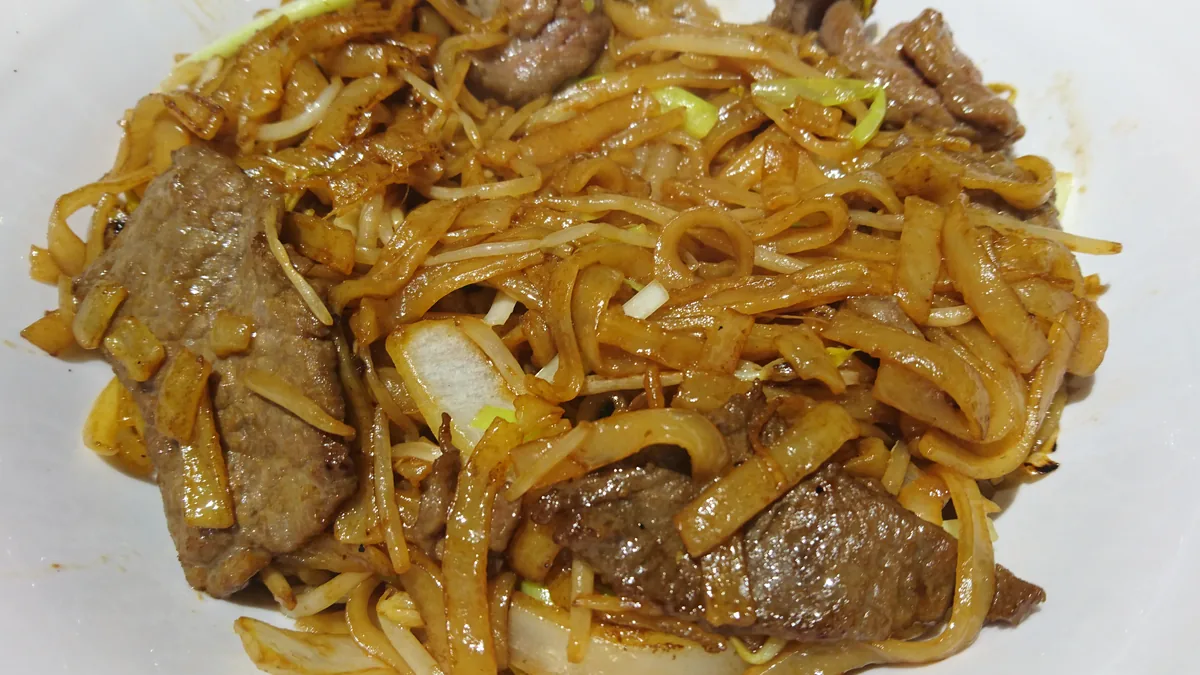
干炒牛河 Dry-fried beef ho fun
The wok test of any Cantonese kitchen — wide rice noodles seared hard enough to char without breaking, with sliced beef and bean sprouts, no sauce. Good versions smell of 镬气 (wok hei); bad ones are grey and oily. ¥25-45.
 *
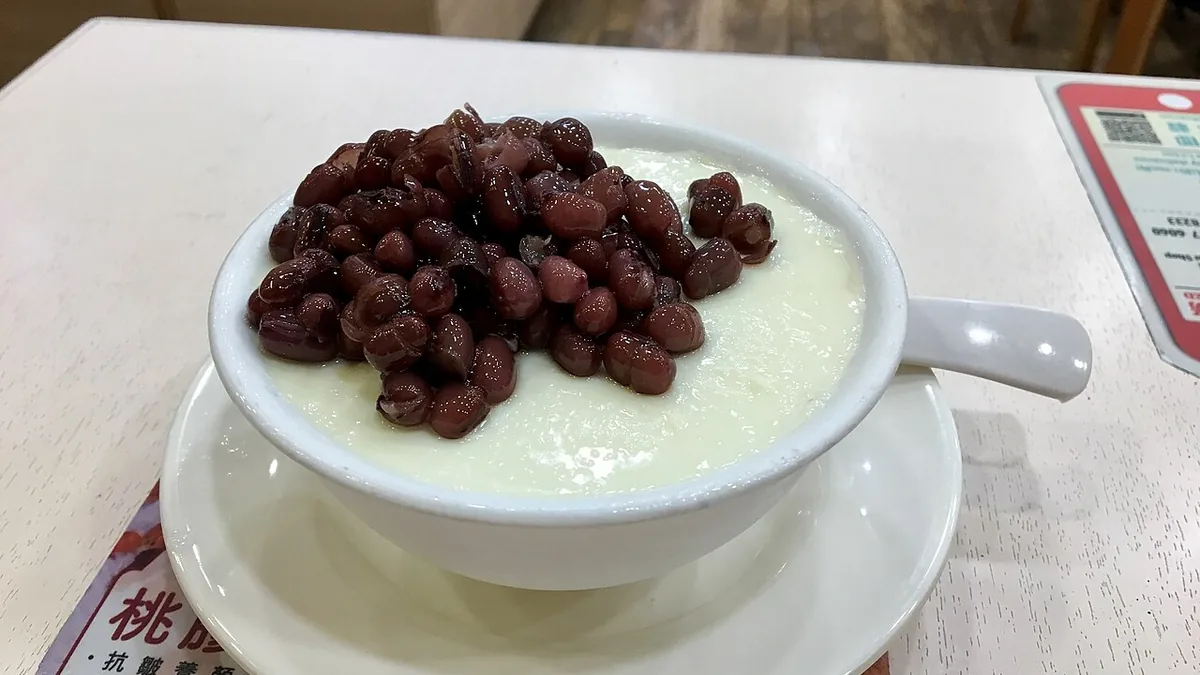
双皮奶 Double-skin milk
A Shunde dessert that spread across the delta: buffalo milk steamed, cooled, and steamed again so two skins form. Served cold with red beans or mango. ¥10-20 in any 甜品 shop. The texture is closer to panna cotta than to custard, and it is the best thing to eat at 10pm in Guangzhou.
 *
How yum cha actually works
Ordering from the cart
In a traditional teahouse, servers push heated carts between tables. Flag one down, point at what you want, and they stamp your card. In modern places you tick a paper menu or scan a QR code. Both are normal; neither is more authentic. Portions are three pieces for dumplings and buns, one for lo mai gai.
The tea
You will be asked 饮咩茶 — which tea? The three answers that matter: 普洱 (pu’er, dark and earthy, the default), 铁观音 (tieguanyin, a floral oolong), 菊花 (chrysanthemum, caffeine-free). Tea is charged per person and refilled free. To get a refill, tip the lid or tap the pot twice on the table; to say thank you when someone pours for you, tap two fingers on the table.
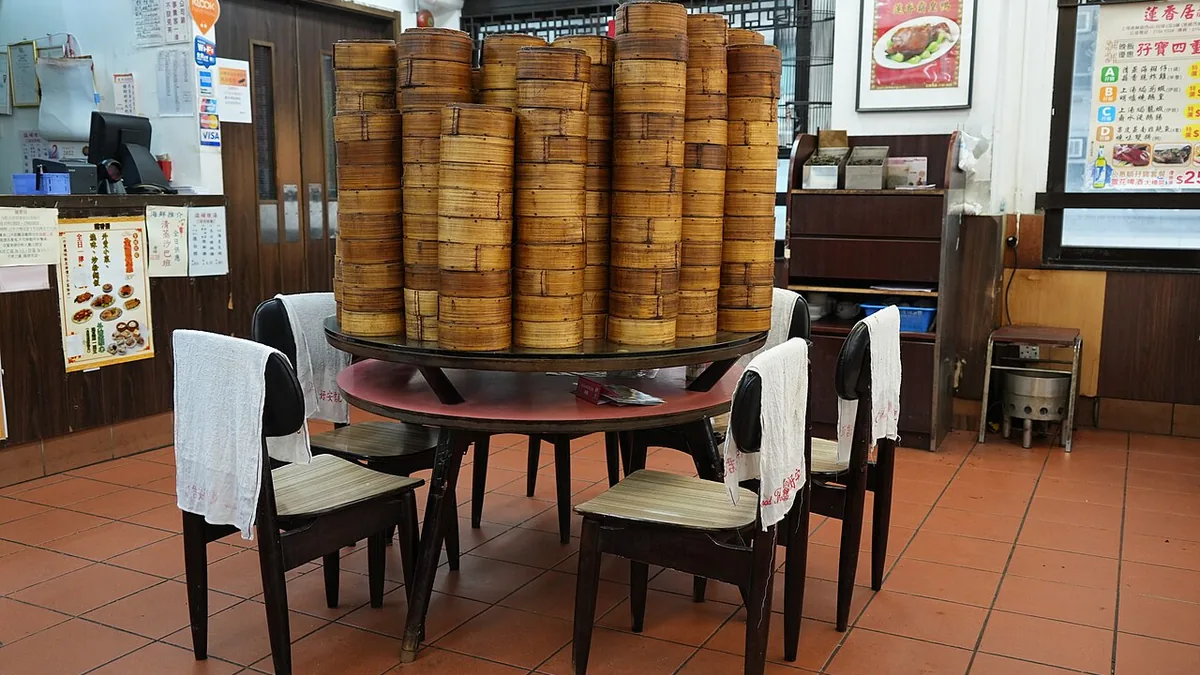 *
A busy teahouse will run through hundreds of baskets in a morning; the stack of steamers by the pass is the simplest measure of how good the kitchen is.
Where to eat in Guangzhou
| Area | What it is good for | Metro |
|---|---|---|
| 西关 / 上下九 Xiguan, Shangxiajiu | Old Guangzhou, cheap dim sum, 肠粉 specialists | 长寿路 Changshou Lu (Line 1) |
| 北京路 Beijing Road | Central, mixed tourist and local, easy for a first yum cha | 公园前 Gongyuanqian (Lines 1/2) |
| 淘金 Taojin | Roast-meat shops and Cantonese restaurants with English menus | 淘金 Taojin (Line 5) |
| 珠江新城 Zhujiang New Town | Modern Cantonese, hotel dim sum, highest prices | 珠江新城 (Lines 3/5) |
| 番禺 Panyu | Suburban seafood halls, where locals go for a big family meal | 番禺广场 Panyu Square (Line 3) |
Three specific places, from cheapest to most formal:
- A neighbourhood teahouse (苍蝇馆子) — any residential street off 上下九 in the morning. No English, carts, ¥30-60 per person. The most authentic experience in the city.
- 点都德 Dian Du De — a modern chain that has kept the standards: excellent har gow and siu mai, English menu, multiple branches. ¥80-150.
- 陶陶居 Tao Tao Ju — founded 1880 on 第十甫路 Dishifu Road, the most famous traditional institution in Guangzhou. Busy, noisy, carts doing the rounds. ¥100-200 per person.
What a day of eating costs
Yum cha breakfast ¥30-60. A bowl of wonton noodles or claypot rice for lunch ¥25-45. Double-skin milk or a 糖水 in the afternoon ¥10-25. Roast goose with rice and a vegetable for dinner ¥60-100. Total: ¥125-230 per person for a full day of eating well, before drinks.
The jump is at hotel level: dim sum in a five-star dining room runs ¥200-500 per person for food that is more polished but rarely better than 点都德. The other trap is the tourist strip around 北京路, where the same bowl of noodles costs double and tastes half.
Ordering, paying and timing
A few Cantonese phrases carry most of the meal: 唔该 (m goi — please/thank you, said to staff), 埋单 (maai daan — the bill), 要呢个 (want this one, with a point). Menus in teahouses are usually ticked on paper; in noodle shops the dishes are on the wall.
Pay with WeChat Pay or Alipay — both accept foreign cards and both are used by every stall in the city. Card acceptance is thin outside hotels, and many traditional teahouses are cash-or-QR only.
Timing matters more than in most Chinese cities. Dim sum is a morning institution: 8am to 11am on a weekday is the sweet spot, weekend queues start before 9am, and several old teahouses close dim sum service on Monday or Tuesday. Roast-meat shops sell out of goose by about 19:30. If you want the full arc, eat yum cha at nine, walk it off along the Pearl River, and have claypot rice at seven.
For the national picture, see our China food by city guide — Guangzhou sits alongside Chengdu, Xi’an and Beijing — and for eating safely at street level anywhere in the country, the China street food guide. The Guangzhou city page covers where to stay, the 3-day Guangzhou itinerary covers what to do between meals, and our ordering food in Chinese guide has the full phrase list.
Plan your trip — verified tools
These free tools are built on real, monthly-verified data and help you skip the trial-and-error phase of China trip planning:
- China Budget Calculator — Real 2026 prices for 5 days in Beijing, Shanghai, Guangzhou, Chengdu, Xi’an, or Hangzhou. Budget / mid-range / comfort tiers, broken down line by line.
- China OTA Comparison 2026 — Trip.com vs Booking.com vs Agoda vs Klook across 5 booking types. Inventory, pricing, foreign card support, English service, per-OTA verdict.
Verified November 2026 by the TravelHubChina editorial team. We re-check prices and policy details monthly so the data doesn’t drift.
- Photos marked * in this article are from Wikimedia Commons — attribution and licence: N509FZ, CC BY-SA 4.0; Sara McCleary, CC BY-SA 4.0; Takeaway, CC BY-SA 4.0; Valenzuela400, CC BY-SA 4.0; Edsel Little, CC BY-SA 2.0; Takeaway, CC BY-SA 4.0; stu_spivack, CC BY-SA 2.0; Ceeseven, CC BY-SA 4.0; N509FZ, CC BY-SA 4.0; Yip Alberto, CC BY-SA 3.0; N509FZ, CC BY-SA 4.0; N509FZ, CC BY-SA 4.0; ZhengZhou, CC BY-SA 4.0; Ceeseven, CC BY-SA 4.0; ZhengZhou, CC BY-SA 4.0; Peachyeung316, CC BY-SA 4.0*
Sources
FAQ
-
What is dim sum and what does yum cha mean?
Dim sum (点心, 'dim sam' in Cantonese) is the food: small steamed, fried and baked dishes served in bamboo baskets. Yum cha (饮茶, 'drink tea') is the occasion: sitting down with tea and dim sum, traditionally on a weekend morning with family. The habit started in teahouses along the Silk Road route through Canton around the 10th century, where travellers stopped for tea and a bite. Guangzhou is where the whole institution was invented. -
How much does yum cha cost in Guangzhou in 2026?
¥30-60 per person at a neighbourhood teahouse, ¥80-150 at a well-known institution, ¥200-500 at hotel-level dim sum. From a cart a basket runs ¥15-30; ordered off a modern menu it is ¥30-80. Tea is ¥10-30 per person with free refills. Three to four baskets per person is the normal order, so two people eat well for ¥150-250 all in. -
What is the tea-lid trick, and is tipping expected?
Leave the lid of your teapot slightly open or tap it twice on the table and the server will refill it — the custom dates from noisy old teahouses where shouting was rude. If someone pours for you, tap two fingers on the table instead of saying thank you. Tipping is not expected and often refused; service charge appears only in hotel restaurants. -
Is Cantonese food spicy?
No. Cantonese cooking uses almost no chilli — the seasoning is soy, oyster sauce, ginger, scallion and sugar, with freshness doing most of the work. Of China's eight great regional cuisines it is the mildest and the easiest for a first-time visitor. The chilli oil on the table is for dipping, not for cooking. -
What should I order if I don't eat pork or offal?
Plenty survives. Safe bets: har gow (shrimp), steamed garoupa, chicken feet can be skipped for white cut chicken, cheung fun with shrimp, turnip cake, egg tarts, mango pudding and most vegetable dishes. Say 走猪肉 (no pork) and ask for 素菜 (vegetable dishes). Note that lard and oyster sauce appear in dishes that look vegetarian — ask before assuming. -
When is the best time to eat dim sum in Guangzhou?
Weekday mornings between 8am and 11am. Carts are full, the room is full of families and retirees, and the kitchen is at its fastest. Arrive by 9am on a weekend or expect a queue of an hour. Some traditional teahouses close their dim sum service on Monday or Tuesday, so check before travelling across the city. -
How do I pay, and do I need cash?
WeChat Pay or Alipay linked to a foreign card works almost everywhere, including teahouses and street stalls. Cash is accepted but small shops may not have change for a ¥100 note. Traditional dim sum restaurants often do not take foreign credit cards, so have a mobile payment set up before you sit down.
Related guides
- Food & Dietary
Beijing Food Guide: 13 Dishes to Eat
Beijing food guide: 13 dishes, 2026 prices and where to eat each — Peking duck, copper-pot lamb, zhajiangmian, baodu, luzhu and the breakfast locals queue for.
13min read
- Food & Dietary
Chengdu Food Guide: 20 Dishes to Eat
Chengdu food guide: 20 dishes with 2026 prices, where to eat each one and how to order — mapo tofu, hotpot, rabbit head and the snacks locals queue for.
12min read
- Food & Dietary
Hangzhou Food Guide: 10 Dishes to Eat
Hangzhou food guide: 10 dishes, 2026 prices and where to eat — Dongpo pork, West Lake vinegar fish, Longjing shrimp, beggar's chicken and Kuiyuanguan noodles.
11min read
- Food & Dietary
China Food by City: 8 Cities, 24 Iconic Dishes
Eight foodie cities and three signature dishes each: Peking duck in Beijing, xiaolongbao in Shanghai, mapo tofu in Chengdu, dim sum in Guangzhou.
14min read
- Food & Dietary
Street Food in China: 20 Safe Dishes for First-Timers
20 street foods from ¥0.50-3 each, plus the four food-safety rules that stop first-timers getting stomach trouble.
10min read
- Food & Dietary
20 Chinese Restaurant Menu Phrases to Order Food (Pinyin + Audio)
Four phrases get you through any Chinese restaurant menu: 你好, 这个, 不要辣, 买单. Ten more and you can order anything on the menu.
11min read




