
3 Days in Guangzhou: Canton Tower, Dim Sum, Shamian Island (2026 Itinerary)
The perfect 3-day Guangzhou itinerary: Canton Tower sunset, Cantonese dim sum, Shamian Island colonial walk, Chen Clan Ancestral Hall, Pearl River cruise. With prices, transit times, and ticket tips.
Guangzhou is the capital of Cantonese food and the oldest of China’s four first-tier cities. Itinerary-wise, Guangzhou is different from Beijing or Shanghai: the language (Cantonese) is the local default, the food is lighter and seafood-forward, and the pace is hot, humid, and business-like. Three days is enough for the main sights.
The reason to come is the food. Guangzhou is the birthplace of Cantonese cuisine, and the morning tea (yum cha, 饮茶) tradition is the cultural signature. Plan at least one long dim sum brunch. The skyline — anchored by the 600m Canton Tower — punches above the city’s tourism profile, and the Pearl River night cruise is the best evening activity.
Day 1: Canton Tower sunset + Pearl River cruise
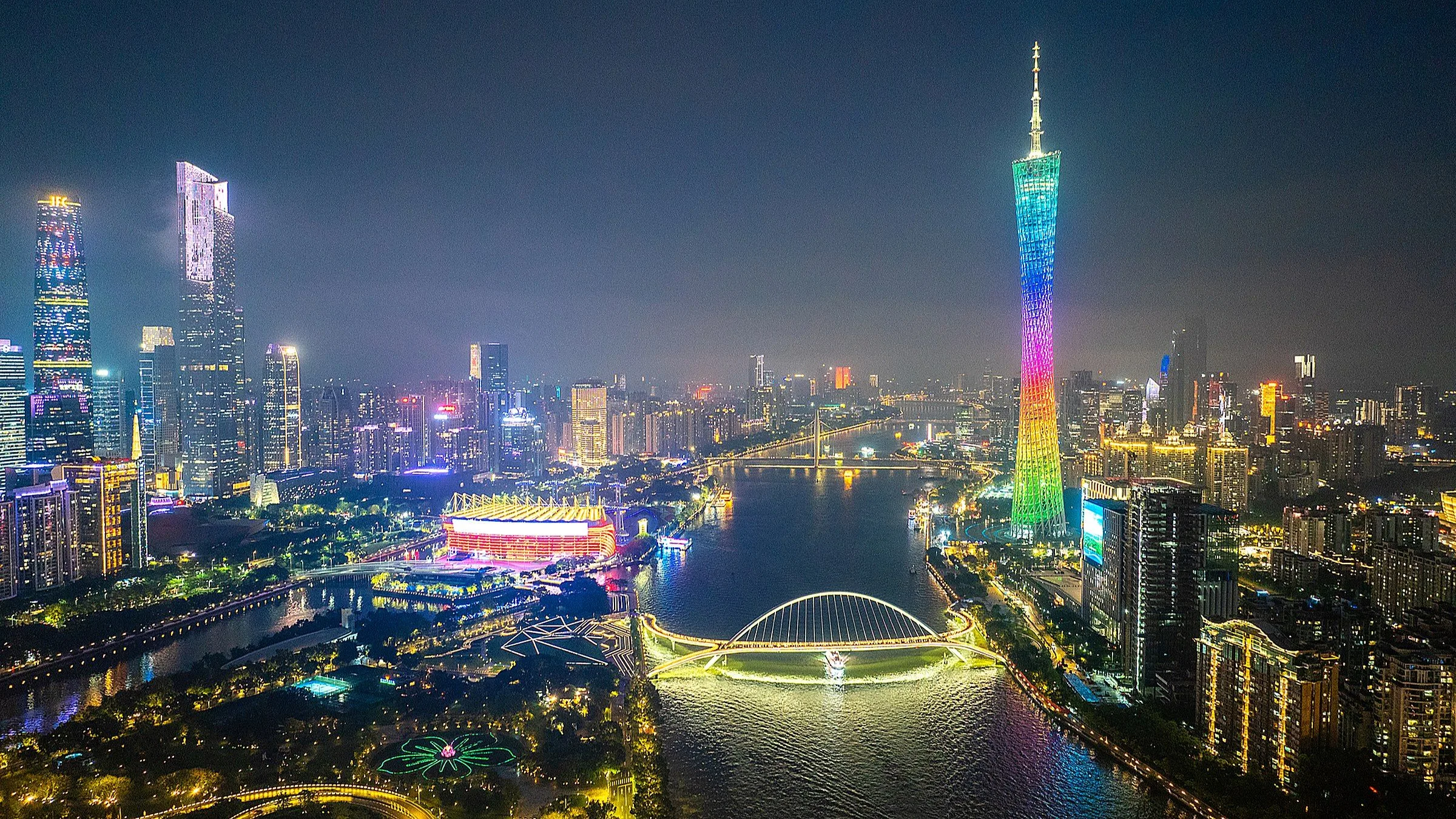
The Canton Tower (广州塔) is the third-tallest TV tower in the world, after Tokyo Skytree and Canton Tower’s design cousin, the Burj Khalifa. The 450m outdoor observation deck is the money shot, especially 30 minutes before sunset when the sky turns pink over the Pearl River. Pre-book via Trip.com to skip the line.
After sunset, walk to the Tianzi Wharf cruise terminal (10 min) and board a 7:30 PM Pearl River cruise (¥88-198, 70-90 min). The boat passes the illuminated Canton Tower, Haixinsha Park (where the 2010 Asian Games opening ceremony was held), and the Liede Bridge. The 9 PM departure catches the tower light show.
Day 2: Shamian Island + Chen Clan + Beijing Road
Start at Shamian Island (沙面岛), the European and American concession from 1860-1940. The 0.3 sq km island is now a quiet enclave of colonial-era buildings, banyan trees, and small cafes. The Our Lady of Lourdes Chapel (1889) and the old British/French consulate buildings are the highlights. Allow 1.5-2 hours.
Then take metro Line 1 to Chen Clan Ancestral Hall (陈家祠, ¥10 entry). The 1894 ancestral hall is now the Guangdong Folk Art Museum. The Qing-dynasty roof decorations are the draw: hand-carved ceramic and stone ridge sculptures depicting folk tales, with a level of detail you won’t see in modern buildings. Allow 1.5 hours.
End the day at Beijing Road (北京路) and the Da Fo Si (大佛寺) area. Beijing Road is a 1,500-year-old shopping street with excavated Song- and Ming-dynasty road layers visible under glass panels along the central walkway. The street itself is tourist-oriented, but the food streets behind it are where locals eat. The Da Fo Si Buddhist temple, lit up at night with its red lantern reflections, is the visual highlight.
Day 3: Long dim sum brunch + Pearl River promenade
The Day 3 morning is the highlight. Tao Tao Ju (陶陶居, est. 1880) is the original Guangzhou dim sum institution. The Liwan district location (Dishifu Road, 十甫路) is the original. Arrive 10:30 AM (10:30 AM opening on weekdays, 9:30 AM on weekends). Order har gow, siu mai, cheung fun, chasiu bao, and chee cheong fun. Allow 1.5-2 hours — dim sum is a slow, social meal.
For the afternoon, two options. Option A: walk the 8-km Pearl River promenade from the Liede Bridge to the historic city center, with views of the Canton Tower on one side and the old city on the other. Option B: visit the Museum of the Nanyue King (南越王宫博物馆) on Beijing Road — the 2,000-year-old tomb of Zhao Mo, a Han-dynasty Nanyue king, with intact bronze artifacts and a jade burial suit.
Optional Day 4: Foshan day trip
Foshan is 40 minutes from Guangzhou by metro Line 1. The Liang Garden (梁园) is one of the four famous classical gardens of Guangdong (¥10 entry, 1.5 hours). The Foshan ceramic museum (石湾陶瓷博物馆) is a must for anyone interested in Chinese ceramics — Foshan has been a production center for 5,000 years. Allow a full day if you want both.
What to eat
Beyond dim sum, try these Cantonese classics:
- White-cut chicken (白切鸡) — poached chicken with ginger-scallion oil, served cold. The test of a Cantonese kitchen.
- Char siu (叉烧) — honey-glazed BBQ pork. The best is from small neighborhood shops, not hotel restaurants.
- Steamed fish (清蒸鱼) — fresh river fish steamed with ginger and soy. The Cantonese steam approach lets the freshness speak.
- Roast goose (烧鹅) — crispy-skin roast goose, similar to char siu but richer. Try the Liwan district shops.
- Wonton noodles (云吞面) — small wontons in clear broth with thin egg noodles. A quick lunch option.
- Sweet soup (糖水) — sweet dessert soups made with red bean, mung bean, black sesame, or peanut. A Cantonese tradition.
When to go
October through December is best — cool and dry, 15-25°C, low humidity. March to May is warm but increasingly humid. June through September is brutally hot (33-38°C) and wet, with typhoon risk in August and September. The Mid-Autumn Festival (usually September) brings lantern displays on the Pearl River.
Step by step
-
Day 1 morning — Arrive in Guangzhou, settle in
Most travelers arrive at Guangzhou Baiyun International Airport (CAN) or by HSR at Guangzhou South Station. From Baiyun, metro Line 3 goes directly to the city center in 45 minutes (¥8). From Guangzhou South, metro Line 2 reaches the Tianhe/East Railway Station area in 30 minutes (¥6). Check in to a hotel in the Tianhe district (near Canton Tower) or the Yuexiu district (near Beijing Road and Shamian).
-
Day 1 afternoon — Canton Tower sunset
Take metro Line 3 to Canton Tower Station (广州塔站), Exit B. Buy the observation deck ticket at the venue (¥150) or pre-book via Trip.com. Aim to arrive 90 minutes before sunset. The 450m outdoor observation deck is the highlight; the 488m bubble tram is a fun add-on (¥298 combined). Stay until after dark to see the tower light up.
-
Day 1 evening — Pearl River night cruise
Walk 10 minutes from Canton Tower to the Tianzi Wharf (天字码头) cruise terminal, or take metro Line 3 + Line 1 to the Yanjiang East Road cruise pier. The 70-90 minute boat ride (¥88-198) leaves at 7:30 PM and passes the illuminated Canton Tower, Haixinsha Park, and Liede Bridge. The 9 PM departure is the iconic one. Book at the pier or via Klook / Trip.com.
-
Day 2 morning — Shamian Island
Take metro Line 1 or Line 6 to Huangsha Station (黄沙站), Exit B. Walk 5 minutes to the bridge entrance of Shamian Island. The 0.3 sq km island was the European and American concession (1860s-1940s) and is now a quiet enclave of colonial-era buildings, banyan trees, and small cafes. Allow 1.5-2 hours for a relaxed walk. The Our Lady of Lourdes Chapel (1889) and the old British/French consulate buildings are the highlights.
-
Day 2 afternoon — Chen Clan Ancestral Hall
Take metro Line 1 to Chen Clan Temple Station (陈家祠站), Exit D. The 1894 ancestral hall is now the Guangdong Folk Art Museum (¥10 entry). The Qing-dynasty roof decorations are the draw: hand-carved ceramic and stone ridge sculptures depicting folk tales, with a level of detail you won't see in modern buildings. Allow 1.5 hours. From here, walk 10 minutes to the next stop or take metro to Beijing Road.
-
Day 2 evening — Beijing Road + Da Fo Si night food
Take metro Line 1 to Gongyuanqian Station (公园前站), Exit E, and walk 5 minutes to Beijing Road. The 1,500-year-old shopping street has excavated Song- and Ming-dynasty road layers visible under glass panels along the central walkway — look down as you walk. The street itself is tourist-oriented, but the food streets behind it (Da Fo Si, 大佛寺 area) are where locals actually eat. The Da Fo Si Buddhist temple, lit up at night with its red lantern reflections, is the visual highlight.
-
Day 3 morning — Long Cantonese dim sum brunch at Tao Tao Ju
Tao Tao Ju (陶陶居) is the 1880 dim sum institution. The Liwan district location (Dishifu Road, 十甫路) is the original. Arrive 10:30 AM to avoid the line (10:30 AM opening on weekdays, 9:30 AM on weekends). Order har gow (shrimp dumplings), siu mai (pork dumplings), cheung fun (rice rolls), chasiu bao (BBQ pork buns), and chee cheong fun (pig intestine noodles). ¥80-150 per person. Allow 1.5-2 hours — dim sum is a slow, social meal.
-
Day 3 afternoon — Pearl River promenade walk + Shamian revisit OR Museum of the Nanyue King
Two options for the afternoon. Option A: walk the 8-km Pearl River promenade from the Liede Bridge to the historic city center, with views of the Canton Tower on one side and the old city on the other. Allow 2-3 hours. Option B: visit the Museum of the Nanyue King (南越王宫博物馆) on Beijing Road — the 2,000-year-old tomb of Zhao Mo, a Han-dynasty Nanyue king, with intact bronze artifacts and a jade burial suit. ¥10 entry. Allow 1.5 hours.
-
Day 3 evening — Departure
From Guangzhou city center, metro Line 3 reaches Baiyun Airport in 45 minutes (¥8). From Guangzhou South Station, HSR to Hong Kong West Kowloon is 50 minutes (¥215 second class). If you have an evening flight, finish dim sum by 1 PM, then visit the Museum of the Nanyue King (closes 5:30 PM) before heading to the airport.
-
Optional Day 4 — Foshan day trip
Foshan is 40 minutes from Guangzhou by metro Line 1 (Guangzhou South Station transfer). The Liang Garden (梁园) is one of the four famous classical gardens of Guangdong (¥10 entry, 1.5 hours). The Foshan ceramic museum (石湾陶瓷博物馆) is a must for anyone interested in Chinese ceramics — Foshan has been a production center for 5,000 years. Allow a full day if you want both, or pick one for a half-day trip.
FAQ
-
Is 3 days enough for Guangzhou?
Yes for the main sights (Canton Tower, Shamian Island, Chen Clan, Cantonese dim sum, Pearl River cruise). 2 days is doable if you skip the dim sum brunch. 4 days lets you add a day trip to Foshan (40 min by metro) for the Liang Garden and ceramic museums. Most foreign travelers do Guangzhou as a 2-3 day add-on to a Hong Kong / Macau trip. -
How does Guangzhou compare to Hong Kong for food?
Guangzhou is the original. Cantonese cuisine (粤菜) is named after Guangdong province, and Hong Kong chefs traditionally trained in Guangzhou. The food in Guangzhou is 30-50% cheaper at the same quality level. A Michelin-starred dim sum brunch that runs ¥120 here is the equivalent of HK$150 in Hong Kong. The downside: Hong Kong has more English-friendly service and a stronger café/bar scene. -
Do I need to speak Cantonese in Guangzhou?
No. Mandarin is widely understood in hotels, restaurants, and the metro. Cantonese dominates in older neighborhoods and at the dim sum carts where aunties push bamboo steamers, but pointing at what you want works fine. Hotel concierges and the Canton Tower staff all speak English. The younger generation (under 30) typically speaks Mandarin as their primary language. -
When is the best time to visit Guangzhou?
October through December is best — cool and dry, 15-25°C, low humidity. March to May is warm but increasingly humid. June through September is brutally hot (33-38°C) and wet, with typhoon risk in August and September. The Mid-Autumn Festival (usually September) brings lantern displays on the Pearl River. The Cantonese New Year flower fair (late January) is the cultural peak if you can handle the crowds. -
How do I get from Hong Kong to Guangzhou?
High-speed rail from Hong Kong West Kowloon Station to Guangzhou South Station, 50 minutes, ¥215 second class. Trains run every 15-20 minutes, 6:30 AM - 10 PM. From Guangzhou South, metro Line 2 to the city center is 30 minutes. Total: 1.5 hours door-to-door. The cross-border train is faster and cheaper than the ferry or bus. -
Is Guangzhou worth a stop on a China trip?
Yes, especially as a 2-day add-on to Hong Kong / Macau. The food alone justifies it. The Canton Tower sunset + Pearl River night cruise is a great evening activity. The Shamian Island + Chen Clan combo fills a relaxed day. The 240-hour visa-free transit policy means many nationalities can stop in Guangzhou without a separate visa.
Related guides
- Itineraries
3 Days in Chengdu: Pandas, Hot Pot, Leshan
The perfect 3-day Chengdu itinerary: Panda Base, Leshan Giant Buddha, Sichuan hot pot, Jinli Street, and tea culture. With prices, transit times, and ticket tips.
10min read
- Itineraries
3 Days in Beijing: Forbidden City + Great Wall
The best 3-day Beijing itinerary for first-time visitors: Forbidden City, Mutianyu Great Wall, Temple of Heaven, Summer Palace, and hutong food tour. With prices, transit times, and ticket tips.
10min read
- Itineraries
4 Days in Xi'an: Terracotta Warriors, City Wall
The best 4-day Xi'an itinerary: Terracotta Warriors, ancient City Wall, Muslim Quarter, Big Wild Goose Pagoda, Mount Hua. With prices, transit times, and ticket tips.
10min read
- Itineraries
5 Days in Shanghai: Bund, Yu Garden, Zhujiajiao
The perfect 5-day Shanghai itinerary: The Bund, Yu Garden, French Concession, Shanghai Tower, Zhujiajiao water town, and day trips. With prices, transit tips, and metro directions.
11min read
- Itineraries
3 Days in Shenzhen: Tech Megacity, Theme Parks, Bay (2026 Itinerary)
The perfect 3-day Shenzhen itinerary: Window of the World + Splendid China theme parks, OCT Loft creative district, Shenzhen Bay Park, Dafen Oil Painting Village, Ping An Finance Centre. With prices, transit times, and ticket tips.
10min read
- Itineraries
China Group Tours in 2026: Complete Guide (Worth It? Best Operators, Costs, and How to Avoid the Traps)
Comprehensive 2026 guide to China group tours: top 6 tour operators (Intrepid, G Adventures, EF, China Highlights, Wild China, Backroads) with prices, group sizes, and reviews. Plus: pros and cons vs independent travel, top 5 sample itineraries (14-day Grand Tour, photography, food, family, adventure), how to avoid shopping trap stops, and whether Tibet, Xinjiang, and Silk Road tours are worth the premium.
10min read