
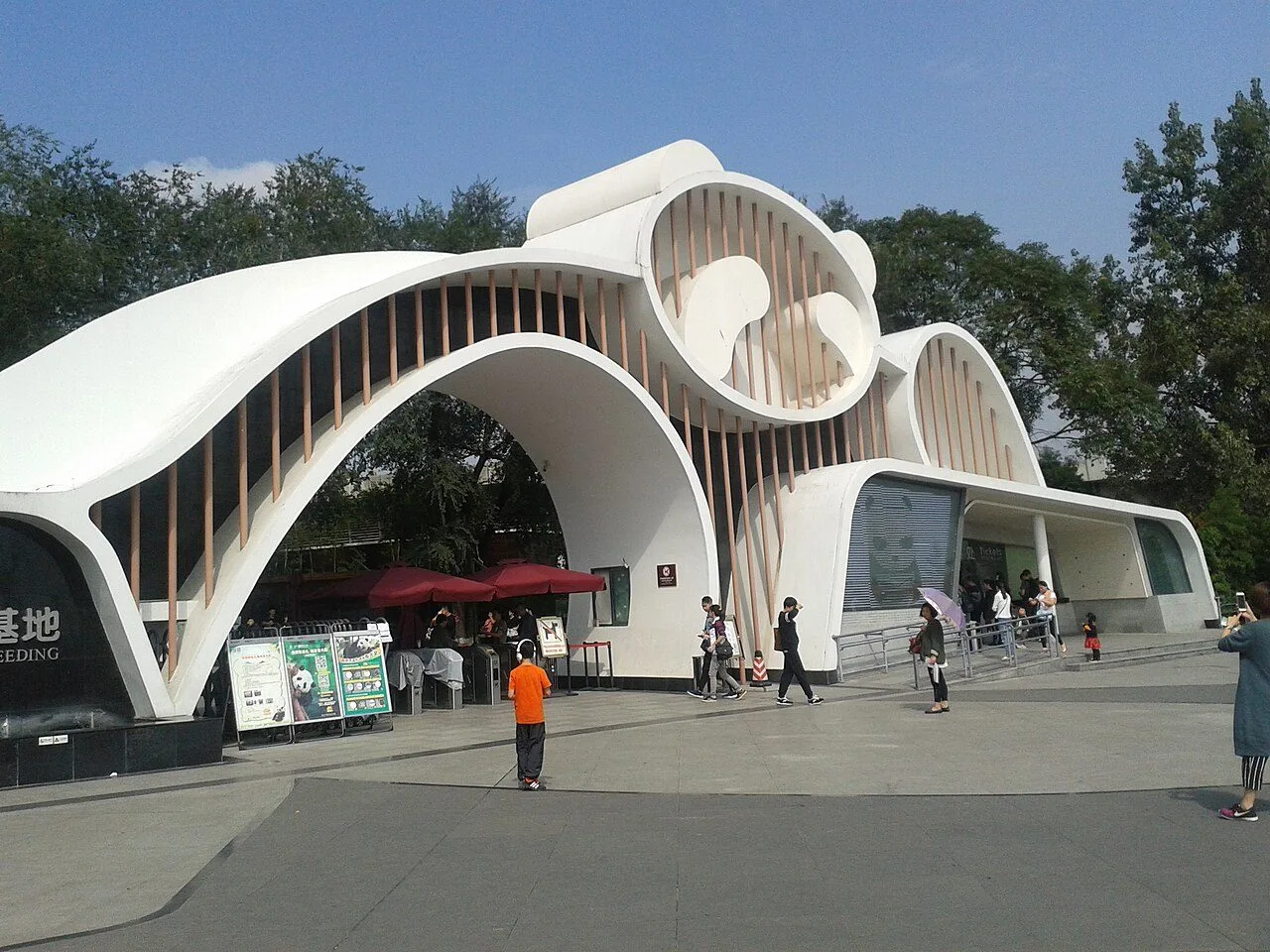
Chengdu Research Base of Giant Panda Breeding
成都大熊猫繁育研究基地 · Chéngdū Dàxióngmāo Fányù Yánjiū Jīdì
Quick answer
Foreign passport required at the gate — your passport number is your ticket. Online booking is via the official WeChat mini-program 熊猫基地 which requires a Chinese phone number; foreign visitors should book via Trip.com or buy tickets at the on-site window (cash, Alipay, or WeChat Pay) with their passport.
Why visit
- 1 Home to 200+ giant pandas — the largest captive population in the world
- 2 Watch the morning feed (8:00-10:00) when pandas are most active and outdoors
- 3 The Huahua (花花) enclosure — the world's most famous panda, known for her slow, gentle temperament
- 4 Red pandas share the base — the smaller, raccoon-like relative, often more visible and active
- 5 Panda cubs visible July-October in the nursery houses (Sun, Moon, Star)
- 6 Beautiful bamboo-forest setting, 67 hectares — feels like a research sanctuary, not a zoo
Essential tips for foreigners
- Arrive at 7:30 sharp for the opening — pandas are outdoor and active in the cool morning. By 11:00 they retreat indoors to sleep. By 14:00 the crowds arrive and the experience becomes a queue.
- Enter through the South Gate if you want the classic route with the Huahua enclosure and the main nursery areas. Enter through the West Gate if you want a quieter experience and more pandas per square meter.
- No flash photography. Pandas are sensitive to bright light, and the flash rule is strictly enforced by staff. The outdoor lighting is usually adequate; on a cloudy day, increase your ISO.
- Book via Trip.com (¥55, free cancellation) if you do not have a Chinese phone number. The official WeChat mini-program requires Chinese phone verification, which excludes most foreign visitors.
- Bring water and comfortable shoes. The base is 67 hectares and you will walk 5-7 km. There is limited shade, and Chengdu summer is genuinely hot (33-38°C) and humid.
- Do not shout, do not feed, do not try to wake a sleeping panda. The rules are enforced and for the welfare of the animals. The most common rule break is parents lifting kids over the barriers for closer photos — staff will stop you.
Suggested route
- 07:00 40 min Take a green-taxi Didi or the Chunxi Road panda tourist bus (景区直通车) to the South Gate. Eat a light breakfast on the way.
- 07:40 10 min Arrive at the South Gate, scan your Trip.com QR code, enter the base. Walk straight past the main gate and the visitor center.
- 07:50 1 hour Swan Lake (天鹅湖) — quick photo stop, then head to Villa No. 6 for Huahua (if visiting Monday-Saturday). Arrive before 8:00 AM to beat the crowd.
- 08:50 1 hour Walk to the Sun Giant Panda Nursery House (太阳产房) and Moon Giant Panda Nursery House (月亮产房) for cubs (best July-October).
- 09:50 45 min Take the battery cart (¥10) to the Red Panda enclosures (小熊猫区). Red pandas are often more visible than the giant pandas.
- 10:35 20 min Walk or take the cart to the Kitchen viewing area (厨房) — watch the keepers prepare the bamboo and panda cakes.
- 10:55 1 hour Lunch at the Panda Panoramic Restaurant, or at the McDonald's at the South Gate. The restaurant has the best view but is mid-priced.
- 11:55 1.5 hours Take the battery cart to the West Gate area (新区). Walk through the new expansion area — 16 panda pavilions, much less crowded, more compact viewings.
- 13:25 30 min Visit the Giant Panda Museum (closed Mondays) — 30 min, included in your ticket. Has good context on conservation.
- 13:55 40 min Exit via the West Gate. Didi back to central Chengdu, or take the metro Line 3 from Panda Avenue Station.
Home to 200+ giant pandas, in a 67-hectare bamboo forest
The Chengdu Research Base of Giant Panda Breeding sits in the northern suburbs of Chengdu, about 15 km from the city center, in a bowl of forested hills at the foot of the Longquan Mountains. It was founded in 1987 with just six sick and starving giant pandas rescued from the wild, and is now home to more than 200 giant pandas and 80+ red pandas — the largest captive population in the world. The base functions simultaneously as a zoo, a research institution, and a conservation center, and it is responsible for the survival of the species as we know it: without the captive breeding program here, giant pandas would likely be functionally extinct in the wild.
For foreign visitors, the base is the single most important stop in Chengdu, and one of the most memorable experiences in all of China. Pandas behave differently than any other animal you will see in a zoo — they are simultaneously powerful and clumsy, focused and absent-minded, dignified and ridiculous. Spending a morning watching them eat bamboo in the morning sun is a different kind of travel experience from the standard imperial palace / ancient city itinerary, and it is the part of Chengdu that stays with you longest.
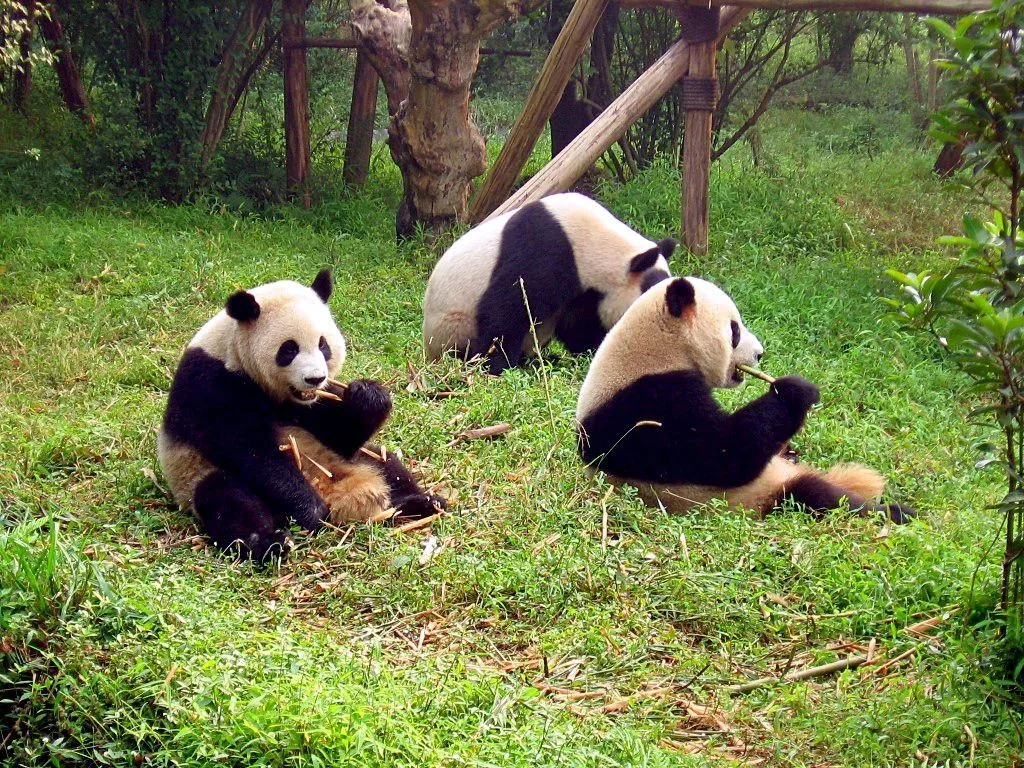
Photo: Wikimedia Commons / CC BY-SA. Source

What the foreigner experience looks like in 2026
The base is foreigner-friendly in most respects — English signage throughout, English audio guide, accessible paths, and an on-site English-speaking guide service. The single significant friction point is ticket booking: the official WeChat mini-program 熊猫基地 (Xióngmāo Jīdì) requires a Chinese phone number to register, which effectively excludes most foreign tourists. The reliable foreigner-friendly alternative is Trip.com, where you book with your passport, pay with international Visa/Mastercard, and get an entry QR code on your phone — same ¥55 price, free cancellation up to 24 hours before.
On-site walk-up tickets are technically available at the South Gate ticket office in low season, but in peak season (April-October, weekends, holidays) the daily allocation can sell out by 10:00 AM. Do not count on this.
The pandas, in order of experience
Huahua (花花): Born 2020, the world’s most famous individual panda. Recognizable by her smaller size, rounder face, and slower, more placid temperament. She became a viral internet phenomenon in 2023 when videos of her gentle eating style and her tendency to sit calmly while other pandas moved around her were shared widely on Chinese social media. She is in Villa No. 6 (幼年别墅) near the South Gate. Important: she is given a rest day every Monday and is not on display. For most foreign visitors this is irrelevant; for Chinese domestic tourists, she is the entire reason to come — arrive before 8:00 AM or after 10:30 AM to avoid the worst crowd.
The Sun and Moon Nurseries (太阳/月亮产房): The cub nursery houses, with pandas from a few months to about 1 year old. The Sun House is the more popular and crowded; the Moon House is quieter and equally rewarding. Cubs are visible year-round, but the most reliable time to see newborns is July-October, the natural birth season.
The adult panda villas: Seven panda villas in the original South Gate area, plus 16 panda pavilions in the new West Gate expansion. The South Gate area is the classic route; the West Gate expansion opened in 2022 and is 2.5x the size of the original, with much less crowding and more compact viewing angles.
Red pandas (小熊猫): Often overlooked by first-time visitors, but the smaller, raccoon-like relative of the giant panda is genuinely more visible and active. The No. 2 enclosure has a long open-air boardwalk where the red pandas sometimes climb within arm’s reach of visitors. They are excellent photography subjects.
The kitchen (大熊猫厨房): The bamboo and panda-cake preparation area. You can watch the keepers sort and wash bamboo, and see the famous “panda cakes” (a steamed bread-like food made with corn, soybean, and vitamins) that are used for nutritional supplementation.
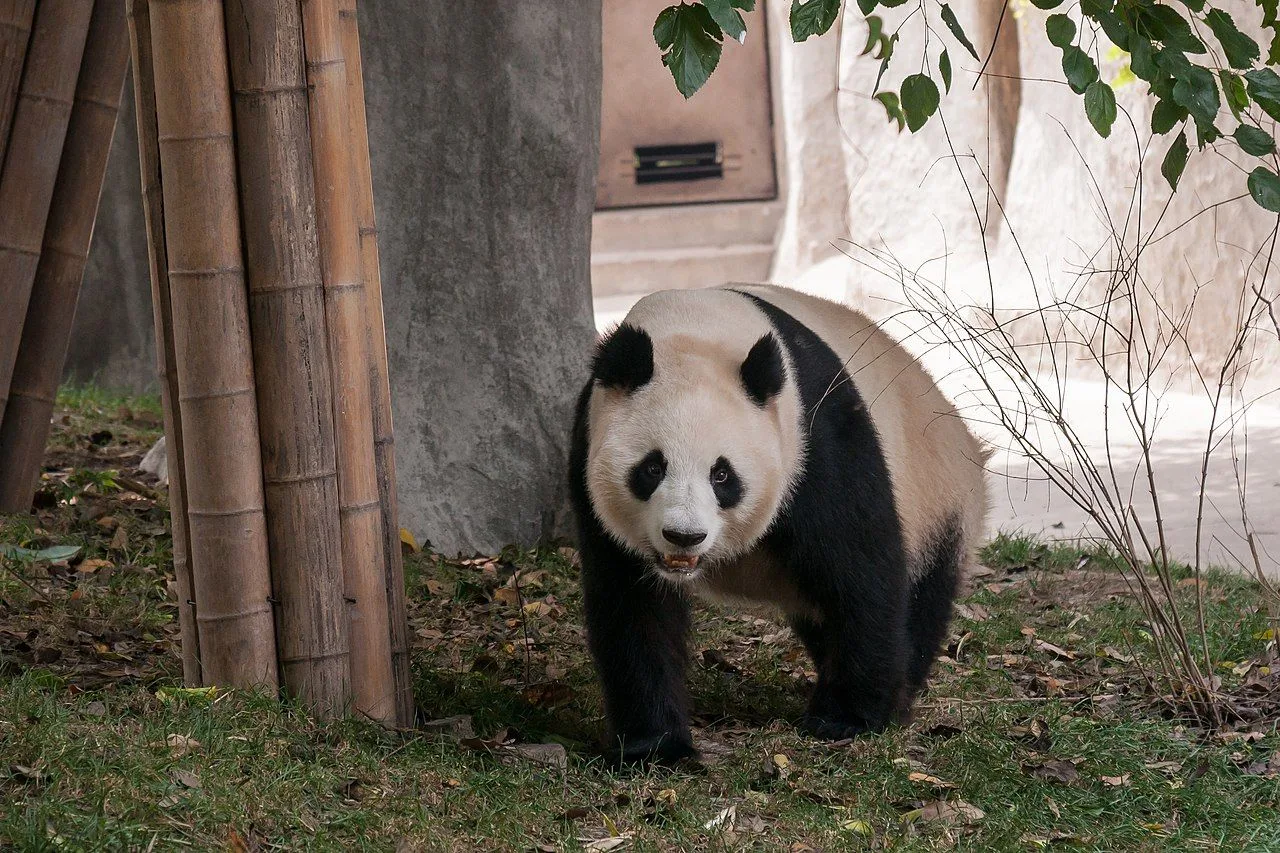
Photo: Wikimedia Commons / CC BY-SA. Source

Best time to visit
Time of day: 7:30-10:00 AM is the gold standard. Pandas are morning-active — they feed from 8:00-10:00, and the cooler morning air keeps them in the outdoor enclosures where you can see them clearly. By 11:00-12:00 they retreat to the indoor enclosures to sleep. By 14:00 the crowds arrive and the experience becomes a queue.
Time of year: March-May and September-November for cool, dry weather and outdoor-active pandas. Summer (June-August) is hot and humid (33-38°C) and the pandas are mostly indoors by mid-morning, but this is also the only time you can reliably see newborn cubs. Winter (December-February) is cold (3-10°C) but the pandas are still active. Avoid Chinese national holidays (May 1-5, Oct 1-7) and summer school-break weekends (late July to late August).
Getting there from central Chengdu
Easiest: Didi or green taxi from Chunxi Road. 30-40 minutes, ¥60-80, drop-off right at the gate. Use the green Chengdu taxis only — blue ones are restricted from Chenghua District and may refuse the fare. Tell the driver 大熊猫繁育研究基地 (Dàxióngmāo Fányù Yánjiū Jīdì) or simply 熊猫基地 (Xióngmāo Jīdì).
Cheapest: Metro Line 3 to Panda Avenue Station (熊猫大道站) Exit A, then Didi (¥15) or the Chengdu-Dujiangyan tourist shuttle bus (¥5) for the final 5 km. Total about 1 hour, total cost under ¥20.
Most convenient for groups: the dedicated panda tourist bus (景区直通车) from Chunxi Road, under the IFS climbing-panda sculpture. Departs every 30 minutes, ¥10, 40-50 minutes direct to either the West Gate or the South Gate. The buses are foreigner-friendly, with English signage and a luggage rack.
Photo: Wikimedia Commons / CC BY-SA. Source

What to do nearby
If you have a full day in Chengdu, combine the Panda Base with these:
- Jinli Street (锦里): 15 min by Didi from the base, a reconstructed ancient street with Sichuan street food, teahouses, and craft shops. Worth 1-2 hours.
- Wuhou Shrine (武侯祠): Next to Jinli, the temple of Zhuge Liang from the Three Kingdoms. ¥50 entry, 1-2 hours.
- People’s Park (人民公园) and the teahouses: 30 min by Didi back to central Chengdu. The quintessential Chengdu experience — locals drinking tea, playing mahjong, and doing tai chi. Free, 1-2 hours.
- Chengdu Museum (成都博物馆): 30 min by Didi, free, the best single introduction to Sichuan history from the ancient Shu kingdom to the present.
Volunteer programs (the deeper experience)
The Chengdu Research Base itself does not run a volunteer program, but two nearby bases do:
- Dujiangyan Panda Base (都江熊猫基地, 1.5 hours from Chengdu): The most foreigner-friendly. The volunteer day (¥1,500-2,000) includes cleaning a panda enclosure, preparing panda food (the famous “panda cake”), watching a panda documentary, and a 30-minute supervised panda interaction. Pre-book via the official website 1-2 months in advance.
- Bifengxia Panda Base (碧峰峡熊猫基地, 2 hours from Chengdu): Similar program, more remote, smaller crowds.
Both volunteer days are the most memorable experience in Sichuan for a panda-loving foreign visitor — pre-booking via the official website is essential.
Practicalities for foreign visitors
- Payment: All on-site spending (restaurants, souvenir shops) accepts Alipay (with international Visa/Mastercard linked) and WeChat Pay. The on-site McDonald’s accepts both plus international Visa/Mastercard. See our Alipay for foreigners guide.
- Restrooms: Available at the South Gate, the West Gate, near the museum, and at multiple points along the main paths. Modern and clean.
- Lockers: Available at both gates (¥10-20) for small bags. You will walk 5-7 km; luggage is not recommended.
- Photography: Allowed throughout. No flash — pandas are sensitive to bright light. Tripods permitted in outdoor enclosures. Drones strictly prohibited.
- Weather: The base is outdoors with limited shade. In summer bring water, sunscreen, and a hat. In winter bring a warm coat — mornings can be below 5°C.
Final tip
The panda base rewards arriving early. Show up at 7:30 AM, enter through the South Gate, and head straight to Villa No. 6 for Huahua. By 10:00 AM the base is at its photogenic best, with the morning light on the bamboo and the pandas at their most active. By 11:00 the pandas will be inside and asleep, and your visit is effectively over. The most common mistake is treating the base as an afternoon excursion — the experience is fundamentally a morning one, and missing that window means missing the reason you came.
Best photo spots
-
Villa No. 6 — Huahua (花花) enclosure · 7:30-8:30 AM (before the crowd arrives) or 10:30-11:00 AM (feeding time)
The single most-photographed panda in the world. Recognizable by her smaller size, rounder face, and the distinctive "smiley" markings around her eyes. Note: she gets a rest day every Monday.
-
Sun/Moon Nursery Houses (太阳/月亮产房) · 10:30-11:00 AM (keeper health check + active play)
Cubs from a few months to about 1 year old. The Sun House is the more popular and crowded; the Moon House is quieter and equally rewarding. Best time for cubs: July-October.
-
Red Panda enclosures (小熊猫区) · Any morning time
Often more visible and active than the giant pandas. They climb, leap across the walkways, and sometimes come within arm's reach of the railings. The No. 2 enclosure is the best for photography.
-
Swan Lake (天鹅湖) · Morning, 7:30-9:00
The gateway to the base from the South Gate. Black swans, white swans, ducks, and koi fish — kids love it, and it's a calm photo stop before the panda crowds.
-
Panda Panoramic Restaurant floor-to-ceiling window · Lunch, 11:00-13:00
The only spot in the base where you can watch pandas eating while you eat. The glass is set up so that the table view lines up with the panda enclosure. Order a coffee and a snack, not a full meal — the food is overpriced for the quality.
Where to eat nearby
-
Panda Panoramic Restaurant (熊猫全景餐厅)
Chinese / Asian set menus, coffee · ¥80-150/person · On-site, central South Gate area
-
McDonald's at the South Gate
Western fast food (foreigner-friendly) · ¥40-80/person · On-site, South Gate exit
-
Long Chao Shou (龙抄手) — Chunxi Road branch
Sichuanese wonton soup, dumplings, dan dan noodles · ¥40-80/person · Back in central Chengdu, Chunxi Road (return-trip meal)
-
Chen Mapo Tofu (陈麻婆豆腐) — Qingyang branch
Sichuan classics (mapo tofu, kung pao chicken, twice-cooked pork) · ¥60-120/person · Back in central Chengdu, 10 min from the Didi drop-off point
-
Jinli Street (锦里) snacks
Sichuan street food (three-gun powder, sweet water noodles, sugar oil fruits) · ¥20-50/person · Back in central Chengdu, next to Wuhou Shrine
Frequently asked questions
How much does the Chengdu Panda Base cost for foreigners in 2026?
¥55 per adult. Student ticket is ¥27 (valid student ID required, including foreign student cards like ISIC). Children under 1.3m are free. Seniors 60+ with ID are free. The official price is the same for Chinese and foreign visitors. Trip.com sells the same ticket for ¥55 with free cancellation up to 1 day before — useful if you need advance peace of mind or do not want to deal with on-site queues in peak season.
Do I need to book Chengdu Panda Base tickets in advance?
Yes, in practice. The official policy is that no tickets are sold on-site — every ticket must be pre-booked via the official WeChat mini-program 熊猫基地 or an authorized partner. The mini-program requires a Chinese phone number, which most foreign visitors do not have. The reliable foreigner-friendly path is Trip.com, where you book with your passport, pay with international Visa/Mastercard, and get an entry QR code on your phone. In low season, the South Gate ticket office sometimes has a limited same-day allocation, but this is not guaranteed.
What is the best time of day to see the pandas?
7:30-10:00 is the gold standard. Pandas are morning-active — they feed from 8:00-10:00 and the cooler morning air keeps them in the outdoor enclosures. By 11:00-12:00 they move to the indoor enclosures to sleep (the indoor enclosures are air-conditioned and the pandas are creatures of habit). After 14:00 you can still see them, but they are usually asleep in the indoor viewing area. For the cubs specifically, 10:30 AM is the sweet spot — the keepers are doing the daily health check and the cubs are most active.
How do I get to the Chengdu Panda Base from central Chengdu?
Three main options. (1) Didi or taxi (green ones only — blue Chengdu taxis are restricted from Chenghua District) from Chunxi Road: 30-40 min, ¥60-80, drop-off right at the gate. This is the easiest. (2) Metro Line 3 to Panda Avenue Station (熊猫大道站) Exit A, then take the Chengdu-Dujiangyan tourist shuttle bus (¥5) or a Didi (¥15) for the final 5 km. Total about 1 hour. (3) The Chengdu Panda Base dedicated tourist bus (景区直通车) from Chunxi Road, under the IFS climbing-panda sculpture, every 30 min, ¥10, 40-50 min, runs to both the West Gate and South Gate.
What is the best time of year to visit the Chengdu Panda Base?
March-May and September-November are the best months — temperatures 12-22°C, low humidity, and the pandas are outdoor and active most of the day. Summer (June-August) is hot and humid (33-38°C) and the pandas retreat indoors by mid-morning, but this is also the only time you can reliably see newborn cubs in the nursery. Winter (December-February) is cold (3-10°C) and the pandas are still active, but the experience is more compact — they huddle in the indoor heated areas. Avoid Chinese national holidays (May 1-5, Oct 1-7) and summer school-break weekends — the base becomes a 2-hour-queue experience.
How long does it take to visit the Chengdu Panda Base?
Minimum 2 hours to see the South Gate area (the Huahua enclosure, the Sun and Moon nurseries, the red pandas, and Swan Lake). 3-4 hours for the standard route covering both gates (most visitors do South to West and exit). 5-6 hours for a thorough visit including the Giant Panda Museum, the kitchen viewing area, and the bamboo forest walk. Most foreign tourists spend 3-4 hours and feel satisfied. The base is 67 hectares — full walking distance is about 7 km; the battery cart cuts this to about 3 km.
Can I volunteer at the Chengdu Panda Base?
The Chengdu Panda Base does offer a paid volunteer program (¥1,500-2,500 per day depending on the base and the activities), but it is operated at the Dujiangyan Panda Base and Bifengxia Panda Base (both about 1.5-2 hours from Chengdu), not at the main Chengdu Research Base. The volunteer program includes panda enclosure cleaning, panda food preparation (the "panda cake"), and a 30-minute keeper-supervised panda interaction. It is the most memorable experience in Sichuan for a panda-loving foreign visitor, and pre-booking 1-2 months in advance via the official website is essential.
Is the Chengdu Panda Base wheelchair accessible?
Yes, mostly. The main paths are paved and the viewing platforms are accessible. The battery cart is wheelchair-friendly. The only challenging areas are the older enclosures in the original South Gate area, where some of the viewing platforms are reached by a flight of stairs. The newer West Gate / expansion area is fully accessible. Free wheelchair loans are available at both gates — bring your passport. The on-site Giant Panda Museum is fully accessible, with ramps and an elevator.
What is Huahua (花花) and why is she famous?
Huahua (花花, also written 花花, born 2020) is the world's most famous individual giant panda. She is recognizable by her distinctive round face, smaller size, and slower, more placid temperament compared to typical pandas. She became a viral internet sensation in 2023 after videos of her gentle, somewhat clumsy eating style and her tendency to sit calmly while other pandas moved around her were widely shared. She is in Villa No. 6 near the South Gate. Note: she is given a "rest day" every Monday and is not on display that day. Most foreign visitors have never heard of her, but Chinese domestic tourists come specifically to see her — arrive before 8:00 AM or after 10:30 AM to avoid the worst crowds.
Are there restaurants inside the Chengdu Panda Base?
Yes, there are 5 on-site restaurants and snack kiosks. The best is the **Panda Panoramic Restaurant**, which has floor-to-ceiling glass windows looking directly into a panda enclosure — you can watch the pandas eat while you eat. The food is mid-priced (¥60-120/person) and the menu is standard Chinese/Asian (rice dishes, noodles, dumplings). The food is acceptable but unremarkable. The base also has a McDonald's at the South Gate, which is the fastest option for families with kids. Most foreign visitors prefer to eat before or after the visit in central Chengdu, where Sichuan food is among the best in China.
Can I take photos of the pandas?
Yes, photography is allowed throughout the base. The only rule is no flash — pandas are sensitive to bright light and the rule is strictly enforced. Tripods are permitted in the outdoor enclosures (they don't bother the pandas), but not in the indoor viewing areas. The best light for panda photos is morning, 7:30-10:00, when the sun is low and warm on the bamboo. Drones are strictly prohibited. Most foreign visitors take 100+ photos and find that about 10% are worth keeping — pandas are constantly moving, and the bamboo often blocks the face.