Solo Female Travel in China 2026: Safety & Cities
An honest 2026 guide to solo female travel in China — real safety data, the best cities for first-timers (Shanghai, Chengdu, Hangzhou), apps you actually need, scams targeting women, women-friendly hotels and hostels, and tour groups that specialize in solo female travelers.
China is one of the safest countries in the world for solo female travel in 2026 — and one of the most underestimated. The violent-crime rate is dramatically lower than in the US, UK, or Australia, the cities are well-lit and CCTV-monitored, the public transport is clean and runs on time, and the Chinese concept of “face” means strangers will go out of their way to help a visibly-lost foreigner. That’s the good news.
The less-good news: solo female travel in China has specific friction points that don’t show up in male-perspective guides — the tea ceremony scam targeting women, the “tea friend” massage parlor setup, the hotel check-in ask for a male chaperone, the late-night DiDi in Tier-2 cities, and the very real “the language barrier is 5x worse when you’re by yourself.”
This is the guide I wish someone had given me before my first solo China trip.
The 60-second safety reality check
| Metric (2026 data) | China | US | UK | France |
|---|---|---|---|---|
| Intentional homicide rate (per 100k) | 0.5 | 6.3 | 1.0 | 1.3 |
| Perceived safety (Numbeo 2026) | 84/100 | 51/100 | 49/100 | 47/100 |
| Rape rate (per 100k, reported) | 1.5 | 30.0 | 85.0 | 25.0 |
| Street harassment prevalence (female solo travelers surveyed) | 15% | 38% | 51% | 64% |
| Public CCTV cameras per 1,000 people | 372 | 13 | 7 | 5 |
Read this carefully: China is genuinely safer than Western countries on violent crime, but it’s not lower-risk on scams, petty theft in tourist areas, and certain sexual-harassment patterns (especially in nightlife and massage-parlor districts). The “China is safe!” refrain you see on travel blogs is true at the macro level and misleading at the individual-scam level.
The 4 cities where solo female travel is easiest
1. Shanghai — The default starting point
- Why it’s easy: English signage is everywhere, the metro is clean and runs until 11pm, the Bund, French Concession, and Jing’an are all very walkable, and the foreigner density means you won’t be a complete oddity.
- Where to stay: Jing’an or French Concession (the former French Concession 衡复 area). Hotels in the $80–$150 range (Jing’an, French Concession, Xintiandi) put you within walking distance of most day and evening activities. The Middle House (by Swire, $350+/night) is design-led and very female-friendly. Jing’an Shangri-La has a female-floor option with extra security.
- Solo female hostels: The Phoenix Hostel (Jing’an, $25–$40/night) and Le Tour Traveler’s Rest (French Concession, $30–$45/night) both have women-only dorms with private bathroom access and 24h reception.
- Day trips for solo travelers: Zhujiajiao Water Town (1 hour by metro + bus, $5 entry, very photogenic), Tongli Water Town (2 hours, more relaxed), and the Yuyuan Garden (in the city, very crowded on weekends — go weekday morning).
2. Chengdu — Pandas, tea, and a relaxed pace
- Why it’s easy: The city has a famously relaxed vibe, the Jinli Ancient Street and Kuanzhai Alley are safe to walk even at night, the people are noticeably warmer than Shanghai/Beijing, and the city’s Kung Fu Tea culture means you’ll get pulled into conversations.
- Where to stay: The Temple House (by Swire, $250+/night) is the design pick. Buddha Zen Hotel (Jinjiang, $80/night) is a women-owned boutique. Hostels: Chengdu Flipflop Hostel ($20–$35/night, women-only dorm option) and Lazybones Hostel ($20–$30/night, social, very solo-friendly).
- Day trips for solo travelers: The Chengdu Research Base of Giant Panda Breeding (must-book 24h in advance, $15), Dujiangyan (1 hour, panda base + irrigation system), and the Leshan Giant Buddha (2 hours, 71m tall, the largest stone Buddha in the world).
3. Hangzhou — The quiet one
- Why it’s easy: The West Lake area is heavily touristed but very safe. The city has a noticeably lower density of tourist scams than Shanghai/Beijing, and the local culture is gentle.
- Where to stay: Aman Fayun ($850+/night) is the bucket-list option. For mid-range, The West Lake Resort ($200–$300/night) or Banyan Tree Hangzhou ($250–$400/night). Hostels: Mingtown Hostel ($25–$40/night) and Westlake Hostel ($20–$35/night).
- Day trips for solo travelers: Lingyin Temple (must, very walkable from West Lake, 1,700-year-old Buddhist temple), Longjing Tea Plantation (30 minutes from West Lake, $5–$10 for a guided tea tasting), and the Hefang Ancient Street (very crowded on weekends but manageable on weekday mornings).
4. Beijing — The one everyone does
- Why it’s harder: Beijing is bigger, the tourist areas are more crowded, the scam density is higher, and the language barrier is more pronounced. But it has the most iconic sights (Great Wall, Forbidden City, Temple of Heaven), so most first-timers go.
- Where to stay: The Peninsula Beijing ($550+/night) is the safe-but-pricey option. For mid-range, NUO Hotel Beijing ($180–$280/night, modern, very female-friendly) or Beijing Double Happiness Courtyard Hotel ($120–$180/night, traditional hutong, very photogenic). Hostels: Beijing 365 Inn ($20–$35/night) and Peking Yard Hostel ($25–$40/night).
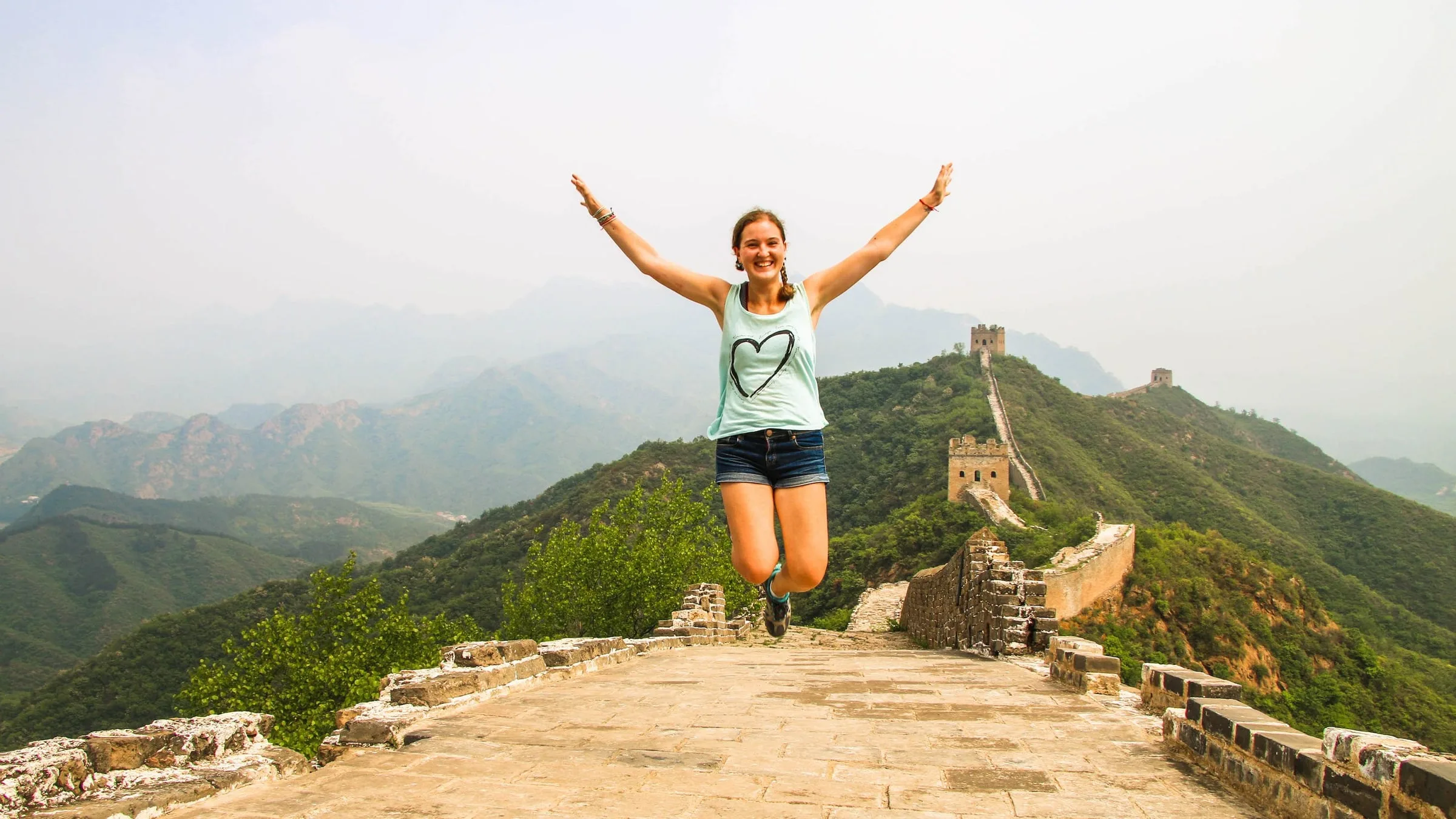
- Day trips for solo travelers: The Great Wall at Mutianyu (1.5 hours, less crowded than Badaling, $45 with cable car), the Forbidden City (must-book online 7 days in advance, $10–$15), and the Temple of Heaven ($5, beautiful morning tai chi scene).
The 5 apps every solo female traveler needs in China
- DiDi (China’s Uber) — works in 100+ cities, accepts foreign Visa/Mastercard through the international version, has a built-in emergency button that shares your live location with a pre-set contact, and routes everything through a local driver. Use it, not taxis. The English version of the app is now stable and good.
- Alipay with Tour Card — sets up in 10 minutes, accepts your foreign card, and the Tour Card version gives you a virtual Visa debit card linked to your account so you can pay at almost any shop, restaurant, or attraction. Critical because most small vendors don’t take cash or foreign credit cards.
- Amap (高德地图) — better than Google Maps in China (Google Maps is partially blocked and shows outdated info). Amap has full English support, transit navigation, walking directions, and crowdsourced reviews.
- Pleco — the best offline Chinese dictionary. Has handwriting recognition, voice input, and a built-in character-by-character breakdown that helps you read signs and menus.
- Apple Maps or Bing Translate — for translation. Google Translate is mostly blocked. Bing Translate is the most reliable option, and Apple Translate (in iOS 18+) works offline in mainland China. The camera-translation feature is essential for reading menus and signs.
Optional but nice: Metroman for metro navigation, Airalo / Holafly for eSIM data (see our eSIM guide), and HelloTalk if you want to chat with locals practicing English.
The 5 scams that specifically target solo women
These are real, current, and well-documented. The 90% rule: if a stranger approaches you in a tourist area with a “free” or “special” offer, walk away.
1. The “tea ceremony” scam
A young Chinese woman (or someone claiming to be studying English / art) approaches you near a tourist area. The conversation goes: “Where are you from? I love your country! I’m an art student and I’d love to practice English with you. Would you like to see my friend’s tea house?” You go. You sit. You “try” the tea. The bill is $200–$500, and two large men are at the door. The tea ceremony is real, but the price is fake, and you’re expected to pay it. The fix: never accept a “free” or “special” invitation from a stranger. Ever.
2. The “art student” / “photographer” setup
Same pattern, slightly different hook. “I’m a photography student, can I take your picture?” or “I love your style, can I show you my art studio?” It ends at a bar, a tea house, or an art “gallery” with the same inflated bill. The fix: polite decline. No exceptions.
3. The “massage parlor” mistake
A friendly local recommends a “nice” massage parlor. The bill includes services you didn’t ask for and didn’t receive. The fix: only use massage parlors you’ve researched and booked in advance. Hotels will recommend reputable ones.
4. The taxi/DiDi “meter is broken” pattern
In Tier-2 cities (less in Shanghai/Beijing), some drivers will claim the meter is broken and quote a flat fare. With DiDi, this doesn’t happen — the price is fixed in the app. With taxis, the meter must run; if it doesn’t, get out. The fix: use DiDi for almost everything.
5. The “I need help with my passport” setup
Someone approaches claiming to be a foreign student, lost their passport, and needs cash immediately. The passport is fake; the cash is gone. The fix: direct them to their embassy, walk away, don’t open your wallet.
The 4 situations that are NOT scams but feel weird
These are cultural differences, not threats. Knowing them in advance saves a lot of awkwardness.
- “Why are you alone?” — Chinese people will ask, and they’ll ask directly. It’s not rude in Chinese culture; it’s a conversational opener. The polite answer is “I’m on a trip to [city] and I like traveling alone.” A short, friendly response ends it.
- The staring — in Tier-2 and Tier-3 cities, you will be stared at. It’s not hostile; it’s curiosity. Smile and move on. If it feels uncomfortable, move to a more touristed area.
- The “let me take a photo with you” request — common, especially from younger Chinese people. It’s flattering, not threatening. You can decline politely.
- The unsolicited help — strangers will offer directions, photo help, and metro navigation without being asked. Accept it; they’re trying to be helpful, and the interaction is usually 30 seconds.
Women-only accommodation options
| City | Property | Type | Per night (USD) | Note |
|---|---|---|---|---|
| Shanghai | The Phoenix Hostel | Hostel, women-only dorm | $25–$40 | 24h reception, central, very social |
| Shanghai | The Middle House | Hotel, design-led | $350+ | Solo-friendly, safe area, top service |
| Shanghai | Jing’an Shangri-La | Hotel, women-floor option | $300+ | Extra security on women-only floor |
| Beijing | Beijing 365 Inn | Hostel, women-only dorm | $20–$35 | Hutong location, social, English staff |
| Beijing | NUO Hotel Beijing | Hotel, design-led | $180–$280 | Modern, central, very female-friendly |
| Chengdu | Chengdu Flipflop Hostel | Hostel, women-only dorm | $20–$35 | Social, near Jinli, English staff |
| Chengdu | The Temple House | Hotel, design-led | $250+ | Swire property, very polished |
| Hangzhou | Mingtown Hostel | Hostel, women-only dorm | $25–$40 | West Lake location, very social |
| Hangzhou | Westlake Resort | Hotel, mid-range | $200–$300 | Female-friendly service |
| Xi’an | Han Tang Inn | Hostel, women-only dorm | $20–$35 | Near Muslim Quarter, social |
The rule for solo female hotel choice: central, well-lit, 24h reception, and (ideally) in a Tier-1 city for the first trip. Don’t book the cheap 1-star “loved by locals” place you’ve never heard of for the first 3 nights — book the known chain, get your bearings, and then experiment.
Women-only and women-friendly tour groups
If the solo-travel idea is appealing but the planning feels overwhelming, these are the established networks that run women-only or women-friendly trips in China:
- Women Welcome Women — UK-based, established network, runs small-group tours in China with female guides. Higher price ($3,000–$5,000 for 10–14 days) but a “solo travel without the solo” experience.
- TourHero — global, has a women-only filter, smaller groups (8–12 people), China trips 7–21 days. ~$2,000–$4,000.
- Intrepid Travel — has a women-only “Basix” style trip in China, 12 days, ~$2,500.
- Wild Women Expeditions — Canada-based, specializes in outdoor and cultural trips, has a 14-day China itinerary, ~$4,000.
- Flash Pack — for solo travelers 30–45, small groups (8–16), 10–14 day China trips, ~$3,500.
- G Adventures — has a “National Geographic–style” women-led China trip, 12 days, ~$2,800.
The local alternative: join a small-group GetYourGuide day trip in each city. The Beijing and Shanghai “Small Group: Forbidden City + Tiananmen Tour” and “Great Wall at Mutianyu” are 90% solo travelers, very social, and the group size is 8–15. They’re not women-only, but the demographic skews 50%+ solo female travelers. $40–$80 per day trip.
The 7-day solo female China itinerary (first trip)
| Day | City | What to do | Where to stay |
|---|---|---|---|
| 1 | Shanghai | Arrive, settle in, walk the Bund at night | The Phoenix Hostel (women-only dorm) |
| 2 | Shanghai | Yuyuan Garden, French Concession wander, Jing’an temple | The Phoenix Hostel |
| 3 | Shanghai → Hangzhou | High-speed train (1 hour, $15), check in, West Lake sunset | Mingtown Hostel |
| 4 | Hangzhou | Lingyin Temple, Longjing tea plantation, Hefang Street | Mingtown Hostel |
| 5 | Hangzhou → Beijing | High-speed train (5 hours, $80), check in, Forbidden City area walk | Beijing 365 Inn |
| 6 | Beijing | Great Wall at Mutianyu (GetYourGuide day trip, $60) | Beijing 365 Inn |
| 7 | Beijing | Forbidden City, Temple of Heaven, depart | — |
Cost: $1,200–$1,600 total, including accommodation, transport, food, 1 day trip, and eSIM. The 7 days are paced for solo travel — 2–3 days per city is enough to feel the place without rushing.
The 4-line takeaway
- China is genuinely safer than the US/UK/France on violent crime, but scams targeting solo women are real and specific — learn the 5 main patterns before you go.
- Start in Shanghai or Chengdu, not Beijing, for the first solo trip. The English density and walkability make everything easier.
- Set up Alipay, DiDi, Amap, and Pleco before you fly. With these 4 apps you can navigate 95% of the country without Chinese.
- Use women-only dorms and mid-range hotels in central areas for the first 3 nights. Don’t experiment on the first solo trip.
China in 2026 is one of the best countries in the world for solo female travel. The infrastructure is there, the cities are safe, the people are curious and helpful, and the cultural experiences are once-in-a-lifetime. The guide above is what I’d send to my own sister for her first trip. Go, and enjoy it.
Where to book
Now that the plan is set, lock in the accommodation and the internal transport — these are the two big line items:
- Browse women-friendly hotels and hostels across China (filter by neighborhood, price, and English-speaking staff — most major chains have women-floor options)
- Search domestic flights within China (Shanghai–Beijing, Shanghai–Chengdu, Beijing–Xi'an — book 14–21 days ahead for the best 2026 prices)
Affiliate disclosure: Some links above are affiliate links. We may earn a commission at no extra cost to you. See full disclosure .
Plan your trip — verified tools
These free tools are built on real, monthly-verified data and help you skip the trial-and-error phase of China trip planning:
- China 240-Hour Visa-Free Transit Checker — 57 countries, 24 provinces, 65 ports. See if you qualify for 10-day visa-free transit, which cities you can visit, and the 5-step process.
- China 6-City 5-Day Budget Calculator — Real 2026 prices for 5 days in Beijing, Shanghai, Guangzhou, Chengdu, Xi’an, or Hangzhou. Budget / mid-range / comfort tiers, broken down line by line.
Verified August 2026 by TravelHubChina Editorial. We re-check prices and policy details monthly so the data doesn’t drift.
Related: China solo travel guide
Related: China travel safety guide
Related: China cultural etiquette
Step by step
-
Start in Shanghai, Chengdu, or Hangzhou for your first solo trip
Shanghai is the default starting point — English signage everywhere, metro runs until 11 PM, the Bund and French Concession are very walkable, and the foreigner density is highest. Chengdu has a famously relaxed vibe and warmer people. Hangzhou is the quiet option with West Lake, Lingyin Temple, and noticeably lower tourist scam density. Beijing is bigger, more crowded, and has a more pronounced language barrier — save it for trip 2 or 3.
-
Install 5 essential apps before you arrive
DiDi (China's Uber, accepts foreign cards, has a built-in emergency button sharing your live location). Alipay with Tour Card (sets up in 10 minutes, gives you a virtual Visa debit card for almost any shop). Amap (better than Google Maps in China, full English support). Pleco (best offline Chinese dictionary with handwriting recognition). Bing Translate or Apple Translate (Google Translate is mostly blocked).
-
Avoid the 5 scams that specifically target solo women
(1) The 'tea ceremony' scam — a young woman invites you to a 'free' tea house, the bill is $200-500 with two men at the door. (2) The 'art student' / 'photographer' setup — same pattern, ends at a bar or gallery. (3) The 'massage parlor' mistake — book only parlors you've researched. (4) The taxi 'meter is broken' pattern — use DiDi, not taxis. (5) The 'I need help with my passport' setup — direct them to their embassy, walk away.
-
Book women-friendly accommodation in central neighborhoods
Choose central, well-lit, 24h reception. The Phoenix Hostel in Shanghai ($25-40/night, women-only dorm) and Beijing 365 Inn ($20-35/night) are the top picks. For hotels, Jing'an Shangri-La has a women-floor option, NUO Hotel Beijing ($180-280) is very female-friendly, and The Middle House in Shanghai ($350+) is design-led. Book a known chain for the first 3 nights to get your bearings before experimenting with boutique options.
-
Use DiDi, not taxis, and stay out late in touristed areas only
DiDi is the safest transport option — the price is fixed in the app, the driver is registered, and the emergency button shares your live location with a pre-set contact. Avoid taxis in Tier-2 cities (meter may be 'broken'). Stay out late only in well-lit, touristed areas (the Bund, Nanjing Road, Tiananmen, major bar streets). For late-night returns, pre-book a DiDi before you leave the venue. Airport priority lane is for first-class and 65+ travelers.
FAQ
-
Is China safe for solo female travelers in 2026?
Yes, China is one of the safest countries in the world for solo female travel. The intentional homicide rate is 0.5 per 100,000 (vs 6.3 in the US, 1.0 in the UK). Numbeo's 2026 perceived safety score is 84/100 (vs 51 in the US). Street harassment prevalence among surveyed female solo travelers is 15% in China vs 38% in the US, 51% in the UK, and 64% in France. The main risks are specific scams (tea ceremony, art student, massage parlor) and traffic, not violent crime. Be defensive about pedestrian traffic and avoid the 'free' invitation pattern. -
What is the best city in China for a first-time solo female traveler?
Shanghai is the default starting point — English signage is everywhere, the metro is clean and runs until 11 PM, the Bund, French Concession, and Jing'an are very walkable, and the foreigner density means you will not be a complete oddity. Chengdu is the alternative pick — relaxed vibe, Jinli Ancient Street and Kuanzhai Alley are safe even at night, the people are noticeably warmer, and the Kung Fu Tea culture means you will get pulled into conversations. Hangzhou is the quiet option with West Lake, Lingyin Temple, and the lowest tourist scam density of the three. -
What are the most common scams targeting solo women in China?
The 5 most common: (1) The 'tea ceremony' scam — a young woman invites you to a 'free' tea house, the bill is $200-500 with two men at the door. (2) The 'art student' / 'photographer' setup — same pattern, ends at a bar or gallery with an inflated bill. (3) The 'massage parlor' mistake — book only parlors you've researched in advance. (4) The taxi 'meter is broken' pattern in Tier-2 cities — use DiDi instead. (5) The 'I need help with my passport' setup — direct them to their embassy, walk away. The 90% rule: if a stranger approaches you in a tourist area with a 'free' or 'special' offer, walk away. -
Do I need to book hotels that specifically host foreign women in China?
Not specifically, but choose wisely. Pick central, well-lit, 24h-reception properties. Budget 1-star 'loved by locals' places are riskier — book a known chain (Jin Jiang Inn, Hanting Express, 3-star international) for the first 3 nights to get your bearings. The Phoenix Hostel in Shanghai (women-only dorm, $25-40) and Beijing 365 Inn (women-only dorm, $20-35) are the top hostel picks. For hotels, NUO Hotel Beijing ($180-280) and The Middle House in Shanghai ($350+) are very female-friendly. Jing'an Shangri-La has a dedicated women-floor option with extra security. -
Can I use DiDi ride-hailing safely as a solo woman in China?
Yes, DiDi is the safest transport option for solo women. The English version of the app is now stable, accepts foreign Visa/Mastercard, has a built-in emergency button that shares your live location with a pre-set contact, and routes everything through a registered local driver. The price is fixed in the app, so the 'meter is broken' taxi scam does not apply. Use DiDi instead of taxis in Tier-2 cities (some drivers will claim the meter is broken and quote a flat fare). For late-night returns, pre-book a DiDi before you leave the venue, and stay in well-lit, touristed areas.
Related guides
- Itineraries
China Group Tours in 2026: Complete Guide (Worth It? Best Operators, Costs, and How to Avoid the Traps)
Comprehensive 2026 guide to China group tours: top 6 tour operators (Intrepid, G Adventures, EF, China Highlights, Wild China, Backroads) with prices, group sizes, and reviews. Plus: pros and cons vs independent travel, top 5 sample itineraries (14-day Grand Tour, photography, food, family, adventure), how to avoid shopping trap stops, and whether Tibet, Xinjiang, and Silk Road tours are worth the premium.
10min read
- Itineraries
China Vacation Packages 2026: Complete Guide to All-Inclusive Tours, Costs, and Best Operators
Compare the best China vacation packages for 2026 by tour type, budget, and traveler profile. Includes pricing for 6 budget tiers, top 8 operators (Trip.com, Intrepid, G Adventures, EF Tours, China Highlights, Wild China, Backroads, Audley), what's included vs excluded, and the 5-step booking process. Plus: how to avoid shopping trap stops, 14-day vs 7-day vs 21-day packages, and whether a guided package is worth it for first-time China visitors.
11min read
- Itineraries
China Cool 2026: 8 Best Summer Escapes from the Heat (Foreigners' Guide)
China Cool is the 2026 trending travel movement — escaping the summer heat to China's mountain and forest retreats averaging 18-26°C. 8 hand-picked destinations with transport, stay, and food tips for foreign visitors.
11min read
- Itineraries
China's 15 Hidden Gem Cities: The 2026 Reverse Tourism Guide for Foreigners
Skip Beijing and Shanghai. China's 15 hidden gem cities for 2026 — verified lesser-known destinations (Wuyuan, Fenghuang, Songpan, Dali, Wuyi, Tengchong, Jianshui, etc.) with how to get there, what to do, where to stay, and food. Reverse tourism trend up 187% YoY in 2026.
14min read
- Itineraries
China Honeymoon 2026: The Ultimate Romantic Travel Guide (Itineraries, Cost, Visas)
China is the surprise 2026 honeymoon destination — cheaper than Bali/Maldives, less crowded than Paris, with hidden romantic gems. 4 ready-made itineraries (7 / 14 / 21 / 30 days) covering Yunnan, Sichuan, Jiangnan, and Tibet-Yunnan grand circuits. 2026 visa rules, costs, best seasons, and how to avoid the 5 most common honeymoon mistakes in China.
16min read
- Itineraries
China on a Budget 2026: The Backpacker & Extreme Budget Travel Guide
Travel China on a backpacker budget of $30-60/day in 2026 — hostel culture, sleeper trains (硬座/硬卧/软卧), the classic backpacker route (Shanghai-Yangshuo-Dali-Lijiang), street food deep dive, free attractions, couchsurfing, work exchange (WWOOF/Workaway), and 4 ready-made itineraries (2 weeks, 3 weeks, 1 month, 2 months). Includes 30 FAQs and 7 cheap cities ranked by daily cost.