
Temple of Heaven
北京天坛 · Tiāntán
Quick answer
Foreign passport required at ID check. No advance booking needed — tickets sold at the South Gate (昭亨门) or West Gate (西天门). The park is also a popular morning exercise spot for locals.
Why visit
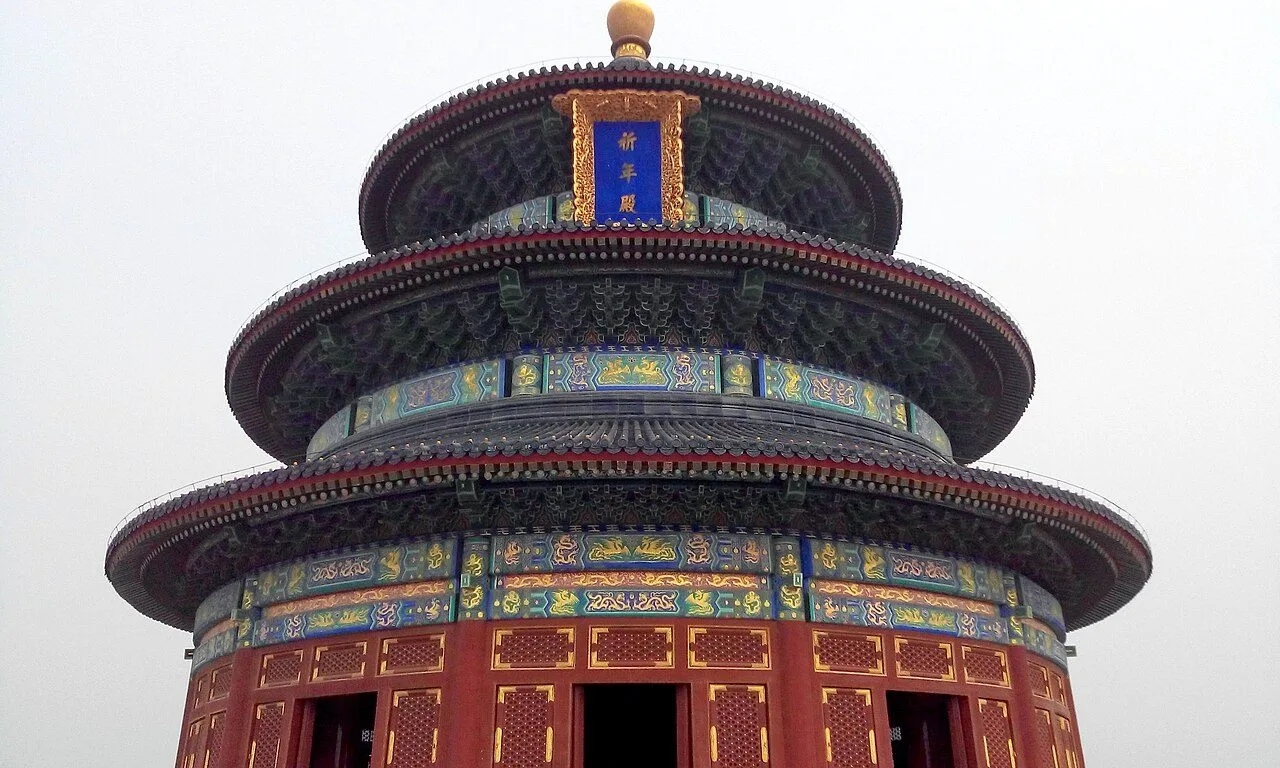
- 1 The Hall of Prayer for Good Harvests (祈年殿) — a 38m tall, triple-eaved circular building in deep blue tiles, the visual symbol of Beijing
- 2 Whisper across the Echo Wall (回音壁) — speak softly at one end of the 65m circular wall and your words travel clearly to the other
- 3 The Circular Mound Altar (圜丘坛) — three concentric tiers of white marble where Ming and Qing emperors prayed for good harvests
- 4 Watch local Beijingers practice tai chi, dance, and calligraphy in the park at dawn — the most authentic local cultural experience
- 5 The 360m Long Corridor (丹陛桥) connecting the Hall of Prayer to the Circular Mound, a raised stone causeway representing the path from earth to heaven
Essential tips for foreigners
- Enter early (7-8 AM) to see the locals exercising and avoid the tour-bus crowds. The park becomes much quieter and the light is beautiful
- Buy the combo ticket (¥34-35) to see all three main religious structures. The park-only ticket (¥15) lets you into the gardens but not the main buildings
- Bring your passport — ID is checked at the security gate. Credit cards and Alipay are accepted at the official ticket window
- The South Gate (昭亨门) is the most direct entrance to the Hall of Prayer. The North Gate (北天门) is closer to the metro
- Wear comfortable shoes — the park is 2.73 km² (673 acres), and you will walk 4-7 km in a full visit
- Visit on a Sunday morning for the authentic local experience: free tai chi classes, dance groups, and calligraphy practice in the park
- The Echo Wall only works if you speak softly and stand at the precise spots marked on the wall. Louder voices do not work as well
- Photography is allowed everywhere; tripods OK in outdoor areas, not inside the buildings
Suggested route
- 07:00 30 min Arrive at South Gate (昭亨门) at 7 AM to see the locals practicing tai chi, dance, and calligraphy in the park. Buy the combo ticket
- 07:30 1 hour Walk through the South Gate to the Hall of Prayer for Good Harvests (祈年殿). Photograph from below to capture the triple-eaved roof
- 08:30 45 min Walk the raised Long Corridor (丹陛桥) north to the Imperial Vault of Heaven (皇穹宇) and the Echo Wall (回音壁). Test the acoustic phenomenon
- 09:15 45 min Continue north to the Circular Mound Altar (圜丘坛). Climb the three tiers of white marble
- 10:00 1.5 hours Walk back through the park on the western path. Stop at any exercise group that catches your eye — the calligraphy and tai chi scenes are wonderful
- 11:30 30 min Exit via the West Gate (西天门). Lunch at the noodle shop across the street, or continue to the North Gate and the Tiantan Beimen metro station
The Ming dynasty temple where emperors prayed to heaven
The Temple of Heaven (天坛, Tiāntán) is the largest existing imperial sacrificial complex in the world — 2.73 km² (673 acres) of park, temples, and pavilions where Ming and Qing dynasty emperors performed annual ceremonies praying to heaven for good harvests from 1420 to 1911. It sits in central-south Beijing, about 4 km south of the Forbidden City, and is one of the most photogenic and culturally significant sites in China.
For most foreign visitors, the Temple of Heaven is the most rewarding half-day trip in Beijing after the Forbidden City. The Hall of Prayer for Good Harvests — a 38-meter tall, triple-eaved circular building in deep blue tiles — is the visual symbol of Beijing, depicted in countless postcards and travel posters. The site is a UNESCO World Heritage Site since 1998.
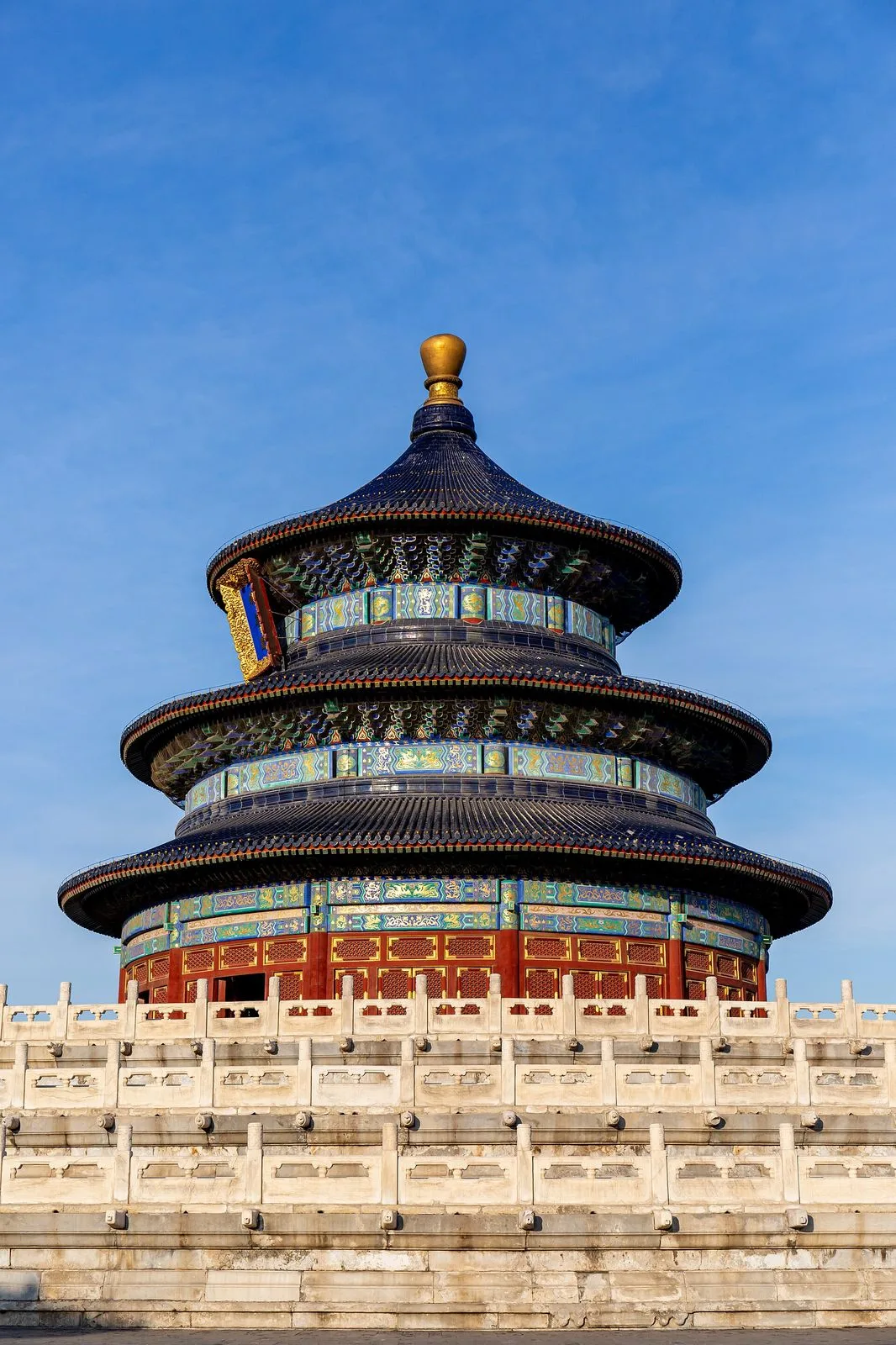
Photo: Wikimedia Commons / CC BY-SA. Source

What the foreigner experience looks like in 2026
The Temple of Heaven is one of the most foreigner-friendly imperial sites in China. There is no advance booking required — you walk up to any of the four gates and buy a ticket with your passport and a credit card. The audio guide is in clear English, and the English signage is comprehensive. The combination of imperial architecture, the park, and the active local exercise scene makes it the most multidimensional of Beijing’s imperial sites.
The main change in recent years: the park has been recognized as a working community space, and the morning exercise scene has become a tourist attraction in its own right. Tourists now arrive at 7 AM to watch locals practice tai chi, dance, and play traditional instruments, and the park has become one of the most photographed scenes of contemporary Chinese life.
Three signature experiences not to miss
First, the Hall of Prayer for Good Harvests (祈年殿) — a 38-meter tall, triple-eaved circular building in deep blue tiles that has become the visual symbol of Beijing. The building is constructed entirely of wood (no nails) and represents the supreme yang number in its 28 columns (4 inner = seasons, 12 middle = months, 12 outer = hours of the day). Walking around the base of the building is the highlight of any visit.
Second, the Echo Wall (回音壁) — a 65-meter circular wall surrounding the Imperial Vault of Heaven, with the unique acoustic property that a whisper at one end travels clearly to the other end. The wall is perfectly smooth and the curve is exact; the principle is similar to whispering galleries in European cathedrals but more reliable. It is the only place in China where this specific acoustic effect is reliable.
Third, the morning exercise scene in the park. By 7 AM, hundreds of Beijingers gather in the park’s squares to practice tai chi, group dance, calligraphy with water brushes on the pavement, and play traditional instruments. The scene is authentic, free, and uniquely Chinese. The Temple of Heaven park is not just a museum — it is a working community space.
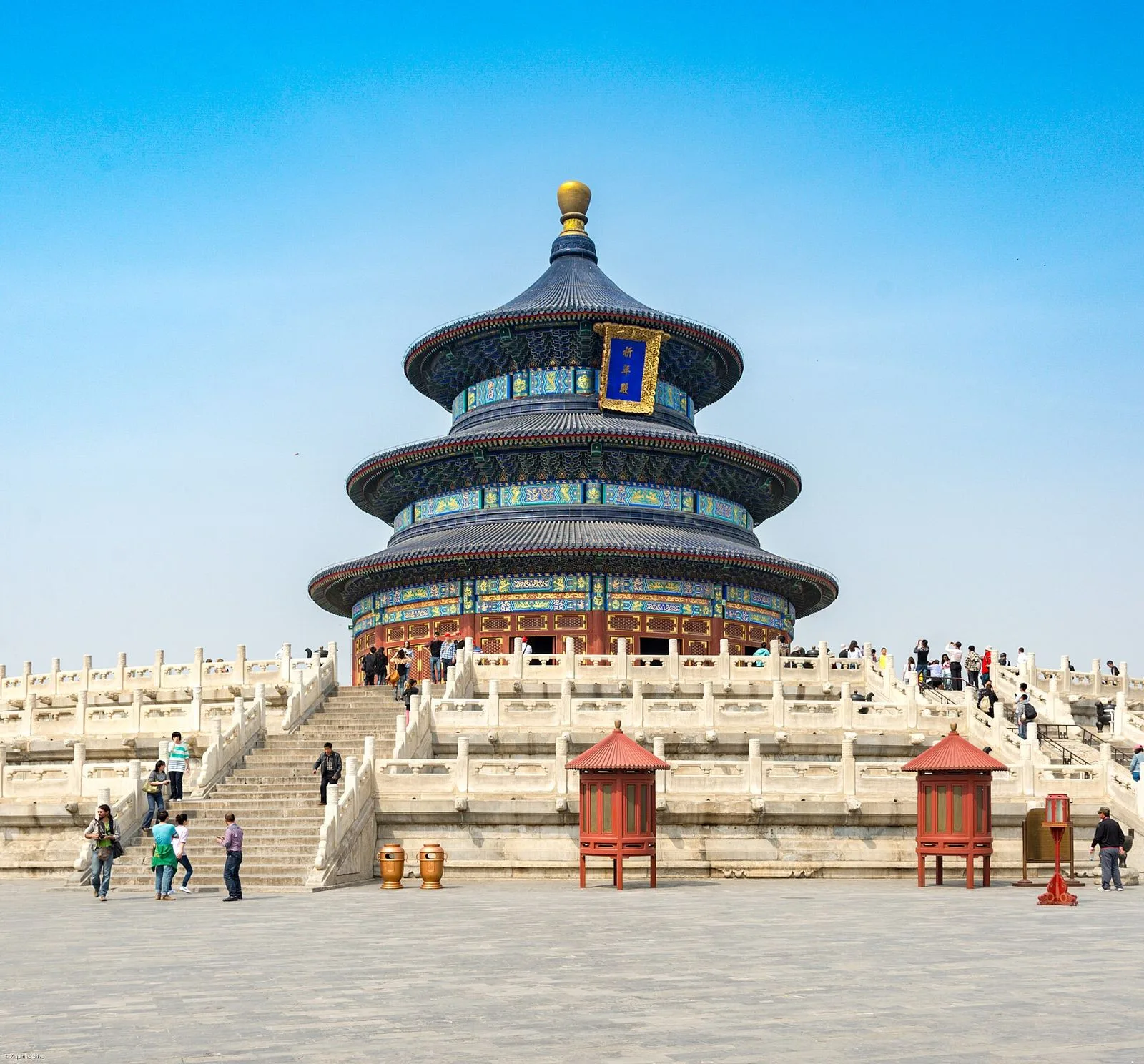
Photo: Wikimedia Commons / CC BY-SA. Source

Cultural context and the imperial cosmology
The Temple of Heaven was designed as a physical representation of the Chinese imperial cosmology. The Hall of Prayer represents heaven, the Circular Mound Altar represents the supreme point of contact with heaven, and the surrounding park represents the earth. The emperor — the Son of Heaven — would come here once a year, usually in early spring, to perform the sacrificial ceremonies that legitimized his rule.
The colors are symbolic: the blue tiles of the Hall of Prayer represent the sky, the red columns represent the sun, and the yellow roof of the Imperial Vault of Heaven represents the emperor. The whole complex is oriented along a north-south axis, with the emperor approaching from the south (the direction of fire and brightness) and the buildings aligned to true north.
The annual ceremonies were the most important state rituals of the Chinese imperial calendar. The emperor would fast for three days before the ceremony, then walk from the Forbidden City to the Temple of Heaven (a procession that took several hours) to perform the sacrifices. The ceremonies ended in 1911 with the fall of the Qing dynasty, but the buildings remain intact.
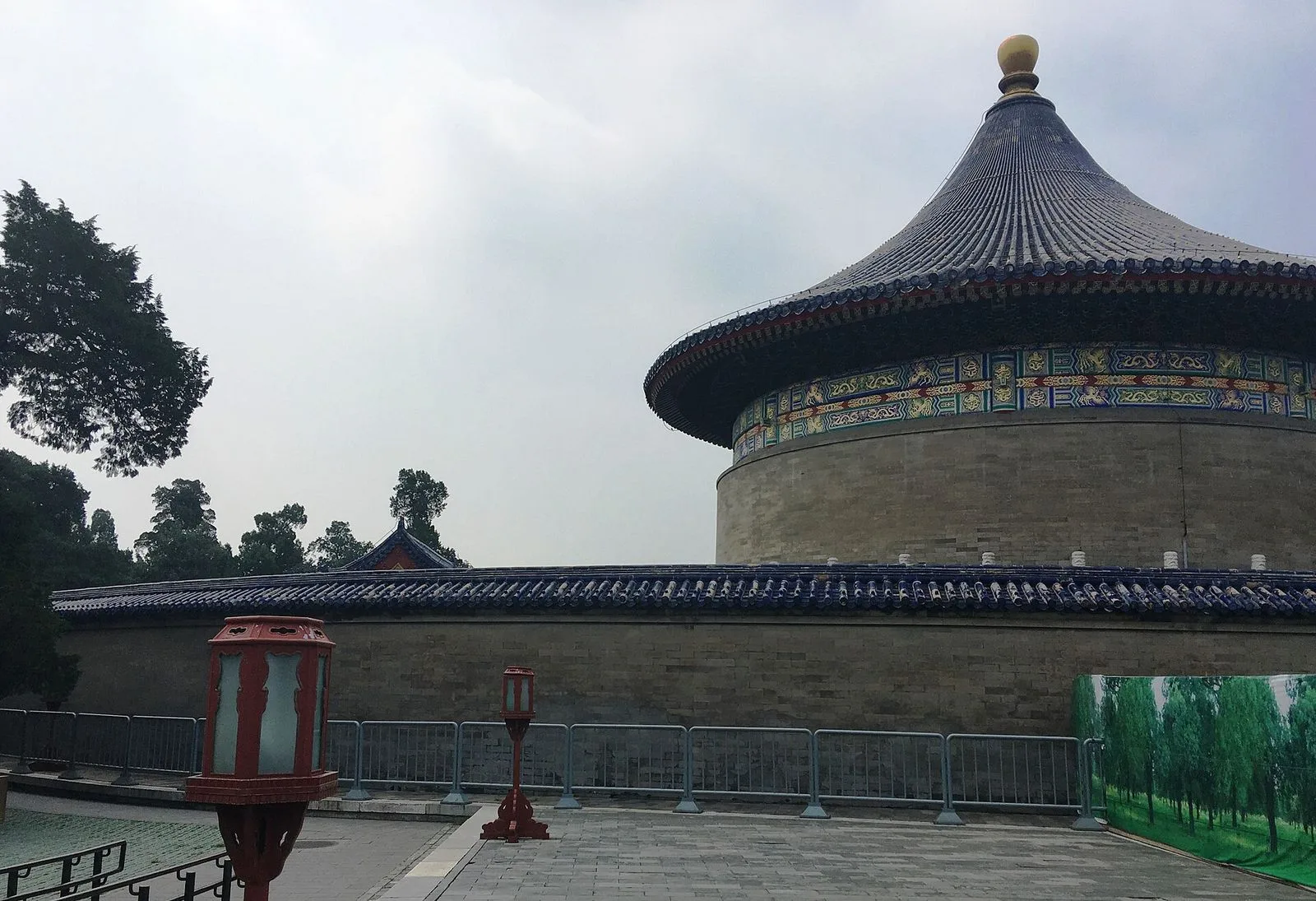
Photo: Wikimedia Commons / CC BY-SA. Source

How to spend your time — three visit lengths
90 minutes (express): Enter the South Gate, photograph the Hall of Prayer, walk the Long Corridor to the Echo Wall, test the acoustic, exit via the North Gate. The two essential experiences are the Hall of Prayer and the Echo Wall.
2-3 hours (standard): Add the Circular Mound Altar, a slow walk through the park gardens, and time to observe (or join) the morning exercise scene. The audio guide (¥20) is well worth it.
3-4 hours (full morning): Arrive by 7 AM, spend an hour watching the local exercise scene, then complete the standard visit. Add lunch at the South Gate snack stalls. Best for a contemplative experience.
Practical guidance for first-timers
The South Gate (昭亨门) is the most direct entrance to the Hall of Prayer for Good Harvests, the highlight. The North Gate (北天门) is closest to the Line 5 metro Tiantan Beimen station. The East Gate (东天门) is closest to the Line 5 Tiantan Dongmen station. The West Gate is the least crowded on weekends.
The park is much more than a museum — it is a working community space, especially in the early morning. You will see locals practicing tai chi, dancing in groups, playing traditional instruments, and writing calligraphy with water brushes on the pavement. The morning is the most authentic time to visit.
Bring water and snacks, although on-site restaurants are decent (¥40-100/person for set menus). The walking distance is substantial — 4-7 km in a full visit — so comfortable shoes are essential. The park is mostly outdoors, so check the weather and bring sun protection in summer, a warm coat in winter.
When to come
The best months are April-May (mild weather, spring blossoms) and September-October (clear autumn skies). December-February offers the most beautiful soft winter light and the most authentic local exercise scene, but temperatures can drop to -10°C. Avoid the Chinese national holidays (May 1-3, October 1-7) — the park becomes impassable.
Final tip
The Temple of Heaven rewards both quick visits and slow mornings. The Hall of Prayer for Good Harvests is the visual centerpiece and worth the trip on its own. But the deeper experience is to arrive at 7 AM, watch the local exercise scene unfold in the park, then walk through the imperial temples as the tour groups arrive. Two completely different perspectives on the same place, and you will leave understanding both imperial China and contemporary Beijing.
Best photo spots
-
Hall of Prayer for Good Harvests (祈年殿) from below · Early morning, 7-9 AM
The iconic three-tiered circular roof in deep blue tiles against a clear sky. Shoot from the southern side at a low angle to capture the height of the columns and the eaves.
-
Long Corridor (丹陛桥) from the side · Afternoon, 2-3 PM
The 360m raised central path, slightly elevated above the surrounding park. From the eastern side, you can capture the causeway stretching to the Hall of Prayer in the distance with the modern Beijing skyline as backdrop.
-
Echo Wall (回音壁) interior · Mid-morning, 10-11 AM
The smooth circular wall is best photographed from a corner, capturing the curve. Have a friend stand at the opposite end for a person-to-person scale shot.
-
Circular Mound Altar (圜丘坛) from above · Late morning, 11 AM - noon
The three concentric tiers of white marble. From the upper tier, you can see the radiating pattern of the stones. Best on a clear day.
-
Park gardens in the early morning · 6:30-8 AM
The park before the tour groups arrive is filled with local Beijingers practicing tai chi, dancing, and playing traditional instruments. The light is soft and the atmosphere is purely local.
Where to eat nearby
-
Temple of Heaven South Gate Snack Stalls
Chinese street food — jianbing, baozi, roasted sweet potatoes, jiaozi · ¥10-30/person · Just outside the South Gate, no ticket needed
-
Donghuamen Night Market style stalls (东华门夜市 style)
Beijing street food — lamb skewers, fried dough, dumplings · ¥20-50/person · 15 min walk north from the North Gate, near the metro
-
Temple of Heaven Restaurant (天坛餐厅)
Chinese set menus (Beijing noodles, dumplings, hot pot) · ¥50-100/person · Inside the park, near the South Gate
-
Old Beijing Noodle Shop (老北京炸酱面馆)
Beijing noodles with soybean paste (zhajiangmian) · ¥30-60/person · 10 min walk from the West Gate
Frequently asked questions
How much does the Temple of Heaven cost for foreigners in 2026?
¥35 for foreign adults during peak season (Apr 1 - Oct 31), ¥28 in off-peak. The combo ticket is ¥34 and includes the Hall of Prayer for Good Harvests, the Echo Wall, and the Circular Mound Altar. The park-only ticket is ¥15 (gardens only, no main buildings). Children under 1.2m are free. No advance booking required.
Do I need to book Temple of Heaven tickets in advance?
No. Tickets are sold at the gate all day. Foreign passport required for ID check at the security gate. Credit cards and Alipay accepted. Avoid third-party resellers at the entrance who may charge inflated prices.
How long does it take to visit the Temple of Heaven?
90 minutes for the highlights (Hall of Prayer + Circular Mound + Echo Wall). 2-3 hours for a relaxed visit including the park gardens and the Long Corridor. 3-4 hours if you want to spend time watching the local exercise scene in the morning.
Which gate should I enter the Temple of Heaven from?
The South Gate (昭亨门) is the main entrance and the most direct to the Hall of Prayer for Good Harvests, the highlight. The North Gate (北天门) is closest to the Line 5 metro Tiantan Beimen station. The East Gate (东天门) is closest to the Line 5 Tiantan Dongmen station. The West Gate is the least crowded on weekends.
What is the best time of year to visit the Temple of Heaven?
April-May and September-October for the best weather and clear skies. Winter mornings (December-February) are popular for the local tai chi scene — arrive by 7 AM to see it in full swing. The Hall of Prayer is at its most photogenic in the soft winter light against a clear blue sky.
Is the Temple of Heaven wheelchair accessible?
Yes, mostly. The flat park paths and the raised central causeway are wheelchair accessible. The Hall of Prayer has step-free access via a side ramp. The Circular Mound Altar's upper tier has steps. Wheelchair loans are free at all gates.
Can I take photos inside the Temple of Heaven?
Yes, photography is allowed throughout the park and most buildings. Tripods are allowed outdoors but not inside the buildings. The Echo Wall is best photographed from a corner to capture the curve. The Hall of Prayer from below at sunset is the iconic shot.
Are there restaurants inside the Temple of Heaven?
Yes — 4 on-site restaurants and many snack kiosks. The most foreigner-friendly is the restaurant near the South Gate serving Chinese set menus (¥40-100/person). For street food, the area outside the East Gate has vendors selling jianbing, dumplings, and roasted sweet potatoes. Bringing water is recommended.
What is the Echo Wall and how does it work?
The Echo Wall (回音壁) is a 65-meter circular wall surrounding the Imperial Vault of Heaven. The wall is perfectly curved and smooth, allowing sound waves to travel along it with minimal loss. If you stand at one marked spot and speak softly, your words can be heard clearly at the other side, 65 meters away. It is one of the most unusual acoustic phenomena in the world.
Is there a dress code for the Temple of Heaven?
No formal dress code. The park is mostly outdoors, so bring sun protection in summer and a warm coat in winter (temperatures drop to -10°C in January). The Hall of Prayer is now a museum and you can wear anything reasonable. The park is also a working exercise space, so most visitors are in casual clothing.