
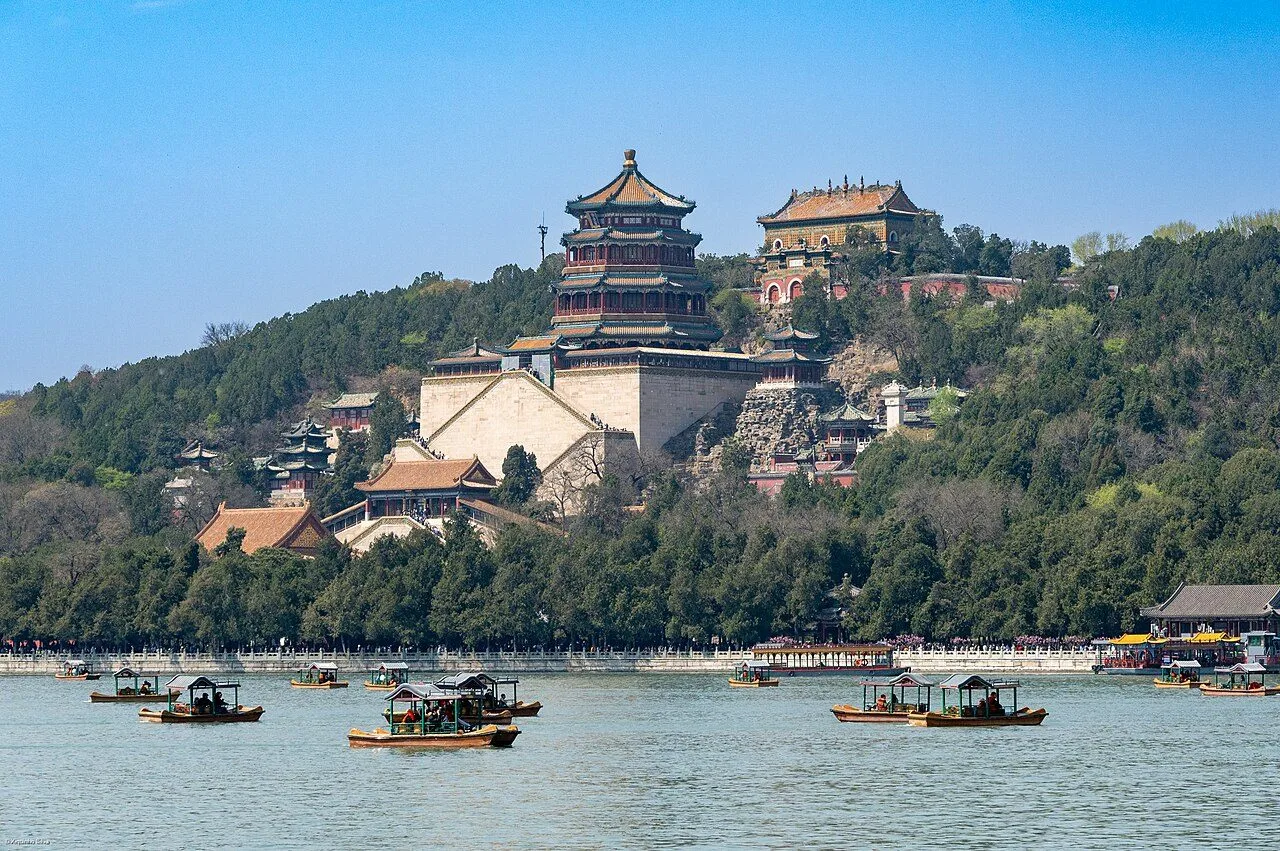
Summer Palace
北京颐和园 · Yíhé Yuán
Quick answer
Foreign passport required at entry for ID check. Tickets are sold at the gate; no advance booking required. The park is large enough that crowds are rarely a problem even on holidays.
Why visit
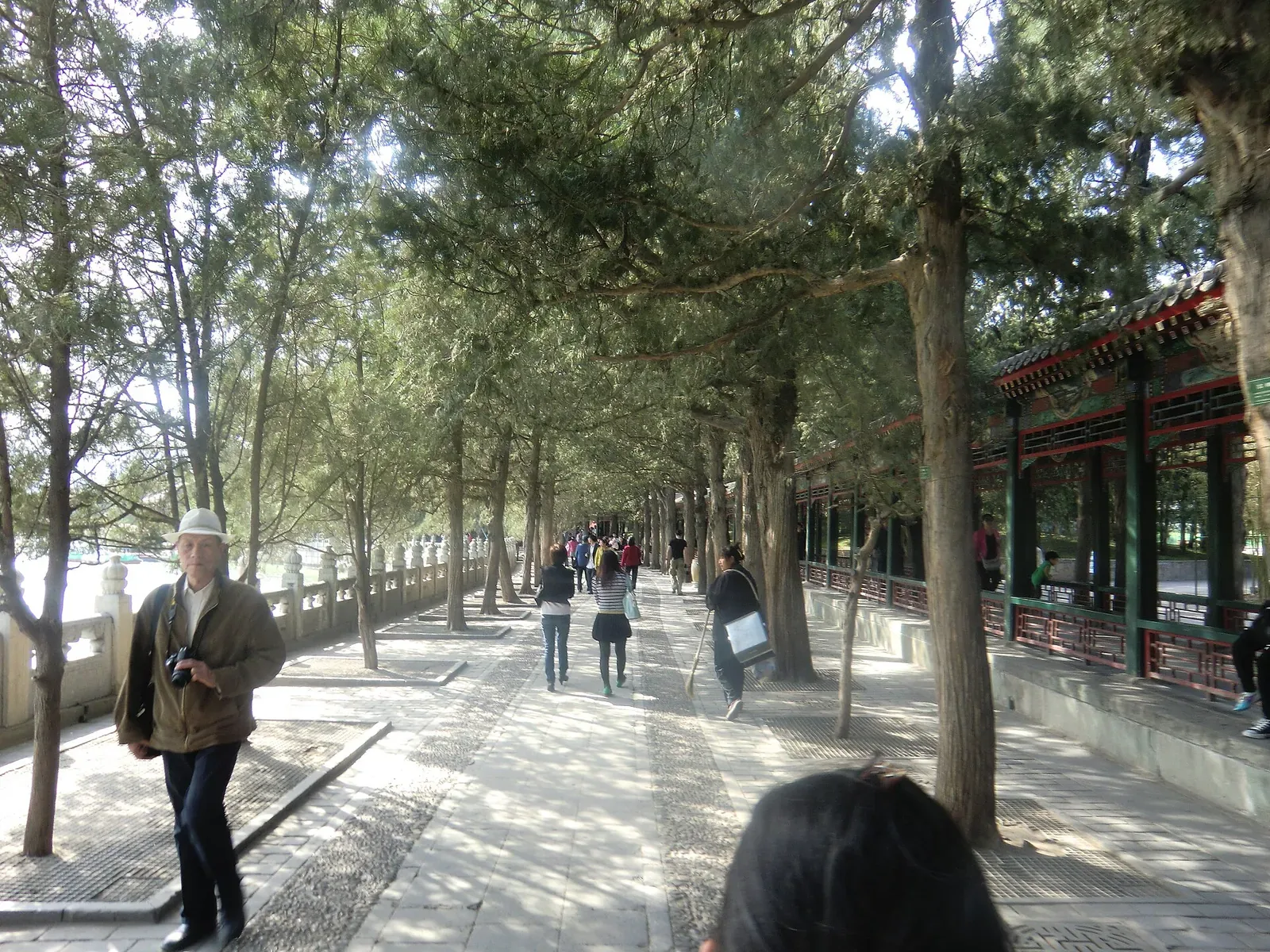
- 1 Walk the Long Corridor (长廊) — 728m of painted beams telling 14,000 stories from Chinese history, the longest covered walkway in the world
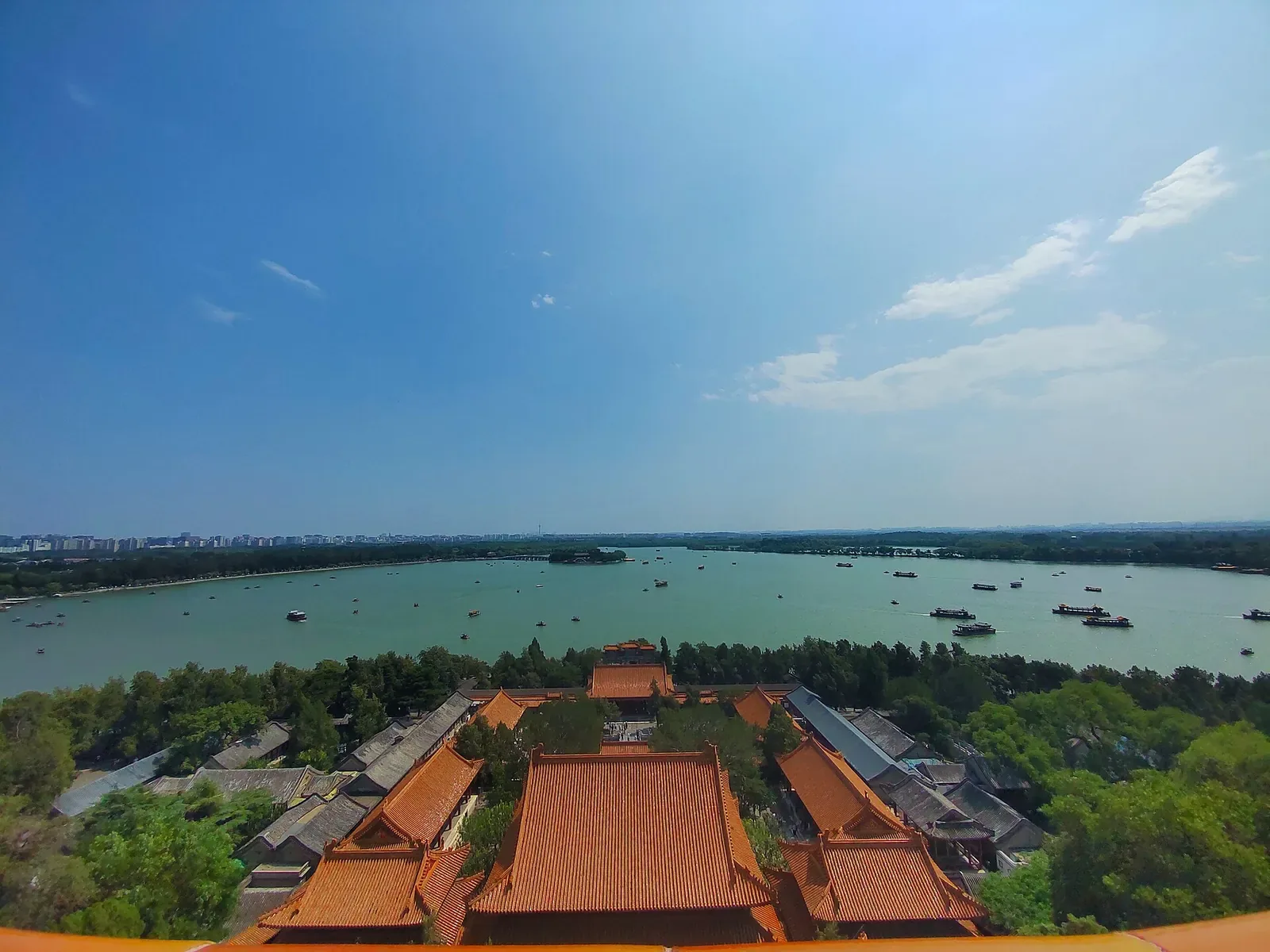
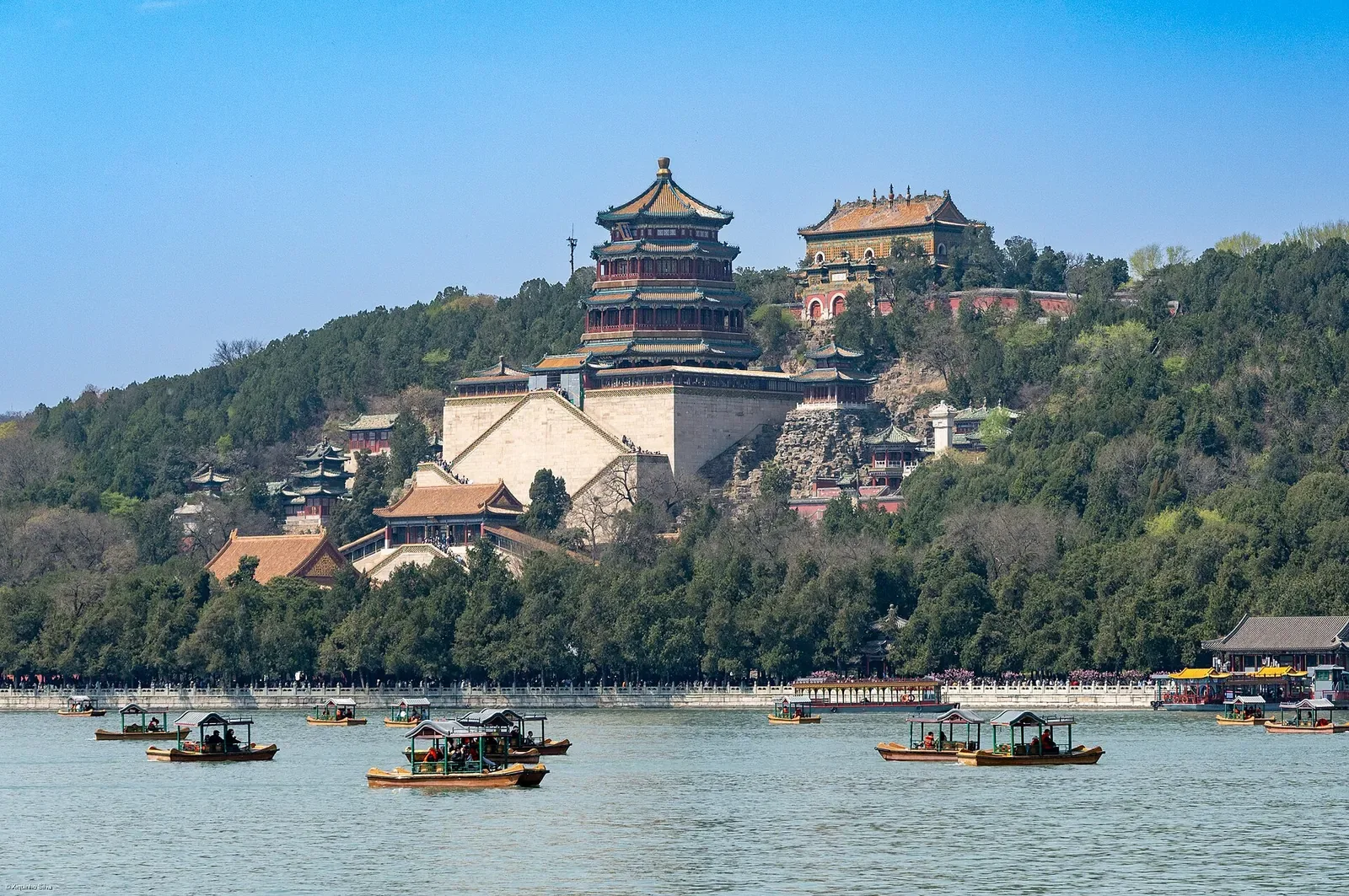
- 2 Climb the Tower of Buddhist Incense on Longevity Hill for the panoramic view over Kunming Lake
- 3 Cross the Seventeen-Arch Bridge (十七孔桥) to Nanhu Island — the single best photo op in the western garden
- 4 Rent a dragon boat or paddle boat on Kunming Lake in summer (¥20-60/hour)
- 5 Lotus bloom season (mid-June to early August) — Kunming Lake is carpeted in pink and white flowers, a photographer's dream
- 6 Visit the Marble Boat (石舫) — Empress Dowager Cixi's extravagant 1893 statement, built with funds meant for the navy
Essential tips for foreigners
- Enter the North Gate (北宫门) or West Gate (新建宫门), not the East Gate — they are less crowded and the routes lead naturally through the highlights
- Bring your passport — checked at the gate for ID. Credit cards and Alipay accepted; no need to bring cash
- Wear comfortable shoes — the park is 2.9 km² (715 acres) and you'll easily walk 6-10 km in a full visit
- Allow at least 3 hours. The park is too large to do thoroughly in 90 minutes
- Best light for photos: early morning (7-9 AM) on the Long Corridor; late afternoon (4-6 PM) on the Seventeen-Arch Bridge
- Lotus season (mid-June to early August) is the visual peak, but also the most crowded. Arrive at 7 AM opening for the best experience
- The audio guide (¥20, available at all gates) is genuinely good — covers the major landmarks in 90 minutes of clear English
- Avoid weekends in May and October (Chinese holidays) — the park becomes impassable
Suggested route
- 08:00 15 min Arrive at North Gate (北宫门) by 8 AM, show passport, buy ticket (¥60)
- 08:15 45 min Walk to Suzhou Street (苏州街) — the reconstructed 18th-century commercial street along the back of Longevity Hill
- 09:00 1.5 hours Climb Longevity Hill via the central path. Visit the Hall of Benevolence and Longevity, then take the side path to the Tower of Buddhist Incense (佛香阁) for the panoramic view
- 10:30 1 hour Descend via the northern path to the Long Corridor (长廊). Walk the full 728m covered walkway, photographing the painted beams
- 11:30 1 hour Continue to the Seventeen-Arch Bridge (十七孔桥) — cross to Nanhu Island and back, the highlight photo op
- 12:30 1 hour Lunch at one of the lakeside restaurants near the eastern shore (set menus ¥80-150/person) or pack your own
- 13:30 1.5 hours Rent a paddle boat or dragon boat on Kunming Lake (¥20-60/hour) and circle the southern shore
- 15:00 1.5 hours Visit the Marble Boat (石舫) and exit via the East Gate (东宫门). The walk to the gate passes the Hall of Dispelling Clouds and the principal courtyard
The Chinese garden that almost bankrupted the Qing dynasty
The Summer Palace (颐和园, Yíhé Yuán) is the largest and best-preserved imperial garden in China — a 290-hectare (715-acre) landscape of Kunming Lake, Longevity Hill, traditional pavilions, and 728-meter covered walkways that served as the summer retreat of the Qing dynasty emperors from 1750 to 1912. It sits about 20 km northwest of central Beijing, and the 3-hour walking visit is the most popular half-day trip from the city for foreign tourists.
For most foreign visitors, the Summer Palace is the single most rewarding cultural experience in Beijing outside the Forbidden City. The garden was designed as a microcosm of the Chinese landscape — Kunming Lake represents the sea, Longevity Hill represents the mountains, and the pavilions and temples scattered across them represent the divine realms. The result is one of the great landscape achievements of world garden design, and a UNESCO World Heritage Site since 1998.
What the foreigner experience looks like in 2026
The Summer Palace is one of the most foreigner-friendly imperial sites in China. There is no advance booking required — you walk up to any of the three main gates (East, North, or West) and buy a ticket with your passport and a credit card or Alipay. The park is so large (2.9 km²) that even on weekends, the crowds are spread out, and on weekdays in winter you can have whole sections almost to yourself.
The main changes for foreign visitors in the last few years: the audio guide is now available in five languages including English, Russian, and Korean; the metro Line 4 extension to Beigongmen (North Gate) makes the park easily reachable without a taxi; and the Suzhou Street boat ride is now included in the combo ticket. The English signage throughout the park has been substantially improved in the last decade.
Three signature experiences not to miss
First, the Long Corridor (长廊) — 728 meters of covered walkway connecting the eastern courtyard to the lake. The painted beams, crossbeams, and ceiling panels depict over 14,000 scenes from Chinese classical literature including Romance of the Three Kingdoms, Journey to the West, and Dream of the Red Chamber. Walking the full length takes about 20 minutes and is the closest you will get to strolling through a Chinese painting.
Second, the Seventeen-Arch Bridge (十七孔桥) — the 150-meter marble bridge connecting the eastern shore to Nanhu Island. The bridge has 544 carved marble lions (more than the Lugou Bridge) and is the single most photographed view in the western garden. Arrive at 4 PM in autumn for the best golden light.
Third, the lotus bloom on Kunming Lake from mid-June to early August. The southern third of the lake is carpeted in pink and white lotus flowers, drawing photographers from across Asia. The early morning (6-8 AM) is the best time, when the light is soft and the crowds are minimal.
Cultural context and the Cixi story
The Summer Palace as it exists today was rebuilt by Empress Dowager Cixi between 1886 and 1895, using 30 million taels of silver originally earmarked for modernizing the Qing navy. The most extravagant statement of this is the Marble Boat (石舫) — a 36-meter stone structure decorated with colored glass windows, moored at the western shore of the lake. The boat was explicitly built to show that the Qing treasury had more than enough money for both imperial luxuries and naval modernization (in fact, the navy was defeated by Japan in 1895 within months of the boat’s completion).
The garden is also the most complete example of Chinese imperial garden philosophy: the integration of architecture into natural landscape, the use of borrowed scenery from the Western Hills in the distance, and the symbolism of water (Kunming Lake as the sea) and mountain (Longevity Hill as the earth). The Western-style architecture (the Marble Boat, the Western-style gates) was Cixi’s interest in mixing Chinese and European aesthetics.
How to spend your time — three visit lengths
2 hours (express): Enter the North Gate, take the cable car up Longevity Hill, walk down via the Long Corridor, photograph the Seventeen-Arch Bridge, exit the East Gate. The two essential experiences are the view from Longevity Hill and the Long Corridor.
3-4 hours (standard): Add Suzhou Street at the back of Longevity Hill, the Marble Boat at the western shore, and a walk across the Seventeen-Arch Bridge. Take the audio guide (¥20) for proper context.
5+ hours (full day): Add a boat rental on Kunming Lake (¥20-60/hour), lunch at the lakeside restaurant, and a slow walk around the entire southern shore. Best for photography and the lotus bloom season.
Practical guidance for first-timers
Enter the North Gate (北宫门) if you are coming by metro (Line 4 to Beigongmen station, 5-minute walk). It is the most direct entrance to the highlights and the one with the smallest security queues. The East Gate (东宫门) is the most famous entrance but has long lines on weekends. The West Gate (新建宫门) is the best choice if you want to start with the Western Hills or skip straight to the boat rentals.
Bring water and snacks, although the on-site restaurants are decent (¥60-150/person for set menus). The walking distance is substantial — 6-10 km in a full visit — so comfortable shoes are essential. The park is mostly outdoors, so check the weather and bring sun protection in summer, a warm coat in winter.
When to come
The best months are April-May (mild weather, spring blossoms) and mid-October to early November (autumn foliage on Longevity Hill). Mid-June to early August is the lotus bloom season, visually spectacular but the busiest. December-February offers snow on the traditional rooftops and the smallest crowds, but temperatures can drop below -10°C. Avoid the Chinese national holidays (May 1-3, October 1-7) entirely — the park becomes impassable.
Final tip
The Summer Palace rewards slow looking. The painted beams of the Long Corridor tell a continuous story across 14,000 individual scenes. The Seventeen-Arch Bridge is one carved marble lion after another, each slightly different. The view from the Tower of Buddhist Incense places the imperial garden in dialogue with the Western Hills, the modern Beijing skyline, and the vast Kunming Lake. Three hours is the minimum, four is the right amount, and a full day lets you experience the place the way the Qing emperors intended.
Best photo spots
-
Seventeen-Arch Bridge (十七孔桥) from the western shore at sunset · Late afternoon, 4-6 PM
The single most photographed view in the Summer Palace. The 150-meter bridge curves gracefully across the lake, with Nanhu Island and its white Tibetan-style stupa in the background. Late afternoon light brings out the warm tones of the marble balustrades.
-
Long Corridor (长廊) interior · Morning, 9-10 AM
The painted beams, crossbeams, and ceiling panels of the Long Corridor are some of the most photographed surfaces in Chinese art history. Get close to capture the detail of individual scenes. The morning light from the east side of the corridor is best.
-
Tower of Buddhist Incense (佛香阁) platform · Late morning, 10-11 AM
From the top of the four-story tower on Longevity Hill, you get a 270-degree view over Kunming Lake and the western mountains. On clear days in autumn, you can see to the modern CBD skyline in the east.
-
Kunming Lake lotus fields in summer · Early morning, 6-8 AM (mid-June to early August)
The lotus bloom season transforms the southern part of the lake. Early morning is the best light and fewest crowds. Bring a telephoto lens to capture the close-up detail of the flowers.
-
Marble Boat (石舫) from the western shore · Afternoon, 2-3 PM
The Marble Boat, decorated with colorful glass windows, sits at the western edge of the lake. From across the lake with the Western Hills in the background, it's a striking contrast of imperial-era architecture and natural landscape.
Where to eat nearby
-
Summer Palace Lakeside Restaurant (颐和园听鹂馆)
Imperial-inspired Chinese set menus (Manchu Han Banquet style) · ¥150-300/person · Inside the park, near the Hall of Benevolence and Longevity, requires park ticket
-
North Gate Street Stalls (北宫门小吃街)
Chinese street food — jianbing, kebabs, dumplings, fried dough twists · ¥10-30/person · Just outside the North Gate, no park ticket needed
-
Suzhou Street Snack Boats
Traditional Chinese snacks — tanghulu, rice cakes, bean curd · ¥15-40/person · Inside the park on the reconstructed Suzhou Street
-
Peking Duck Restaurants near East Gate
Peking duck (full or half bird), Beijing noodles · ¥120-250/person · 15-20 min walk from East Gate, several Da Dong branches in the area
Frequently asked questions
How much does the Summer Palace cost for foreigners in 2026?
¥60 for foreign adults during peak season (Apr 1 - Oct 31), ¥40 in off-peak (Nov 1 - Mar 31). The combo ticket (¥60) includes Suzhou Street and Deheyuan Garden. Children under 1.2m are free. The audio guide is ¥20 deposit (refundable). No advance booking is required.
Do I need to book Summer Palace tickets in advance?
No. The Summer Palace sells walk-up tickets at the gate all day. Foreign passport required for ID check at the security gate, but you do not need to pre-book online. Avoid third-party resellers at the entrance who may charge inflated prices.
How long does it take to visit the Summer Palace?
3 hours for a focused visit (Long Corridor + Seventeen-Arch Bridge + Marble Boat). 4-5 hours for the full eastern courtyard, Longevity Hill, and a boat ride. 6+ hours if you add Suzhou Street, the Western Hills, and walking the entire lake shore.
Which gate should I enter the Summer Palace from?
The North Gate (北宫门, Line 4 Beigongmen station) is the most convenient — direct from metro, leads naturally to the Suzhou Street and eastern courtyard. The West Gate (新建宫门) is closest to the Western Hills and the lotus pond. Avoid the East Gate (东宫门) on weekends — it has long security queues.
What is the best time of year to visit the Summer Palace?
April-May for spring blossoms and mild weather. Mid-June to early August for the lotus bloom on Kunming Lake (the visual peak, but crowded). Mid-October to early November for autumn foliage on Longevity Hill. December-February for snow on the traditional rooftops (uncrowded but cold, -5 to 5°C).
Is the Summer Palace wheelchair accessible?
Yes, mostly. The flat eastern courtyard, Long Corridor, Seventeen-Arch Bridge, and most lakeside paths are wheelchair accessible. Longevity Hill has steps but a cable car (¥50 round trip) reaches the top. Wheelchair loans are free at all gates. The Suzhou Street boat ride is not accessible.
Can I take photos inside the Summer Palace?
Yes, photography is allowed throughout the park and most buildings. Tripods are allowed in outdoor areas but not inside the buildings. The Seventeen-Arch Bridge from the western shore is the most photographed spot; arrive at 4 PM in autumn for the best light.
Are there restaurants inside the Summer Palace?
Yes — there are 8 on-site restaurants and many snack kiosks. The most foreigner-friendly are the lakeside restaurants near the North Gate serving Chinese set menus (¥60-150/person). For street food, exit to the North Gate street where vendors sell jianbing, kebabs, and cold noodles. Bringing water and snacks is recommended.
What is the Long Corridor and why is it famous?
The Long Corridor (长廊) is a 728-meter covered walkway connecting the Hall of Benevolence and Longevity to the shore of Kunming Lake. The painted beams, crossbeams, and ceiling panels depict over 14,000 scenes from Chinese classical literature including Romance of the Three Kingdoms, Journey to the West, and Dream of the Red Chamber. It is the longest covered corridor in the world and a UNESCO-inscribed structure within the Summer Palace.
Is there a dress code for the Summer Palace?
No formal dress code, but wear comfortable walking shoes and bring sun protection in summer (the park has limited shade near the lake). In winter, bring a warm coat — the lakeside path is exposed. The park is mostly outdoors and temperatures range from -10°C in January to 35°C in July.