
Tsim Sha Tsui
尖沙咀 · Jiānshāzuǐ
Quick answer
No passport required for any of the free outdoor attractions — walk up and enjoy. For museums, foreign passport holders pay the same as Hong Kong residents. The Hong Kong Space Museum and Hong Kong Museum of Art both accept credit card and Octopus at the counter; the official online booking system works for foreign passports. Audio guides for the museums are available in English, Cantonese, and Mandarin.
Why visit
- 1 Walk the Avenue of Stars — 440m waterfront promenade with handprints of Hong Kong film legends and the Bruce Lee statue, free, 24/7
- 2 Watch the Symphony of Lights at 8:00 PM nightly — world's largest permanent light and sound show (Guinness-certified), free, 40+ buildings
- 3 Stand at the 44m Hong Kong Clock Tower — the only surviving part of the old Kowloon Station from 1915, free, 24/7
- 4 Pair with the Star Ferry (HK$4-6) — the 130-year-old green-and-white ferry across Victoria Harbour, the cheapest and most iconic crossing
- 5 See the world's highest concentration of Michelin-starred restaurants in one district — 80+ starred venues within walking distance
Essential tips for foreigners
- Arrive by 19:30 for the Symphony of Lights (20:00) — claim a spot along the rail near the Avenue of Stars. The 10-minute show is best viewed from the waterfront between the Star Ferry Pier and the Hong Kong Cultural Centre.
- Take the Star Ferry from TST to Wan Chai or Central (HK$4-6 Octopus, 10 min) — the cheapest harbour crossing and a better view than the MTR Cross-Harbour Tunnel. The Star Ferry is more than transport; it is a Hong Kong cultural icon.
- Free Wi-Fi is available across the waterfront via the gov.hk network, and inside every major mall (Harbour City, K11 Musea, 1881 Heritage). The Peninsula Hong Kong lobby has free Wi-Fi for anyone, even if you are not a guest.
- Avoid the Avenue of Stars 13:00-16:00 in summer — the promenade is fully exposed to direct sun, and 32-34°C with 90% humidity makes it uncomfortable. Plan the waterfront walk for sunset (around 18:30 in October) or after 17:00.
- The Peninsula Hong Kong afternoon tea is one of Hong Kong's most famous experiences — HK$500+/person, book 2-3 weeks ahead via the hotel's website. Even if you skip the tea, the lobby is open to the public and worth a 5-minute look.
Suggested route
- 14:00 10 min Take the MTR Red Line to Tsim Sha Tsui Station Exit A1, walk 5 min south to the Star Ferry Pier waterfront
- 14:15 1 hour Start at the Avenue of Stars — 440m waterfront promenade, Bruce Lee statue, handprints of Hong Kong film legends. Walk south toward the Hong Kong Museum of Art
- 15:15 1.5 hours Hong Kong Museum of Art (free) — 6 floors, view of Hong Kong Island skyline from the upper levels, rotating exhibitions of Chinese antiquities and modern Hong Kong art
- 16:45 30 min Walk back north to the Hong Kong Clock Tower (44m, 1915) and the Star Ferry Pier. The Old Clock Tower is free and open 24/7
- 17:15 15 min Take the Star Ferry to Central or Wan Chai (HK$4-6 Octopus, 10 min across the harbour) — see the skyline at sunset from the upper deck
- 17:30 1.5 hours Dinner — return to TST by MTR or Star Ferry. Options range from a Peninsula afternoon tea experience (booked in advance) to Chungking Mansions Indian food (walk-in) to Temple Street Night Market dai pai dong
- 19:00 1 hour Stroll along the TST waterfront, then claim a spot along the Avenue of Stars rail before 20:00
- 20:00 10 min Watch the Symphony of Lights — 10 minutes, 40+ buildings participate, free. Best viewed from the Avenue of Stars or the Star Ferry Pier
- 20:30 30 min End the evening with dessert at a TST dessert shop (mango pomelo sago at Honeymoon Dessert, HK$50-80), then MTR back to the hotel
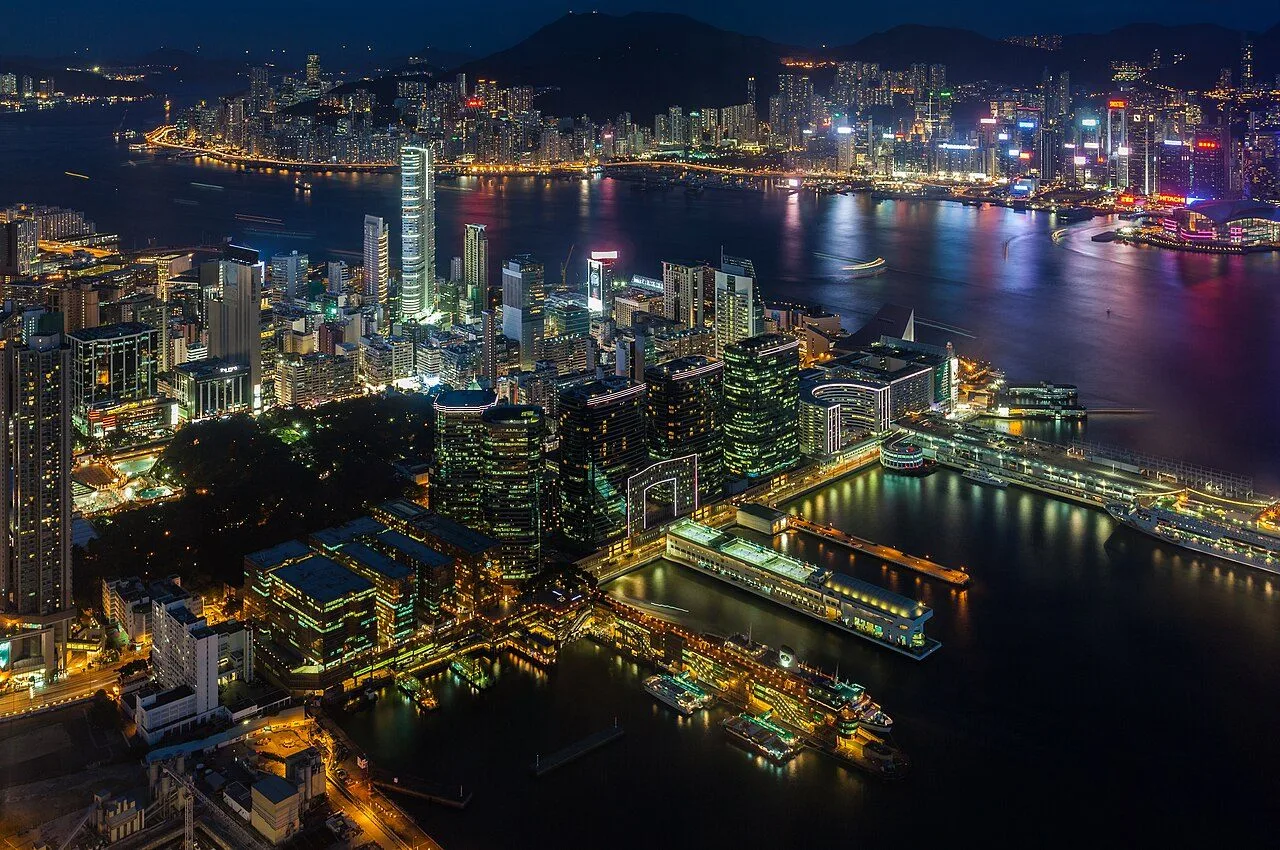
Tsim Sha Tsui (尖沙咀, Jiānshāzuǐ) is the southern tip of the Kowloon peninsula, facing Hong Kong Island across Victoria Harbour. It is the most-visited neighbourhood in Hong Kong and the single best introduction to the city — a compact district where the Avenue of Stars, the Symphony of Lights, the 1915 Clock Tower, the Star Ferry, and the world’s highest concentration of Michelin restaurants sit within a 1.5 km walk.
For most first-time visitors, Tsim Sha Tsui is the centre of gravity of a Hong Kong trip. The waterfront gives you the most iconic Hong Kong view — the Hong Kong Island skyline reflected in the harbour — and the neighbourhood layers colonial history (the 1915 Clock Tower, the former Kowloon Station site, the 1881 Heritage building) on top of modern luxury (The Peninsula, Harbour City, K11 Musea). Evening brings the Symphony of Lights, the world’s largest permanent light show, with 40+ buildings on both sides of the harbour participating.
History
Tsim Sha Tsui (literally “pointed sand mouth”) was a small salt-trading village in the Qing dynasty. In 1860, the British acquired the southern tip of Kowloon under the Convention of Peking and began building it up as the colonial terminus of the Kowloon-Canton Railway. The 1915 Clock Tower was the centrepiece of the old Kowloon Station, the southern end of the railway to Guangzhou. The station was demolished in 1978 to make way for the MTR, but the Clock Tower was preserved as a Declared Monument.
The waterfront was extended in the 1980s on reclaimed land, creating the modern Tsim Sha Tsui Promenade and the Avenue of Stars. The Peninsula Hong Kong, the district’s most famous building, opened in 1928 and is the oldest hotel in Hong Kong still operating under its original name. The 1881 Heritage building was the Marine Police Headquarters from 1884 to 1996, then restored as a heritage shopping and dining complex in 2009. Chungking Mansions, the 17-story building on Nathan Road, was built in 1961 and is the most international block in Hong Kong — its low-rent guesthouses and Indian, Pakistani, and Nepali restaurants have made it a cultural icon, immortalized in Wong Kar-wai’s 1994 film Chungking Express.
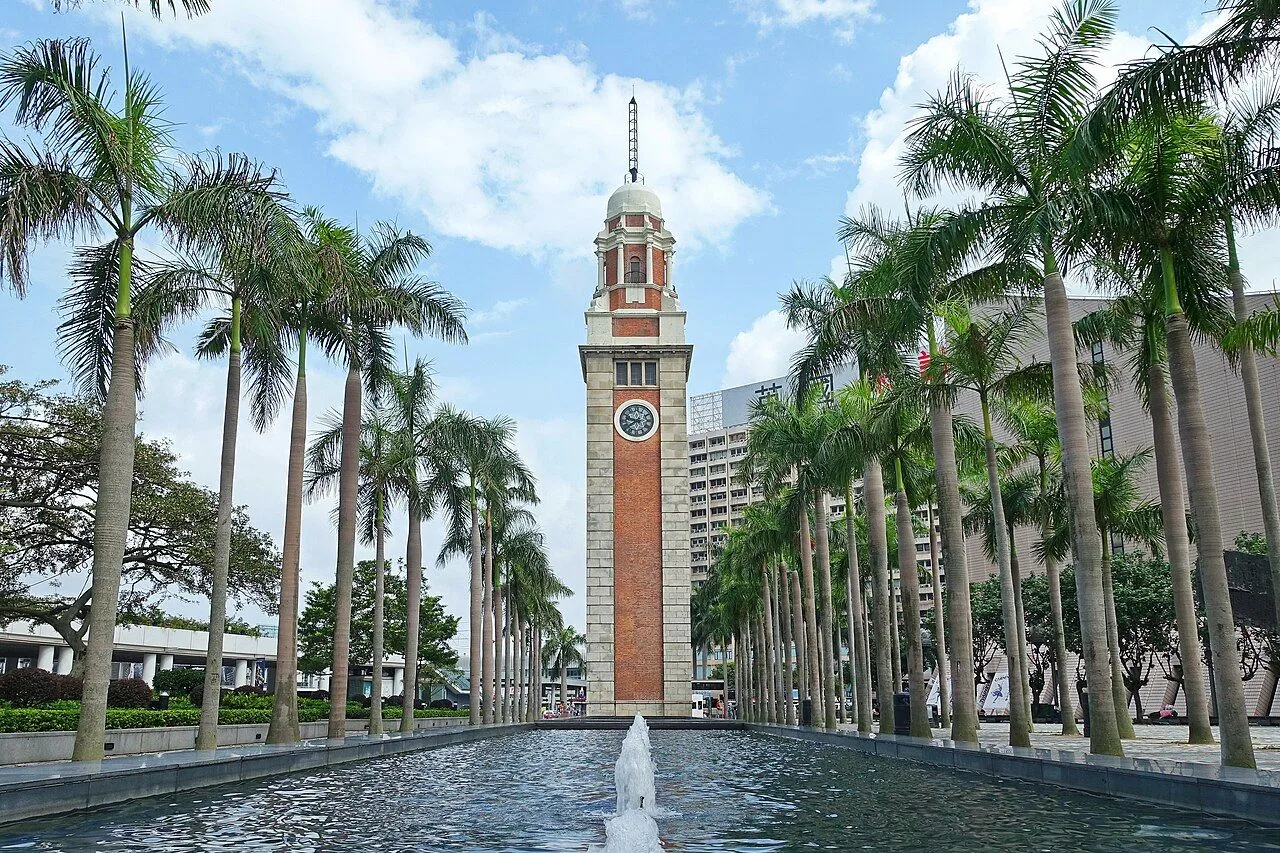
Photo: Wikimedia Commons / CC BY-SA. Source
.jpg)
What to see
The Tsim Sha Tsui waterfront is the heart of the district. The Avenue of Stars is a 440-meter promenade with handprints of Hong Kong film legends, the Bruce Lee statue (the most-photographed figure on the waterfront), and the Anita Mui statue. Walk it for free, any time of day. The 44-meter Hong Kong Clock Tower, built in 1915, stands at the south end of the promenade. The 1881 Heritage building — the former Marine Police Headquarters — has a free-to-enter courtyard with the heritage clock tower and 19th-century colonial architecture.
The Symphony of Lights is the evening headline. It runs nightly at 20:00, lasts 10 minutes, and involves 40+ buildings on both sides of the harbour — Hong Kong Island and Kowloon — in a synchronized light, laser, and sound show. The show is free and best viewed from the Avenue of Stars or the Star Ferry Pier. Arrive 30 minutes before to claim a front-row spot along the rail.
For culture, the Hong Kong Museum of Art is free and has 6 floors of Chinese antiquities and modern Hong Kong art, with a view of Hong Kong Island from the upper levels. The Hong Kong Space Museum next door (HK$10) has an OMNIMAX theatre and the largest planetarium in Hong Kong. The Hong Kong Cultural Centre hosts international music and dance performances in its Grand Hall (book via URBTIX).
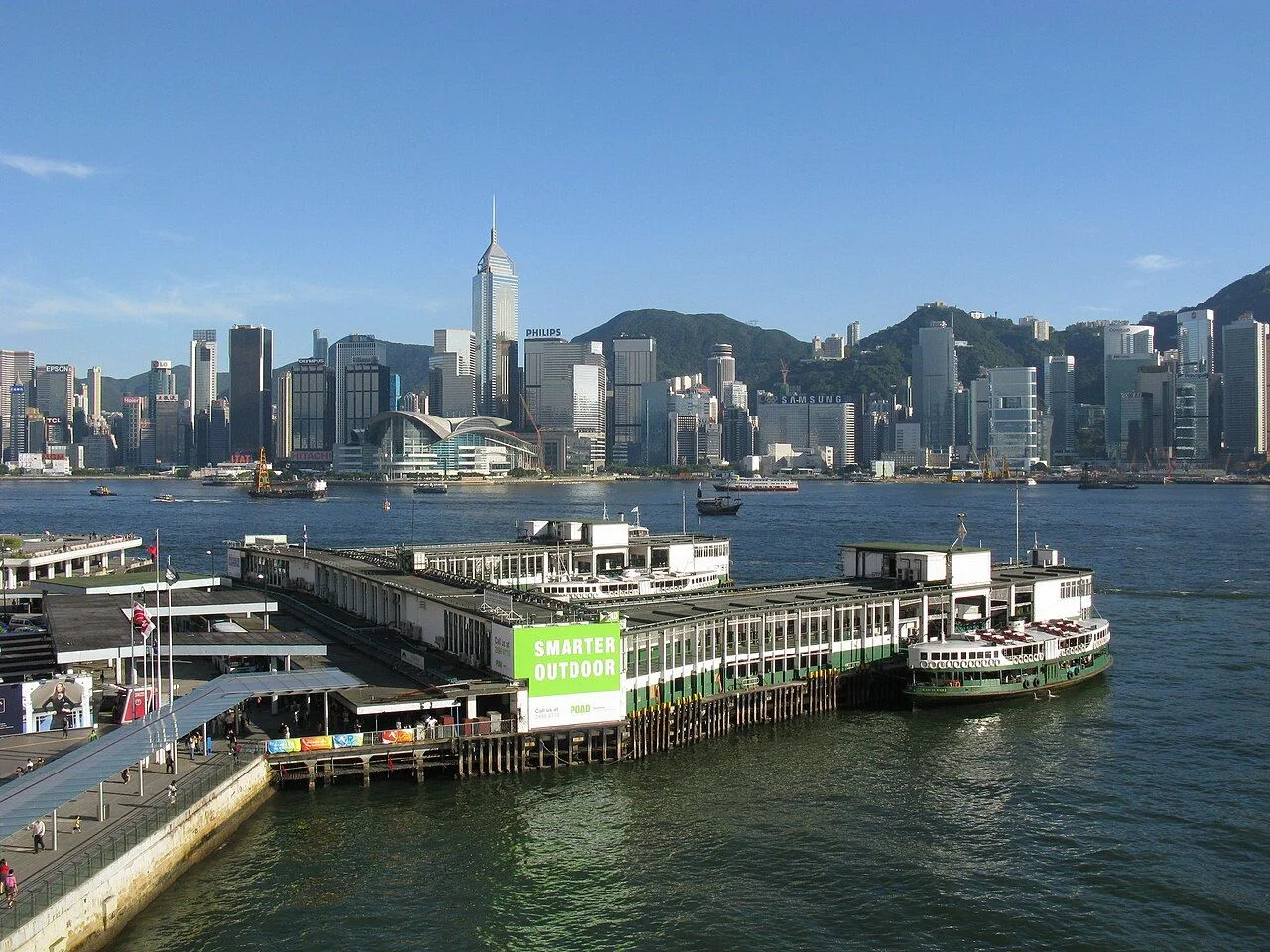
Photo: Wikimedia Commons / CC BY-SA. Source

When to visit
October to December is the best time: clear skies, 18-25°C temperatures, low humidity, and the most photogenic light for the Hong Kong Island skyline views. Avoid June-August, when temperatures hit 32-34°C with 90% humidity, the harbour haze dulls the view, and afternoon thunderstorms are common. Typhoon season (July-September) brings the risk of Signal 8 typhoons, which close the outdoor attractions and cancel the Symphony of Lights.
The Symphony of Lights is best viewed at 20:00 from October to February, when the show starts in full darkness and the lights look more dramatic against a dark sky. In summer the show starts in late dusk, which is less dramatic. Arrive 30 minutes before to claim a spot along the Avenue of Stars rail — the show is popular and the front row fills up.
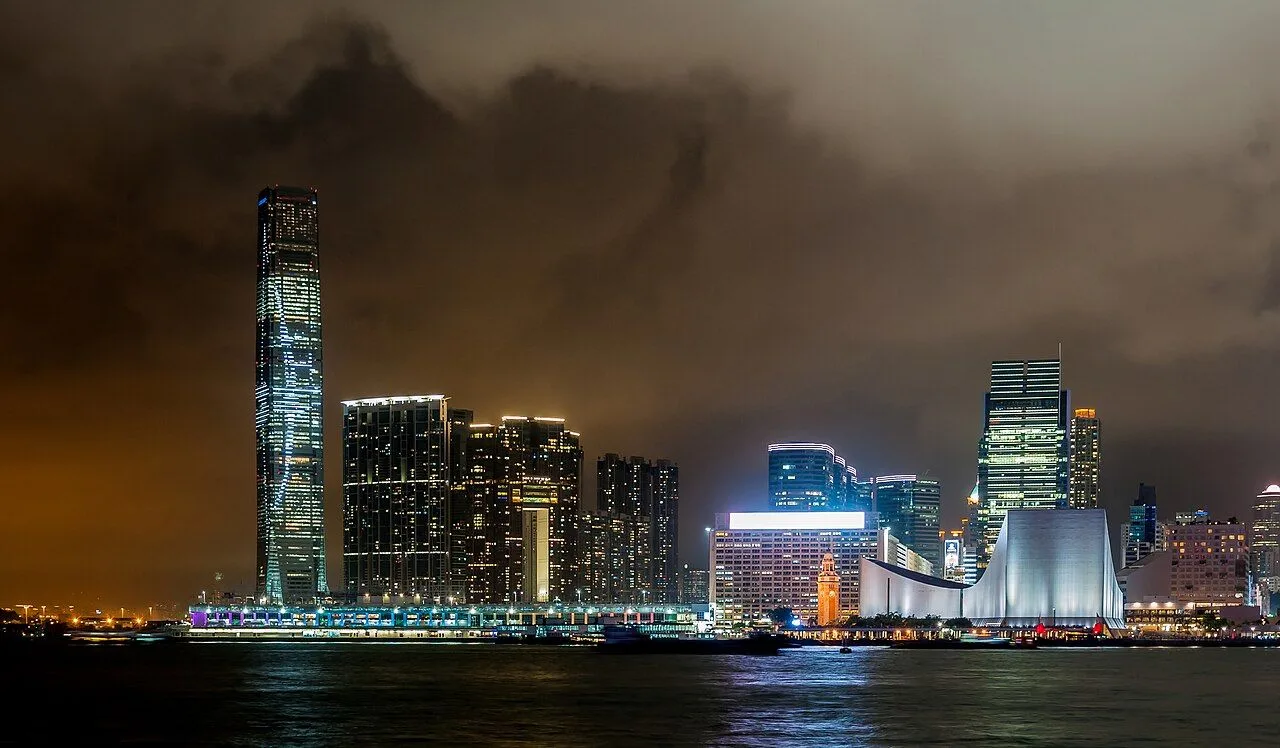
Photo: Wikimedia Commons / CC BY-SA. Source

How to get there
Tsim Sha Tsui is connected to the MTR network. Tsim Sha Tsui Station (Red Line / Tsuen Wan Line) Exit A1 is 5 minutes from the waterfront. East Tsim Sha Tsui Station (West Rail Line) Exit L6 is closer to the Hong Kong Museum of Art and Space Museum. The Airport Express connects to Tsim Sha Tsui via Kowloon Station and one MTR interchange, total 35-40 minutes from Hong Kong International Airport. The Star Ferry from Central or Wan Chai on Hong Kong Island is the cheapest harbour crossing (HK$4-6 Octopus, 10 minutes) and the most scenic — the upper deck is the best view in Hong Kong.
How to pair the visit
Pair Tsim Sha Tsui with the Star Ferry (10 minutes to Central or Wan Chai) and Victoria Peak (Peak Tram from Central, HK$52 one-way) for the most iconic Hong Kong day. The Symphony of Lights is the natural evening closer. Hong Kong Disneyland on Lantau Island is a full-day add-on — pair it with a Disney hotel night for the full experience. For a half-day add-on, the Hong Kong Museum of History (closed for renovation until 2026/2027 — check before visiting) and the Hong Kong Palace Museum in West Kowloon are 10 minutes by MTR west.
Where to eat and stay
The Peninsula Hong Kong is the district’s defining luxury hotel — open since 1928, the oldest hotel in Hong Kong still operating under its original name. The lobby is open to the public and worth a 5-minute look even if you are not a guest. Afternoon tea in The Lobby is one of Hong Kong’s most famous experiences: HK$500+/person, served 15:00-19:00 daily, book 2-3 weeks ahead via the hotel’s website. Spring Moon (1 Michelin star, Cantonese fine dining) and Chesa (Swiss Alpine cuisine) are the Peninsula’s headline restaurants.
For mid-range, the Hyatt Regency Tsim Sha Tsui and the Sheraton Hong Kong are connected to Harbour City mall and walk to the waterfront in 5 minutes. Budget options cluster around the Chungking Mansions block on Nathan Road — guesthouse rooms from HK$400-700/night, the most international block in Hong Kong. The Marco Polo Hong Kong Hotel is family-friendly and connected to Harbour City by a covered walkway.
For food, the most concentrated choice is the block between Carnarvon Road, Haiphong Road, and Ashley Road — over 50 restaurants within a 5-minute walk, from Michelin-starred Cantonese to budget cha chaan tengs. Spring Moon at The Peninsula (Cantonese, 1 Michelin star, HK$800-1,500/person), Tin Heung Lau at The Royal Garden (Cantonese, HK$400-800/person, harbour view), and the dozens of cha chaan tengs on Carnarvon Road (HK$80-150/set) cover the price range. Chungking Mansions Indian restaurants (HK$50-120/person) are the most authentic. Temple Street Night Market dai pai dong (HK$150-300/person) is the most atmospheric.
Practical tips for foreigners
Hong Kong is one of the most foreigner-friendly destinations in Asia, and Tsim Sha Tsui is the most foreigner-friendly district in Hong Kong. English is spoken at every hotel, every MTR station, every museum counter, and most restaurants. Signage is bilingual (English and Traditional Chinese) at all MTR stations and on every major building. The Hong Kong dollar (HKD) is the only accepted currency; the Octopus card is the universal payment for MTR, Star Ferry, buses, trams, and most retail — pick one up at the airport MTR customer service centre on arrival (HK$150 including HK$50 stored value, refundable at the end of your trip).
Tipping is not customary in Hong Kong — restaurants add a 10% service charge to the bill. Most major restaurants accept credit cards (Visa, Mastercard, Amex), but smaller eateries and dai pai dong stalls are cash or Octopus only. ATMs are everywhere, and 7-Eleven, HSBC, and Hang Seng Bank ATMs accept foreign Visa and Mastercard withdrawals. The gov.hk free Wi-Fi network covers the entire waterfront promenade, every MTR station, and every major mall. Mobile data via a Hong Kong SIM (CSL, 3 Hong Kong) is HK$50-100 for 30 days with 30-100 GB — available at the airport arrivals hall.
A typical 12-hour day in TST
Start the morning at the Hong Kong Museum of Art (free, opens 10:00) to escape the worst of the midday heat and to see the Chinese antiquities collection and the modern Hong Kong art wing. From the museum’s upper floors, the view of Hong Kong Island’s skyline across the harbour is one of the best free panoramas in the city. Allow 90 minutes.
Walk north along the waterfront to the Avenue of Stars and the Bruce Lee statue. Continue to the 44-meter Hong Kong Clock Tower (1915), the only surviving piece of the old Kowloon Station. Then walk to the Star Ferry Pier and take the 10-minute crossing to Wan Chai or Central on Hong Kong Island (HK$4-6 Octopus). Lunch in Wan Chai at a dai pai dong (open-air food stall) — try the shrimp roe noodles (蝦籽麵) or the claypot rice (煲仔飯).
In the afternoon, return to Kowloon by MTR or Star Ferry and visit 1881 Heritage (former Marine Police Headquarters, now a heritage shopping complex) or the Hong Kong Space Museum (HK$10). For an early dinner, book ahead at Spring Moon at The Peninsula (Cantonese, 1 Michelin star) or walk into the Chungking Mansions block for authentic Indian at half the price.
After dinner, claim a spot along the Avenue of Stars rail by 19:30. Watch the Symphony of Lights at 20:00 (10 minutes, 40+ buildings participating, free). End the day with a Star Ferry night crossing (the harbour is beautiful after dark) or dessert at Honeymoon Dessert on Carnarvon Road (HK$50-80 for the famous mango pomelo sago).
Insider notes
Three small details that make a TST visit smoother. First, the Symphony of Lights music is broadcast on FM 103.4 MHz (or you can stream it from the Hong Kong Tourism Board app) — without music, the show is just flashing lights. Bring a small Bluetooth speaker or earphones. Second, the Avenue of Stars Bruce Lee statue is on the south end of the promenade, not the centre — most tourists walk straight past it. Look for the small plaza with the 2.5-meter bronze figure. Third, the Star Ferry Pier is the best spot to photograph the Hong Kong Island skyline at sunset, but the rail gets crowded 20-30 minutes before sunset — arrive early or walk 5 minutes east to the Hong Kong Cultural Centre for a less-crowded view.
Finally, if you are short on time and want the single most iconic Hong Kong experience, do this: arrive at TST Star Ferry Pier at 18:30, take the Star Ferry to Central (HK$6 Octopus, 10 minutes on the upper deck), walk to the Peak Tram (HK$52 one-way, 7 minutes to the top), watch the sunset from Victoria Peak, then return to TST for the Symphony of Lights at 20:00. The full experience takes about 3 hours and covers the most photographed view in Hong Kong from two angles — the harbour and the peak.
Best photo spots
-
Avenue of Stars, Bruce Lee statue · 1 hour before sunset, 18:30 in October
The 2.5m bronze Bruce Lee statue with the Hong Kong Island skyline as a backdrop — the most-photographed figure on the promenade. The light is best in golden hour; the statue faces west.
-
Star Ferry Pier, viewing rail at dusk · Sunset, 18:00-19:00 in October
The Star Ferry Pier is the best spot to photograph the harbour and Hong Kong Island skyline at sunset. The green-and-white ferries passing in the foreground frame the skyline. Tripod-friendly; the rail is at the perfect height for a stable long exposure.
-
Hong Kong Clock Tower, looking up · Evening, 19:00-20:00
The 44m red-brick and granite clock tower from 1915, lit up at night. Best photographed from the south with the modern Hong Kong Cultural Centre in the foreground, the old and new in one frame.
-
TST waterfront facing Hong Kong Island · 20:00-20:10 during the Symphony of Lights
The classic Symphony of Lights shot: 40+ buildings on both sides of the harbour light up in synchronization. The waterfront rail at the Avenue of Stars is the best vantage point. Bring a wide-angle lens (16-35mm) to capture both sides of the harbour.
Where to eat nearby
-
Spring Moon (The Peninsula Hong Kong)
Cantonese fine dining (1 Michelin star) · HKD 800-1,500/person · On the TST waterfront, 5 min walk from Star Ferry Pier
-
Honeymoon Dessert (滿記甜品)
Hong Kong-style desserts (mango pomelo sago, herbal jelly) · HKD 50-100/person · Multiple TST branches, the one on Carnarvon Road is closest to the waterfront
-
Chungking Mansions Indian restaurants
Indian, Pakistani, Nepali (curry, biryani, thali) · HKD 50-120/person · Chungking Mansions on Nathan Road, 10 min walk north of Star Ferry
-
Temple Street Night Market dai pai dong
Cantonese street food (seafood, claypot rice, dai pai dong classics) · HKD 150-300/person · Temple Street, 10 min walk north of TST MTR station
Frequently asked questions
What is the Symphony of Lights and when is it?
The Symphony of Lights is the world's largest permanent light and sound show, recognized by Guinness World Records in 2004. It runs nightly at 20:00 (8:00 PM) for about 10 minutes, weather permitting. Over 40 buildings on both sides of Victoria Harbour — Hong Kong Island and Kowloon — participate with synchronized laser beams, LED lights, and music. The show is free and best viewed from the Tsim Sha Tsui waterfront between the Star Ferry Pier and the Hong Kong Cultural Centre, or from the Avenue of Stars. In typhoon Signal 8 conditions the show is cancelled for safety. The show is broadcast on local radio so you can hear the music clearly along the promenade.
Do I need to book Avenue of Stars tickets?
No booking is required and there is no ticket — the Avenue of Stars is a free, open-air public promenade, open 24/7. The 440-meter walkway runs along the Tsim Sha Tsui waterfront from the Star Ferry Pier to the Hong Kong Museum of Art. It is decorated with handprints of Hong Kong film legends, the Bruce Lee statue (the most-photographed figure on the promenade), and the Anita Mui statue. The promenade is fully wheelchair-accessible and flat — perfect for strollers and wheelchairs. The only booking you might consider is for the Symphony of Lights harbour cruise, which departs from the pier and offers a harbour-level view of the show — book via Klook 1-3 days ahead.
How do I get to Tsim Sha Tsui from Hong Kong Airport?
Three options from Hong Kong International Airport (HKG). Airport Express MTR (fastest): Take the Airport Express from the airport to Kowloon Station, 22 min, HK$105. Then walk 5 min to the Austin MTR station (just one stop) and take the Tung Chung Line to Tsim Sha Tsui Station — 10 min total. Total journey: about 35-40 min, HK$120 with the Octopus card. Taxi (red taxi): HK$250-330, 45-60 min depending on Cross-Harbour Tunnel traffic. Bus A21 (cheapest): HK$33, 70-90 min, stops at Tsim Sha Tsui on Nathan Road. For most travelers, the Airport Express + MTR combination is the best balance of speed, cost, and reliability.
What's the best time to visit Tsim Sha Tsui for the Symphony of Lights?
Arrive at the waterfront by 19:30 — 30 minutes before the 20:00 show — to claim a front-row spot along the rail. The best viewing is from the Avenue of Stars between the Star Ferry Pier and the Hong Kong Cultural Centre, with the Hong Kong Island skyline as a backdrop. In summer, sunset is around 19:00 and the harbour still has light at show time; in winter, sunset is around 17:30 and the show begins in full darkness — the lights look more dramatic against a dark sky. Avoid the first Sunday of every month, when the show is sometimes replaced by a Chinese-themed special with reduced synchronization. In typhoon Signal 8 or Black Rain conditions, the show is cancelled for safety.
Is Tsim Sha Tsui worth visiting if I'm only in Hong Kong for one day?
Yes — Tsim Sha Tsui is one of the two most important districts to visit in Hong Kong (the other is Central / Victoria Peak on Hong Kong Island). In one day you can: morning at the Hong Kong Museum of Art (free, 1.5 hours), lunch at a TST cha chaan teng (¥100-200/person, 1 hour), afternoon walking the Avenue of Stars and the Clock Tower (1.5 hours), an early dinner at one of TST's Michelin-starred restaurants (1.5 hours), then the Symphony of Lights at 20:00. Pair this with the Star Ferry across the harbour to Hong Kong Island for sunset, then Victoria Peak for the night view (Peak Tram, HK$52 one-way). The total day is doable in 12 hours and covers the most iconic Hong Kong experiences.
What restaurants are there in Tsim Sha Tsui?
TST has the highest concentration of restaurants in Kowloon — over 1,500 venues within a 1.5 km radius of the Star Ferry. Highlights: Spring Moon at The Peninsula (1 Michelin star, Cantonese, HK$800-1,500/person, jacket required), Tin Heung Lau at The Royal Garden (Cantonese, HK$400-800/person, harbour view), and dozens of budget cha chaan tengs (Hong Kong-style cafes) on Carnarvon Road and Ashley Road (HK$80-150/person for a set meal). Chungking Mansions on Nathan Road is famous for authentic Indian, Pakistani, and Nepali restaurants at HK$50-120/person — it is the most international block in Hong Kong and the setting for Wong Kar-wai's Chungking Express. For street food, the Temple Street Night Market (10 min walk north) has dai pai dong open-air stalls serving seafood and claypot rice (HK$150-300/person).