
2 Weeks in China: The Classic Beijing-Xi'an-Chengdu-Shanghai Route (2026)
A complete 14-day China itinerary for first-time visitors: 3 days Beijing, 2 days Xi'an, 2 days Chengdu, 4 days Shanghai, with day-by-day timing, costs, transit between cities (high-speed rail vs flight), hotel recommendations, and which days to skip if you have less time. Budget: ¥15,000-22,000 per person excluding international flights.
This 14-day route hits the 4 most-visited cities and uses high-speed rail between 3 of them. It’s the most efficient way for a first-timer to see imperial history, ancient capitals, modern life, and regional food — without feeling like you spent the whole trip on a train. For the best months to take this trip, April-May and September-October are ideal — avoid Chinese New Year and National Day Golden Week. For a deeper dive into each city, see our 3-day Beijing itinerary, Terracotta Army guide, 3-day Chengdu panda itinerary, and 5-day Shanghai itinerary.
Route map and timing
| Day | City | Highlights | HSR / flight |
|---|---|---|---|
| 1-3 | Beijing | Forbidden City, Great Wall (Mutianyu), Temple of Heaven, hutongs | Arrive |
| 4 | Train to Xi’an | 5-hour HSR, afternoon in Xi’an | HSR |
| 5-6 | Xi’an | Terracotta Army, City Wall bike, Muslim Quarter | — |
| 7 | Train to Chengdu | 3-hour HSR, evening in Chengdu | HSR |
| 8-9 | Chengdu | Panda Base, Sichuan food, Jinli Street | — |
| 10 | Train or fly to Shanghai | 2.5-hour flight OR 12-hour HSR | Flight |
| 11-13 | Shanghai | Bund, Yu Garden, French Concession, day trip to Suzhou | — |
| 14 | Depart | Pudong airport | — |
Total transit time: 11 hours (3 HSR + 1 flight). Most of the trip is in the cities themselves.
Day 1: Beijing arrival + Tiananmen area
Land at Beijing Capital (PEK) or Daxing (PKX). Take the airport express (¥25, 30 min) or a DiDi (China’s Uber) for ¥80-150 (45-75 min). Check into your hotel — recommended: a 4-star chain near Wangfujing or Qianmen (¥600-1,000/night). Lunch in your hotel area. In the afternoon, walk through Tiananmen Square (15 min, free) and into the Forbidden City (¥60, allow 3 hours). Exit through the north gate (神武门, Shenwumen) and climb Jingshan Park (¥2) for the iconic view of the Forbidden City’s golden roofs at sunset. Dinner in Wangfujing or hutongs — try Peking duck (Quanjude, Da Dong, or smaller local spots).
Day 1 budget: hotel ¥700 + Forbidden City ¥60 + Jingshan ¥2 + dinner ¥150 = ¥912 (USD 130).
Day 2: Great Wall (Mutianyu) + Olympic Park
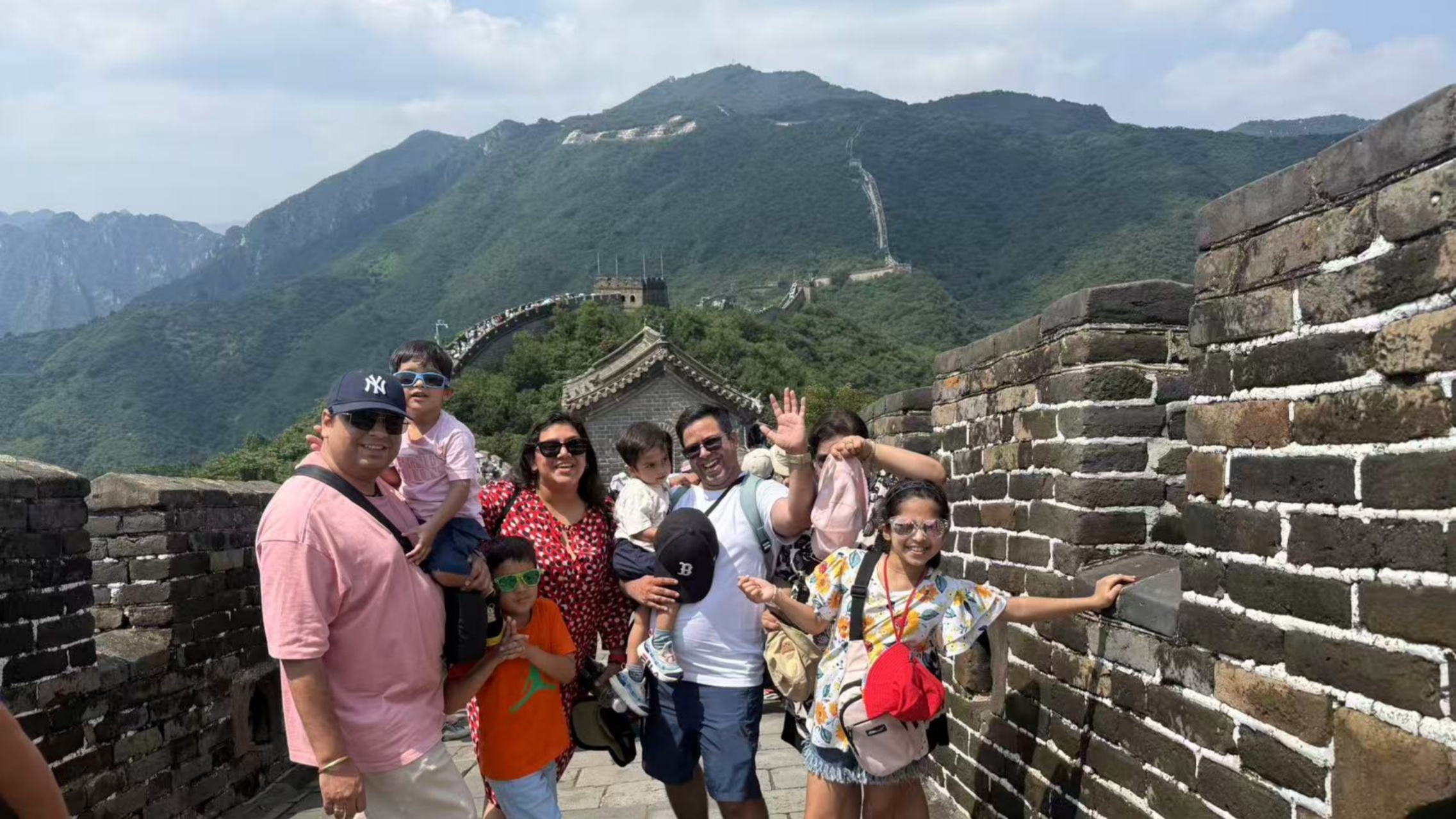
The Great Wall is the day’s anchor. Mutianyu is the best section for first-timers (less crowded than Badaling, more scenic than Juyongguan). Options to get there:
- Bus: Dongzhimen station, Bus 867 (¥16, 2 hours each way)
- Private car: ¥600-800 for the day (4 people)
- Group tour: ¥300-500/person including Mutianyu ticket (¥40), cable car (¥120 round trip), and lunch
Allow 4-5 hours at the wall. The cable car up + toboggan down is the most fun option. Lunch at the wall or back in Beijing. Afternoon: visit the Bird’s Nest (¥50) and Water Cube (¥30) in Olympic Park (¥2 subway ride from Mutianyu drop-off). Evening: dinner near your hotel, optional Peking opera at Liyuan Theatre (¥200-400).
Day 2 budget: transport ¥200 + Wall ¥160 + Olympic Park ¥80 + dinner ¥150 = ¥590 (USD 85).
Day 3: Temple of Heaven + Hutongs + Beijing farewell
Morning: Temple of Heaven (¥35, allow 2 hours). Watch locals doing tai chi in the park; the Hall of Prayer for Good Harvest is the iconic round building. From there, take the subway to the hutong area — Nanluoguxiang is the most touristy, Yandai Byway is more authentic, and the backstreets around Bell and Drum Towers are the most local. Rent a rickshaw for ¥100-150/hour. Lunch: jianbing (Chinese crepe) or zhajiangmian (noodles with soybean paste). Afternoon: optional Summer Palace (¥60, half-day trip) or just wander hutongs and shop. Evening: a final Peking duck or hotpot dinner, pack for Xi’an.
Day 3 budget: Temple of Heaven ¥35 + lunch ¥60 + rickshaw ¥150 + dinner ¥200 = ¥445 (USD 65).
Day 4: Beijing → Xi’an (5-hour HSR)
Morning: checkout, taxi to Beijing West Railway Station (¥50, allow 30 min). Board G-series HSR train to Xi’an North (5 hours, ¥515 second class / ¥830 first class). The ride is smooth, comfortable, with a food cart and free water. Lunch on the train (¥40-60) or buy baozi at the station before boarding. Arrive Xi’an North Station in the early afternoon. Taxi to your hotel near the Bell Tower or South Gate (¥30). The old city walls are walkable from any central hotel. Afternoon: walk the Bell Tower → Drum Tower → Muslim Quarter axis. Dinner: rou jia mo (Chinese hamburger), biang biang noodles, yangrou paomo (lamb soup with crumbled flatbread).
Day 4 budget: HSR ¥515 + lunch ¥50 + hotel ¥500 + dinner ¥80 = ¥1,145 (USD 165).
Hotel recommendation: a 4-star near the Bell Tower (¥500-800/night). The ancient city wall is right there.
Day 5: Terracotta Army full day
The Terracotta Warriors are 40 km east of Xi’an. Options:
- Bus: Tourism Bus 5 (游5, ¥7) from Xi’an Railway Station — 1 hour, runs every 10 min
- Private car: ¥400-600 for the day, 4 people
- Group tour: ¥300-500 including ticket (¥120), shuttle, lunch, and a guide
Allow 3-4 hours at the site. Pit 1 is the iconic one (thousands of warriors in battle formation). Pit 3 is the command HQ. Pit 2 has the famous kneeling archer. Back in Xi’an by late afternoon. Evening: walk the City Wall (¥54, bike rental ¥45) at sunset, then dinner in the Muslim Quarter. Try the night market vibe: kebabs, persimmon cakes, pomegranate juice.
Day 5 budget: Terracotta ticket + transport ¥200 + Wall ¥54 + bike ¥45 + dinner ¥80 = ¥379 (USD 55).
Day 6: Xi’an → Chengdu (3-hour HSR), free time
Morning: Big Wild Goose Pagoda (¥50) for the morning light, or the Shaanxi History Museum (free with reservation) if you prefer context over photo ops. Lunch: more Muslim Quarter (try liangpi cold noodles, then saozi noodles). Mid-afternoon: taxi to Xi’an North Station, HSR to Chengdu (3 hours, ¥263 second class). Arrive Chengdu East Station in the evening. Taxi to your hotel near Chunxi Road (¥30). Recommended: a 4-star chain (Atour is excellent, ¥500-800/night). Evening: Chengdu is a food city. Start with hotpot (Shu Da Xia, Xiaolongkan, or the local institution, 皇城老妈). Yes it’s spicy, and yes you need to try it. Order the 鸳鸯 (yuanyang) pot if you’re a first-timer.
Day 6 budget: pagoda ¥50 + lunch ¥60 + HSR ¥263 + hotel ¥600 + dinner ¥150 = ¥1,123 (USD 160).
Day 7: Chengdu pandas + Jinli Street
Morning, early: Chengdu Research Base of Giant Panda Breeding (¥55, plus shuttle ¥10). Get there by 7:30-8:00 AM — pandas are most active before 11 AM (they nap after). The Baby Panda enclosure is the highlight. Allow 3 hours. From there, take a taxi to the Wuhou Shrine (¥50) — a temple to the Three Kingdoms strategist Zhuge Liang, with classical gardens. Walk next door to Jinli Ancient Street for lunch and shopping: try the Three Kingdoms-themed snacks (san zhua, three-arrow skewers, ¥5-15 each), and watch the street performers. Afternoon: People’s Park (free) for the famous tea culture — sit in a 茶馆 (teahouse), order a 盖碗茶 (gaiwan tea, ¥15-30), and watch locals do mahjong, ear-cleaning, and matchmaking. Evening: Sichuan opera at Shufeng Yayun (蜀风雅韵) theater (¥200-300) for the face-changing show.
Day 7 budget: Panda Base ¥65 + Wuhou ¥50 + lunch ¥80 + People’s Park ¥30 + opera ¥200 + dinner ¥100 = ¥525 (USD 75).
Day 8: Leshan Giant Buddha OR Dujiangyan day trip
A 1.5-hour drive from Chengdu. The Leshan Giant Buddha (¥80, plus shuttle ¥10) is the world’s largest stone Buddha, carved into a cliff in the 8th century. Allow 3-4 hours including the queue. Optional: combine with Dujiangyan (都江堰), the 2,200-year-old irrigation system still in use (¥80). Local guides at both sites cost ¥150-300.
If you’d rather stay in Chengdu for a relaxing day, options:
- Cooking class (¥300-500, 4 hours, learn 4-5 Sichuan dishes)
- Sichuan museum (free)
- Hejiang Pavilion riverside walk (free)
- More hotpot
Day 8 budget: Leshan ¥90 + transport ¥100 + lunch ¥60 + dinner ¥120 = ¥370 (USD 55).
Day 9: Chengdu → Shanghai (flight)
Morning: pack, late breakfast in hotel, taxi to Chengdu Shuangliu (CTU) airport (¥80, 30 min). Flight to Shanghai Pudong (PVG) — 2.5 hours, ¥600-1,500 on Trip.com. Most flights are morning; book 2-3 weeks ahead. Arrive Shanghai by 2-3 PM. Taxi or Maglev (¥50) + Metro to your hotel. Recommended: a 4-star near Nanjing Road or the Bund (¥800-1,200/night). Evening: walk the Bund (外滩) for the iconic Pudong skyline lit up. Dinner: xiaolongbao (soup dumplings) at Jia Jia Tang Bao or Din Tai Fung, or local Shanghainese at Jesse Restaurant.
Day 9 budget: airport transfer ¥80 + flight ¥900 + hotel ¥1,000 + dinner ¥200 = ¥2,180 (USD 310).
Day 10: Shanghai — Old City + French Concession
Morning: Yu Garden (¥40, allow 2 hours) and the adjacent Old City bazaar. From there, walk to the Bund for the daytime skyline view (free). Lunch: shengjianbao (pan-fried buns) at Yang’s Fry Dumpling, or local noodles. Afternoon: Nanjing Road pedestrian street for shopping, then French Concession (wander the leafy streets, stop at a coffee shop, browse boutiques on Anfu Road). Evening: Acrobatic show at Shanghai Center (¥250-400) or jazz at a 1930s-style bar in the Bund.
Day 10 budget: Yu Garden ¥40 + lunch ¥60 + acrobatics ¥300 + dinner ¥200 = ¥600 (USD 85).
Day 11: Shanghai — modern + art
Morning: Shanghai Tower (¥180) for the highest observation deck in China and a view of the entire city. Or Shanghai Museum (free with reservation) for the bronze and ceramics collections. Lunch: hairyi or noodles. Afternoon: M50 art district (free) for contemporary Chinese art, or the French Concession’s Tianzifang for a maze of art galleries. Evening: Huangpu River cruise (¥120-200, 1 hour) at sunset.
Day 11 budget: Shanghai Tower ¥180 + lunch ¥60 + cruise ¥150 + dinner ¥200 = ¥590 (USD 85).
Day 12: Shanghai day trip — Suzhou or Zhujiajiao
Option A: Suzhou (1 hour by HSR, ¥40) Classical gardens (Humble Administrator’s Garden, ¥90, 2 hours; Lingering Garden, ¥45), Pingjiang Road canal district (free, very picturesque), Tiger Hill (¥80). Back to Shanghai by 6 PM. Suzhou is the better choice for first-timers — the gardens are UNESCO World Heritage.
Option B: Zhujiajiao water town (45 min by Metro Line 17, ¥8) 900-year-old canal town, 1 km of stone bridges and wooden buildings. Less famous than Suzhou but closer and cheaper. Good if you have less energy for travel.
Option C: Hangzhou (1 hour by HSR, ¥75) — West Lake (free, but boats ¥70) and the Lingyin Temple. Beautiful but a longer day. Choose this if you have 3+ weeks and are extending the trip.
Day 12 budget: HSR ¥40 + gardens ¥135 + lunch ¥80 + dinner ¥200 = ¥455 (USD 65).
Day 13: Shanghai free day
Options:
- Shopping: Nanjing Road, Xintiandi (upscale), or the fake market at AP Plaza for haggling practice
- Tianzifang: art and craft shops, tea houses
- Longhua Temple: oldest Buddhist temple in Shanghai (¥10)
- Relaxed café day: French Concession has excellent specialty coffee (Manner, %Arabica)
- Last-minute museum visit: Shanghai Propaganda Poster Art Museum, Power Station of Art
Packing and resting for the flight home. Last dinner: try a Shanghainese banquet at Lost Heaven (Yunnan food) or Fu 1088 (in a 1930s villa).
Day 13 budget: shopping + last meals ¥800 = ¥800 (USD 115).
Day 14: Depart Shanghai
Taxi to Pudong (PVG) — 45-90 minutes depending on traffic, ¥200-300. Or take the Maglev from Longyang Road station (¥50) for the 7-minute ride to the airport. Allow 3 hours before international flight.
Practical notes for the whole trip
Hotels: Book 3-4 star chains via Trip.com with free cancellation. Recommended chains: Atour, Vienna, Hilton, Marriott, IHG. Budget ¥500-1,200/night for the trip.
HSR tickets: Book on Trip.com or 12306 (English available, harder to use) 1-2 weeks ahead. Allow 1 hour at the station for security + boarding. Second class is plenty comfortable (¥260-540 for the longest segments).
Alipay: Set up before departure. Link your Visa/Mastercard, complete passport verification, enable QR code payment. You’ll use it 50+ times a day.
eSIM: Buy Airalo or Holafly before departure. Activate on landing. Costs USD 5-15 for 2 weeks. Don’t rely on roaming — China blocks Google, WhatsApp, Instagram, Facebook, X, Reddit. You need a VPN for those if you want them.
Visa: Check your country. If you need one, apply at a Chinese consulate 3-4 weeks before the trip.
Language: English is rare outside hotels and tourist sites. Use the Trip.com app, Pleco (offline dictionary), and Google Translate (with the Chinese offline pack downloaded before you fly). Learn 5 phrases: 你好 (hello), 谢谢 (thank you), 多少钱 (how much), 厕所在哪里 (where’s the bathroom), 不用了 (no, thank you).
Weather by month:
- April-May: 15-25°C, ideal. Light jacket for evenings.
- June-August: 25-35°C, hot and humid. Pack sunscreen and a portable fan.
- September-October: 15-25°C, ideal. Best month is October (autumn foliage).
- November-March: 0-10°C in Beijing, 5-15°C in Shanghai. Pack heavy coat, hat, gloves.
Book this 2-week route
Trip.com
Beijing entry hotel (start your trip)
Trip.com's Beijing hotel listing with 5,000+ foreigner-friendly properties, foreign cards accepted, free cancellation on most rooms. Use it for the first 3 nights before catching the HSR to Xi'an. (For the actual train tickets, see the Trip.com trains link in the booking list below.)
Hotels from $84/night
Affiliate disclosure: We earn a small commission at no extra cost to you. See full disclosure.
Plan your trip — verified tools
These free tools are built on real, monthly-verified data and help you skip the trial-and-error phase of China trip planning:
- China 240-Hour Visa-Free Transit Checker — 55 countries, 24 provinces, 65 ports. See if you qualify for 10-day visa-free transit, which cities you can visit, and the 5-step process.
- China 6-City 5-Day Budget Calculator — Real 2026 prices for 5 days in Beijing, Shanghai, Guangzhou, Chengdu, Xi’an, or Hangzhou. Budget / mid-range / comfort tiers, broken down line by line.
Verified August 2026 by TravelHubChina Editorial. We re-check prices and policy details monthly so the data doesn’t drift.
Step by step
-
Book HSR routes and 4-city hotels
Reserve Beijing → Xi'an HSR (5 hr, ¥515 / $72), Xi'an → Chengdu HSR (3 hr, ¥263 / $37), and a Chengdu → Shanghai flight (2.5 hr, ¥400-800 / $56-112) on Trip.com 2-3 weeks ahead. Mid-range hotel budget ¥500-800/night; book 4-5 weeks ahead for April-May and October.
-
Beijing (3 days): imperial landmarks
Forbidden City (¥60 / $8.50, closed Mondays) on day 1, Temple of Heaven (¥35 / $5) on day 3, and the Mutianyu Great Wall via MuBus (¥80 / $11 round-trip) on day 2. Book a Peking duck dinner at Da Dong (¥300-500 / $42-70 for a whole duck) for the last Beijing night.
-
Xi'an and Chengdu (4 days)
In Xi'an: Terracotta Warriors (¥120 / $17, arrive 7:30 AM) and a 13.7 km City Wall bike ride (¥54 / $7.50 + ¥45 bike). In Chengdu: Panda Base (¥55 / $7.50) at dawn and a Leshan Giant Buddha day trip by HSR (¥54 / $7.50 one-way). Plan a Sichuan hot pot dinner for each Chengdu night (¥100-200 / $14-28 per person).
-
Shanghai (4 days): Bund and day trips
Walk the Bund at sunset, climb Shanghai Tower (¥180 / $25, 118th-floor observation), and take a day trip to Zhujiajiao water town (¥150 / $21 bus tour) or Suzhou (HSR 25 min, ¥40 / $5.50 one-way). End with a Maglev ride from Longyang Road to PVG (¥50 / $7, 7 min at 431 km/h).
FAQ
-
Is 2 weeks enough for China?
Yes, 2 weeks is the standard 'first-timer' length. You can comfortably cover 4 major cities (Beijing, Xi'an, Chengdu, Shanghai) and get a representative taste of China's history, food, and modern life. With 10 days, drop Shanghai or combine Xi'an+Chengdu into 1 city. With 7 days, just do Beijing + Shanghai. Less than 7 days, stick to 1-2 cities (e.g., Beijing only, or Shanghai + Suzhou day trip). 2 weeks is also the minimum needed to experience the country's diversity — from the imperial north to the spicy southwest to the cosmopolitan east. -
When is the best time for a 2-week China trip?
April-May (spring) and September-October (autumn) are ideal — temperatures 15-25°C, low humidity, clear skies, and the famous autumn foliage in Beijing. Avoid Chinese New Year (late Jan/Feb, exact date varies) and National Day Golden Week (Oct 1-7) when prices are 2-3x higher, attractions are packed, and transport is sold out. Summer (Jun-Aug) is hot (30-38°C) and humid in southern cities, with the bonus of fewer crowds. Winter (Dec-Feb) is cold in the north (Beijing -5 to 5°C) but beautiful in the south and offers winter promotions. -
How much does a 2-week China trip cost?
Budget traveler (hostels, street food, public transport): ¥6,000-9,000/person (USD 850-1,300) excluding international flights. Mid-range (3-4 star hotels, mix of street food and restaurants, attractions, 1 HSR segment): ¥15,000-22,000/person (USD 2,100-3,100). Comfortable (4-5 star hotels, mostly restaurants, all attractions, all HSR): ¥30,000-45,000/person (USD 4,200-6,300). Add ¥5,000-12,000/person for international flights from the US/EU. The HSR itself costs about ¥2,500-3,500 for all segments on this 14-day route. -
Should I use high-speed rail or fly between cities?
Use high-speed rail (HSR) for Beijing → Xi'an (5 hours) and Xi'an → Chengdu (3 hours) — the train stations are city-center, the ride is comfortable, and you see the countryside. Use a flight for Chengdu → Shanghai (2.5 hours vs 12 hours by train) — the long train ride is not worth the saved money. Book HSR tickets on Trip.com (foreign passport OK) or 12306 (China Railway, English available but harder to use). Book flights on Trip.com 2-3 weeks ahead for the best prices. Allow 2 hours buffer for HSR station security; 3 hours for flights (security is similar to international). -
Do I need a visa for a 2-week China trip?
If you're from one of the 54+ countries with visa-free access to China (US, UK, Canada, Australia, most EU, Japan, South Korea, Singapore, etc., for stays of 7-30 days depending on country — verify for yours), you don't need a visa for tourism up to the limit. If you need a visa, apply for an L (tourist) visa at a Chinese consulate; processing is 4-7 business days, cost USD 140-180. Starting 2024, China also offers a 240-hour (10-day) visa-free transit for travelers entering and exiting at different cities with confirmed onward tickets — useful for shorter visits that don't use up your visa-free days. -
Is China safe for tourists?
Yes, China is one of the safest countries for tourists. Violent crime against tourists is rare. Petty scams exist (overcharging taxis, "tea ceremony" scam, fake monks) but are well-documented and avoidable with basic awareness. The main risks are: traffic (don't expect cars to stop for pedestrians — be defensive), tap water (don't drink it; use bottled or filtered), and food hygiene (street food is safe 95% of the time; avoid raw vegetables, unpeeled fruit, and anything that's been sitting out). Solo female travelers report feeling very safe in China, especially in major cities. -
What's the best way to pay in China?
Alipay is the default. Set it up before your trip: download the app, link a foreign Visa/Mastercard, complete the ID verification (use your passport), and enable the in-app QR code for payments. WeChat Pay works the same way. Cash (¥) is still accepted everywhere but you'll get change in small bills. Foreign credit cards are accepted at international chain hotels, upscale restaurants, and major shopping malls — but not at most local businesses, street food, or transit. Get ¥1,000-2,000 in cash from an airport ATM as backup. Use ATM machines from Bank of China or ICBC, which accept foreign cards. -
Can I visit Tibet on a 2-week China trip?
Not on this itinerary — Tibet (Lhasa) requires a separate Tibet Travel Permit, must be booked through a registered tour agency, and adds 5-7 days to a trip. Lhasa is reachable by train from Chengdu (the famous Qinghai-Tibet Railway, 36 hours) or by flight (3-4 hours). For a 2-week first-timer, focus on the 4 cities in this itinerary. If you have 3+ weeks and want Tibet, add 5-7 days at the end for Lhasa + Yamdrok Lake + Everest Base Camp (the latter requires an additional permit and a 4-day detour).
Related guides
-
Beijing 2-Day Layover: Max China, Min Time
A tested 2-day Beijing itinerary for a long layover: Forbidden City highlights, Mutianyu Great Wall, Peking duck, and a Hutong night walk. With PVG/PEK airport transfer times and 240h visa-free rules.
-
3 Days in Beijing: Forbidden City + Great Wall
The best 3-day Beijing itinerary for first-time visitors: Forbidden City, Mutianyu Great Wall, Temple of Heaven, Summer Palace, and hutong food tour. With prices, transit times, and ticket tips.
-
3 Days in Chengdu: Pandas, Hot Pot, Leshan
The perfect 3-day Chengdu itinerary: Panda Base, Leshan Giant Buddha, Sichuan hot pot, Jinli Street, and tea culture. With prices, transit times, and ticket tips.