
Gulangyu Island (Kulangsu)
鼓浪屿 · Gǔlàng Yǔ
Quick answer
Foreign passport required at ferry boarding. Foreigners must use the dedicated Gulangyu ferry terminal at Lundu Pier (轮渡码头) — not the local passenger ferry. The ¥35 round-trip ticket is the same price as Chinese nationals.
Why visit
- 1 UNESCO-listed 2-sq-km island with NO motor vehicles — deliveries by handcart, only electric buggies
- 2 Walk across the entire island in 2 hours — small enough to explore on foot in a day
- 3 Piano Museum (鼓浪屿风琴博物馆) — China's only museum dedicated to piano history, 100+ pianos
- 4 Shuzhuang Garden (菽庄花园) — piano-shaped garden with sea views, 30-meter bridge
- 5 19th-century colonial architecture from 13 countries' consulates (treaty port era)
- 6 Highest density of pianos in China — the nickname 'Piano Island' (琴岛) comes from the 600+ pianos on the island
Essential tips for foreigners
- Foreigners use the dedicated Gulangyu ferry terminal at Lundu Pier — NOT the local passenger ferry. The dedicated terminal is clearly marked in English; ¥35 round-trip.
- Bring your passport — checked at ferry boarding. International passports are accepted without prior booking.
- Walk the entire island on foot — no cars, no bikes. Wear comfortable shoes; the cobblestones are uneven.
- Buy ferry tickets on Alipay or WeChat at the pier — no advance booking required. The round-trip ticket is ¥35 for everyone.
- Catch the last ferry back at 17:30 (or 18:00 in summer) — staying overnight on the island is possible but most visitors day-trip from Xiamen.
- Avoid the weekend crowds — 10:00-15:00 Saturday and Sunday are the busiest. Weekday mornings are the most peaceful.
Suggested route
- 08:30 15 min Arrive at Lundu Pier, take the dedicated foreign ferry terminal (10 min from city center)
- 09:00 10 min Ferry departs for Gulangyu — 7-minute ride, outdoor seating on the upper deck
- 09:15 15 min Disembark at Gulangyu Nei Cuo An Pier; walk to the Piano Museum (15 min)
- 09:30 1.5 hours Visit the Piano Museum — 100+ antique pianos, the most famous is the 1901 gold-framed Chickering
- 11:00 1.5 hours Walk the main lanes — explore the side streets, look up at the colonial architecture
- 12:30 1 hour Lunch on the island — try Gulangyu fish ball soup (鱼丸汤) and peanut soup (花生汤)
- 13:30 15 min Walk to Shuzhuang Garden — piano-shaped garden, 30-meter bridge over the sea
- 13:45 1.5 hours Visit Shuzhuang Garden — 1.5 hours, includes the piano-shape observation
- 15:15 1.5 hours Walk to the highest point on the island — Sunlight Rock (日光岩) for the panoramic view
- 17:00 15 min Return to the pier, catch the ferry back to Xiamen
- 17:30 — Arrive back in Xiamen
The car-free island that became China’s most-photographed UNESCO site
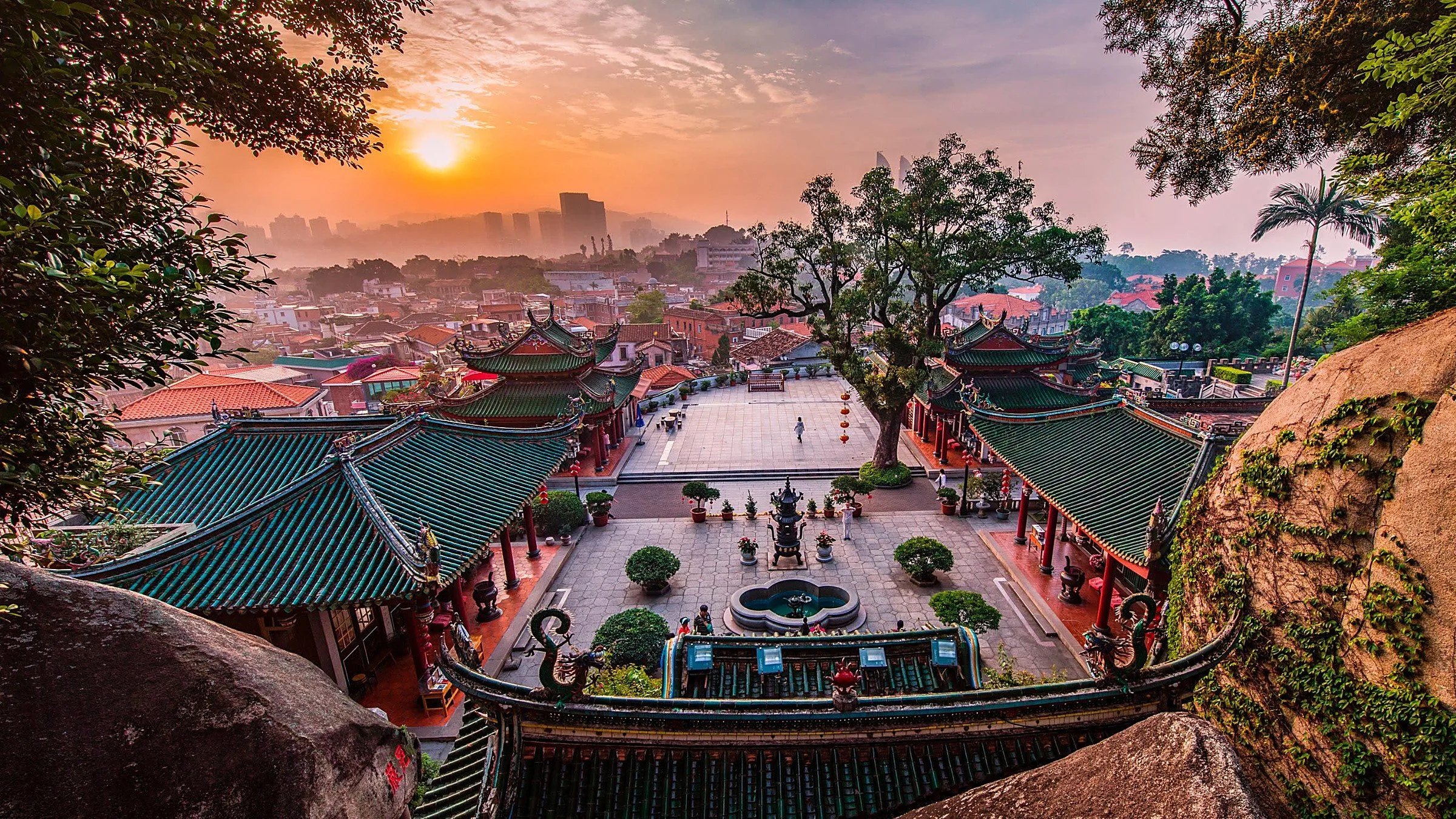
Gulangyu (鼓浪屿) is a 2-sq-km island 7 minutes by ferry from Xiamen’s main waterfront. It was designated UNESCO World Heritage in 2017 for two reasons: 1) it’s the only district in China with no motor vehicles — deliveries arrive by ferry, hauled on handcarts; 2) the 19th-century colonial architecture from the era when Xiamen was forced open as a treaty port after the First Opium War. At its peak in the 1920s-30s, Gulangyu had consulates from 13 countries, and the surviving buildings — half-timbered, red-brick, with terracotta roofs — are unlike anything else in China.
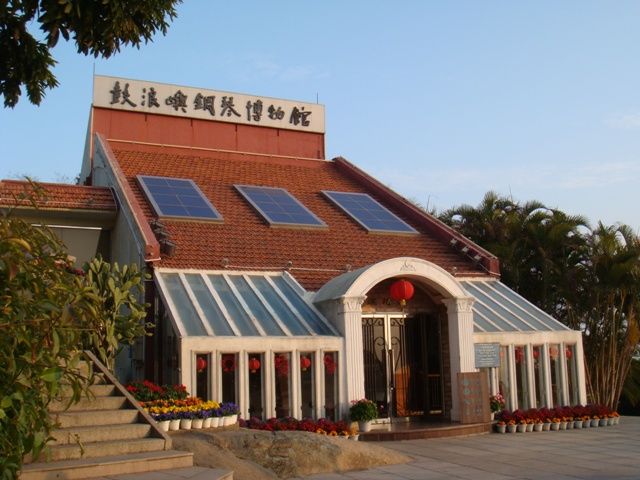
Photo: Wikimedia Commons / CC BY-SA. Source

The island is small enough to walk across in 2 hours, but most visitors spend a full day. The two main attractions are the Piano Museum (China’s only museum dedicated to piano history) and Shuzhuang Garden (a piano-shaped garden with a 30-meter bridge over the sea). The rest of the day is for walking the cobblestone lanes, eating fish ball soup and peanut soup at the street vendors, and photographing the colonial architecture.
What the foreigner experience looks like in 2026
The foreigner experience on Gulangyu is straightforward. The ferry terminal at Lundu Pier has a dedicated foreign-friendly section, ¥35 round-trip, passport required. The island itself is free to enter; museums and gardens have separate fees of ¥30-50. Alipay works everywhere. The main challenge is the crowds: weekends and Chinese national holidays are packed, and the noon-to-3pm window is the worst. Weekday mornings (before 10am) are the most peaceful.

Photo: Wikimedia Commons / CC BY-SA. Source

One thing to know: the island is a 7-minute ferry ride, not a car ride. You don’t need to “plan” the visit as a major outing. Many Xiamen residents visit Gulangyu for half a day just to walk and eat. The ferry runs every 15-20 minutes, so you can show up whenever and return whenever.
The Piano Museum: why an island in Fujian has 600+ pianos
Gulangyu’s nickname is “Piano Island” (琴岛) because of its 600+ pianos — the highest density in China. The story starts in 1886, when a Scottish missionary brought the first piano to the island. By the 1930s, every well-off family on the island had a piano, and the 19,000 residents had 500+ pianos among them. The Piano Museum (鼓浪屿风琴博物馆) was opened in 2000 with the collection of local resident Hu Youzhen, who spent 30 years gathering 100+ antique pianos. The most famous piece is the 1901 gold-framed Chickering & Sons piano, the only one of its kind in China.
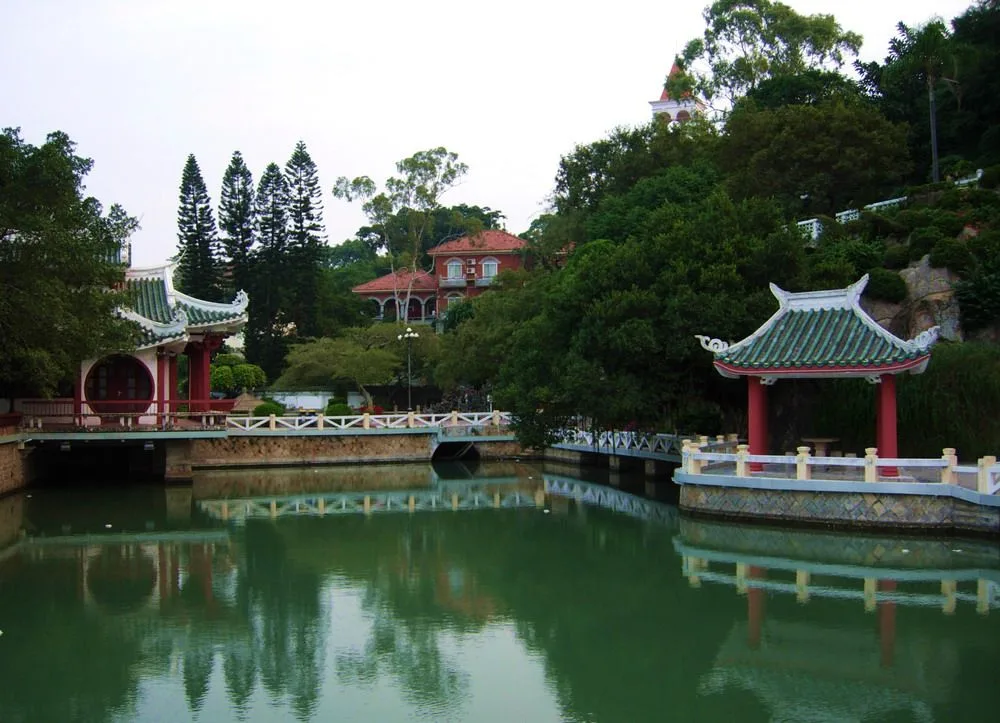
Photo: Wikimedia Commons / CC BY-SA. Source

Shuzhuang Garden: the garden shaped like a piano
Shuzhuang Garden (菽庄花园) was built in 1913 by Lin Erjia, a wealthy Taiwanese businessman. The garden is shaped like a piano when viewed from above — the four pavilions are the keys, the central pond is the body, and the 30-meter bridge extending out over the sea is the keyboard. The garden merges Chinese and Western garden design principles: a 14-meter artificial mountain, a moon-gazing pavilion, and a 30-meter seawall with views across to the main Xiamen waterfront. ¥30 entry, allow 90 minutes.
The colonial architecture: 13 countries’ consulates
Gulangyu has 19th-century buildings from 13 countries’ consulates, plus churches, banks, and trading houses. The most-photographed are: the old British Consulate (now part of the Piano Museum), the former Japanese Consulate (still intact on Tianwei Road), and the Union Church of China (1901, still active). Walking the side streets — not just the main Long Road — is the best way to see them. Look for the red-brick facades, the round arched windows, and the iron balustrades.
Final tip
Catch the 9am ferry on a weekday. The island is empty until about 10:30am, the light is soft, and the Piano Museum and Shuzhuang Garden are both quiet. By 1pm the tour buses arrive, and by 3pm the lanes are packed. The 9am-12pm window is the magic time.
Best photo spots
-
Piano Museum (鼓浪屿风琴博物馆) · Morning, 09:30-11:00
100+ antique pianos in a 19th-century colonial building. The 1901 gold-framed Chickering is the most-photographed.
-
Shuzhuang Garden bridge (菽庄花园) · Afternoon, 14:00-15:30
The 30-meter bridge over the sea at Shuzhuang Garden. The garden is shaped like a piano.
-
Sunlight Rock (日光岩) · Late afternoon, 16:00-17:00
The highest point on the island — 60 m above sea level, panoramic view of Xiamen and the harbor. ¥60 entry.
-
Long Road (龙头路) commercial street · Afternoon, 13:00-15:00
The main commercial street with craft shops and street food. Look up at the colonial-era facades.
-
Gangzaihou Beach (港仔后沙滩) · Sunset, 17:00-18:00
The only beach on the island, with views back to Xiamen's main waterfront.
Where to eat nearby
-
Gulangyu fish ball soup (鼓浪屿鱼丸)
Local specialty — fish balls in clear broth, ¥15-25/bowl · ¥15-30/bowl · Multiple vendors on Long Road
-
Ye's Mochi (叶氏麻糍)
Traditional Fujian glutinous rice cakes · ¥5-10/piece · Long Road, the original location
-
Lin's Peanut Soup (林记花生汤)
Sweet peanut soup, a Gulangyu classic · ¥10-15/bowl · Long Road, near the ferry pier
-
Gulangyu Cafes
Western and Chinese; many with sea views · ¥50-100/person · Throughout the island
Frequently asked questions
How much does Gulangyu cost for foreigners in 2026?
¥35 round-trip ferry. The island itself is free to enter. The Piano Museum is ¥30 (¥20-50 depending on season), Shuzhuang Garden is ¥30. Total day trip budget: ¥80-150 per person including transport, food, and a museum.
Do I need to book the Gulangyu ferry in advance?
No — tickets are sold at the pier with Alipay or WeChat Pay. International passports are accepted at the dedicated foreign-friendly terminal. The pier is most crowded on weekends and Chinese national holidays, but wait times are usually under 20 minutes.
Is Gulangyu really car-free?
Yes — the only motor vehicles allowed are a few small electric buggies for essential services. Deliveries arrive by ferry and are hauled on handcarts. Walking is the only way to get around.
How long should I spend on Gulangyu?
A full day (6-8 hours) is enough. Most visitors arrive on the 9am ferry, walk the island's main lanes, visit the Piano Museum and Shuzhuang Garden, have lunch on the island, and return on the 5pm ferry.
What is Gulangyu famous for?
Two things: 1) The Piano Museum — China's only museum dedicated to piano history, with 100+ antique pianos from the 19th century. 2) The 19th-century colonial architecture — buildings from 13 countries' consulates, when Xiamen was forced open as a treaty port after the First Opium War (1842).
When is the best time to visit Gulangyu?
October through December for cool, dry weather and clear sea views. Avoid May-June (rainy season) and Chinese national holidays (May 1-3, Oct 1-7) when the island is packed. Early morning (before 10am) on any day is the most peaceful.
Can I use Alipay on Gulangyu?
Yes — every restaurant, shop, and museum on the island accepts Alipay and WeChat Pay. Link a Visa/Mastercard before you arrive. Cash still works as backup.
Is Gulangyu wheelchair accessible?
The ferry is wheelchair-accessible. On the island, the main lanes are flat but cobblestoned; some side streets have steps. The Piano Museum and Shuzhuang Garden are partially accessible — call ahead for step-free routes.