Jade Buddha Temple (玉佛寺), Shanghai
玉佛寺 · Yùfó Sì
Quick answer
No passport and no visa is checked at the gate — entry is free and open to all visitors. The rules that actually apply to a visitor are dress and conduct: shoulders and knees covered inside the halls, no photography of the Buddha images or the monks unless the temple permits it, silence inside the halls, and no incense unless you buy it at the temple's own counter.
Why visit
- 1 Home of two jade Buddhas — a 1.95-metre seated figure and a 4-metre white-jade reclining Buddha — brought from Myanmar and Singapore in the 1880s and 1990s
- 2 One of the few working Chan (Zen) monasteries in Shanghai, and a national key Buddhist temple since 1983
- 3 Entry is free and the temple abolished its incense-and-flower voucher in 2023 — you walk in without paying
- 4 A compact Song-style complex in the middle of a working city: the whole visit is an hour, not a day
- 5 Its famous vegetarian noodle and congee canteen (素斋) is a Shanghai institution in its own right
Essential tips for foreigners
- Check the name carefully. This is 玉佛寺 (Jade Buddha Temple) on Anyuan Road. Jing'an Temple (静安寺) is a different, much larger and much newer complex several streets south — they are routinely confused, and the temple you want is the quiet one.
- Cover your shoulders and knees. It is the one rule that gets enforced at the hall doors, and it is what separates a visitor who is welcome from one who is not.
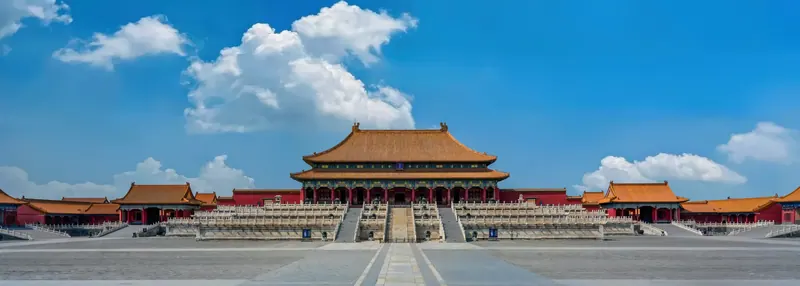
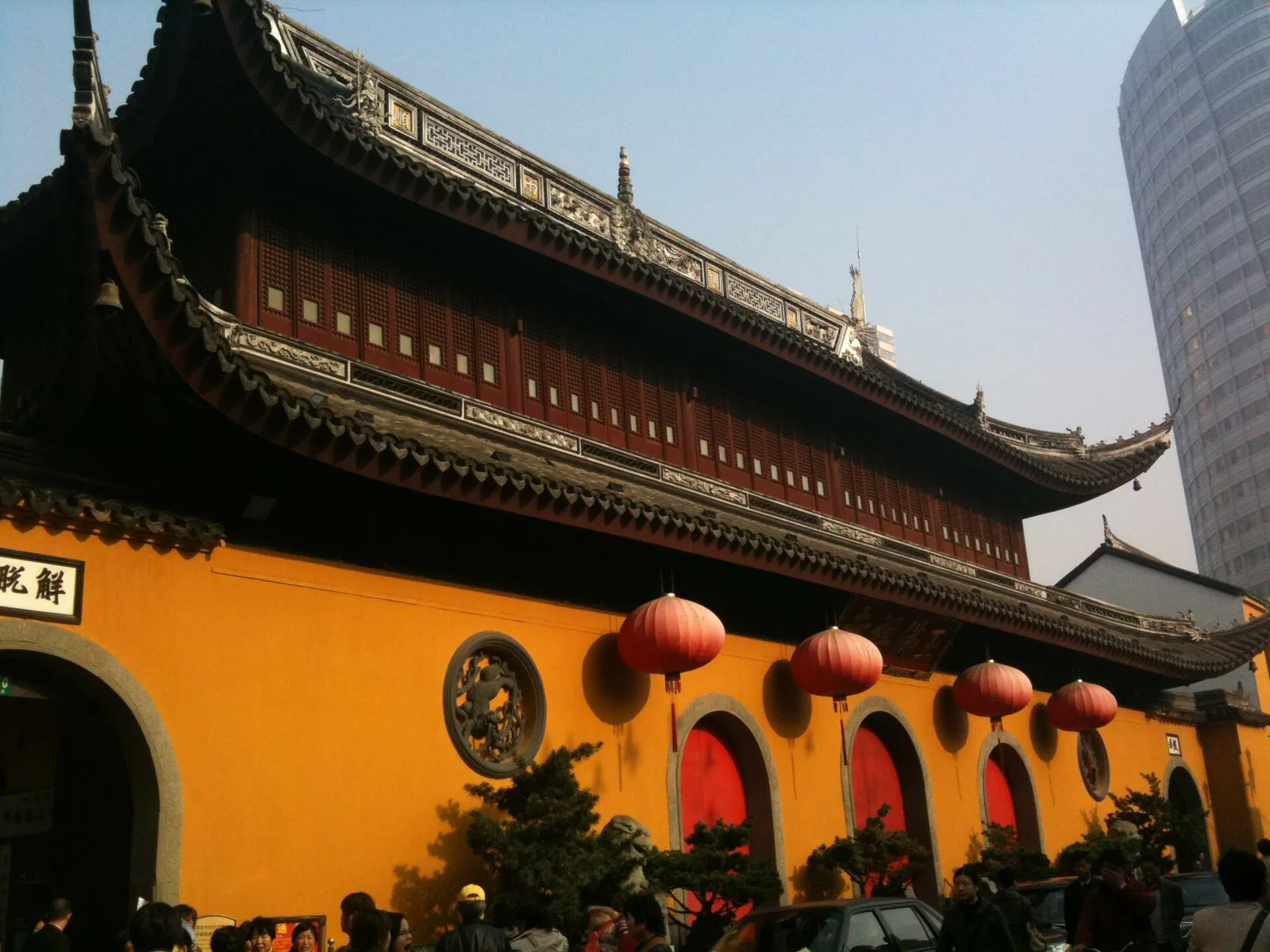
- Ask before photographing. Many halls prohibit photography of the Buddha images, and the monks and nuns are never to be photographed. The two photographs on this page are of the courtyard and the exterior.
- Go at 08:00 or after 15:00. The temple sits in a dense neighbourhood with offices and schools around it, so the middle of the day is busy with local worshippers rather than visitors.
- Eat the vegetarian breakfast. The temple's 素斋 canteen serves simple vegetarian noodles and congee and it is the best-known thing about the complex after the jade itself.
- Combine it with the Yu Garden walk. Anyuan Road and Jiangning Road station are both on the same side of the city as [Yu Garden and the Old City](/attractions/yu-garden-shanghai/), and the two make an easy half-day.
Suggested route
- 08:00 10 min Arrive at the gate on Anyuan Road as it opens, before the neighbourhood fills with commuters
- 08:15 40 min Walk the axis of the complex: Heavenly Kings Hall, then the Main Hall, with the bronze hand-washing basins in the courtyard
- 09:00 30 min The Jade Buddha Hall and the side halls, including the Great Compassion Hall with the reclining white jade Buddha
- 09:30 45 min Vegetarian breakfast at the temple's 素斋 canteen
- 10:30 20 min Walk to Jiangning Road metro station and head south to the Old City
Photo: Iamtherealnick / Wikimedia Commons, CC BY-SA 3.0. Source
A working Chan monastery in the middle of Shanghai
The Jade Buddha Temple (上海玉佛禅寺) is one of the oldest Buddhist institutions in Shanghai, and it is still a working monastery rather than a museum. Its address is 170 Anyuan Road (安远路170号) in Putuo District, postcode 200060, and its telephone number is 021-62663668.
The name comes from what is inside. In 1882 the founding abbot Huigen (慧根) carved five jade Buddhas at Wutai Shan, took them through Myanmar and left two of them in Shanghai when he passed through — a seated figure and a reclining one. The seated Buddha in the Jade Buddha Hall (玉佛楼) is 1.95 metres tall and carved from a single block of Burmese jade. The reclining Buddha in the Great Compassion Hall (大悲殿) is 4 metres long, carved from white jade, and was brought from Singapore much later, by the tenth abbot Zhenchan.
The temple was rebuilt at its present site from 1918 in the Song-dynasty imperial style, and the layout follows that axis: the gate, then the Heavenly Kings Hall (天王殿), the Main Hall (大雄宝殿) and the Jade Buddha Hall, with the Hall of Avalokitesvara, the Medicine Buddha Hall, the Samantabhadra Hall, the Manjushri Hall and the Ksitigarbha Hall on either side. In 1983 the State Council listed it as a nationally key Buddhist temple in the Han areas, and in 1994 the Shanghai municipal government listed the complex as a protected historic building. The Main Hall itself was physically moved — 30.66 metres north and raised by 1.05 metres — during a structural protection project completed in 2017.
Hours, and the notice that decides your visit
The temple’s official site publishes the following:
- 08:00 - 16:30, except on major national holidays
- On the first and fifteenth days of the lunar month, on incense days, and on the Buddha’s and Bodhisattvas’ birthdays: 07:00 - 16:30
- It publishes a separate opening notice for each Lunar New Year — the 2026 one is dated 2026-02-12, the 2025 one 2025-01-23 — so if you are here over Chinese New Year, read that notice rather than assuming the normal hours
Entry is free — and it used not to be
Entry to the temple costs nothing. On 2023-06-13 the temple published the notice 「上海玉佛禅寺实行免香花券入寺」 — entry no longer requires buying an incense-and-flower voucher (香花券), which used to be the way in.
The one exception is the Lunar New Year period, when the temple issues a 香花券 again. The price for the 2027 Lunar New Year was not published on the temple’s official site as of 2026-10-31, so we are not quoting a figure for it.
Incense itself is still sold at the temple’s own counter if you want to make an offering, and the temple’s vegetarian canteen (素斋) — plain Buddhist vegetarian food, noodles and congee included — is the other reason many people come.
The rules that actually apply to you
No passport and no visa is checked at the gate; the temple is open to all visitors. What does apply is conduct:
- Cover your shoulders and knees. This is the rule that is enforced at the hall doors.
- Keep quiet inside the halls.
- Do not photograph the Buddha images or the monks and nuns unless the temple permits it. The two images on this page are of the courtyard and the exterior — an interior photograph of the jade Buddhas was not sourced for this page, because the temple does not publish interior photography and we would not use a photo taken without permission.
Getting there
Metro Line 13 to Jiangning Road (江宁路), then about a five-minute walk to Anyuan Road. Source status: the temple’s official site publishes its address, postcode, telephone number and opening hours, but not transport instructions — the station detail above comes from standard Shanghai visitor information and should be re-checked against the official Shanghai Metro map.
A taxi to 安远路170号 is quick at any hour, and there is no visitor parking: the area is a narrow street grid two blocks from the old city.
Where it fits
The temple is a natural second half of a Shanghai walking day. The Old City and Yu Garden are the same side of the city and the obvious pairing; the Bund is fifteen minutes away on the metro, and the Shanghai city page lays out how to string the three together without crossing the river twice.
Best photo spots
-
The courtyard in front of the Main Hall (大雄宝殿) · Opening hour
The bronze incense burner in the middle of the courtyard, the yellow walls and the red lattice doors, with the neighbourhood's apartment towers visible above the roofline.
-
The entrance gate on Anyuan Road · Late afternoon
The Song-style gate building with its grey-tiled roof and red lanterns, framed by the plane trees of the street.
-
The Great Compassion Hall (大悲殿) · Mid-morning
Home of the 4-metre white jade reclining Buddha; photography inside is subject to the temple's rules, so ask before raising a camera.
Where to eat nearby
-
Temple vegetarian canteen (素斋)
Plain Buddhist vegetarian food — noodles, congee, pickled vegetables · ¥20-50/person · Inside the temple complex
-
Jiangning Road (江宁路) restaurants
Shanghai street food and small restaurants · ¥30-80/person · 5 min walk from the gate
Frequently asked questions
Is there a ticket to enter the Jade Buddha Temple?
No. Entry is free. The temple announced on 2023-06-13 that it had abolished the incense-and-flower voucher for entry. During the Lunar New Year period the temple issues a 香花券 (incense-and-flower voucher) instead — the price for the 2027 Lunar New Year was not published on the official site when we checked on 2026-10-31, so we are not quoting one.
What time does the Jade Buddha Temple open?
08:00 to 16:30, except on major national holidays. On the first and fifteenth days of the lunar month, on incense days and on the Buddha's and Bodhisattvas' birthdays it opens an hour earlier, at 07:00, and closes at 16:30.
Do I need a passport to visit the Jade Buddha Temple?
No passport and no visa is checked at the gate — the temple is open to all visitors and entry is free. What does apply is temple conduct: cover shoulders and knees, keep quiet inside the halls, and do not photograph the Buddha images or the monks and nuns without permission.
What is actually made of jade?
Two things. The seated jade Buddha in the Jade Buddha Hall (玉佛楼) is 1.95 metres tall and carved from a single piece of Burmese jade, brought back by the founding abbot Huigen in 1882. The reclining jade Buddha in the Great Compassion Hall (大悲殿) is 4 metres long, carved from white jade and brought from Singapore by the tenth abbot Zhenchan.
How long should I spend there?
One to one and a half hours. The complex is small — the Heavenly Kings Hall, the Main Hall, the Jade Buddha Hall and the side halls are all within a few minutes' walk of each other — so it pairs easily with another half-day in the city.
Is Jade Buddha Temple the same as Jing'an Temple?
No, and this is the single most common mistake. The Jade Buddha Temple is 玉佛寺, the quiet 1882 Chan monastery at 170 Anyuan Road. Jing'an Temple is 静安寺, a large gilded complex a few streets to the south. They are separate temples with separate tickets, and the names are one character apart in Chinese.
How do I get there?
Metro Line 13 to Jiangning Road (江宁路) station and a five-minute walk to Anyuan Road, or a taxi to 安远路170号. The temple's own official site publishes its address, postcode and telephone number but not transport instructions, so check the official Shanghai Metro map before you go.
Can I eat there?
Yes — the temple's vegetarian canteen serves 素斋 (plain Buddhist vegetarian food) including noodles and congee, and it is the thing most regular visitors come for. It is paid for separately from entry, which is free.
Sources
- 上海玉佛禅寺 — official temple website (address 安远路170号, postcode 200060, telephone 021-62663668, opening hours 8:00-16:30 except major holidays, notice of 2023-06-13 abolishing the incense-and-flower voucher for entry, Lunar New Year opening notices) · yufotemple.cn
- OpenStreetMap / Nominatim — 玉佛禅寺, 安远路 170, Shanghai temple point · nominatim.openstreetmap.org