
Yu Garden
上海豫园 · Yù Yuán
Quick answer
Foreign passport required at ID check. No advance booking needed. The garden is small and gets crowded; arrive at 9 AM opening for the best experience.
Why visit
- 1 The Exquisite Jade Stone (玉玲珑) — an 1100-year-old Lake Tai scholar's rock, one of the most prized ornamental stones in China
- 2 The Grand Rockery (大假山) — a 12-meter tall Huangshi stone mountain in the center, with caves and water features
- 3 The Nine-Turn Bridge (九曲桥) — an iconic zigzag bridge over the lotus pond, one of Shanghai's most photographed views
- 4 The Sansui Hall (三穗堂) — the main ceremonial hall, beautifully preserved from the Ming dynasty
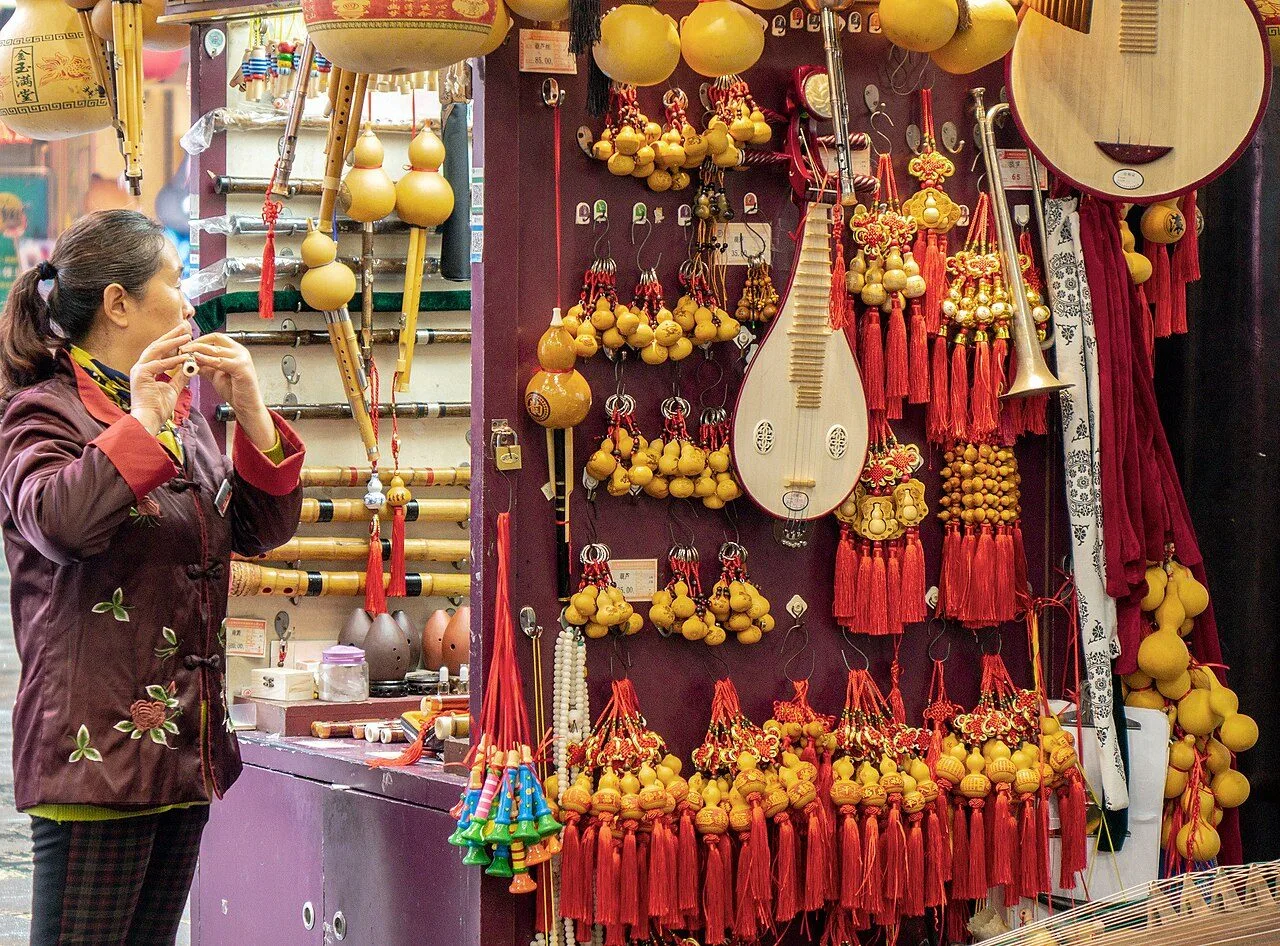
- 5 The Yuyuan Bazaar (豫园商城) — the surrounding traditional shopping area with snacks, souvenirs, and lanterns
Essential tips for foreigners
- Arrive at 9 AM opening — the garden is small and gets crowded by 11 AM
- Bring your passport — ID is checked at the gate. Credit cards and Alipay accepted at the official ticket window
- Allow at least 90 minutes. The garden is small but has six sections and a lot of detail
- Wear comfortable shoes — the garden has many stone steps and uneven paths
- Visit the Yuyuan Bazaar (free) too — the surrounding area has the best Shanghai street food, including the famous Nanxiang Xiaolongbao Restaurant
- Avoid Mondays and Tuesdays — the garden is closed on alternating days depending on the season. Check the official website
- The audio guide (¥20) is recommended — the symbolism of the rocks, plants, and water features is more meaningful with explanation
- The garden is NOT wheelchair accessible — many stone steps and uneven paths
Suggested route
- 09:00 15 min Arrive at 9 AM opening. Buy ticket (¥40) and enter through the main gate on Anren Street
- 09:15 30 min Begin at the Sansui Hall (三穗堂), the main ceremonial hall, and read the introduction to the garden
- 09:45 30 min Walk to the Grand Rockery (大假山), the 12-meter tall Huangshi stone mountain in the center. Climb the side path for the view from above
- 10:15 30 min Continue to the Ten Thousand Flower Chamber (万花楼) and the Exquisite Jade Stone (玉玲珑) — the most prized rock in the garden
- 10:45 30 min Walk to the Inner Garden (内园), the most secluded section. The Spring Hall (点春堂) here was the headquarters of the Small Swords Society uprising in 1853
- 11:15 1.5 hours Exit through the Yuyuan Bazaar (豫园商城). Cross the Nine-Turn Bridge (九曲桥) over the lotus pond, then explore the bazaar for snacks and souvenirs
- 12:45 1 hour Lunch at Nanxiang Xiaolongbao Restaurant (南翔小笼包) in the bazaar — the famous 1900 soup dumpling restaurant
A Ming dynasty garden hidden in the heart of modern Shanghai
Yu Garden (豫园, Yù Yuán) is the only surviving Ming dynasty classical garden in Shanghai — a 2-hectare (5-acre) walled garden of pavilions, rockeries, ponds, and curved bridges that has been a quiet escape from the modern city since 1559. It sits in the Huangpu District, about 10 minutes from the Bund, surrounded by the Yuyuan Bazaar — a recreated traditional shopping street with the best Shanghai street food.
For most foreign visitors, Yu Garden is the single most rewarding cultural site in central Shanghai. The garden is small enough to see thoroughly in 90 minutes but rich enough in detail to reward slow looking. The combination of the garden, the bazaar, and the nearby City God Temple makes the area the most concentrated cultural experience in Shanghai.
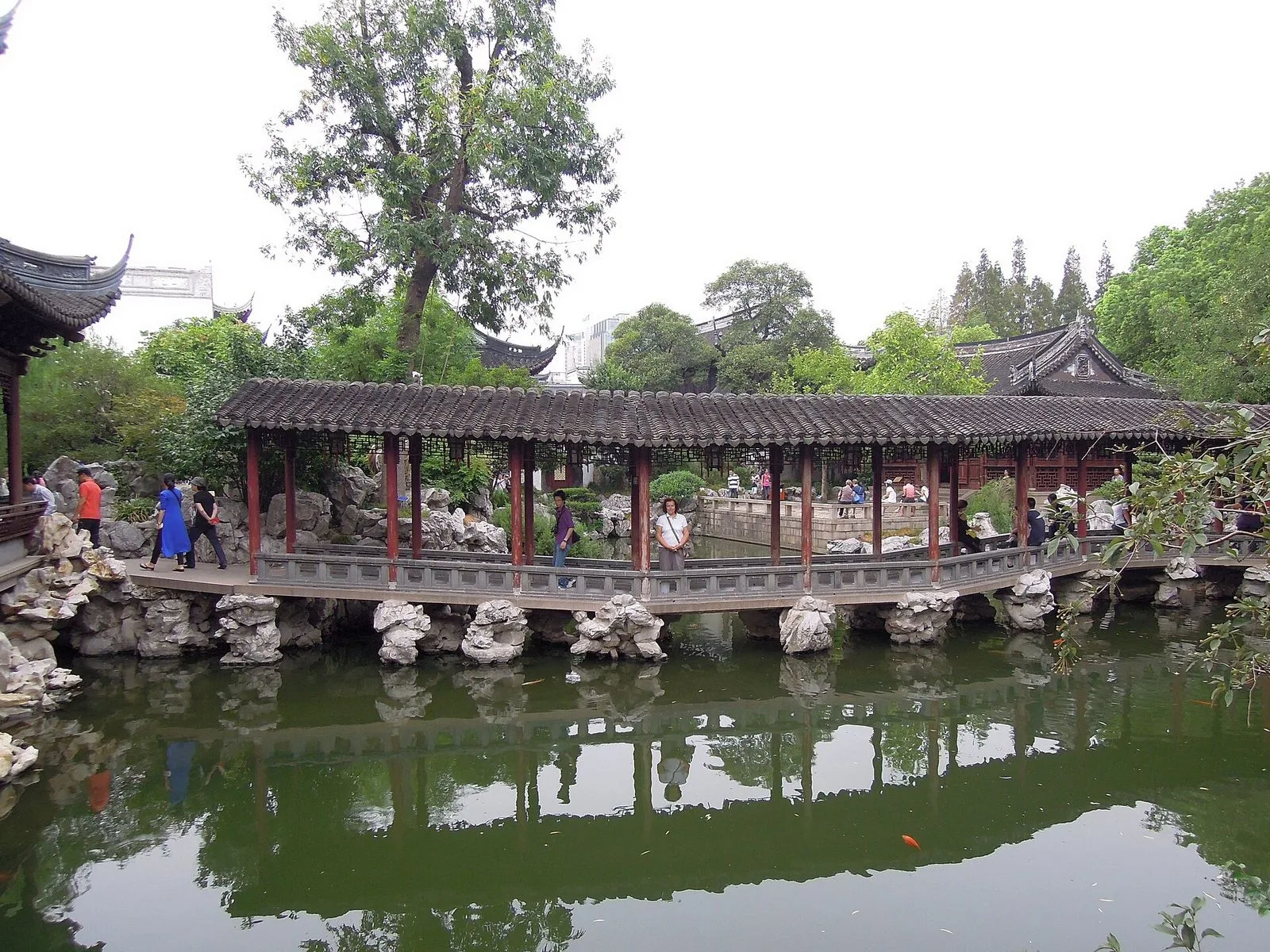
Photo: Wikimedia Commons / CC BY-SA. Source

What the foreigner experience looks like in 2026
Yu Garden is foreigner-friendly but small and crowded. There is no advance booking required — you walk up to the gate and buy a ticket with your passport and a credit card. The English signage is comprehensive, and the audio guide covers the symbolism of the rocks, plants, and water features. The main challenge is the crowds, especially in the morning when tour groups arrive.
The main change in recent years: the surrounding Yuyuan Bazaar has been heavily renovated and now has an Instagram-friendly mix of traditional shops and modern chain stores. The classic Shanghai experiences (Nanxiang Xiaolongbao, the herbal tea shops, the candy stores) are still present but mixed with Starbucks, Häagen-Dazs, and other international brands.
Three signature experiences not to miss
First, the Exquisite Jade Stone (玉玲珑) — an 1100-year-old Lake Tai scholar’s rock, 3.3 meters tall with 72 holes. It is one of three most famous ornamental stones in southern China. According to legend, if you light incense in any hole, smoke will emerge from all the others — a sign of authenticity. The rock was originally owned by the Ming dynasty painter Wu Zhen, then by a series of wealthy Shanghai merchants, before being placed in Yu Garden in 1769.
Second, the Grand Rockery (大假山) — a 12-meter tall Huangshi stone mountain in the center of the garden, constructed in 1559 from 2000 tons of rock shipped from Lake Tai. The mountain has caves, water features, and a mist effect in summer. It is one of the finest examples of Jiangnan garden rockery in existence.
Third, the Nanxiang Xiaolongbao Restaurant (南翔小笼包) in the surrounding Yuyuan Bazaar. Founded in 1900, the restaurant serves the original Nanxiang-style soup dumplings — small steamed pork buns filled with hot broth. A basket of 8 costs ¥30-50 and is one of Shanghai’s most famous culinary experiences. The restaurant has a window where you can watch the chefs make the dumplings by hand.
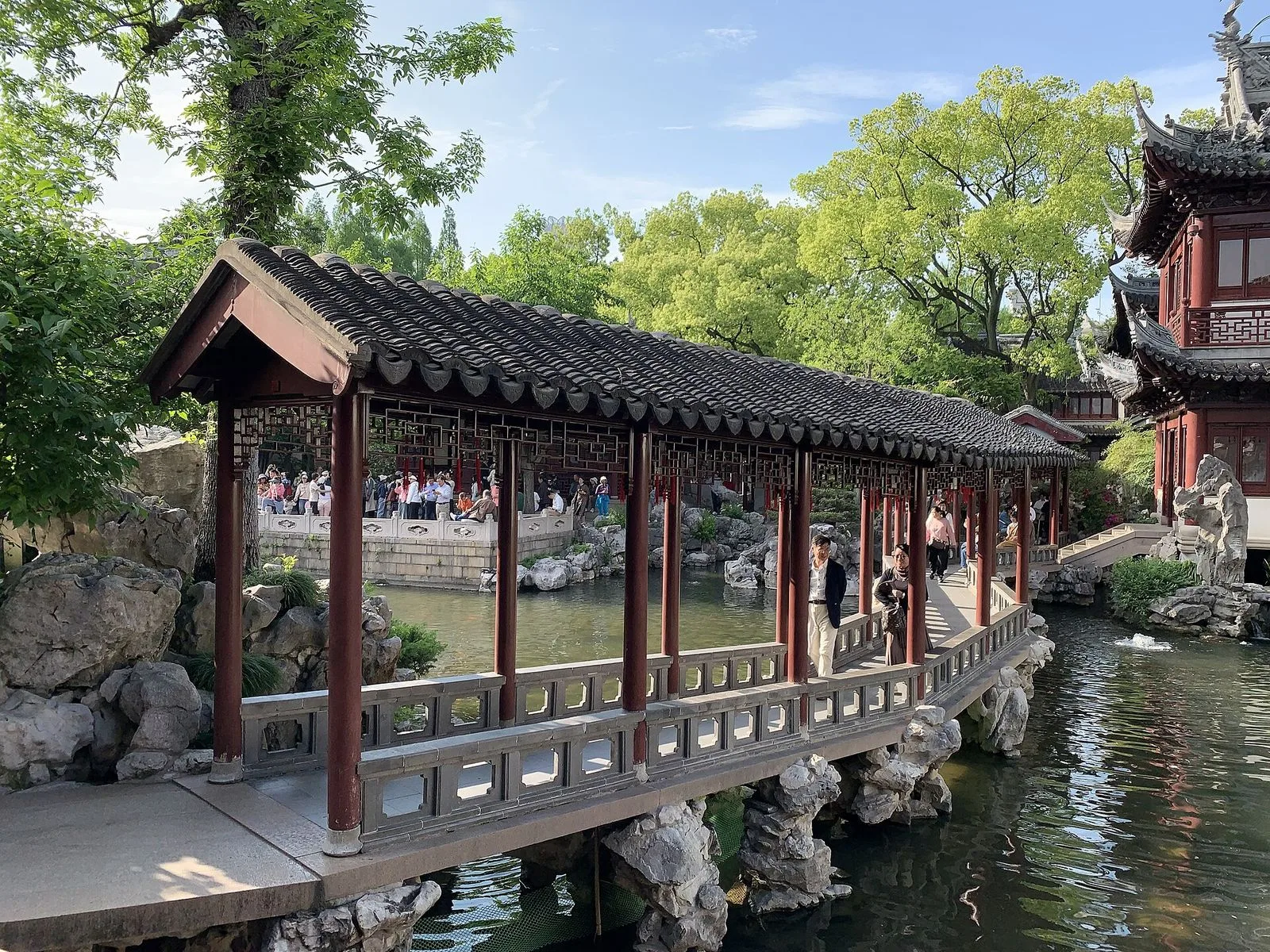
Photo: Wikimedia Commons / CC BY-SA. Source
_-_IMG_32.webp)
Cultural context and the scholar’s garden tradition
Yu Garden was built in 1559 by Pan Yunduan, a Ming dynasty official who wanted a peaceful place to care for his aging father. The name 豫 (yù) means “peaceful” or “providing for the aged” — the garden was originally called “Yuyuan” (豫园) meaning “Garden of Providing for the Aged.” The garden passed through many hands over the centuries, was destroyed during the Opium Wars and the Taiping Rebellion, and was reconstructed multiple times. The current layout largely follows the Ming dynasty design.
The garden is a classic example of the Jiangnan (south Yangtze) scholar’s garden tradition, which emphasizes borrowed scenery, asymmetry, and the symbolic use of rocks, water, and plants. The “five essentials” of a Chinese garden — rocks, water, plants, architecture, and calligraphy — are all present, with the Exquisite Jade Stone and the Grand Rockery being particularly famous examples.
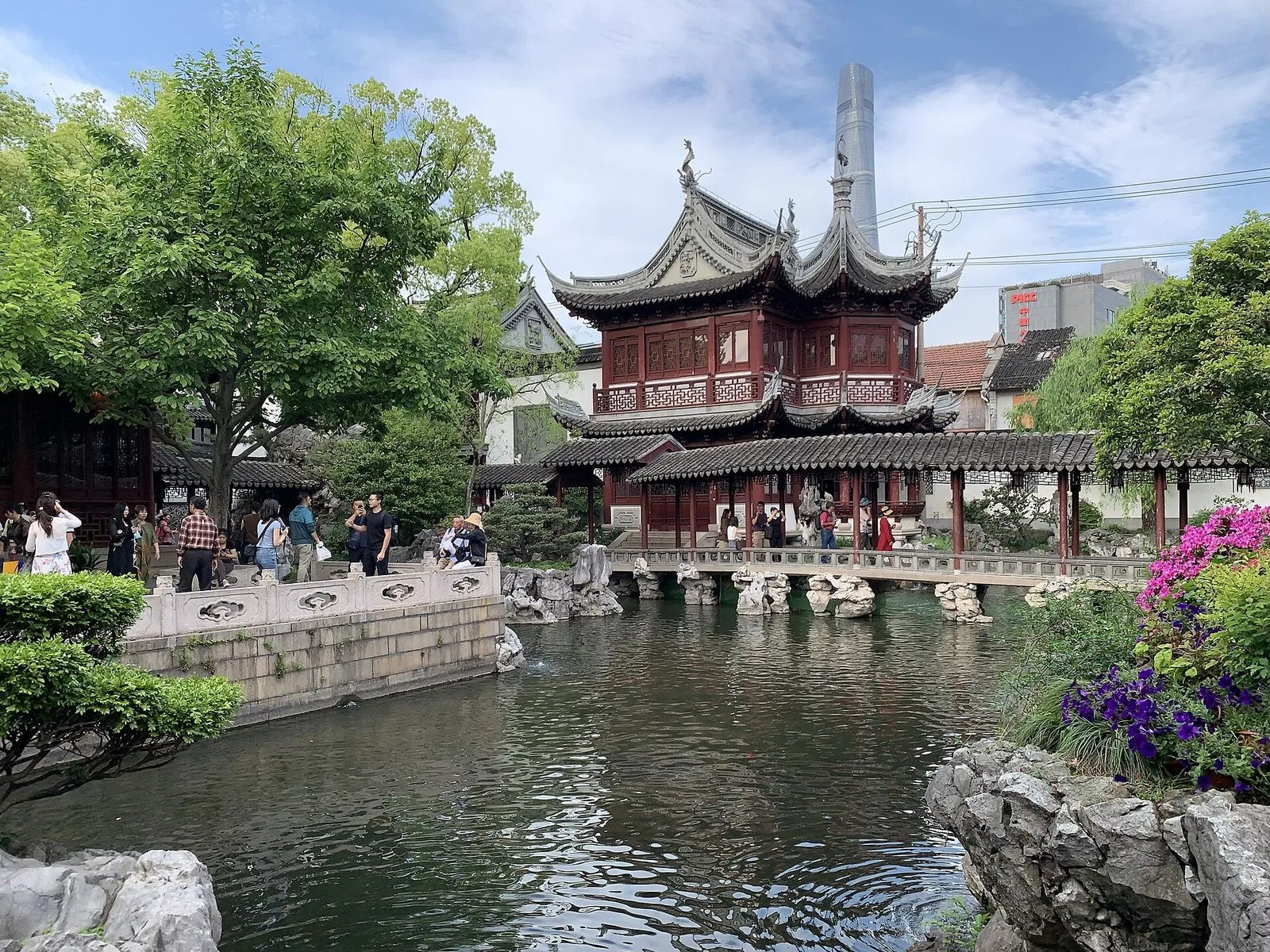
Photo: Wikimedia Commons / CC BY-SA. Source
_-_IMG_20.webp)
How to spend your time — three visit lengths
60 minutes (express): Enter the main gate, walk the central path through the six sections, photograph the Exquisite Jade Stone and the Grand Rockery, exit to the bazaar. The two essential experiences are the Jade Stone and the bazaar.
90 minutes (standard): Add the Sansui Hall, the Inner Garden, and a walk around the lotus pond. The audio guide (¥20) is well worth it for the symbolism.
2-3 hours (full): Add the City God Temple (separate ticket, ¥10) and a leisurely lunch at Nanxiang Xiaolongbao. Best for a half-day cultural morning.
Practical guidance for first-timers
The garden is closed on Mondays during peak season and Tuesdays during off-peak. Always check the official website the day before your visit. The garden is not wheelchair accessible — many stone steps and uneven paths. The Yuyuan Bazaar surrounding the garden is more accessible.
Bring water and snacks, although the bazaar has plenty of food options. The walking distance in the garden itself is short (1-2 km) but the steps are numerous — comfortable shoes are essential. The garden is mostly outdoors, so check the weather and bring sun protection in summer, a warm coat in winter.
When to come
The best months are April-May (spring peonies and azaleas) and September-October (autumn osmanthus). The Chinese New Year lantern festival (usually late January or February) is a special experience — the entire garden and bazaar are lit with elaborate lantern displays, and the crowds are at their peak. Avoid the May 1-3 and October 1-7 national holidays.
Final tip
Yu Garden rewards both a quick visit and a slow morning. The garden itself is small enough to see thoroughly in 90 minutes, but the surrounding bazaar is worth 2-3 hours of exploration. The combination of the Ming dynasty garden, the bazaar food, and the nearby Bund makes the area the most concentrated cultural experience in Shanghai. Arrive at 9 AM opening to avoid the tour-group crowds, and end with lunch at Nanxiang Xiaolongbao.
Best photo spots
-
Nine-Turn Bridge (九曲桥) from the viewing platform · Morning, 9-10 AM (peak bloom in summer lotus season)
The zigzag bridge over the lotus pond is one of Shanghai's most photographed views. From the elevated viewing platform on the garden side, you can see the full zigzag pattern. Best in summer when the lotus is in bloom.
-
Exquisite Jade Stone (玉玲珑) in close-up · Mid-morning, 10-11 AM
The 1100-year-old Lake Tai rock, 3.3m tall with 72 holes. The close-up shows the weathered texture and the holes. The mid-morning light from the side gives the best contrast.
-
Grand Rockery (大假山) from the side · Late morning, 11 AM - noon
The 12-meter tall Huangshi stone mountain with caves and water features. From the side, you can see the layered structure of the rocks. The mist from the waterfall adds atmosphere in summer.
-
Sansui Hall (三穗堂) main hall · Afternoon, 2-3 PM
The main ceremonial hall with its original Ming dynasty wooden carvings and decorative roof. The afternoon light from the courtyard entrance illuminates the central panel.
-
Yuyuan Bazaar lanterns at dusk · Sunset, 5-6 PM
The traditional shopping area lit by red lanterns at dusk. The lanterns are switched on 30 minutes before sunset. The combination of traditional architecture and the warm light is iconic.
Where to eat nearby
-
Nanxiang Xiaolongbao Restaurant (南翔小笼包)
Shanghai soup dumplings (xiaolongbao) — founded 1900 · ¥30-80/person · Inside the Yuyuan Bazaar, 5 min walk from the garden
-
Lu Bo Lang (绿波廊)
Shanghai cuisine — famous for serving Bill Clinton and other foreign dignitaries · ¥150-300/person · Inside the Yuyuan Bazaar, near the Nine-Turn Bridge
-
Shanghai Grandma's (上海老奶奶)
Shanghai home-style cooking — red-braised pork, lion's head meatballs · ¥80-150/person · 5 min walk from the East Gate of the Yuyuan Bazaar
-
Bund Kitchen (外滩厨房)
Modern Shanghai fusion with river view · ¥200-400/person · 10 min walk north to the Bund
Frequently asked questions
How much does Yu Garden cost for foreigners in 2026?
¥40 during peak season (Apr-Jun, Sep-Nov) and ¥30 during off-peak (Jul-Aug, Dec-Mar). Children under 1.2m are free. The Yuyuan Bazaar (the surrounding shopping area) is free. No advance booking required. Credit cards and Alipay accepted at the ticket window.
Do I need to book Yu Garden tickets in advance?
No. Tickets are sold at the gate all day. Foreign passport required for ID check at the security gate. Avoid third-party resellers at the entrance who may charge inflated prices. The queue at 9 AM opening is short; by 11 AM it can be 20+ minutes.
How long does it take to visit Yu Garden?
60-90 minutes for a focused visit through the six sections of the garden. 1.5-2 hours for a relaxed visit with time in the Sansui Hall and the Exquisite Jade Stone. Add 1-2 hours for the Yuyuan Bazaar (free) which has the best Shanghai street food and souvenirs.
Is Yu Garden open on Mondays?
It depends on the season. During peak season (Apr-Jun, Sep-Nov), the garden is closed on Mondays. During off-peak (Jul-Aug, Dec-Mar), it is closed on Tuesdays. The Yuyuan Bazaar around it is open every day. Always check the official website the day before your visit to confirm.
Which metro station is closest to Yu Garden?
Yuyuan Garden (豫园) station on Line 10, Exit 1, is a 5-minute walk. Line 14 also has a Yuyuan station. The garden is in the Huangpu District of Shanghai, about 20 minutes from People's Square.
What is the Exquisite Jade Stone?
The Exquisite Jade Stone (玉玲珑) is an 1100-year-old Lake Tai scholar's rock, 3.3m tall with 72 holes. It is one of the three most famous ornamental stones in southern China. According to legend, if you light incense in any hole, smoke will emerge from all the others — a sign of authenticity. The rock was originally owned by the Ming dynasty painter Wu Zhen, then by a series of wealthy Shanghai merchants, before being placed in Yu Garden in 1769.
Is Yu Garden wheelchair accessible?
No. The garden is a classical Chinese garden with many stone steps, narrow paths, and uneven surfaces. Wheelchair access is not possible. Strollers can be brought in but require lifting over many thresholds. The surrounding Yuyuan Bazaar is more accessible, with mostly flat paths.
Can I take photos inside Yu Garden?
Yes, photography is allowed throughout the garden. Tripods are allowed outdoors but not inside the buildings. The Nine-Turn Bridge is best photographed from above (there is a viewing platform) for the zigzag effect. The Exquisite Jade Stone is best photographed in close-up to show the holes and texture.
What food should I try at Yu Garden?
The Yuyuan Bazaar surrounding the garden is one of the best places in Shanghai to try traditional street food. Must-try items: Nanxiang Xiaolongbao (soup dumplings from the famous 1900 restaurant), Nanxiang shengjian bao (pan-fried pork buns), Chinese toffee candy, and herbal teas. Most snacks cost ¥10-30.
Is there a dress code for Yu Garden?
No formal dress code. The garden is mostly outdoors with some covered pavilions. Bring sun protection in summer (the gardens have limited shade). In winter, bring a warm coat — temperatures can drop to 0°C in January. Comfortable walking shoes are essential because of the many stone steps.