
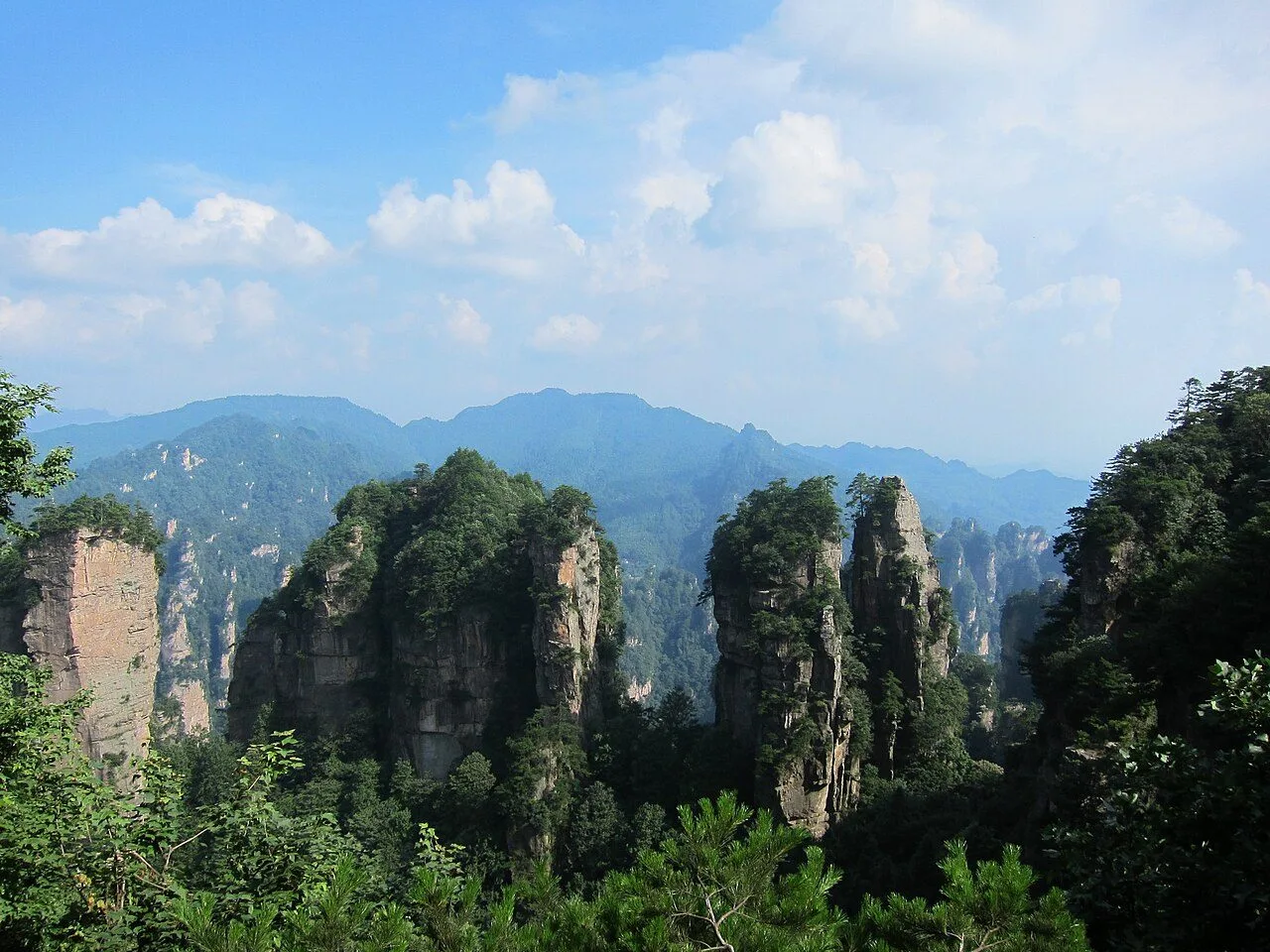
Zhangjiajie National Forest Park
张家界国家森林公园 · Zhāngjiājiè Guójiā Sēnlín Gōngyuán
Quick answer
Foreign passport required at ID check. The 4-day pass is valid for 4 days from first use — plan carefully. The park is large and requires multiple days to see properly. English signage is available at the major viewpoints, less so on the trails.
Why visit
- 1 The Hallelujah Mountain (哈利路亚悬浮山) — the sandstone pillar that supposedly inspired the floating mountains in James Cameron's Avatar (2009)
- 2 The Tianzi Mountain (天子山) — the most spectacular viewpoint in the park, with over 1000 named sandstone pillars and a sea of clouds at dawn
- 3 The Bailong Elevator (百龙天梯) — the world's tallest outdoor elevator, 326m, built into the cliff face
- 4 The Golden Whip Stream (金鞭溪) — 7.5 km of canyon walking path along a clear stream, between two cliff walls
- 5 Tianmen Mountain (天门山) — the 'Heaven's Gate' cave, a 131m tall natural arch in the cliff face, accessible by the world's longest passenger cable car
- 6 The Sea of Clouds (云海) at dawn from Tianzi Mountain — one of the most spectacular natural phenomena in China
Essential tips for foreigners
- Buy the 4-day pass (¥225-298) — the park is huge and the pass is designed for 3-4 days of visits. Trying to see it in 1-2 days means missing most of it
- Stay inside the park at one of the in-park hotels (Zhangjiajie Grand Hotel, Pullman) — saves 2-3 hours of daily commuting from the city
- Take the Bailong Elevator (¥72) to the top of Tianzi Mountain — world's tallest outdoor elevator, 326m in 2 minutes
- Hike the Golden Whip Stream (金鞭溪) in the morning — flat 7.5 km canyon path, beautiful in dappled light
- Visit Tianzi Mountain at sunrise (5-6 AM) for the famous 'Sea of Clouds' (云海) — bring a flashlight for the pre-dawn walk
- Bring water, snacks, rain gear, and comfortable hiking shoes — the park has limited food options and the weather changes quickly
- Avoid Chinese national holidays (May 1-3, October 1-7) — the park is at its worst crowd-wise
- The Tianmen Mountain ticket (¥261) is separate from the 4-day pass — plan a separate day for it
Suggested route
- Day 1 Full day Morning: Hike the Golden Whip Stream (金鞭溪) — flat 7.5 km canyon path from the main entrance. Afternoon: Take the Bailong Elevator (¥72) to Yuanjiajie (袁家界). Visit the Hallelujah Mountain viewpoint. Stay at the in-park Zhangjiajie Grand Hotel
- Day 2 Full day Sunrise at Tianzi Mountain (天子山, 5:30 AM departure). Visit the Imperial Brush Peaks, the Sea of Clouds, and the Tianzi Pavilion. Afternoon: Take the cable car (¥72) down to Suoxi Valley (索溪峪). Stay in Suoxi village or return to the in-park hotel
- Day 3 Full day Morning: Visit the Yangjiajie (杨家界) area — the 'Natural Great Wall' sandstone ridge and the One Step to Heaven (一步登天). Afternoon: Visit the Yellow Dragon Cave (黄龙洞, ¥95, optional) — one of the largest caves in China. Stay overnight in Wulingyuan town
- Day 4 Full day Full day for Tianmen Mountain (¥261) — the separate scenic area. Take the cable car up (30 min). Visit the Heaven's Gate (天门洞), the Glass Skywalk (玻璃栈道), and the 99-Bend Road. Return to Zhangjiajie city or fly out
- Optional Day 5 Full day If time allows, add a day in Zhangjiajie city — visit the Hehua Grand View Garden (荷花大观园) and the Tujia Folk Custom Park (土家风情园) to learn about the Tujia minority culture. Or add a hike in the Laowupo (老屋场) area for the most spectacular sunrise views
The Avatar mountains of China
Zhangjiajie National Forest Park (张家界国家森林公园) is a 4810-hectare (48.1 km²) national park in northwestern Hunan province, famous for over 3000 vertical sandstone pillars and pillars that inspired the floating mountains in James Cameron’s Avatar (2009). The park is a UNESCO World Heritage Site (as part of the larger Wulingyuan Scenic and Historic Interest Area, 1992) and the most spectacular natural landscape in central China.
For most foreign visitors, Zhangjiajie is the most rewarding nature experience in China outside the Jiuzhaigou Valley and Zhangjiajie. The combination of unique geology, the world’s tallest outdoor elevator, and the famous Sea of Clouds at dawn makes it a 3-4 day trip that is well worth the journey from eastern China.
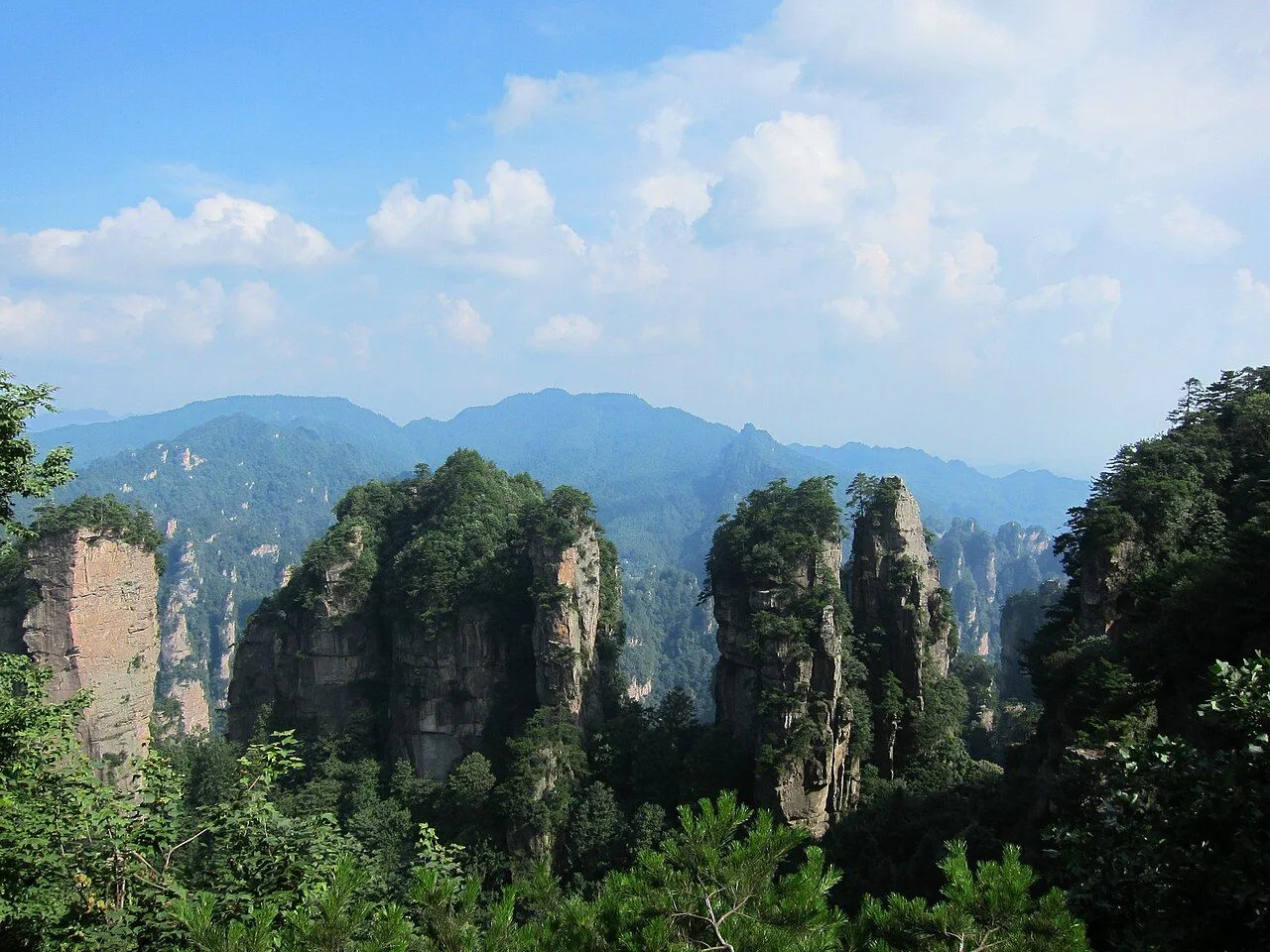
Photo: Wikimedia Commons / CC BY-SA. Source

What the foreigner experience looks like in 2026
Zhangjiajie is foreigner-friendly but logistically complex. The 4-day park pass is designed for 3-4 days of visits, and the park is large enough that trying to see it in 1-2 days means missing most of it. The English signage is available at major viewpoints, less so on the trails. The food options inside the park are limited and expensive, so most visitors eat at the in-park hotel or pack their own.
The main change in recent years: the addition of the in-park Pullman Hotel and the renovation of the in-park Zhangjiajie Grand Hotel, which makes multi-day visits much more practical than the previous day-trip from Zhangjiajie city. The cable cars and the Bailong Elevator have been upgraded, and the shuttle bus system is more efficient.
Three signature experiences not to miss
First, the Hallelujah Mountain (哈利路亚悬浮山) — a 1080m sandstone pillar in the Yuanjiajie (袁家界) area that became world-famous when James Cameron’s Avatar was released in 2009. The floating mountains in the film were reportedly inspired by this and other Zhangjiajie pillars. The viewpoint is reached via the Bailong Elevator (¥72), the world’s tallest outdoor elevator at 326m.
Second, the Sea of Clouds (云海) at dawn from Tianzi Mountain (天子山) — the most spectacular natural phenomenon in the park. Over 1000 named sandstone pillars emerge from a sea of clouds, lit by the rising sun. Arrive at the viewpoint by 5:30 AM to see the full effect. The phenomenon is most common in the cooler months (October to April).
Third, the Golden Whip Stream (金鞭溪) — 7.5 km of canyon walking path along a clear stream, between two cliff walls. The flat path takes 3-4 hours and is the most accessible hike in the park. The morning light filters through the trees and onto the stream, creating a magical atmosphere.
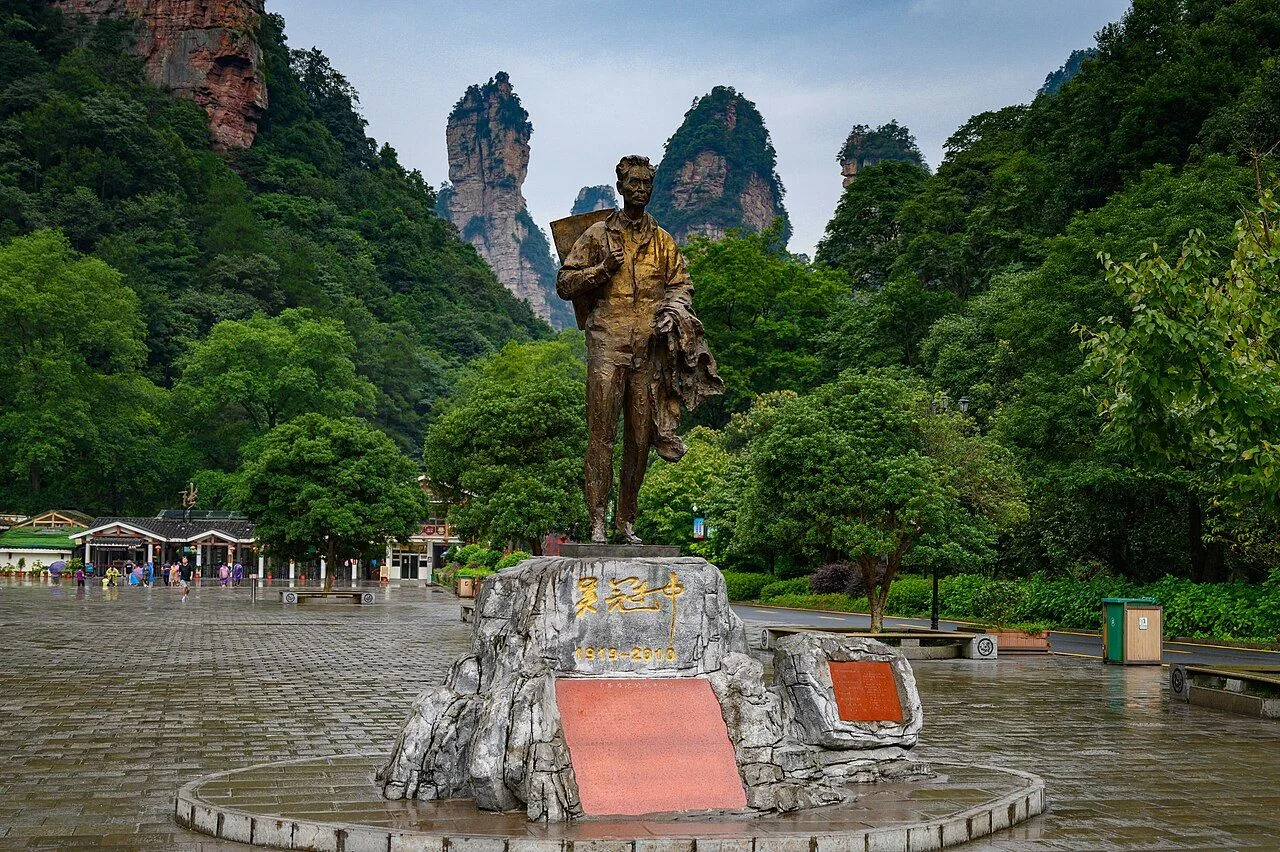
Photo: Wikimedia Commons / CC BY-SA. Source
.jpg)
Geological context and the 380-million-year story
The sandstone pillars of Zhangjiajie are the result of 380 million years of geological history. The original sandstone was laid down in the Devonian period, then uplifted by tectonic activity. Over millions of years, water, wind, and freeze-thaw cycles eroded the sandstone along vertical joints, creating the unique pillar formations. The park has over 3000 named pillars, ranging from 50m to over 1000m tall.
The pillars are also home to a unique ecosystem, with over 700 plant species and 50 animal species found only in Zhangjiajie. The park has several species of rare trees, including the Chinese dove tree (Davidia involucrata), the dawn redwood (Metasequoia glyptostroboides), and the Tujia brook trout. Birdwatching is excellent, with over 100 species recorded.
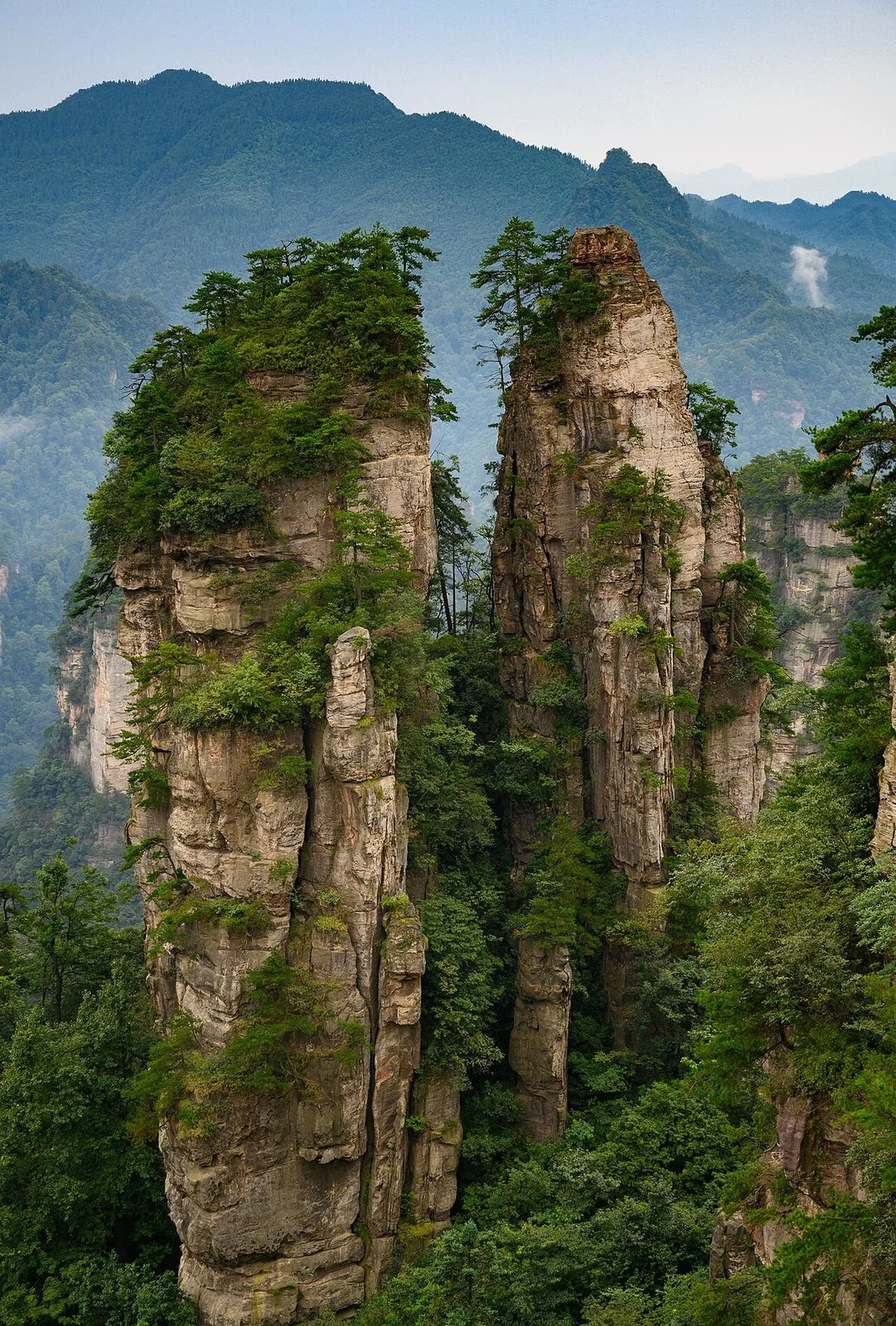
Photo: Wikimedia Commons / CC BY-SA. Source
.jpg)
How to spend your time — three visit lengths
2 days (compact): Day 1: Golden Whip Stream morning hike + Bailong Elevator + Hallelujah Mountain viewpoint. Day 2: Tianzi Mountain sunrise + Imperial Brush Peaks. Skip Tianmen Mountain and Yangjiajie.
3-4 days (recommended): Add Yangjiajie (the Natural Great Wall, the One Step to Heaven) and a day for Tianmen Mountain (the separate scenic area, ¥261). Stay at the in-park Zhangjiajie Grand Hotel or the Pullman for 2-3 nights.
5+ days (comprehensive): Add a day for the Yellow Dragon Cave (黄龙洞, ¥95) and a day in the Laowupo area for the most spectacular sunrise views. Visit a Tujia minority village for cultural context.
Practical guidance for first-timers
Stay inside the park at one of the in-park hotels (Zhangjiajie Grand Hotel, Pullman) for at least 2 nights. The commute from Zhangjiajie city is 30-45 minutes each way, and doing it daily would consume 3-4 hours of daylight. The in-park hotels are more expensive (¥600-1500/night) but worth it for the time saved and the dawn/sunset access.
The 4-day pass (¥225-298) is the most cost-effective ticket — single-day tickets are not available. Plan a 3-4 day itinerary from the start.
Bring water, snacks, rain gear, comfortable hiking shoes, and a flashlight (for the pre-dawn walk to the Sea of Clouds viewpoint). The park has limited food options, and the weather changes quickly in the mountains.
When to come
The best months are April-May (mild weather, fresh green foliage) and September-November (autumn colors, the most common Sea of Clouds month). June-August is hot and humid but the park is at its most lush. December-February is cold (temperatures drop below 0°C in the mountains) but the snow-dusted pillars are spectacular. Avoid Chinese national holidays (May 1-3, October 1-7) — the park is at its worst crowd-wise, with 3+ hour queues for the cable cars.
Final tip
Zhangjiajie rewards at least 3-4 days. The 4-day pass is designed for this length, and trying to see the park in less means missing 80% of the highlights. Stay inside the park, take the Bailong Elevator, hike the Golden Whip Stream, watch the Sea of Clouds at dawn, and add the Tianmen Mountain day trip. The Avatar mountains are real, and they are one of the most spectacular natural landscapes on earth.
Best photo spots
-
Hallelujah Mountain viewpoint (Yuanjiajie area) · Morning, 8-9 AM (after taking the Bailong Elevator)
The 1080m sandstone pillar that supposedly inspired the floating mountains in Avatar. The viewpoint is the most famous in the park. The morning light from the east side is best.
-
Tianzi Mountain (天子山) viewpoint at dawn · Sunrise, 5:30-6:30 AM
Over 1000 named sandstone pillars with a sea of clouds at dawn. Arrive 30 minutes before sunrise for the best light. Bring a flashlight for the pre-dawn walk from the hotel.
-
Golden Whip Stream (金鞭溪) canyon · Mid-morning, 9-10 AM
The 7.5 km canyon walking path with clear stream, cliff walls, and forest. The morning light filters through the trees and onto the stream. Best for landscape photography.
-
Tianmen Mountain (天门山) Heaven's Gate · Midday, when the sun is overhead
The 131m tall natural arch in the cliff face. The midday sun lights up the arch and the 999-step staircase below. Best for dramatic scale photography.
-
Bailong Elevator (百龙天梯) exterior · Afternoon, 2-3 PM
The world's tallest outdoor elevator, 326m, built into the cliff face. From the bottom, you can see the elevator running up the cliff. From the top, the view is panoramic.
Where to eat nearby
-
In-park Zhangjiajie Grand Hotel restaurant
Chinese set menus, Tujia minority specialties · ¥80-150/person · In the Wulingyuan area, inside the park
-
Suoxi Village local restaurants
Tujia minority cuisine — smoked pork, sour fish soup, rice tofu · ¥60-100/person · Suoxi Valley entrance, near the park
-
Zhangjiajie city restaurants
Hunan cuisine (spicy), Tujia specialties, Chinese fast food chains · ¥40-100/person · In Zhangjiajie city, 30 min drive from the park
-
Wulingyuan town restaurants
Tujia and Hunan cuisine, hot pot, noodle shops · ¥50-100/person · Wulingyuan town, 15 min from the park entrance
Frequently asked questions
How much does Zhangjiajie National Park cost for foreigners in 2026?
The 4-day park pass is ¥225 in low season (Dec-Feb) and ¥298 in shoulder season (Mar-Nov, except Oct holidays). The pass covers Zhangjiajie National Forest Park, Wulingyuan Scenic Area, and Suoxi Valley. Cable cars (¥72 each) and the Bailong Elevator (¥72) are extra. The Tianmen Mountain ticket (¥261) is separate. Children under 1.2m are free. Credit cards and Alipay accepted at the main entrance.
How long do I need to visit Zhangjiajie National Park?
3-4 days for the 4-day pass to make sense. Minimum 2 days if you skip Tianzi Mountain. The park is 4810 hectares (48.1 km²) and has multiple distinct areas: Zhangjiajie National Forest Park (the original area), Wulingyuan Scenic Area, Suoxi Valley, and Tianmen Mountain (separate ticket). Trying to see it in 1 day means missing 80% of the highlights.
How do I get to Zhangjiajie from Beijing or Shanghai?
Fly to Zhangjiajie Hehua Airport (DYG) from Beijing (2h) or Shanghai (2.5h) — direct flights, ¥500-1500. High-speed rail from Shanghai (8h) or Beijing (12h) is available but slow. From the airport, take the airport bus (¥20) or Didi (¥120) to the park main entrance. From Zhangjiajie city, take bus 1 (¥2) or Didi (¥30).
What is the Hallelujah Mountain?
The Hallelujah Mountain (哈利路亚悬浮山) is a 1080m sandstone pillar in the Yuanjiajie (袁家界) area of the park. It became world-famous in 2009 when James Cameron's Avatar was released — the floating mountains in the film were reportedly inspired by this and other Zhangjiajie pillars. The pillar is one of over 3000 named sandstone pillars in the park, and the viewpoint is reached via the Bailong Elevator.
What is the Bailong Elevator?
The Bailong Elevator (百龙天梯) is the world's tallest outdoor elevator, 326 meters, built into the cliff face in the Yuanjiajie (袁家界) area. It carries visitors from the valley floor to the top of the Tianzi Mountain in 2 minutes. The elevator is included in many guided tours and is highly recommended for visitors who don't want to hike the steep climb. The elevator ticket is ¥72 round-trip.
When is the best time to see the Sea of Clouds at Tianzi Mountain?
The Sea of Clouds (云海) is most common on cool, clear mornings after rain — typically September to April, especially October-November and February-March. Arrive at the Tianzi Mountain viewpoint by 5:30 AM to see the sunrise through the clouds. Bring a flashlight for the pre-dawn walk. The summer months (June-August) are too warm and humid for the Sea of Clouds phenomenon.
Is Zhangjiajie wheelchair accessible?
No, mostly. The park is a natural area with many steps, narrow paths, and steep terrain. The Bailong Elevator is wheelchair accessible, and a few viewpoints have wheelchair paths, but most of the park requires walking on uneven stone steps. Visitors with mobility issues should plan a single-day visit focusing on the Bailong Elevator and the main viewpoints in Yuanjiajie.
What is Tianmen Mountain and is it included in the 4-day pass?
Tianmen Mountain (天门山) is a separate scenic area from Zhangjiajie National Forest Park. The famous 'Heaven's Gate' is a 131m tall natural arch in the cliff face, accessible by the world's longest passenger cable car (7.5 km, 30 minutes). The Tianmen Mountain ticket (¥261) is NOT included in the 4-day pass — it requires a separate day. Tianmen Mountain is closer to Zhangjiajie city and is a popular day trip.
What should I pack for Zhangjiajie National Park?
Comfortable hiking shoes (the park has many steps and uneven paths), rain gear (the weather changes quickly in the mountains), a flashlight if you plan to see the Sea of Clouds at dawn, water and snacks (food options inside the park are limited and expensive), sunscreen and a hat in summer, a warm coat in winter (temperatures can drop below 0°C in the mountains). Pack light — you'll be moving between areas frequently.
Is there a dress code for Zhangjiajie?
No formal dress code. The park is a natural area with no dress restrictions. Bring layered clothing — the temperature can vary 10°C between the valley and the mountain tops. In summer, bring sun protection (temperatures reach 30°C in the valleys but cooler at elevation). In winter, bring a warm coat — temperatures can drop below 0°C and snow on the pillars is common.