
Big Wild Goose Pagoda Guide: Xi'an's 1,300-Year Tang Pagoda
Big Wild Goose Pagoda (Dayan Ta) in Xi'an: 64m Tang-dynasty brick pagoda from 652 AD, UNESCO since 2014 as part of the Silk Roads network. Tickets (¥50), climb times, and the free North Square musical fountain (9 PM nightly).
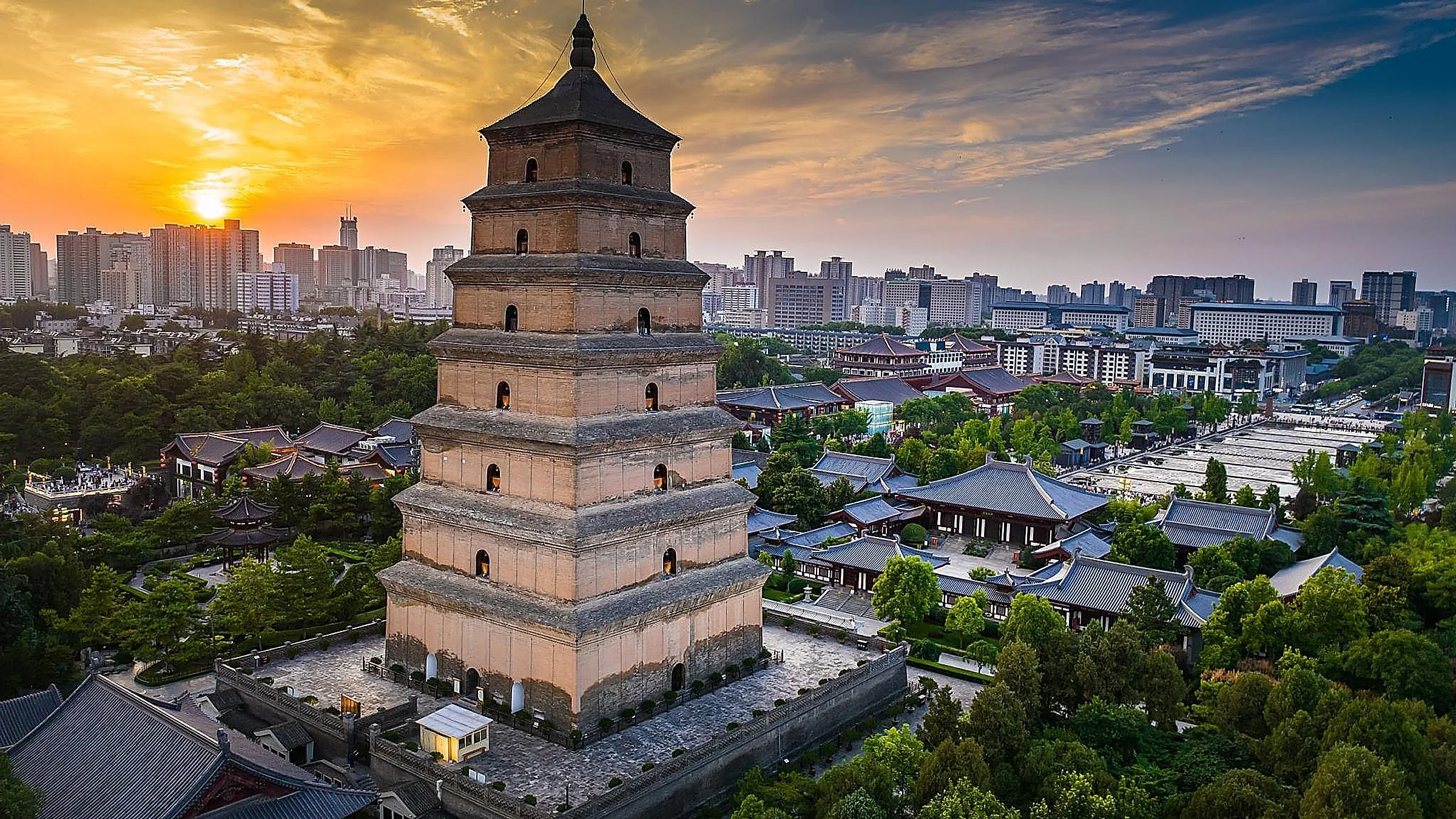
The Big Wild Goose Pagoda (大雁塔, Dàyàn Tǎ) is a 64-meter Tang-dynasty brick pagoda in central Xi’an, built in 652 AD to house Buddhist sutras and statues brought from India by the monk Xuanzang. It stands inside the Da Ci’en Temple complex, surrounded by the modern North Square (Asia’s largest musical fountain) and the bustling Da Ci’en Temple commercial district.
The pagoda is the most important surviving Tang-dynasty Buddhist structure in Xi’an and was inscribed as part of the UNESCO Silk Roads network in 2014. For travelers, it is the iconic Xi’an skyline silhouette — the brick pyramid that anchors every postcard of the city, and the focal point of the city’s Buddhist heritage.
History
Xuanzang (玄奘, 602-664 AD) was a Tang-dynasty Buddhist monk who walked from Chang’an (today’s Xi’an) to India in 629 AD, against the emperor’s travel ban. He spent 17 years abroad, returning in 646 AD with 657 Buddhist sutras, 150 relics, and a deep understanding of Sanskrit Buddhist philosophy.
The Tang emperor Gaozong funded the construction of the Da Ci’en Temple and its pagoda to house Xuanzang’s translations. The original pagoda was a 5-story earth-and-brick structure; it was rebuilt in 704 AD by Empress Wu Zetian to the 7-story brick form you see today. The pagoda has survived 1,370 years of earthquakes, wars, and weather, and is one of the best-preserved Tang brick pagodas in China.
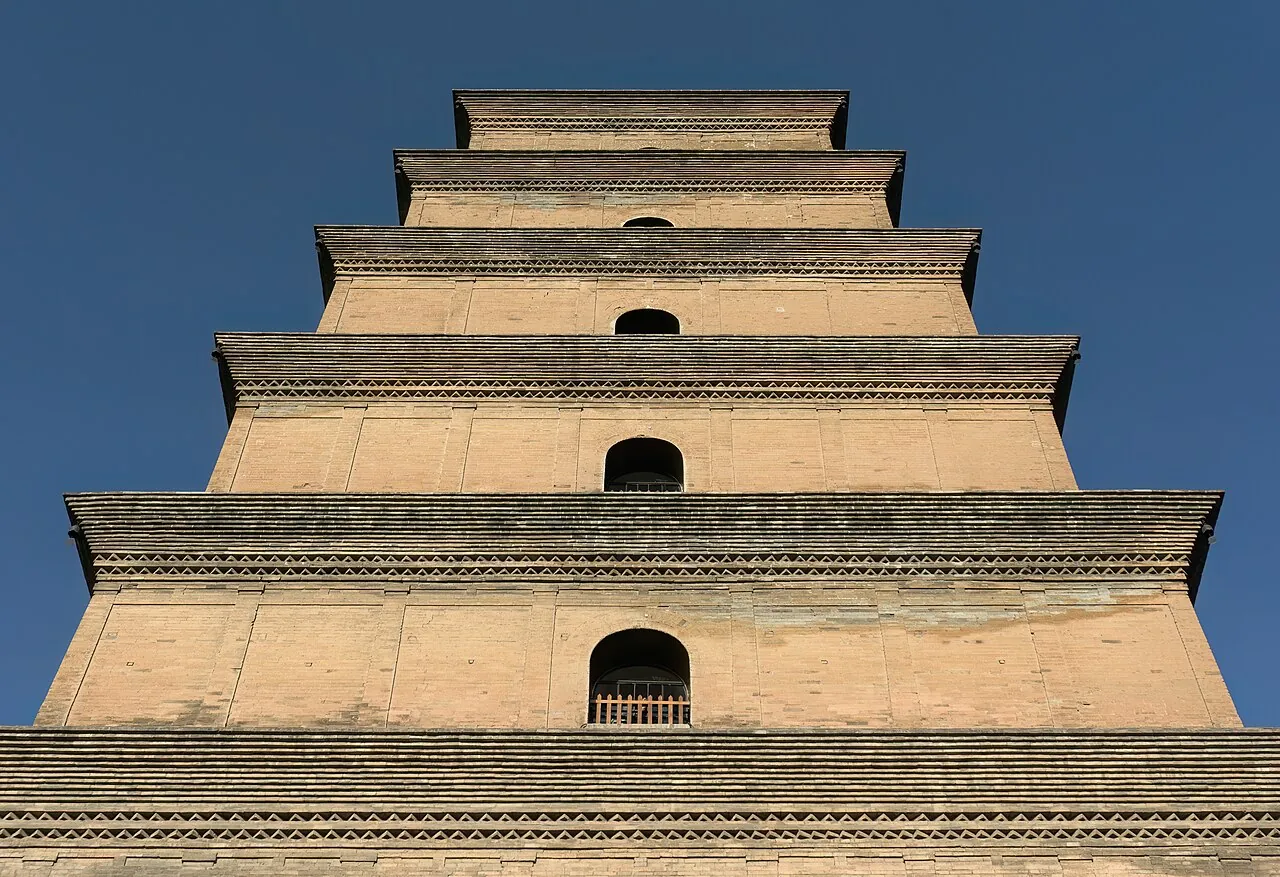
Photo: Wikimedia Commons / CC BY-SA. Source

The original Buddhist relics and sutras were moved to other temples during the Ming dynasty. Today, the pagoda contains replicas and statues; the original Xuanzang relics are in the nearby Small Wild Goose Pagoda and in Japan (where Xuanzang’s work influenced the founding of Buddhism’s Kegon sect).
What to see
The Da Ci’en Temple complex has three main sections: the North Square (outside, free), the temple grounds (paid), and the pagoda climb (extra).
The North Square is the most-photographed spot in Xi’an. The musical fountain — Asia’s largest — runs nightly at 9 PM, choreographed to music with the pagoda as a backdrop. The show is free and draws a crowd. Arrive 20 minutes early to claim a front-row spot along the rail.
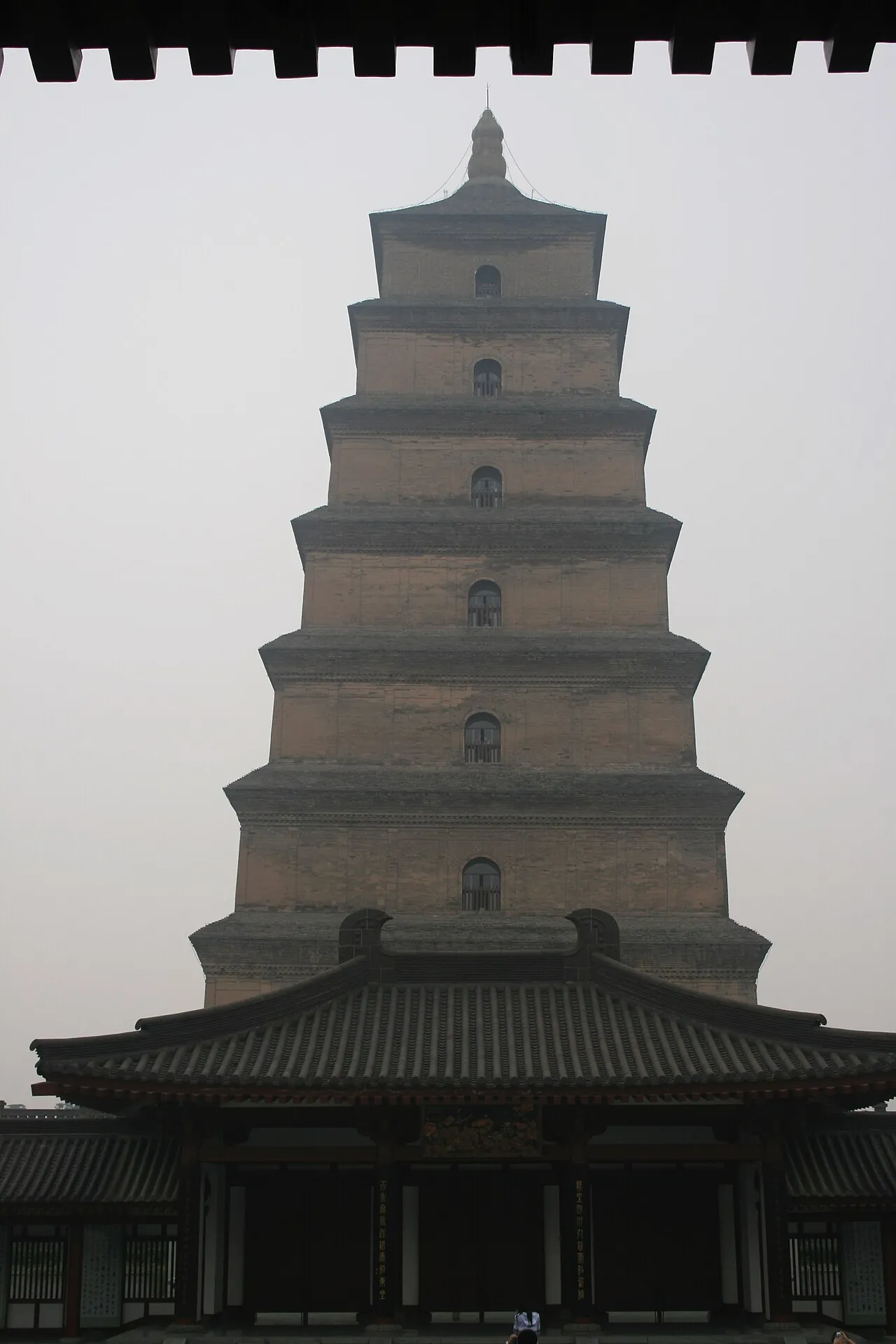
Photo: Wikimedia Commons / CC BY-SA. Source
.jpg)
The temple grounds (¥50 ticket) are a quiet escape from the North Square crowds. The main hall (Mahavira Hall) houses a 5.2m wooden Shakyamuni statue flanked by the Twenty-Four Heavenly Kings. The east and west side halls display photos and relics of Xuanzang’s translation work. The temple gardens are shaded and pleasant for a 30-minute walk.
The pagoda climb (¥30 extra) is 218 steps up a gentle internal staircase. Each floor has small Buddha statues in niches. The 7th-floor viewing platform has views over the temple complex, the North Square fountain, and the modern Xi’an skyline. The climb is recommended only for visitors without knee issues.
When to visit
The pagoda is open 8:00-22:00 in summer (March 16–November 15) and 8:00-21:00 in winter (November 16–March 15). The climb closes 30 minutes before the temple.
April-May and September-October have the best weather (15-25°C) and the clearest views. The pagoda is particularly photogenic in golden hour — arrive 1-2 hours before sunset, climb the pagoda for the top-floor view, then descend for the 9 PM fountain show.
Avoid Chinese National Day (October 1-7) when domestic tourist numbers spike to 20,000+ per day. Summer (June-August) is hot (32-38°C) with little shade on the climb — bring a hat and 2L of water. Winter visits (December-February) are quiet, and a snow-dusted pagoda is striking.
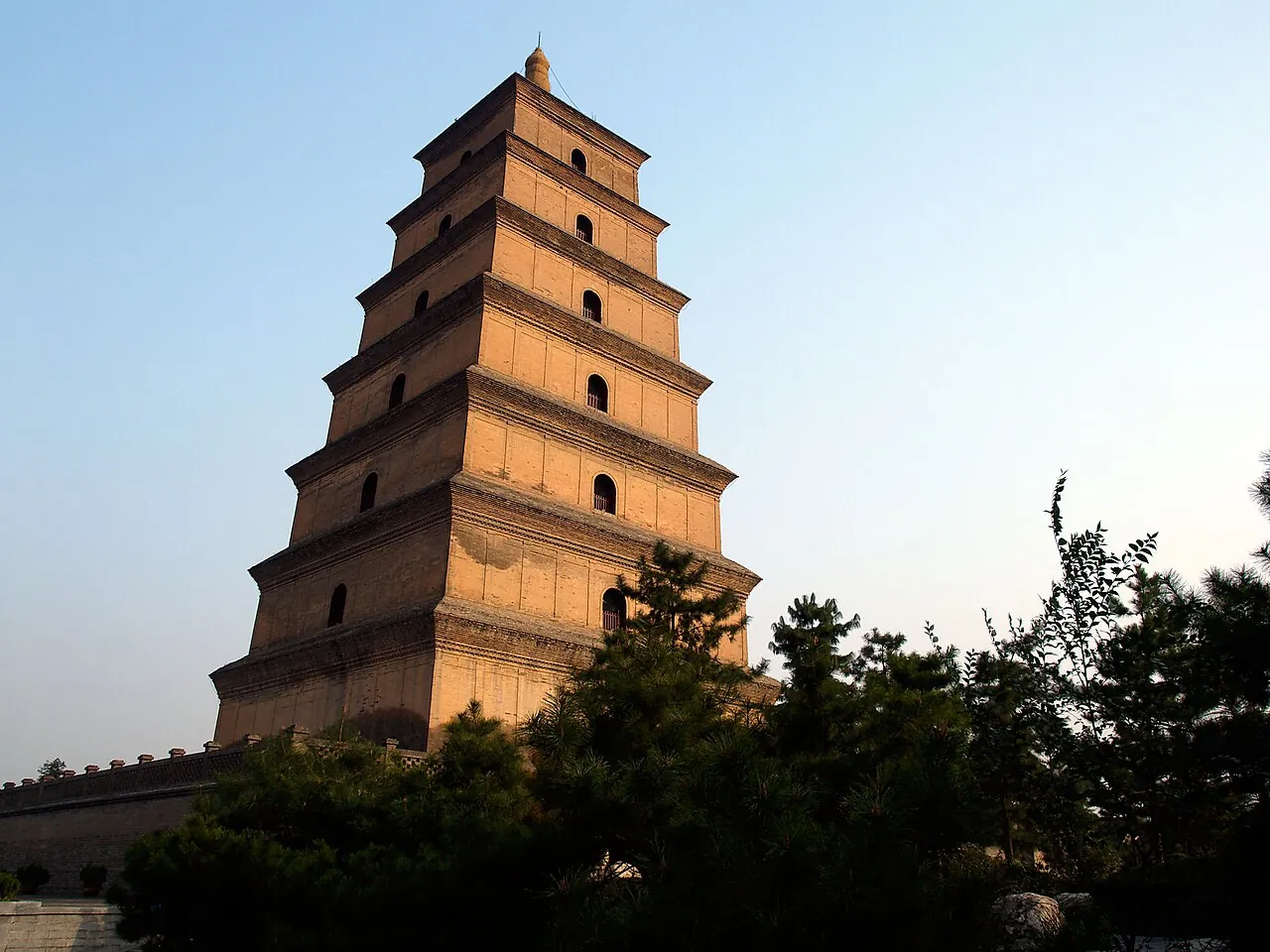
Photo: Wikimedia Commons / CC BY-SA. Source

How to pair the visit
Most travelers pair the Big Wild Goose Pagoda with the Small Wild Goose Pagoda (15-min taxi west) for a half-day Buddhist Xi’an experience. The Small is more refined, less crowded, and on the same UNESCO inscription.
For a full Xi’an day: Tang Dynasty show in the evening (8:30 PM) is 4 km east at Tang Paradise, which pairs naturally with a pagoda visit. After the show, taxi 10 minutes to the pagoda for the 9 PM fountain show if you time it right — but the Tang show runs 90 minutes and the fountain show is 20 minutes, so plan to pick one for the evening.
Step by step
-
Take Metro Line 3 or 4 to Dayanta Station
Dayanta Station (大雁塔站) is the closest metro stop, served by Lines 3 and 4. Exit A leads to the North Square and the free musical fountain. Exit B leads to the Da Ci'en Temple south entrance. Allow 5 minutes walk from the metro to the ticket gate.
-
Buy a ticket for Da Ci'en Temple (¥50)
Combined ticket at the south gate covers the Da Ci'en Temple grounds, the Big Wild Goose Pagoda exterior, and the Buddhist scripture hall. Passport required. There is no foreigner surcharge. Pay with Alipay, WeChat, or cash. The ticket office is on the right of the south gate; the e-ticket is on the left.
-
Visit the North Square musical fountain (free, outside the gate)
Skip the line and head to the North Square first. The musical fountain show runs 9 PM nightly (8:30 PM in winter), 20 minutes. This is the most-photographed view in Xi'an: the pagoda lit up with the fountain in front. Come back inside the temple after the show (the temple is open until 22:00 in summer).
-
Walk the temple grounds (45-60 minutes)
Da Ci'en Temple was rebuilt in the Ming dynasty on Tang foundations. The main hall houses a 5.2m wooden statue of Shakyamuni. The two side halls hold photos and relics of Xuanzang's translation work. The temple gardens are quiet and shaded — a relief from the busy North Square. Allow 45-60 minutes.
-
Climb the pagoda (¥30 extra, 30 minutes)
The pagoda climb costs an extra ¥30. There is no elevator. 218 steps, gentle staircase, handrails. The interior walls have niches with small Buddha statues on each floor. The top (7th floor) has a small viewing platform with views over the Da Ci'en Temple complex, the North Square, and the modern Xi'an skyline. Not recommended for anyone with knee issues.
-
Stay for the fountain show (if not already done)
If you visited during the day, return at 9 PM (or 8:30 PM in winter) to see the fountain show. The temple re-opens to the public after dark; the pagoda is lit up and the North Square fountain performs. The show is choreographed to traditional Chinese and Western classical music, with water jets timed to the beat.
-
Pair with the Small Wild Goose Pagoda (optional, 2 hours)
If you have a half day, take a 15-min taxi to the Small Wild Goose Pagoda (Xiaoyan Ta) in the western part of downtown. Smaller (43m), more refined, and on the UNESCO Silk Roads inscription. The Small Pagoda is less crowded and has a more contemplative feel. Combined ticket ¥30.
-
Return downtown by 22:30
The temple closes at 22:00 in summer (21:00 in winter). The last metro from Dayanta Station leaves around 23:30. Plan to exit the temple by 22:00 to walk back to the metro in time. If you are heading to the Muslim Quarter for dinner, take Line 3 north 2 stops to Beidajie (Bell Tower), then walk 10 min west.
FAQ
-
How much is the Big Wild Goose Pagoda ticket in 2026?
Da Ci'en Temple grounds cost ¥50 (Mar 16–Nov 15) or ¥30 (Nov 16–Mar 15). The pagoda climb costs an extra ¥30. There is no foreigner surcharge. The free North Square musical fountain is outside the temple and requires no ticket. Audio guide is ¥20 at the entrance; the Alipay mini-program offers a free AI guide. -
Can foreigners visit the Big Wild Goose Pagoda?
Yes. Passport required for ticket purchase. The site is on every standard Xi'an 2-day itinerary. Most visitors spend 1-2 hours on the temple grounds plus 30 minutes for the climb. The pagoda has 7 above-ground floors (218 steps in total) and is fully accessible by a gentle internal staircase — no elevator. -
Is the Big Wild Goose Pagoda worth visiting?
Yes, especially if you have even mild interest in Tang-dynasty history, Buddhist heritage, or the Silk Road. The pagoda was built in 652 AD to house Buddhist sutras translated from Sanskrit by the monk Xuanzang, who walked to India in 629 AD and returned 17 years later. The wooden statues on the ground floor and the views from the top are the highlights. The free North Square musical fountain (9 PM) is worth timing a visit for. -
What is the best time to visit the Big Wild Goose Pagoda?
April-May and September-October for the weather (15-25°C). Arrive 1-2 hours before sunset for the climb: golden hour light on the brick pagoda, then the North Square fountain show at 9 PM. Avoid the Chinese National Day (Oct 1-7) when visitor numbers spike. Winter visits (Dec-Feb) are quiet, and the pagoda dusted with snow is striking but cold. -
How tall is the Big Wild Goose Pagoda?
64 meters (210 feet), with 7 above-ground floors. The pagoda is a square-pyramid brick structure, tapering at each floor, and is one of the best-preserved Tang-dynasty pagodas in China. It has survived multiple earthquakes, including the 1556 Shaanxi earthquake (the deadliest in recorded history). The internal staircase is 218 steps. -
What is the difference between the Big and Small Wild Goose Pagodas?
The Big Wild Goose Pagoda (Dayan Ta, 652 AD) is 64m, square, brick, and is the more famous of the pair. The Small Wild Goose Pagoda (Xiaoyan Ta, 707 AD) is 43m, denser, and located in a quieter part of the city. The Small is included on the UNESCO Silk Roads inscription and is generally less crowded. If you have time, visit both; if only one, the Big is the iconic photo and the North Square fountain is the experience. -
When does the North Square musical fountain run?
The North Square musical fountain runs nightly at 9 PM (sometimes 8:30 PM in winter). The show lasts 20 minutes and uses the pagoda as a backdrop, with choreographed water jets synchronized to music. It is the largest musical fountain in Asia and is free. Arrive 20 minutes early to claim a good spot along the rail — the show draws a crowd. -
How do I get to the Big Wild Goose Pagoda?
Metro Line 3 or Line 4 to Dayanta (Big Wild Goose Pagoda) Station, Exit A. The temple entrance is 5 minutes walk south. From the Xi'an Railway Station, take Metro Line 4 (15 min, ¥3). From the Bell Tower downtown, take Line 2 to Xiaozhai, transfer to Line 3 (25 min, ¥4) or taxi 15 min (¥30).
Related guides
- Scenic & Nature
Famen Temple Guide: Xi'an Day Trip, Finger-Bone Relic, Tickets
Famen Temple (Famen Si) day trip from Xi'an: 110 km west in Fufeng County, the finger-bone relic of the Buddha, Tang underground palace museum. Tickets ¥120, transport options, and whether it's worth the day.
7min read
- Scenic & Nature
Terracotta Army Guide: Xi'an UNESCO Site, Tickets & Plan
Terracotta Army in Xi'an: 8,000+ life-sized warriors from 210 BC, UNESCO since 1987. Tickets (¥120), Bus 306 transport, 3 pits, and how to plan your visit.
12min read
- Scenic & Nature
Tang Dynasty Show in Xi'an: Dream Chang'an at Tang Paradise (Tickets & Plan)
Tang Dynasty show in Xi'an — the Tang Paradise 'Dream Chang'an' performance with dumpling banquet. Tickets ¥198-580, 8:30 PM nightly, 90 min. How to book, what to expect, and whether it's worth it.
7min read
- Scenic & Nature
Mogao Caves Guide: Dunhuang Silk Road Buddhist Caves
Mogao Caves near Dunhuang: 735 Buddhist caves with 45,000 sqm of murals, UNESCO since 1987. Tickets (¥238), 6,000 daily cap, photography ban.
12min read
- Scenic & Nature
China's Top 3 Scenic Wonders Compared: Zhangjiajie vs Huangshan vs Jiuzhaigou (2026)
Zhangjiajie (sandstone pillars), Huangshan (sea of clouds + granite peaks), Jiuzhaigou (turquoise lakes + waterfalls). Decision guide covering which fits your time, budget, fitness level, photography goals, and travel style. Prices, distances from Shanghai/Beijing, best seasons compared.
12min read
- Scenic & Nature
Ejina Populus Forest Guide: 21 Days of Golden China
Ejina Populus Forest in Inner Mongolia has 39,000 hectares of Populus euphratica, gold October 1-21. Covers tickets, transport, Erdaoqiao Bridge, 4-day plan.
12min read