
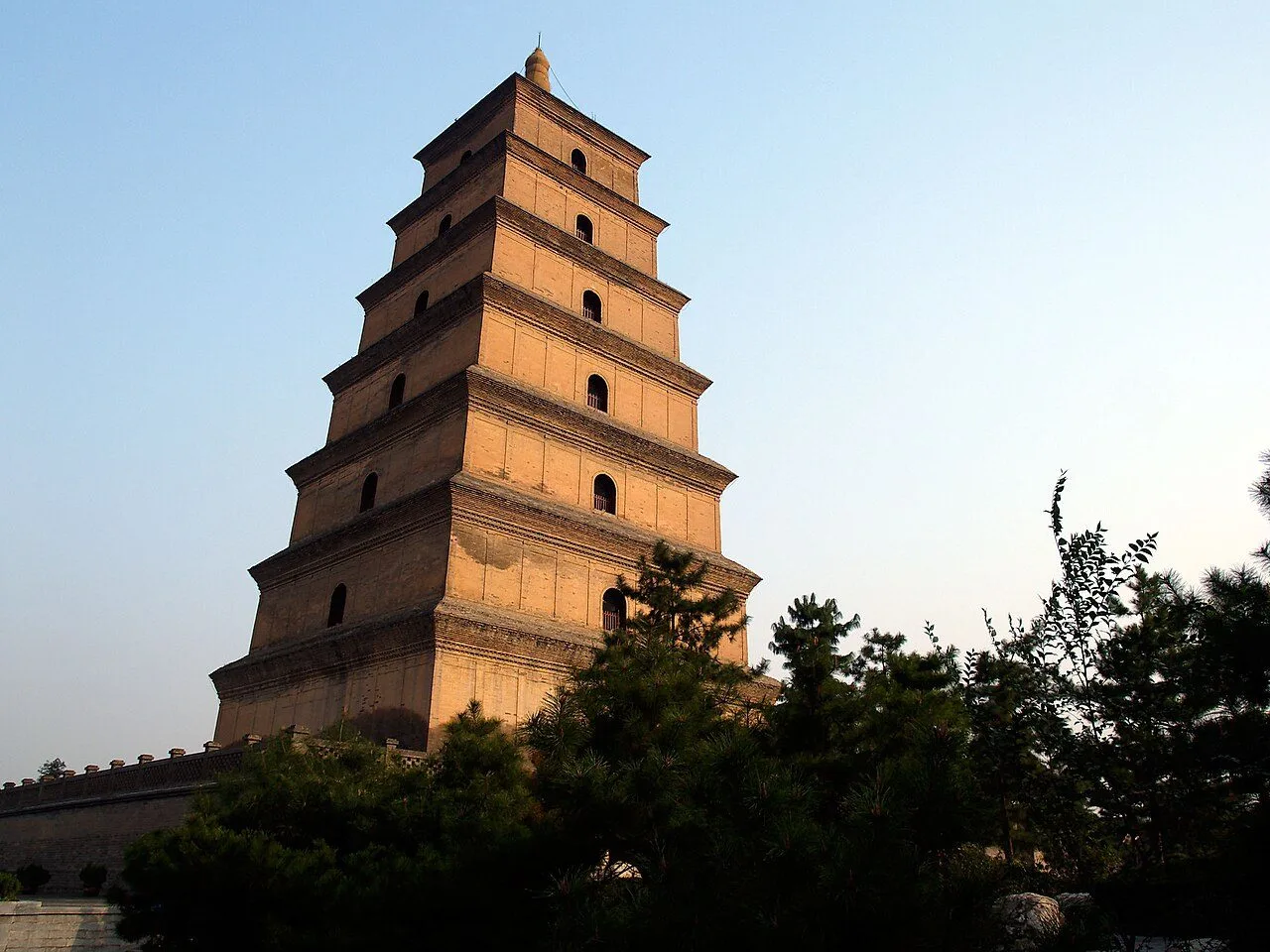
Big Wild Goose Pagoda
大雁塔 · Dàyàn Tǎ
Quick answer
Passport required at the ticket window. Foreign visitors can buy same-day tickets at the on-site ticket office without a Chinese phone number. The official WeChat mini-program (大慈恩寺) requires a Chinese phone number to register, so it is effectively closed to passport holders — use the on-site window or Trip.com.
Why visit
- 1 Stand before a 1,300-year-old Tang-dynasty brick pagoda — 64 m tall, 7 stories, survived 70+ earthquakes
- 2 See the North Square musical fountain at 9 PM nightly — Asia's largest, free, set against the lit pagoda
- 3 Climb the 218 internal steps to the 7th-floor viewing platform for 360° views over central Xi'an
- 4 Walk through the Da Ci'en Temple complex where the monk Xuanzang translated 657 Buddhist sutras from India
Essential tips for foreigners
- Foreigners must buy tickets at the window with your passport — the official WeChat mini-program requires a Chinese phone number. Same-day tickets are reliably available outside of Golden Week.
- Take Metro Line 3 or Line 4 to Dayanta Station (大雁塔站) Exit A — 5 min walk to the North Square. Avoid driving on weekends (the South 2nd Ring Road is congested).
- The 9 PM North Square fountain show is the highlight — arrive 20 min early to claim a front-row spot along the rail. Combine with the Tang Dynasty show at Tang Paradise (4 km east, 8:30 PM, 90 min) for a full evening — pick one or the other as they overlap.
- The pagoda climb (¥30 extra) closes at 17:00 — if you want the top-floor view, do it before 4 PM. The 218 steps are gentle, but bring water in summer.
- Pair the visit with the Small Wild Goose Pagoda (小雁塔) 15 min by taxi west — quieter, more refined, on the same UNESCO inscription, fewer tour groups.
Suggested route
- 16:00 5 min Take Metro Line 3 or Line 4 to Dayanta Station (大雁塔站) Exit A, walk 5 min to the North Square
- 16:15 45 min Walk around the North Square and the musical fountain area — the sunset over the pagoda is the most-photographed spot in Xi'an
- 17:00 1.5 hours Enter the Da Ci'en Temple grounds (¥50). Visit the Mahavira Hall and the side halls, then climb the pagoda (¥30 extra) for the 7th-floor view — close enough before 17:00 last entry
- 18:30 1.5 hours Walk through the temple gardens on the way out, then dinner at one of the Tang-themed restaurants near the North Square (try the biangbiang noodles)
- 20:40 20 min Return to the North Square, claim a front-row spot along the rail for the 9 PM musical fountain show
- 21:00 20 min Watch the 20-minute musical fountain show against the lit pagoda — free, weather-independent
- 21:30 30 min Didi or taxi back to the hotel, or stay for the lit-up gardens and the Tang Dynasty show at Tang Paradise (4 km east, 8:30 PM, 90 min) if you have the energy
The Big Wild Goose Pagoda (大雁塔, Dàyàn Tǎ) is a 64-meter Tang-dynasty brick pagoda in central Xi’an, built in 652 AD to house Buddhist sutras and statues brought from India by the monk Xuanzang. It stands inside the Da Ci’en Temple complex, surrounded by the modern North Square (Asia’s largest musical fountain) and the bustling Da Ci’en Temple commercial district.
The pagoda is the most important surviving Tang-dynasty Buddhist structure in Xi’an and was inscribed as part of the UNESCO Silk Roads network in 2014. For travelers, it is the iconic Xi’an skyline silhouette — the brick pyramid that anchors every postcard of the city, and the focal point of the city’s Buddhist heritage.
History
Xuanzang (玄奘, 602-664 AD) was a Tang-dynasty Buddhist monk who walked from Chang’an (today’s Xi’an) to India in 629 AD, against the emperor’s travel ban. He spent 17 years abroad, returning in 646 AD with 657 Buddhist sutras, 150 relics, and a deep understanding of Sanskrit Buddhist philosophy.
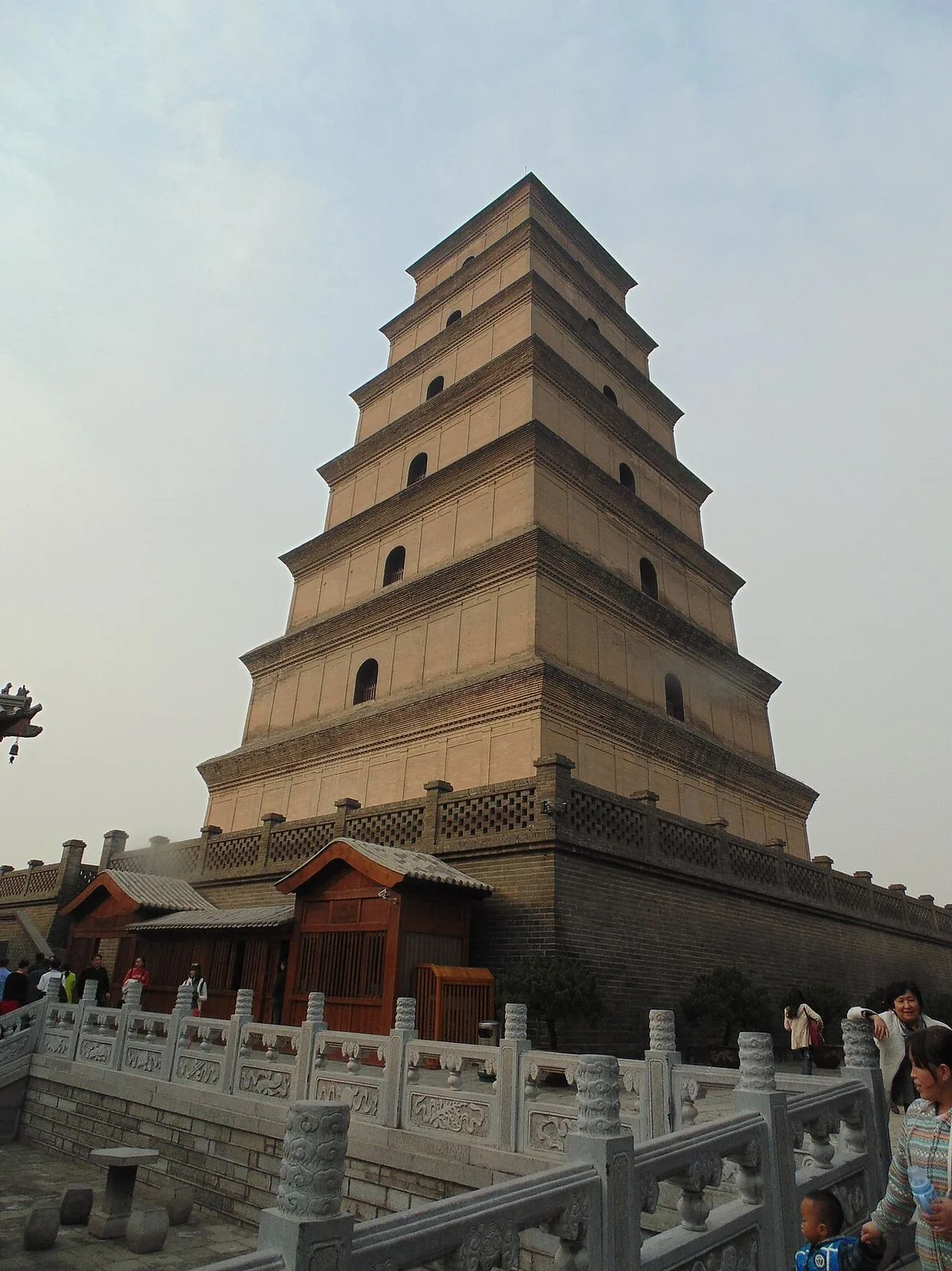
Photo: Wikimedia Commons / CC BY-SA. Source

The Tang emperor Gaozong funded the construction of the Da Ci’en Temple and its pagoda to house Xuanzang’s translations. The original pagoda was a 5-story earth-and-brick structure; it was rebuilt in 704 AD by Empress Wu Zetian to the 7-story brick form you see today. The pagoda has survived 1,370 years of earthquakes, wars, and weather, and is one of the best-preserved Tang brick pagodas in China.
The original Buddhist relics and sutras were moved to other temples during the Ming dynasty. Today, the pagoda contains replicas and statues; the original Xuanzang relics are in the nearby Small Wild Goose Pagoda and in Japan (where Xuanzang’s work influenced the founding of Buddhism’s Kegon sect).
What to see
The Da Ci’en Temple complex has three main sections: the North Square (outside, free), the temple grounds (paid), and the pagoda climb (extra).
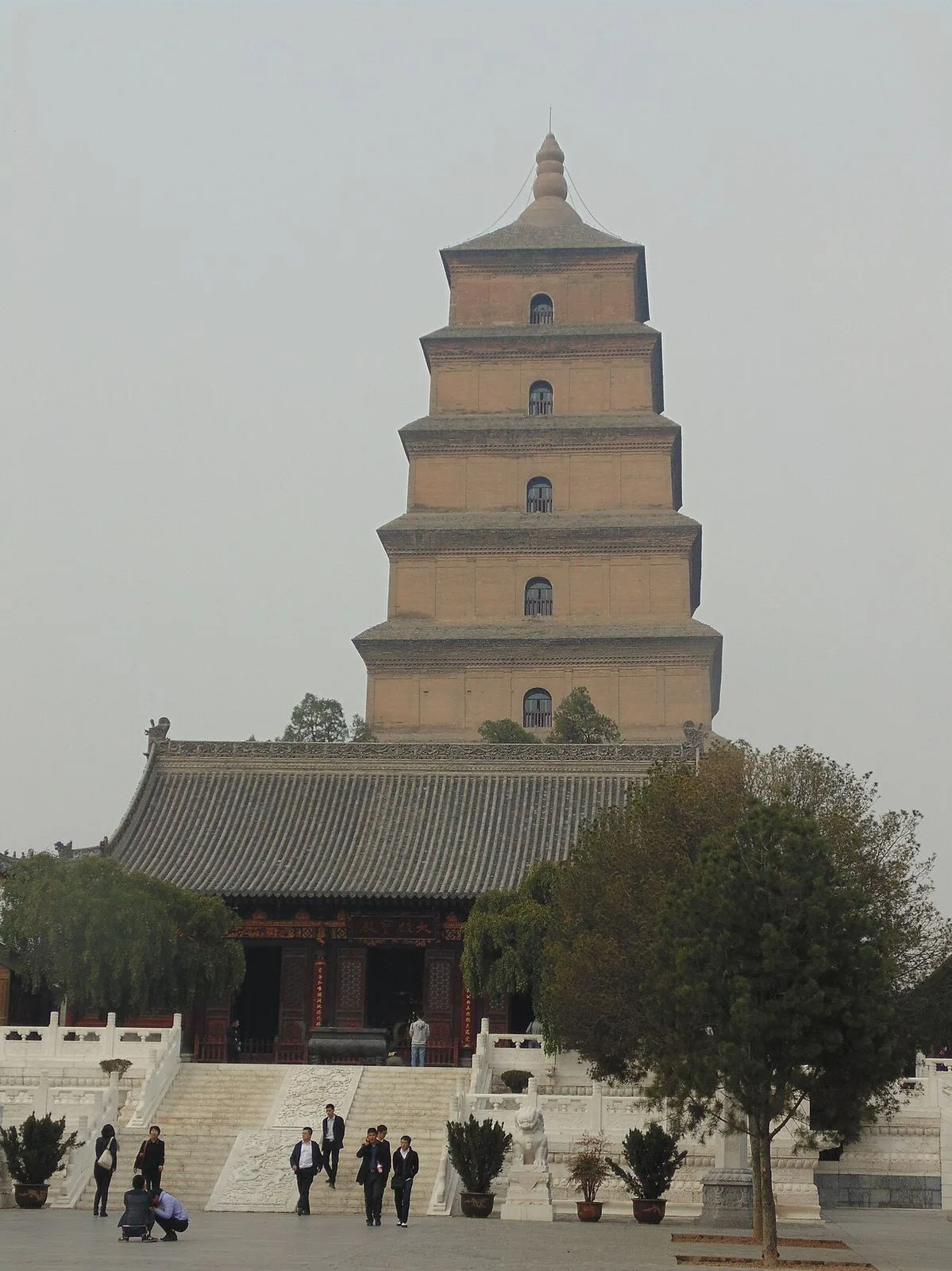
Photo: Wikimedia Commons / CC BY-SA. Source

The North Square is the most-photographed spot in Xi’an. The musical fountain — Asia’s largest — runs nightly at 9 PM, choreographed to music with the pagoda as a backdrop. The show is free and draws a crowd. Arrive 20 minutes early to claim a front-row spot along the rail.
The temple grounds (¥50 ticket) are a quiet escape from the North Square crowds. The main hall (Mahavira Hall) houses a 5.2m wooden Shakyamuni statue flanked by the Twenty-Four Heavenly Kings. The east and west side halls display photos and relics of Xuanzang’s translation work. The temple gardens are shaded and pleasant for a 30-minute walk.
The pagoda climb (¥30 extra) is 218 steps up a gentle internal staircase. Each floor has small Buddha statues in niches. The 7th-floor viewing platform has views over the temple complex, the North Square fountain, and the modern Xi’an skyline. The climb is recommended only for visitors without knee issues.
When to visit
The pagoda is open 8:00-18:30 (last entry 17:30). The climb closes at 17:00. The North Square fountain show runs nightly at 9:00 PM (20 min, free).
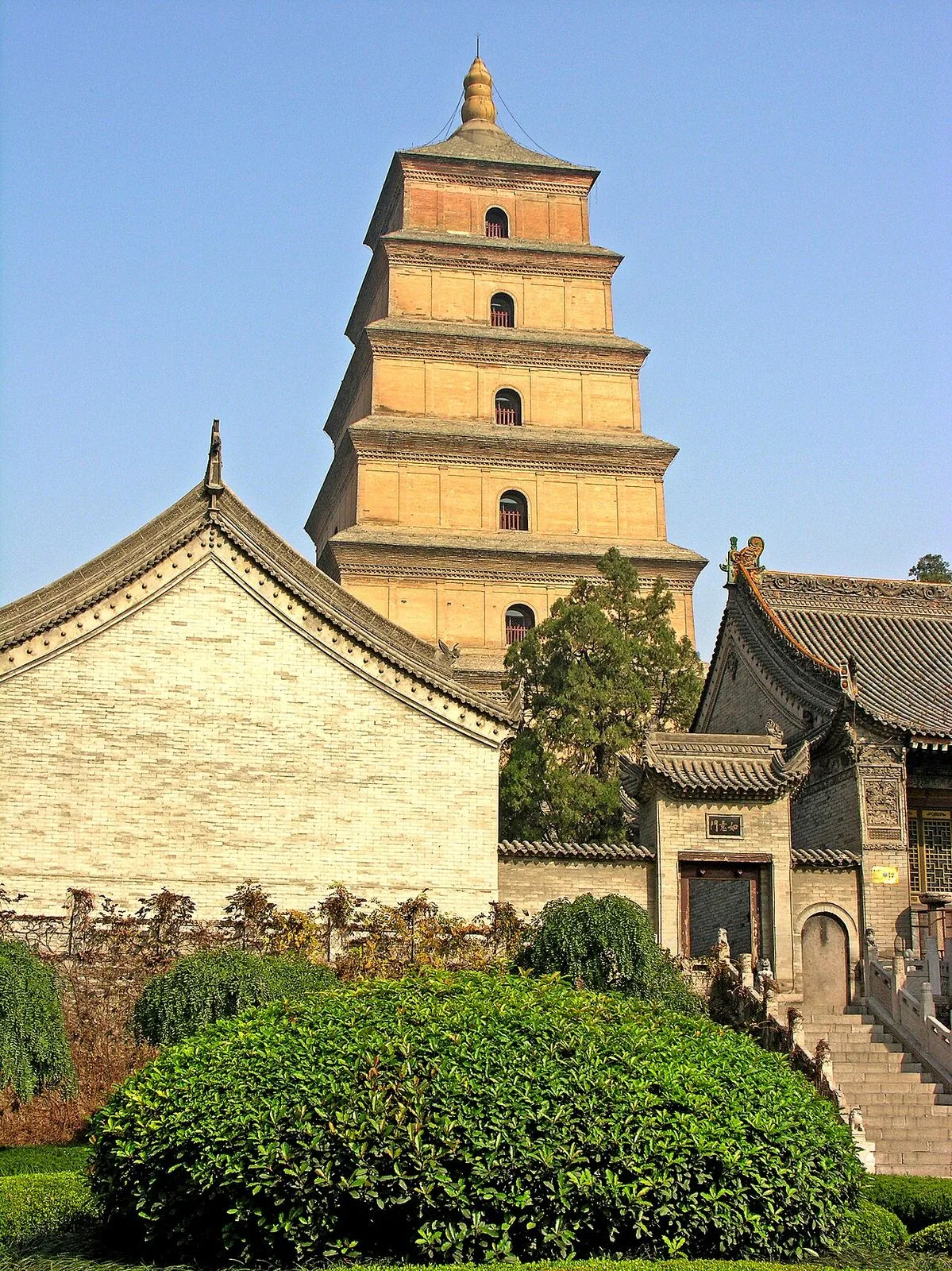
Photo: Wikimedia Commons / CC BY-SA. Source
_-_China_7461_-_Big_Wild_Goose_Pagoda.jpg)
April-May and September-October have the best weather (15-25°C) and the clearest views. The pagoda is particularly photogenic in golden hour — arrive 1-2 hours before sunset, climb the pagoda for the top-floor view, then descend for the 9 PM fountain show.
Avoid Chinese National Day (October 1-7) when domestic tourist numbers spike to 20,000+ per day. Summer (June-August) is hot (32-38°C) with little shade on the climb — bring a hat and 2L of water. Winter visits (December-February) are quiet, and a snow-dusted pagoda is striking.
How to pair the visit
Most travelers pair the Big Wild Goose Pagoda with the Small Wild Goose Pagoda (15-min taxi west) for a half-day Buddhist Xi’an experience. The Small is more refined, less crowded, and on the same UNESCO inscription.
For a full Xi’an day: Tang Dynasty show in the evening (8:30 PM) is 4 km east at Tang Paradise, which pairs naturally with a pagoda visit. After the show, taxi 10 minutes to the pagoda for the 9 PM fountain show if you time it right — but the Tang show runs 90 minutes and the fountain show is 20 minutes, so plan to pick one for the evening.
Best photo spots
-
North Square fountain viewing rail, facing south toward the pagoda · 9 PM (fountain show) or 1 hour before sunset (golden hour)
The classic Xi'an postcard shot: the pagoda reflected in the fountain, lit up at night. The North Square fountain is the largest in Asia and is free to view.
-
Da Ci'en Temple Mahavira Hall interior · Afternoon, any time
The 5.2m wooden Shakyamuni statue flanked by the Twenty-Four Heavenly Kings. Photography is allowed (no flash).
-
Pagoda 7th-floor viewing platform · Late afternoon, 1 hour before sunset
360° views over the Da Ci'en Temple complex, the North Square, and the modern Xi'an skyline. The pagoda climb is recommended before 17:00 last entry.
-
Tang-themed commercial street south of the temple · Evening, 6-8 PM
The street between the North Square and the temple is lit with red lanterns at night, with the pagoda silhouette above — atmospheric for evening photography.
Where to eat nearby
-
Da Ci'en Temple vegetarian restaurant (大慈恩寺素斋馆)
Buddhist vegetarian · ¥60-100/person · Inside the temple grounds, west wing
-
First Noodle Under the Sun (天下第一面)
Shanxi-style hand-pulled noodles · ¥30-50/person · 5 min walk south of the temple, in the Tang-themed commercial district
-
Muslim Quarter (回民街)
Xian street food · ¥20-80/person · 20 min by Didi west — pair with the pagoda visit if you have half a day
Frequently asked questions
How much does the Big Wild Goose Pagoda cost for foreigners in 2026?
¥50 for the Da Ci'en Temple grounds (foreigners pay the same as Chinese visitors). The pagoda climb is an extra ¥30. The North Square musical fountain show is free. Bundle ticket (temple + climb) is ¥80. Same-day tickets are sold at the on-site window with your passport — no Chinese phone number needed.
Do I need to book Big Wild Goose Pagoda tickets in advance?
No booking required in normal periods. Walk up with your passport, buy at the on-site ticket window, and walk in. Trip.com sells advance tickets for ¥60-80 with free cancellation, which is useful during Chinese National Day (Oct 1-7) and the May 1-5 holiday when daily visitors can exceed 20,000.
What time is the North Square musical fountain show?
Nightly at 9:00 PM, runs about 20 minutes, free, weather-independent. Arrive 20 min early to claim a front-row spot along the rail. The show is choreographed to music with the pagoda as a backdrop — Asia's largest musical fountain. The North Square is open 24/7 and is the most-photographed spot in Xi'an at sunset and after dark.
How do I get to the Big Wild Goose Pagoda from Xi'an city center by public transport?
Metro Line 3 or Line 4 to Dayanta Station (大雁塔站) Exit A — 5 min walk to the North Square. By Didi or taxi from the Bell Tower area: 25-40 min, ¥30-50. Bus 5, 19, 21, 22, 23, 24, 27, 34, 41, 44, 400 all stop at the North Square; the buses are cheaper but slower (40-60 min from the Bell Tower).
Is the pagoda climb worth it?
Yes if you don't have knee issues and want the 360° view over central Xi'an from the 7th-floor platform. The 218 internal steps are gentle with small Buddha statues in niches on each floor. The climb is recommended before 4 PM (closes 17:00). Skip the climb if you have knee issues, are very short on time, or if it's a hot summer day — the climb has no air conditioning and can be physically demanding.
What is the best time of year to visit the Big Wild Goose Pagoda?
April-May and September-October for clear weather, comfortable temperatures (15-25°C), and golden hour photography (sunset behind the pagoda is iconic). Avoid Chinese national holidays (May 1-5, Oct 1-7) — daily visitors can exceed 20,000. Summer (June-August) is hot (32-38°C) with little shade on the climb. Winter (December-February) is quiet and cold but a snow-dusted pagoda is striking.
Is the Big Wild Goose Pagoda wheelchair accessible?
The North Square (free, musical fountain) and the Da Ci'en Temple grounds are fully accessible. The pagoda climb is not wheelchair-accessible — there is no elevator. The Mahavira Hall and the temple gardens are accessible. Free wheelchair loans are available at the visitor center; bring your passport.