Huaqing Palace
华清宫 · Huáqīng Gōng
Quick answer
Real-name ticketing: passport number at booking, same passport at the gate. Foreign visitors pay the same ¥120. English signage is present on the main route and at the bathhouse ruins but thin in the side halls; the ruins themselves are stone foundations, so without a guide or an audio guide you are looking at rectangles in the ground. The site is 30 km east of Xi'an on Metro Line 9, which makes it one of the easiest day trips from the city.
Why visit
- 1 Stand over the excavated Tang bathhouse foundations and see the actual shape of Yang Guifei's pool — a crabapple blossom carved in stone, fed by nine dragon heads, with 43°C mineral water still running through the site
- 2 Find the bullet holes in the glass of 五间厅, the building where Chiang Kai-shek was staying on the night of 12 December 1936 when Zhang Xueliang's troops stormed the compound — the founding moment of the united front against Japan
- 3 Ride the cableway up Mount Li to 兵谏亭, where Chiang was captured hiding in a crevice, and look back down on the palace, the plain and the whole geography of the Xi'an Incident
- 4 Stay for 长恨歌 — a 70-minute outdoor production staged on the lake with Mount Li as the backdrop, based on Bai Juyi's 120-line poem about the same emperor and the same consort
Essential tips for foreigners
- The ticket is valid for two days — use that. Do the palace and the bathhouse ruins one afternoon, then Mount Li and the Beacon Tower the next morning, or the other way round. Almost no one realises, and it turns a rushed 2-hour stop into a proper visit.
- Take Metro Line 9, not a taxi. Huaqingchi station, Exit B or C, five minutes on foot. About an hour from central Xi'an, no traffic, and it drops you at the west gate. This is the only Tang palace in China you can reach on a metro.
- Read up before you look at the ruins. The Tang bathhouse is excavated foundations — stone rectangles in the ground. Without the story they are unimpressive; with it they are the most specific surviving evidence of how the Tang court actually lived. Take the audio guide or a guide, and skip the touts outside.
- Book 长恨歌 about a week ahead if you want it. Tickets release roughly seven days before each performance from 09:00 and sell out in peak season. It is a separate ticket, it is not included in the ¥120, and turning up on the night rarely works.
- Do not pair it carelessly with the Terracotta Army. They are 10-15 minutes apart and everyone tries to do both, but Huaqing needs 2-3 hours minimum and the Terracotta Army needs 3-4. Doing both properly means starting at 08:00. Doing both in an afternoon means seeing neither.
- The palace's best light is early morning, not sunset. The site faces east toward Mount Li and the buildings run north-south along the slope; by late afternoon the main halls are in shadow. Cold winter mornings with steam rising off the pools are the version worth getting up for.
Suggested route
- 08:00 1 hour 15 min Metro Line 9 from central Xi'an to Huaqingchi station, Exit C, five minutes' walk to the west gate 望京门. Enter with your passport
- 09:15 40 min 芙蓉湖 and 长生殿 on the way in — the 6D film inside 长生殿 runs on a loop and sets up the Xuanzong-Yang Guifei story in 15 minutes
- 09:55 1 hour 唐华清宫御汤遗址博物馆 — the excavated Tang pools. This is the core of the site and it rewards the audio guide. Look for 海棠汤 (Yang Guifei's) and 莲花汤 (Xuanzong's)
- 10:55 45 min 九龙湖 and 飞霜殿, then north to 五间厅 — the Xi'an Incident building. Look at the window glass; the bullet holes are still there
- 11:40 1 hour 30 min Cableway up Mount Li from inside the grounds (about ¥35 one way). 兵谏亭 first, then the short walk to the Beacon Tower for the view down over the palace and the plain
- 13:10 1 hour Down by cableway or on foot, and out through 昭阳门. Lunch in Lintong town — the local speciality is 临潼石榴 and the town does good noodles
- 14:30 3 hours Either continue to the Terracotta Army (10-15 min by taxi or bus 613) or return to Xi'an on Line 9. If you are staying for the show, this is the gap to fill
- 19:30 2 hours Return for 长恨歌 at 九龙湖 — 70 minutes, Mount Li as the backdrop, and the single best-produced thing in Lintong. Booked separately and roughly a week in advance
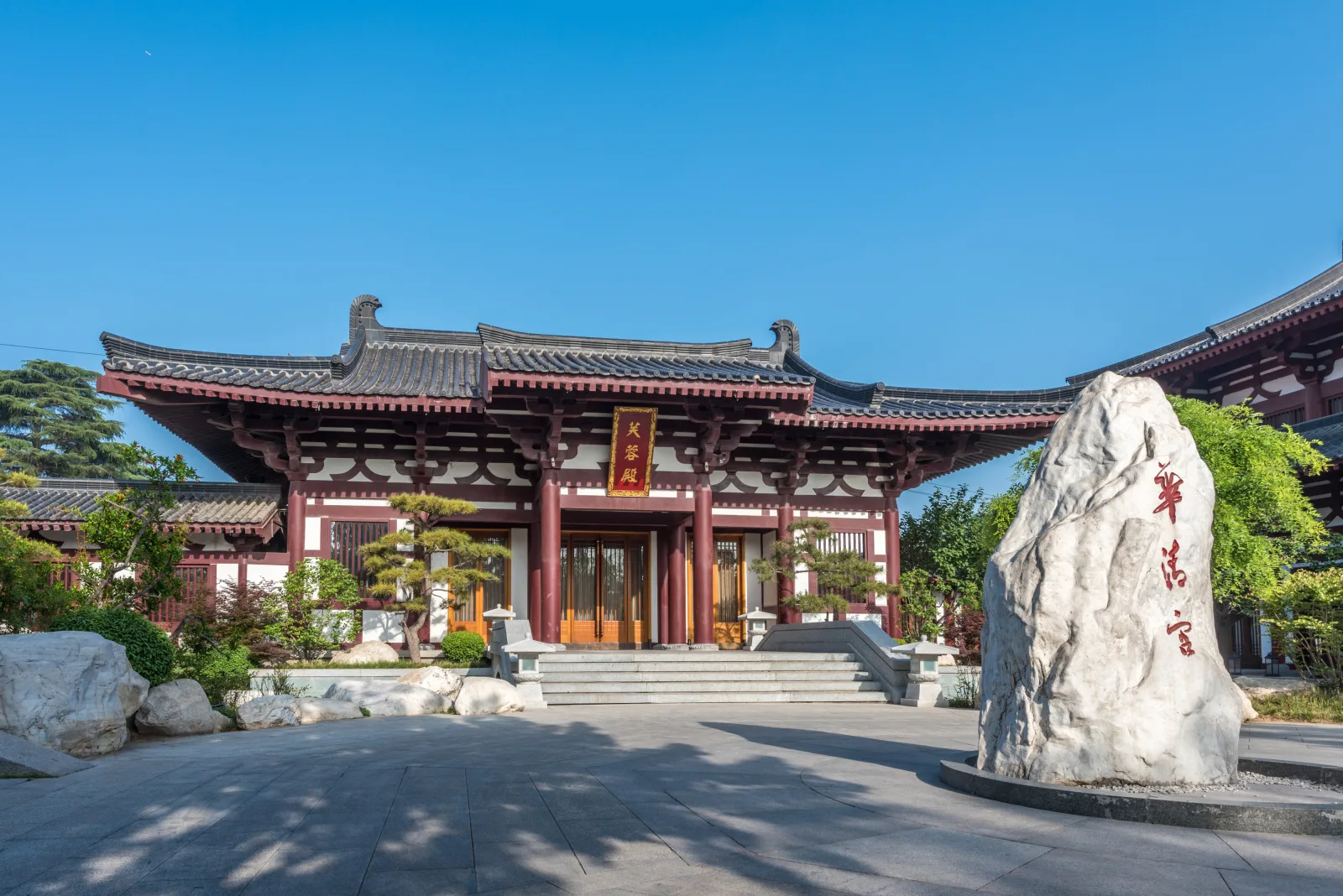
Huaqing Palace (华清宫, historically 华清池) sits at the foot of Mount Li, 30 km east of Xi’an, and it holds two completely unrelated stories in the same walled compound. The first is the Tang dynasty’s: a hot-spring resort where Xuanzong wintered with Yang Guifei, expanded in 747, and made permanent in Chinese memory by Bai Juyi’s 120-line poem 长恨歌. The second is modern: on 12 December 1936, Zhang Xueliang’s troops stormed the compound and arrested Chiang Kai-shek, the event that forced a united front against Japan and changed the following decade.
Most visitors come for the first and are surprised by the second. Both are worth the ¥120, and the ticket being valid for two days is the detail that makes the visit comfortable rather than rushed.
What you pay
| Item | Price | Notes |
|---|---|---|
| Palace ticket (adult) | ¥120 | Valid 2 days, one entry per day |
| Palace ticket (student) | ¥60 | With ID |
| Mount Li cableway | ~¥35 one way / ¥60 return | Not included |
| 长恨歌 evening show | ¥249-359 | By seat zone; separate ticket |
| 《12.12》 Xi’an Incident show | ¥268 | Separate production |
| Bus 306 (游5) from Xi’an East Railway Station | ~¥5-7 | Routes 306, about 1 hour |
| Metro Line 9 | standard fare | Huaqingchi station, 5 min walk |
Free: under 1.2m, and 65 and over. No free days otherwise, and the cableway and shows are never discounted.
What is the entrance fee for Huaqing Palace?
¥120 for an adult, and the price is the same for foreigners — there is no passport premium at the gate. Children under 1.2 m and visitors aged 65 and over are free, students pay ¥60, and discount platforms sometimes sell the same ticket at ¥99. There are no free days, and the cableway and both evening productions are never discounted.
What the ¥120 does and does not cover matters more than the number itself. It covers the palace grounds, the Tang bathhouse ruins museum (唐华清宫御汤遗址博物馆, including Yang Guifei’s crabapple-shaped pool and Xuanzong’s lotus pool), 九龙湖 and 长生殿, and the Xi’an Incident sites 五间厅 and 兵谏亭. It does not cover the Mount Li cableway (about ¥35 one way, ¥60 return) or either evening show — 长恨歌 runs ¥249-359 depending on seat zone, and 《12.12》 is ¥268.
One detail makes that ¥120 unusually generous: the ticket is valid for two days, one entry per day. Almost nobody uses the second day. Treat it as two short visits rather than one long one, and the palace stops being the thing that has to fit between the Terracotta Army and dinner.
Hours, and the one rule that matters
Currently 07:30-17:30 with last entry 17:10; peak season extends to roughly 07:00-19:00 with last entry 18:30. The times shift seasonally and not all sources agree, so plan on the shorter window.
The practical consequence: this is not a site you visit after the Terracotta Army if you started late. It needs two to three hours for the palace alone, and the bathhouse museum and the Xi’an Incident buildings both close with the grounds. A 16:00 arrival gets you a walk around a lake.
What are the opening hours of Huaqing Palace?
Currently 07:30-17:30 with last entry at 17:10. In peak season the listed hours extend to roughly 07:00-19:00 with last entry 18:30, and the palace shortens again in winter. Because the published times move with the season and not all sources agree, plan on 17:10 as the last entry until the gate tells you otherwise on the day.
The evening productions run on a completely separate schedule after the grounds close, so they do not change the daytime window. 长恨歌 is staged on 九龙湖 inside the compound and runs 70 minutes; it plays roughly April to October and is cancelled in heavy rain or high wind. The Mount Li cableway is a separate matter again — it closes in high wind and does not run in snow, and that is the constraint that decides whether the mountain is worth adding to the day.
One practical consequence of the hours: the Tang bathhouse ruins museum and the Xi’an Incident buildings close with the grounds, so the last hour before 17:10 is not enough for either. Arrive by 14:00 if you want the palace and the mountain in one afternoon.
The three things worth your time
The Tang bathhouse ruins (唐华清宫御汤遗址博物馆) are the core of the historic site and the part most visitors under-rate. They are excavated foundations — stone pools at ground level under a protective hall — and without context they are rectangles. With it, they are the most specific surviving evidence of how the Tang court actually lived: Yang Guifei’s 海棠汤 carved as a crabapple blossom and fed by nine dragon heads, Xuanzong’s larger 莲花汤, and 43°C mineral water still moving through the site. Take the audio guide.
The Xi’an Incident sites. 五间厅 is the building where Chiang Kai-shek was staying; the bullet holes in the window glass are still there, unrepaired. 兵谏亭 is up Mount Li, at the crevice where he was found in his nightclothes. The two together tell the story physically, and the mountain view explains why the position was hopeless.
长恨歌, in the evening, on 九龙湖 with Mount Li as the backdrop. Seventy minutes, staged outdoors, based on the poem about the same emperor and the same consort whose bath you stood over that morning. It is the most polished production in Lintong. Tickets release about seven days ahead from 09:00 and sell out in peak season, so it is a planned purchase.
The pools, one by one
Five pools have been excavated inside the walled bathhouse museum, and the guideboards number them without explaining the hierarchy — which is why most visitors photograph the first one and walk out. The order below is the order of rank, not the order on the path.
| Pool | Built for | What you actually see |
|---|---|---|
| 莲花汤 (Lotus Pool) | Emperor Xuanzong | The largest of the two central pools, with a carved double-lotus base and a stone conduit for the spring water. This was the imperial bath proper; the scale is the point. |
| 海棠汤 (Crabapple Pool) | Yang Guifei | Petal-shaped, roughly a quarter the size of the emperor’s, long described as fed by nine dragon-head outlets. Small, intimate, and the reason the site is famous. |
| 星辰汤 (Star Pool) | Emperor Taizong’s generation | The oldest and largest excavated pool, originally open to the sky. It predates the 747 rebuild and shows the resort existed for a century before the story everyone comes for. |
| 尚食汤 (Kitchen Staff Pool) | Palace officials and staff | Two adjoining chambers, plain by comparison. The clearest evidence that this was a working institution with a supply chain, not only a pleasure pavilion. |
| 太子汤 (Crown Prince Pool) | Heirs apparent | The smallest and least decorated, tucked to one side — rank made visible in stone. |
The water is the thread that ties the table together: the same 43°C mineral spring still surfaces at the site and still feeds the pools, which is why a resort was built here in the first place and why hotels next door sell hot-spring rooms today.
What is the Xi’an Incident and where did it happen?
On 12 December 1936, Zhang Xueliang’s and Yang Hucheng’s troops stormed the Huaqing compound at Lintong and arrested Chiang Kai-shek, who was staying in 五间厅, in order to force him to stop fighting the Communists and unite against Japan. The arrest created the Second United Front and reshaped the next decade of Chinese history.
Both halves of that story sit inside one walled compound, which is why a Tang bathing palace and a 1936 political arrest are covered by the same ticket. Chiang fled in his nightclothes up Mount Li and was found hiding in a crevice, now marked by 兵谏亭, at the top of the cableway run. The bullet holes in the windows of 五间厅 are still visible, unrepaired, and they are the object most visitors are looking for when they come for the incident rather than for the Tang.
Two places make the geography of it: 五间厅 in the palace grounds, where the arrest happened, and 兵谏亭 on the mountain, where it ended. The cableway (about ¥35 one way) takes you to the second of them, with the whole Lintong basin below and the palace visible at the foot of the slope — which is why the site explains the event better than any panel does.
What the two-day ticket is actually for
The ¥120 ticket admits you once per day across two consecutive days, and almost nobody uses the second day. Two ways it earns its keep:
Split the mountain from the palace. Mount Li and the Xi’an Incident sites sit above the bathhouses and take two hours with the climb. Doing the palace in the morning and the mountain after lunch is a four-hour day; splitting them across two mornings is a two-hour day twice, at the same price.
Use the second day for the evening show. 长恨歌 is staged at night on 九龙湖, inside the compound, on a separate ticket. If you are staying in Lintong — which is the sane choice if you are also seeing the pits — the second day of the palace ticket lets you arrive in the late afternoon, walk the lake, watch the show, and still have seen the ruins properly the day before.
One caveat: the two days are normally consecutive, and the gate reads the validity from the booking record rather than the paper ticket. Confirm the exact window at the ticket office when you buy, and treat the second day as a bonus rather than something to schedule around.
Should I go up Mount Li?
Yes, if you have the time and the weather is clear. The cableway (about ¥35 one way) takes you up to 兵谏亭 and the Beacon Tower, with the whole Lintong basin below and the palace visible at the foot of the slope. It is where Chiang Kai-shek was captured, and the geography explains the event better than any panel does — the crevice he was found in is only impressive once you have seen how exposed the position is. Budget two hours for it. The mountain is a separate part of the day from the bathhouse ruins: those are excavated foundations you read about indoors, while the cableway ride and the short walk from 兵谏亭 to the Beacon Tower are an open hour of view and walking above the plain. The cableway closes in high wind and does not run in snow, so this is the part of the visit most likely to be lost to the weather.
The two-day ticket is what makes it easy to say yes. Because the ¥120 admission is valid for two days, one entry per day, you can do the palace in the afternoon and Mount Li the next morning rather than racing both into one.
Skip it if you are short on time and the incident is not your main reason to come: the ruins and the sites on the flat are 2-3 hours on their own, and that is the part the ¥120 covers.
How long to spend at Huaqing Palace?
Two to three hours for the palace, the bathhouse ruins and the Xi’an Incident sites — that is the figure the site works to, and it is the minimum for doing the three things properly rather than walking past them. The Tang bathhouse is the deepest part: five excavated pools with 43°C mineral water still running through the site, and they only make sense with the audio guide. 五间厅 and 兵谏亭 take the rest.
Two hours is enough if you are disciplined. Three is better, because the 6D film inside 长生殿 runs on a loop and sets up the Xuanzong-Yang Guifei story in 15 minutes, and the surface halls — 芙蓉湖, 九龙湖, 飞霜殿 — are where the actual walking happens. Four is where you will be glad the ¥120 ticket is valid for two days.
Add two hours if you want the mountain, and a full evening if you are staying for 长恨歌, which is 70 minutes and starts after dark. A day that covers the palace, the mountain and the show is a long one, and the usual mistake is trying to compress it into the gap between the Terracotta Army and dinner.
Getting there, and the Lintong pairing
Metro Line 9 to Huaqingchi station, Exit B or C, then five minutes on foot to the west gate. About an hour from central Xi’an, no traffic, and — unusually for a Tang site — no taxi required.
The Terracotta Army is 10-15 minutes away by taxi or bus 613, and everyone tries to do both in a day. That works only with an early start: pits first thing (3-4 hours), lunch, then Huaqing in the afternoon. Our Terracotta Army guide covers the pit sequence and the ticket system; the 4-day Xi’an itinerary slots Lintong into day two, which is where it belongs.
If you are staying in Xi’an rather than Lintong, note that Line 9 runs late enough for the show but not comfortably — check the last train before you commit to the second performance.
Also nearby
- Terracotta Army (兵马俑) — 10-15 minutes away, and the reason most people are in Lintong at all.
- Xi’an City Wall (西安城墙) — the Ming wall in the city, and the best cycling in Xi’an.
- Big Wild Goose Pagoda (大雁塔) — the Tang’s other surviving monument, back in the city.
Best photo spots
-
九龙湖, looking south to Mount Li with the palace in the foreground · Early morning, when the water is still and the mountain is clear
The composition that explains the site: Tang roofs at the foot of a mountain, with the hot spring between them. On cold mornings the water steams and the whole thing looks like the reason the Tang court came here. Wide angle; the mountain needs to be in frame.
-
五间厅, the Xi'an Incident building · Late morning, when the light reaches the courtyard
Cracked window glass with bullet holes, in a quiet courtyard. Photograph the glass close, at an angle that lets the light pick out the fractures — straight on it reads as dirt. This is the most historically loaded object at the site.
-
兵谏亭 on Mount Li, looking down over Lintong · Clear mornings; haze builds through the day
The view Chiang Kai-shek would have had while hiding in the crevice. Better as a landscape than as a monument shot — the point is how exposed the position was, with the whole basin below.
-
The crabapple pool (海棠汤) in the bathhouse ruins museum · Any time; the museum is indoor and lit
A stone pool carved in the shape of a crabapple blossom, at floor level behind glass. Shoot down into it with a wide lens, and watch for reflections in the covering glass — a polariser earns its place here.
Where to eat nearby
-
Lintong town centre
Shaanxi — biangbiang noodles, roujiamo, and the local pomegranate in autumn · ¥30-80 per person · 10 min walk or 5 min taxi from the palace
-
Restaurants along Huaqing Road
Shaanxi home cooking and noodle shops aimed at day-trippers · ¥40-100 per person · Directly outside the west gate
-
Huaqing Yutang hotel restaurant
Banquet-style Shaanxi, attached to the hot-spring hotel · ¥150-300 per person · Adjacent to the scenic area, west side
Frequently asked questions
How much does it cost to visit Huaqing Palace?
¥120 for an adult, students ¥60, and children under 1.2m and visitors aged 65 and over free. The ticket is valid for two days, which is unusual in China and lets you split the palace and Mount Li across two visits. It does not include the Mount Li cableway (about ¥35 one way, ¥60 return) or the evening shows — 长恨歌 runs ¥249-359 depending on seat zone, and 《12.12》 is ¥268.
What are the opening hours of Huaqing Palace?
Currently listed as 07:30-17:30 with last entry at 17:10. Peak-season hours extend to roughly 07:00-19:00 with last entry 18:30. Because the published times shift seasonally, plan on the shorter window unless the gate confirms otherwise. The evening productions run after the grounds close, on a separate schedule.
How do I get to Huaqing Palace from Xi'an?
Metro Line 9 to Huaqingchi station (华清池), Exit B or C, then five minutes on foot to the west gate — about an hour from central Xi'an and by far the easiest option. Bus 306 (游5) still runs direct, but it now leaves from Xi'an East Railway Station (西安东站), not the old railway-station square. From the Terracotta Army it is 10-15 minutes by taxi, or bus 613.
Is the 长恨歌 show worth it and how do I book?
It is a 70-minute outdoor production staged on 九龙湖 with Mount Li as the backdrop, based on Bai Juyi's poem about Xuanzong and Yang Guifei. It is the most polished thing in Lintong and the reason some people plan the trip. Tickets release around seven days ahead from 09:00 and sell out in peak season; buy through the official site, the 华清宫 WeChat account or a platform. Zones run about ¥249 (east/west B), ¥289 (east/west A) and ¥359 (centre). Book the second performance if you want more time to get there.
What is the Xi'an Incident and where did it happen?
On 12 December 1936, Zhang Xueliang and Yang Hucheng's troops stormed the Huaqing compound and arrested Chiang Kai-shek, who was staying in 五间厅, to force him to stop fighting the Communists and unite against Japan. Chiang fled in his nightclothes up Mount Li and was found hiding in a crevice, now marked by 兵谏亭. The bullet holes in the windows of 五间厅 are still visible. It is the event that created the Second United Front and reshaped the next decade of Chinese history.
Can I visit Huaqing Palace and the Terracotta Army in one day?
Yes, but only with an early start. They are 10-15 minutes apart and the standard Lintong day is Terracotta Army first thing (3-4 hours), lunch, then Huaqing Palace in the afternoon (2-3 hours). Starting after 10:00 means cutting one of them short, and Huaqing shuts to new visitors at 17:10, so it has to be the second stop. If you want Mount Li and the cableway as well, give Huaqing its own half-day.
What is actually worth seeing at Huaqing Palace?
Three things, and they are unrelated to each other. The Tang bathhouse ruins museum — excavated foundations including Yang Guifei's crabapple-shaped pool and Xuanzong's lotus pool, still fed by 43°C spring water. The 1936 Xi'an Incident sites — 五间厅 with its bullet holes and 兵谏亭 up the mountain. And 长恨歌 in the evening, if the season is right. The reconstructed Tang buildings on the surface are pleasant but not the point.
Should I go up Mount Li?
If you have the time and the weather is clear, yes — the cableway (about ¥35 one way) takes you to 兵谏亭 and the Beacon Tower, with the whole Lintong basin below and the palace visible at the foot of the slope. It is where Chiang Kai-shek was captured, and the geography explains the event better than any panel does. Skip it in high wind or snow, when the cableway stops.