
Chinamaxxing 2026: 12 Everyday Chinese Experiences
The 2026 trend: hot water, park qigong, tea ceremony, tai chi, mahjong and hanfu — twelve experiences ranked by how easy they are to join.
In 2026, a new travel trend has taken over Instagram, TikTok, and YouTube: Chinamaxxing (中国化生活方式的极致体验) — the practice of fully embracing Chinese daily lifestyle during a trip to China.
Unlike China Travel (visiting landmarks) or China Cool (escaping the heat), Chinamaxxing is about becoming — drinking hot water as a cultural staple, practicing qigong in parks, joining the sunset square dance, eating Peking duck with traditional carving techniques.
The hashtag Chinamaxxing has crossed 40 billion views on Instagram and TikTok combined. Foreigners aren’t just watching — they’re participating. This guide covers the 12 most accessible and meaningful Chinese lifestyle experiences, ranked by ease-of-entry so you can pick the right 2-3 for your trip.
Difficulty scale (1-10): 1 = walk in, 10 = needs 1 week booking + Chinese guide Cost range per person: from free (parks) to 800 RMB / $115 (Peking duck lesson)
These are things to do rather than places to go. If you are still choosing the places, start with the hidden cities guide.
1. Drinking Hot Water (热水) — Difficulty 1/10, Free
The most underrated Chinese habit. In China, hot water (热水, literally “hot water”) is the universal beverage. It’s served in restaurants, hotels, train stations, parks, and offered by strangers who think you look cold. Hot water is believed to be good for digestion, circulation, and overall “qi” balance. The British Council famously asked a Chinese diplomat why he drank hot water in 100°F weather; the answer was “it’s hot water, not hot weather.”
How to try:
- Order 热水 in any restaurant (it’s always free or 5 RMB)
- Carry a thermos (very common in China)
- Ask hotel reception for hot water — most have dispensers
- Train station water dispensers (开水器) are free and everywhere
Why it matters: It’s the single most shared Chinese daily habit. Trying hot water is the smallest possible Chinamaxxing step.
2. Ba Duan Jin Qigong (八段锦) in the Park — Difficulty 1/10, Free
8 pieces of brocade — a 1,000-year-old qigong form practiced in parks across China every morning. Each of the 8 movements takes 30-60 seconds, total 15 minutes. Locals practice in groups of 5-30, usually 6-8 AM. The form improves balance, flexibility, and is believed to circulate qi.
How to try:
- Arrive at any city park at 6:30-7:30 AM (Tiantan, Chaoyang, People’s Park)
- Stand at the edge of a group
- Follow the movements — no Chinese needed
- Most groups welcome foreigners; some will even correct your form
Where to try:
- Beijing: Tiantan Park, Chaoyang Park, Ritan Park (6:30-8 AM)
- Shanghai: People’s Park, Jing’an Park
- Chengdu: People’s Park (the famous teahouse area)
- Hangzhou: West Lake area (multiple groups)
- Any city park with locals doing slow exercise
Tip: Wear comfortable clothes. Bring a small towel.
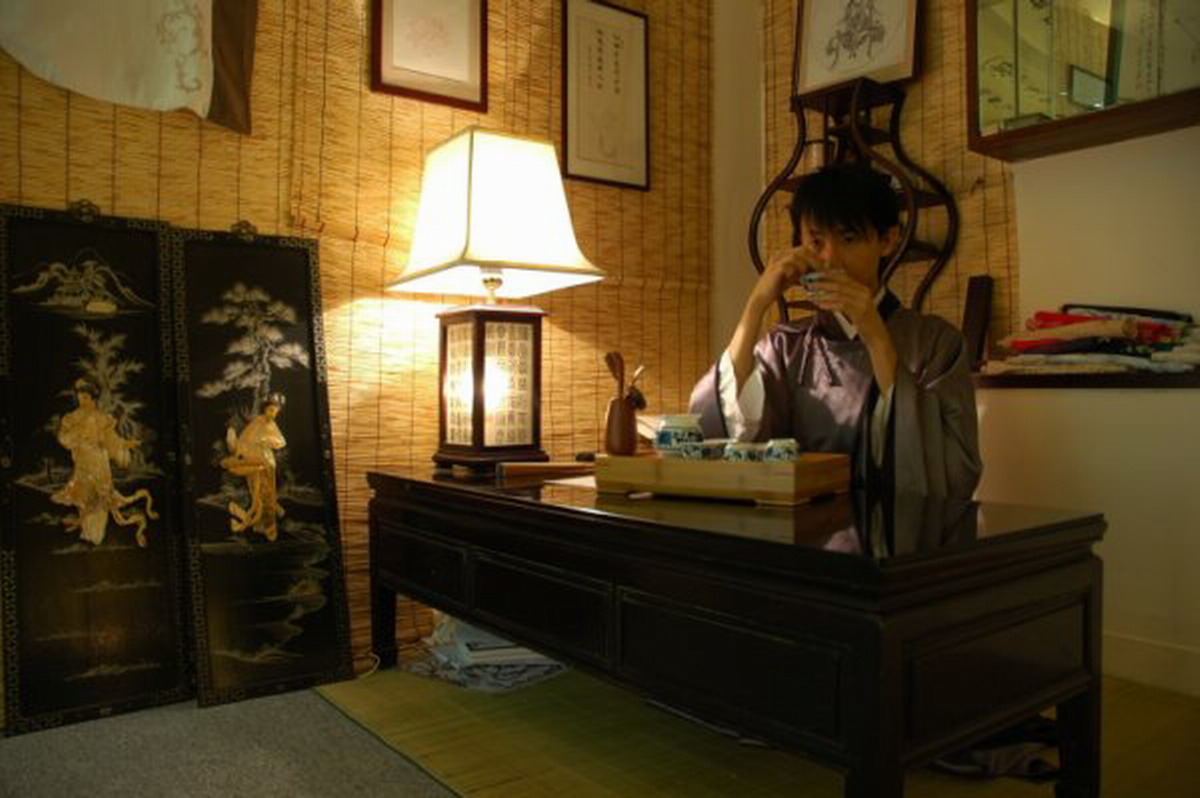
3. Tea Ceremony (功夫茶 / Gongfu Cha) — Difficulty 2/10, 100-300 RMB
The 1,000-year-old Chinese tea ceremony — a slow ritual of brewing oolong or pu’er tea in a small clay teapot (often Yixing clay, 50-300 RMB for a basic one). Each infusion takes 15-30 seconds; the ceremony lasts 30-60 minutes for 4-8 infusions. The same leaves are brewed 4-12 times, with the flavor changing each round. Tea ceremony is the cultural backbone of Chinese hospitality — refusing a cup is considered rude.
How to try:
- Hangzhou: Longjing (Dragon Well) tea houses near West Lake (200-400 RMB / $30-55 per ceremony, includes tea + snacks)
- Fujian (Xiamen / Quanzhou): Tieguanyin (Iron Goddess) oolong, the original home of gongfu cha
- Yunnan (Kunming / Pu’er): Pu’er tea, the famous aged tea (100-300 RMB)
- Chengdu: Bamboo tea houses in People’s Park (50-150 RMB)
Tip: Sip slowly. Refuse the first pour (it’s to wash the leaves). The second pour is the start. Tap two fingers on the table when the host pours for you — this is the silent “thank you” gesture in Chinese tea culture.
4. Tai Chi (太极拳) at Dawn in a Park — Difficulty 2/10, Free
The most iconic Chinese morning exercise. Unlike Ba Duan Jin (8 movements, 15 min), Tai Chi has 24 movements in the standard form and takes 20-30 minutes. The slow, flowing movements improve balance, reduce stress, and are believed to cultivate qi. Every major city park has at least one Tai Chi group practicing at dawn.
How to try:
- Beijing: Temple of Heaven Park (Tiantan), 6:30-8 AM (famous for international visitors joining local groups)
- Shanghai: People’s Park, Fuxing Park
- Chengdu: People’s Park (teahouses + Tai Chi in same area)
- Guangzhou: Yuexiu Park
Tip: Stand behind the group and mirror their movements. Don’t ask questions during the form — it’s meditation. After the form, locals often share tea and are happy to chat.
5. Mahjong (麻将) at a Local Teahouse — Difficulty 3/10, 50-200 RMB
China’s national game. 144 tiles, 4 players, 15-30 minutes per round. Most Chinese people play it daily from age 7 to 70. The rules are simple to learn but the strategy takes years. Don’t try to win — try to participate and have fun. Locals will often let you win a round out of courtesy.
How to try:
- Chengdu: People’s Park teahouses (40-80 RMB per afternoon, includes tea + mahjong)
- Beijing: Houhai teahouses, Sanlitun Soho area
- Shanghai: Yuyuan area, Tianzifang
- Hong Kong: temple street night market (more English-friendly)
Tip: Watch one full game first. Then join a friendly table. Don’t gamble. Smile, drink tea, and don’t worry about winning.
6. Hanfu Rental & Photoshoot (汉服) — Difficulty 3/10, 200-500 RMB
Hanfu (汉服) — the traditional clothing of the Han Chinese — has seen a huge revival in 2026 among both Chinese and foreign visitors. Xi’an’s Tang Dynasty-inspired hanfu is the most popular style, with red and gold patterns. Rental shops are everywhere in tourist areas; you can dress up in 15-30 minutes and walk around historical sites for the day. Many shops also include professional photoshoots.
How to try:
- Xi’an: Tang Dynasty hanfu (200-500 RMB / $30-70 for full day + basic photo)
- Hangzhou: Song Dynasty hanfu near West Lake
- Nanjing: Ming Dynasty hanfu (the original Ming capital)
- Luoyang: Han Dynasty hanfu near Longmen Grottoes
- Suzhou: Qing Dynasty hanfu in classical gardens
Tip: Book in advance for peak season (May, October). Some shops have English-speaking staff. Wear minimal jewelry — hanfu is the statement. Most shops provide hair styling.
7. Chinese Calligraphy Class (书法) — Difficulty 4/10, 150-400 RMB
Calligraphy is meditation with a brush. A 1-hour class covers basic brush grip, ink grinding, and 2-3 characters (often “福” luck, “茶” tea, or your name). Most tourist calligraphy schools are in historical districts and use traditional ink stone, brush, and rice paper.
How to try:
- Beijing: Hutong calligraphy schools (Dongcheng, Xicheng districts)
- Xi’an: Muslim Quarter calligraphers (often impromptu lessons for 50 RMB)
- Hangzhou: West Lake calligraphy studios
- Shanghai: Yu Garden, Tianzifang
Tip: Wear dark clothes (ink splatters). Choose 1-2 characters for your class — mastering takes hours per character. Most studios frame your work and let you take it home.
8. Sichuan Hot Pot (四川火锅) the Local Way — Difficulty 4/10, 150-400 RMB
Sichuan hot pot is a way of life, not just a meal. The traditional version uses a “nine-grid” pot (九宫格) where each section has different broth intensity. The cooking method is precise: meat in the central grid (rolling boil) for 15 seconds, vegetables in the corners (gentle simmer) for longer. Locals dip in sesame oil + garlic + coriander sauce. The meal takes 2-3 hours, with constant socializing.
How to try:
- Chengdu: Shuangliu district local hot pot (Xiaolongkan, Shudaxia are tourist-friendly)
- Chongqing: Old town local joints (ask for the local recommendation)
- Beijing: Sanyuanli market area (more authentic)
- Xi’an: Muslim Quarter hole-in-the-wall
Tip: Order mild (微辣) or non-spicy (鸳鸯 — half-and-half pot) for your first time. The sesame oil dip protects your mouth. Drink warm water, not cold, to manage the spice. Plan 2-3 hours — this is not a quick lunch.
9. Foot Bath (泡脚) at a Wellness Center — Difficulty 3/10, 80-200 RMB
泡脚 (pào jiǎo) — soaking feet in hot herbal water — is a national wellness ritual. The water is infused with ginger, mugwort, or traditional Chinese medicine herbs. The session lasts 30-60 minutes in a massage chair while you soak. Wellness centers range from basic neighborhood shops to luxury spa-style venues. Most are open late (until 1-2 AM), making this a perfect after-dinner activity.
How to try:
- Any city: Search for “足浴” (foot bath) or “足道” (foot path) on Baidu Maps or Amap
- Budget version: 80-150 RMB (40 min, neighborhood shop)
- Mid-range: 150-300 RMB (60 min, full body + foot)
- Luxury: 300-800 RMB (90+ min, full body + tea + snacks)
Tip: Bring clean socks for after. Most places give you a locker. Don’t expect a private room unless you book. The herbal water is hot (45-50°C) — start with cool water if you have sensitive skin.
10. Huaqiangbei Tech Shopping (华强北) in Shenzhen — Difficulty 4/10, Free to enter, 100-2000 RMB
The world’s largest electronics market — Huaqiangbei in Shenzhen sells everything from AI smart glasses and drones to $5 phone cases. Foreigners are a major customer base in 2026 — the trend “buy in China, ship home” (carry an empty suitcase) has gone viral. The market has 20+ buildings, each 5-10 floors, with vendors in Mandarin and Cantonese (most speak some English in the larger buildings).
How to try:
- Metro: Huaqiangbei Station (Line 7) or Huaqiang Road Station (Line 2)
- Buildings to start: SEG Electronics Market (Plaza), Yuanwang Digital Mall
- Best finds: drones (DJI and competitors), AI smart glasses, mini projectors, mechanical keyboards, USB-C hubs, smart home devices
Tip: Bring your passport (for tax refund), use WeChat Pay / Alipay (cash payments get less discount), and ask vendors for “factory price” (出厂价). Tax refund is available for foreign visitors on purchases over 200 RMB.
11. Peking Duck Carving Lesson — Difficulty 5/10, 300-800 RMB
Peking duck is carved table-side in 108 precise slices — a chef’s knife technique that takes 5-10 years to master. Most high-end restaurants offer a carving experience where you learn to carve a duck yourself, then eat it. The skill is in slicing thin, even pieces that include both skin and meat.
How to try:
- Quanjude (全聚德): The original, founded 1864. Book 1 week ahead. 500-800 RMB / $70-115 per person including duck + lesson.
- Da Dong (大董): Modern style, more foreigner-friendly. 400-700 RMB.
- Bianyifang (便宜坊): Older alternative, less crowded. 200-400 RMB.
Tip: Book a private room for the lesson. The carving technique involves: (1) slice the breast skin first (the most prized part), (2) cut the breast meat in thin slices, (3) separate the leg and thigh, (4) carve the back. Each duck yields 108-120 slices. The skill is in the wrist rotation.
12. Joining the Sunset Square Dance (广场舞) — Difficulty 5/10, Free
Every evening at 7-8 PM, thousands of parks across China fill with middle-aged and elderly women (and a few men) dancing in coordinated groups to pop music. Square dance is the largest participatory dance movement in the world — 100+ million regulars in China. The choreography changes monthly; the most popular songs are Chinese pop hits of the 2000s-2010s. Foreigners are welcome to join or watch.
How to try:
- Beijing: Chaoyang Park, Tiantan Park, Ritan Park
- Shanghai: People’s Park (multiple groups)
- Chengdu: People’s Park (the famous teahouse area)
- Guangzhou: Yuexiu Park
- Any city park between 19:00 and 21:00
Tip: Most groups dance in lines. Stand at the back and copy the person in front of you. Don’t worry about the moves — locals will smile and invite you to keep going. Bring a small bottle of water and a sense of humor. Your phone will be photographed more than you are.
5-7 Day Chinamaxxing Itinerary Template
Day 1: Hot water in every meal + Ba Duan Jin in a morning park + sunset square dance
Day 2: Tea ceremony (afternoon) + Hanfu rental for the day (walk around in costume)
Day 3: Mahjong at a teahouse (afternoon) + foot bath (evening)
Day 4: Sichuan hot pot dinner (2-3 hours) + calligraphy class (afternoon)
Day 5: Huaqiangbei tech shopping (Shenzhen) — half day
Day 6: Tai chi at dawn + Peking duck carving lesson (afternoon)
Day 7: Rest, hot water, last Ba Duan Jin, pack tea ceremony leaves to take home
Where Each Experience Works Best
| Experience | Best Cities | Booking | Cost |
|---|---|---|---|
| Ba Duan Jin | Any major city park | None | Free |
| Tai Chi | Beijing, Shanghai, Chengdu | None | Free |
| Tea Ceremony | Hangzhou, Fujian, Yunnan | Walk-in or 1 day | 100-400 RMB |
| Mahjong | Chengdu, Beijing, Hong Kong | Walk-in to teahouse | 50-200 RMB |
| Hanfu | Xi’an, Hangzhou, Nanjing, Luoyang | 1 day ahead | 200-500 RMB |
| Calligraphy | Beijing, Xi’an, Hangzhou, Shanghai | 1-3 days | 150-400 RMB |
| Hot Pot | Chengdu, Chongqing, Xi’an | 1-2 hours wait | 150-400 RMB |
| Foot Bath | Any city | Walk-in | 80-300 RMB |
| Huaqiangbei | Shenzhen only | None | 100-2000 RMB |
| Peking Duck Lesson | Beijing (Quanjude, Da Dong) | 1 week | 300-800 RMB |
| Square Dance | Any city park at 19-21h | None | Free |
| Hot Water | Everywhere | Always | Free |
Chinamaxxing Content Etiquette
- Ask before photographing people — especially during tea ceremony and mahjong
- Don’t bargain aggressively at teahouses and parks — the listed price is fair
- Tip 10-20 RMB at wellness centers if service is good (not expected but appreciated)
- Bring your own towel to hot pot — some restaurants charge for paper towels
- Dress modestly for tea ceremony and calligraphy classes (no shorts)
- Try every food offered — even unfamiliar items (e.g., century egg, chicken feet)
- Speak slowly and clearly in English — most service staff speak some English
- Use translation apps for menus and signage
- Respect quiet hours — mahjong teahouses and parks have lunch and dinner quiet periods
- Smile — Chinese people will respond positively, even if communication is difficult
Frequently Asked Questions
What is the minimum Chinese language needed for Chinamaxxing?
Almost none. The 12 experiences are designed to be visually-led. Knowing “你好” (hello), “谢谢” (thank you), and the numbers 1-10 covers 80% of interactions. For deeper connection, learning the names of common foods, drinks, and places helps. Translation apps (Pleco, Google Translate, Baidu) handle the rest.
Are there any experiences that are NOT foreigner-friendly?
A few: foot massage in rural areas (cultural awkwardness), mahjong with aggressive locals (avoid gambling), and hot pot with very local groups (spice levels are intense). For a smoother experience, start in cities with established foreigner infrastructure: Beijing, Shanghai, Hangzhou, Chengdu, Xi’an, Guangzhou. The first time is always easier with a guide or translator app.
What if I’m vegetarian or have dietary restrictions?
Most teahouses and restaurants have vegetarian options. Ba Duan Jin, tai chi, mahjong, calligraphy, hanfu, foot bath, and Huaqiangbei have no food involved. Hot pot can be ordered all-vegetable (素锅). Peking duck lesson is non-vegetarian. For other restrictions (gluten, halal, kosher), carry a translation card in Chinese.
How does Chinamaxxing relate to the China Travel trend?
Chinamaxxing is China Travel’s inner circle. Where China Travel says “visit the Great Wall,” Chinamaxxing says “do morning Ba Duan Jin in a Beijing park, then go see the Wall.” Where China Travel says “try Peking duck,” Chinamaxxing says “learn to carve a duck table-side.” It’s a depth-over-breadth philosophy that 2026 visitors are embracing.
Sources
- Instagram — #Chinamaxxing hashtag (40+ billion views, August 2026)
- TikTok — Chinamaxxing creator content
- CGTN — “Why ‘Chinamaxxing’ is reshaping inbound tourism” (August 2026)
- Xinhua — “Foreigners embrace traditional Chinese wellness” (August 2026)
Last updated: 2026-08-23. Chinamaxxing is a fast-moving trend — follow #Chinamaxxing on Instagram and TikTok for the latest experiences.
Step by step
-
Pick 2-3 experiences that match your trip type
Fast (1-2 hours): hot water, Ba Duan Jin, foot bath, tai chi, square dance. Medium (2-3 hours): tea ceremony, mahjong, hanfu rental. Slow (3-5 hours): calligraphy class, hot pot dinner, Peking duck, Huaqiangbei tech shopping, all-day slow travel. Family-friendly: tea ceremony, foot bath, hot pot. Solo: Ba Duan Jin, calligraphy, Hanfu photoshoot.
-
Book in advance for calligraphy, hanfu photoshoots, and Peking duck lessons
These need 1-3 day advance booking. The other 9 are walk-in (just show up). Tour operators on Trip.com bundle calligraphy + tea + mahjong for $40-80 / person, 3-4 hours. Hanfu rental is via shop staff in tourist areas (no booking). Peking duck carving lessons at Quanjude or Da Dong need 1 week ahead.
-
Use translation apps for menu and sign reading
Pleco (free) for offline Chinese-English dictionary. Google Translate (camera mode) for menus and signs. Baidu Translate for Chinese-only. WeChat built-in translation for chat.
-
Bring cash + cards + mobile pay
Even with WeChat Pay / Alipay, bring 200-500 RMB cash for street stalls, teahouses, and parks. Most small vendors prefer cash. Mobile pay is fine in cities but slow in rural areas. Foreign cards accepted at hotels and chain restaurants only.
-
Document your experience for the trend
Chinamaxxing is a social trend — your photos and videos contribute. The 3 highest-engagement content types: (1) before/after (e.g., 'Western me' vs 'me in hanfu'), (2) detailed walkthroughs (e.g., 8-piece brocade in slow motion), (3) unexpected Chinese wisdom (e.g., 'Why everyone carries a thermos in China'). Hashtags: #Chinamaxxing #ChinaTravel #ChinaCool.
FAQ
-
What is Chinamaxxing and how is it different from China Travel?
Chinamaxxing (中国化生活方式的极致体验) is the 2026 evolution of the China Travel trend — instead of just visiting landmarks, foreigners fully embrace Chinese daily lifestyle: drinking hot water as a cultural staple, practicing Ba Duan Jin qigong in parks, joining square dance at sunset, eating Peking duck with traditional carving techniques. The hashtag has 40+ billion views on Instagram and TikTok combined. China Travel is the umbrella trend (visiting), Chinamaxxing is the inner-circle trend (becoming). -
Do I need to speak Chinese for any of these 12 experiences?
No. All 12 are designed for non-Chinese speakers. The trick is: point at what you want, count with fingers for price, and use translation apps. Tea ceremony is mostly hand gestures, mahjong uses universal tile patterns, tai chi follows the instructor, hanfu rental staff speak some English at tourist sites. WeChat Pay and Alipay (see our WeChat Pay guide and Alipay guide) handle payments. -
How much time do I need to try all 12 experiences?
5-7 days is enough. The fastest 4 (hot water, Ba Duan Jin, mahjong, foot bath) take 2-3 hours each. The slower 4 (calligraphy class, hot pot, hanfu, Peking duck) take 3-5 hours each. The 4 sunrise/sunset activities (tai chi, square dance) are 30-60 min. Most can be done in a single major city — Beijing, Shanghai, Chengdu, or Hangzhou cover 10+ of the 12. Plan 2-3 experiences per day and skip the rest if time is short. -
Are these experiences safe and accepted by Chinese people?
Yes — all 12 are mainstream Chinese daily life. The 'Chinamaxxing' trend specifically shows foreigners participating in what Chinese people already do. You'll be welcomed, photographed (curious locals often want selfies with you), and sometimes invited to join family or group activities. Beijing, Shanghai, Chengdu, Hangzhou, and Xi'an are the most foreigner-friendly cities for these activities. Rural areas may be less comfortable but the activities themselves are still safe. Avoid rush hour subways during peak tourist events. -
Which experience is the best 'starter' for first-time visitors?
Tea ceremony (2 hours, 100-300 RMB / $15-40) is the best starter — universally welcoming, hand-based, no language needed, and provides context for the other 11. Mahjong at a local teahouse is the second best for groups. For solo travelers, Ba Duan Jin qigong in any park is the easiest entry — you can just stand at the edge and follow the movements, no booking needed.
Related guides
- Culture & Practical
Solo Female Travel in China 2026: The Honest Safety Guide
China is statistically safe for solo female travellers, but the risk profile differs. The 4 scenarios that catch people out and the 2 to avoid.
5min read
- Culture & Practical
Is It Safe to Travel to China in 2026? A Full Safety Guide
Yes, China is safe for visitors in 2026. Crime statistics, region-by-region risk, the 12 most common scams, and advice for solo women and LGBTQ+ travelers.
12min read
- Itineraries
China Cool 2026: 8 Best Summer Escapes from the Heat
Escape 35-40°C coastal heat for mountain retreats averaging 18-26°C: Zhangjiajie 22-26°C, Jiuzhaigou 18-22°C, Kunming 20-25°C year-round.
11min read
- Itineraries
China Honeymoon 2026: 4 Romantic Itineraries & Costs
China is 2026's surprise honeymoon destination — cheaper than Bali, less crowded than Paris. 4 ready-made itineraries (7, 14, 21 and 30 days) with costs.
16min read
- Culture & Practical
11 Cultural Mistakes Foreigners Make in China
11 etiquette slips that cause offence in China: chopsticks upright in rice, tipping, opening gifts immediately, giving clocks, being loud.
9min read
- Culture & Practical
China Medical Tourism & TCM: A Foreigner Guide
Real options for medical tourism and TCM in China 2026: top hospitals, TCM clinics, costs vs the US and UK, and the language question.
10min read