
West Lake Hangzhou: The Complete Walking Guide (2026 Update)
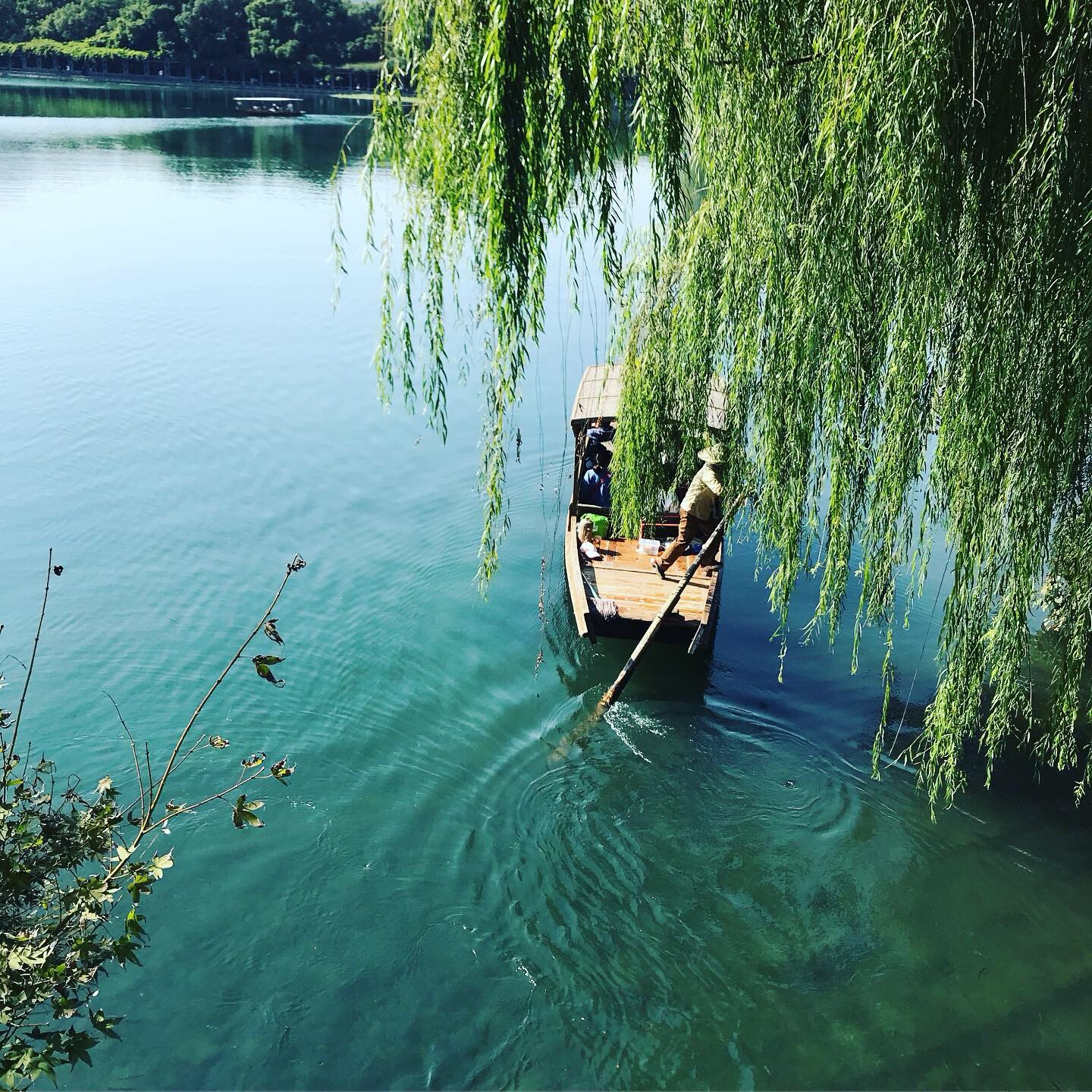
West Lake (西湖) is a 6-sq-km UNESCO World Heritage lake in Hangzhou — a 15-km loop with 10 classical scenes, causeways, pagodas, and lotus ponds. This guide covers the best 1-day circuit, boat rides, the 10 scenes ranked, and how to avoid the crowds.
West Lake (西湖, Xī Hú) is the most-celebrated lake in China. Marco Polo called it “the finest and most splendid city in the world” when he passed through in the 13th century; a thousand years of Chinese poetry, painting, and garden design have revolved around it. It was inscribed as a UNESCO World Heritage Site in 2011 for the way it shaped “an idealized fusion between humans and nature.”
The lake is 6.4 sq km — about 3 times the size of Central Park’s reservoir. Around the perimeter: two causeways, four islands, three pagodas, four historic temples, and a 15-km walking path. You can do it as a day trip from Shanghai (45 min by HSR) but a 2-night stay lets you combine West Lake with Lingyin Temple and the Longjing tea village.
The 10 classical scenes (西湖十景)
The “Ten Scenes of West Lake” were first codified by Song-dynasty poet Zhang Dai in the 1600s and have been re-canonized by every generation since. They are the highest-density photo locations around the lake.
1. Su Causeway in Spring (苏堤春晓)
A 2.8-km causeway across the western lake, built in 1089 by Su Shi (苏轼) when he was governor. Six stone bridges along its length; peach and willow trees planted in alternating rows. Best in March-April for the blossoms, or any time of year for the symmetry of the causeway mirrored in still water.
2. Three Pools Mirroring the Moon (三潭印月)
The iconic “three small towers on the water” — visible on the ¥1 RMB banknote. Three stone pagodas stand in the south part of the lake, and when the moon is full they appear to mirror three more moons. Reach it by boat from Hubin Wharf (¥55 for the boat + island combo, includes admission to Xiaoying Island).
3. Leifeng Pagoda in Evening Glow (雷峰夕照)
A five-story pagoda on Sunset Hill (南屏山), the southern shore. The current structure is a 2002 reconstruction of the original (built 975, collapsed 1924). The view from the top covers the whole lake. Best at sunset — the orange sun drops behind the distant mountains and the pagoda is silhouetted against the sky. Entry ¥40, the elevator up is worth it.
4. Broken Bridge in Remaining Snow (断桥残雪)
A short bridge at the northern end of Su Causeway. Famous from the Legend of the White Snake — the lovers Xu Xian and Bai Suzhen met here in the snow. Visually it is a single arch over a narrow channel; the snow rarely falls in Hangzhou but the association is so strong that any winter visit gets the literary nod.
5. Viewing Fish at Flower Harbor (花港观鱼)
A park on the southwest corner of the lake with a koi pond so densely packed the fish are visibly stacked. Free, with a small lotus pond, peony garden, and a Long corridor. Good rainy-day option (covered walkways).
6. Autumn Moon over Calm Lake (平湖秋月)
A lakeside platform on the northern shore with a stone-paved terrace. Best in September-October when the full moon rises over the still water. Café attached; popular at sunset even outside autumn.
7. Lotus Breezes at Winding Courtyard (曲院风荷)
The lotus pond on the northwestern shore, planted with 130+ varieties. Best in July when every pond is in flower. Free; the dedicated viewing pavilion is worth the walk.
8. Orioles Singing in the Willows (柳浪闻莺)
A park on the southeast shore with old willows and a small bird-watching area. Quieter than the other scenes; good for a 30-minute stroll mid-morning.
9. Twin Peaks Piercing Clouds (双峰插云)
Two mountains north and south of the lake. Visible from many lakeside points; the “piercing” effect is most dramatic on misty mornings after rain. Free to view (it is about seeing them from a distance).
10. Evening Bell at Nanping Hill (南屏晚钟)
A bronze bell at Jingci Temple (净慈寺), south of Leifeng Pagoda, rung 108 times each evening at 5 PM. The bell weighs 10 tons and was recast in 1984. Free to enter the temple; the bell-ringing is a free, public ceremony you can hear from the lakeside.
The 1-day walking circuit
The classic 12-km route, starting and ending at Hubin Wharf (湖滨码头), covers 6 of the 10 scenes in 4 hours walking or 2 hours biking. Direction matters: doing it counter-clockwise puts the sun behind you in the afternoon and gives you the Leifeng sunset at the end.
- Start at Hubin Wharf (湖滨) — the central subway station, on Metro Line 1. Pick up a bike here (¥20/hour) or just walk.
- North up the Bai Causeway (白堤) — 1 km to the Solitary Hill (孤山), a forested island. Pause at the Mid-Lake Pavilion.
- Past Zhejiang Provincial Museum (free, open 9-5, English signage). Then into Yue Fei Temple (¥25) on the west side, the memorial to the Southern Song general.
- Continue west into Lotus Breezes (曲院风荷) — 30 minutes in the lotus garden.
- Reach Su Causeway (苏堤) at the south end. 2.8 km across the lake, 6 bridges, willow and peach trees. Allow 1 hour.
- Exit the south end of Su Causeway into Viewing Fish at Flower Harbor (花港观鱼).
- West to Leifeng Pagoda (雷峰塔) — entry ¥40, elevator to the top.
- Walk east along the south shore to Jingci Temple / Nanping Hill for the 5 PM bell.
- Finish back at Hubin Wharf by walking the southeast shore past Orioles Singing in the Willows (柳浪闻莺).
Practical info
Getting there: Metro Line 1 to Longxiangqiao (龙翔桥) or Ding’an Road (定安路) is the central access. Buses K4, K7, and Y1 (tourist line) circle the lake.
Boat rides: Three types — rowed (¥150/hour/boat, fits 4), electric (¥70/person for a 30-min circuit), and the painted tour boats to Three Pools (¥55-80, 1 hour). Buy tickets at any of the 5 wharves (Hubin, Hubin 2, Zhongshan, Huxin, Qianwang).
Cycling: Hangzhou Public Bike (公共自行车) has stations every 500m around the lake. App: Alipay mini-program. ¥1/30 min, ¥2/hour.
Best times: Sunrise at Su Causeway (fewer people, mirror-still water). Sunset at Leifeng Pagoda. Weekday mornings are 50% less crowded than weekends.
Food: The northeast corner of the lake has a cluster of restaurants serving Dongpo pork (东坡肉) — the dish invented by Su Shi. Louwailou (楼外楼) at Solitary Hill is the famous one but tourist-priced; smaller places on Beishan Road are more authentic.
How West Lake differs from other famous Chinese lakes
- vs. Lijiang Old Town (丽江古城): West Lake is a free public space, Lijiang is an entry-ticket old town.
- vs. Erhai Lake (大理洱海): West Lake is urban and walkable; Erhai is a 250-sq-km lake that requires a car and 2-3 days.
- vs. Tai Lake (太湖): West Lake is compact and self-contained; Tai Lake is industrial and not pedestrian-friendly.
- vs. Wuhan East Lake (武汉东湖): East Lake is larger and wilder, with fewer cultural sites; West Lake is denser with temples and gardens.
Day trip vs. overnight
A day trip from Shanghai (HSR 45 min, ¥73 second class) is doable but rushed. You will see 4-5 of the 10 scenes in 6-7 hours round-trip.
For 2 nights in Hangzhou: Day 1 is the West Lake walking circuit + boat ride. Day 2 morning is Lingyin Temple (west hills, 30 min from the lake by taxi). Day 2 afternoon is the Longjing tea village (15 min from Lingyin). Day 3 morning is the Hefang Ancient Street area, or extend to a Wuzhen water town day trip.
FAQ
Is West Lake crowded? Yes, in peak season (April–May, October holidays, weekends). Go on a weekday morning or at sunrise to see the lake in its quieter mode.
Are there electric scooters to rent? Yes — but the road around the lake has a separate bike path that is safer. E-scooters share the path with bikes and pedestrians.
Can I see all 10 scenes in one day? Not really — the 2 mountain peaks (#9) require driving out to viewing points, and the 5 PM bell at Nanping (#10) is timing-specific. Pick 6-7 that interest you.
What if it rains? The lake in light rain is one of the most-celebrated scenes in Chinese painting (literally: 烟雨西湖 “misty-rain West Lake”). Bring a clear umbrella. Lingyin Temple is a good rainy-day option. For the full 3-day plan that pairs the lake circuit with Lingyin and Longjing, see our 3-day Hangzhou itinerary.
Plan your trip — verified tools
These free tools are built on real, monthly-verified data and help you skip the trial-and-error phase of China trip planning:
- China 240-Hour Visa-Free Transit Checker — 55 countries, 24 provinces, 65 ports. See if you qualify for 10-day visa-free transit, which cities you can visit, and the 5-step process.
- China 6-City 5-Day Budget Calculator — Real 2026 prices for 5 days in Beijing, Shanghai, Guangzhou, Chengdu, Xi’an, or Hangzhou. Budget / mid-range / comfort tiers, broken down line by line.
Verified August 2026 by TravelHubChina Editorial. We re-check prices and policy details monthly so the data doesn’t drift.
Step by step
-
Start at Hubin Wharf and pick up a bike
Metro Line 1 to Longxiangqiao (龙翔桥) or Ding'an Road. Hubin is the central access point. Rent a public bike at the Hangzhou Public Bike station (¥1/30 min, ¥2/hour via Alipay mini-program), or just walk the 12-km circuit.
-
Walk north along Bai Causeway (1 km)
From Hubin, head north to Solitary Hill (孤山), a forested island. Pause at the Mid-Lake Pavilion. On the west side, the Zhejiang Provincial Museum (free) and Yue Fei Temple (¥25) are worth a 30-minute stop.
-
Cross Su Causeway (2.8 km, 1 hour)
Built in 1089 by Su Shi, with 6 stone bridges and alternating peach and willow trees. Best in March-April for blossoms. The full crossing is 2.8 km on a flat paved path — the most photographed stretch of the lake.
-
Continue to Leifeng Pagoda at sunset
Exit the south end of Su Causeway into Flower Harbor (free, koi pond). Then west to Leifeng Pagoda (¥40, elevator to the top). The orange sun drops behind the mountains with the pagoda silhouetted — the best sunset in Hangzhou.
-
End at the Jingci Temple bell and Orioles Park
Walk east along the south shore to Jingci Temple (free) for the 5 PM bell-ringing, then north past Orioles Singing in the Willows (柳浪闻莺) back to Hubin. Optional boat detour to Three Pools Mirroring the Moon (¥55-80).
FAQ
-
How long does it take to walk around West Lake?
The full loop is 15 km and takes 4-5 hours at a leisurely pace, or 2-2.5 hours by bike. Most visitors skip the most repetitive northern section and focus on the 8-10 km south-and-west circuit (Su Causeway → Hunan hill → Leifeng Pagoda), which is 3 hours. -
Do I need a ticket for West Lake?
No — the perimeter is free. Tickets are only for specific sights: Leifeng Pagoda ¥40, Three Pools Mirroring the Moon ¥55 (boat + island), Yue Fei Temple ¥25, Lingyin Temple ¥75. The lake itself, all 3 causeways, and the lakeside parks are open to everyone. -
When is the best time to visit West Lake?
March for cherry blossoms along Su Causeway. Late April–May for the general spring green. September for the Mid-Autumn Festival light show (Moon over West Lake, ¥80-150 boat ticket). Avoid Chinese national holidays (Oct 1-7, May 1-3) — the lake becomes impossibly crowded. -
Can I swim in West Lake?
No — swimming is officially banned. The lake is for viewing and boating only. There are also no motorized boats on the lake to protect the water quality; the only vessels are the traditional rowed and electric sightseeing boats.
Related guides
-
Beijing 2-Day Layover: Max China, Min Time
A tested 2-day Beijing itinerary for a long layover: Forbidden City highlights, Mutianyu Great Wall, Peking duck, and a Hutong night walk. With PVG/PEK airport transfer times and 240h visa-free rules.
-
3 Days in Beijing: Forbidden City + Great Wall
The best 3-day Beijing itinerary for first-time visitors: Forbidden City, Mutianyu Great Wall, Temple of Heaven, Summer Palace, and hutong food tour. With prices, transit times, and ticket tips.
-
2 Weeks in China: The Classic Beijing-Xi'an-Chengdu-Shanghai Route (2026)
A complete 14-day China itinerary for first-time visitors: 3 days Beijing, 2 days Xi'an, 2 days Chengdu, 4 days Shanghai, with day-by-day timing, costs, transit between cities (high-speed rail vs flight), hotel recommendations, and which days to skip if you have less time. Budget: ¥15,000-22,000 per person excluding international flights.