
Yellow Mountain (Huangshan)
黄山 · Huángshān
Quick answer
Foreign passport required. Tickets are sold at the entrance gates in cash, Alipay, or WeChat Pay. The 3-day validity is generous — most visitors stay 2 nights. The official huangshan.com has English booking for summit hotels.
Why visit
- 1 UNESCO World Heritage since 1990 — the most iconic mountain in Chinese art and literature
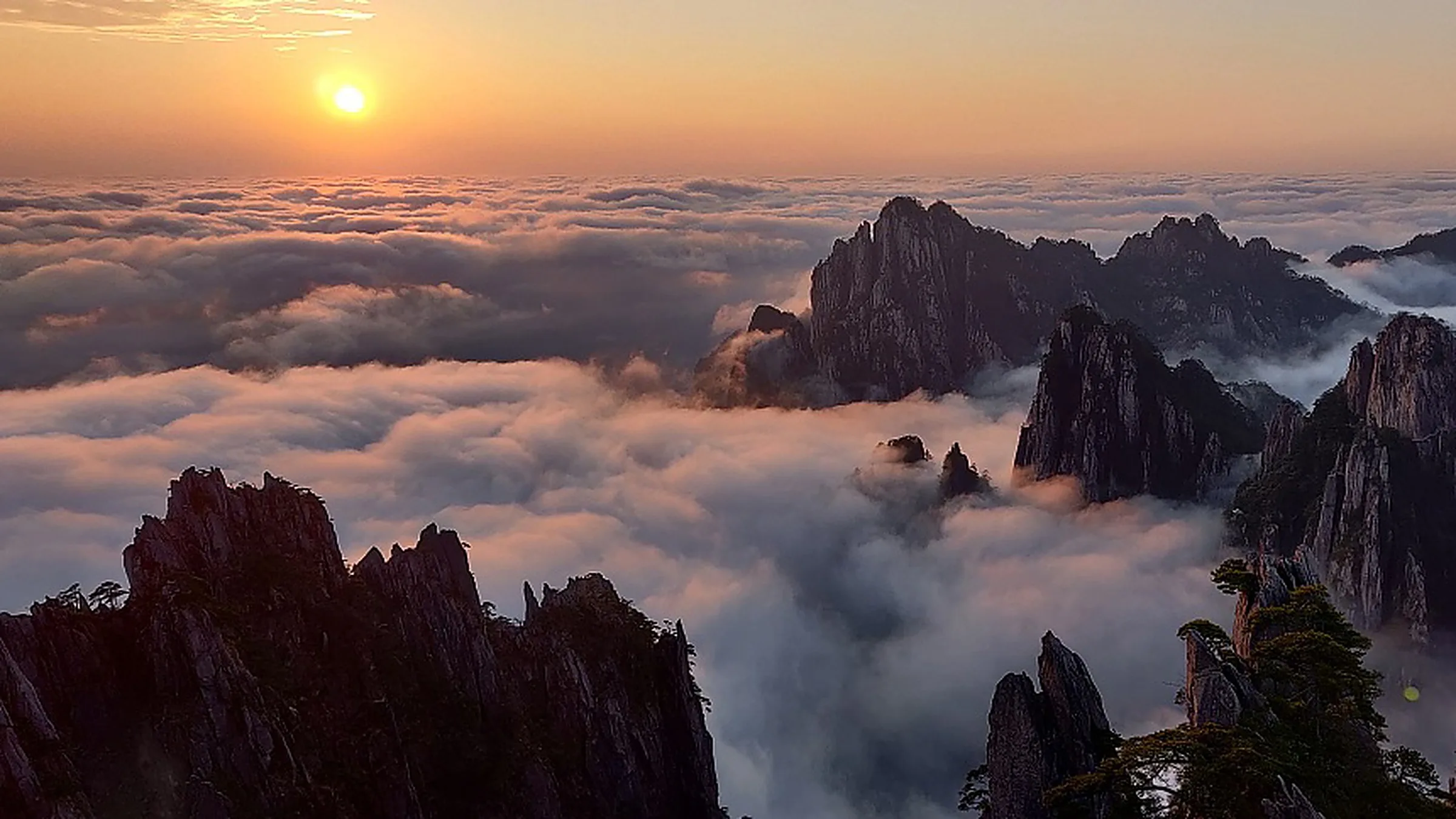
- 2 Sea of clouds (云海) — the rolling fog below the peaks, the most famous feature of Huangshan
- 3 The twisted pines (奇松) — pine trees growing from granite cliffs, surviving on rainwater and mist for centuries
- 4 Bright Summit (光明顶, 1,860 m) — the second-highest peak, the classic sunrise viewpoint
- 5 Five main scenic areas: North Sea, West Sea, Sky Sea, Jade Screen, Cloud Valley Temple
- 6 Hundreds of steps and stone paths built into the cliffs — a unique engineering heritage
Essential tips for foreigners
- Stay at least one night on the summit — sunrise and sunset over the sea of clouds are the main draw. The Baiyun and Xihai summit hotels are basic but adequate (¥600-1200/night).
- Take the Yungu Temple (eastern) cable car up — it's the most popular route and the views from the cable car are spectacular. The 99-bend road is an alternative for a more dramatic arrival.
- Buy a 3-day ticket (¥190) — the 3-day validity lets you pace yourself. Most visitors stay 2 nights: one night for sunset + sunrise, one night for the West Sea Grand Canyon.
- Check the weather forecast before going up — the summit has its own microclimate. Clear days are best; in fog, the views disappear and the experience is much less rewarding.
- Wear layers — the summit is 1,800+ m and 10°C cooler than the foot. Bring a rain jacket even in summer. Winter requires thermal underwear and a -10°C coat.
- Buy water and snacks at the foot — food on the summit is 2-3x more expensive. The Yungu Temple entrance has a large supermarket with hiking food.
Suggested route
- 08:00 1 hour Hotel breakfast in Tunxi, bus or Didi to Yungu Temple entrance
- 09:00 30 min Buy ticket (¥190) + cable car (¥90), take cable car to summit (8 min)
- 09:30 2 hours Walk the North Sea scenic area — see the famous pines (e.g., Guest-Greeting Pine area)
- 11:30 1 hour Lunch at the North Sea Hotel (basic Chinese, ¥80/person)
- 12:30 3 hours Walk to West Sea Grand Canyon — the most dramatic cliff scenery, 3-4 hour loop
- 15:30 1 hour Cable car down from West Sea (¥100 one-way) or continue walking to the lower station
- 16:30 1.5 hours Return to hotel for rest, dinner at the foot
- 18:00 1 hour Sunset from the foot or the lower station viewpoint
- Day 2, 05:30 1 hour Cable car up to summit before sunrise, walk to Bright Summit (光明顶)
- 06:00 1 hour Sunrise over the sea of clouds — the highlight of the Huangshan visit
- 07:00 1.5 hours Walk to Jade Screen (玉屏) — see the Guest-Greeting Pine (迎客松)
- 08:30 30 min Cable car down from Yuping (southern entrance, ¥90)
- 09:00 Half day Day trip to Hongcun Ancient Village (¥104 entry, 1 hour drive)
The mountain that inspired a thousand Chinese paintings
Huangshan (Yellow Mountain) has been the most celebrated mountain in Chinese art for over 1,000 years. The signature features: the twisted pines (奇松) growing from granite cliffs, surviving on rainwater and mist; the sea of clouds (云海) that rolls between the peaks at sunrise and sunset; the granite pillars that give the landscape its otherworldly quality. UNESCO World Heritage since 1990.
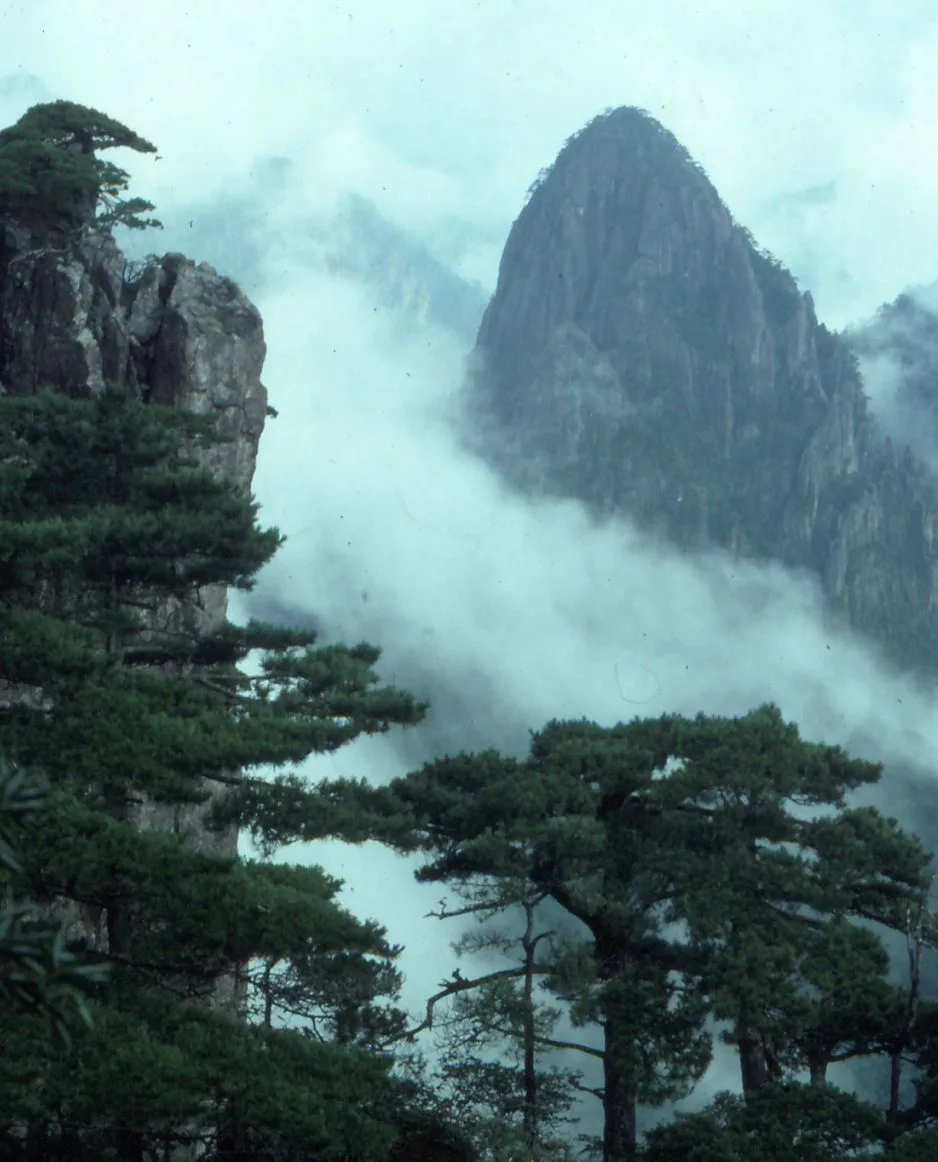
Photo: Wikimedia Commons / CC BY-SA. Source

The mountain has 5 main scenic areas, each with its own character: the North Sea (北海, the most visited, with the Guest-Greeting Pine), the West Sea (西海, the most dramatic cliffs), the Sky Sea (天海, the central area), the Jade Screen (玉屏, with the iconic pine against the city backdrop), and the Cloud Valley Temple (云谷寺, the eastern entrance). Most visitors stay 1-2 nights on the summit to catch both sunrise and sunset.
The foreigner experience in 2026
Huangshan is one of the most foreigner-friendly natural sites in China. The cable cars and entrance have English signage, the summit hotels have English-speaking staff, and the path system is well-marked. The main challenges: the mountain has its own microclimate (the summit can be 10°C cooler than the foot), the 1,800-m altitude can be tiring for first-day visitors, and the cable car lines can be long on weekends.
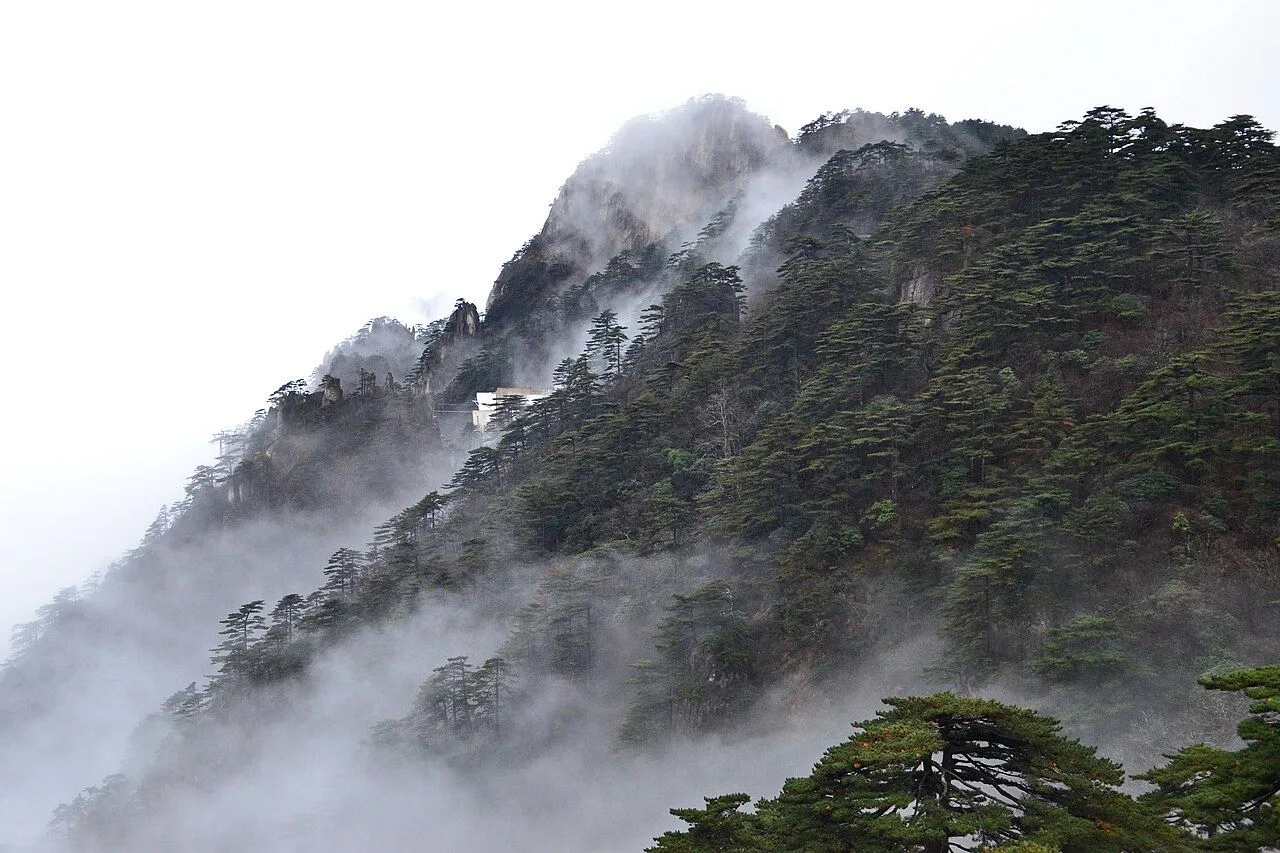
Photo: Wikimedia Commons / CC BY-SA. Source

For first-timers, the recommended approach: stay 2 nights. Day 1: arrive at the Yungu Temple entrance, take the cable car up, walk the North Sea and West Sea Grand Canyon, stay at the Baiyun Hotel. Day 2: catch sunrise at Bright Summit, walk to Jade Screen, take the Yuping cable car down. Day 3 (optional): visit Hongcun or Xidi Ancient Village at the foot.
What to actually see
Three things stand out. The sea of clouds at sunrise is the signature experience — the fog below the peaks, with the sun rising behind the granite pillars. Bright Summit (光明顶) is the classic viewpoint. The twisted pines are the otherworldly feature — pine trees growing horizontally from vertical cliff faces, surviving on rainwater and mist for centuries. The Guest-Greeting Pine (迎客松) is the most photographed. The West Sea Grand Canyon has the most dramatic cliff scenery in the park — a 3-4 hour loop with vertical pillar formations on both sides.
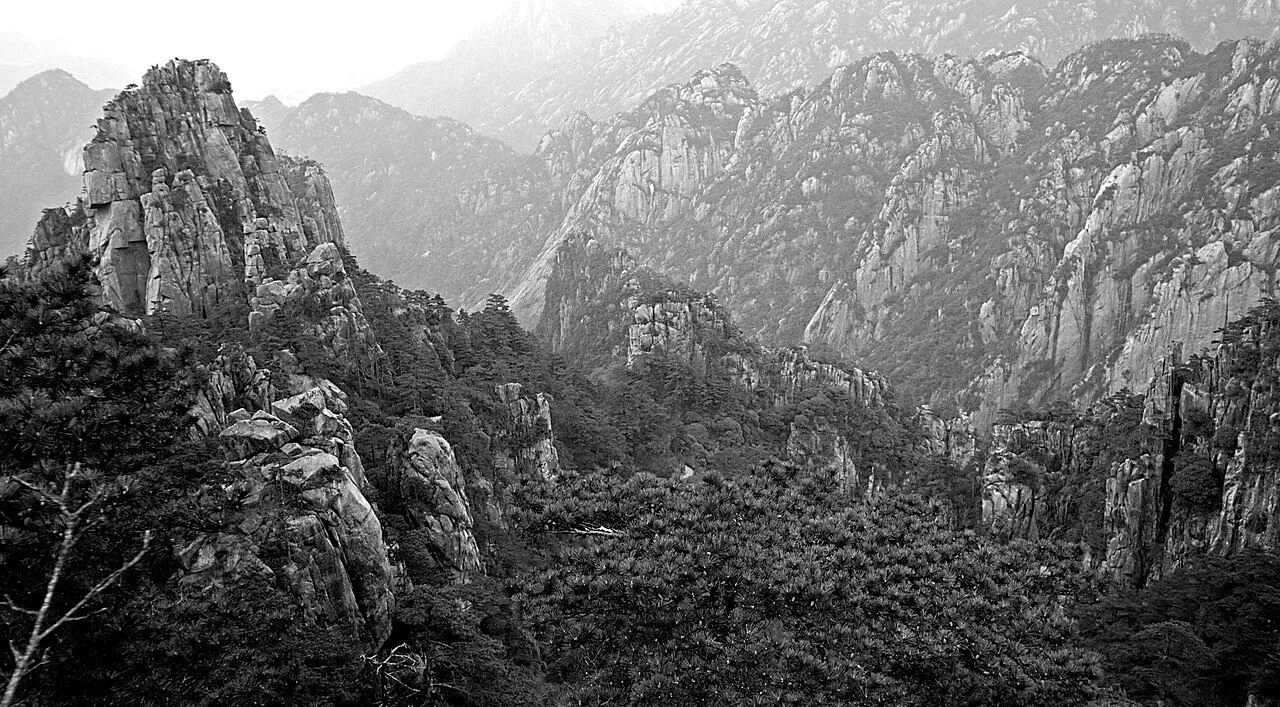
Photo: Wikimedia Commons / CC BY-SA. Source
_XII_(1071076723).jpg)
The four wonders of Huangshan
Chinese tradition names the “Four Wonders of Huangshan”: the twisted pines (奇松), the sea of clouds (云海), the hot springs (温泉), and the strange rocks (怪石). Most visitors come for the first two, but the hot springs at the foot of the mountain (黄山温泉) are a legitimate post-climb relaxation — ¥238, 45°C year-round, with traditional Chinese bathing pools. The strange rocks are scattered throughout the park; the most famous is “Flying Rock” (飞来石), a giant boulder balanced on a cliff edge that supposedly landed here from a celestial journey.
Final tip
The biggest mistake first-timers make: doing it as a day trip from Shanghai or Hangzhou. The HSR connection is fast (3 hours from Shanghai, 1.5 hours from Hangzhou) but the cable car + walking + return takes the full day, and you miss the sunset and sunrise — the main draw. The second mistake: not checking the weather. The summit has its own microclimate; in fog, the views disappear. The third mistake: bringing only daypack clothing. The summit is 10°C cooler than the foot even in summer; a light rain jacket is essential.
Best photo spots
-
Bright Summit at sunrise · 05:30-06:30 (sunrise)
The single most iconic view of Huangshan — the sun rising over the sea of clouds, with the twisted pines in the foreground. Use a tripod and a wide-angle lens.
-
Guest-Greeting Pine (迎客松) · 07:00-09:00 (morning, soft light)
The 1,000-year-old pine that has been the symbol of Anhui province since the Ming dynasty. Most-photographed tree in China.
-
West Sea Grand Canyon · 14:00-15:00 (afternoon, side-lit)
The dramatic cliff faces and pillar formations in the western valley. Use a telephoto lens to capture the depth.
-
Jade Screen (玉屏) viewpoint · 08:00-10:00 (morning, side-lit)
The view of the Jade Screen Pavilion with the city in the background. Iconic Huangshan scene.
Where to eat nearby
-
Summit hotel restaurants (Baiyun, Xihai)
Basic Chinese — noodles, rice dishes, simple stir-fry. Prices are 2-3x normal (altitude premium) · ¥80-120/person · At the summit, 2-3 hotel restaurants
-
Tunxi Old Street restaurants
Huizhou cuisine — stinky mandarin fish (臭鳜鱼), preserved meats, bamboo shoots · ¥40-80/person · 1-hour drive from the mountain
-
Hongcun/Xidi village restaurants
Local Anhui cuisine — bamboo rice, braised pork with preserved vegetables, tofu dishes · ¥30-60/person · 1-hour drive from the mountain
-
Foot-of-mountain restaurants
Tourist-oriented Chinese cuisine — basic but affordable · ¥50-100/person · Near the cable car stations
Frequently asked questions
Do I need a visa for Huangshan?
Huangshan Tunxi International Airport (TXN) has direct flights from Beijing, Shanghai, Guangzhou, and Hong Kong. 57 nationalities can transit visa-free for 240 hours; otherwise apply for an L-visa. The mountain is also reachable by HSR from Shanghai (3 hours) and Hangzhou (1.5 hours).
Should I stay on the summit or at the foot?
Stay on the summit at least one night to catch sunrise and sunset — these are the main draw. The Baiyun and Xihai summit hotels are basic but adequate. Spend your second night at the foot (Tunxi town) for hot springs and a Huizhou village visit. Budget ¥600-1200/night for summit, ¥200-500/night at the foot.
How long does it take to climb Huangshan?
From the eastern entrance (Yungu Temple), the cable car takes 8 minutes to the summit (¥90). The walking path from the cable car to the main scenic spots is 2-3 hours of moderate walking. From the southern entrance (Yuping), the cable car is steeper. Most visitors take 2 full days to see the 5 main scenic areas.
Is Huangshan crowded?
Yes — Huangshan receives 3+ million visitors per year. The busiest days are Chinese National Day (Oct 1-7), weekends, and the May Day holiday. To avoid crowds, visit mid-week in April, late September, or winter. Summit hotel rooms sell out 1-2 weeks ahead in peak season.
What should I pack?
Even in summer, the summit is 10°C cooler than the foot. Bring a light jacket year-round, a heavier coat in winter. Comfortable hiking shoes (paths are well-maintained but steep in places). A small daypack for water, snacks, and rain gear. Cash for cable cars and small vendors.