
Longmen Grottoes
龙门石窟 · Lóngmén Shíkū
Quick answer
Foreign passport required at entry. The Longmen Grottoes are managed by a state heritage organization; tickets are sold at the gate in cash, Alipay, or WeChat Pay. No advance booking required for the standard visit.
Why visit
- 1 UNESCO World Heritage Site since 2000 — one of the four great Buddhist cave complexes in China
- 2 100,000+ Buddhist statues carved into limestone cliffs over 400 years (493-1127 AD)
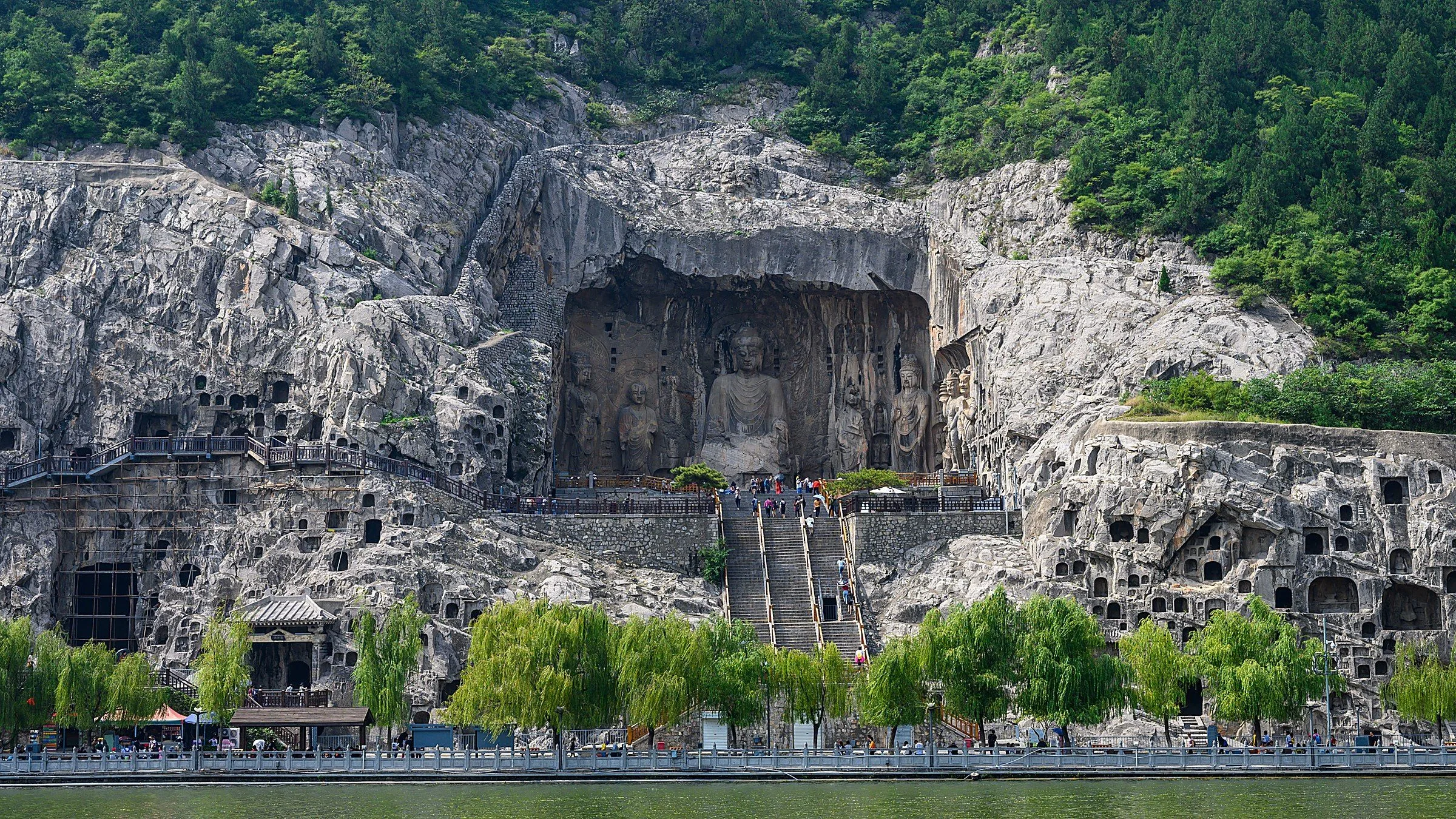
- 3 The 17-meter Vairocana Buddha at Fengxian Temple — the pinnacle of Tang dynasty Buddhist sculpture
- 4 2,345 caves and niches stretching 1 km along the Yi River cliffs
- 5 The Eastern and Western caves are connected by walking paths; the full route is 3 km
- 6 Most caves can be entered and viewed up close — a much more intimate experience than the Mogao Caves at Dunhuang
Essential tips for foreigners
- Rent the English audio guide (¥20) — the cave history is complex; the guide explains each major cave and the symbolism of the Buddhist art. Strongly recommended.
- Allow 3-4 hours minimum — the cave complex is large (1 km of cliff face, 2,345 caves). Most visitors spend 3-4 hours and see ~30 major caves.
- Wear comfortable walking shoes — the main paths are flat, but there are stairs and steep sections. Avoid sandals.
- Bring a wide-brim hat and water — much of the walking is in direct sun. The site has very few shaded rest areas.
- Start with the Western caves (the side with the Vairocana Buddha) and walk east. The Western caves are the highlight; the Eastern caves are smaller and less dramatic.
- Don't miss the museum (inside the main gate, before you reach the caves) — it has scale models and explanations of all the major caves, plus the original Tang-era stone tablets.
Suggested route
- 08:30 30-40 min Hotel breakfast, then Didi to Longmen Grottoes
- 09:00 20 min Arrive at main gate, passport check, collect audio guide (¥20), buy ticket (¥90)
- 09:20 40 min Visit the museum first — scale models and explanations of all major caves
- 10:00 1.5 hours Walk the Western caves (west of the bridge) — start with the smaller caves, build up to the Vairocana Buddha at Fengxian Temple
- 11:30 1 hour Cross the bridge to the Eastern caves — smaller but more intimate, less crowded
- 12:30 1 hour Lunch at the on-site restaurant (Luoyang Water Banquet, ¥80-120/person)
- 13:30 30 min Return to Fengxian Temple area for final photos and closer view of the Vairocana Buddha
- 14:00 1.5 hours at temple Optional: Didi to White Horse Temple (30 min) for an afternoon visit
- 15:30 30 min Didi back to Luoyang city center
The pinnacle of Tang dynasty Buddhist sculpture
The Longmen Grottoes are a 1-km cliff face on the north bank of the Yi River, 12 km south of Luoyang, carved with Buddhist statues over 400 years (493-1127 AD). The site has 2,345 caves and niches with 100,000+ statues, ranging from 2 cm to 17 m tall. The masterpiece is the 17-meter Vairocana Buddha at Fengxian Temple, carved in 652-655 AD during the Tang dynasty — a work that combines classical Chinese realism with the spiritual grandeur of Mahayana Buddhism.
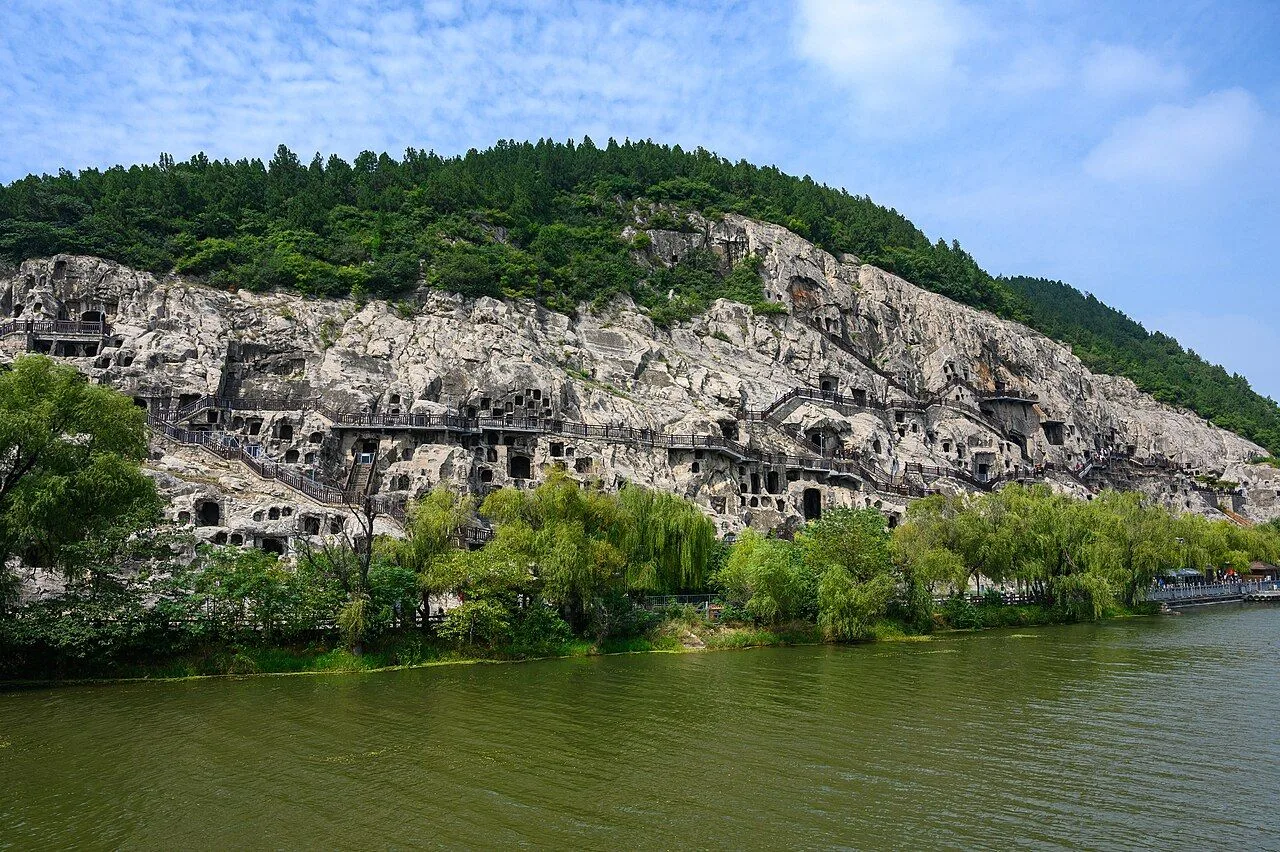
Photo: Wikimedia Commons / CC BY-SA. Source
.jpg)
Longmen is one of China’s four great Buddhist cave complexes, alongside Mogao (Dunhuang), Yungang (Datong), and Maijishan (Tianshui). The four together represent the apex of Chinese Buddhist art. Longmen is also the most accessible of the four for foreign travelers — 4-4.5 hours from Beijing by HSR.
The foreigner experience in 2026
Longmen is well-set-up for foreign visitors. The site is state-managed, the museum has English signage, and the English audio guide (¥20 rental) explains the major caves. The main paths are flat and wheelchair-friendly. The site can be visited in a half-day from Luoyang or as a day trip from Beijing (4-4.5 hours HSR each way).
For first-timers, the recommended approach: spend 3-4 hours at the site, start with the museum (inside the gate), then walk the Western caves to the Vairocana Buddha, cross the bridge, and walk the Eastern caves. Combine with White Horse Temple (30 min Didi) for a full day.
What to actually see
Three things stand out. The Vairocana Buddha at Fengxian Temple is the showpiece — a 17m seated Buddha with attendant disciples (Ananda, Kasyapa), guardian figures, and heavenly kings. The face alone is 4m tall. The carving is the pinnacle of Tang dynasty Buddhist sculpture. The Western caves overall cliff face — hundreds of statues visible from across the river, lit by morning light. The Eastern caves are smaller but more intimate; less crowded, with intricate detail carving.
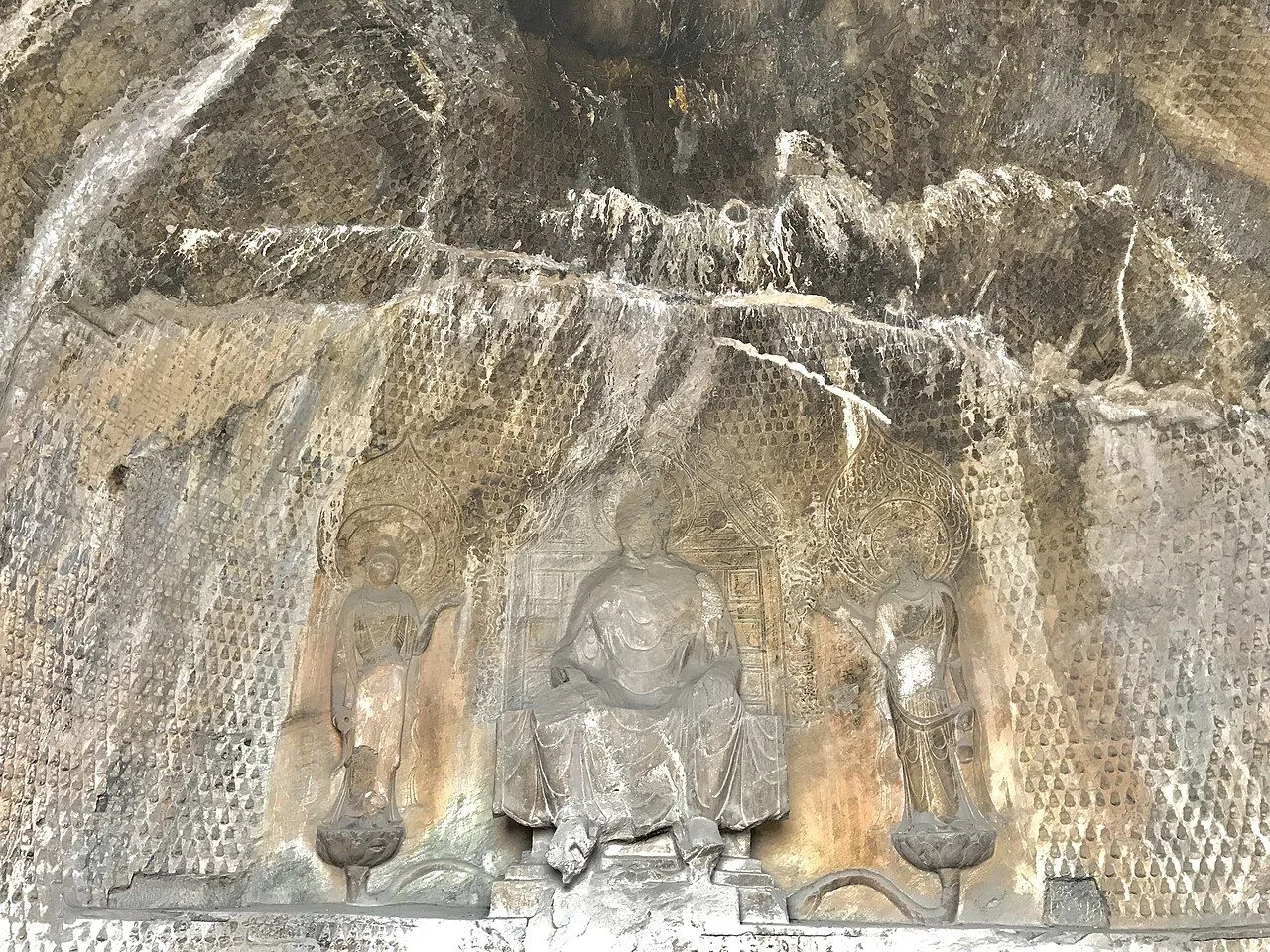
Photo: Wikimedia Commons / CC BY-SA. Source

The four Buddhist cave complexes
China has four great Buddhist cave complexes. All UNESCO-listed. Longmen (Luoyang, 12 km south of city), Mogao (Dunhuang, 2,500 km west in Gansu province), Yungang (Datong, 350 km west of Beijing), and Maijishan (Tianshui, 300 km west of Xi’an). If you can only see one, Longmen is the most accessible; Mogao is the most famous. If you have time for two, pair Longmen with Yungang (both in Henan/Shanxi region, 1.5 hours apart by HSR).
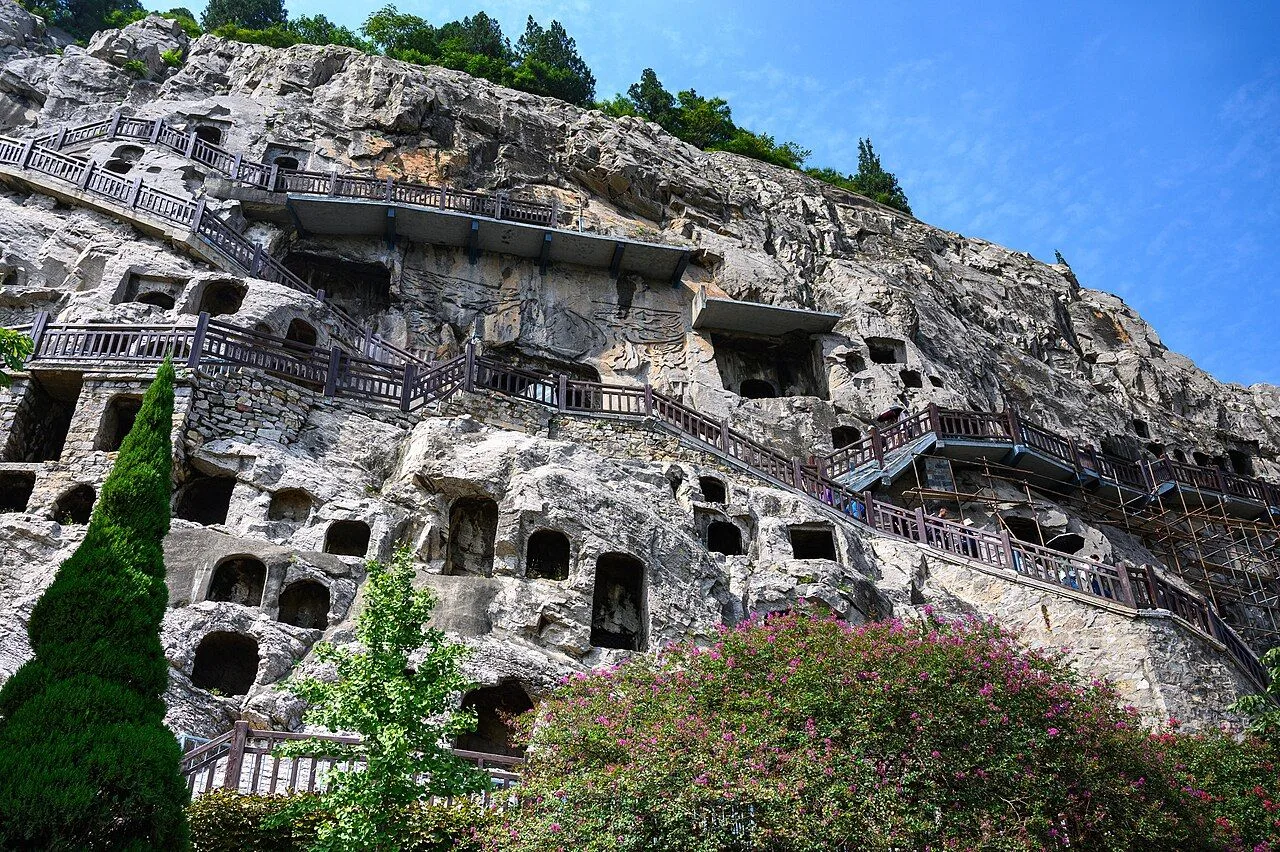
Photo: Wikimedia Commons / CC BY-SA. Source
.jpg)
Final tip
The biggest mistake first-timers make: visiting in the middle of the day (noon-2 PM) when the sun is overhead and the cliff face is flatly lit. The best light is morning (10:00-11:00) and late afternoon (4:00-5:00) when the sun is at an angle and the statues cast shadows. Start at 9:00 AM to catch the morning light on the Vairocana Buddha’s face.
Best photo spots
-
Fengxian Temple (Vairocana Buddha) · 10:00-11:00 (morning light on the Buddha's face)
The single most important Buddhist sculpture in China. The 17m Buddha is best photographed from the central viewpoint inside the cave, looking up. Morning light hits the Buddha's face from the right.
-
Western caves overall cliff view · 10:30-11:30 (morning, side-lit)
The full cliff face of Western caves, with hundreds of statues visible. Best from the opposite river bank — cross the bridge and walk down.
-
Eastern caves smaller shrines · 11:30-12:30 (midday, no harsh shadows)
The smaller caves with intricate detail carving. A 50mm prime lens at f/4 captures the detail best.
Where to eat nearby
-
Longmen on-site restaurant
Luoyang Water Banquet (洛阳水席) — 24 cold and hot dishes, all soup-based, a local specialty dating to the Tang dynasty · ¥80-150/person · Inside the main gate
-
Luoyang Old Town restaurants (downtown)
Luoyang Water Banquet, beef soup (牛肉汤), Luoyang dumplings · ¥40-100/person · 20 min Didi from Longmen
-
Old Town Cross Street (老城十字街) night market
Street food — Luoyang dumplings, sour soup noodles, fried glutinous rice cakes · ¥20-50/person · 25 min Didi from Longmen
-
Peony-themed restaurants (April-May only)
Peony petal tea, peony cakes, peony-flavored dishes · ¥60-120/person · Wangcheng Park area, 25 min Didi
Frequently asked questions
How long does it take to see the Longmen Grottoes?
3-4 hours for the main caves (Western + Eastern + Fengxian Temple). The full route is 3 km. Allow a full day if combining with White Horse Temple (north of Luoyang city, 30 min Didi).
Is the Longmen Grottoes kid-friendly?
Yes — the main paths are flat, the museum is engaging, and the giant Buddha statues impress children. Strollers work on the main paths. Allow 2-3 hours with kids (less than adults want). The site is outdoors with limited shade; bring a hat and water.
What is the Vairocana Buddha and why is it famous?
The 17-meter-tall Vairocana Buddha at Fengxian Temple is the largest statue at Longmen, carved in 652-655 AD during the Tang dynasty. It depicts Vairocana, the cosmic Buddha in Mahayana Buddhism. The face alone is 4 meters tall; the entire composition with attendant disciples and guardian figures is considered the pinnacle of Tang Buddhist sculpture.
How does Longmen compare to the Mogao Caves in Dunhuang?
Different experiences — Mogao is closed caves with painted interiors (no entry to most caves; you view from a distance). Longmen is open-air cliff carving (you walk right up to the statues). Both are UNESCO; both are must-see. If you can only see one, Longmen is more accessible from Beijing (4-4.5 hours HSR); Mogao requires a longer trip to Gansu province.
When is the best time to visit Longmen Grottoes?
April-May and September-October for mild weather. The peony festival (April 5-May 5) brings crowds but the peonies are stunning. Avoid July-August (35°C+). Winter is cold but uncrowded; the cliffs look dramatic with snow.