
White Horse Temple
白马寺 · Báimǎ Sì
Quick answer
Foreign passport required at entry (the international halls are active Buddhist temples with resident monks, and management verifies passports for security). Tickets sold at the gate in cash, Alipay, or WeChat Pay. No advance booking required for the standard visit.
Why visit
- 1 China's first Buddhist temple, founded in 68 AD during the Eastern Han dynasty — almost 2,000 years old
- 2 Built to honor the two white horses that carried Buddhist sutras from India via the Silk Road
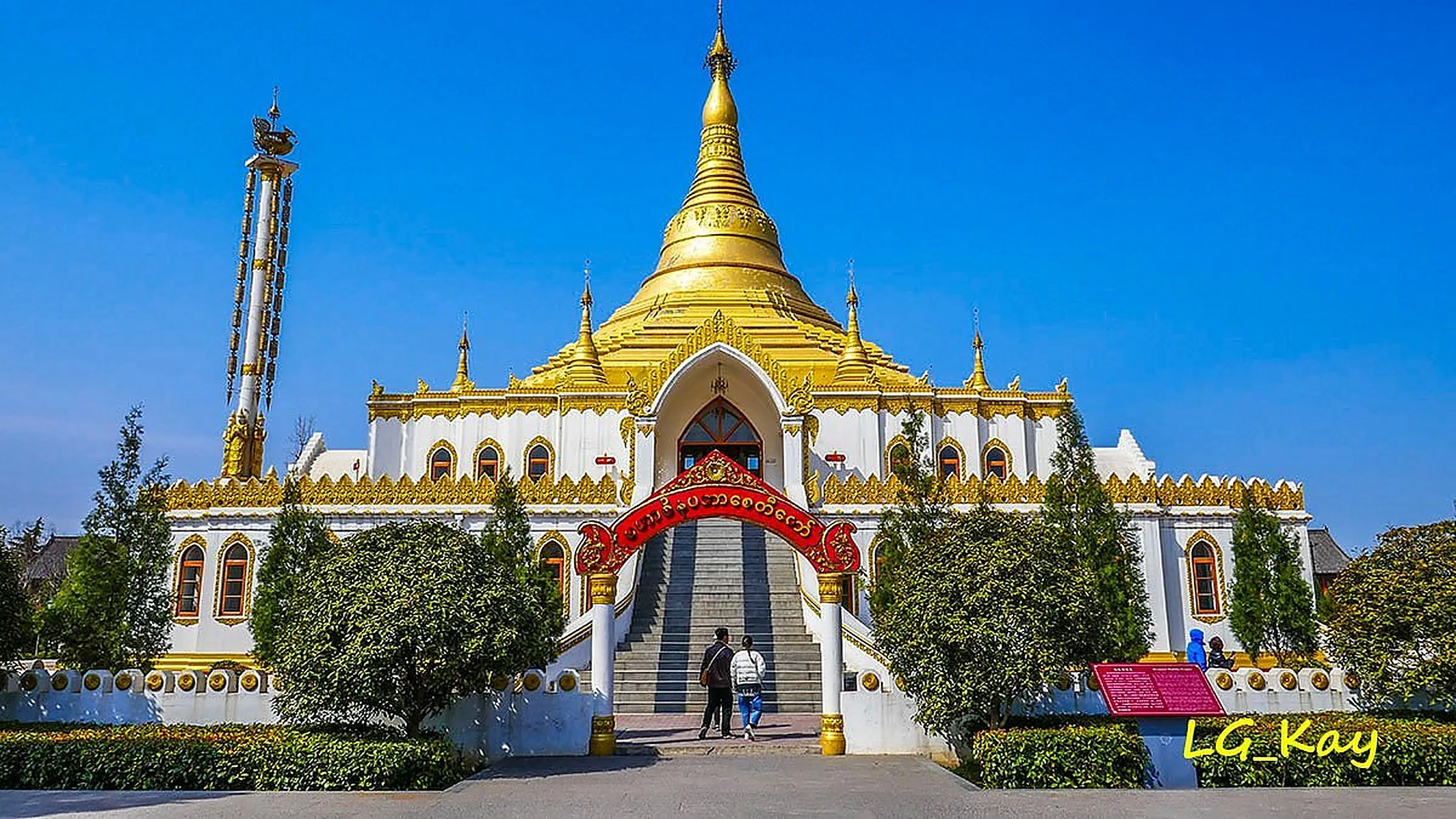
- 3 Original Chinese halls + International Buddhist Hall complex (Thai, Burmese, Indian sections) — six countries represented
- 4 Qiyun Pagoda (齐云塔) — the original 69-meter brick pagoda, a 12th-century Song-dynasty landmark 2 km north
- 5 Active working temple with resident monks — visit during morning chanting (06:30) for the real experience
- 6 ¥35 entry — the cheapest major historical site in Luoyang
Essential tips for foreigners
- Start with the original Chinese halls (Tianwang Hall, Mahavira Hall, Daxiong Hall) on the central axis. The International Halls are in a separate compound to the east and worth a separate hour.
- Visit at 07:30 opening to see the morning chanting (06:30-07:00 is the monks' private chanting; visitors can join the public chanting at 07:30). The temple is also nearly empty then — much better photos.
- Don't skip the Qiyun Pagoda — 2 km north of the main temple, a 12th-century Song-dynyata brick pagoda. Same ticket (¥50 combined with main entry). Few tourists visit it; the original pagoda is more atmospheric than the reconstructed main halls.
- The temple is east of the city, near Luoyang Museum — visit the museum in the morning (open 09:00) and the temple in the afternoon (open until 19:00) for a full day of Luoyang culture.
- Avoid weekends and the peony festival (April 5-May 5) — the temple gets shoulder-to-shoulder crowds. The international halls in particular are a quiet experience on weekday mornings.
- Bring small change — the smaller donation boxes inside the halls only accept ¥1, ¥5, ¥10 notes. Alipay works at the gate but not for incense offerings.
Suggested route
- 07:30 10 min Arrive at opening time, ticket purchase at gate (¥35 cash or Alipay)
- 07:40 45 min Walk the central axis: Mountain Gate → Tianwang Hall (Four Heavenly Kings) → Mahavira Hall (main Buddha) → Daxiong Hall (Great Hall)
- 08:30 45 min Explore the side halls: the Hall of the Three Saints (西方三圣殿), the Hall of Ksitigarbha (地藏殿), the Cool Garden (清凉台)
- 09:15 1 hour Walk to the International Halls compound (east). Visit the Burmese Hall (golden pagoda), Thai Hall, Indian Hall, Japanese Hall
- 10:15 30 min walk Walk 2 km north (or short Didi ¥10) to the Qiyun Pagoda
- 10:45 30 min Visit the Qiyun Pagoda compound — the original 12th-century brick pagoda
- 11:15 20 min Didi back to Luoyang city center or to Luoyang Museum (next door to the temple)
The birthplace of Chinese Buddhism
White Horse Temple is the first Buddhist temple in China, founded in 68 AD during the Eastern Han dynasty. Emperor Ming of Han (汉明帝) built the temple after a dream of a golden figure flying from the west; his envoys traveled to Gandhara (modern-day Pakistan/Afghanistan) and returned with two Indian monks, Kasyapa Matanga and Dharmaraksha, who brought Buddhist sutras and statues on the backs of two white horses. The temple was named for those horses.
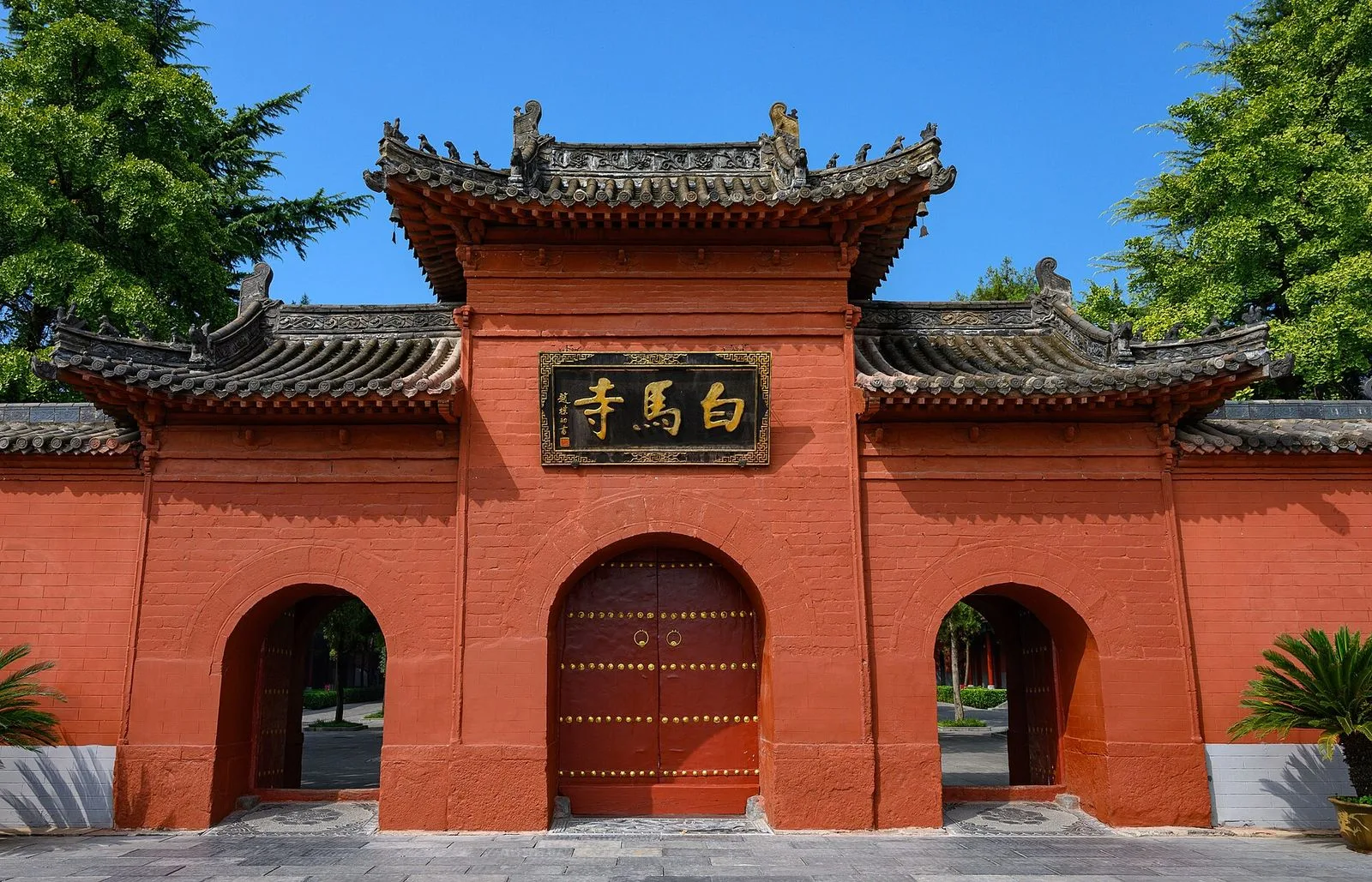
Photo: Wikimedia Commons / CC BY-SA. Source
.jpg)
Almost 2,000 years later, White Horse Temple is still an active working Buddhist monastery with ~50 resident monks, and it remains the symbolic birthplace of Chinese Buddhism. Every other Buddhist temple in China — from the great mountain monasteries to the village shrines — traces its lineage, in some way, back to White Horse Temple.
The temple is in Luolong District, east of Luoyang city center and close to the Luoyang Museum. It is a half-day visit from Luoyang (2-3 hours) and combines well with the Luoyang Museum (next door) or the Longmen Grottoes (12 km south, a different aspect of Luoyang’s Buddhist heritage).
What to actually see
The temple is divided into three main areas:
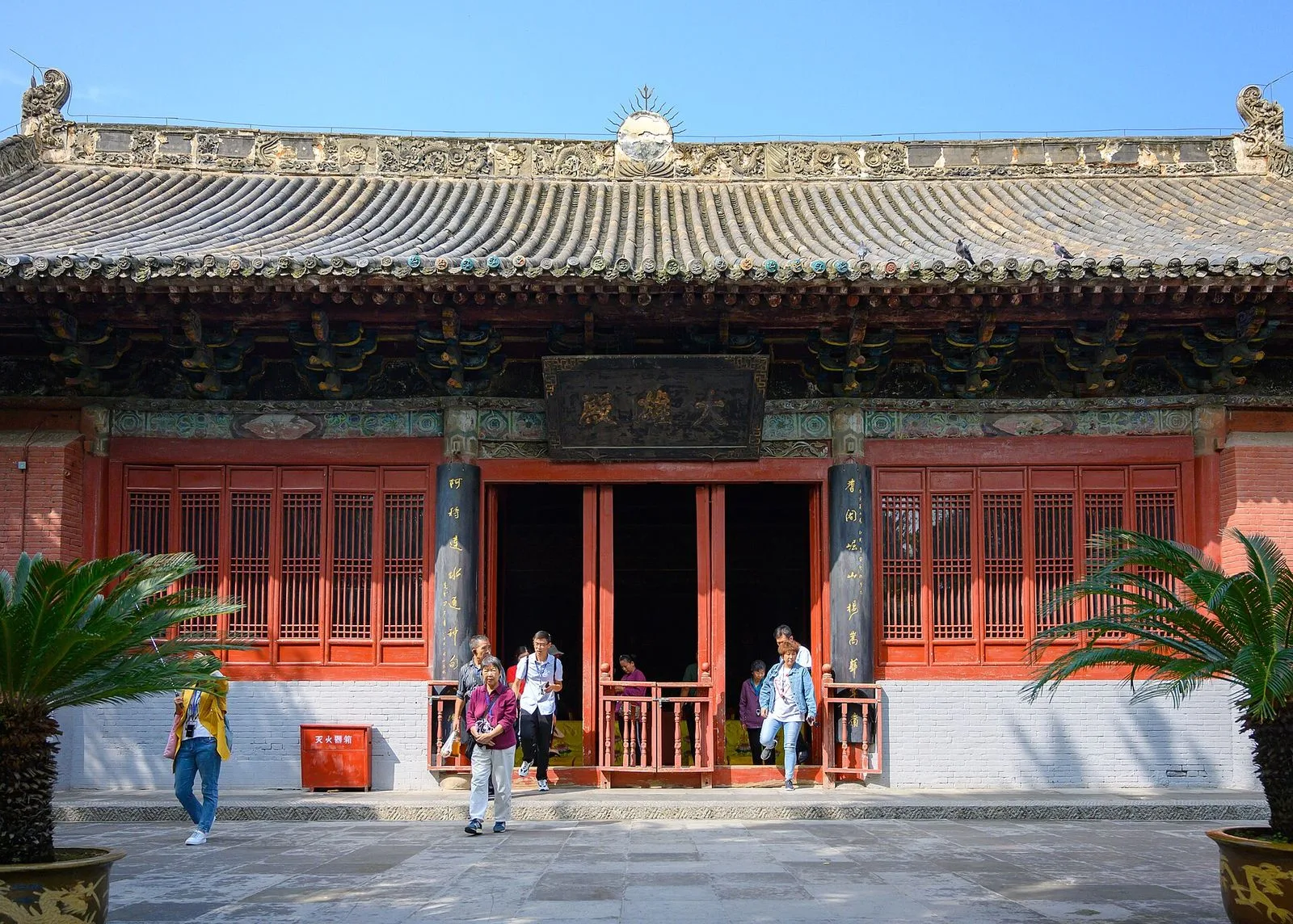
Photo: Wikimedia Commons / CC BY-SA. Source

The original Chinese temple complex (the central axis): a 1-km walk through six traditional halls starting at the Mountain Gate (山门) and ending at the Cool Garden (清凉台). The halls have all been rebuilt many times — the current buildings are mostly Qing dynasty (1644-1912) reconstructions — but the site is original. The most important halls are the Tianwang Hall (天王殿, with the four Heavenly Kings), the Mahavira Hall (大雄殿, the main Buddha hall with the resident monks’ chanting), and the Cool Garden (清凉台), the elevated platform at the back where the Tang-dynasty monk Xuanzang did his translation work.
The International Halls compound (east of the main temple, entered through a separate gate): five Buddhist halls in the architectural styles of Thailand, Burma, India, and Japan, each built in the 1990s-2000s as gifts from those countries’ Buddhist communities. The Burmese Hall is the showpiece — a 30-meter golden pagoda with resident Burmese monks. The Thai Hall, Indian Hall, and Japanese Hall are working Buddhist temples. The Indian Hall has a small museum of the original Indian Buddhist sites.
Qiyun Pagoda (齐云塔, 2 km north of the main temple, separate compound): a 12th-century Song-dynasty 13-tier brick pagoda, 69 meters tall. This is the ONLY original structure remaining on the White Horse Temple site — everything in the main temple has been rebuilt at least once. The pagoda is more atmospheric than the main halls; the 2 km walk is on a quiet country road; and the ¥50 combined ticket is excellent value.
A brief history
68 AD: Emperor Ming of Han sends envoys to the Western Regions (Central Asia) to learn about Buddhism. They return with two Indian monks (Kasyapa Matanga and Dharmaraksha) carrying Buddhist sutras and a statue of the Buddha on two white horses.
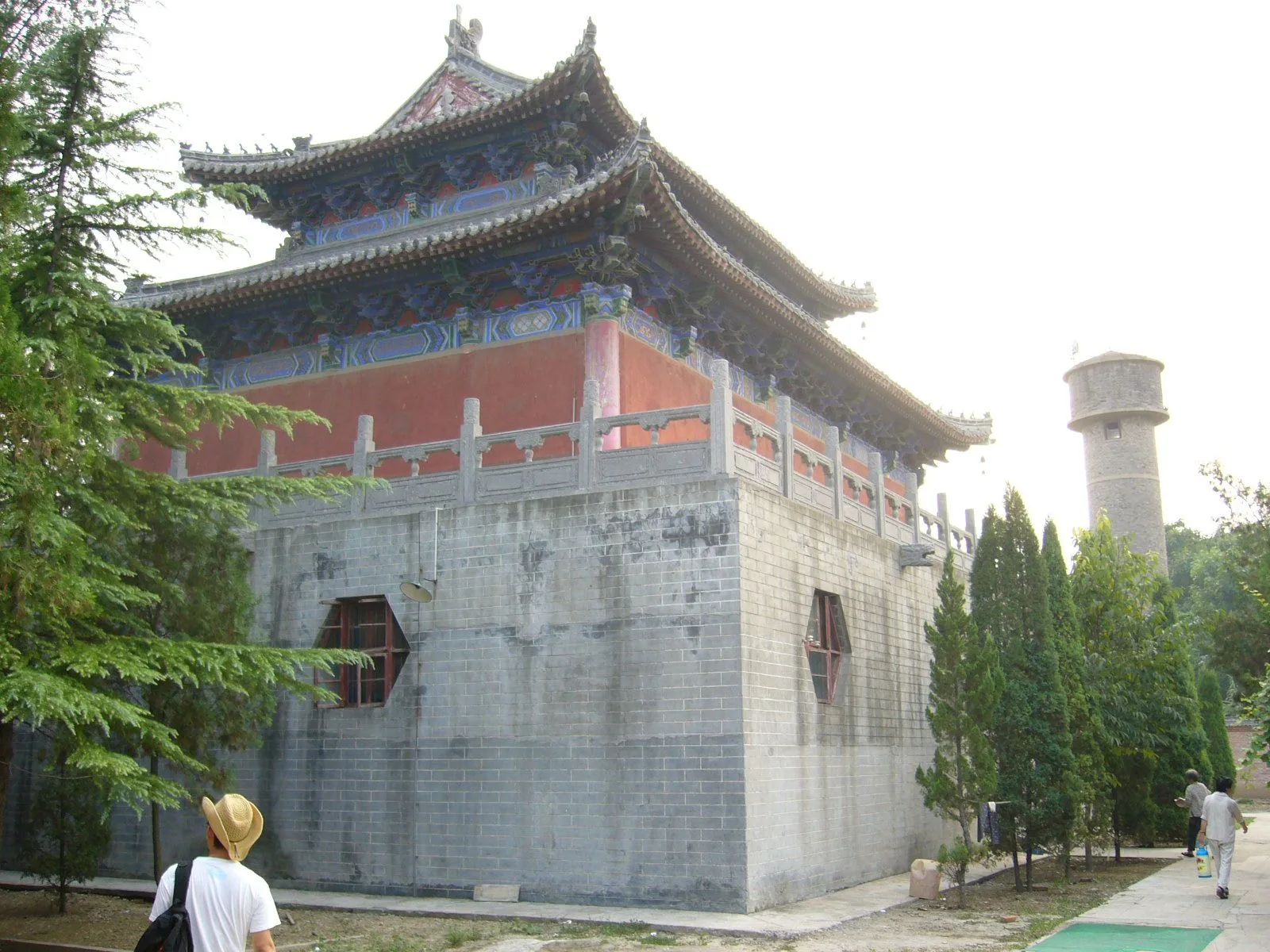
Photo: Wikimedia Commons / CC BY-SA. Source

68-75 AD: The temple is built and named White Horse Temple (白马寺) in honor of the horses. The monks translate the Sutra of Forty-Two Sections (四十二章经), the first Buddhist sutra translated into Chinese.
148-180 AD: The Indian monk Lokaksema arrives at White Horse Temple and translates key Mahayana sutras (the Prajnaparamita, the Lotus Sutra, the Vimalakirti Sutra), establishing the foundation of Chinese Mahayana Buddhism.
627-645 AD: The famous Tang-dynasty monk Xuanzang (玄奘) studies at White Morning Temple before his 17-year pilgrimage to India. He returns in 645 with 657 Buddhist texts and spends the rest of his life translating them at the Big Wild Goose Pagoda in Xi’an. His story is the basis of the classic novel “Journey to the West” (西游记).
1990s-2000s: The International Halls compound is built as a symbol of Buddhist exchange between China and the rest of Asia. Each hall is a gift from a different country’s Buddhist community.
The morning chanting experience
White Horse Temple is one of the few places in Luoyang where foreign visitors can observe a working Buddhist monastery. The 50 resident monks follow the traditional monastic schedule: 04:00 wake, 06:00 private chanting, 07:30 public morning service, 12:00 lunch (vegetarian, no eating after noon), 16:30 afternoon chanting, 20:00 evening chanting, 21:30 sleep.
The public services (07:30 morning, 16:30 afternoon) in the Mahavira Hall are open to visitors. Sit on the wooden benches at the back of the hall, remove your hat, no photography during chanting. The monks chant in classical Chinese (文言文) — most visitors don’t understand the words but the rhythm and sound are powerful. The morning service is the highlight — arrive at 07:30 to catch it.
Getting to White Horse Temple
White Horse Temple is in the eastern suburbs of Luoyang, about 12 km from the railway station. There is no metro. The main access options:
Bus 56 from Luoyang railway station: 30 min, ¥2, runs every 15-20 min from 06:00 to 20:00. The temple is the terminus. The bus is local and not English-friendly — show the driver 白马寺 or the English name.
Didi (ride-hailing): 25-30 min from Luoyang city center, ¥40-55. The most foreigner-friendly option. Show the driver 白马寺 (Báimǎ Sì).
Taxi: Similar to Didi but more expensive. Make sure the driver uses the meter.
Self-drive: Large parking lot at the temple, ¥10/day. Roads are well-maintained.
When to visit
- Spring (March-May): Best weather (12-25°C). The peony festival (April 5-May 5) brings peak crowds to all of Luoyang — visit on a weekday morning.
- Summer (June-August): Hot (32-38°C). The morning is more comfortable than the afternoon. The temple’s tree cover provides some shade.
- Autumn (September-November): Best for photography. Clear skies, mild temperatures, the ginkgo trees in the temple turn golden in late October.
- Winter (December-February): Cold (0-8°C) but uncrowded. The empty temple has a stark, atmospheric quality. Some halls may have reduced hours.
Practicalities for foreign visitors
- Payment: Gate accepts Alipay (with international Visa/Mastercard linked) and WeChat Pay. The smaller donation boxes inside the halls only accept ¥1, ¥5, ¥10 notes.
- Dress code: No explicit dress code but cover shoulders and knees out of respect for the active temple. Hats off inside the halls.
- Photography: Allowed in the outdoor areas. No photography during chanting services or inside the resident monks’ quarters.
- Incense: The temple provides free incense at the entrance — three sticks per visitor, light them at the main incense burner in front of the Mahavira Hall. No need to buy incense from vendors outside the temple.
- Restrooms: Available at the entrance and near the International Halls. Western-style toilets. Bring your own tissue paper.
- English: English signage throughout. The gate has a printed English guide map (free). No English audio guide or guided tours as of 2026 — the on-site monks speak Chinese and a few speak English.
What to do nearby
- Luoyang Museum (洛阳博物馆): 1 km west of the temple, 5 min Didi. The provincial museum with 40,000+ artifacts spanning 5,000 years. Free entry, English signage in the main halls. Allow 2-3 hours.
- Ancient Tombs Museum (古墓博物馆, “Ancient Tombs of the Han-Wei Luoyang City”): 5 km west of the temple, the world’s first museum of ancient tomb art. ¥0-30 entry. Allow 2 hours. Combine with the Luoyang Museum for a full day of Han-Wei dynasty history.
- Wangcheng Park (王城公园): The main venue of the annual Luoyang Peony Festival, 6 km west of the temple. April 5-May 5 only. ¥0-30 entry.
- Longmen Grottoes (龙门石窟): 12 km south of the temple, 30 min Didi. The UNESCO World Heritage Buddhist cave complex — the other half of Luoyang’s Buddhist heritage. ¥90 entry. Allow 3-4 hours.
Final tip
The biggest mistake first-timers make: only visiting the main temple complex and skipping the International Halls AND the Qiyun Pagoda. The main temple is well-known but the international halls are the unique feature of White Horse Temple and the Qiyun Pagoda is the only original structure on the site. Buy the ¥50 combined ticket at the gate (it covers all three areas), arrive at 07:30 opening, and you’ll have the place largely to yourself for the first 90 minutes before the tour buses arrive.
Best photo spots
-
Mountain Gate (山门) — main entrance · Morning, 08:00-09:00 (soft light, no crowds)
The traditional three-bay temple gate with the 'White Horse Temple' (白马寺) calligraphy in gold on a black background, attributed to the famous calligrapher Zhao Puchu. Stand in the central bay for the framed view of Tianwang Hall through the gate.
-
Burmese Hall (缅甸佛殿) golden pagoda · Afternoon, 14:00-16:00 (warm golden light on the gold)
The 30-meter Burmese-style golden pagoda in the International Halls compound, with resident Burmese monks. The pagoda is the single most-photographed spot at White Horse Temple. Best framed with the surrounding gardens.
-
Cool Garden (清凉台) · Morning, 08:00-10:00
The elevated wooden platform at the back of the main temple, traditionally where Xuanzang (the famous Tang-dynasty monk who translated the sutras) did his translation work. Quiet in the morning, with a view back over the central axis.
-
Qiyun Pagoda (齐云塔) exterior · Late afternoon, 16:00-17:00 (warm side-light on the brick)
The 12th-century Song-dynasty 13-tier brick pagoda, the ONLY original structure on the White Horse Temple site. Photograph from the south side to see all 13 tiers, with the surrounding farmland in the foreground for context.
Where to eat nearby
-
Temple vegetarian restaurant (寺院素斋)
Temple vegetarian (素斋) — strictly Buddhist, no meat, fish, eggs, garlic, or strong spices · ¥30-60/person · Inside the temple complex, near the International Halls
-
Luoyang Old Town restaurants (downtown)
Luoyang Water Banquet (洛阳水席) — 24 cold and hot dishes, all soup-based, a Tang-dynasty specialty · ¥50-120/person · 20 min Didi back to Old Town
-
Old Town Cross Street (老城十字街) night market
Street food — Luoyang dumplings, sour soup noodles (浆面条), fried glutinous rice cakes · ¥20-50/person · 25 min Didi from White Horse Temple
-
Peony-themed restaurants (April-May only)
Peony petal tea, peony cakes, peony-flavored dishes — Luoyang is the peony capital of China · ¥60-120/person · Wangcheng Park area, 20 min Didi from White Horse Temple
Frequently asked questions
How long does it take to see White Horse Temple?
2-3 hours for the main Chinese halls and the International Hall complex. Add 1 hour for the Qiyun Pagoda (2 km north, separate walk or short Didi). Most visitors spend 2 hours at the main temple and 30-45 minutes at the pagoda. Allow a full morning if combining with Luoyang Museum next door.
Is White Horse Temple kid-friendly?
Yes — the main paths are flat and the halls are large enough for strollers. The international halls (especially the Burmese golden pagoda) impress children. Avoid during school holidays and the peony festival in April when domestic tourist groups crowd the halls. The Cool Garden (清凉台) at the back of the temple is a quiet spot to break with kids.
What is the Qiyun Pagoda and is it worth the extra walk?
Yes. The Qiyun Pagoda (齐云塔) is a 12th-century Song-dynasty 13-tier brick pagoda, 69 meters tall, located 2 km north of the main temple in a separate compound. It's the ONLY original structure remaining on the White Horse Temple site — the main halls have all been rebuilt. The pagoda is more atmospheric than the main halls; the 2 km walk is on a quiet country road; and the ¥50 combined ticket is excellent value.
Can I see monks chanting at White Horse Temple?
Yes. The temple is an active Buddhist monastery with ~50 resident monks. Public chanting happens daily at 07:30 (morning service) and 16:30 (afternoon service) in the Mahavira Hall. The 06:30 private chanting is for monks only. Visitors are welcome to observe the public services quietly — remove hats, no photography during chanting, and sit on the wooden benches at the back of the hall.
How does White Horse Temple compare to other Buddhist temples in China?
Different experience from the four great Buddhist mountains (Wutai, Emei, Putuo, Jiuhua). Those are mountain pilgrimage sites with multiple temples spread across a region. White Horse Temple is a single compact complex focused on the founding history of Chinese Buddhism. For historical significance, it ranks alongside the Big Wild Goose Pagoda in Xi'an (which also housed Xuanzang's translated sutras) and the White Pagoda at Miaoying Temple in Beijing (the only surviving Yuan-dynasty Tibetan Buddhist pagoda).
Is the International Hall section worth visiting?
Yes — it's the unique feature of White Horse Temple. The International Halls compound (east of the main temple) was built in the 1990s-2000s with five Buddhist halls in the architectural styles of Thailand, Burma, India, and Japan. Each was a gift from that country's Buddhist community and contains active Buddhist monks from that country. The Burmese Hall (the golden pagoda, the most-photographed) has a working monastery with Burmese monks who study Mandarin. The Thai Hall is a working Thai monastery. The Indian Hall has a small museum of the original Indian Buddhist sites.
What's the best time to visit White Horse Temple?
April-May and September-October for mild weather. The peony festival (April 5-May 5) brings peak crowds to all of Luoyang. Visit at 07:30 opening on a weekday for the best experience. July-August is hot (35°C+). Winter (December-February) is cold (0-10°C) but uncrowded; the temple has a stark, atmospheric quality in the off-season. Avoid weekends and Chinese national holidays.
Is White Horse Temple worth a separate trip from Longmen Grottoes?
Yes if you have 2+ days in Luoyang. The two sites are 12 km apart (30 min Didi) and represent different aspects of Luoyang's Buddhist heritage: Longmen is the imperial-era cave sculpture (493-1127 AD, Tang dynasty peak); White Horse Temple is the founding temple of Chinese Buddhism (68 AD, Han dynasty). Visit both for the full story. If you only have one day, prioritize Longmen (the more dramatic site).