
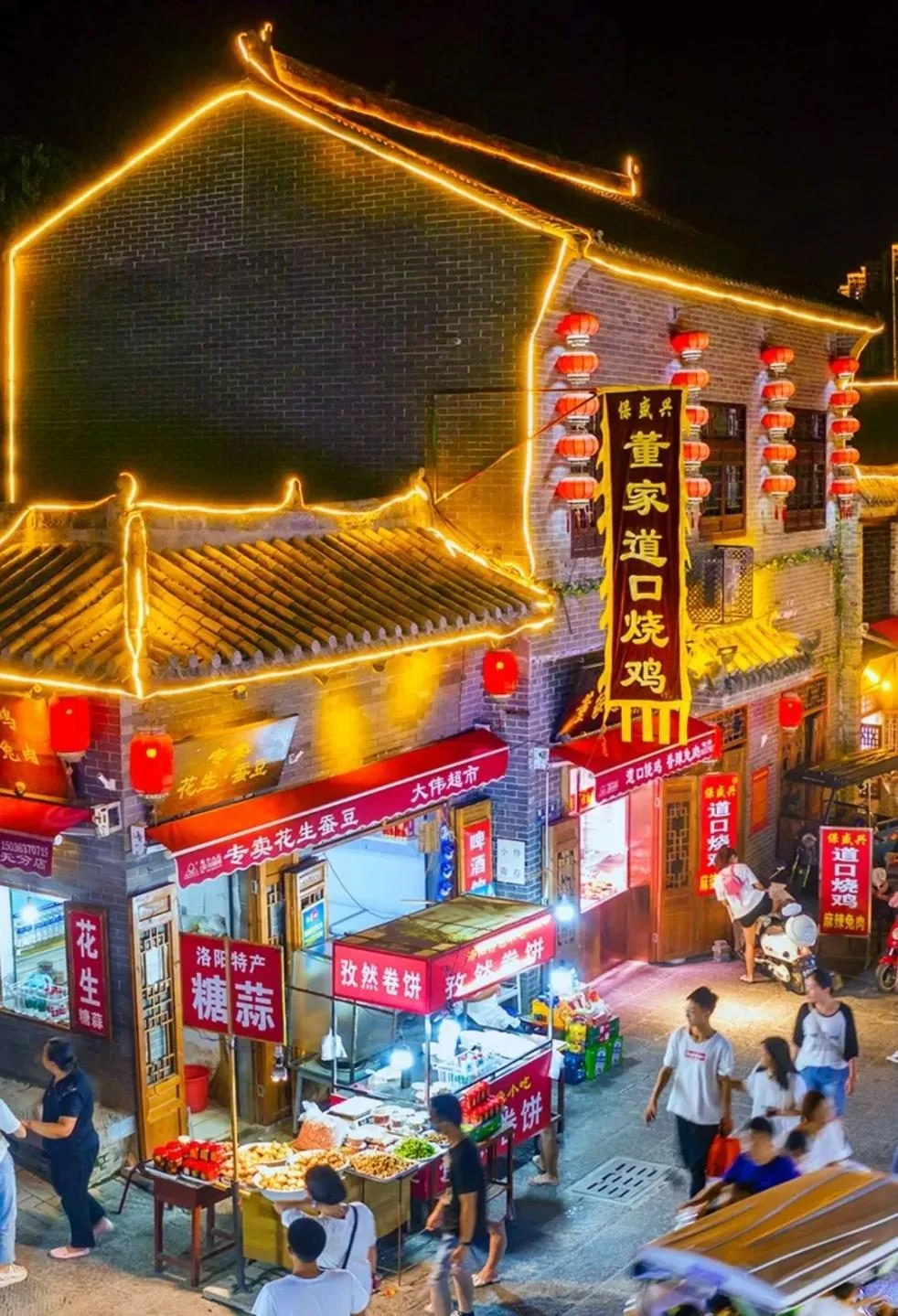
Old Town Cross Street
老城十字街 · Lǎochéng Shízì Jiē
Quick answer
Foreign passport not required to enter the cross-street (it's a public street). No ID check at any point. The night market vendors do not require ID — just cash or Alipay/WeChat Pay. The nearby Lijing Gate scenic area has a passport check and ¥30 entry.
Why visit
- 1 Free 24/7 public street — no entry fee, no ID check, no reservation. Walk in any time.
- 2 The night market (17:00-22:00) is the heart of Luoyang's street food scene — 200+ vendors serving local specialties
- 3 Try the Luoyang Water Banquet (洛阳水席) — a 24-dish Tang-dynasty-origin soup-based feast unique to Luoyang
- 4 Bufan Tang (不翻汤) — Luoyang's signature green-beer-pancake soup, only served in the morning and at night
- 5 Jiang Mian Tiao (浆面条) — fermented-green-bean noodles, the most local of Luoyang's noodle dishes
- 6 Lijing Gate (丽景门) — the symbolic entrance to the Old Town, 1 block west (¥30 entry)
- 7 Surrounded by 70+ traditional streets in the 2.2-sq-km Old Town — a maze of craft shops, teahouses, and small temples
Essential tips for foreigners
- Visit in the evening (17:00-22:00) for the night market — this is when the Old Town comes alive. Daytime is fine for sightseeing but quiet; nighttime is the cultural experience.
- Start at the Lijing Gate (丽景门) entrance on the west side, then walk east into the cross-street. The route from Lijing Gate through Old Town to Yingtian Gate (应天门) and Ming Tang (明堂) is the classic Luoyang Old Town walk.
- Eat Bufan Tang (不翻汤) early in the morning or at the night market — the green-beer pancake is only made fresh at those times. The dish is named for the fact that the pancake doesn't need to be flipped (不翻, 'no flip') because it cooks from one side.
- Try the Luoyang Water Banquet (洛阳水席) at a dedicated restaurant — the 8 cold + 16 hot dishes all have soup or broth. Old Town has multiple water-banquet restaurants; the original (老雒阳) is the most famous. ¥80-150 per person for the full 24-dish feast.
- Use Alipay or WeChat Pay for food stalls — most vendors don't accept cash or credit cards. Set up Alipay with international Visa/Mastercard before you arrive (5 minutes via the Alipay app).
- Avoid the Luoyang Peony Festival week (April 5-May 5) — the Old Town is shoulder-to-shoulder with domestic tour groups during this period. The night market becomes difficult to navigate. Late September or October is much calmer.
Suggested route
- 17:00 30 min Arrive at Lijing Gate (丽景门, ¥30 entry if you want to climb the gate tower), then walk east into the cross-street
- 17:30 1 hour Walk the cross-street slowly, sampling street food as you go. Start with savory dishes: Bufan Tang (不翻汤) at the west end, then potstickers (锅贴), then Hula Tang (胡辣汤)
- 18:30 30 min Continue east to the central cross-street intersection. Browse the craft shops and souvenir stalls. Try the Jiang Mian Tiao (浆面条) at a noodle stall
- 19:00 1 hour Settle into a small restaurant for the Luoyang Water Banquet (洛阳水席) — the smaller 8-dish set menu (¥30-50) is enough for 1-2 people. Or stay at the night market for more sampling
- 20:00 30 min Walk south to Wangcheng Park area for the Peony Festival (April-May only), or continue along the cross-street to the east end
- 20:30 1.5 hours Optional: continue south to Yingtian Gate (应天门, ¥50) and Ming Hall (明堂, ¥50) for the Sui-Tang palace site evening light show
- 22:00 20 min Head back to the hotel via Didi (¥20-30 to the city center)
The 1,200-year-old food street of Luoyang
The Old Town Cross Street (老城十字街) is the heart of Luoyang’s traditional food scene — a 100-meter-long cross-shaped intersection in the Laocheng (Old City) District that has been a market street for over 1,200 years. Today it hosts 200+ food vendors and craft shops, with the night market (17:00-22:00 daily) being the most authentic food experience in Luoyang.
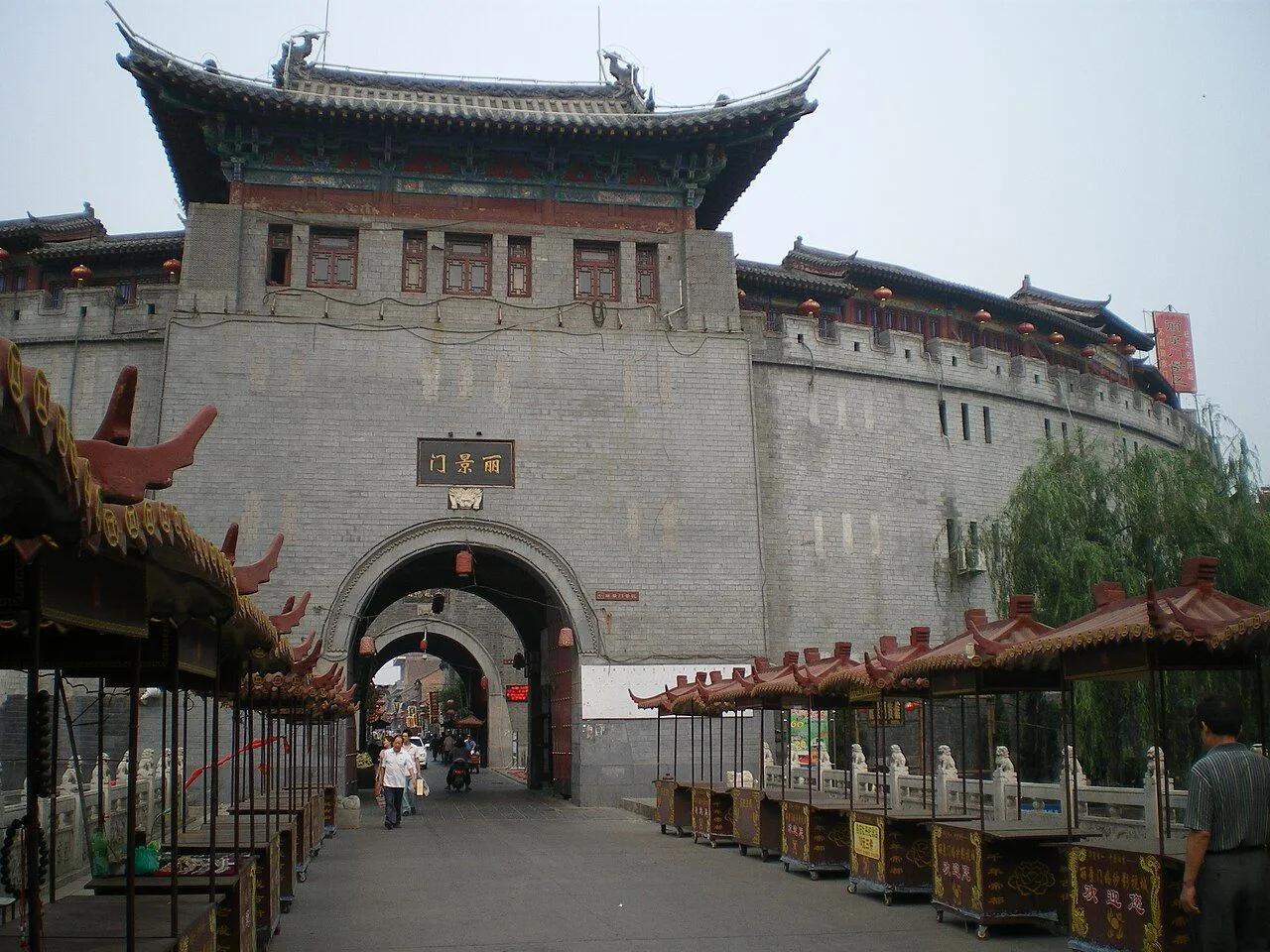
Photo: Wikimedia Commons / CC BY-SA. Source

The cross-street sits at the center of a 2.2-sq-km Old Town surrounded by 70+ traditional streets, with the symbolic Lijing Gate (丽景门) at the west entrance and the rebuilt Drum Tower (鼓楼) at the central intersection. The Old Town is the most-photographed area of Luoyang, especially in the evening when the red lanterns are lit and the food vendors are cooking.
For first-time foreign visitors, the Old Town is the place to experience Luoyang’s living food culture — the museum (covered separately) explains the city’s 5,000-year history, but the Old Town is where you taste it. The combination of museum + Old Town is the complete Luoyang experience.
What to actually eat
The Old Town is Luoyang’s street food capital. Top 5 must-try dishes:
1. Bufan Tang (不翻汤, “no-flip soup”) — the signature Luoyang dish. A thin green-beer pancake dropped into a clear broth with粉丝 (vermicelli), 海带 (kelp), 豆腐丝 (shredded tofu), and 油豆皮 (yuba). The pancake is named for the fact that it doesn’t need to be flipped during cooking — it solidifies from one side. Only served in the morning and at the night market. ¥8-15/bowl.
2. Jiang Mian Tiao (浆面条, “fermented-bean noodles”) — the most local of Luoyang’s noodle dishes. A sour-fermented green-bean juice broth with thick hand-pulled noodles, topped with芹菜 (celery), 黄豆 (soybeans), 花生碎 (crushed peanuts), and a touch of pork fat. The sour flavor is acquired — most foreign visitors find it unusual at first. ¥10-15/bowl.
3. Guotie (锅贴, “potstickers”) — Luoyang-style pan-fried dumplings, especially the beef and chive filling. Crispy bottom, juicy filling. ¥8-15 for 6-8 pieces.
4. Hula Tang (胡辣汤, “Henan pepper soup”) — the Henan breakfast classic, also great at the night market. A thick spicy-sour soup with vermicelli, tofu, beef or pork strips, and the signature Henan pepper blend (a numbing-spicy mix). ¥8-12/bowl.
5. Mudan Bing (牡丹饼, “peony cakes”) — the Luoyang specialty souvenir food. Small round cakes filled with peony-petal paste. ¥3-5 each, often paired with peony tea (牡丹茶).
Plus the Luoyang Water Banquet (洛阳水席) — a 24-dish Tang-dynasty-origin feast (8 cold + 16 hot, all soup-based) that takes 2-3 hours to eat. The Old Town has 5+ dedicated water-banquet restaurants; the most famous is 老雒阳 (Lǎo Luòyáng) at the west end of the cross-street. The 8-dish set menu is enough for 1-2 people at ¥30-50; the full 24-dish feast is ¥80-150/person.
A brief history of the Old Town
The Luoyang Old Town traces its street pattern to the Sui-Tang dynasty (581-907 AD) when Luoyang was the eastern capital of the Chinese empire. The cross-shaped street layout (东西南北, “east-west-north-south”) was a deliberate Sui-Tang urban design — the city’s main streets met at a central cross, with a Drum Tower or Bell Tower at the intersection for civic time-keeping.
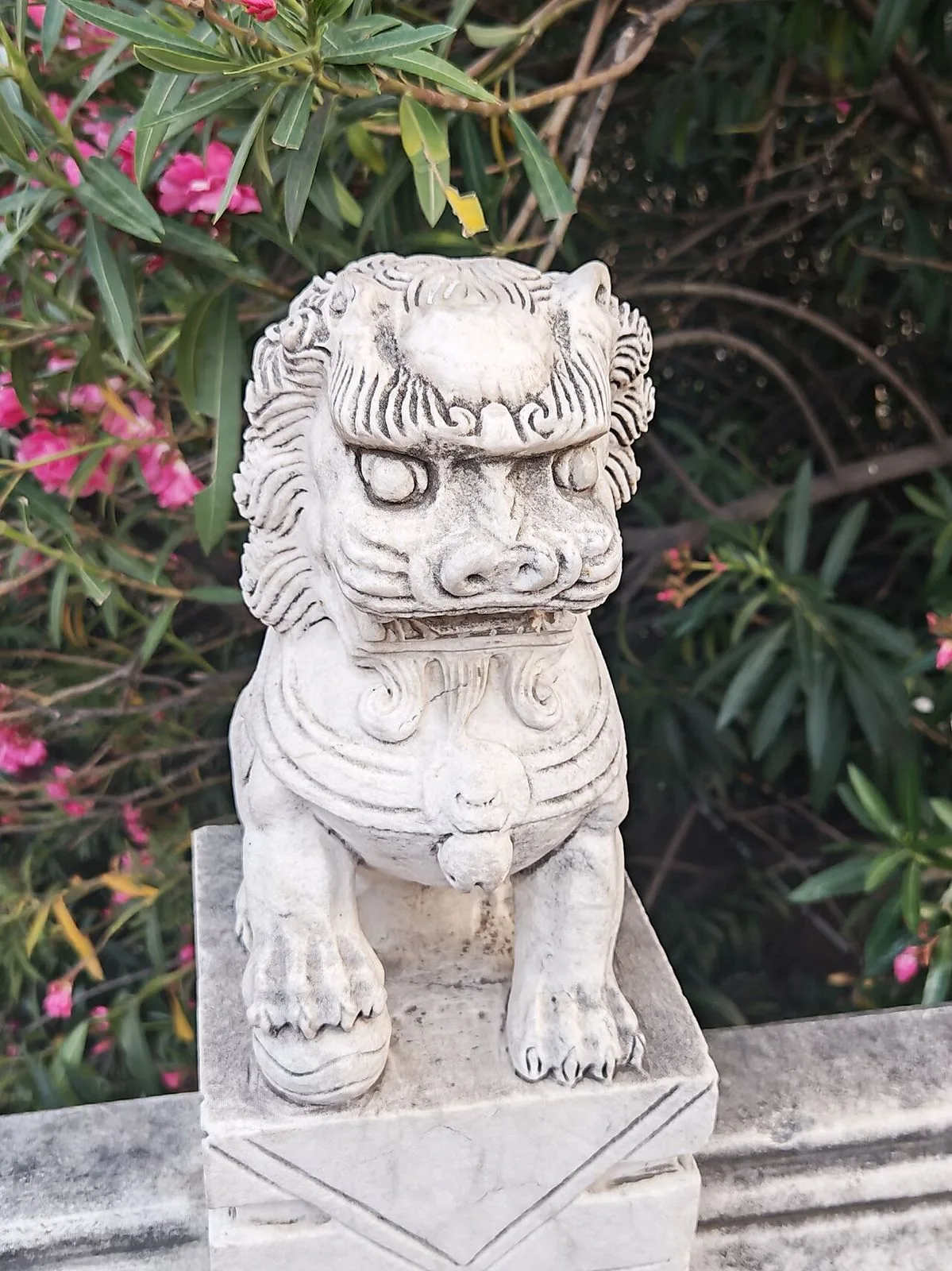
Photo: Wikimedia Commons / CC BY-SA. Source

The current cross-street was the commercial heart of the Old Town for 1,200+ years. The name “十字街” (cross street) comes from the cross-shaped street layout. The night market tradition is even older — Chinese cities have had night markets since the Tang dynasty, when imperial curfew was relaxed to allow food vendors to operate in the evenings.
The current buildings along the cross-street are mostly Ming-Qing (1368-1912) and early 20th century, with the 2002 restoration of Lijing Gate as the symbolic entrance. The Drum Tower was rebuilt in 2002. The Old Town is one of the best-preserved traditional urban areas in central China.
The Lijing Gate (丽景门) gateway
Lijing Gate is the symbolic western entrance to the Luoyang Old Town — a 4-tier traditional gate tower first built in 1217 (Jin dynasty) and rebuilt in 2002. The scenic area (¥30 entry) includes the gate tower, a small museum on Luoyang history, and a courtyard with traditional architecture.
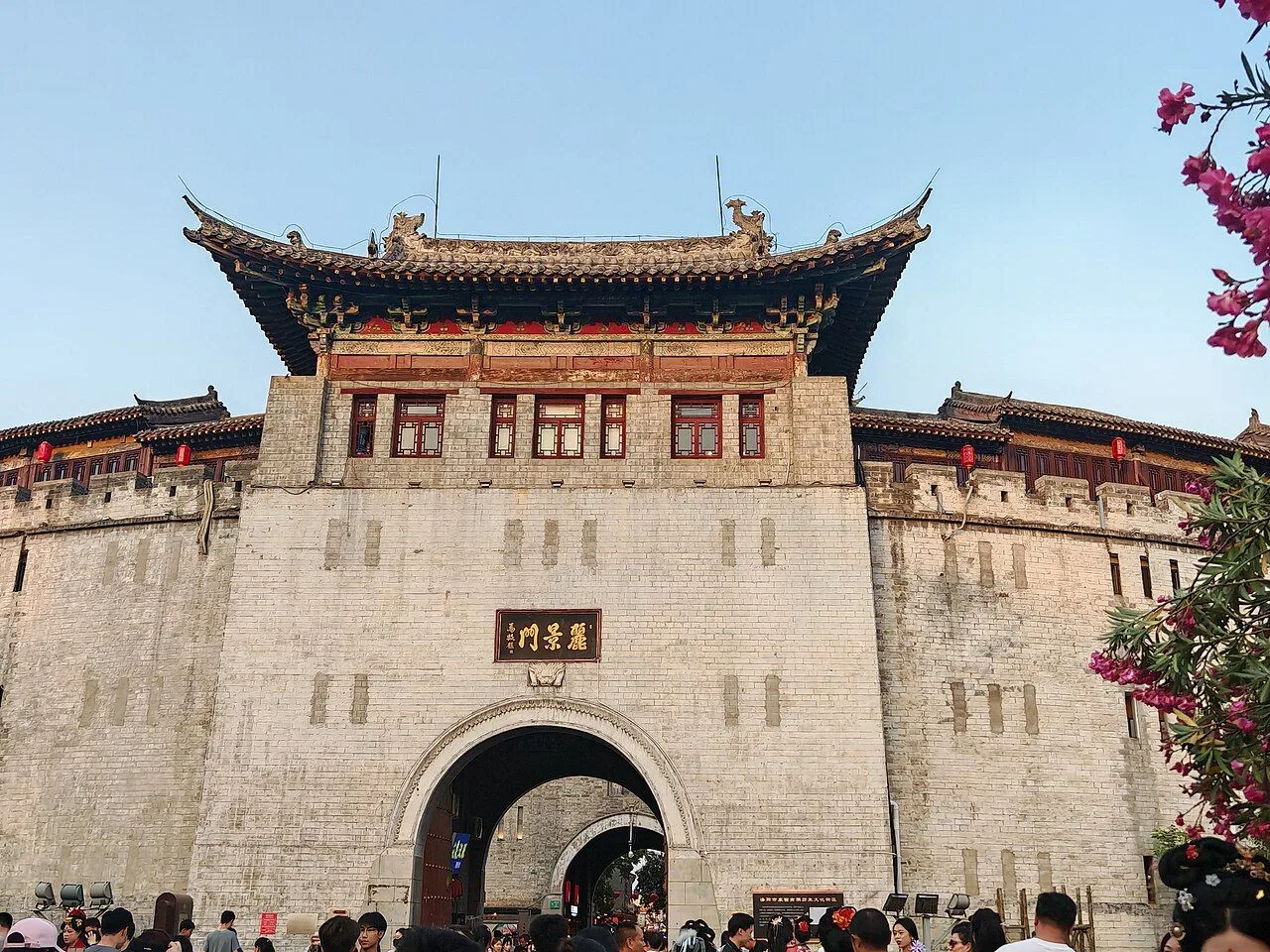
Photo: Wikimedia Commons / CC BY-SA. Source

Climb the gate tower for a panoramic view of the Old Town rooftops — the maze of traditional streets, the Drum Tower in the distance, and (in good weather) the Longmen Grottoes hills to the south. The sunset hour (16:00-17:00) is the gold standard for photography.
The local saying 不到丽景门,枉来洛阳城 (“without seeing Lijing Gate, your visit to Luoyang is wasted”) is a well-known Luoyang slogan. Whether or not the gate itself is worth the ¥30, the surrounding area is the heart of the Old Town and the natural starting point for the cross-street walk.
What to see beyond the cross-street
The cross-street is the centerpiece of the Old Town, but the broader 2.2-sq-km area has multiple other attractions:
- Drum Tower (鼓楼) — at the central intersection of the cross-street, rebuilt in 2002 in Ming style. Free to enter, open during the day.
- Luoyi Ancient City (洛邑古城) — 1 km south of the cross-street, a 2017-built cultural district with traditional architecture, food, and crafts. The most popular for foreign visitors.
- Yingtian Gate (应天门) — 1 km south, the Sui-Tang dynasty south gate of the imperial city, rebuilt 2021. ¥50 entry, evening light show.
- Ming Hall (明堂) — 1.5 km south, the Tang dynasty imperial palace, rebuilt 2020. ¥50 entry, with the underground palace ruins.
- Wenfeng Pagoda (文峰塔) — 5 km east, a Yuan dynasty brick pagoda. ¥30 entry, the only Yuan-era pagoda in Luoyang.
For a full Old Town day, do the Lijing Gate + cross-street + Drum Tower + Luoyi Ancient City + Yingtian Gate + Ming Hall route (allow 4-6 hours).
Getting to Old Town Cross Street
The Old Town is in the Laocheng (Old City) District, 2 km west of Luoyang railway station. The main access options:
Bus: Take bus 5, 10, 16, 22, 41, or 56 from Luoyang railway station, 20-30 min, ¥2. Get off at the Lijing Gate (丽景门) stop. Buses run every 10-15 min from 06:00 to 22:00.
Didi (ride-hailing): 15-20 min from Luoyang city center, ¥20-30. Show the driver 老城十字街 (Lǎochéng Shízì Jiē) or simply 十字街 (Cross Street) — every Luoyang taxi driver knows it.
Taxi: Similar to Didi. Make sure the driver uses the meter. The Old Town is a pedestrian zone — drivers drop you at the Lijing Gate or Wangcheng Park parking lot.
Self-drive: Not practical in the Old Town (pedestrian zone). Park at the Lijing Gate parking lot (¥10/day) or Wangcheng Park parking lot (¥10/day) and walk in.
Walking from the Luoyang Museum: 30 min walk south via the Luolong District, or 10 min Didi.
When to visit
- Spring (March-May): Best weather (15-25°C). The Peony Festival (April 5-May 5) brings extra visitors to the Old Town. The Wangcheng Park peony display is 1.5 km west of the cross-street.
- Summer (June-August): Hot (30-35°C). The night market is still lively but the day is hot for walking. August is the wettest month — bring rain gear.
- Autumn (September-November): Best for atmosphere. Mild weather (15-25°C), clear skies, fewer crowds than spring. October is golden for photography.
- Winter (December-February): Cold (0-8°C) but the night market is still active. Fewer tourists, more local atmosphere. The red lanterns look especially atmospheric in winter fog.
Avoid Chinese national holidays (Oct 1-7, May 1-3, Spring Festival) — the Old Town becomes unmanageable. Weekday evenings (Tuesday-Thursday) are the sweet spot.
Practicalities for foreign visitors
- Payment: Food vendors accept Alipay and WeChat Pay. Some accept cash. NO credit cards. Set up Alipay with international Visa/Mastercard before you arrive (5 minutes via the app, can be done from your home country).
- Dress code: No dress code. Wear comfortable walking shoes — the cross-street is cobblestoned.
- Photography: Allowed everywhere. The night market vendors are friendly to photography. The red lanterns are atmospheric in low light.
- Restrooms: Available at Lijing Gate (paid, ¥2-5) and at the Luoyi Ancient City scenic area (paid, ¥2-5). The cross-street itself has no public restrooms — plan accordingly.
- Language: No English signage. Most food vendors speak basic Chinese. Download Pleco and Google Translate with the offline Chinese pack before you arrive.
- Pickpockets: Watch for pickpockets in the dense night-market crowds. Keep your bag zipped and in front of you.
- Scams: The “tea ceremony” / “art student” / “secret bar” scams target foreign tourists in Luoyang. Polite but firm “bu xie” (不谢) and walk on.
What to do nearby
- Luoyang Museum (洛阳博物馆): 8 km east, 20 min Didi. The provincial museum with 20,000+ artifacts. Free entry, allow 2-3 hours. Combine with the Old Town for the full Luoyang experience.
- Longmen Grottoes (龙门石窟): 12 km south, 30 min Didi. The UNESCO World Heritage Buddhist cave complex. ¥90 entry, allow 3-4 hours.
- White Horse Temple (白马寺): 12 km east, 25 min Didi. China’s first Buddhist temple. ¥35 entry, allow 2-3 hours.
- Wangcheng Park (王城公园): 1.5 km west, 10 min walk. The main venue of the annual Luoyang Peony Festival (April 5-May 5). ¥0-30 entry.
- Laojun Mountain (老君山): 150 km south, 3.5 hours one way by Didi or HSR+Didi. The Taoist sacred mountain. Full-day trip.
- Yingtian Gate + Ming Hall (应天门 + 明堂): 1-1.5 km south of the cross-street, the rebuilt Sui-Tang palace site. ¥50 each, with evening light show.
Final tip
The biggest mistake first-timers make: visiting the Old Town during the day. The cross-street itself is a 100-meter intersection that takes 5 minutes to walk through in daylight. The Old Town comes alive in the evening (17:00-22:00) when the night market opens and the red lanterns are lit — this is when the 200+ food vendors set up shop, the local Luoyang families come out for their evening meals, and the Old Town becomes the cultural experience it was meant to be. Plan the Old Town as your evening stop, not your morning stop. The other common mistake: only trying one or two dishes at the night market. The Old Town is a multi-dish destination — try Bufan Tang + Jiang Mian Tiao + potstickers + Hula Tang + Mudan Bing, all in one evening. That’s 5+ dishes, ¥80-100 total, the complete Luoyang street-food experience.
Best photo spots
-
Central intersection of the cross-street (十字街中心) · 19:00-21:00 (night market peak, lanterns lit)
The 4-way intersection with red lanterns strung across the street, food stalls on all 4 corners. The most-photographed single spot in the Old Town. Best framed from a slight elevation (find a balcony or stand on a stall's platform) for the full lantern-and-stall view.
-
Lijing Gate (丽景门) gate tower (¥30 entry) · Late afternoon, 16:00-17:00 (warm light on the wooden gate tower before sunset)
The 4-tier traditional gate tower with the Old Town rooftops behind. Climb the tower for a panoramic view. The sunset hour is the gold standard for photography — the warm light hits the wooden tower and the red lanterns.
-
Night market food stalls (any of the 200+ vendors) · 19:00-20:30 (busiest, best atmosphere)
The food stalls themselves are the most-photographed detail. The vendors are friendly to photography. The best shots are of specific dishes (the sugar-coated garlic 糖蒜, the soup bowls, the pan-fried dumplings) with the lantern-light background.
-
Wangcheng Park (1.5 km west, only in April-May) · 10:00-11:00 (morning, soft light) or 16:00-17:00 (late afternoon, warm light)
During the annual Peony Festival (April 5-May 5), Wangcheng Park is the main venue with 100+ varieties of peonies in bloom. The park itself is 5 km west of the Old Town — combine with the Old Town for a full day.
Where to eat nearby
-
Old Luoyang Water Banquet (老雒阳)
Luoyang Water Banquet (洛阳水席) — the signature 24-dish Tang-dynasty-origin feast (8 cold + 16 hot, all soup-based). 8-dish set menu ¥30-50/person, full 24-dish feast ¥80-150/person. · ¥30-150/person · Old Town Cross Street, west end
-
Bufan Tang stall (multiple vendors)
Bufan Tang (不翻汤) — green-beer-pancake soup, the signature Luoyang breakfast/night-market dish. ¥8-15/bowl. · ¥8-15/bowl · Multiple vendors along the cross-street, especially west end
-
Mama's Jiang Mian Tiao (妈妈浆面条)
Jiang Mian Tiao (浆面条) — fermented-green-bean noodles, the most local Luoyang noodle dish. ¥10-15/bowl. · ¥10-15/bowl · Central cross-street area
-
Old Town potsticker vendors
Guotie (锅贴) — Luoyang-style potstickers, especially beef and chive. ¥8-15 for 6-8 pieces. · ¥8-15/portion · Multiple vendors
-
Peony cake vendors (牡丹饼)
Mudan Bing (牡丹饼) — peony-petal cakes, the Luoyang specialty souvenir food. ¥3-5 each. · ¥3-5 each · Multiple vendors, often paired with peony tea (牡丹茶)
Frequently asked questions
How much does the Old Town Cross Street cost?
Free. The cross-street and night market are public. Individual food stalls charge ¥5-30 per dish (most ¥10-20). A full dinner at the night market for 2 people: ¥80-150. The nearby Lijing Gate scenic area is ¥30 (separate). The Luoyang Water Banquet at a dedicated restaurant: ¥80-150 per person for the full 24-dish feast, or ¥30-50 for a smaller 8-dish set menu.
Is the Old Town Cross Street safe?
Yes — extremely safe. The cross-street is one of Luoyang's busiest tourist areas, well-monitored, and busy until 22:00 every night. The main safety notes: (1) watch for pickpockets in the dense night-market crowds; (2) avoid the 'tea ceremony' or 'art student' scams (well-known Luoyang scam targeting foreign tourists — polite but firm 'bu xie' / 不谢 / no thanks and walk on); (3) at the very late hours (after 23:00) the crowds thin out and the area becomes quieter — fine for walking but stick to main streets.
What's the best food to try at the Old Town night market?
Top 5 must-try Luoyang specialties at the Old Town night market: (1) Bufan Tang (不翻汤) — green-beer pancake soup, the signature Luoyang dish. (2) Jiang Mian Tiao (浆面条) — fermented-green-bean noodles, the most local noodle dish. (3) Guotie (锅贴) — Luoyang potstickers, especially beef and chive. (4) Hula Tang (胡辣汤) — Henan pepper soup, spicy breakfast classic. (5) Mudan Bing (牡丹饼) — peony-petal cakes, the Luoyang specialty souvenir (¥3-5 each). For the full Luoyang Water Banquet experience, eat at a dedicated restaurant (Old Town has 5+).
How do I get to the Old Town Cross Street?
From Luoyang railway station, take bus 5, 10, 16, 22, 41, or 56 (20-30 min, ¥2). Or Didi (15-20 min, ¥20-30) — show the driver 老城十字街 (Lǎochéng Shízì Jiē). The Old Town is a pedestrian zone — if driving, park at the Lijing Gate parking lot or Wangcheng Park parking lot and walk in. The closest landmarks: Lijing Gate (west entrance), Yingtian Gate (south, 1 km south), Ming Tang (south, 1.5 km south).
What is the Luoyang Water Banquet (洛阳水席)?
The Luoyang Water Banquet is a 24-dish feast (8 cold + 16 hot) all based on soup or broth, originating in the Tang dynasty (618-907 AD) when Luoyang was the eastern capital. The name 'water banquet' (水席) comes from the soup-based nature of the dishes. Signature dishes include: Lianrou Soup (连汤肉片, sliced pork in thick broth), Tang Menzi (汤丸子, broth meatballs), and Kuxiang Tofu (苦香豆腐, bitter-aromatic tofu). The full 24-dish feast takes 2-3 hours. Old Town has 5+ dedicated water-banquet restaurants. The most famous is 老雒阳 (Lǎo Luòyáng) at the west end of the cross-street.
What is Lijing Gate (丽景门) and is it worth visiting?
Lijing Gate is the symbolic western entrance to the Luoyang Old Town, a 4-tier traditional gate tower first built in 1217 (Jin dynasty) and rebuilt in 2002. The scenic area (¥30 entry) includes the gate tower, a small museum on Luoyang history, and a courtyard. Climb the gate tower for a panoramic view of the Old Town rooftops. The phrase '不到丽景门,枉来洛阳城' ('without seeing Lijing Gate, your visit to Luoyang is wasted') is a local saying. Allow 1 hour. Combine with the cross-street walk for the full Old Town experience.
How does the Old Town compare to the Luoyang Museum?
Very different experiences. The Luoyang Museum (covered separately) is a state-of-the-art modern museum with 20,000+ verified artifacts — the best place to understand Luoyang's 5,000-year history. The Old Town is the living, breathing city — the best place to experience Luoyang's food culture, nightlife, and modern street life. For first-time visitors, do BOTH: the museum in the morning (climate-controlled, 2-3 hours), the Old Town in the evening (outdoor, 2-3 hours including night market). The two together are a complete Luoyang experience.
What other Old Town attractions are worth seeing?
Beyond the cross-street and night market, the Luoyang Old Town has: (1) Lijing Gate (丽景门) — the symbolic gate tower, ¥30 entry. (2) Drum Tower (鼓楼) — rebuilt 2002, free. (3) Wenfeng Pagoda (文峰塔) — Yuan dynasty brick pagoda 5 km east, ¥30. (4) Luoyi Ancient City (洛邑古城) — a 2017-built cultural district 1 km south of the cross-street, with traditional architecture, food, and crafts. (5) Yingtian Gate (应天门) — the Sui-Tang dynasty south gate of the imperial city, rebuilt 2021, ¥50. (6) Ming Hall (明堂) — the Tang dynasty imperial palace, rebuilt 2020, ¥50. Allow a full day for all 6.
What is the best day to visit the Old Town?
Weekday evenings (Tuesday-Thursday, 17:00-22:00) are the sweet spot — the night market is lively but not packed, and you can find seating at the food stalls. Friday and Saturday nights are the busiest (most domestic tourists). Sunday is calmer than Saturday. Avoid Chinese national holidays (Oct 1-7, May 1-3, Spring Festival) — the Old Town is unmanageable. The Peony Festival week (April 5-May 5) is also very crowded.
Is the Old Town family-friendly?
Yes — very family-friendly. The night market has foods kids love (sugar rolls, fried dough, candied fruits). The cross-street is flat and stroller-accessible. Lijing Gate has a museum that older kids find interesting. The Peony Festival (April-May) is especially good for families — kids love the flowers and the festival atmosphere. The main safety note for families: the night market gets crowded after 19:00, keep small children close.