
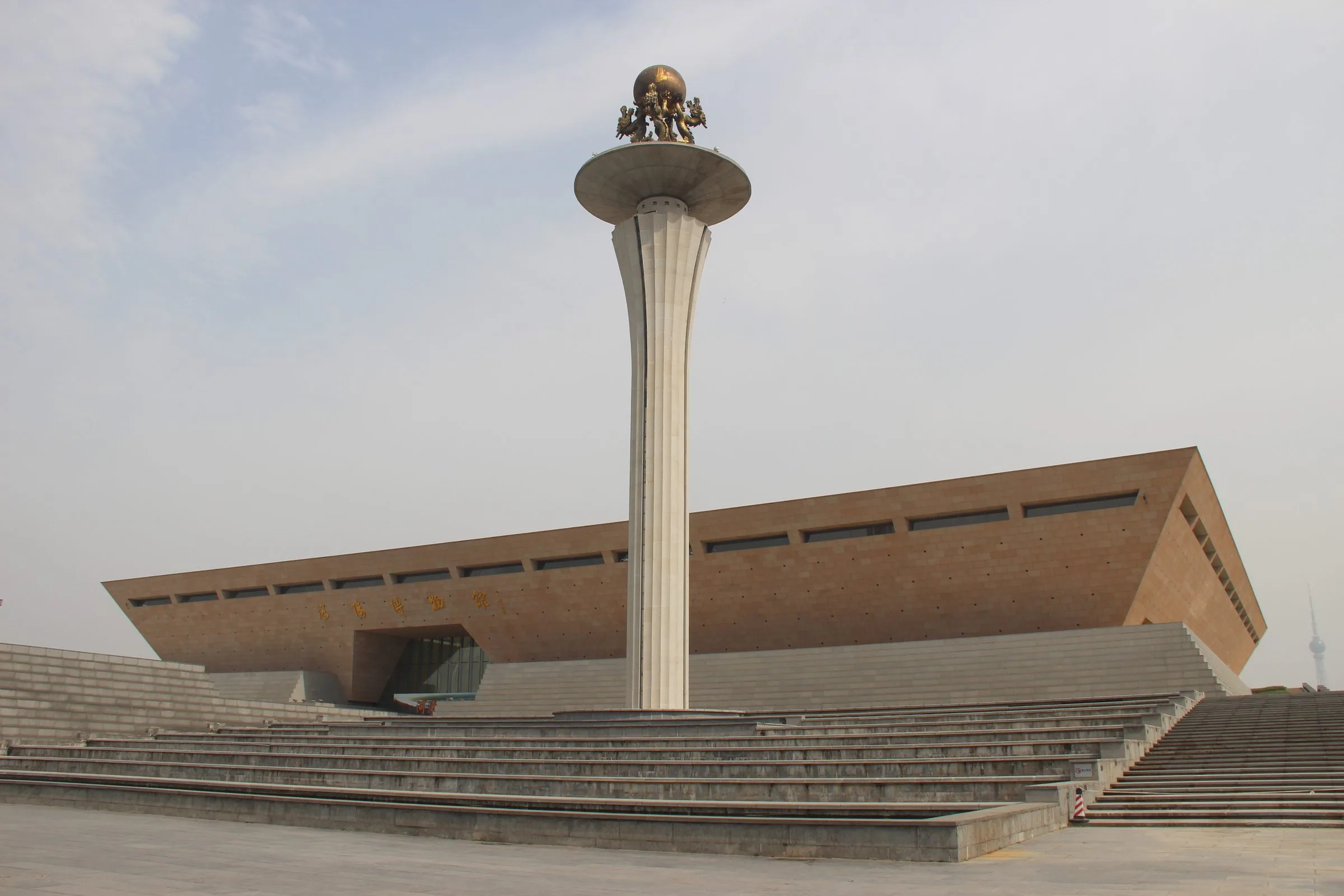
Luoyang Museum
洛阳博物馆 · Luòyáng Bówùguǎn
Quick answer
Foreign passport required at entry. The museum is state-managed; entry is free with passport check. The WeChat mini-program reservation (洛阳博物馆) is Chinese-only — for foreigners, walk-in is the most practical option. The main He-Luo Civilization exhibition has full English signage; the 6 special exhibitions have partial English.
Why visit
- 1 Free entry with passport check — one of the best values among Chinese provincial museums
- 2 20,449 artifacts in the collection, of which 5,428 are grade-one precious (国家一级文物)
- 3 The He-Luo Civilization (河洛文明) main exhibition covers 5,000 years of regional history, from prehistoric to the Northern Song dynasty
- 4 The Tang Tri-Color exhibition (唐三彩) — 200+ Tang dynasty glazed pottery figures including the famous Black-Glazed Horse (三彩黑釉马), the museum's signature piece
- 5 The building (opened 2011) is itself an architectural statement — designed in the 'Cauldron Standing Under Heaven' (鼎立天下) concept, with 62,000 sq m of exhibition space
- 6 A National First-Grade Museum (国家一级博物馆) — the highest museum classification in China, shared with about 130 museums nationwide
- 7 All main exhibitions have English signage; English audio guide available at the front desk
Essential tips for foreigners
- Walk in without reservation — foreigners don't need a WeChat mini-program reservation. Bring your passport; the security scan takes 30 seconds. For peak periods (Peony Festival, summer), show up at 09:00 opening to avoid queues.
- Allow 2-3 hours minimum — the He-Luo Civilization main exhibition alone is 5,000 sq m across 3 halls. Add 1-2 hours for the Tang Tri-Color exhibition and the Han-Tang Pottery Figures exhibition. Don't try to see everything in 1 hour.
- The Tang Tri-Color exhibition is the highlight — 200+ Tang dynasty glazed pottery figures (7th-8th century AD), including the museum's signature Black-Glazed Horse (三彩黑釉马) and the Stone Bixie (石辟邪), a 8-ton Eastern Han stone sculpture. Don't miss the 2nd-floor Tang Tri-Color hall.
- Take the English audio guide (¥20) — the museum is huge and the English signage, while present, doesn't tell the full story. The audio guide is well-produced and covers the major pieces in 90 minutes.
- Combine with the Ancient Tombs Museum (古墓博物馆) — 6 km away, the world's first museum of ancient tomb art, with original Northern Wei and Tang dynasty tombs brought indoors. The combined Luoyang Museum + Ancient Tombs Museum day is the most immersive Han-Tang dynasty history experience in central China.
- The museum café is overpriced — basic Chinese fast food, ¥40-60 per person. Better to eat before or after. Wangcheng Park (the Peony Festival venue) has decent restaurants.
Suggested route
- 09:00 10 min Arrive at opening, passport check at gate (free, no ticket needed)
- 09:10 1.5-2 hours Pick up English audio guide at the front desk (¥20), start the He-Luo Civilization main exhibition on the 1st floor
- 11:00 1 hour He-Luo Civilization concludes. Move to the 2nd floor for the Tang Tri-Color exhibition (signature Black-Glazed Horse, 200+ Tang pottery figures)
- 12:00 1 hour Lunch at the museum café (basic Chinese fast food, ¥40-60/person) or exit for lunch nearby
- 13:00 1.5-2 hours Continue with the 2nd-floor special exhibitions: Han-Tang Pottery Figures, Palace Artifacts, Stone Carvings, Calligraphy & Paintings
- 14:30 2-3 hours Optional: Didi to the Ancient Tombs Museum (6 km, 15 min) for 2-3 hours of original Northern Wei / Sui / Tang tombs
- 17:00 20 min Return to Luoyang city center via Didi
The museum of the first capital
The Luoyang Museum is the only comprehensive historical museum in Luoyang, opened in its current form in 2011 after 4 years of construction. The building itself is an architectural statement — designed in the “Cauldron Standing Under Heaven” (鼎立天下) concept, with a 30-meter-high atrium, stone columns, and traditional Chinese curved roofs. The 62,000 sq m building houses 20,449 artifacts, of which 5,428 are National Grade-One Cultural Relics (国家一级文物) — the highest classification in China.
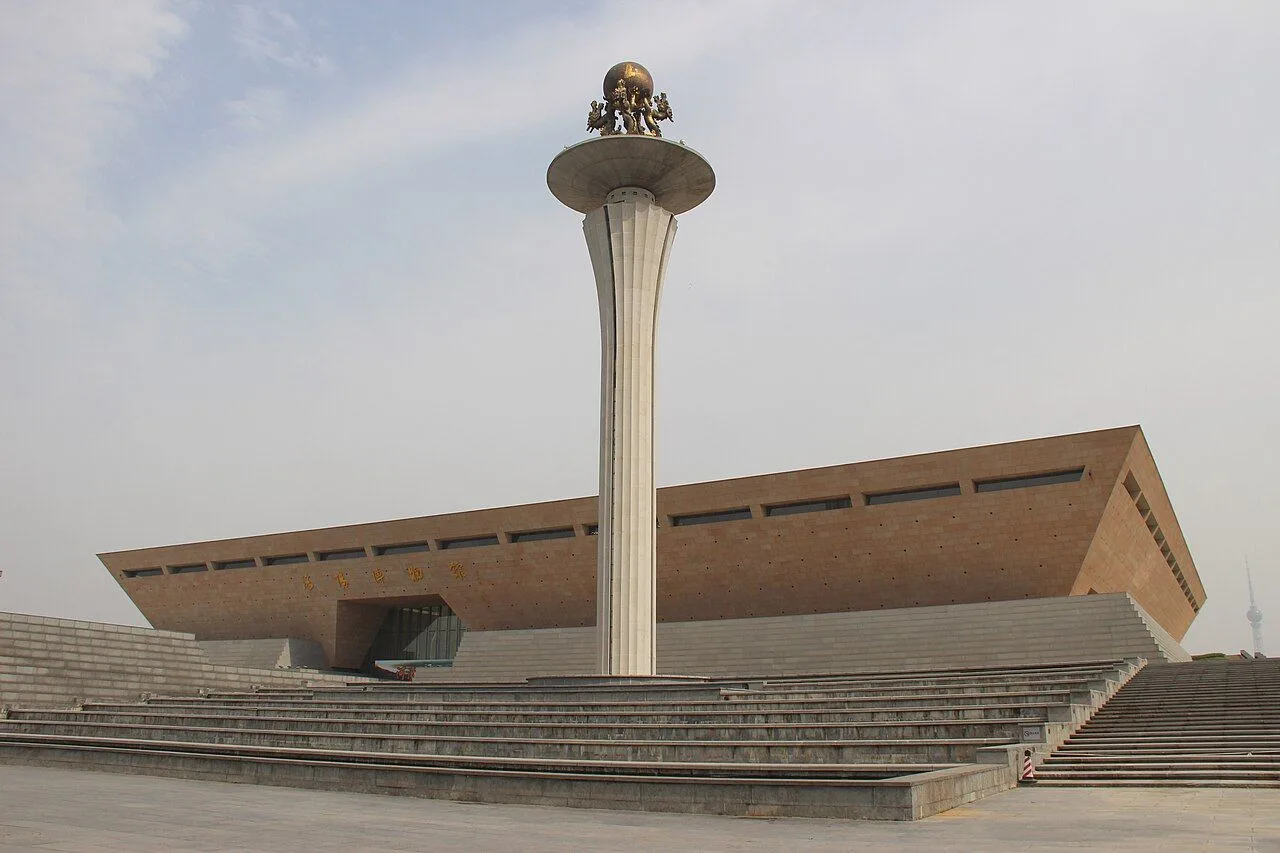
Photo: Wikimedia Commons / CC BY-SA. Source

The museum is best understood as the “museum of the first capital” — Luoyang was the capital of 13 Chinese dynasties from 1,100 BC to 937 AD, a longer continuous period than any other city. The collection focuses on the artifacts of these dynasties, with the Tang dynasty (618-907 AD) being the museum’s strongest period (the city was the eastern capital of Tang, after the western capital Chang’an).
The museum is free to enter with passport check. It is one of the best values among Chinese provincial museums. For first-time foreign visitors to Luoyang, the museum provides essential context for the Buddhist heritage sites (Longmen Grottoes, White Horse Temple) by showing the 5,000-year cultural backdrop of the region.
The seven permanent exhibitions
The museum has 7 permanent exhibitions across 2 floors:
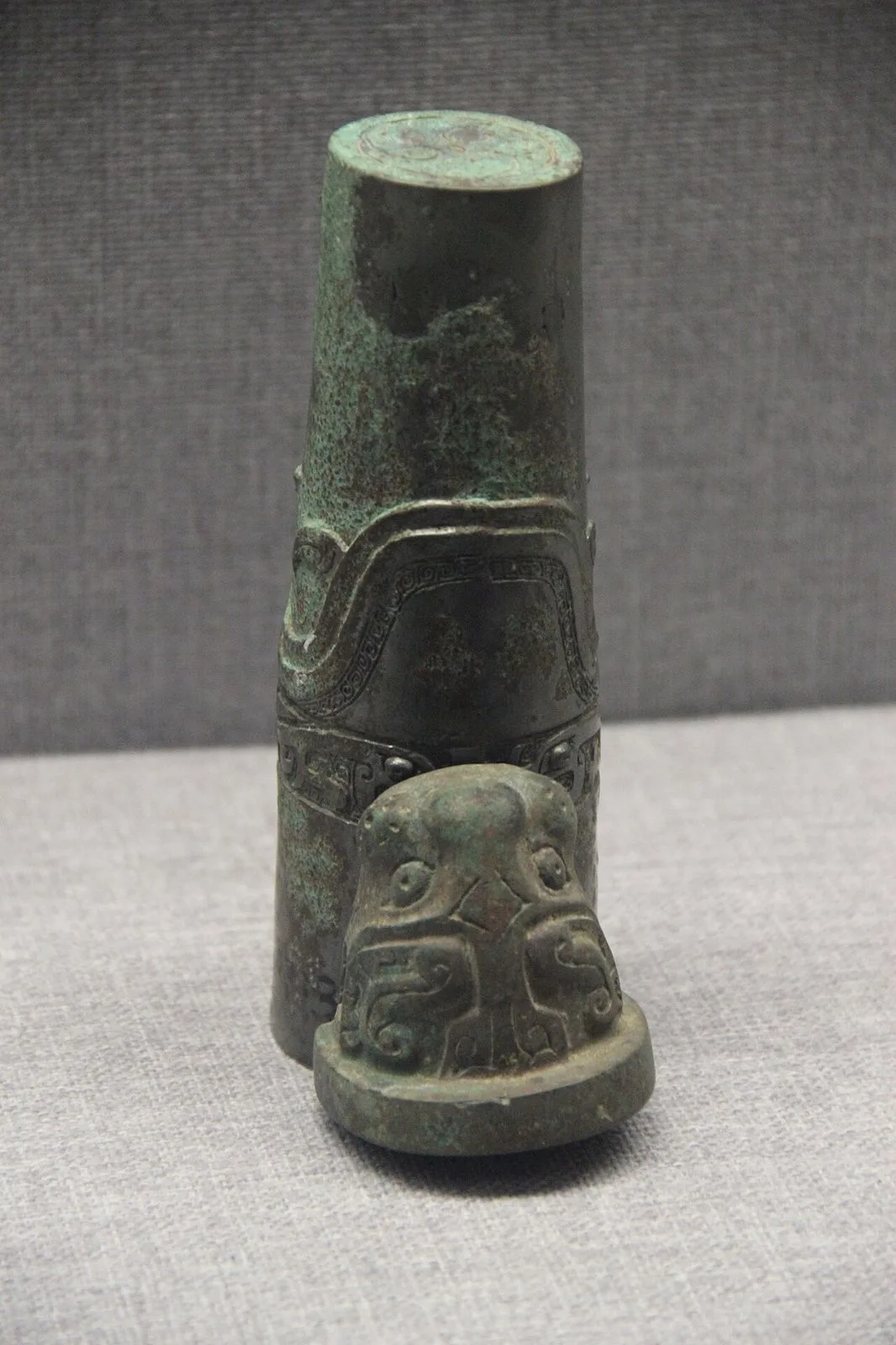
Photo: Wikimedia Commons / CC BY-SA. Source

1st floor (main exhibition):
- He-Luo Civilization (河洛文明) — the signature exhibition, 5,000 sq m across 3 halls. Covers 5,000 years of regional history from prehistoric to the Northern Song dynasty. Includes the 50,000-year-old elephant fossil, Neolithic pottery from the Peiligang and Yangshao cultures, oracle bones from the Erlitou and Shang dynasties, Eastern Han stone sculptures, Tang tri-color pottery, and Song dynasty porcelain.
2nd floor (6 special exhibitions):
- Tang Tri-Color Exhibition (唐三彩展) — 200+ Tang dynasty glazed pottery figures including the signature Black-Glazed Horse
- Han-Tang Pottery Figures Exhibition (汉唐陶俑展) — 1,000+ burial pottery figures spanning the Han and Tang dynasties, with musicians, dancers, foreign merchants, and civil officials
- Palace Artifacts Exhibition (宫廷文物展) — gold, silver, jade, and lacquerware from the imperial collections
- Stone Carvings Exhibition (石刻艺术展) — Buddhist stone carvings, tomb inscriptions, and memorial steles
- Calligraphy & Paintings Exhibition (书画展) — Chinese calligraphy and paintings, with the famous 武则天除罪金简 (Wu Zetian’s Gold Memorial Tablet of Atonement, 700 AD)
- Treasures Exhibition (珍宝展) — rotating selection of the museum’s most precious pieces
Temporary exhibitions are hosted in 2 additional halls and change every 6-12 months.
The Tang Tri-Color collection
The Tang Tri-Color (唐三彩, literally “Tang three-color”) is the museum’s strongest collection. Tang tri-color is a type of glazed pottery produced in the Tang dynasty (7th-8th century AD), typically with three colors: amber, green, and cream. The pieces were primarily burial goods for the Tang elite, made in workshops in Chang’an (modern Xi’an) and Luoyang.
The museum’s signature piece is the Black-Glazed Horse (三彩黑釉马), a Tang tri-color horse with a distinctive deep black glaze on the neck, limbs, belly, and rear — one of the few Tang tri-color animals with the rare black glaze. It is one of the most important Tang tri-color pieces in existence, and a National Grade-One Cultural Relic.
The collection also includes:
- Tang tri-color camel carrying a band of musicians — a typical “Silk Road” piece, showing a Bactrian camel with a band of foreign musicians playing instruments
- Tang tri-color female figurine — a standing female court figure with typical Tang dynasty plump proportions
- 200+ other Tang tri-color pieces in the central display case, including horses, camels, guardian figures, and burial goods
The He-Luo Civilization
The He-Luo Civilization (河洛文明) is the cultural identity of the region where the Yellow River (河, Hé) meets the Luo River (洛, Luò) — exactly the location of Luoyang. It is one of the foundational concepts of ancient Chinese civilization.
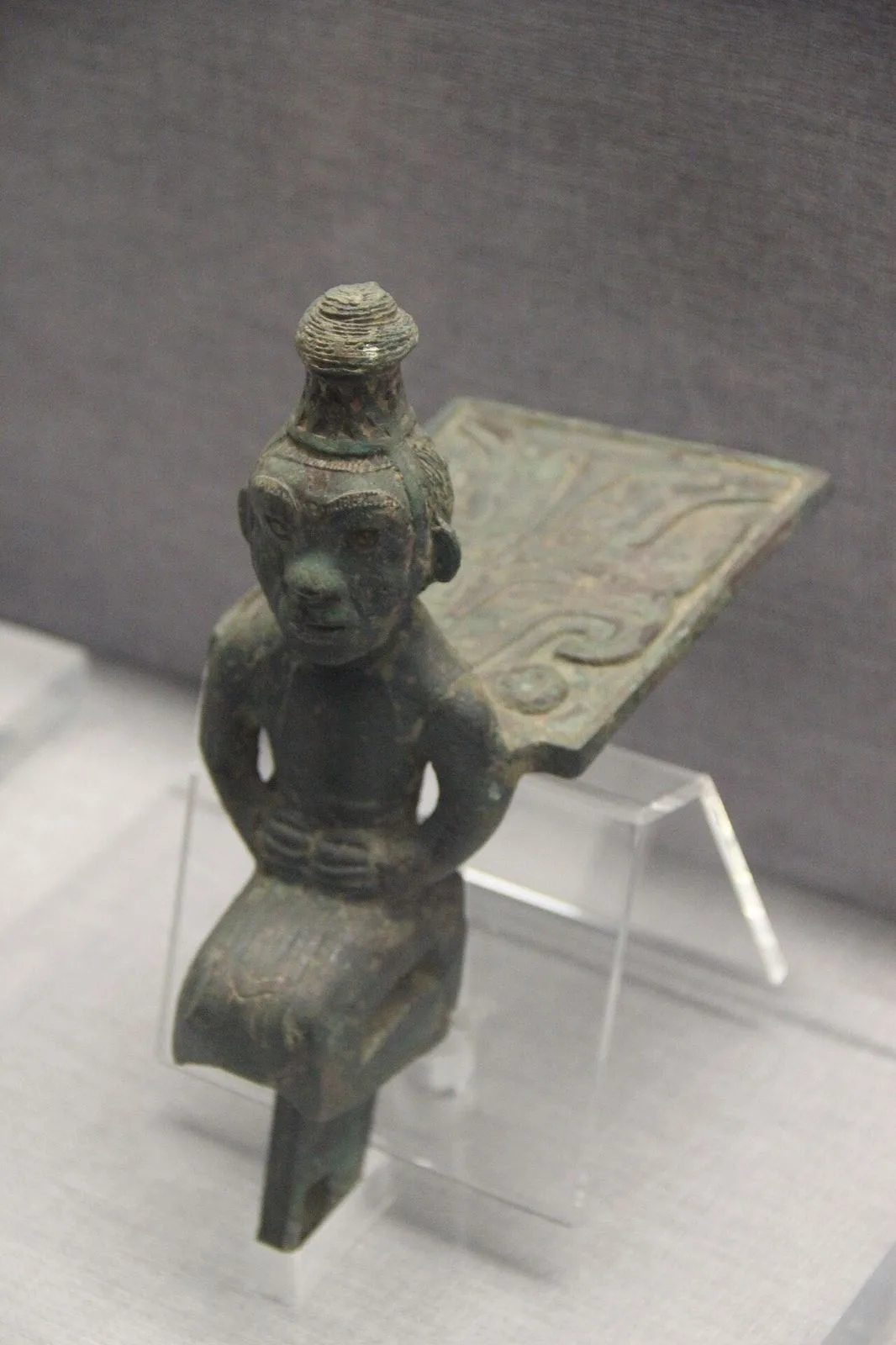
Photo: Wikimedia Commons / CC BY-SA. Source

The mythical origins of the He-Luo Civilization trace to:
- Yu the Great (大禹) dividing the world at Mount Luo (洛山), establishing the Nine Provinces (九州) of ancient China
- The “Luo Book” (洛书) — a mystical diagram said to have been revealed on the back of a dragon-horse emerging from the Luo River. The Luo Book is the cosmological basis of the feng shui bagua (八卦) and Chinese numerology.
- The “He Diagram” (河图) — a similar diagram said to have been revealed on the banks of the Yellow River. Together with the Luo Book, the He Diagram is the foundation of Chinese cosmology.
The Luoyang Museum’s main exhibition traces this 5,000-year cultural tradition through 5 historical periods:
- Prehistoric (5000-1700 BC): Yangshao and Longshan culture pottery, oracle bones
- Xia-Shang-Zhou (1700-256 BC): Bronze vessels, oracle bones from the Erlitou culture (the legendary Xia dynasty capital)
- Han-Wei (206 BC-220 AD): Stone carvings, tomb frescoes, bronze mirrors
- Sui-Tang (581-907 AD): Tang tri-color pottery, gold and silver artifacts, tomb figurines
- Five Dynasties-Northern Song (907-1127 AD): Porcelain, calligraphy, painting
Getting to Luoyang Museum
The museum is in the new Luolong District, 8 km south of Luoyang railway station. The main access options:
Bus 1 or 77 from Luoyang railway station: 30 min, ¥2, runs every 15-20 min from 06:00 to 21:00. The bus is local and not English-friendly — show the driver 洛阳博物馆 (Luòyáng Bówùguǎn) or 聂泰路 (Nietai Road).
Didi (ride-hailing): 20-25 min from Luoyang city center, ¥30-45. The most foreigner-friendly option. Show the driver 洛阳博物馆 (Luòyáng Bówùguǎn).
Taxi: Similar to Didi but more expensive. Make sure the driver uses the meter.
Self-drive: Large free parking lot at the museum. Roads are well-maintained.
When to visit
- Spring (March-May): Best time to combine with the Luoyang Peony Festival (April 5-May 5), held at Wangcheng Park, 1 km from the museum. Mild weather (15-25°C), clear skies.
- Summer (June-August): Hot (32-38°C). The museum is climate-controlled inside. The Wangcheng Park peonies are not in bloom.
- Autumn (September-November): Best for photography outside the museum (the ginkgo trees on Nietai Road turn golden in late October). Mild weather, fewer crowds.
- Winter (December-February): Cold (0-8°C) but uncrowded. The museum is climate-controlled. The city itself is quiet, with hot pot season in full swing.
Avoid Chinese New Year week (late Jan / mid Feb) when domestic tourist crowds are at peak.
Practicalities for foreign visitors
- Payment: Free entry (passport check). The audio guide is ¥20 (cash or Alipay/WeChat Pay). The museum café accepts cash and mobile payment. The museum shop accepts cash and mobile payment.
- Dress code: No dress code. Standard museum etiquette — no flash photography of pieces with the “no flash” symbol.
- Photography: Allowed in all permanent exhibitions without flash. Tripods require permission from the front desk. The Tang Tri-Color Hall is the most-photographed.
- Restrooms: Available on each floor. Western-style toilets. Bring your own tissue paper.
- Lockers: Available at the entrance for bags and large items (free, ID required for the key).
- English: English signage in the main He-Luo Civilization exhibition. Partial English in the Tang Tri-Color and Han-Tang Pottery Figures exhibitions. English audio guide available at the front desk (¥20). The staff at the information desk speak some English.
- WiFi: Free museum WiFi available (login: “Luoyang Museum-Guest”, no password).
What to do nearby
- Ancient Tombs Museum (洛阳古墓博物馆): 6 km north, 15 min Didi. The world’s first museum of ancient tomb art, with original Northern Wei, Sui, and Tang dynasty tombs brought indoors. Free entry, allow 2-3 hours.
- Wangcheng Park (王城公园): 1 km north, 5 min walk. The main venue of the annual Luoyang Peony Festival (April 5-May 5). ¥0-30 entry. The museum + park combination is the highlight of a Luoyang spring visit.
- Longmen Grottoes (龙门石窟): 12 km south, 30 min Didi. The UNESCO World Heritage Buddhist cave complex. ¥90 entry, allow 3-4 hours.
- White Horse Temple (白马寺): 12 km east, 25 min Didi. China’s first Buddhist temple. ¥35 entry, allow 2-3 hours.
- Luoyang Old Town (老城十字街): 8 km north, 20 min Didi. The traditional old-city cross-street with night market and food stalls.
Final tip
The biggest mistake first-timers make: only visiting the 1st-floor He-Luo Civilization main exhibition and missing the 2nd-floor Tang Tri-Color exhibition. The 1st floor has the depth of history; the 2nd floor has the wow factor. The Tang tri-color Black-Glazed Horse is the museum’s signature piece, and the 200+ Tang tri-color figures in the central display case are some of the most beautiful Chinese artifacts you will see anywhere. Allow 3-4 hours to do both floors justice. The other common mistake: not combining with the Ancient Tombs Museum. The two museums together (both free, 5 hours total) make Luoyang the most immersive Han-Tang dynasty history destination in central China.
Best photo spots
-
Tang Tri-Color Exhibition Hall (2nd floor) · Any time (climate-controlled, no outdoor light variation)
The signature Black-Glazed Horse is the museum's most-photographed piece. Also worth photographing: the Tang tri-color camel carrying a band of musicians, the Tang tri-color female figurine, and the array of 200+ Tang tri-color figurines in the central display case.
-
He-Luo Civilization main hall — prehistoric section (1st floor) · Any time
The prehistoric section has a 50,000-year-old elephant fossil (the largest in the museum), Neolithic pottery, and oracle bones from the Erlitou culture. The dim lighting and stone display cases create a museum-quality atmosphere.
-
Atrium of the main building (1st floor central) · Any time
The 30-meter-high atrium with traditional curved roof and stone columns. The museum's design concept (Cauldron Standing Under Heaven) is most visible from the atrium viewpoint. Worth a wide-angle photo.
-
Ancient Tombs Museum (separate site, 6 km away) · Any time
Original Northern Wei and Tang dynasty tombs brought indoors, with original frescoes. The most-photographed tomb is the Northern Wei Tomb (北魏墓) with its well-preserved figurative frescoes depicting daily life.
Where to eat nearby
-
Museum café (inside)
Basic Chinese fast food — noodles, dumplings, rice dishes · ¥40-60/person · Inside the museum, 1st floor
-
Wangcheng Park area restaurants
Luoyang Water Banquet (洛阳水席) — 24 cold and hot dishes, all soup-based, a Tang-dynasty specialty. Peony-themed restaurants in April-May. · ¥60-120/person · 1 km from the museum, 5 min Didi
-
Luoyang Old Town restaurants (downtown)
Luoyang Water Banquet, beef soup (牛肉汤), Luoyang dumplings (水席), local Henan noodles · ¥40-100/person · 20 min Didi to the old town
-
Old Town Cross Street (老城十字街) night market
Street food — Luoyang dumplings, sour soup noodles (浆面条), fried glutinous rice cakes · ¥20-50/person · 25 min Didi from the museum
Frequently asked questions
How much does Luoyang Museum cost?
Free. The museum is one of the best values among Chinese provincial museums. Bring your passport for the entry scan. Optional extras: English audio guide ¥20, temporary exhibitions ¥0-20. Total cost of a full visit: ¥20-40 per person.
How long does it take to see Luoyang Museum?
2-3 hours for the He-Luo Civilization main exhibition plus 2-3 of the 6 special exhibitions. Allow 4-5 hours to see all 7 permanent exhibitions. The He-Luo Civilization alone (3 halls, 5,000 sq m) takes 1.5-2 hours. The Tang Tri-Color exhibition is the most-photographed and takes 30-45 minutes.
Is Luoyang Museum kid-friendly?
Yes — the main He-Luo Civilization exhibition has interactive displays and is large enough to be engaging. The Tang Tri-Color pottery figures (horses, camels, foreign merchants) impress children. Strollers work on all floors (elevator available). The Tang dynasty Black-Glazed Horse is the museum's signature piece and a kid favorite. Allow 2 hours with kids (less than adults want).
What is the Black-Glazed Horse (三彩黑釉马)?
The Black-Glazed Horse is the museum's signature piece — a Tang dynasty (7th-8th century AD) glazed pottery horse with a distinctive deep black glaze on the neck, limbs, belly, and rear, contrasted with the typical Tang tri-color glaze on the body. The horse is one of the most important Tang tri-color pieces in existence, and is one of the few Tang tri-color animals with the rare black glaze. It is housed in the 2nd-floor Tang Tri-Color exhibition hall. The piece is on permanent display and is a National Grade-One Cultural Relic.
What is the He-Luo Civilization (河洛文明)?
The He-Luo Civilization refers to the historical and cultural identity of the region where the Yellow River (河) meets the Luo River (洛) — exactly the location of Luoyang. The He-Luo Civilization is one of the core concepts of ancient Chinese civilization, with the mythical Yu the Great (大禹) dividing the world at Mount Luo and the legendary Luo Book (洛书) and He Diagram (河图) said to have been revealed on the banks of these two rivers. The Luoyang Museum's main He-Luo Civilization exhibition traces this 5,000-year cultural tradition from prehistoric to the Northern Song dynasty.
How does Luoyang Museum compare to the Henan Museum in Zhengzhou?
The Henan Museum in Zhengzhou is larger (100,000+ artifacts) and free, and has a wider scope (entire Henan province, not just Luoyang). The Luoyang Museum is more focused — its strength is the He-Luo Civilization specific to the Luoyang region, with the Tang dynasty tri-color ceramics being its world-class highlight. If you can only visit one, the Henan Museum has more breadth; if you can visit both, the Luoyang Museum's Tang tri-color collection is unique.
Is there a Tang dynasty tomb museum in Luoyang?
Yes — the Ancient Tombs Museum of Luoyang (洛阳古墓博物馆, also called 洛阳古代艺术博物馆) is 6 km from the Luoyang Museum, in the Mang Mountain area. It's the world's first museum of ancient tomb art, with original Northern Wei, Sui, and Tang dynasty tombs brought indoors and opened to the public. The tombs have original frescoes and burial goods. Entry is free (separate from Luoyang Museum). The combined Luoyang Museum + Ancient Tombs Museum day is the most immersive Han-Tang dynasty history experience in central China. Allow 2-3 hours for the Ancient Tombs Museum.
What is the building itself like?
The new Luoyang Museum building opened in 2011 after 4 years of construction. The design is based on the 'Cauldron Standing Under Heaven' (鼎立天下) concept — the ancient Chinese cauldron (鼎) was a symbol of imperial power. The building has a stone facade with traditional Chinese architectural elements (curved roofs on the main hall, stone columns), but is fundamentally a modern museum. The main hall has a 30-meter-high atrium. The total exhibition area is 17,000 sq m across 7 permanent exhibitions and several temporary exhibition halls.
Is Luoyang Museum worth visiting for English-only speakers?
Yes — the main He-Luo Civilization exhibition has full English signage, and the English audio guide (¥20) is well-produced. The Tang Tri-Color exhibition has partial English. The Han-Tang Pottery Figures exhibition has English captions. Don't expect in-depth English interpretation of every piece, but the major pieces are well-explained. Allow extra time and use the audio guide to get the most from the visit.