
Build Your Own China Trip: The DIY Planner (2026)
We read 705 Trip.com tour packages and 269 traveller reviews, then built a free planner that assembles your China trip city by city.
Quick answer: we took apart 705 tour packages to find out what a packaged China trip is actually made of — and what came back was not a list of sights. It was a service layer. The guide, the driver, the transfers and the hotel are what you are paying for; the sights are the cheap part. So we built the opposite of a package: a free planner at /build/ where you set the total days, split them into city blocks, pick the places for each day, and get told the distance, the travel time, the mode, the closure warnings and the real transfer numbers between cities.
Read the transcript (60 sections)
- 0:00 Here is the thing about planning a trip to China. The moment you start pricing it, the numbers get uncomfortable.
- 0:07 A packaged tour, five days, private car and private guide, from Beijing to Shanghai.
- 0:13 Five hundred dollars a person, before you have bought a single ticket.
- 0:17 And here is the real problem: you cannot tell whether that is a good price, because nobody shows you what is inside it.
- 0:24 So we took the whole shelf apart. Every package Trip.com sells across twenty-nine Chinese cities.
- 0:31 Eight hundred and sixty-eight listings, which turn out to be six hundred and seventy distinct trips, and then thirty-five more we only found deeper in the catalogue, so seven hundred and five in all.
- 0:42 Three hundred and sixty-four private, three hundred and forty-one group. The median private package starts at four hundred and eighty-four US dollars a person.
- 0:50 The median group package, four hundred and sixteen. Both run five days.
- 0:55 Then we opened every detail page. Nine hundred and sixteen fetches, covering those seven hundred and five trips.
- 1:02 Not the marketing copy, the structured data Trip.com already files away for each product.
- 1:08 The group type, the hotel tier, the departure city, the cancellation policy, the service language, how tight the itinerary is.
- 1:17 And two hundred and sixty-nine traveller reviews, read one by one, plus eighteen hundred and fifty-six highlight lines, which is where the sales copy actually lives.
- 1:26 Because the point was never to copy somebody else’s itinerary. It was to work out what people actually pay for, and what they actually complain about.
- 1:34 That is a different question, and it is the one that lets you build your own.
- 1:38 So we read all of it before we wrote a single line of our own tool.
- 1:42 Here is what a competent package has to state. Ten dimensions, and Trip.com fills every one of them in.
- 1:48 Whether the tour is a mini group or a private one. The diamond tier.
- 1:52 Where it departs from. How many people are in the group. Whether you can cancel free.
- 1:56 Whether a guide is included. Which languages the service runs in. How relaxed the schedule is.
- 2:01 How you get picked up. And whether a deposit is needed.
- 2:04 Out of seven hundred and five packages, departure city is filled in on ninety-four percent, service language ninety-four, diamond tier ninety-three, pick-up eighty-eight, free cancellation fifty-four, guide forty-one, pace thirty-eight, deposit thirty, group type twenty-seven.
- 2:22 On top of that, every one of those packages carries a set of structured marketing tags.
- 2:27 One thousand four hundred and thirty-six different tag names, attached six thousand two hundred and ninety times.
- 2:33 The most common, counted by package: guaranteed departure, five hundred and sixty of them.
- 2:39 Airport transfers included, five hundred and twenty-three. Free cancellation, three hundred and fifty-seven.
- 2:45 Car type options, three hundred and seven. No mandatory shopping, three hundred and four.
- 2:50 English service, two hundred and ninety. Tour guide included, two hundred and sixty-eight.
- 2:57 Good accommodation, two hundred and four. And one hundred and seventy-six let you pick your own hotel. That is the actual recipe.
- 3:06 Now look at where the money actually goes. In two hundred and sixty-nine reviews, the guide and the driver come up in thirty-four percent of them.
- 3:14 The hotel in eighteen. Meals and food in ten. Pick-up and transport in ten. Not one of the top four is about the sights themselves.
- 3:23 The outright negatives are rare. Six out of two hundred and sixty-nine.
- 3:28 But they are specific, and they land on the same three things.
- 3:32 The agency could not change small details. The hotel was further out than expected.
- 3:37 And there were queues. Crowds show up in three reviews out of a hundred, so it is a scheduling problem, not a taste problem.
- 3:44 Trip.com scores each review along its own dimensions, and this is the part we borrowed.
- 3:50 The itinerary itself, four point seven four out of five. The experience at the hotel, four point five seven.
- 3:57 The driver, four point eight six. The tour guide, four point eight nine.
- 4:01 And the list changes with the product: private tours get scored on driver service, group tours on tour guide service.
- 4:08 Which gives us the insight. A package is mostly the service layer wrapped around a list of sights.
- 4:14 The sights are the cheap part.
- 4:16 Three hundred and seventy-three of our seven hundred and five packages cross at least one city, so the service layer is doing the moving too.
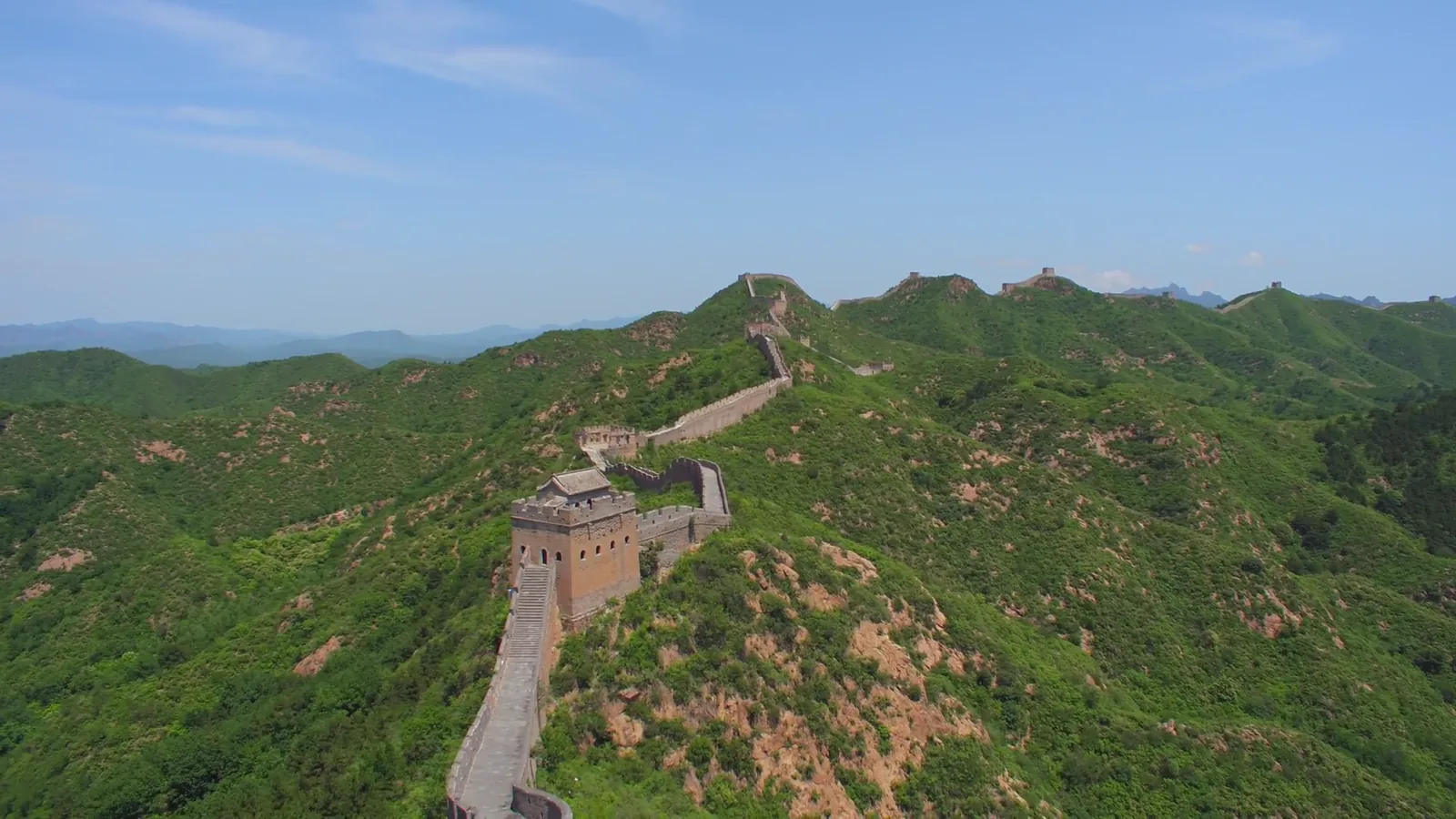
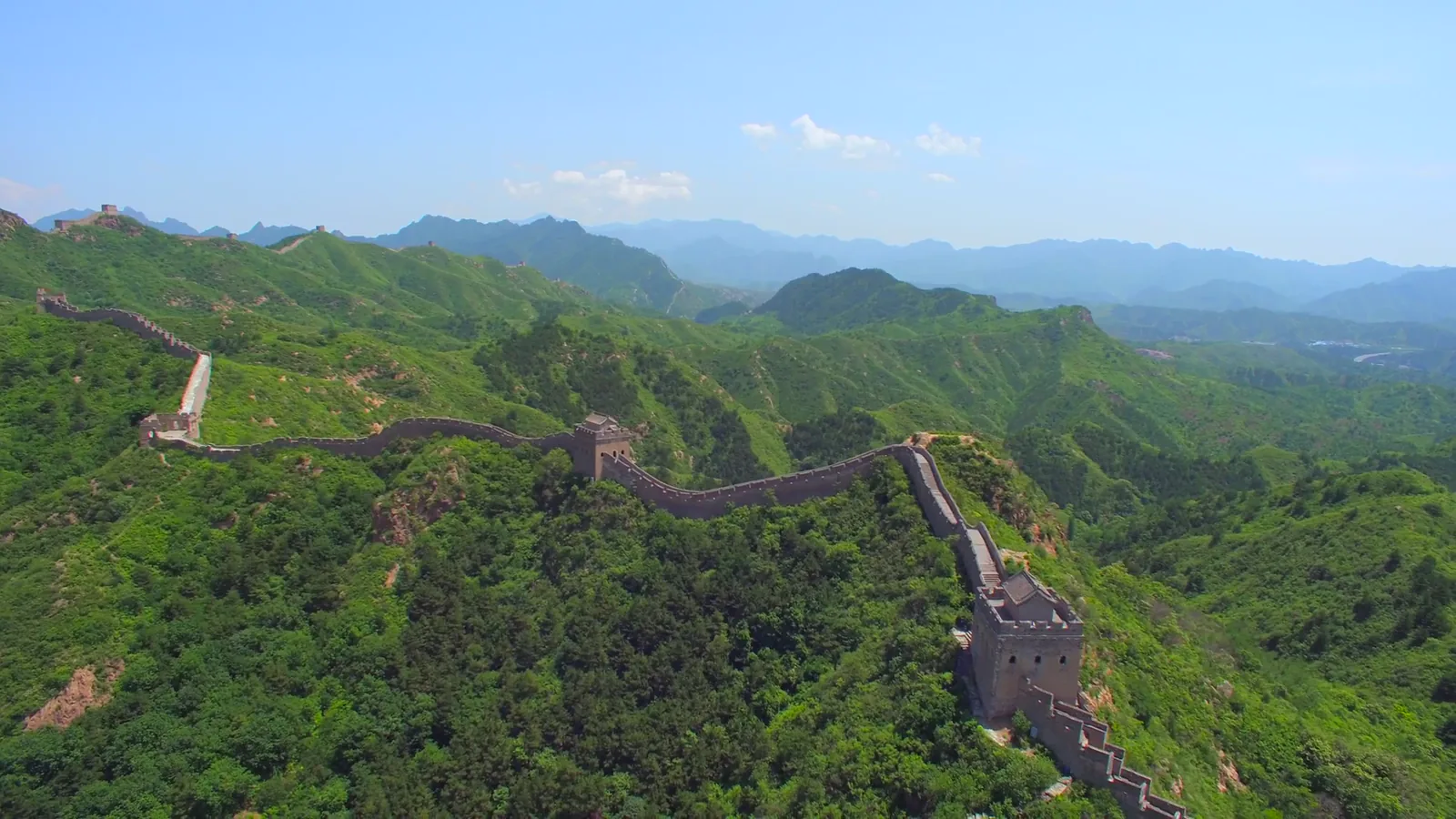
- 4:23 If you do not need the driver, the guide and the hotel at their packaged level, you are paying for the most expensive way to see the same Great Wall.
- 4:32 So we built it the other way round. Our builder works like assembling a computer.
- 4:37 The left column is your total number of days. The middle column is the trip split into city blocks: three days in Beijing, three in Shanghai, three in Xi’an.
- 4:47 The right column is every single day, and every attraction you can pick for it.
- 4:51 Today that is three hundred and twenty-eight sights across thirty-nine cities, four hundred and eight hotels across thirty-four, and a hundred and forty-five food spots.
- 5:02 And when you pick two places for the same day, the builder tells you what it costs you: the distance between them, how long it takes, and whether to take the metro or a taxi.
- 5:11 If a site closes on Mondays, it says so. If the day runs past eleven hours at a balanced pace, it tells you the day is packed.
- 5:19 And if we do not have a ticket price, it says the price is not confirmed.
- 5:23 It does not invent one. Transfer time between cities gets its own line too, not buried inside a total.
- 5:30 Between cities we publish the transfer numbers straight from the same route pages you book on.
- 5:36 Beijing to Shanghai by high-speed rail: four hours eighteen minutes, one thousand and sixty-three kilometres, five hundred and seventy-six to six hundred and ninety-seven yuan, about fifty-three trains a day.
- 5:49 By air: two hours fifteen, sixty-eight to eighty-six US dollars. Beijing to Xi’an, four hours ten by rail, two hours five by air.
- 5:58 Shanghai to Xi’an, five hours thirty-nine by rail, two hours fifty by air.
- 6:04 And those are not our estimates. They are the numbers on the page, published with the date we measured them.
- 6:10 And here is what we do not have yet. Twelve of our three hundred and twenty-eight attractions have no exact coordinates, so their distance is an estimate by district.
- 6:18 Eleven of our thirty-nine cities have sights but no hotels yet, and six more have hotels but no sights.
- 6:24 And live prices move, so we show a range and a date rather than one number that goes stale by morning.
- 6:31 So build the trip the way you would build a computer. Pick your days, pick your cities, pick your sights.
- 6:37 Nine days, three cities, and every number on that page comes from somewhere you can check. It is at travelhubchina dot com slash build.
What we did, and why the numbers are honest
We did not take a sample. We collected every group and private tour Trip.com lists for 29 Chinese cities — 868 listings — and those listings turn out to be 670 distinct trips, because one trip can appear under several city keywords. Opening the detail pages gave us 916 fetches covering 705 distinct packages. From each detail page we pulled the structured product data rather than the marketing copy, because the structured fields are comparable and the copy is not.
From the reviews side we pulled 269 traveller reviews (305 rows before we de-duplicated them by comment id). Trip.com shows close to 2,899 reviews in total across those listings, so we are working with the reviews it renders on the product pages rather than the entire corpus — and every claim below is sized to the 269 we actually read.
Two things we did not do: we did not estimate a single price we could not find, and we did not turn a review into a statistic it does not support.
One more thing we did: we counted the same package once. Every ratio in this article uses distinct packages as the denominator, not listings and not page fetches. It is a small thing, but it is the difference between saying “705 packages” and saying “1,088 packages” when the real answer is 560.
What a competent package has to state
The most useful thing we found was not in the reviews at all. Trip.com files ten structured dimensions against every package it sells — and a package that fills all ten in is telling you everything you need before you pay.
| Dimension | How often it is stated | Why it matters |
|---|---|---|
| Departure city | 663 / 705 (94%) | Where the trip actually starts |
| Service language | 662 / 705 (94%) | Who can actually talk to you |
| Diamond tier | 654 / 705 (93%) | The hotel standard you are buying |
| Group size | 630 / 705 (89%) | How many strangers you travel with |
| Pick-up method | 623 / 705 (88%) | Whether you are met at the airport |
| Free cancellation | 384 / 705 (54%) | How much you lose by changing your mind |
| Guide included | 292 / 705 (41%) | Whether a human comes with you |
| Pace of the itinerary | 267 / 705 (38%) | Whether you will be sprinting |
| Deposit required | 211 / 705 (30%) | How much money you commit up front |
| Group type | 192 / 705 (27%) | Mini group, private, or a full coach |
Two of these are worth reading twice. Service language is stated on 94% of packages but is rarely the same word: English alone, Mandarin/English, or English/Mandarin appear with different frequencies, and “service language: English” does not promise that your guide is fluent, only that the service is offered in English. And pace — the split between Relaxed (67), Balanced (137) and Fast-paced (63) itineraries — is stated on fewer than four in ten packages, which means on the other six in ten you are guessing how packed your days will be. That is exactly the number our planner puts in front of you on purpose.
Then there is the tag layer. Every one of the 670 trips we saw on the list pages carries structured marketing tags — 1,436 different tag names, attached 6,290 times across distinct packages. The most common ones are a direct answer to “what is this package selling?”: guaranteed departure (560 packages), airport transfers included (523), free cancellation (357), car type options (307), no mandatory shopping (304), English service (290), guide included (268), good accommodation (204), and choose your own hotel (176).
Read those as a recipe. A package that cannot promise a departure date, an airport transfer, a language and a cancellation window is telling you it has not thought about the parts that go wrong. And 176 packages that let you pick the hotel are quietly admitting that the hotel is where a lot of the dissatisfaction comes from — a point the reviews confirm.
Where the money actually goes
Now the reviews. We grouped them by theme, and the distribution is not what you would guess from the marketing copy:
| Theme | Share of the 269 reviews | What it means |
|---|---|---|
| Guide & driver | 34% | The single biggest thing people judge the trip on |
| Hotel & room | 18% | Second — and the one with the most complaints |
| Meals & food | 10% | Whether the food was included and good |
| Pick-up & transport | 10% | Airport and station logistics |
| Value for money | 6% | Surprisingly rare as a headline complaint |
| Shopping stops | 4% | The promise travellers care about most |
| Photo stops | 4% | Where the day was long enough to stop and take pictures |
| Kids & elderly | 4% | Whether the pace worked for the whole group |
| Pace & schedule | 3% | Too rushed, or too slow |
| Crowds & queues | 3% | Present in three reviews out of a hundred |
| Tickets & hidden costs | 2% | The classic “it cost more than the sheet said” |
| Flexibility & changes | 1% | Small in volume, large in anger |
Only six of the 269 reviews were outright negative, and they land on three specific things: the agency could not change small details, the hotel was further from the centre than expected, and there were queues.
That last row is the one to notice. Flexibility and changes is the rarest theme and the one people are angriest about. A bad meal is a bad meal. An agency that will not move a dinner because you are exhausted after three days of walking is a different category of complaint, and it is the one that a DIY trip fixes completely — because you never asked anyone to move anything.
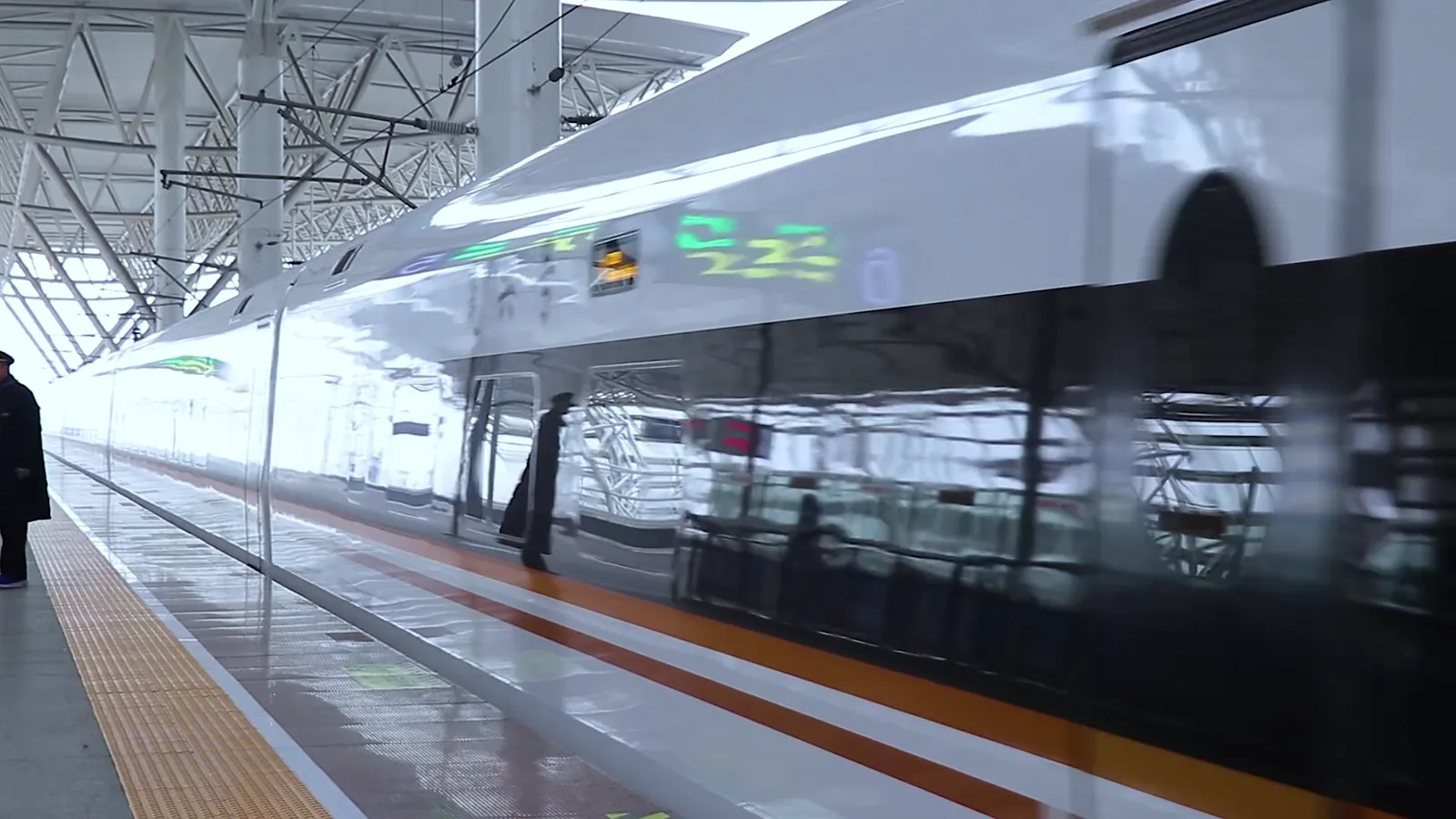
Trip.com also scores each review along its own dimensions, and those are the dimensions we borrowed: the itinerary itself averages 4.74 out of 5 across the 80 packages that carry the score, the experience at hotel 4.57 across 77, driver service 4.86 across 33, and tour guide service 4.89 across 37. Note the shape of it: the thing people rate highest is the guide, and the thing they rate lowest is the hotel. If you are assembling your own trip, the hotel is where you should spend your own attention — and where our planner lists hotels by tier with their real review scores.
The insight

A package is the service layer wrapped around a list of sights. The sights are the cheap part. In our own data a ticket to the Forbidden City is ¥60 and a ticket to Badaling Great Wall is ¥40 — those are our editorial snapshot prices, not live quotes. What costs around US$500 per person is the car, the guide, the transfers, the hotel at a fixed tier and the promise that nobody will drag you into a shop.
If you do not need that service layer at its packaged level, you are paying for the most expensive way to see the same Great Wall. That is the whole argument for building your own trip — and it is why our planner is deliberately quiet about selling you a package.
What the planner does
The builder at /build/ is laid out like a parts bin, or like assembling a computer:
- Left column — your total days. One number drives everything else.
- Middle column — the city blocks. Three days in Beijing, three in Shanghai, three in Xi’an. Between the blocks sits a transfer bar with the real numbers for that city pair.
- Right column — every day, and every place you can pick for it. Tick what you want; the pool is what we have genuinely written up, not an infinite search box.
Today the pool holds 328 sights across 39 cities, 408 hotels across 34 cities, 145 food spots and 54 neighbourhoods — every one of them with coordinates, opening hours, ticket price and closure days attached, or explicitly marked as missing.
Pick two places for the same day and the planner tells you what it costs you: the distance between them, how long it takes by metro or taxi, and which of the two to use. It warns you when a site closes on Mondays, when a day runs past eleven hours at a balanced pace, and when it does not have a ticket price — in that case it says price not confirmed rather than putting a number there. Transfer time between cities gets its own line, too, rather than being buried inside a total.

Your whole plan lives in the URL. Send the link to the person you are travelling with and they open exactly the trip you built; change a day and the link changes with it.
The transfer numbers
For the three routes most people take, the numbers come from the same route pages you book on — not from our own estimates:
| Route | High-speed rail | Air |
|---|---|---|
| Beijing – Shanghai | 4h18 · 1,063 km · ¥576–697 · ~53 trains/day (06:18–21:21) | 2h15 · US$68–86 |
| Beijing – Xi’an | 4h10 · 897 km · ¥480–593 | 2h05 · US$83–143 |
| Shanghai – Xi’an | 5h39 · 1,210 km · ¥659–773 | 2h50 · US$71–161 |
Rail distance is the line distance; flight distance is the straight line between the two city centres, which is why the two columns do not compare directly. Flight times are the middle of the observed distribution with the interquartile range behind them, because a route page also lists one-stop itineraries that would make the range meaningless.

What it does not know yet

We would rather list the gaps than let you find them:
- 12 of our 328 attractions have no exact coordinates, so the distance between them is estimated by district rather than measured. We are adding coordinates; until then the planner marks those distances as estimates.
- Eleven cities have places but no hotels yet — chengde, dunhuang, jiayuguan, kashgar, shangri-la, shaoxing, tianjin, tongli, wuxi, wuzhen and xitang. No hotel rows means no hotel row, not an invented one. Six more cities run the other way (guiyang, hohhot, lhasa, urumqi, wuhan and wuyuan): hotels without places.
- Live prices move. Ticket and hotel prices are shown with the date we last checked and as a range where we have one. Nothing on the page is a promise about tomorrow’s fare.
- Our review corpus is 269 texts, not the full 2,899 reviews Trip.com shows across those listings. The themes are consistent enough to act on; the proportions are not precise enough to quote as statistics.
Try it
Open the planner, set your days, split them into cities, and pick your places. If you want the reasoning behind the numbers, it is all here: what a package states, what travellers say, and which of the two is the expensive part.
Related reading: our high-speed rail guide, the China train booking guide for foreigners, and how to plan a first trip to China.
Sources
- [1] Trip.com — group and private tour listings across 29 Chinese cities · Trip.com · Nov 3, 2026
- [2] Trip.com — Beijing to Shanghai high-speed rail route · Trip.com · Nov 3, 2026
- [3] Trip.com — Beijing to Shanghai flight fares · Trip.com · Nov 3, 2026
- [4] Trip.com — Shanghai to Xi'an high-speed rail route · Trip.com · Nov 3, 2026
FAQ
-
How much does a packaged China tour cost?
Across the 705 distinct Trip.com packages we collected across 29 cities, the median starting price was US$484 per person for a private tour and US$416 for a group tour, with a median trip length of five days. Those are starting prices for the cheapest available departure — they move with season, inventory and exchange rate, so treat them as a floor rather than a quote. Our own planner shows a per-person range built from hotel tier, inter-city transport, ticket prices and daily local transport instead of a single headline number. -
Is building your own China itinerary cheaper than a tour?
Usually, but it depends on what you drop. A package's price is mostly the service layer: the guide, the driver, the airport transfers, the hotel at a fixed tier, and the no-shopping-stop promise. In our review sample, guide and driver came up in 34% of reviews, the hotel in 18%, meals in 10% and pick-up and transport in 10% — not one of the top four themes was about the sights themselves. If you are happy with your own hotel, your own metro tickets and no private car, DIY is typically much cheaper. If you want a guide in every city and door-to-door transfers, a package is often the better deal. -
What should a good China tour package state?
Trip.com files ten structured dimensions against every package it sells, and a competent package fills in all of them: whether the tour is a mini group or fully private, the diamond tier, the departure city, the group size, whether cancellation is free and how many days before, whether a guide is included, which languages the service runs in, how relaxed the schedule is, how you are picked up, and whether a deposit is needed. Across the 705 packages we opened, departure city appeared on 94%, service language on 94%, diamond tier on 93% and pick-up on 88%, while a stated pace appeared on only 38%. -
How do I plan a multi-city China trip by train?
Use the numbers we publish on /build/, which come from the same route pages you book on. Beijing to Shanghai by high-speed rail is 4h18 over 1,063 km, with fares from ¥576 to ¥697 and about 53 trains a day between 06:18 and 21:21; by air it is 2h15 for US$68-86. Beijing to Xi'an is 4h10 by rail (897 km, ¥480-593) or 2h05 by air (US$83-143). Shanghai to Xi'an is 5h39 by rail (1,210 km, ¥659-773) or 2h50 by air (US$71-161). Flights get cheaper the further ahead you book; rail is usually cheaper and lands in the city centre. -
What does a planner like this not know?
We would rather say so than guess. Twelve of our 328 attractions have no exact coordinates yet, so the distance between them is an estimate by district rather than a measured figure. Eleven of our thirty-nine cities have places but no hotels in our data yet, and six more have hotels but no places yet. Live ticket and hotel prices move, so we show a range and the date we last checked rather than one number that goes stale overnight. And where we do not have a source, the planner says the price is not confirmed instead of inventing one. -
How many days should I spend in each city?
Our data says the useful number is the number of days we can genuinely fill with specific, written-up places: roughly two days of real content for Beijing, two for Shanghai and two for Xi'an, which is why the default plan is three cities at two days each. Stay longer and you are relying on general advice rather than specific places — the planner will tell you when a city is being asked to carry more days than our coverage supports. -
Is a group tour or a private tour better for a first trip?
The median scored package was 4.8 out of 5 for private tours and 4.9 for group tours, so on ratings alone the two are close — and group tours score slightly higher. The difference is in what you give up: a group tour is cheaper and you keep the same guide and driver; a private tour is a car and a guide to yourself, with the itinerary flexible. Group tours also need more coordination on the days you want to do something the package did not plan. -
What do travellers complain about most in China?
In 269 Trip.com reviews we collected, only six were outright negative, and they cluster on three things: the agency could not change small details, the hotel was further out than expected, and there were queues. Crowds show up in three reviews out of a hundred. Shopping stops come up in 4% of reviews and the pace of the schedule in 3%. When a traveller says the agency was not flexible, that is not a small complaint — it is the difference between a package and a trip you control.
Related guides
- Tools & Resources
China Daily Budget 2026: Beijing, Shanghai + 5 More
Verified 2026 per-person daily budget for 7 China cities in 4 travel styles. Line-item breakdown and 4 city-specific cost traps to avoid.
10min read
- Tools & Resources
English-Speaking Tour Guides in China: The Shortage
Only 56,000 of China's 660,000 licensed guides speak English (8.4%), and bilingual guides are under 1%. Eight workarounds that actually work in 2026.
10min read
- Tools & Resources
Bringing Prescription Medication to China: 2026 Guide
China's controlled-substance list is stricter than the US or EU, and a foreign prescription is no defence. Learn the 5-category risk system before flying.
12min read
- Tools & Resources
How Much Does a Trip to China Cost in 2026?
A 7-day trip costs $800-1,200 budget, $1,500-2,500 mid-range or $3,500-7,000 comfort per person, excluding international flights.
11min read
- Tools & Resources
Lost Passport in China: 2026 Emergency Guide
Lost passport in China: the police report required first, the 12308 consular hotline, ETD vs full replacement, and the 5-step process.
12min read
- Tools & Resources
Cheapest Flights on Trip.com (2026): Timing + Hacks
2026 playbook for the cheapest flights on Trip.com — booking windows, cheapest days to book and fly, Air Flexibility and price alerts.
8min read

