
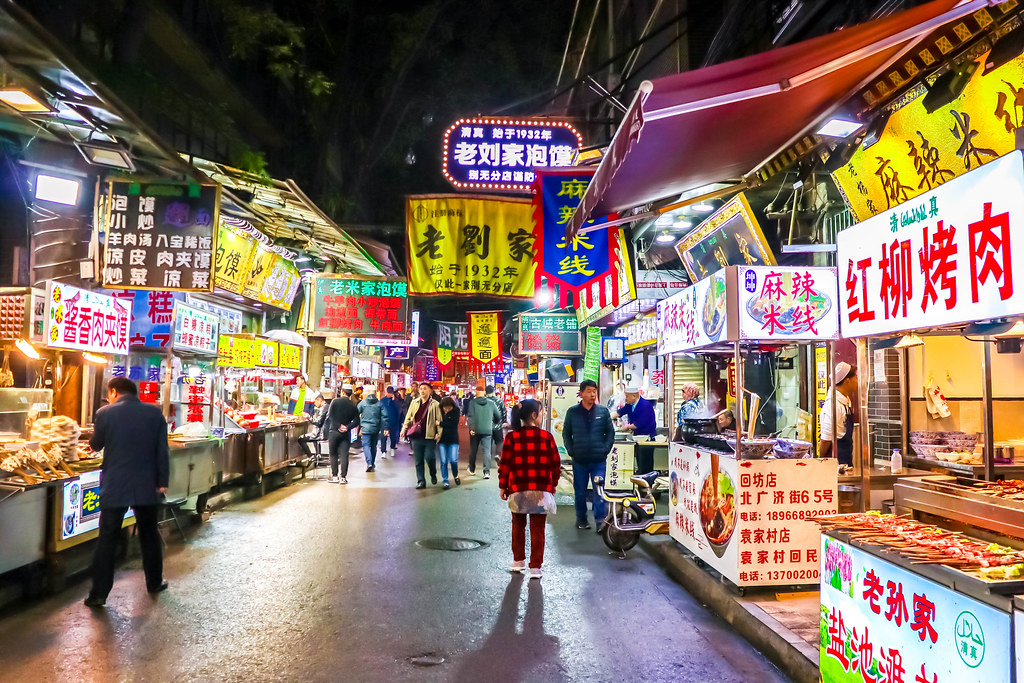
Beijing Hutong Food Tour: The 8 Best Stops for a 3-Hour Walk
A curated 3-hour Beijing hutong food walk covering 8 specific stops: from 豆汁儿 (the legendary fermented mung bean drink) to 卤煮 (old Beijing's working-class stew) to 炒肝 (stir-fried liver) to 北京烤鸭 (Peking duck) hutong-style. Includes the exact addresses, what to order at each, how to find the authentic (non-touristy) places, and a printable walking map.
Beijing’s hutong food scene is one of the most underrated culinary experiences in China. While tourists flock to Peking duck at the famous restaurants (Quanjude, Da Dong), the real Beijing food culture is in the hutong alleys — the small 早餐 (breakfast) stalls, the 卤煮 (lǔzhǔ) shops, the 炒肝 (chǎo gān) vendors, the candied hawthorn sellers. These places serve the food that Beijingers have eaten for 100+ years, often in the same family for generations.
A hutong food tour is a 3-hour walk covering 8 specific stops, with each stop representing a different facet of Beijing’s traditional cuisine. You’ll start with the most challenging (豆汁, the sour fermented mung bean drink that’s an acquired taste), move through savory main dishes (卤煮, 炒肝, 褡裢火烧), and end with sweet desserts (艾窝窝, 糖葫芦). The total cost is ¥120-180 per person — a fraction of what you’d pay at the famous Peking duck restaurants, and a far more authentic experience.
This guide covers the 8 specific stops, the exact addresses, the route map (all within walking distance in the Dongcheng and Xicheng districts), what to order at each, and how to find the authentic stalls versus the tourist versions. For the cultural and historical context of the hutong neighborhoods themselves, see our Beijing hutong history guide; for the broader picture of which alleys are worth the walk, see our top 10 hutongs beyond the tourist traps. For the cultural and historical context of the hutong neighborhoods themselves, see our Beijing hutong history guide; for the broader picture of which alleys are worth the walk, see our top 10 hutongs beyond the tourist traps.
The 3-hour hutong food tour route
The 8 stops below are organized geographically to minimize walking. All are within a 2-km radius in central Beijing, mostly between 什刹海 (Shichahai) and 鼓楼 (Drum Tower). The full walk is 2.5-3 km, taking 2.5-3 hours including time to eat at each stop.
Starting point: 鼓楼 (Drum Tower) metro station (Line 8, exit C) Ending point: 什刹海 (Shichahai) metro station (Line 8, exit A2) Total distance: 2.5-3 km Total cost: ¥120-180 per person Best time: 11 AM-2 PM on a weekday
Stop 1: 豆汁儿 + 焦圈 (Dòuzhīr + Jiāoquān) — the cultural initiation
What it is: 豆汁儿 is the most iconic (and most challenging) Beijing food. It’s a fermented mung bean drink, slightly sour, slightly thick, with a distinctive funky flavor that foreigners almost universally dislike on first try. The locals’ love for it is part of the cultural initiation — if you can stomach 豆汁, you’re in the inner circle of Beijing food appreciation.
焦圈 (jiāoquān) are the traditional pairing: crispy, ring-shaped fried dough sticks, slightly salty, perfect for dipping in the 豆汁.
How to eat it: Pour the 豆汁 into a bowl (it comes hot). Drink in small sips — the first sip is the hardest. Dip the 焦圈 in the 豆汁 before each bite. Add a bit of 辣菜 (spicy pickled mustard greens, 辣菜丝) for the full traditional experience.
Why it matters: This is the most authentic Beijing experience. If you survive 豆汁, you can try anything.
Where to find it:
- 老磁器口豆汁店 (Lǎo Cíqìkǒu Dòuzhī Diàn) — the most famous 豆汁 shop, 50+ year history. Address: 天坛路 (Tiāntán Road) — but this is far from the hutong route. Use the alternative.
- 护国寺小吃店 (Hùguósì Xiǎochī Diàn) — multiple locations in central Beijing, the most convenient for the hutong tour. Address: 护国寺街 93 号 (93 Huguosi Street, Xicheng District). 15-min walk from Drum Tower.
Price: ¥3-5 for a bowl of 豆汁, ¥3-5 for a serving of 焦圈, ¥3-5 for 辣菜. Total: ¥10-15 per person.
Verdict for foreigners: An acquired taste. Most Western visitors try it once, decide it’s not for them, and move on. But the experience is the point — you’ll be one of the few foreigners who tried it.
Stop 2: 炒肝 (Chǎo Gān) — Beijing’s most underrated savory dish
What it is: A stir-fry of pork liver and pork intestine, with thin onion slices, in a thickened sauce made from 淀粉 (starch), 蒜 (garlic), and 黄酱 (yellow soybean paste). The liver is sliced paper-thin, the intestine is chopped into small pieces, and the sauce is glossy and slightly sweet. The dish is a Beijing specialty that’s almost impossible to find outside the city.
How to eat it: With a bowl of white rice (mandatory) or with 火烧 (huǒshāo, baked wheat buns) which you tear into pieces and dip in the sauce.
Why it matters: This is the Beijing dish most foreigners miss because it’s not in the typical “Peking duck + hotpot + dim sum” tourist frame. It’s a working-class classic that locals have eaten for 100+ years.
Where to find it:
- 炒肝赵记 (Chǎo Gān Zhào Jì) — the most authentic 炒肝 shop in central Beijing. Address: 安定门内大街 (Āndìngmén Nèi Dàjiē), near 安定门 metro. 10-min walk from Drum Tower.
- 天兴居 (Tiān Xīng Jū) — another famous 炒肝 shop, slightly more accessible. Address: 鲜鱼口街 (Xiānyúkǒu Street).
Price: ¥20-30 for a portion (serves 2 people). Per person: ¥10-15.
Verdict for foreigners: More accessible than 豆汁. If you can handle the strong liver flavor, you’ll be rewarded. The sauce is the star.
Stop 3: 卤煮 (Lǔzhǔ) — Beijing’s working-class stew
What it is: A stew made from pork offal (large intestine, small intestine, lung, liver), 豆腐干 (firm tofu), 豆腐泡 (fried tofu puffs), and 火烧 (huǒshāo, baked wheat buns), all cooked in a rich brown broth flavored with 黄酱 (yellow soybean paste) and 蒜汁 (garlic juice). Served in a large bowl with the broth on top.
How to eat it: Mix the 蒜汁 (garlic juice) and 醋 (vinegar) in to taste. Eat the meat, offal, tofu, and 火烧 with chopsticks. The 火烧 at the bottom (soaked in broth) is the best part.
Why it matters: 卤煮 is the most authentic working-class Beijing food — a cheap, hearty meal that laborers, taxi drivers, and night-shift workers have eaten for 100+ years. It’s served from street stalls and small shops, not restaurants. Eating 卤煮 is a cultural experience, not just a meal.
Where to find it:
- 小肠陈 (Xiǎo Cháng Chén) — the most famous 卤煮 shop, family-run since 1900s. Address: 南横街 (Nán Héng Street), near 菜市口 metro (Line 4). 20-min walk from the hutong tour start.
- 卤煮吕 (Lǔzhǔ Lǚ) — alternative, slightly more central. Address: 门框胡同 (Ménkuàng Hútòng).
- 北新桥卤煮老店 (Běixīnqiáo Lǔzhǔ Lǎo Diàn) — northern hutong, near 雍和宫. Address: 雍和宫大街 (Yōnghégōng Dàjiē).
Price: ¥25-35 per bowl (a full meal in itself). Per person: ¥25-35.
Verdict for foreigners: 卤煮 is the most challenging hutong food after 豆汁. The offal has a strong, distinctive flavor. If you’re adventurous, try it. If you’re not, the experience of watching locals eat it is still valuable.
Stop 4: 褡裢火烧 (Dàlián Huǒshāo) — pan-fried meat pockets
What it is: Long, rectangular pan-fried pockets filled with a mixture of ground pork, onion, and seasonings. The wrapper is crispy on the bottom and chewy on top. Served with a small dish of 醋 + 蒜泥 (vinegar + mashed garlic) for dipping.
How to eat it: Dip in the vinegar-garlic sauce, eat in one bite. The crispy bottom + chewy top + savory filling is a satisfying combination.
Why it matters: 褡裢火烧 is one of the most beloved Beijing street foods — cheap, fast, delicious. It’s the kind of thing a local grabs for lunch on the go.
Where to find it:
- 褡裢火烧 (Dàlián Huǒshāo) — the original 1930s shop, multiple locations. Address: 前门大街 (Qiánmén Dàjiē) has the most convenient. The original is at 门框胡同 11 号 (11 Ménkuàng Hútòng).
- 大栅栏褡裢火烧 — Dashilan branch, good for combining with the 大栅栏 area visit.
Price: ¥8-12 for 4 pockets. Per person: ¥10-15.
Verdict for foreigners: Easy entry point. 褡裢火烧 is universally accessible — the flavors are familiar (pan-fried pastry with meat filling), the format is intuitive, and the price is low. Most foreigners rate it the most enjoyable hutong food.
Stop 5: 爆肚 (Bào Dǔ) — quick-seared tripe
What it is: Sheets of beef or lamb tripe (肚, dǔ) that are quick-seared in boiling water for 30-60 seconds (so they stay tender, not chewy), then served with a sesame sauce (麻酱) and a small dish of 酱油 (soy sauce) for dipping. Served on a small plate.
How to eat it: Dip in the sesame sauce, eat in one bite. The tripe should be tender, almost creamy — not chewy.
Why it matters: 爆肚 is a Beijing specialty that’s hard to find elsewhere. The quick-searing technique preserves the tripe’s natural texture. It’s the perfect light bite in a longer food tour.
Where to find it:
- 爆肚冯 (Bào Dǔ Féng) — the most famous 爆肚 shop, 100+ year history. Address: 安定门内大街 (Āndìngmén Nèi Dàjiē). 10-min walk from Drum Tower.
- 西德顺爆肚 (Xī Déshùn Bào Dǔ) — alternative, slightly cheaper. Address: 朝阳门内大街 (Cháoyángmén Nèi Dàjiē).
Price: ¥30-50 per plate (about 100g of tripe). Per person: ¥30-50.
Verdict for foreigners: A good middle-ground dish — adventurous enough to feel local, accessible enough to enjoy. The tripe is subtle in flavor and the sesame sauce is familiar.
Stop 6: 艾窝窝 (Ài Wō Wo) — Beijing’s most underrated dessert
What it is: A small glutinous rice ball filled with sweet bean paste (red bean, typically), rolled in a fine layer of 糯米粉 (glutinous rice flour) so it doesn’t stick. The exterior is slightly sticky, the filling is sweet, the texture is unique among Beijing desserts.
How to eat it: As a snack, with tea. Eat in one bite to avoid the sticky exterior making a mess.
Why it matters: 艾窝窝 is one of Beijing’s most ancient desserts (dating to the Ming dynasty, possibly earlier), and it’s still made by hand in a few shops. It’s the perfect break in a longer food tour — a sweet, simple, no-effort treat.
Where to find it:
- 清真白记小吃 (Qīngzhēn Bái Jì Xiǎochī) — the most famous 艾窝窝 maker, family-run for generations. Address: 牛街清真超市 (Niújiē Qīngzhēn Chāoshì) area — a bit far from the main tour. Alternative below.
- 护国寺小吃店 (Hùguósì Xiǎochī Diàn) — same shop as the 豆汁 stop, also makes 艾窝窝. Address: 护国寺街 93 号.
Price: ¥3-5 per piece. Per person: ¥6-10 for 2 pieces.
Verdict for foreigners: Universally liked. The flavor is sweet, the texture is fun, the price is low. Most foreigners are surprised by how much they like 艾窝窝.
Stop 7: 糖葫芦 (Tánghúlu) — candied hawthorn
What it is: Hawthorn berries (山楂, shānzhā) on a bamboo skewer, coated in a hard, glossy sugar syrup. The combination is sweet, sour, crunchy (the sugar), and slightly soft (the hawthorn). The classic Beijing street snack — every child grows up eating it.
How to eat it: Bite into the sugar shell first (it cracks satisfyingly), then suck the hawthorn off the stick. Don’t bite the hawthorn seeds — spit them out discreetly.
Why it matters: 糖葫芦 is the most accessible Beijing street food — sweet, fun, photogenic, and almost universally liked. It’s also deeply nostalgic for Beijingers.
Where to find it:
- Almost any street vendor in the hutong areas. Look for the bright red skewers hanging on the vendor’s cart.
- 护国寺小吃店 — also has 糖葫芦.
- 王府井 (Wángfǔjǐng) Street — the most famous street for 糖葫芦, but more touristy.
Price: ¥5-10 per skewer.
Verdict for foreigners: Best entry-level Beijing street food. Order at any vendor, no language needed.
Stop 8: 京味奶茶 (Jīngwèi Nǎichá) — Beijing-style milk tea
What it is: A modern twist on the traditional Beijing 奶酪 (nǎilào, milk curd dessert) — silky milk pudding topped with fruit or nuts, sometimes served in a drinkable form. The flavors are subtle, less sweet than Western milk tea, and very refreshing.
How to eat it: Drink it cold. The most popular flavors are 杏仁 (almond) and 核桃 (walnut), both with traditional Beijing flavor profiles.
Why it matters: This is a modern interpretation of a classic Beijing dessert — the kind of evolution the city’s food culture is undergoing. It’s also the perfect cool-down after a hot hutong walk.
Where to find it:
- 奶酪魏 (Nǎilào Wèi) — the most famous Beijing 奶酪 shop, family-run for 100+ years. Address: 鼓楼东大街 (Gǔlóu Dōng Dàjiē), perfect for the end of the tour. ¥15-20 per serving.
Price: ¥15-20 per cup.
Verdict for foreigners: Easy to like — the flavors are familiar (almond, walnut, milk) and the texture is pleasant.
The complete 3-hour itinerary
| Time | Stop | Dish | Price | Address |
|---|---|---|---|---|
| 0:00 | Start at Drum Tower metro | — | — | Line 8, exit C |
| 0:05 | Stop 1: 护国寺小吃 | 豆汁 + 焦圈 + 辣菜 | ¥15 | 护国寺街 93 号 |
| 0:30 | Stop 2: 炒肝赵记 | 炒肝 + 火烧 | ¥15 | 安定门内大街 |
| 0:55 | Stop 3: 爆肚冯 | 爆肚 | ¥40 | 安定门内大街 |
| 1:20 | Stop 4: 褡裢火烧 (前门店) | 褡裢火烧 4 个 | ¥12 | 前门大街 |
| 1:50 | Stop 5: 卤煮 (北新桥店) | 卤煮 | ¥30 | 雍和宫大街 |
| 2:15 | Stop 6: 艾窝窝 (护国寺) | 艾窝窝 2 个 | ¥8 | 护国寺街 93 号 |
| 2:30 | Stop 7: 糖葫芦 | 糖葫芦 1 串 | ¥8 | Any vendor |
| 2:45 | Stop 8: 奶酪魏 | 京味奶茶 | ¥18 | 鼓楼东大街 |
| 3:00 | End at 什刹海 metro | — | — | Line 8, exit A2 |
Total walking: 2.5-3 km Total cost: ¥146 per person Total time: 2.5-3 hours including eating
What to bring on the hutong food tour
- Comfortable shoes — you’ll be walking 2.5-3 km on uneven surfaces
- Bottled water — hutong food is salty; you’ll need to drink water between stops
- Wet wipes — your hands will get messy
- Tissues — for the sugar from 糖葫芦 and the sauce from 卤煮
- Small bag for leftovers — if you can’t finish a portion
- Camera — the food is photogenic
- WeChat Pay / Alipay — most stalls don’t take cash
- ¥50-100 in cash — backup for the smallest stalls
How to find authentic vs. touristy versions
The same dish is served in both authentic and touristy versions. The differences are usually:
Authentic signs:
- Local customers, especially elderly
- A line of regulars
- Simple interior, plastic tables, no English menu
- The food is served quickly (high turnover)
- The price is below ¥50 for any single dish
Touristy signs:
- Mostly foreign customers
- No line, empty seats at peak
- Decorated interior, English menu with photos
- The food takes 15+ minutes (low turnover)
- The price is ¥80+ for any single dish
If a hutong food shop has a TripAdvisor rating above 4.5 stars and a fancy English menu, it’s likely a tourist trap. For first-time visitors planning a wider Beijing trip around the food tour, our first-time Beijing guide covers visas, Alipay setup, and the broader 3-day itinerary. For first-time visitors planning a wider Beijing trip around the food tour, our first-time Beijing guide covers visas, Alipay setup, and the broader 3-day itinerary. The best hutong food shops are the ones that look like they haven’t changed in 50 years.
The 4 food safety rules
Same as for any Chinese street food:
- Eat where locals queue — turnover = freshness
- Watch the food being cooked — boiling broth, sizzling grills, fresh frying = good
- Avoid raw vegetables, unpeeled fruit, and tap water — stick to cooked food, fruit you peel yourself, bottled water
- Carry oral rehydration salts (ORS) and loperamide — available at any Chinese pharmacy for ¥10-20
The one thing every visitor should know
The hutong food experience is more about culture than cuisine. The dishes are interesting, the prices are low, and the experience is unique — but the real value is seeing how Beijingers have eaten for 100+ years. Even if you don’t like 豆汁, even if you can’t stomach 卤煮, even if the offal flavors are too strong — the experience of walking the hutongs, seeing the small family shops, and observing the daily life is what makes this tour special.
The locals eating 豆汁 at 6 AM have been doing it for 50+ years. The 卤煮 shops have been in the same family for 3-4 generations. The 糖葫芦 vendors have been walking the same streets since before you were born. This is not a museum — it’s a living, evolving, deeply traditional food culture that you can be part of for 3 hours and a few dollars.
Go. Eat. Be part of it.
Book this Beijing hutong food tour
Trip.com
Beijing hotel (Wangfujing or Sanlitun base)
Trip.com's Beijing hotel listing with 5,000+ foreigner-friendly properties. Stay near Wangfujing for the easiest hutong access (Donghuamen, Yandai Xiejie, Beiluoguxiang all walkable). Foreign cards accepted, free cancellation.
Hotels from $84/night
Affiliate disclosure: We earn a small commission at no extra cost to you. See full disclosure.
Plan your trip — verified tools
These free tools are built on real, monthly-verified data and help you skip the trial-and-error phase of China trip planning:
- China 6-City 5-Day Budget Calculator — Real 2026 prices for 5 days in Beijing, Shanghai, Guangzhou, Chengdu, Xi’an, or Hangzhou. Budget / mid-range / comfort tiers, broken down line by line.
- China OTA Comparison 2026 — Trip.com vs Booking.com vs Agoda vs Klook across 5 booking types. Inventory, pricing, foreign card support, English service, per-OTA verdict.
Verified August 2026 by TravelHubChina Editorial. We re-check prices and policy details monthly so the data doesn’t drift.
Step by step
-
Start at Drum Tower metro at 11 AM
Take Line 8 to Gulu (Drum Tower, exit C) and begin the 3-hour walk. Weekday afternoons are best to avoid weekend crowds at hutong food stalls; weekends 11 AM-2 PM are 2-3x busier.
-
Stop at 8 hutong food stalls along the route
Hit douzhi at Huguosi Snacks (Y10-15), chao gan at Zhao Ji (Y10-15), bao du at Feng (Y30-50), dalian huoshao at Qianmen (Y10-15), luzhu at Beixinqiao (Y25-35), aiwowo at Huguosi (Y6-10), tanghulu from any street vendor (Y5-10), and finish with jingwei naicha at Nailao Wei (Y15-20).
-
Use Baidu Maps to navigate between stops
Google Maps is unreliable in China. Download Baidu Maps (BaiDu DiTu) for free; it has English interface and works in the hutong alleys. Pre-pin the 8 stops in order before you start.
-
End at Shichahai metro around 2 PM
Wrap up at Shichahai metro station (Line 8, exit A2) for an easy ride back. Total walk is 2.5-3 km, total cost is Y120-180 (about $17-25) per person for 8 stops.
FAQ
-
What is the most famous Beijing hutong food?
豆汁儿 (dòuzhīr) — fermented mung bean drink — is the most iconic hutong food. It has a distinctive sour taste that foreigners almost universally dislike on first try. The locals' love for it is part of the cultural experience. 焦圈 (jiāoquān) — crispy dough rings — are the traditional pairing. Other hutong classics: 卤煮 (lǔzhǔ) offal stew, 炒肝 (chǎo gān) stir-fried liver, 艾窝窝 (ài wō wo) rice dessert, 糖葫芦 (tánghúlu) candied hawthorn. -
Is Beijing street food safe?
Yes, with the standard 4 rules: eat where locals queue, watch food being cooked to order, avoid raw vegetables and unpeeled fruit, carry oral rehydration salts. Most hutong food stalls are very clean by international standards. The offal dishes (卤煮, 炒肝) are cooked for long periods at high heat, killing any bacteria. -
How much does a hutong food tour cost?
A self-guided 3-hour hutong food tour costs ¥120-180 per person for 8 stops. A guided tour (with an English-speaking local guide) costs ¥400-600 per person. The guided tour is more educational but the self-guided tour is more flexible and less expensive. For first-time visitors, the guided tour is recommended. -
Can vegetarians eat hutong food?
Limited options. The most famous hutong dishes (豆汁, 卤煮, 炒肝) all contain animal products. Vegetarian-friendly options: 艾窝窝 (glutinous rice dessert), 糖葫芦 (candied hawthorn), 烤红薯 (roasted sweet potato), 凉皮 (cold noodles), and most baozi (包子) varieties. Most hutong restaurants have a vegetable dish or two but the cuisine is heavy on meat and offal. -
What time of day is best for a hutong food tour?
Late morning to early afternoon (11 AM-2 PM) is ideal. The 早餐 breakfast stalls open at 6 AM (mostly empty by 10 AM), the lunch stalls open at 11 AM (best at noon), and the afternoon tea/snack stalls open at 2 PM. Going 11 AM-2 PM lets you catch both the late breakfast crowd and the lunch crowd. Avoid weekends (busier, less authentic). -
Where can I try Peking duck in a hutong?
Most famous Peking duck restaurants (Quanjude, Da Dong) are not in hutongs — they're in modern commercial buildings. The hutong alternative is smaller family restaurants serving a hutong-style duck that's more affordable. Recommended: 利群 (Lìqún) in 寿长街 (Shòucháng Street) — a converted hutong courtyard with wood-fired oven duck that's been operating for 30+ years. ¥150-200 per duck (serves 2-3 people). -
Are hutong food tours appropriate for kids?
Yes, but the offal dishes (卤煮, 炒肝) might be too adventurous. For families, focus on: 糖葫芦 (candied hawthorn), 艾窝窝 (rice dessert), 烤红薯 (roasted sweet potato), baozi (steamed buns), and 炸酱面 (zhajiangmian noodles). Most kids enjoy these. The 豆汁 (sour mung bean drink) is almost universally too acquired-taste for children. -
What should I do if I get a stomach issue from hutong food?
The most common issue is mild stomach upset from unfamiliar spices. Carry oral rehydration salts (ORS) and loperamide (止泻药) — available at any Chinese pharmacy for ¥10-20. Drink bottled or boiled water (not tap). If symptoms persist beyond 24 hours, visit a hospital — major ones have English-speaking staff in the international clinic. Beijing United Family Hospital is the best private option for foreigners.
Related guides
-
Cantonese Dim Sum Guide: 12 Essential Dishes + Tea Etiquette
A practical guide to Cantonese dim sum (点心) for foreign visitors — the 12 essential dishes, how to order from the cart, tea etiquette, where to eat in Guangzhou and Hong Kong, and the famous 饮茶 (yum cha) tradition.
-
Chengdu's Three Famous Snacks: Dan Dan Noodles, Zhong Dumplings, Long Chao Shou (2026)
Complete guide to Chengdu's iconic snack trio: 担担面 (dan dan noodles), 钟水饺 (Zhong dumplings), and 龙抄手 (Long chao shou). Includes each dish's history, where to find the original restaurants, how to order, what they taste like, average prices, and how these local dishes differ from their national imitations.
-
Chengdu Hotpot: The Local's Guide to Sichuan's Fiery Feast (2026)
Complete Chengdu hotpot guide for foreigners: how to order at a local restaurant, the 9-grid pot explained, the 3 essential dipping sauces, ingredient order, spice levels for beginners, the difference between Chengdu and Chongqing styles, and the 7 best hotpot restaurants locals recommend.