
10 Best Beijing Hutongs to Visit (Beyond the Tourist Traps)
Beyond the crowded Nanluoguxiang: 10 specific hutongs worth visiting, from the most authentic residential alleys to the most photogenic, with what makes each one unique, exact addresses, how to get there, and when to visit. Includes a printable walking map.
Most visitors to Beijing’s hutongs end up at 南锣鼓巷 (Nánluógǔ Xiàng) — the most famous, the most commercialized, and (ironically) the least authentic. For the 700-year history, the gate styles, and the social patterns that shape the hutong neighborhoods, see our Beijing hutong history guide; for the rickshaw-tour option (drivers, pricing, scams to avoid), see our Beijing hutong rickshaw guide. For the 700-year history, the gate styles, and the social patterns that shape the hutong neighborhoods, see our Beijing hutong history guide; for the rickshaw-tour option (drivers, pricing, scams to avoid), see our Beijing hutong rickshaw guide. They walk the 786-meter main alley, see the souvenir shops and trendy cafes, take a few photos, and leave thinking they’ve experienced the hutongs. They haven’t. The real hutong life is in the smaller alleys, the side streets, the residential neighborhoods that most tourists never see.
This guide covers 10 specific hutongs that are worth your time — each one is interesting for a different reason. Some are the most authentic residential alleys, some have the best preserved architecture, some are the most photogenic, and some are the most fun to walk through. The order is by recommendation, starting with the most essential for a meaningful hutong experience.
How to use this guide: Pick 3-4 hutongs based on your interests, plan a 2-3 hour walking route, and use Baidu Maps to navigate. Most hutongs are within walking distance of each other in the central Dongcheng and Xicheng districts. For a compressed hutong experience that fits a 2-day Beijing stopover, see our 2-day Beijing layover itinerary (it includes a sunset rickshaw slot on Day 1); for full first-timer planning, see our first-time Beijing guide.
1. 帽儿胡同 (Mào’er Hútòng) — the most authentic
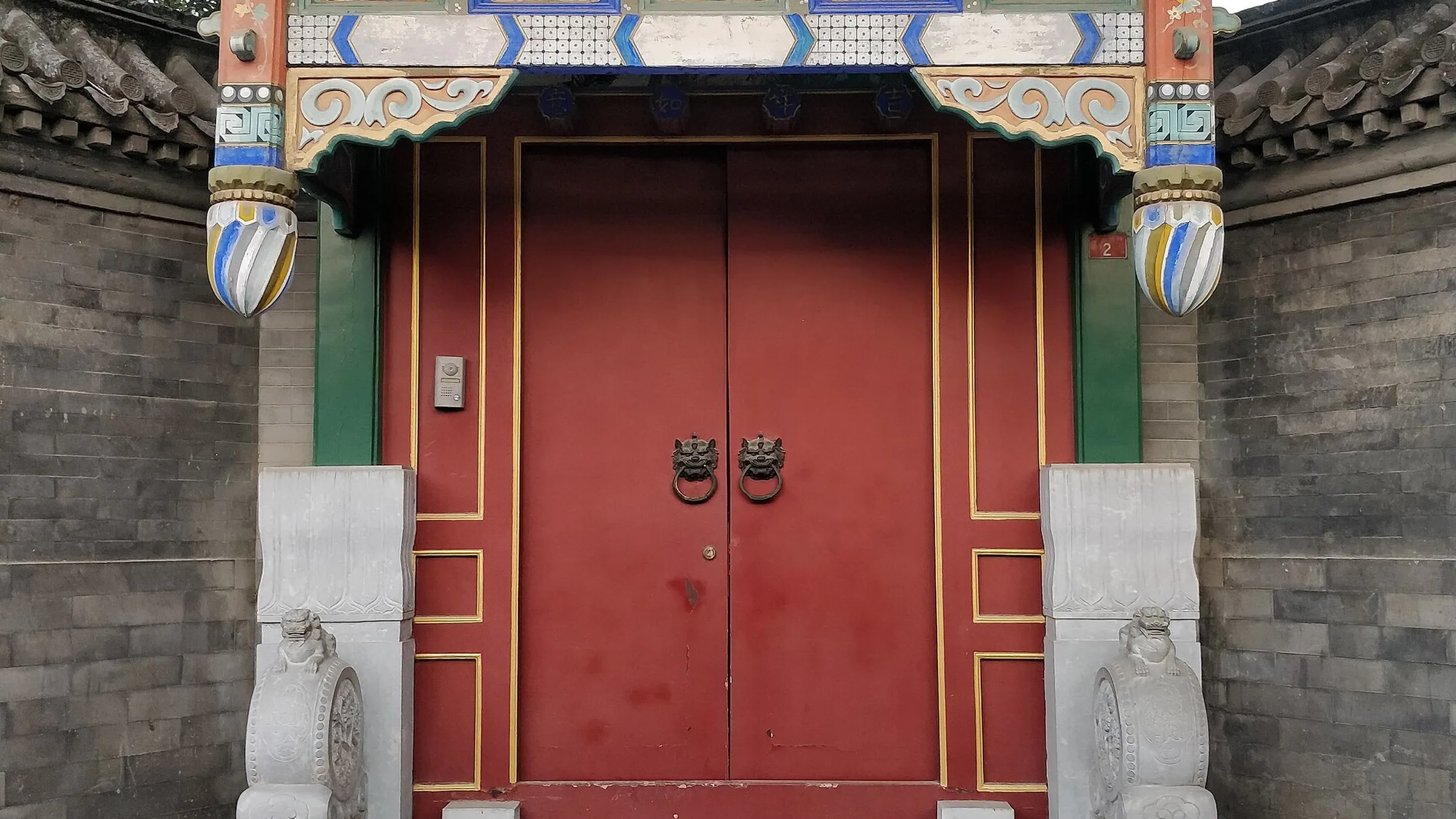
Why it’s special: 帽儿胡同 is the hutong that most clearly shows what Beijing’s residential life was (and is). 585 meters long, mostly residential, with traditional 四合院 (sìhéyuàn, courtyard homes) that have been continuously inhabited for generations. The alley is wide enough to feel open, the trees are mature, and the gates are some of the most beautiful in the city.
Historical significance: Was the residence of several historical figures, including 文煜 (Wén Yù, a Qing dynasty official who built a 100-room mansion here) and several Beiyang warlord families in the Republic era. The 9 号 院 (No. 9 Yard) is a preserved historic residence now used for cultural events.
What you’ll see: Traditional gates, mature trees, residents going about daily life, the occasional small shop or tea house. The 9 号 mansion is at the southern end.
Practical info:
- Address: 帽儿胡同, 东城区 (Mao’er Hutong, Dongcheng District)
- Nearest metro: Line 5 to 北新桥 (Běixīnqiáo) station, 5-min walk
- Best time: Weekday mornings 8-10 AM
- Time needed: 30-45 minutes
- Cost: Free
2. 史家胡同 (Shǐjiā Hútòng) — the historical one
Why it’s special: 史家胡同 has been home to several important figures, including 赛金花 (Sài Jīnhuā, a famous Qing dynasty courtesan who spoke multiple languages), 章士钊 (Zhāng Shìzhāo, a 20th-century politician), and several contemporary Chinese leaders’ families. The 史家胡同博物馆 (Shijia Hutong Museum) at No. 24 is a small but excellent free museum about the hutong’s history.
What you’ll see: The museum (highly recommended), beautifully preserved gates, the former residences of important figures (marked with plaques), and a quieter residential atmosphere than the more famous hutongs.
Practical info:
- Address: 史家胡同, 东城区 (Shijia Hutong, Dongcheng District)
- Nearest metro: Line 5 to 东单 (Dōngdān) station, 8-min walk
- Best time: Weekday mornings, especially to visit the museum
- Time needed: 45-60 minutes (including museum)
- Cost: Free
3. 方家胡同 (Fāngjiā Hútòng) — the artistic one
Why it’s special: 方家胡同 has become the hub of Beijing’s contemporary art and creative scene. The 46 号 院 (No. 46 Yard) is the most famous — a former industrial complex converted into a creative park with cafes, galleries, design studios, and live-music venues. The rest of the hutong mixes traditional residences with modern creative businesses.
What you’ll see: A blend of old Beijing and new Beijing — courtyard homes next to contemporary art galleries, traditional 包子 (baozi) shops next to specialty coffee roasters. The vibe is more “creative class” than “ancient capital” but the architecture is well-preserved.
Practical info:
- Address: 方家胡同, 东城区 (Fangjia Hutong, Dongcheng District)
- Nearest metro: Line 2/13 to 东直门 (Dōngzhímén) station, 5-min walk
- Best time: Weekday afternoons (when the creative businesses are open)
- Time needed: 1-1.5 hours (including 46 号)
- Cost: Free to walk; 46 号 has cafes and shops with their own prices
4. 什刹海环湖 (Shíchà Hǎi Loop) — the lakeside
Why it’s special: 什刹海 (Shíchà Hǎi) is a 34-hectare lake system (three connected lakes: 前海, 后海, 西海) surrounded by hutongs and traditional architecture. The 2.5 km lakeside walk is one of the most beautiful urban walks in China. The area has a mix of historic sites (恭王府 Prince Gong’s Mansion, 醇亲王府 Chun Prince’s Mansion), traditional hutongs, and modern bars and restaurants.
What you’ll see: The lake itself (especially beautiful at sunset), 银锭桥 (Yǐndìng Qiáo, Silver Ingot Bridge — one of the most photographed spots in Beijing), traditional boats in summer, the bars and restaurants of 后海 (Hòu Hǎi, “Back Sea”), and 烟袋斜街 (Yāndài Xiéjiē, the diagonal street with souvenir shops).
Practical info:
- Address: 什刹海, 西城区 (Shichahai, Xicheng District)
- Nearest metro: Line 8 to 什刹海 (Shíchàhǎi) station, 3-min walk
- Best time: Late afternoon to sunset (4-7 PM in summer, 3-5 PM in winter)
- Time needed: 1.5-2 hours for the full loop
- Cost: Free to walk; boat rides ¥50-100 per person in summer
5. 礼士胡同 (Lǐshì Hútòng) — the residential one
Why it’s special: 礼士胡同 is one of the most intact residential hutongs in central Beijing. Almost entirely residential, with the original 1920s-30s architecture preserved. Walking down this hutong, you see what ordinary Beijing life was (and is) — laundry hanging between buildings, elderly men playing chess, children returning from school. The gates are simpler than in the touristy areas, but the integrity of the neighborhood is unmatched.
What you’ll see: Pure residential life, beautifully maintained 1920s courtyard homes, mature trees, no commercial businesses to break the residential feel.
Practical info:
- Address: 礼士胡同, 东城区 (Lishi Hutong, Dongcheng District)
- Nearest metro: Line 5 to 灯市口 (Dēngshìkǒu) station, 10-min walk
- Best time: Weekday mornings or late afternoons
- Time needed: 20-30 minutes
- Cost: Free
6. 九湾胡同 (Jiǔwān Hútòng) — the maze
Why it’s special: 九湾胡同 (“Nine-Bend Hutong”) is the most tortuous hutong in Beijing — it turns 13 times in its 390-meter length, making it almost impossible to walk straight. The unusual name comes from the 9 primary bends (some sources say 13). The hutong was used historically as a secret passage during the Qing dynasty.
What you’ll see: A literal maze. The narrow alleys (sometimes less than 1 meter wide in places) make this the most unique walking experience in central Beijing. The hutong is still mostly residential, with some preserved 1920s architecture.
Practical info:
- Address: 九湾胡同, 西城区 (Jiuwan Hutong, Xicheng District)
- Nearest metro: Line 4 to 灵境胡同 (Língjìng Hútòng) station, 8-min walk
- Best time: Anytime (it’s quiet)
- Time needed: 20-30 minutes
- Cost: Free
- Warning: Easy to get disoriented. Note the entrance direction before entering.
7. 砖塔胡同 (Zhuāntǎ Hútòng) — the oldest
Why it’s special: 砖塔胡同 (“Brick Pagoda Hutong”) is considered the oldest named hutong in Beijing, dating to the Yuan dynasty (1270s, 750+ years old). The name comes from a brick pagoda at the entrance, built during the Yuan dynasty. Despite the city’s massive changes, this hutong has been continuously inhabited for over 700 years.
What you’ll see: The historic brick pagoda at the entrance (small but well-preserved), a long straight hutong (unusual — most hutongs turn), traditional residential architecture, a few small shops at the southern end.
Practical info:
- Address: 砖塔胡同, 西城区 (Zhuanta Hutong, Xicheng District)
- Nearest metro: Line 4 to 西四 (Xīsì) station, 3-min walk
- Best time: Weekday mornings
- Time needed: 20-30 minutes
- Cost: Free
8. 鼓楼东大街 (Gǔlóu Dōng Dàjiē) — Drum Tower East Street
Why it’s special: 鼓楼东大街 is a wider street that connects the 鼓楼 (Drum Tower) and 钟楼 (Bell Tower) area to the hutong neighborhoods. It has a more lively, working-class feel than the touristy hutongs — independent shops, small restaurants, street vendors, locals going about their day. The street also offers great views of the Drum and Bell Towers.
What you’ll see: The Drum Tower and Bell Tower (the historic time-keeping center of imperial Beijing), independent businesses (some have been here for 50+ years), street food, and a real working-class Beijing atmosphere. Less polished than the main tourist areas, but more alive.
Practical info:
- Address: 鼓楼东大街, 东城区 (Drum Tower East Street, Dongcheng District)
- Nearest metro: Line 8 to 鼓楼大街 (Gǔlóu Dàjiē) station, 5-min walk
- Best time: Late afternoon
- Time needed: 1 hour
- Cost: Free
9. 南锣鼓巷东侧 (Nánluógǔ Xiàng East Side) — the quiet alternative
Why it’s special: 南锣鼓巷 is famous and crowded. But the 8 smaller side hutongs branching off its EAST side (菊儿, 交道口, 板厂, 东棉花, 雨儿, 帽儿, 蓑衣, 福祥) are much quieter and more residential. They share the same architectural style as the main 南锣鼓巷 but lack the tourist crowds.
What you’ll see: The architectural context of 南锣鼓巷 without the crowds. The 蓑衣胡同 Suoyi Hutong and 福祥胡同 Fuxiang Hutong are particularly quiet and photogenic. 雨儿胡同 is where 齐白石 Qi Baishi (one of China’s most famous 20th-century painters) lived — his former residence is now a small memorial.
Practical info:
- Address: Various, all on the east side of 南锣鼓巷 (Nánluógǔ Xiàng), Dongcheng District
- Nearest metro: Line 6 to 南锣鼓巷 (Nánluógǔ Xiàng) station
- Best time: Weekday mornings
- Time needed: 1-1.5 hours for all 8
- Cost: Free
10. 大栅栏 / 前门 (Dàzhàlán / Qiánmén) — the commercial heart
Why it’s special: 大栅栏 is the historic commercial heart of Beijing — a district of narrow streets and traditional shops that has been a commercial center for 600+ years. The shops are mostly authentic (not reproductions): 内联升 (Nèiliánshēng, cloth shoe maker since 1853), 瑞蚨祥 (Ruìfúxiáng, silk shop since 1862), 张一元 (Zhāng Yīyuán, tea shop since 1900). The area is more commercial than residential but has the best-preserved traditional commercial streetscape in Beijing.
What you’ll see: Traditional shop fronts, signage in classical Chinese calligraphy, the famous 大栅栏商业街 shopping district, traditional snacks (糖葫芦, 驴打滚, 艾窝窝), and the historic shops listed above.
Practical info:
- Address: 大栅栏, 西城区 (Dashilan, Xicheng District)
- Nearest metro: Line 2 to 前门 (Qiánmén) station, 5-min walk
- Best time: Daytime
- Time needed: 1.5-2 hours
- Cost: Free to walk; shop prices vary
Suggested 2-3 hour walking route (combining 4-5 hutongs)
Route option A: The Historical Hutmix (most authentic)
Start at 帽儿胡同 (Mao’er Hutong) → walk south to 礼士胡同 (Lishi Hutong) → west to 史家胡同 (Shijia Hutong) → visit the museum → south to 灯市口 (Dengshikou) metro station. Total: 2 hours, 4 hutongs, all free.
Route option B: The Lake and Arts Hutmix (most scenic)
Start at 什刹海 (Shichahai) metro → walk the lakeside loop → north to 鼓楼东大街 (Drum Tower East) → north to 方家胡同 (Fangjia Hutong) → visit 46 号 → metro back. Total: 2.5 hours, includes dining options.
Route option C: The Old-Commercial Hutmix (most varied)
Start at 砖塔胡同 (Zhuanta Hutong) → walk to 广济寺 (Guangji Temple) → east to 西四 → south to 大栅栏 (Dashilan) → visit the historic shops → south to 前门 (Qianmen) → metro back. Total: 2.5 hours, includes shopping.
Common mistakes to avoid
- Don’t go to Nanluoguxiang on a weekend — it’s shoulder-to-shoulder and not enjoyable
- Don’t skip the side hutongs — the main streets are the least authentic
- Don’t enter private courtyards — observe from the street
- Don’t be loud — the residential hutongs are still people’s homes
- Don’t miss the museums — Shijia Hutong Museum and 帽儿 No. 9 are small but excellent
The bottom line
Beijing’s hutongs are not a tourist attraction — they’re a way of life that has survived 700 years. By choosing which hutongs to visit carefully (skip Nanluoguxiang, head to the side alleys), by going at the right time (weekday mornings), and by walking slowly and observing, you’ll see something most tourists miss: the real Beijing, where life has flowed through these same alleys for 30 generations. For a compressed hutong experience that fits a 2-day Beijing stopover, see our 2-day Beijing layover itinerary (it includes a sunset rickshaw slot on Day 1); for full first-timer planning, see our first-time Beijing guide.
The 10 hutongs above are a starting point. Once you’ve seen them, you’ll start noticing the small unnamed alleys that branch off them — and those are the real treasures.
Plan your trip — verified tools
These free tools are built on real, monthly-verified data and help you skip the trial-and-error phase of China trip planning:
- China 240-Hour Visa-Free Transit Checker — 57 countries, 24 provinces, 65 ports. See if you qualify for 10-day visa-free transit, which cities you can visit, and the 5-step process.
- China 6-City 5-Day Budget Calculator — Real 2026 prices for 5 days in Beijing, Shanghai, Guangzhou, Chengdu, Xi’an, or Hangzhou. Budget / mid-range / comfort tiers, broken down line by line.
Verified August 2026 by TravelHubChina Editorial. We re-check prices and policy details monthly so the data doesn’t drift.
Step by step
-
Plan a 2-3 hour route across 4-5 hutongs
Recommended combination: Mao'er Hutong (most authentic) -> Lishi Hutong (residential) -> Shijia Hutong (free museum at No. 24) -> Shichahai lakeside (sunset). All free, all in Dongcheng/Xicheng districts, all within walking distance.
-
Use the closest metro station for each hutong
Mao'er: Line 5 to Beixinqiao (5-min walk). Lishi: Line 5 to Dengshikou (10-min walk). Shijia: Line 5 to Dongdan (8-min walk). Shichahai: Line 8 to Shichahai (3-min walk). Buy a metro card at any station or scan Alipay at the gate.
-
Walk the hutongs in the morning
Visit 8-10 AM for the most authentic experience. Residents are active, breakfast stalls serve baozi and soymilk (Y8-15 for a full breakfast), and there are no tour buses yet. Avoid weekends 11 AM-5 PM at the famous Nanluoguxiang.
-
Bring Baidu Maps, water, and a portable charger
Google Maps is unreliable in China. Download Baidu Maps (free, English interface). The hutongs are a maze - note the gate style at each entrance so you can find your way back. Bring water; most hutongs lack shops. Phones drain fast with map navigation.
FAQ
-
Which hutong is the most authentic in Beijing?
帽儿胡同 Mao'er Hutong and 史家胡同 Shijia Hutong are the most authentic for residential life. 礼士胡同 Lishi Hutong is the best for traditional courtyard architecture. These three are still mostly inhabited by long-time Beijing residents, with limited commercialization. Visit on weekday mornings for the most authentic experience. -
What is the oldest hutong in Beijing?
砖塔胡同 Zhuanjia Hutong (Brick Tower Hutong), in the Xicheng District, is considered the oldest named hutong in Beijing, dating to the Yuan dynasty (1270s). The name comes from a brick pagoda that was built at the entrance during the Yuan dynasty. The hutong has been continuously inhabited for 750+ years. -
Can you visit hutong courtyard homes?
Generally no — they are private residences. A few historic courtyards have been converted to museums or are open by appointment. 梅兰芳纪念馆 Mei Lanfang Memorial (in 护国寺街 Huguosi Street) and 齐白石旧居纪念馆 Qi Baishi Former Residence (in 雨儿胡同 Yu'er Hutong) are two of the most accessible. Otherwise, observe from the street and through the gates. -
Are hutongs in Beijing worth visiting?
Yes, very much. They are among the most important pieces of urban heritage in the world, representing 700+ years of continuous Chinese urban life. The experience is unique — no other major city has preserved this much of its historical residential fabric. Plan 2-3 hours minimum. -
How do you get around in the hutongs?
Walking is the best way. The alleys are too narrow for cars. Bicycles and e-bikes are common (rent through Meituan or ask your hotel). Rickshaws (pedicabs) are available in the tourist areas. Baidu Maps is essential for navigation — Google Maps is unreliable in China. Allow yourself to get lost — the maze structure is part of the experience. -
Are the hutongs safe at night?
Yes, generally safe. The main tourist hutongs (Nanluoguxiang, Shichahai) are well-lit and have security patrols. The more residential hutongs are quiet but not dangerous. Use Didi for late-night transport — never walk alone in unfamiliar hutongs after midnight. -
Can you find authentic Beijing food in the hutongs?
Yes, especially in the morning. Look for 早餐 (breakfast) stalls selling 包子 (baozi), 油条 (youtiao), 豆浆 (soy milk), and 豆腐脑 (tofu pudding). For lunch, look for 小馆 (small family restaurants) tucked into hutong corners. Avoid the tourist-oriented restaurants on the main Nanluoguxiang — they're expensive and not authentic. -
What's the best photo spot in the hutongs?
砖塔胡同 Zhuanjia Hutong has the most photogenic gate (the ancient brick pagoda entrance). 帽儿胡同 Mao'er Hutong has the best combination of gates + trees + atmospheric light. 方家胡同 Fangjia Hutong has the most colorful contemporary scenes (art galleries, creative shops). 鼓楼东大街 Drum Tower East Street has the best street-photography opportunities.
Related guides
- Culture & Practical
Beijing Hutongs: A Complete Guide to the City's Ancient Alleyways (History, Map, How to Visit)
Complete guide to Beijing's hutongs: the 700-year history from Yuan dynasty to today, why hutongs are disappearing, the 6 best hutong areas to visit as a foreigner, how to navigate them on foot or by rickshaw, the etiquette rules, and how to experience the real local hutong life (not the tourist-trap version).
8min read
- Culture & Practical
Beijing Hutong Rickshaw Tour: The Complete Guide (2026)
Everything you need to know about Beijing's hutong rickshaw tours: the history of the rickshaw, the 3 main rickshaw stands, how to negotiate a fair price (¥150-300/hour), the 4 most popular routes, what the rickshaw driver typically explains, how to avoid the commission-shop scams, and whether to do a self-walk or rickshaw tour.
7min read
- Culture & Practical
11 Cultural Mistakes Foreigners Make in China (And How to Avoid Them)
The 2026 etiquette guide for foreigners in China: 11 cultural mistakes that cause offense, awkwardness, or worse — and exactly what to do instead. Covers tipping (don't), chopsticks (don't stick them in rice), gift-giving (red envelope etiquette), loud phone calls, queueing, gift color symbolism, and the 茶 ceremony scam. Plus regional and generational differences.
9min read
- Culture & Practical
China Travel Etiquette: 15 Things to Get Right
The 15 most important Chinese etiquette rules: tipping, queueing, gift-giving, tea ceremony, chopstick taboos, and the small mistakes that cause real offense. Plus the 2025-2026 'China Travel' cultural shift.
9min read
- Food & Dietary
Beijing Hutong Food Tour: The 8 Best Stops for a 3-Hour Walk
A curated 3-hour Beijing hutong food walk covering 8 specific stops: from 豆汁儿 (the legendary fermented mung bean drink) to 卤煮 (old Beijing's working-class stew) to 炒肝 (stir-fried liver) to 北京烤鸭 (Peking duck) hutong-style. Includes the exact addresses, what to order at each, how to find the authentic (non-touristy) places, and a printable walking map.
8min read
- Culture & Practical
Is It Safe to Travel to China in 2026? The Complete Foreigner's Safety Guide
Comprehensive 2026 safety guide for China travel: crime statistics, region-specific risks, scams targeting foreigners, US State Department advisory, LGBTQ+ safety, female solo travel, health and medical care, embassy registration, and 5-step arrival safety checklist. Plus: is it safe to travel to China right now in 2026 (yes, with normal precautions).
12min read