
Beijing Hutong Rickshaw Tour: The Complete Guide (2026)
Everything you need to know about Beijing's hutong rickshaw tours: the history of the rickshaw, the 3 main rickshaw stands, how to negotiate a fair price (¥150-300/hour), the 4 most popular routes, what the rickshaw driver typically explains, how to avoid the commission-shop scams, and whether to do a self-walk or rickshaw tour.
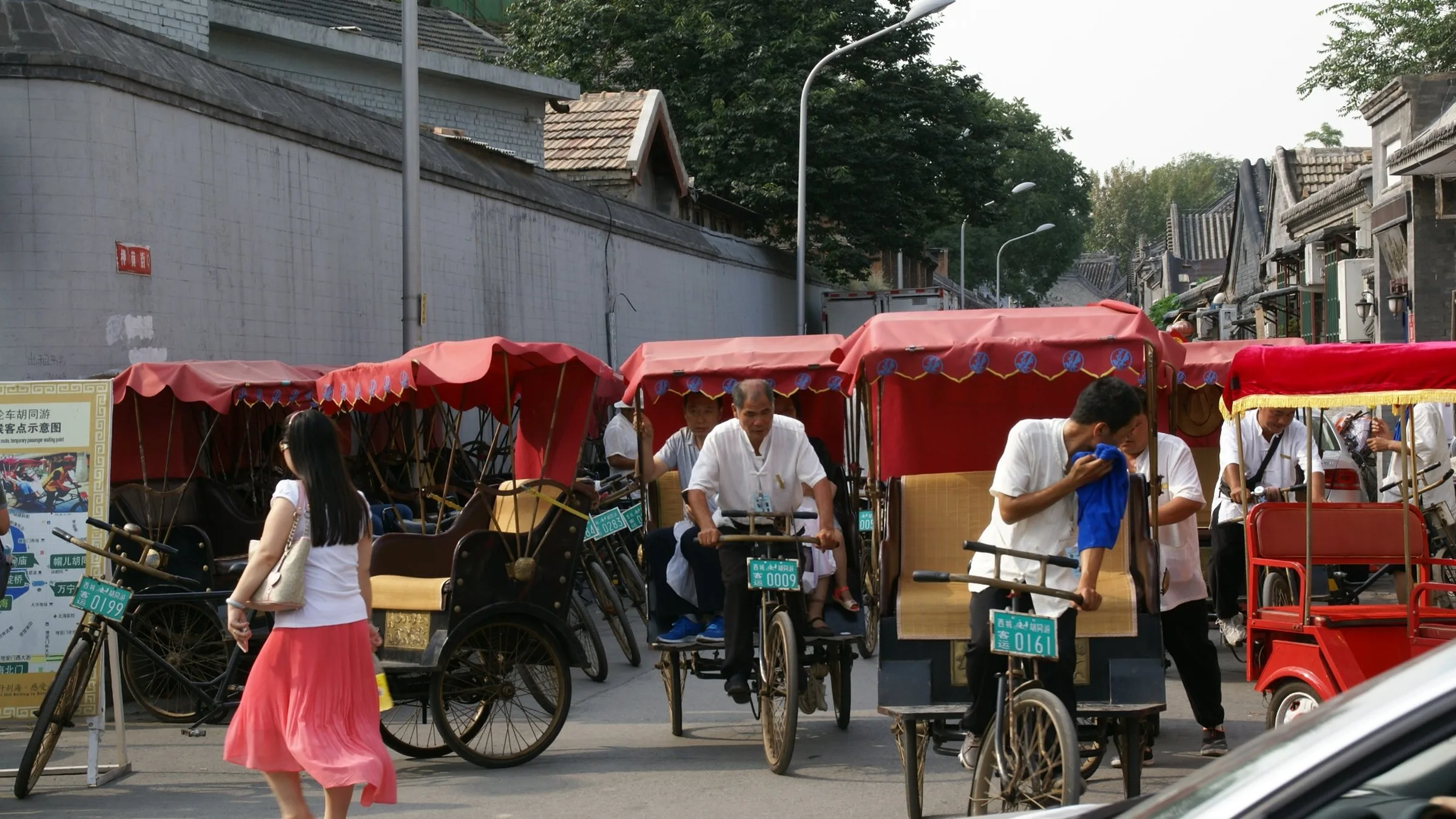
The hutong rickshaw is one of Beijing’s most iconic tourist images — a uniformed driver in a traditional red-canopied pedicab, weaving through narrow alleys, stopping at historic gates, providing historical commentary. For the cultural and historical context of the alleyways themselves, see our Beijing hutong history guide; for a focused ranking of the 10 best alleys to walk, see our top 10 hutongs beyond the tourist traps. For the cultural and historical context of the alleyways themselves, see our Beijing hutong history guide; for a focused ranking of the 10 best alleys to walk, see our top 10 hutongs beyond the tourist traps. The experience is part transportation, part guided tour, and part cultural immersion. For first-time visitors with limited time, a rickshaw tour is the fastest way to get oriented to the hutongs and learn the historical context you won’t get on a self-walk.
But the hutong rickshaw industry has its controversies. Some drivers are honest, knowledgeable, and fair; others use commission-shop scams, demand extra fees, or take circuitous routes to inflate the price. Knowing the system — the right stands, the right prices, the right questions to ask — is essential for a good experience.
This guide covers the history of the rickshaw, the 3 official rickshaw stands, the standard pricing, the 4 most popular routes, how to identify and avoid the common scams, and the practical decision: should you do a rickshaw tour or just walk on your own?
The 700-year evolution of Beijing’s transport
The hutong rickshaw (人力车, rénlìchē, literally “human-powered vehicle”) has a relatively short history but a fascinating cultural trajectory:
Yuan dynasty (1267-1368): The hutongs themselves were established, but wheeled transport in the city was limited to horse-drawn carts for the wealthy. Most people walked.
Ming dynasty (1368-1644): Sedan chairs (轿子, jiàozi) were the primary transport for officials. The emperor banned wheeled vehicles from the inner city for security reasons, so Beijing was a walking city.
Qing dynasty (1644-1912): The same restrictions continued. Officials used sedan chairs, ordinary people walked. The narrow hutongs were not designed for wheeled vehicles.
1860s: The Japanese rickshaw (人力車, jinrikisha, literally “human-powered vehicle”) was invented in Japan around 1869. It reached Beijing in the 1880s via Shanghai. By 1900, the rickshaw was the primary wheeled transport in Beijing — there were estimated 30,000+ rickshaws operating in the city.
Mid-20th century: After 1949, the Communist government gradually phased out rickshaws as a mode of transport (considered a symbol of feudal exploitation). They were replaced by bicycles, then cars. The last functional rickshaws in Beijing were mostly gone by the 1960s.
1990s: The rickshaw revival: As tourism developed, the Beijing government reintroduced rickshaws as a cultural experience. The 什刹海 area became the first formal rickshaw stand in the 1990s. Today, licensed rickshaws operate at 3 official stands, with approximately 200-300 active drivers in the city.
2000s-present: The rickshaw became a tourist experience, not a transport option. Drivers undergo training (history of the hutongs, English phrases, customer service). The red canopy, the traditional uniform (white shirt, sometimes with a black vest), and the specific rickshaw design became standardized as part of Beijing’s cultural brand.
The 3 official rickshaw stands
1. 什刹海 (Shichahai) stand — the most popular. Located at the southern end of 后海 (Hòu Hǎi) lake, near the 银锭桥 (Yǐndìng Qiáo, Silver Ingot Bridge). This is where 90% of hutong rickshaw tours start. The stand has 30-50 drivers at peak times. Drivers are licensed, trained, and the prices are posted on a board. Why this stand: most drivers, most languages (some English, some Japanese, some Korean), and the location provides the best starting routes (lakeside + multiple hutong options).
2. 南锣鼓巷 (Nanluoguxiang) stand — the most touristic. Located at the south entrance of Nanluoguxiang (the most famous hutong). Drivers here are accustomed to first-time visitors, often speak basic English, and offer standard 1-hour tours of the main Nanluoguxiang + side alleys. Why this stand: convenient if you’re already at Nanluoguxiang, and the routes are simpler (no complex negotiation needed). Downside: this is the most “tourist package” experience; less authentic than 什刹海.
3. 鼓楼 (Drum Tower) stand — the most atmospheric. Located near the historic Drum and Bell Towers. Drivers here often have the deepest historical knowledge (the 鼓楼 area is the historic heart of Beijing). For a food-focused 3-hour walk that ends near the same Drum Tower, see our Beijing hutong food tour. For a food-focused 3-hour walk that ends near the same Drum Tower, see our Beijing hutong food tour. Why this stand: the most authentic experience, the most knowledgeable drivers, and the most photogenic starting point. Downside: fewer drivers (10-20 at peak), sometimes harder to find an English-speaking one.
The pricing: what to expect to pay
Standard posted rates (as of 2026):
- 1-hour tour: ¥150-200
- 1.5-hour tour: ¥200-280
- 2-hour tour: ¥250-350
- 3-hour tour (with major sites): ¥400-500
Per-person vs. per-rickshaw: Most tours are charged per rickshaw, not per person. A rickshaw typically seats 2 adults comfortably. If you’re a solo traveler, you pay the same as a couple. If you’re 3 adults, you may need to negotiate or split into 2 rickshaws.
What’s included in the standard price: the rickshaw ride, basic historical commentary in your language, and stops at major sites. What’s NOT included: entry fees to sites (most hutong sites are free, but 恭王府 Prince Gong’s Mansion is ¥40), food/drinks, souvenirs.
Tipping: Not required but appreciated. ¥20-50 is standard for good service.
The 4 most popular rickshaw tour routes
Route 1: 什刹海湖 + hutong loop (90 minutes, ¥200-280). The classic route. Starts at 什刹海 stand, goes around the lake (with photo stops), then enters the hutong network south of the lake, ending back at the start. Covers: 银锭桥, 恭王府 (Prince Gong’s Mansion, exterior), 柳荫街 (Liuyin Street, the most photogenic hutong in the area), traditional gates, and 1-2 residential side alleys. Best for: first-time visitors, anyone who wants the most complete experience.
Route 2: 南锣鼓巷 + side alleys (60 minutes, ¥150-200). Starts at Nanluoguxiang stand, goes through the main hutong, branches into 2-3 of the quieter east-side hutongs (蓑衣胡同, 雨儿胡同, 帽儿胡同), then returns. Best for: anyone who wants to see the architecture without the tourist crowds, anyone already in the area.
Route 3: 鼓楼 + 钟楼 area (90 minutes, ¥200-250). Starts at Drum Tower stand, goes around the Drum and Bell Towers (exterior), through the surrounding hutongs, and into 什刹海. Best for: history enthusiasts, anyone who wants the most knowledgeable driver.
Route 4: Evening tour (60-90 minutes, ¥200-280). Same routes as above but in the late afternoon/evening, when the lanterns are lit and the hutongs have a different atmosphere. Often includes a stop at a traditional tea house. Best for: photographers, couples, anyone who wants the romantic hutong experience.
How to negotiate a fair price
The negotiation is the most stressful part for first-time visitors. Here’s the system:
Step 1: Ask the posted price first. At the official stands, prices are posted. Don’t negotiate yet — get the baseline.
Step 2: Specify what you want. Tell the driver:
- Which route (1, 2, 3, or 4 above)
- How long (60, 90, 120 minutes)
- Language (Mandarin, basic English, fluent English)
- Group size (1, 2, 3, or more people)
Step 3: Confirm the total price. Based on the posted rate, negotiate if needed:
- 1 hour, 2 people, basic English: ¥150-200
- 90 minutes, 2 people, basic English: ¥200-250
- 2 hours, 2 people, basic English: ¥250-300
- For larger groups or longer tours: negotiate based on the per-hour rate
Step 4: Confirm the route on a map. Ask the driver to point out the route on a paper map or use your phone to show them. This prevents the “extended route” scam.
Step 5: Pay upfront if requested. Some drivers ask for payment upfront (especially for shorter tours). This is normal and protects both of you. For longer tours, you may pay 50% upfront and 50% at the end.
Step 6: Tip if the service was good. ¥20-50 is standard for a 1-hour tour.
The 4 common scams to avoid
Scam 1: “Sister store” / commission shops. The driver takes you to a “traditional” teahouse, silk shop, or pearl store, claiming it’s “where locals go.” The store pays the driver a 20-40% commission on anything you buy, so the driver is motivated to send you there. The prices are inflated, the products are often fake, and the experience is scripted. How to avoid: tell the driver upfront you don’t want to stop at any shops. If they insist, refuse and find another driver.
Scam 2: “Extended route” / “traffic detour.” The driver takes a longer route than agreed, or claims traffic made the tour longer, and demands more money at the end. How to avoid: confirm the route + duration upfront, set your phone timer if needed, and refuse to pay more than the agreed price.
Scam 3: “No English drivers” / “Need premium.” The driver claims no English is available, so you need a “premium” driver at a higher price. How to avoid: most official stands have multiple drivers; if one claims no English, walk 5 meters and ask another. Don’t pay a “premium” unless you specifically requested an English-speaking driver.
Scam 4: “Fixed price” with hidden extras. The driver quotes a ‘fixed price’ of ¥300-500, then adds extras (entry fees, ‘stop fees’, ‘waiting fees’) at the end. How to avoid: always agree on a per-hour or per-tour total price. Don’t agree to ‘fixed’ prices without specifying what’s included.
The alternative: walking on your own (or pairing it with a Beijing layover)
A rickshaw tour is convenient and educational, but it’s not the only way to experience the hutongs. Many experienced Beijing travelers prefer walking on their own for several reasons. If you only have 2 days in Beijing and need to compress the experience, our 2-day Beijing layover itinerary builds a hutong rickshaw sunset slot into Day 1; for a fuller 3-day trip, the first-time Beijing guide covers the broader planning:
Pros of walking:
- Free — no rickshaw cost
- Authentic — you can enter the side alleys rickshaws can’t reach
- Self-paced — you stop where you want, for as long as you want
- Better photos — you can frame shots from angles a rickshaw can’t
- More flexible — change plans on the fly
Cons of walking:
- No historical commentary — you need to do your own research
- More tiring — 2-3 hours of walking in the hutongs is significant
- Harder to navigate — the hutongs are a maze, easy to get lost
- Less comfortable — no seat, no shade, no protection from rain
The hybrid approach (recommended for first-time visitors): Do a 1-hour rickshaw tour for orientation and history, then spend another 1-2 hours walking on your own. This gives you the educational context plus the authentic exploration.
Self-walking tips (if you skip the rickshaw)
Bring Baidu Maps (the Chinese Google Maps equivalent). Google Maps is unreliable in China. Baidu Maps (百度地图) is free, has English interface, and works in the hutongs.
Allow yourself to get lost — the maze structure is part of the experience. Note the direction you came from (the hutong is asymmetric — one end usually has more shops, the other end is more residential).
Use the gates as landmarks — each gate is unique. Remember the visual features of the gate you came from, so you can find your way back.
Walk during weekday mornings — the most authentic time, the most pleasant weather, the fewest tourists.
Bring water and comfortable shoes — the hutongs involve a lot of walking on uneven surfaces.
Rickshaw tour vs. walking tour: the practical decision
| Rickshaw | Walking | Walking tour (with guide) | |
|---|---|---|---|
| Cost | ¥150-300 per hour | Free | ¥200-500 per person |
| Duration | 60-90 min standard | As long as you want | 2-3 hours standard |
| History commentary | Basic, in your language | None (do your own research) | Detailed, expert guide |
| Authenticity | Medium (tourist experience) | High (you’re on your own) | Medium-High |
| Flexibility | Low (driver decides route) | High (you decide) | Medium (guide has set route) |
| Photography | Limited (you can take shots but rickshaw moves) | High (you can frame) | Medium (guide may pause for shots) |
| Comfort | High (you sit) | Medium (you walk) | Medium (you walk) |
| Best for | First-timers, limited mobility, evening tours | Repeat visitors, photographers, anyone who wants authentic | Anyone who wants detailed history without rickshaw |
The 5 rickshaw drivers to know
While you can’t book specific drivers in advance (mostly), the official 什刹海 stand has a few “star drivers” who are recommended by word of mouth. The drivers are independent contractors but most have been doing this for 10+ years. If you find a good one, ask for their WeChat (Chinese WhatsApp equivalent) so you can book them again on a return visit.
The one thing every rickshaw rider should know
A hutong rickshaw is a tourist experience, not authentic Beijing transport. The drivers are performing for you — they’re not locals going to work, they’re tourist guides who happen to drive rickshaws. The historical commentary is rehearsed. The routes are pre-planned. This doesn’t make the experience less valuable — it’s a convenient way to see the hutongs — but it does mean you shouldn’t expect “real” Beijing life from inside a rickshaw. For that, you need to walk on your own after the rickshaw tour ends.
The other thing: tipping matters. A ¥30-50 tip for a 1-hour tour is appropriate. The drivers are independent contractors who depend on tips for a significant portion of their income. A good tip ensures the next visitor also gets a good experience.
Final practical tips
- Bring sunscreen and water in summer — the rickshaw is open-air and you’ll be sitting in the sun
- Bring a light jacket in spring/fall — the mornings and evenings are cool
- Wear comfortable shoes — you may need to walk short distances when the rickshaw can’t fit
- Bring your phone/camera with charged battery — you’ll want to take many photos
- Confirm the price in writing if possible — WeChat message with the driver before the tour is ideal
The hutong rickshaw is one of the most enjoyable 90 minutes you can spend in Beijing. The combination of slow transport, historical context, and beautiful architecture is unique to the city. Take the tour. Just be smart about it.
Plan your trip — verified tools
These free tools are built on real, monthly-verified data and help you skip the trial-and-error phase of China trip planning:
- China 240-Hour Visa-Free Transit Checker — 57 countries, 24 provinces, 65 ports. See if you qualify for 10-day visa-free transit, which cities you can visit, and the 5-step process.
- China 6-City 5-Day Budget Calculator — Real 2026 prices for 5 days in Beijing, Shanghai, Guangzhou, Chengdu, Xi’an, or Hangzhou. Budget / mid-range / comfort tiers, broken down line by line.
Verified August 2026 by TravelHubChina Editorial. We re-check prices and policy details monthly so the data doesn’t drift.
Step by step
-
Go to an official rickshaw stand
Head to Shichahai (most drivers, some English), Nanluoguxiang south entrance (most touristic), or Drum Tower (most atmospheric, most knowledgeable drivers). Avoid unsolicited drivers approaching you on the street - they often charge 2-3x and detour to commission shops.
-
Negotiate the price and route upfront
Standard 2026 rates: Y150-200 for 1 hour, Y200-280 for 1.5 hours, Y250-350 for 2 hours. Confirm the route (Shichahai loop, Nanluoguxiang + side alleys, Drum Tower area, or evening tour), duration, language, and total price before you start. Reject any quote over Y400.
-
Tell the driver no commission shops
Say upfront 'bu yao dai wo qu shangdian' (don't take me to shops). The 'sister store' scam sends you to teahouses, silk shops, or pearl stores where the driver gets 20-40% commission. If they insist, find another driver at the same stand.
-
Tip and pay via WeChat/Alipay or cash
Pay the agreed total. Tip Y20-50 for a 1-hour tour if the service was good. Drivers are independent contractors who depend on tips for a significant portion of their income. Save their WeChat (Chinese WhatsApp) for booking on return visits.
FAQ
-
How much does a hutong rickshaw tour cost?
¥150-300 per hour is the standard rate. The official rickshaw stands at 什刹海 Shichahai, 南锣鼓巷 Nanluoguxiang, and 鼓楼 Drum Tower charge a posted rate. Drivers outside these areas may offer lower or higher rates — always negotiate before starting. For a 1-hour tour, expect to pay ¥150-200. For a 2-hour tour with extended route, ¥250-300. -
Are the rickshaw drivers honest?
Most are — they're licensed, have been doing this for years, and rely on repeat customers and word-of-mouth. But a few bad apples exist: drivers who take you to "sister stores" that pay them commission, drivers who extend the route to charge more, drivers who demand higher prices at the end. Stick to official rickshaw stands and confirm the price + route upfront. -
Should I take a rickshaw tour or walk on my own?
Depends on your priorities. Rickshaw: convenient, educational (the drivers explain the history), good for evening tours, accessible for limited mobility. Walking: free, more authentic, you can explore the side alleys rickshaws can't enter, you control the pace. Most first-time visitors do both — a 1-hour rickshaw tour for context, then walking on their own to explore. -
Are the rickshaws safe?
Yes, generally. The vehicles are well-maintained (required by the city), drivers are experienced. The main safety concerns: traffic (rickshaws share the road with cars at intersections), and the narrow alleys (drivers may need to maneuver carefully). Wear comfortable shoes and bring a jacket in winter (rickshaws are open-air). -
How long is a typical hutong rickshaw tour?
1-1.5 hours is standard. The shortest tours (30-45 minutes) cover just the main hutongs in 什刹海 or 南锣鼓巷. Longer tours (2-3 hours) can include the lakeside loop, more residential side alleys, and stops at specific sites. Negotiate the duration upfront — most drivers prefer the standard 1-hour tour. -
Can I book a rickshaw tour in advance?
Yes, through Trip.com, Airbnb Experiences, or directly with hutong tour companies. Pre-booking gives you a confirmed English-speaking driver, a set price, and a more curated experience. The downside: it's more expensive (¥400-800 per tour) and less flexible than a walk-up booking. For first-time visitors, pre-booking is recommended. -
Do the rickshaw drivers speak English?
Varies. Drivers at the official stands in 什刹海 and 南锣鼓巷 are often trained with basic English phrases (the major hutong sites, “left/right”, “this is the gate of...”). Few drivers are fluent in English. If you need detailed historical commentary, book an English-speaking driver in advance through Trip.com or a hutong tour operator. -
What if it rains during my rickshaw tour?
The rickshaws have canopies (the red cover you see in photos) that protect against light rain. Heavy rain makes the tour less pleasant — drivers may offer to continue or refund. Most hutong tour companies allow rebooking for weather. Check the weather forecast the morning of and have a backup plan (a walking tour of museums, indoor tea ceremony, etc.).
Related guides
- Culture & Practical
Beijing Hutongs: A Complete Guide to the City's Ancient Alleyways (History, Map, How to Visit)
Complete guide to Beijing's hutongs: the 700-year history from Yuan dynasty to today, why hutongs are disappearing, the 6 best hutong areas to visit as a foreigner, how to navigate them on foot or by rickshaw, the etiquette rules, and how to experience the real local hutong life (not the tourist-trap version).
8min read
- Culture & Practical
10 Best Beijing Hutongs to Visit (Beyond the Tourist Traps)
Beyond the crowded Nanluoguxiang: 10 specific hutongs worth visiting, from the most authentic residential alleys to the most photogenic, with what makes each one unique, exact addresses, how to get there, and when to visit. Includes a printable walking map.
9min read
- Culture & Practical
11 Cultural Mistakes Foreigners Make in China (And How to Avoid Them)
The 2026 etiquette guide for foreigners in China: 11 cultural mistakes that cause offense, awkwardness, or worse — and exactly what to do instead. Covers tipping (don't), chopsticks (don't stick them in rice), gift-giving (red envelope etiquette), loud phone calls, queueing, gift color symbolism, and the 茶 ceremony scam. Plus regional and generational differences.
9min read
- Culture & Practical
China Travel Etiquette: 15 Things to Get Right
The 15 most important Chinese etiquette rules: tipping, queueing, gift-giving, tea ceremony, chopstick taboos, and the small mistakes that cause real offense. Plus the 2025-2026 'China Travel' cultural shift.
9min read
- Culture & Practical
Is It Safe to Travel to China in 2026? The Complete Foreigner's Safety Guide
Comprehensive 2026 safety guide for China travel: crime statistics, region-specific risks, scams targeting foreigners, US State Department advisory, LGBTQ+ safety, female solo travel, health and medical care, embassy registration, and 5-step arrival safety checklist. Plus: is it safe to travel to China right now in 2026 (yes, with normal precautions).
12min read
- Culture & Practical
Chinamaxxing 2026: 12 Chinese Lifestyle Experiences Every Foreigner Should Try
Chinamaxxing is the 2026 trend of foreign visitors going deep into Chinese daily life — hot water, ba duan jin qigong, hanfu, mahjong, tea ceremony, foot baths, and more. 12 hands-on experiences with where to try each one, what to expect, and how to book.
9min read