
Peking Duck Guide: How to Eat It, Best Restaurants, History
A practical guide to Peking duck (北京烤鸭) for foreign visitors — the history, how to eat it the traditional way, the 7 best restaurants in Beijing, prices, and how to spot a quality duck.
The dish that made Beijing famous
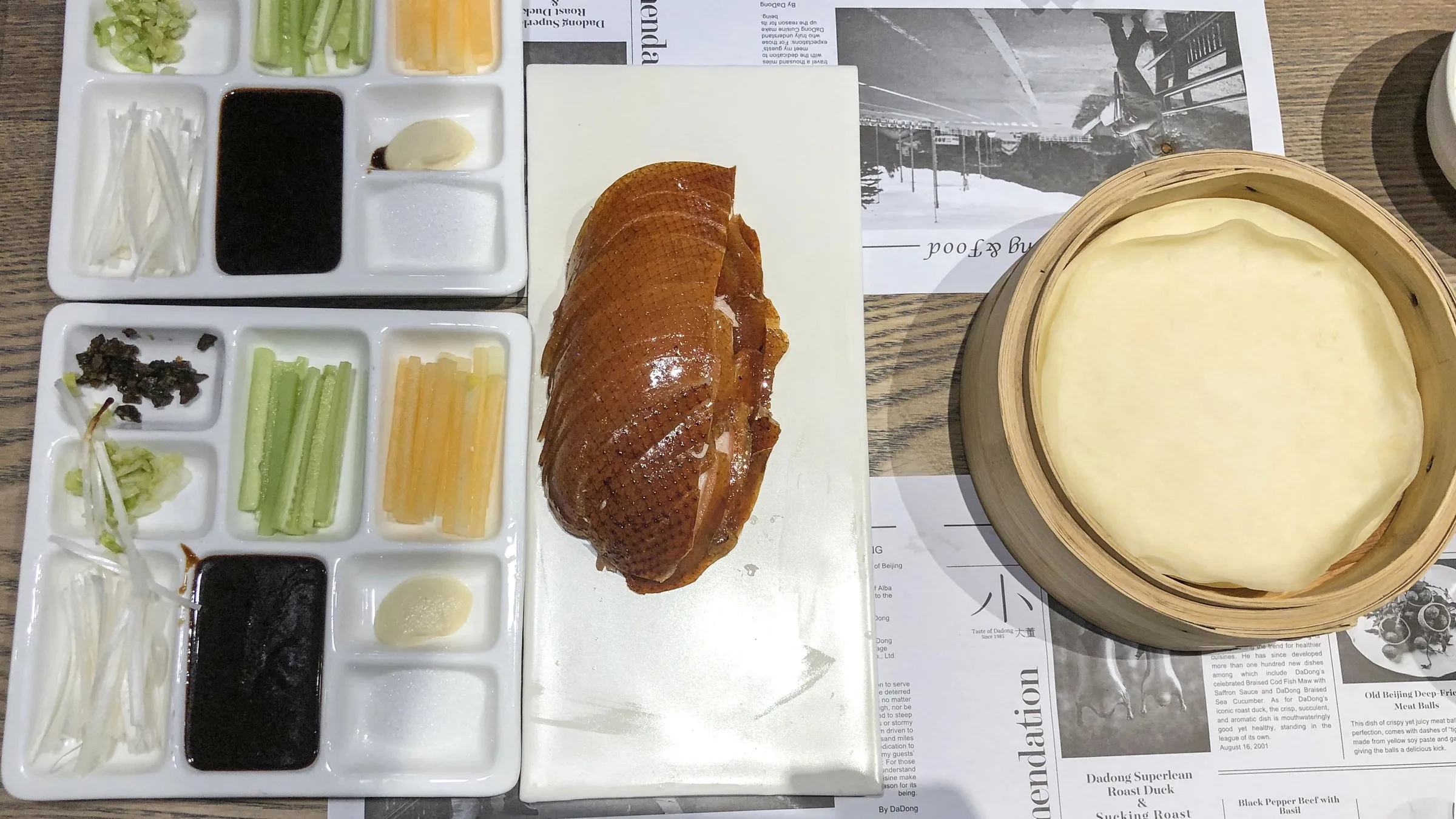
Peking duck (北京烤鸭 Běijīng kǎoyā) is the iconic dish of Beijing — a whole duck roasted until the skin is crispy and golden, served with thin pancakes, scallions, cucumber, and hoisin sauce. The dish has been a fixture of imperial and Beijing cuisine since the Yuan dynasty (1271-1368), and is the most internationally recognized Chinese dish.
For foreign visitors to Beijing, Peking duck is the single most important culinary experience. Plan the meal into a 3-day Beijing itinerary that also covers the Forbidden City, the hutongs, and the Wall. The dish is a sensory ritual — the carving is done table-side, the skin is eaten first dipped in sugar, and the meat is wrapped in pancakes with the traditional accompaniments. No visit to Beijing is complete without a proper Peking duck meal. After dinner, walk off the duck on a Beijing hutong food tour for jianbing, lvdagun, and the city’s other street classics.
The history: 700 years of refinement
Peking duck originated in the imperial kitchens of the Yuan dynasty (1271-1368), and the technique was refined during the Ming dynasty (1368-1644) and Qing dynasty (1644-1912). The dish was originally an imperial delicacy served only to the emperor and the court.
The two most famous restaurants in Beijing both have imperial origins:
- Bianyifang (便宜坊), founded in 1416 during the Ming dynasty, is the oldest Peking duck restaurant in the world. It uses the ‘menlu’ (焖炉) method — sealing the duck in a closed oven with sorghum stalks, where it roasts in its own fat for about 30 minutes.
- Quanjude (全聚德), founded in 1864, popularized the ‘gonglu’ (挂炉) method — hanging the duck in an open oven over fragrant wood (typically jujube or date wood) for about 25 minutes. Quanjude became the most internationally famous Peking duck restaurant and was the first to introduce the table-side carving ritual.
The dish is now considered a national treasure of Chinese cuisine and is one of the most famous Chinese dishes in the world.
How to eat Peking duck the traditional way
The Peking duck eating ritual is a sensory experience with specific steps. The traditional method:
Step 1: The skin first. The first serving is the duck skin only, sliced into small rectangles about 4cm x 2cm. The skin is dipped in white sugar (not hoisin) and eaten as a sweet, crispy bite. This is the imperial tradition — the skin is the prized part of the duck.
Step 2: Take a pancake. The pancakes (春饼 chūnbǐng) are paper-thin, about 15cm in diameter, and served in bamboo steamers to keep them warm. Take one in your hand and lay it flat on your plate or palm.
Step 3: Add hoisin sauce. Use the back of a spoon (or a small brush) to spread a thin layer of hoisin sauce (海鲜酱 hǎixiān jiàng) on the pancake. The hoisin is sweet and savory — a small amount is plenty.
Step 4: Add scallion and cucumber. Add a thin strip of scallion (white part) and a thin strip of cucumber. The vegetables add crunch and freshness.
Step 5: Add duck meat and skin. Add 2-3 slices of duck meat (with a small piece of skin attached). The chef will have carved the meat into bite-sized pieces with the skin.
Step 6: Roll and eat. Roll the pancake up like a small burrito, fold the bottom up, and eat with your hands. Dip the bottom in any remaining sauce.
Plan for 8-10 pancakes per person. A whole duck typically yields 100+ pieces of skin and meat, enough for 2-3 people with hearty appetites.
The 7 best restaurants in Beijing
The traditional institutions
1. Quanjude (全聚德) — The most famous traditional restaurant, founded in 1864. The flagship at Qianmen (前门) is the classic experience — a large dining room with the duck being carved table-side by white-uniformed chefs. The duck is the original gonglu (open oven) style. Price: ¥300-500 for a whole duck. Multiple branches in Beijing.
2. Bianyifang (便宜坊) — The oldest Peking duck restaurant in the world, founded in 1416. The flagship at Dongdan (东单) uses the original menlu (closed oven) method, which produces a slightly different flavor profile. Price: ¥200-400 for a whole duck. Less famous than Quanjude but considered by many locals to be more authentic.
3. Duck de Chine (鸭缘) — A more refined institution, located in a beautiful traditional courtyard in the Sanlitun area. The duck is excellent and the setting is more atmospheric than the bigger traditional restaurants. Price: ¥300-500 for a whole duck.
The modern institutions
4. Da Dong (大董) — The most modern and refined Peking duck restaurant, founded in 1985. The chain is famous for the ‘Superlean Roast Duck’ (superlean version with less fat) and the creative contemporary presentation. Considered by many food critics to be the best Peking duck in Beijing today. Price: ¥400-800 for a whole duck. Multiple branches including the flagship at Tuanjiehu (团结湖).
5. Duck Chang (长城烤鸭店) — A smaller, less famous institution in the Wangfujing area. The duck is excellent and the prices are more moderate than the bigger names. Price: ¥200-350 for a whole duck. Popular with local Beijingers.
6. Jingzun Peking Duck Restaurant (京尊北京烤鸭店) — A local favorite in the Chaoyang district. No English menu, no decor, just excellent duck at a moderate price. The most authentic local experience. Price: ¥150-250 for a whole duck.
The new wave
7. Jing Yaa Tang (京雅堂) — A modern, upscale Peking duck experience in a beautiful traditional courtyard. The duck is excellent and the setting is the most photogenic of any Peking duck restaurant. Price: ¥400-700 for a whole duck. Worth it for a special occasion.
What to expect at the restaurant
A Peking duck meal typically takes 1.5-2 hours. The experience:
-
Order the duck (45-60 minutes before serving). The duck needs to be roasted after you order, so the restaurant requires advance notice. Most famous restaurants offer 2-3 duck options at different price points (the more expensive ducks are typically higher-quality birds, force-fed for longer).
-
Start with the appetizers. The restaurant will bring a series of small cold dishes (cold cuts, jellyfish, pickled vegetables) while you wait. These are typically included in the set meal or charged separately at ¥30-50 per dish.
-
The carving ritual. When the duck arrives, the chef will carve it table-side. A trained Peking duck chef can carve 100+ pieces in 4-5 minutes, separating the skin from the meat, slicing the meat, and arranging everything on plates. The carving is part of the experience — watch closely.
-
The first serving — skin only. The chef will bring the first plate: the duck skin, sliced into small rectangles. The skin is dipped in white sugar and eaten as a sweet, crispy bite. This is the imperial tradition.
-
The main meal — skin + meat in pancakes. The second serving is the meat with attached skin. Use the pancakes, hoisin sauce, scallion, and cucumber to assemble the rolls.
-
Optional: the second course. Most restaurants offer a ‘second course’ (二吃 èr chī) of the duck — the bones and remaining meat are made into a soup (鸭架汤) or a stir-fry (with bean sprouts, ginger, and scallion). This is typically included in the set meal or charged ¥30-50 extra.
-
The third course (sometimes). At the most refined restaurants, the chef will offer a third preparation — the duck bones are boiled into a clear soup with tofu and vegetables. This is included in the highest-priced set meals.
How to spot a tourist trap
Peking duck is one of the most over-priced tourist dishes in Beijing. The tourist-trap indicators:
- The restaurant has pictures of the duck on the menu in multiple languages
- The waitstaff aggressively invites you in from the street
- The duck is priced per ‘half’ (no Beijing restaurant sells half-ducks)
- The ‘traditional decorations’ are clearly staged for tourists
- The restaurant is empty even during peak dinner hours
The most reliable indicators of quality: the restaurant is busy with Chinese diners (not just tourists), the duck is carved table-side by a uniformed chef, and the duck takes 45-60 minutes to prepare (not pre-cooked and reheated).
When to come
Peking duck is excellent year-round. The best times:
- October-November — The new season’s ducks are at their fattest
- Lunar New Year (late January or February) — Special Peking duck banquets are traditional
- Avoid the May 1-3 and October 1-7 national holidays — Restaurants are crowded, ducks are rushed, prices inflated
Final tip
Peking duck rewards the traditional experience. Eat the skin first with sugar. Wrap the meat in the pancakes with the proper accompaniments. Take your time — the meal should last 1.5-2 hours. The most famous restaurants (Quanjude, Da Dong) are worth the visit, but the smaller local restaurants (Jingzun) often serve better duck at a fraction of the price. The dish has been refined over 700 years; take the time to enjoy it properly.
Plan your trip — verified tools
These free tools are built on real, monthly-verified data and help you skip the trial-and-error phase of China trip planning:
- China 6-City 5-Day Budget Calculator — Real 2026 prices for 5 days in Beijing, Shanghai, Guangzhou, Chengdu, Xi’an, or Hangzhou. Budget / mid-range / comfort tiers, broken down line by line.
- China OTA Comparison 2026 — Trip.com vs Booking.com vs Agoda vs Klook across 5 booking types. Inventory, pricing, foreign card support, English service, per-OTA verdict.
Verified August 2026 by TravelHubChina Editorial. We re-check prices and policy details monthly so the data doesn’t drift.
Related: Sichuan cuisine guide
Related: China food by city
Step by step
-
Plan to eat Peking duck in Beijing only
Peking duck (北京烤鸭) is a Beijing specialty — the white Beijing duck breed, the air-dried-then-roasted method, and the table-side carving all require Beijing-specific sourcing. Other Chinese cities serve inferior imitations. Stay 2-3 nights in Beijing and book dinner on day 1 or 2.
-
Choose your budget tier
Traditional institution: ¥200-500 per duck (serves 2-3) at Quanjude or Bianyifang. Modern upscale: ¥400-800 per duck at Da Dong or Duck de Chine. Per-person: ¥150-300 including sides and drinks. For first-timers, Quanjude Qianmen flagship (since 1864) is the classic experience.
-
Book 1-2 days in advance
Quanjude and Da Dong require advance booking, especially for weekend dinners. Call the restaurant (numbers on official websites), book through your hotel concierge, or use the WeChat/Alipay mini-program. The duck takes 45-60 minutes to roast, so the kitchen needs notice. Walk-ins are sometimes possible at lunch.
-
Order the signature whole duck and traditional sides
The duck is always whole (no half-orders). Set menus typically include: whole duck, pancakes (春饼), hoisin sauce (海鲜酱), scallions, cucumber, and sometimes a light soup. Add ¥30-50 for duck bone soup (鸭架汤) made from leftovers — it comes at the end. Avoid à la carte pricing — set menus are better value.
-
Eat in the 7-step ritual and pay
First, eat skin dipped in sugar (the imperial tradition). Then wrap: pancake → hoisin → scallion → cucumber → duck meat+skin → roll. Plan 8-10 pancakes per person. Pay with Alipay/WeChat Pay/credit card. Total ¥200-500 for 2-3 people including drinks.
FAQ
-
What makes Peking duck different from other roast ducks?
Peking duck (北京烤鸭) is distinguished by three factors: the breed (specifically the white Beijing duck, force-fed for 2-4 weeks to fatten the skin), the roasting method (the air-dried, glazed skin is roasted in a hung oven or closed oven at high heat until the skin is crispy and the fat melts away), and the serving ritual (the duck is carved table-side into 100+ pieces, with the skin and meat served separately with thin pancakes, scallions, cucumber, and hoisin sauce). Other Chinese roast ducks (Cantonese, Sichuan) are different breeds, different roasting methods, and served differently. -
How much does Peking duck cost for foreigners in 2026?
A whole Peking duck at a famous institution costs ¥200-400 (€30-50) for a duck that serves 2-3 people. At the most famous traditional restaurants (Quanjude, Bianyifang), the price is ¥300-500. At upscale modern restaurants (Da Dong, Duck de Chine), the price is ¥400-800. Per-person cost is typically ¥150-300 including the duck, sides, and drinks. The duck is always sold whole — half-ducks are not an option. Most restaurants offer set meals that include the duck, pancakes, sauces, and side dishes. -
Where should I try Peking duck for the first time?
Beijing is the only authentic destination — Peking duck is a Beijing specialty. The three most famous traditional institutions are: Quanjude (全聚德, founded 1864, the most famous traditional), Bianyifang (便宜坊, founded 1416, the oldest), and Da Dong (大董, founded 1985, the most modern and refined). The first-time experience should be at one of these three. Avoid tourist-trap restaurants near the Forbidden City or Wangfujing that charge inflated prices for low-quality duck. -
How do I know if the Peking duck is good quality?
Five signs of quality: (1) the duck should be the Beijing white duck breed, force-fed for the fattened skin; (2) the skin should be uniformly golden-brown, crispy, and translucent when held to the light; (3) the carving should be done table-side by a trained chef, with 100+ pieces carved in 4-5 minutes; (4) the skin and meat should be served separately, with the skin coming first; (5) there should be no excess fat or oil. A quality duck will have most of its fat rendered out during roasting — the meat should be lean, not greasy. -
How do I eat Peking duck the traditional way?
The traditional Peking duck eating ritual: (1) Take a thin pancake in your hand. (2) Use chopsticks to add a slice of crispy skin (the first serving is skin only, dipped in sugar). (3) Add a slice of duck meat on top of the skin. (4) Add a strip of scallion and a strip of cucumber. (5) Drizzle a small amount of hoisin sauce over the duck. (6) Roll the pancake up like a small burrito. (7) Eat with your hands, dipping the bottom in any remaining sauce. The whole process takes about 1 minute per pancake. Plan for 8-10 pancakes per person. -
Is Peking duck the same as Cantonese roast duck?
No — they are different dishes with different origins, methods, and flavors. Peking duck (北京烤鸭) is from Beijing, uses the white Beijing duck breed, is air-dried and roasted until the skin is crispy, and is served with pancakes, scallions, cucumber, and hoisin. Cantonese roast duck (烧鸭) is from Guangdong, uses a different breed, is marinated in a spiced solution and roasted at lower heat until the skin is lacquered, and is served over rice or with noodles. The flavors and textures are quite different. Both are excellent but not interchangeable. -
Can I take leftover Peking duck home?
Yes — most restaurants will pack the leftover duck for you. The duck is best eaten fresh but will keep in the fridge for 1-2 days. Reheat in a hot oven (not microwave) to crisp the skin. The leftover duck is excellent in fried rice, congee, or in a duck sandwich. The bones can be used to make duck soup (鸭架汤 yājià tāng) — most restaurants will make this for you from the leftover bones, with tofu, napa cabbage, and seasonings, for an additional ¥30-50. -
Do I need to book Peking duck in advance?
Yes, especially at the most famous restaurants. Quanjude and Da Dong should be booked at least 1-2 days in advance, especially for weekend dinners. You can book by phone (the numbers are on the official websites), through your hotel concierge, or through WeChat/Alipay mini-programs. For lunch, walk-ins are often possible. For dinner on a Friday or Saturday, advance booking is essential. The duck takes 45-60 minutes to roast after ordering, so the restaurant needs to know in advance.
Related guides
- Food & Dietary
Sichuan Cuisine Guide: 15 Essential Dishes for Foreigners
A practical guide to Sichuan (川菜) cuisine for foreign visitors — the 15 essential dishes, what makes Sichuan food spicy-numbing (麻辣), where to eat in Chengdu, and how to order without speaking Chinese.
12min read
- Food & Dietary
Cantonese Dim Sum Guide: 12 Essential Dishes + Tea Etiquette
A practical guide to Cantonese dim sum (点心) for foreign visitors — the 12 essential dishes, how to order from the cart, tea etiquette, where to eat in Guangzhou and Hong Kong, and the famous 饮茶 (yum cha) tradition.
11min read
- Food & Dietary
China Food by City: 8 Cities, 24 Iconic Dishes
A guide to Chinese regional food by city — the 8 most foodie-worthy cities for foreign visitors, the 3 iconic dishes in each, and where to find them. Beijing, Shanghai, Chengdu, Guangzhou, Hong Kong, Xi'an, Hangzhou, Chongqing.
14min read
- Food & Dietary
Street Food in China: 20 Safe Dishes for First-Timers
20 iconic Chinese street foods with pinyin, English names, what they taste like, regional origin, average price in USD, and which ones are safe for first-time visitors. Plus food-safety rules.
10min read
- Food & Dietary
Chinese Hotpot Guide: 4 Styles + How to Eat It
A practical guide to Chinese hotpot (火锅) for foreign visitors — the 4 main styles (Sichuan, Chongqing, Beijing, Cantonese), how to eat it, the 20 essential ingredients, and where to try it in each city.
11min read
- Food & Dietary
20 Chinese Phrases to Order Food (Pinyin + Audio)
The 20 must-know Mandarin phrases for ordering food in China, with pinyin, English translation, audio tips, and a printable phrase card. Includes restaurant, street food, and dietary phrases.
8min read