
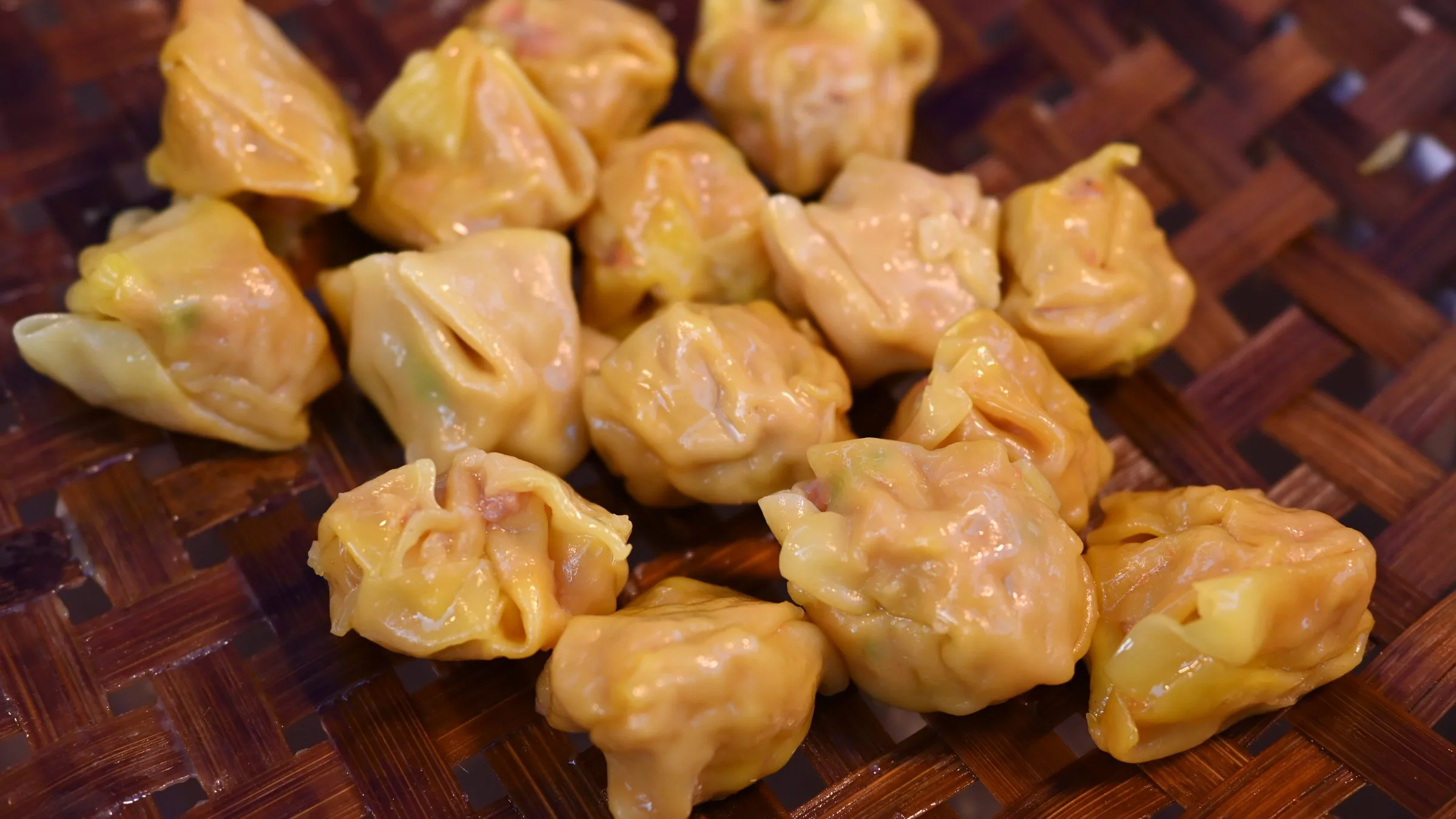
Cantonese Dim Sum Guide: 12 Essential Dishes + Tea Etiquette
A practical guide to Cantonese dim sum (点心) for foreign visitors — the 12 essential dishes, how to order from the cart, tea etiquette, where to eat in Guangzhou and Hong Kong, and the famous 饮茶 (yum cha) tradition.
The 1000-year-old brunch tradition
Cantonese dim sum (点心 dǐngxīn in Mandarin, dim sám in Cantonese) is a Cantonese culinary tradition of small, bite-sized dishes — dumplings, buns, rolls, tarts, savory and sweet items — typically served in bamboo steamers. It is part of the wider yum cha (饮茶) tradition: gathering with family or friends over tea and dim sum on weekend mornings. The practice dates to the 10th century along the ancient Silk Road in Canton (now Guangzhou), where weary travelers stopped at roadside teahouses for refreshment.
For foreign visitors to China, dim sum is the most accessible and beginner-friendly of all the regional Chinese cuisines. The small portions, the social setting, and the visual variety make it the ideal introduction to Chinese food culture. To extend the culinary experience beyond Cantonese cuisine, see our Sichuan cuisine guide for the spicy half of the country, the broader China food by city overview, and our China street food guide for what to eat at markets and hawker stalls. For practical Cantonese travel, see our Hong Kong on a budget guide — the most affordable Michelin-starred dim sum in the world is in Hong Kong.
The 12 essential dishes
The 5 foundational dumplings
1. Har Gow (虾饺, hā gǎo) — Crystal shrimp dumplings. The most iconic dim sum dish. 4-5 translucent dumplings in a bamboo steamer, made from wheat-starch-tapioca wrapper showing the pink shrimp inside, steamed. Price: ¥25-40 per steamer.
2. Siu Mai (烧卖, shāo mài) — Pork and shrimp dumplings. Open-topped yellow dumplings with visible pork and shrimp filling, topped with a single orange roe or pea. Price: ¥20-35 per steamer.
3. Cheung Fun (肠粉, cháng fěn) — Rice noodle rolls. Wide, flat rice noodles rolled around fillings (shrimp, beef, char siu pork, or plain). Drizzled with sweet soy sauce. The plain version is the most traditional. Price: ¥25-40 per plate.
4. Lo Mai Gai (糯米鸡, nuòmǐ jī) — Sticky rice in lotus leaf. Glutinous rice with chicken, shiitake mushrooms, Chinese sausage, and salted egg yolk, wrapped in a lotus leaf and steamed. Unwrap the leaf to eat. Price: ¥25-40 per portion.
5. Char Siu Bao (叉烧包, chāshāo bāo) — BBQ pork buns. Fluffy steamed white buns filled with sweet-savory char siu pork. The ‘cha siu bao’ is sometimes baked (the ‘pineapple bun’ version) but the steamed version is the classic. Price: ¥20-30 per steamer (3 buns).
The 5 classic savory dishes
6. Steamed Spare Ribs with Black Bean (豉汁排骨, chǐ zhī páigǔ) — Tender pork ribs steamed with fermented black beans, garlic, and ginger. The most popular steamed savory dish. Price: ¥25-40 per portion.
7. Turnip Cake (萝卜糕, luóbo gāo) — Pan-fried daikon radish and rice flour cake, with bits of Chinese sausage and dried shrimp. Crispy on the outside, soft inside. Price: ¥20-30 per portion.
8. Phoenix Claws (凤爪, fèng zhǎo) — Chicken feet braised in sweet black bean sauce, then deep-fried and steamed until gelatinous. The name is more appetizing than the dish — the feet are mostly cartilage and skin. Price: ¥20-30 per portion.
9. Beef Tripe (牛肚, niú dǔ) — Tripe steamed with ginger and scallions. A classic for those who want the authentic experience. Price: ¥25-35 per portion.
10. Egg Yolk Bun (黄金流沙包, huángjīn liúshā bāo) — Custard buns filled with salted egg yolk custard that ‘flows’ when bitten. A modern dim sum innovation. Price: ¥20-30 per steamer (3 buns).
The 2 essential desserts
11. Egg Tarts (蛋挞, dàn tà) — Flaky pastry shells filled with sweet egg custard. The Macau version is particularly famous. Price: ¥20-30 per portion (3-4 tarts).
12. Mango Pudding (芒果布丁, mángguǒ bùdīng) — Sweet mango pudding topped with fresh mango pieces, served cold. A modern dim sum dessert. Price: ¥20-30 per portion.
The yum cha etiquette
How to order
In a traditional restaurant, the dim sum carts are pushed around the dining room by waitstaff. When you see a cart with something you want, flag the server down and point to the dish. They will either hand you a plate or mark your order on a card. In modern restaurants, you order from a paper menu or QR code.
The serving sizes are typically 3 pieces per steamer for dumplings and buns, 1 piece for the larger items (lo mai gai, char siu bao), and 1-2 pieces for the dessert items. Plan for 3-4 dishes per person, plus a pot of tea.
The tea ceremony
The tea is the central ritual. The waitstaff will bring a pot of your chosen tea and a small cup for each person. Refills are free and frequent. The traditional choices are:
- 普洱 (Pǔ’ěr, pu’er tea) — Earthy, dark, the most popular
- 铁观音 (Tiěguānyīn, tieguanyin) — Floral oolong
- 菊花茶 (Júhuā, chrysanthemum) — Light, caffeine-free
To order more tea, tap the lid of your tea cup twice on the table — the traditional signal for “more tea, please.” The custom originated because the early teahouses were noisy, and shouting for service was considered rude.
A nice custom: the first person to pour tea for the others pours for the youngest at the table, and the youngest then pours for the eldest. If someone pours for you, tap two fingers on the table to say thank you without interrupting the conversation.
How to eat
- Dumplings: Dip in the chili oil or sweet soy sauce. Don’t drown the dumplings in sauce — a small amount enhances the flavor.
- Char siu bao: Eat with your hands, biting carefully as the filling can be hot.
- Cheung fun: Use chopsticks, dipping each piece in the sweet soy sauce.
- Lo mai gai: Unwrap the lotus leaf completely, then eat with chopsticks.
- Spare ribs: Use a small spoon to scoop the meat off the bones.
Where to eat
In Guangzhou
- Tao Tao Ju (陶陶居) — The most famous traditional institution, founded in 1880. The flagship restaurant on Dishifu Road is the classic experience — busy, noisy, with the carts making their rounds. The setting is more refined than the local spots, with English menus. Price: ¥100-200 per person.
- Dian Du De (點都德) — A more modern chain that is still authentic. Excellent har gow, siu mai, and the full dim sum range. Multiple branches in Guangzhou. Price: ¥80-150 per person.
- Local yum cha in residential neighborhoods — The most authentic experience. Visit a 苍蝇馆子 (cāngyíng guǎnzi, ‘fly restaurant’) in a residential area on a weekend morning. Price: ¥30-60 per person.
In Hong Kong
- Tim Ho Wan (添好运) — The world’s most affordable Michelin-starred restaurant, founded in 2009. The dim sum is consistently excellent and the price is much lower than the Michelin tier suggests. Price: ¥80-150 per person. Multiple branches, including at Hong Kong Station and in Sham Tseng.
- Lin Heung (莲香楼) — A 19th-century institution with the classic push-cart service. The experience is more traditional and chaotic than modern dim sum. Price: ¥80-150 per person.
- Lung King Heen (龙景轩) — The world’s first Chinese restaurant to receive 3 Michelin stars. The most refined dim sum experience, with prices to match. Price: ¥500-1000+ per person.
- Local cha chaan tengs and yum cha restaurants — The authentic experience. Visit any neighborhood restaurant on weekend mornings from 8 AM to noon. Price: ¥50-100 per person.
In Macau
- Yum Cha at the Portuguese-influenced restaurants — The unique Macau twist: dim sum served alongside Portuguese tarts (蛋挞 originated in Macau). The Lord Stow’s Bakery in Coloane is famous for the Portuguese egg tart.
How to make the most of the experience
The best time to go is weekend mornings from 8 AM to noon — this is when the carts are busiest and the atmosphere is most authentic. Arrive by 9 AM to avoid the worst queues. Avoid Monday and Tuesday when many restaurants are closed or have limited carts.
Bring cash or Alipay — most traditional restaurants do not accept credit cards. Wear comfortable clothing — the carts are hot and the room can be steamy. Don’t be shy about pointing — the servers are used to foreign customers and pointing is universally accepted.
When to come
Dim sum is excellent year-round. Weekend mornings are the most authentic time. Special occasions like the Lunar New Year (late January or February) have special dishes like the ‘taro cake’ (芋头糕) and the ‘golden sand bao’ (流沙包). Mid-Autumn Festival (mid-September to early October) has special mooncakes on the dim sum menu.
Final tip
Dim sum rewards the social, relaxed experience. The point is not to eat as much as possible but to spend time with friends and family over tea and small dishes. Order 3-4 dishes per person, choose a tea you enjoy, and let the afternoon unfold. The most authentic dim sum experience is on a weekend morning in Guangzhou or Hong Kong, at a busy traditional restaurant with the carts making their rounds. Once you have tried real Cantonese dim sum, you will never look at Chinese food the same way.
Plan your trip — verified tools
These free tools are built on real, monthly-verified data and help you skip the trial-and-error phase of China trip planning:
- China 6-City 5-Day Budget Calculator — Real 2026 prices for 5 days in Beijing, Shanghai, Guangzhou, Chengdu, Xi’an, or Hangzhou. Budget / mid-range / comfort tiers, broken down line by line.
- China OTA Comparison 2026 — Trip.com vs Booking.com vs Agoda vs Klook across 5 booking types. Inventory, pricing, foreign card support, English service, per-OTA verdict.
Verified August 2026 by TravelHubChina Editorial. We re-check prices and policy details monthly so the data doesn’t drift.
Step by step
-
Choose a dim sum institution: Tao Tao Ju or Tim Ho Wan
In Guangzhou, go to Tao Tao Ju (Tao Tao Ju) on Dishifu Road - the most famous traditional spot, founded in 1880, Y100-200 per person. In Hong Kong, Tim Ho Wan (Tian Hao Yun) - the world's most affordable Michelin-starred dim sum, Y80-150 per person. Weekend mornings 8 AM-noon are the most authentic time.
-
Order pu'er (Pu Er) tea for the table
When the waitstaff asks 'yam mi cha?' (what tea?), answer 'Pu Er' (pu'er) - earthy, dark, the classic Cantonese choice. Tieguanyin (Tie Guan Yin) is the floral oolong alternative. Tea is Y10-30 per person with free refills. To order more, tap the lid of your tea cup twice on the table.
-
Pick 3-4 dishes per person from the cart or menu
Order the 5 foundational dumplings: har gow (shrimp), siu mai (pork-shrimp), cheung fun (rice noodle rolls), lo mai gai (sticky rice in lotus leaf), char siu bao (BBQ pork buns). Add 1-2 savory (spare ribs with black bean, phoenix claws) and 1 dessert (egg tarts or mango pudding). Y25-40 per steamer.
-
Master the small customs and pay
If someone pours tea for you, tap two fingers on the table to say thanks (a Cantonese tradition). Do not drown dumplings in sauce. To get the server's attention, raise your hand (zhao shou). Pay via Alipay or WeChat Pay (preferred) or cash - most traditional dim sum spots do not take credit cards.
FAQ
-
What is dim sum and how do you pronounce it?
Dim sum (点心, pronounced 'dim-sam' in Cantonese) is a Cantonese culinary tradition of small, bite-sized dishes — dumplings, buns, rolls, tarts, and savory or sweet items — typically served in bamboo steamers or small plates. The tradition is part of 'yum cha' (饮茶, literally 'drink tea') — the Cantonese brunch experience of gathering with family or friends over tea and dim sum, usually on weekend mornings. The practice dates to the 10th century along the ancient Silk Road in Canton (now Guangzhou), where weary travelers stopped at roadside teahouses for refreshment. -
What's the difference between dim sum and yum cha?
Yum cha (饮茶, 'drink tea') is the social tradition — gathering with family or friends over tea and dim sum on weekend mornings. Dim sum (点心, 'touch the heart') is the food itself. The two are inseparable: yum cha is the practice, dim sum is the dishes. The most authentic yum cha is on weekend mornings from 8 AM to noon, when families gather. The carts of dim sum make their rounds of the dining room, and diners choose what they want. Order at least 3-4 dishes per person plus a pot of tea. -
How much does dim sum cost for foreigners in 2026?
Budget: ¥30-60 per person at a local Guangzhou or Hong Kong establishment. Mid-range: ¥80-150 per person at a famous institution. Upscale: ¥200-500 per person for high-end dim sum. The cost depends heavily on whether you choose from the cart (¥15-30 per steamer, traditional) or from the menu (¥30-80 per dish, modern). The tea is typically ¥10-30 per person. Most dim sum dishes are designed to be shared, so groups of 2-4 can eat well for ¥150-300 total. -
What kind of tea should I order with dim sum?
The traditional choices are 普洱 (Pǔ'ěr, pu'er tea — earthy, dark, the most popular), 铁观音 (Tiěguānyīn, tieguanyin — floral oolong), and 菊花茶 (Júhuā, chrysanthemum — light, caffeine-free). For beginners, pu'er is the safe choice. The waitstaff will ask '饮咩茶?' (drink what tea?) — answer with '普洱' (pu'er) for the classic experience. You can change tea mid-meal by ordering a different type. The tea is poured for the table and refilled frequently. -
Where should I try dim sum for the first time?
Guangzhou (广州) is the birthplace of dim sum and the most authentic destination. Start with Tao Tao Ju (陶陶居) on Dishifu Road — the most famous traditional institution, founded in 1880. In Hong Kong, the Michelin-starred Tim Ho Wan (添好运) is the most famous affordable option, founded in 2009. For the most authentic local experience in either city, visit a neighborhood restaurant on weekend mornings from 8 AM to noon, when the carts are busiest. -
Is dim sum safe for foreigners with dietary restrictions?
Yes, with some caveats. Most dim sum is gluten-free (made from rice flour or tapioca starch), but the dumplings often contain wheat. Vegetarian options exist (vegetable dumplings, taro cake, mango pudding), but many dishes contain pork, shrimp, or beef. Peanut allergies are a concern — many dim sum dishes contain peanuts or are cooked in peanut oil. The traditional shrimp dumplings (har gow) are the most common allergen. Ask the server in Chinese or with a translation app to confirm ingredients. -
How do I order dim sum from the cart?
In a traditional restaurant, the dim sum carts are pushed around the dining room by waitstaff. When you see a cart with something you want, flag the server down and point to the dish. They will either hand you a plate or mark your order on a card. In modern restaurants, you order from a paper menu or QR code. Don't be shy about pointing — the servers are used to foreign customers. If you want a specific dish and the cart doesn't pass, ask the server (招手 zhāoshǒu). -
What is the famous tea cup lid etiquette?
The traditional way to order more tea in a dim sum restaurant is to tap the lid of your tea cup twice on the table — this signals to the server that you want a refill. The custom originated because the early teahouses were noisy, and shouting for service was considered rude. Tapping the lid is the universal signal. If you want a different type of tea, leave the lid off the cup or set it on the table. Modern restaurants have moved to electronic pagers or QR code ordering, but the lid-tap tradition is still observed.
Related guides
- Food & Dietary
China Food by City: 8 Cities, 24 Iconic Dishes
A guide to Chinese regional food by city — the 8 most foodie-worthy cities for foreign visitors, the 3 iconic dishes in each, and where to find them. Beijing, Shanghai, Chengdu, Guangzhou, Hong Kong, Xi'an, Hangzhou, Chongqing.
14min read
- Food & Dietary
Street Food in China: 20 Safe Dishes for First-Timers
20 iconic Chinese street foods with pinyin, English names, what they taste like, regional origin, average price in USD, and which ones are safe for first-time visitors. Plus food-safety rules.
10min read
- Food & Dietary
Peking Duck Guide: How to Eat It, Best Restaurants, History
A practical guide to Peking duck (北京烤鸭) for foreign visitors — the history, how to eat it the traditional way, the 7 best restaurants in Beijing, prices, and how to spot a quality duck.
9min read
- Food & Dietary
Sichuan Cuisine Guide: 15 Essential Dishes for Foreigners
A practical guide to Sichuan (川菜) cuisine for foreign visitors — the 15 essential dishes, what makes Sichuan food spicy-numbing (麻辣), where to eat in Chengdu, and how to order without speaking Chinese.
12min read
- Food & Dietary
Chinese Hotpot Guide: 4 Styles + How to Eat It
A practical guide to Chinese hotpot (火锅) for foreign visitors — the 4 main styles (Sichuan, Chongqing, Beijing, Cantonese), how to eat it, the 20 essential ingredients, and where to try it in each city.
11min read
- Food & Dietary
20 Chinese Phrases to Order Food (Pinyin + Audio)
The 20 must-know Mandarin phrases for ordering food in China, with pinyin, English translation, audio tips, and a printable phrase card. Includes restaurant, street food, and dietary phrases.
8min read