Nanjing West Road, Shanghai (上海南京西路)
南京西路 · Nánjīng Xīlù
Quick answer
The street is public space. No passport check, no ticket, no ID of any kind. Two places on it do need a document: the Shanghai History Museum and Shanghai Sports Museum are free but ask for your identity card (身份证) at the door, so carry the passport you travelled with. Everything else is walk-in, with one exception. Going inside the LV installation at HKRI Taikoo Hui requires a booking made in the 「我的专属LV」 WeChat mini program, and without that booking the installation is a photograph taken from the pavement.
Why visit
- 1 Zhang Yuan (张园), one of the larger surviving shikumen quarters in Shanghai, begun in 1882 and restored rather than replaced — and its park is open around the clock
- 2 The LV ocean-liner art installation at HKRI Taikoo Hui (兴业太古汇), free to photograph from outside and open to enter with a booking in the 「我的专属LV」 mini program
- 3 The Jing'an Temple (静安寺) footbridge at the junction of Huashan Road and Yan'an West Road, where the temple's glazed golden roof and the elevated Yan'an Road's light trails share one frame
- 4 Two free public museums with no ticket — the Shanghai History Museum (上海历史博物馆 / 上海革命历史博物馆), open 09:00-17:00 and closed Mondays except public holidays, and the Shanghai Sports Museum (上海体育博物馆), closed every Monday — both asking for your identity card
- 5 A street you can walk end to end without spending anything, in three to five hours, with Jing'an Sculpture Park (静安雕塑公园) as the free rest stop in the middle
Essential tips for foreigners
- Check which Nanjing Road you are going to. This is Nanjing West Road in Jing'an District. It is not Nanjing Road East (南京东路) at the Bund, and it is not a road in the city of Nanjing. A search for "Nanjing Road" alone will take you to the East side.
- Everything here is free, but two places want your identity card. The Shanghai History Museum and Shanghai Sports Museum admit on ID, not on a ticket, so carry the passport you travelled with. The LV installation at Taikoo Hui wants a mini-program booking, and without one it is a photo from outside.
- Do not plan the museums for a Monday. The Shanghai Sports Museum is closed every Monday, and the History Museum is closed Mondays except public holidays. The street, the parks and Zhang Yuan stay open, so a Monday is still a good day for everything else.
- Come on a weekday morning if you want the architecture. The street is at its emptiest then, and Zhang Yuan's shikumen is doing all the work rather than the crowd.
- Allow three to five hours. The anchors sit along the length of the road, and the elevated Yan'an Road traffic is above you rather than beside you, so it is a walk rather than a ride.
- If you have one hour only, do Zhang Yuan and the Jing'an Temple footbridge. They are the two places on this street that could not be anywhere else, and both cost nothing.
Suggested route
- 09:00 1 hour Start at Zhang Yuan (张园). Walk the restored shikumen lanes while the block is quiet, and the gable and doorplate detail is easier to photograph than it will be at noon
- 10:00 45 min Continue to HKRI Taikoo Hui (兴业太古汇) for the LV ocean-liner installation. If you booked in the 「我的专属LV」 mini program you can go inside; if not, photograph it from outside and take the coffee
- 10:45 45 min Walk to the pedestrian bridge where Huashan Road crosses Yan'an West Road for the Jing'an Temple (静安寺) frame, then drop into Jing'an Sculpture Park (静安雕塑公园) for a sit-down break
- 11:30 1 hour Go in to the Shanghai History Museum (上海历史博物馆) or Shanghai Sports Museum (上海体育博物馆) with your passport. Both are free and both want your ID, and both are shut on Mondays — the History Museum except on public holidays — so skip this slot on a Monday
- 12:30 1.5 hours Lunch at one of the old brands — 王家沙 for cold noodles and mugwort qingtuan, 弄堂小馄饨 for wonton soup — then continue along the mall row: 中信泰富广场, 上海恒隆广场, 上海商城, 锦沧文华广场, 上海静安嘉里中心, 芮欧百货, 上海久光百货
- 14:00 2 hours Finish at the Shanghai Exhibition Center (上海展览中心) at the west end of the street, and come back towards Wu Jiang Road (吴江路) and Fengsheng Li (丰盛里) in the evening for the night-economy cluster
Nanjing West Road (南京西路) is the commercial and cultural spine of Jing’an District in Shanghai — and the word Shanghai does real work there, because two other things get called “Nanjing Road” in search results. This is the street that holds Zhang Yuan’s shikumen quarter (张园), the footbridge below Jing’an Temple (静安寺), Jing’an Sculpture Park (静安雕塑公园), two free public museums and a row of malls. It is not a road in Nanjing, and it is not Nanjing Road East (南京东路), the Bund-side shopping street.
The second thing to know is that it costs nothing to walk: public road, open around the clock, no gate, no ticket. Jing’an Sculpture Park has no barrier and no entry fee, the Shanghai History Museum (上海历史博物馆 / 上海革命历史博物馆) and Shanghai Sports Museum (上海体育博物馆) ask for your identity card and nothing else, and Zhang Yuan’s park is open around the clock with most of the exhibitions inside free.
What keeps it from being just another retail street is the mixture within a few hundred metres: a stone-gate housing quarter standing since 1882 and restored rather than replaced; a working temple whose glazed golden roof shares a frame with the elevated Yan’an Road; an art installation the size of a small building; an open city park; and an old-brand food strip.
What to do at Nanjing Road West?
The anchors sit along the street in a natural walking order, and the full run takes three to five hours.
Zhang Yuan (张园) — the shikumen quarter standing since 1882, one of the larger surviving groups of that kind in Shanghai. Its park is open around the clock (business hours 10:00-22:00) and needs no booking; most exhibitions inside are free, and some special exhibitions are sold separately. It sits across three entrances: Maoming North Road 200-290, Weihai Road 590 and Shimen 1st Road 315.
The LV installation at HKRI Taikoo Hui (兴业太古汇) — an ocean-liner art installation the size of a building. Going inside needs a booking in the 「我的专属LV」 mini program; without one you can photograph it from outside only. Metro Line 13, Nanjing West Road station, Exit 5.
The Jing’an Temple footbridge (静安寺) — the classic frame is the pedestrian overpass where Huashan Road crosses Yan’an West Road: the temple’s glazed golden roof on one side, the car light-trails of the elevated Yan’an Road on the other. It costs nothing — you are on a footbridge.
Jing’an Sculpture Park (静安雕塑公园) — the open city park on the route, free throughout, no entry threshold. The natural place to sit mid-walk, and where people return at day’s end for the light over the city.
The Shanghai History Museum (上海历史博物馆 / 上海革命历史博物馆) and Shanghai Sports Museum (上海体育博物馆) — the two public museums on the street. The History Museum opens 09:00-17:00 (last entry 16:00), closed Mondays except public holidays, and needs no booking. No ticket either way, but bring your identity card: entry is by ID, and your passport is what you actually have. Both closed every Monday.
The Park Hotel History Museum (国际饭店文史馆) — inside the Park Hotel. Our source pack did not establish its admission rules; it is likely shut at weekends and on statutory holidays. The butterfly pastries and the exterior are unaffected.
The mall row — 中信泰富广场, 上海恒隆广场, 上海商城, 锦沧文华广场, 上海静安嘉里中心, 芮欧百货, 上海久光百货, with the Shanghai Exhibition Center (上海展览中心) closing the street at the west end.
Wu Jiang Road–Fengsheng Li (吴江路—丰盛里) — the night-economy cluster, working with Zhang Yuan, Fengsheng Li and Wujiang Road. This is the street’s evening face.
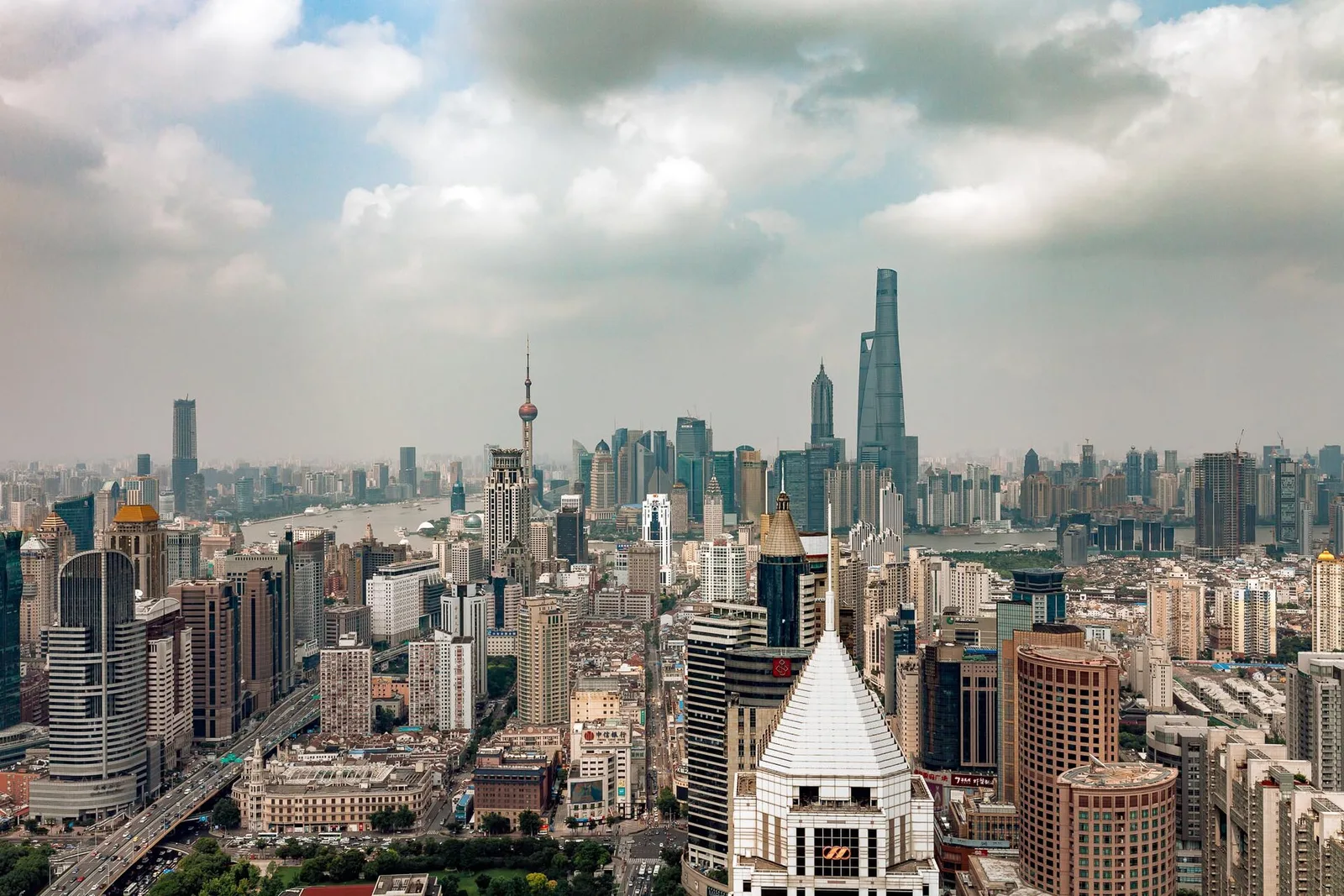
The skyline from K11. Photo: Wikimedia Commons / CC BY-SA 4.0 — Bureau36. Source
Where is Zhang Yuan in Shanghai?
On this street. Zhang Yuan is the shikumen quarter restored on Nanjing West Road in Jing’an District, and one of the anchors this page is built around. If a map app or a taxi took you to “Zhang Yuan” as a destination of its own, it will still drop you on this same road.
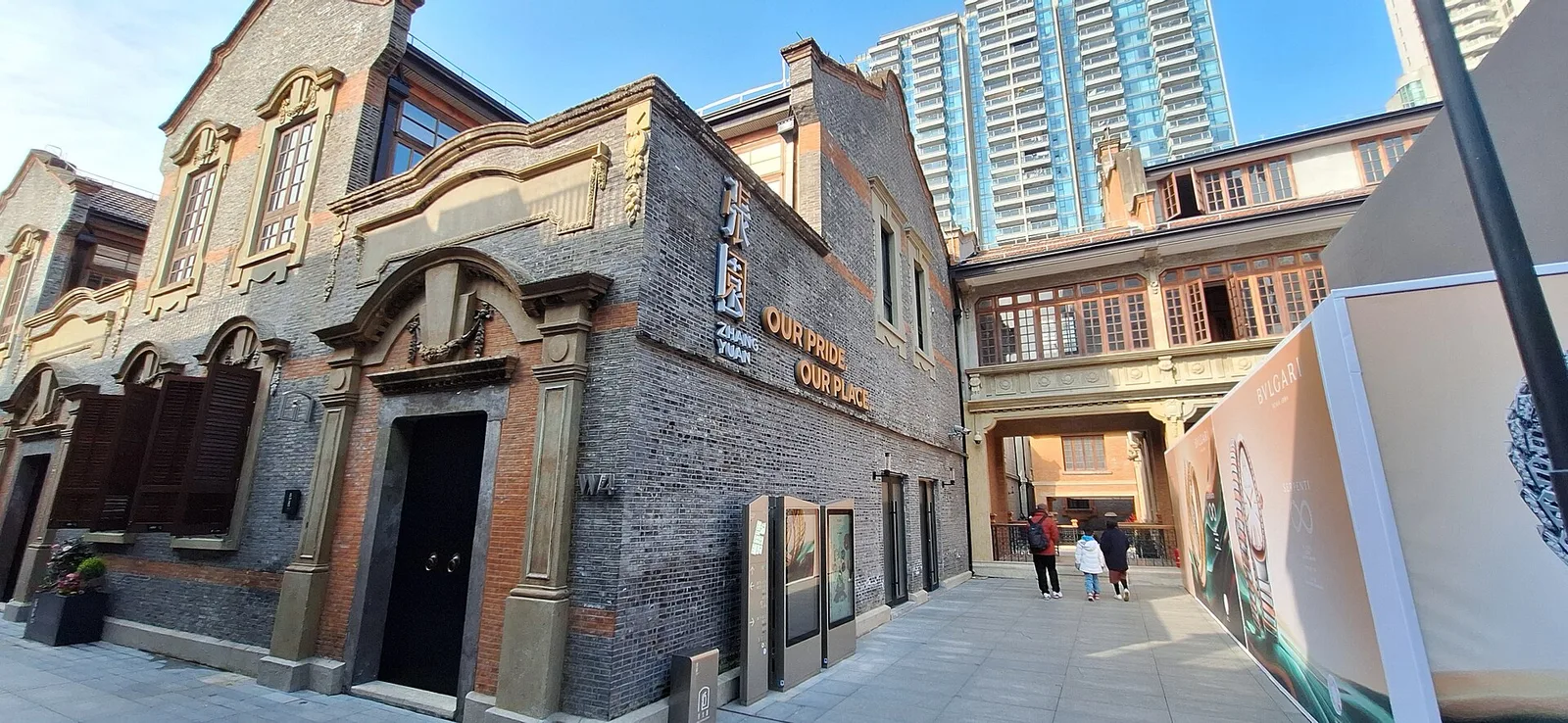
The distinction that catches people out is between the block and the park. The block is the shikumen architecture: stone-and-brick lane houses with carved gables, wooden doors and round doorplates. The park is the open ground inside and around the block, where the exhibitions and events are. Both are free.
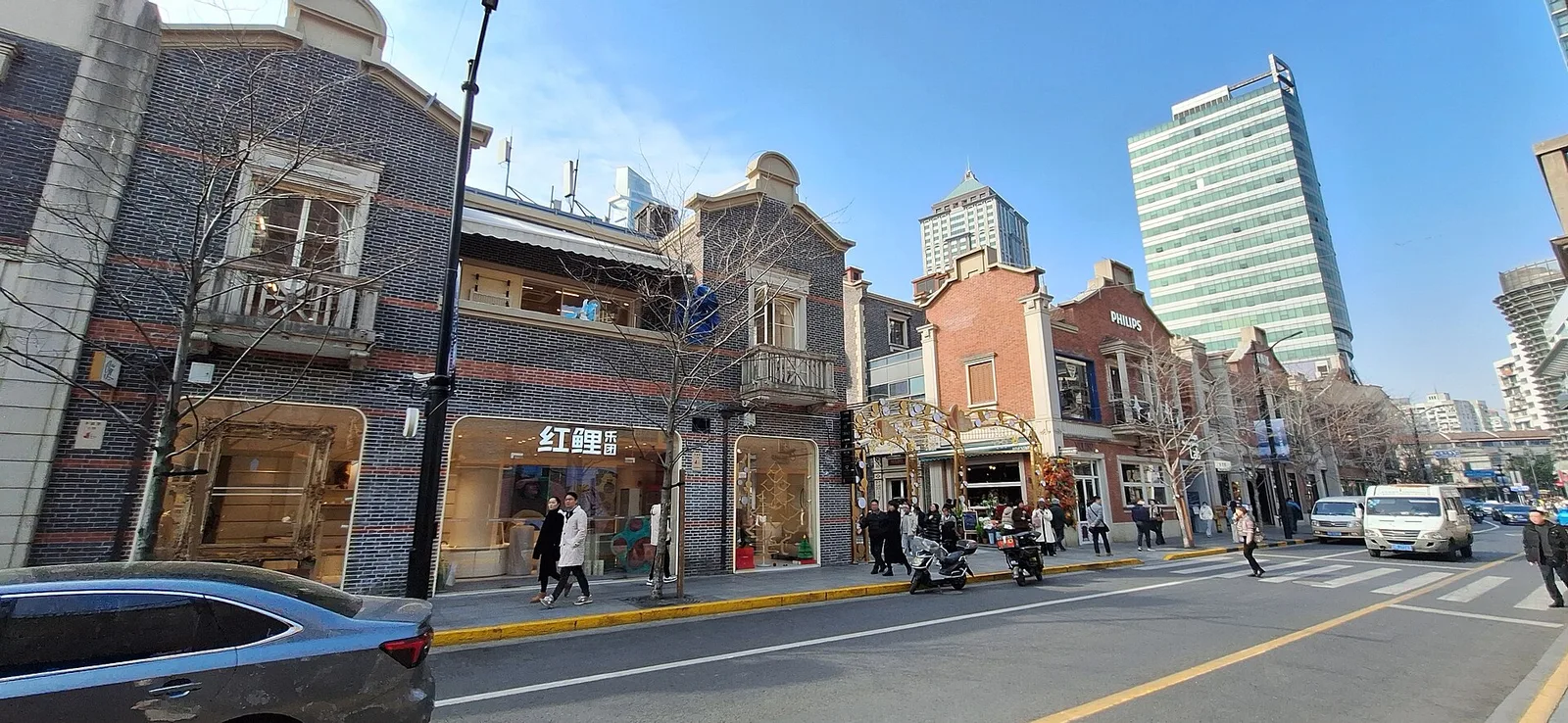
Inside the Zhang Yuan block. Photo: Wikimedia Commons / CC BY 2.0 — Juan Antonio Segal. Source
What is the history of Zhang Yuan in Shanghai?
The short version, and the part we can stand behind: Zhang Yuan began in 1882 as a shikumen quarter, and it is one of the larger surviving groups of that building type in Shanghai.
Shikumen (石库门) — literally “stone-gate house” — names the attached stone-and-brick lane houses in the photographs here: gables, wooden doors, round doorplates, shopfronts let into the ground floors. What makes Zhang Yuan notable is scale, not the uniqueness of the form.
Our source pack gives the 1882 date and the description of the buildings; it does not give a year-by-year history, so we are not going to invent one. What it does establish is the present role: the restored block is one of the anchors of the street’s night economy, working together with Fengsheng Li (丰盛里) and Wujiang Road (吴江路).
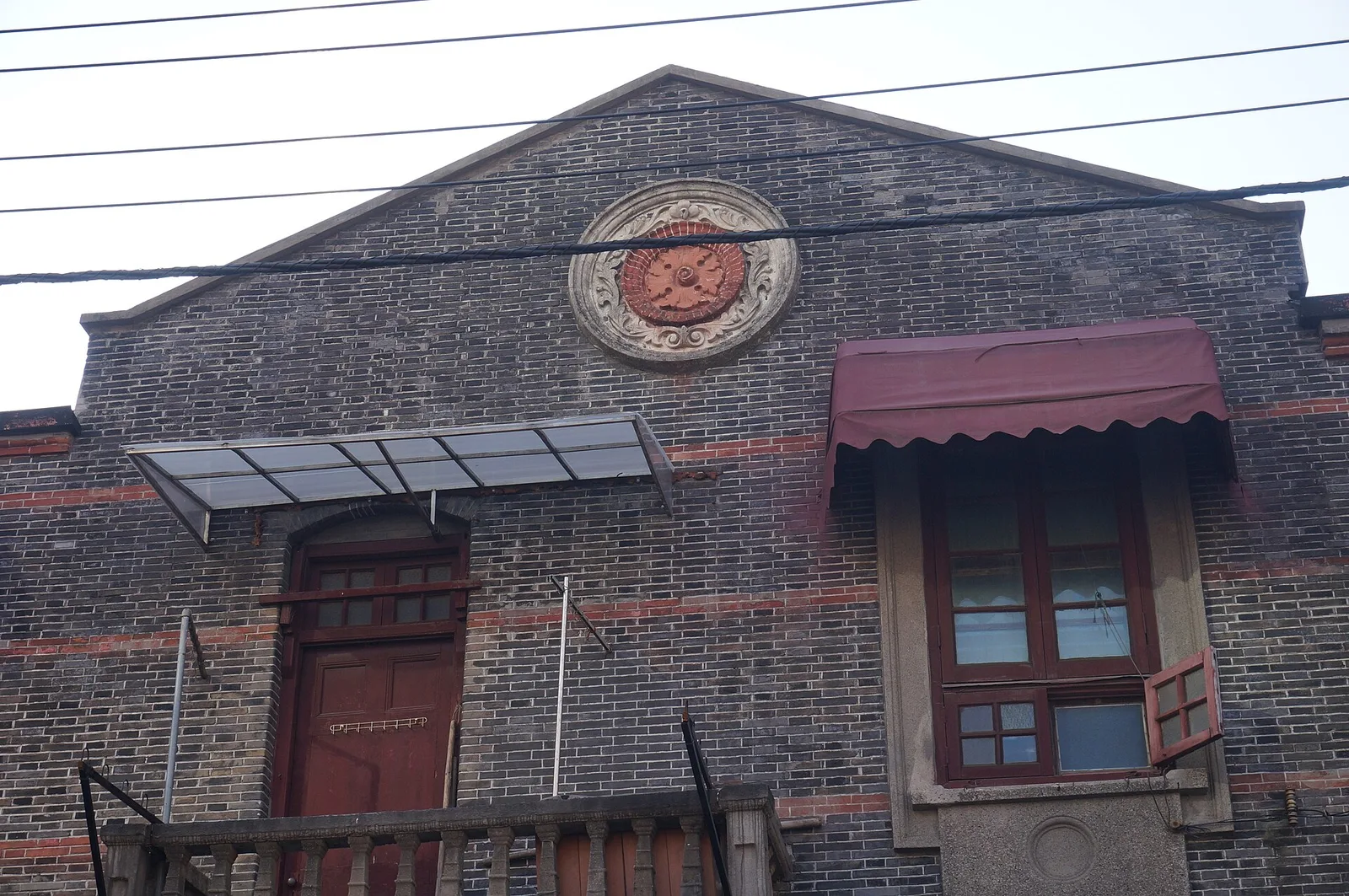
Shikumen gable detail. Photo: Wikimedia Commons / CC BY-SA 3.0 — Livelikerw. Source
Which is better, Nanjing Road east or west?
They are two different streets in two different districts, and search engines mix them constantly, so settle the entity first.
Nanjing Road East (南京东路) is the Bund-side half of the city’s Nanjing Road axis: the pedestrian shopping street at the river end, served by the Lines 2 and 10 station of that name. It belongs with the Bund.
Nanjing West Road (南京西路) — this page — is in Jing’an District, served by the Line 13 station of the same name.
Which is better depends on what your Shanghai plan already contains. If the Bund is in it, take the East side that day: a shopping street that starts by the river, which is why you are there. Take the West side if you want a walk that changes character every few hundred metres — a preserved 1882 shikumen quarter, a temple with a landmark photo position, an open park, two free museums, a building-sized art installation and a food strip of old brands. Both are free. The West has the museums, the park and the architecture; the East has the river.
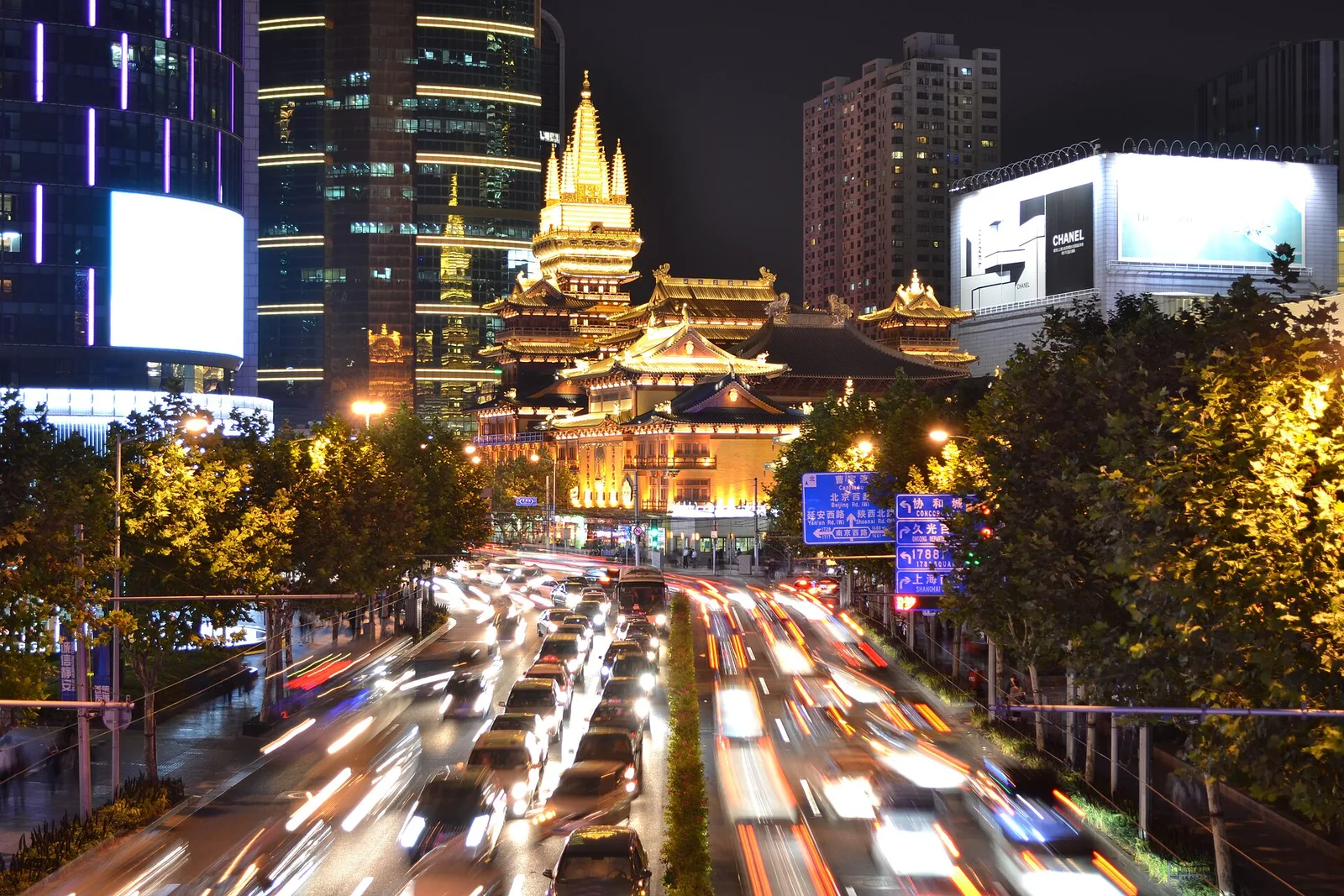
Jing’an Temple after dark, seen from the pedestrian bridge on Huashan Road. Photo: Wikimedia Commons / CC BY-SA 4.0 — Parkertony. Source
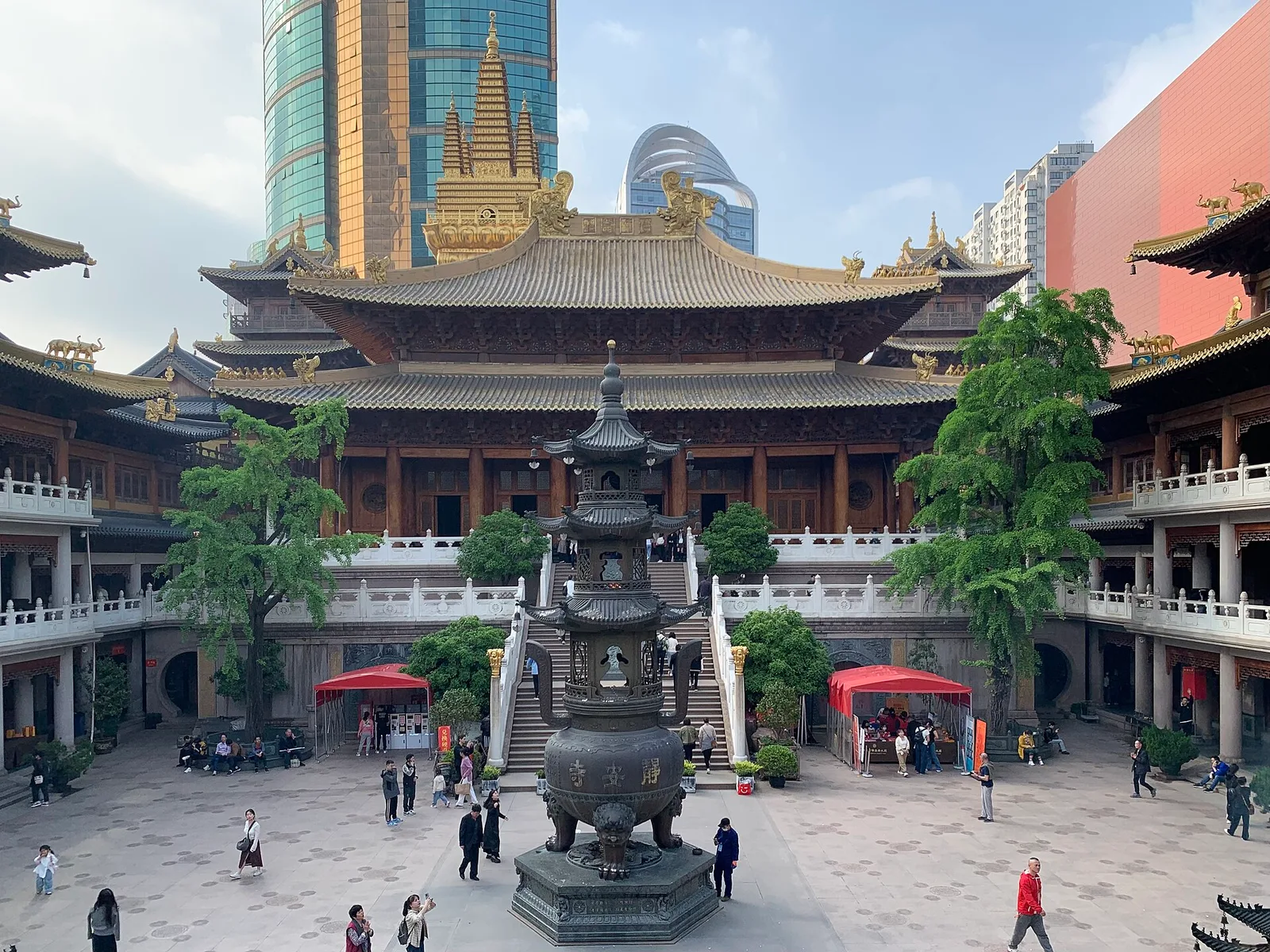
Jing’an Temple and the towers going up around it. Photo: Wikimedia Commons / CC BY 4.0 — Chainwit.. Source
What is the nicest neighborhood in Shanghai?
We will not pretend there is a right answer, and we do not rank neighbourhoods. But this street is a defensible answer for a particular kind of trip.
It is the right pick if you want one street to give you several things in an afternoon rather than one monument: the 1882 shikumen quarter at Zhang Yuan, the Jing’an Temple footbridge frame, an open park mid-walk, two museums that cost nothing once you have your passport to hand, and a night economy when the light goes down. It is the wrong pick if you want a single defining sight — for that, the Bund and Yu Garden carry the old-Shanghai idea more directly.
Within this street, the quietest time to be on it is a weekday morning, when our source pack says the street is at its emptiest and the architecture is doing all the work rather than the crowd.
Is Nanjing Road worth visiting?
Yes — with one condition attached. If you are after a river view and a single iconic frontage, then no: you want Nanjing Road East at the Bund instead. If you want a half-day mixing a historic quarter, a working temple, a park, two free museums, one very large piece of public art and old Shanghai food — all within walking distance, none behind a ticket — then it is worth visiting.
It is free, it is three to five hours on foot, and it has a free fallback for every hour of the day. Rain at the museums, an exhibition you did not buy, a booking you did not make for the LV installation — none of it costs you anything, because the street, the park and the museum steps are still there.
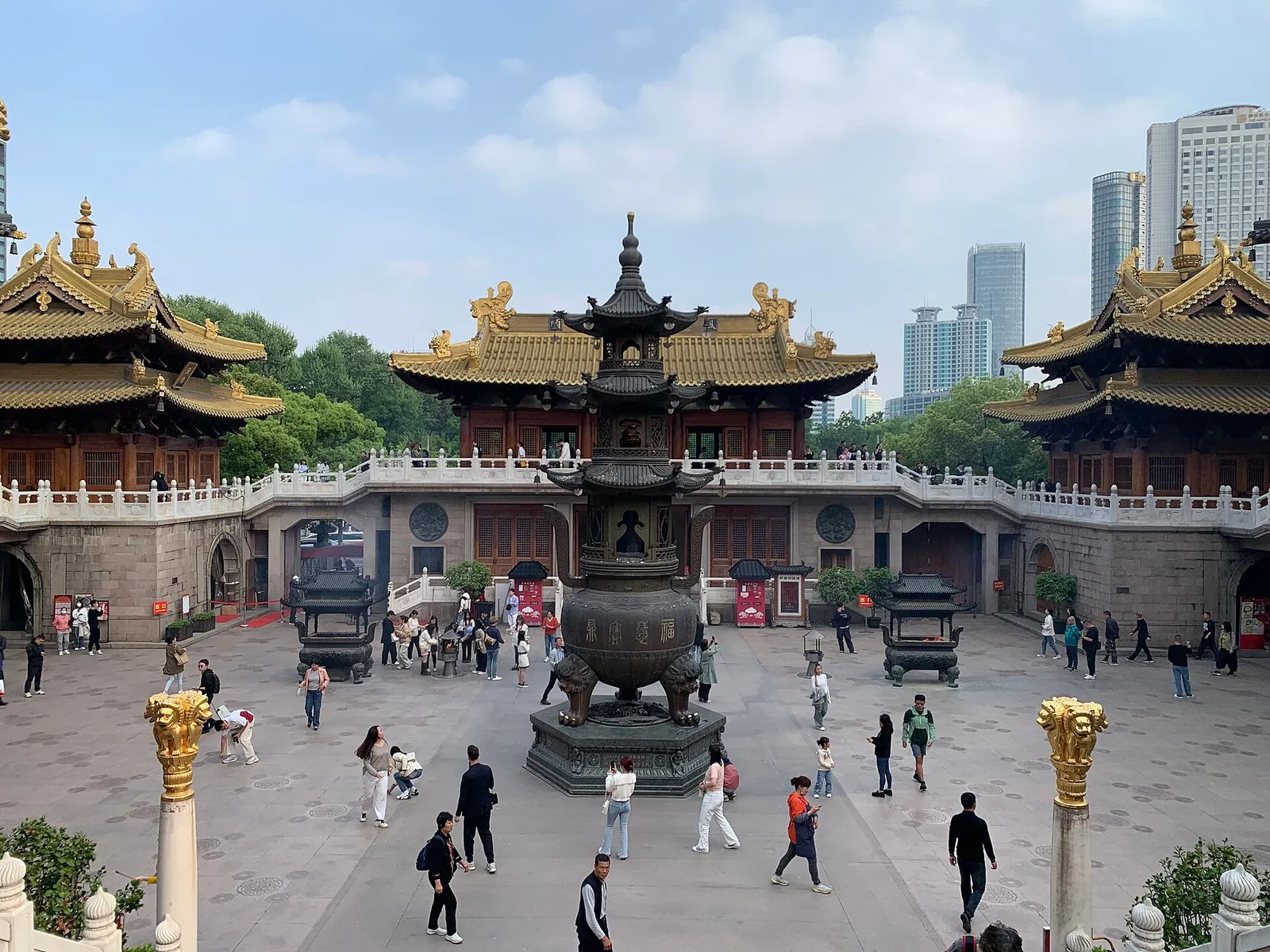
The courtyard at the foot of the Jing’an Temple halls. Photo: Wikimedia Commons / CC BY 4.0 — Chainwit.. Source
What each stop costs, and when it is open
There is no single opening hour for Nanjing West Road, because it is a street and not one gated attraction. This is the practical version, stop by stop.
| Stop | Free? | Opening | The catch |
|---|---|---|---|
| The street itself (南京西路) | Yes | Open around the clock | No gate, no ticket |
| Zhang Yuan’s park (张园) | Yes, most exhibitions inside free too | Open around the clock (business hours 10:00-22:00) | No booking needed; some special exhibitions sold separately |
| Jing’an Sculpture Park (静安雕塑公园) | Yes | Open through the day | No barrier, no entry threshold |
| Shanghai History Museum (上海历史博物馆 / 上海革命历史博物馆), Nanjing West Road 325 | Yes, no ticket | 09:00-17:00, last entry 16:00; closed Mondays except public holidays | No booking needed; bring your identity card (身份证) — a passport works |
| Shanghai Sports Museum (上海体育博物馆) | Yes, no ticket | Tuesday to Sunday; closed every Monday | Bring your identity card (身份证) — a passport works |
| Park Hotel History Museum (国际饭店文史馆) | Not established in our source pack | Likely closed at weekends and on statutory holidays | Butterfly pastries and the exterior are unaffected |
| LV installation, HKRI Taikoo Hui (兴业太古汇) | Free to photograph from outside | Metro Line 13, Nanjing West Road station, Exit 5 | Inside needs a 「我的专属LV」 booking |
| The Jing’an Temple footbridge (静安寺) | Yes | The footbridge position is public street | The temple’s own admission rules were not established in our source pack |
Two cells read “not established” rather than a figure on purpose. Our source pack did not settle the Park Hotel History Museum’s admission rules or Jing’an Temple’s own entry arrangements, and we would rather say so than publish a number we cannot stand behind.
Getting there and getting around
Metro Line 13 runs to Nanjing West Road station (南京西路站), Exit 5 being the exit for HKRI Taikoo Hui (兴业太古汇) — the one stop our source pack establishes for this street. The rest of the anchors are on foot along the road, which is the only sensible way to do them: it is a walking street, and the heavy traffic is above you on the elevated Yan’an Road rather than beside you.
Budget three to five hours for the full length, and more if you want to go properly inside a museum — both are shut on Mondays. With only an hour, do Zhang Yuan and the Jing’an Temple footbridge, the two places here that could not be anywhere else.
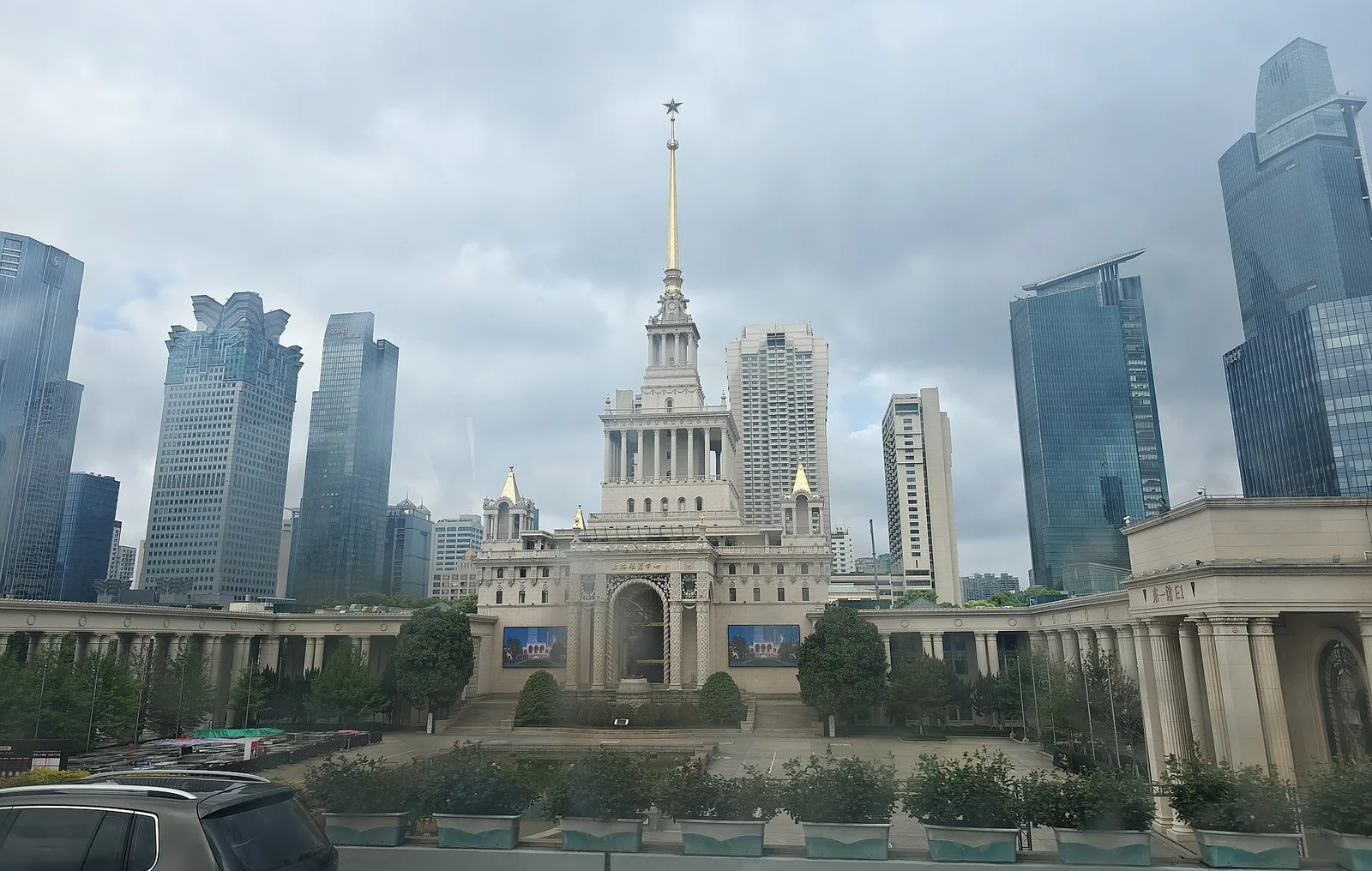
The Shanghai Exhibition Center at the west end of the street. Photo: Wikimedia Commons / CC0 — DvTor8303. Source
Where to eat
The old brands are still working, and they are the reason to come at mealtime:
- 王家沙 (Wangjiasha) — cold noodles and 艾草细沙青团, the mugwort qingtuan with its fine sand coating.
- 弄堂小馄饨 — wonton soup.
- 状元楼 — one of the old brands (老字号) on this street.
In the evening the street’s other food face is the Wu Jiang Road–Fengsheng Li cluster (吴江路—丰盛里), the night-economy zone that works with Zhang Yuan, Fengsheng Li and Wujiang Road.
How this fits with the rest of Shanghai
Nanjing West Road works well as a half-day of its own, and pairs naturally with the city’s other anchors. The Bund is the other half of the Nanjing Road story and the place to go for the river. Yu Garden is the old-city garden, the Jade Buddha Temple the other Jing’an landmark worth an hour, and the Oriental Pearl Tower the skyline across the water.
For the wider trip, the Shanghai guide for foreign visitors covers planning the city, the five-day Shanghai itinerary shows how a street like this fits a longer stay, and the Shanghai safety notes the practicalities.
Best photo spots
-
The lanes inside Zhang Yuan (张园) · Weekday morning, when the street is at its emptiest
Stone-and-brick shikumen with gables, wooden doors and round doorplates, and shopfronts inserted at ground level. The block is free to enter at any hour, so the morning is a matter of having the lanes to yourself rather than of light.
-
The pedestrian bridge at the junction of Huashan Road and Yan'an West Road · After dark, when the temple's roof is lit and the elevated road shows light trails
The classic frame on this street: the glazed golden roof of Jing'an Temple (静安寺) on one side and the car light-trails of the Yan'an elevated road on the other, in a single shot from a public footbridge that costs nothing.
-
Jing'an Sculpture Park (静安雕塑公园) · Late afternoon into sunset
The open city park in the middle of the walk: free throughout, no entry threshold, and the place to sit down mid-route and watch the light go down over the city.
Where to eat nearby
-
王家沙 (Wangjiasha)
Old Shanghai cold noodles and 艾草细沙青团, mugwort qingtuan with its fine sand coating · On the street, among the old brands
-
弄堂小馄饨
Wonton soup, the old lane-house style · On the street
-
状元楼
One of the street's old brands (老字号) · On the street
-
Wu Jiang Road–Fengsheng Li cluster (吴江路—丰盛里)
The street's night-economy food district, working together with Zhang Yuan, Fengsheng Li and Wujiang Road · Evening, off the main daytime route
Frequently asked questions
What to do at Nanjing Road West?
Walk it in one direction: Zhang Yuan's shikumen quarter, the LV installation at HKRI Taikoo Hui, the Jing'an Temple footbridge at Huashan Road and Yan'an West Road, Jing'an Sculpture Park, the Shanghai History Museum and Shanghai Sports Museum, the Park Hotel History Museum, then the mall row and the Shanghai Exhibition Center at the west end. Add the Wu Jiang Road–Fengsheng Li cluster in the evening and the old-brand food stops. All of it is free, and the full walk takes three to five hours.
Where is Zhang Yuan in Shanghai?
On this street. Zhang Yuan is the shikumen quarter restored on Nanjing West Road in Jing'an District, and it is one of the anchors of the walk described on this page. If a map app or a taxi took you to "Zhang Yuan" as a destination of its own, it will still drop you on the same road.
What is the history of Zhang Yuan in Shanghai?
It began in 1882 as a shikumen quarter, and it is one of the larger surviving groups of that building type in Shanghai. Shikumen (石库门) is the attached stone-and-brick lane-house form you can see in the photographs here, with gables, wooden doors and round doorplates. The restored block is now one of the anchors of the street's night economy, working together with Fengsheng Li (丰盛里) and Wujiang Road (吴江路).
Which is better, Nanjing Road east or west?
They are two different streets in two different districts, so it depends on what your Shanghai plan already contains. Nanjing Road East (南京东路) is the Bund-side pedestrian shopping street, served by the Lines 2 and 10 station of that name, and it belongs with the Bund. Nanjing West Road (南京西路), this page, is in Jing'an District, served by the Line 13 station of that name, and it is the one with the historic quarter, the park, the two free museums and the art installation. Both are free.
What is the nicest neighborhood in Shanghai?
There is no ranking we can stand behind, because we do not rank neighbourhoods. What we can say is which kind of trip each page suits. Nanjing West Road is the pick if you want a single walk that changes character every few hundred metres: an 1882 shikumen quarter, a temple with a landmark photo position, an open park, two museums that cost nothing, one very large piece of public art and old-brand food. For one defining sight rather than a mixed street, the Bund and Yu Garden carry the old-Shanghai idea more directly.
Is Nanjing Road worth visiting?
Yes, with one condition. If you are after a river view and one iconic frontage, you want Nanjing Road East at the Bund instead. If you want a half-day that mixes a historic quarter, a working temple, a park, two free museums, a building-sized art installation and old Shanghai food, all within walking distance and all without a ticket, then it is worth it. Weekday mornings are the emptiest time.
Sources
- 上海市静安区人民政府(“上海静安”门户网站)——《又见张园 再现繁华》:张园地处静安区南京西路风貌保护区核心位置,1882 年无锡富商张叔和购地建“张氏味莼园”,13 处上海市优秀历史建筑 + 24 处区级文保点 · Government of the PRC
- 上海市静安区人民政府(“上海静安”门户网站)——《春节去张园!上海百年石库门迎高人气》:张园始建 1882 年,上海现存规模最大、最完整、种类最多的中后期石库门建筑群;张园西侧茂名北路与丰盛里连成静安南京西路商圈 · Government of the PRC
- 上海市历史博物馆(上海革命历史博物馆)—— 参观须知:基本陈列对公众免费开放;开放时间 9:00-17:00(16:00 停止检票),周一闭馆(国定假日除外);地址 上海市南京西路 325 号 · Chinese public institution
- 上海市人民政府门户网站(黄浦区)—— 上海市历史博物馆:无需预约、免费开放;开放时间 周二至周日 9:00-17:00(16:00 停止入馆),周一闭馆(法定节假日除外);地址 黄浦区南京西路 325 号 · Government of the PRC