
Kuanzhai Alley Guide: Chengdu's Wide and Narrow Alleys
Kuanzhai Alley (Wide and Narrow Alleys) in Chengdu: 3 parallel Qing-era courtyard streets, free entry, the upscale alternative to Jinli. Best for boutique teahouses, Sichuan opera, and a quieter old-China experience.
Kuanzhai Alley (宽窄巷子, Kuānzhǎi Xiàngzi) is the calm, refined alternative to the touristy Jinli Ancient Street, and the single best place in Chengdu to spend a slow afternoon over tea. The neighborhood is made of 3 parallel Qing-era streets (Wide Alley, Narrow Alley, Well Alley) that have been preserved and converted into 70+ boutique teahouses, restaurants, craft shops, and small museums. Locals prefer this over Jinli; first-time visitors who only have time for one should pick based on taste.
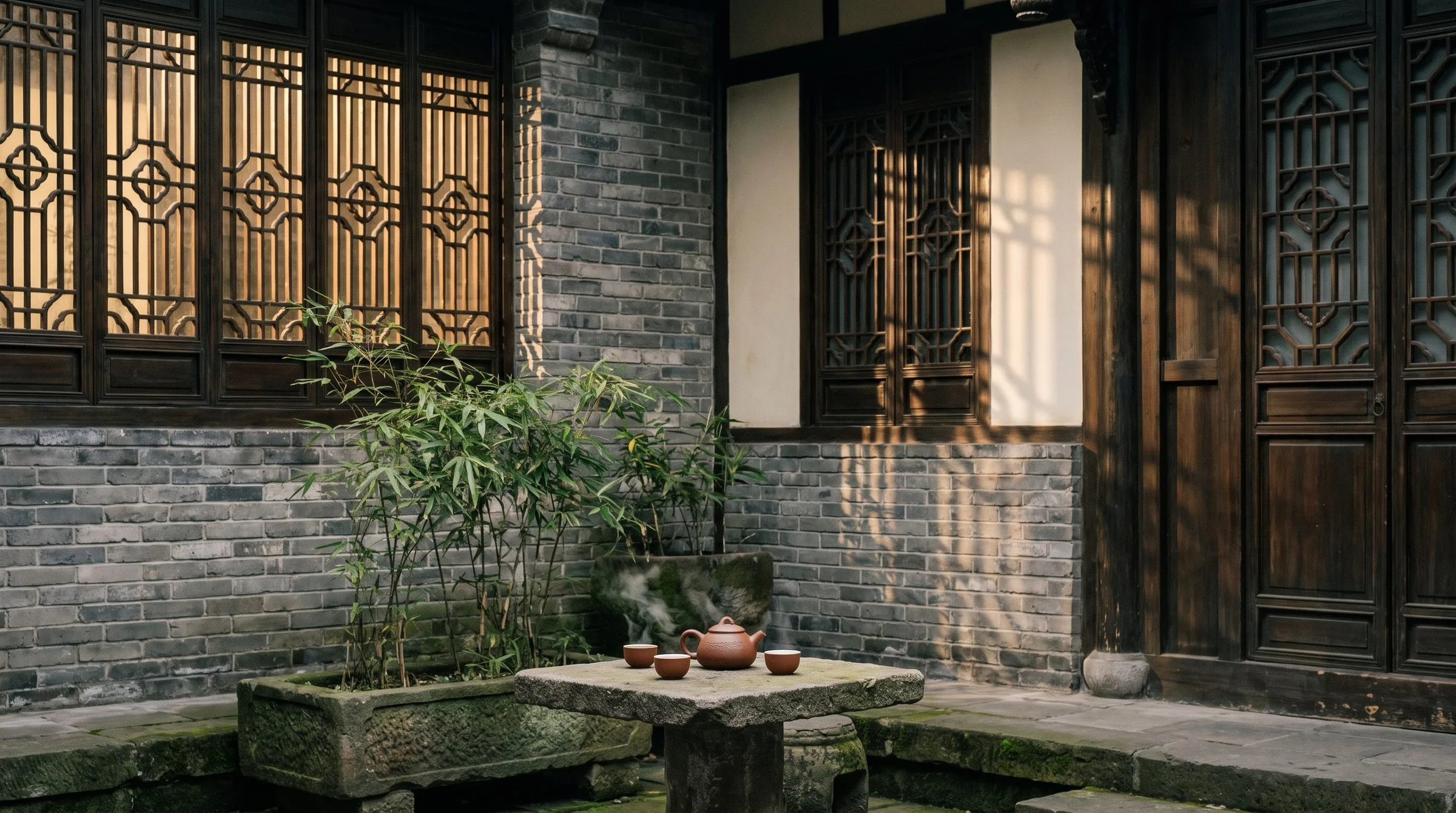
The 3 streets together cover roughly 350m x 200m. Entry is free. The alleys are pedestrian-only and feel like a museum of Qing-era architecture: grey brick walls, dark wood lattice windows, stone-paved lanes, and small inner courtyards. Most of the teahouses have inner courtyards where you can sit, drink tea, and watch a Sichuan opera face-changing show (变脸, biànliǎn).
Plan your visit
- Entry: Free for the streets and outer courtyards. Individual teahouses and shows have their own prices.
- Hours: Streets are open 24/7. Shops and teahouses typically 10:00-23:00. Most shows run 14:00, 16:00, 20:00.
- Subway: People’s Park Station (Line 2/4 transfer) is 5 min walk. Tonghuimen Station (Line 2) is also close.
- Best time: Weekday afternoon 14:00-17:00 for calm teahouse sitting. Weekday evening 19:00-22:00 for night atmosphere and the evening opera show.
- Allow 2-4 hours if you want to sit at a teahouse, watch a show, and eat.
The 3 streets
Wide Alley (宽巷子, Kuān Xiàngzi)
The most upscale of the 3. Lined with restored Qing-era courtyard mansions, now boutique teahouses (¥80-200 per pot of tea), Sichuan restaurants (¥150-400 per person), and a few small museums. Best for: a slow tea ceremony, a refined Sichuan dinner, an hour of reading in a courtyard. Locals call this the “elegant” street.
Narrow Alley (窄巷子, Zhǎi Xiàngzi)
Slightly more casual than Wide Alley, with a mix of teahouses, craft shops, and Sichuan opera teahouses. The opera teahouses here are the best in the neighborhood (¥100-200 per person including tea). Best for: a face-changing show, buying a small craft item (silk scarves, teacups, embroidery).
Well Alley (井巷子, Jǐng Xiàngzi)
The shortest of the 3, mostly small craft shops and snack stalls. Less polished than Wide and Narrow Alley, but the cheapest snacks. Best for: a quick bowl of sweet water noodles, browsing cheap souvenirs.
What to do
Watch a face-changing show (变脸, biànliǎn)
The Sichuan opera face-changing act is one of China’s most famous performance arts. A performer changes masks in milliseconds, traditionally by manipulating masks hidden in their costume. The technique is a closely guarded secret. Teahouses in Kuanzhai Alley host daily shows (typically 14:00, 16:00, 20:00). The best teahouses:
- Shu Feng Ya Yun (蜀风雅韵) — the original and best, ¥200-400 per person including tea and a small banquet. Booking recommended.
- Jinjiang Theater (锦江剧场) — a smaller, more traditional venue, ¥150-250 per person. Easier to get same-day tickets.
The 30-40 minute shows include face-changing plus other Sichuan opera highlights (fire-breathing, hat-spinning, hand-shadow plays). English commentary is rare; ask your hotel concierge or book via Klook for an English-speaking host.
Sit at a teahouse for an hour
This is the core Chengdu experience. Pick any teahouse in Wide or Narrow Alley, order a pot of tea (¥60-150 for two people, refilled with hot water as you drink), and sit. Most teahouses have:
- Inner courtyards with stone tables and bamboo plants
- Free wifi (decent speed)
- Snacks and Sichuan dishes (¥30-100 each)
- Quiet hours weekday afternoons (locals take their post-lunch nap here)
The teahouses in Wide Alley are more upscale (¥100+); the ones in Narrow Alley are more casual (¥40-80). Most allow you to bring your own snacks.
Try Chengdu’s local food
Most of the restaurants in Kuanzhai Alley are upscale Sichuan. Good mid-range options:
- Mapo Tofu (麻婆豆腐) — the iconic Sichuan dish, originating from Chengdu. Try it at any sit-down restaurant here.
- Kung Pao Chicken (宫保鸡丁) — another Chengdu original, named after the Qing governor Ding Baozhen.
- Hotpot (火锅) — available everywhere, but the Kuanzhai Alley versions are expensive. For authentic local hotpot, walk 10 min south to a small neighborhood restaurant.
Browse the craft shops
The alleys are full of small craft shops: silk scarves, embroidery, teacups, jade jewelry, paper cuttings, traditional Chinese knot work. Quality is uneven. The genuine craft items (Yunnan silver, Jiangxi porcelain, Hunan embroidery) are at the larger shops with fixed prices; the smaller stalls have more tourist-grade items.
What to skip
- The “ancient” claim — the alleys are restored, not original. The Qing-era feel is real, but the buildings are renovated. Treat as a designed experience, not a historical site.
- Most of the snack stalls — same touristy pricing as Jinli. The teahouses are the better value here.
- The souvenir shops on Well Alley — generic and overpriced. Skip unless you want a fridge magnet.
Practical tips
- Cash + WeChat Pay work everywhere. Foreign cards rarely accepted.
- Photography is welcome in the alleys and courtyards. The grey brick + dark wood + bamboo combination photographs beautifully in any light.
- Dress for the season. Chengdu is hot and humid in summer, cool and damp in winter. The teahouses are well-heated in winter, well-ventilated in summer.
- Avoid weekends if possible. Saturday and Sunday afternoons are packed. Weekday evenings are calmer.
- Free wifi is patchy. Bring a Chinese SIM or eSIM.
Common questions
Is Kuanzhai Alley better than Jinli Ancient Street?
Depends on your style. Kuanzhai is calm, refined, and great for teahouse sitting. Jinli is busy, photogenic, and great for street food and lantern photos. Locals prefer Kuanzhai; first-time tourists often prefer Jinli. If you have time for both, do Kuanzhai in the afternoon and Jinli at dusk.
Can I see face-changing in the teahouse?
Yes — most opera teahouses include the face-changing act in their regular show. The full Sichuan opera (with face-changing) is 30-40 minutes. Some teahouses have it as part of a longer show with a small banquet.
How long do I need at Kuanzhai Alley?
1 hour if just walking the alleys. 2-3 hours if stopping at a teahouse. 3-4 hours if watching a show + dinner. It’s the kind of place you can wander into for “just a quick tea” and stay 3 hours.
Is Kuanzhai Alley touristy or local?
Both. The alleys are designed for tourists (and priced for them), but Chengdu residents do come here to sit at teahouses, especially in the evenings. It’s a hybrid space — cleaner and more touristy than a pure local teahouse district, but more authentic than Jinli.
Kuanzhai Alley teahouse + Chengdu essentials
Sichuan opera teahouse with face-changing show reservation, Jinli Ancient Street + Wuhou Shrine combo, Giant Panda Base day tour, and hotel booking in one cart. English interface, foreign cards accepted, e-voucher to phone. The 'Chengdu 3-day classic' bundle is the most efficient for first-timers.
Show ticket from $25 · Hotel from $78/night
Verified August 2026 by TravelHubChina Editorial. We re-check prices and policy details monthly so the data doesn’t drift.
FAQ
-
How much does it cost to enter Kuanzhai Alley?
The streets and outer courtyards are free. Individual teahouses, restaurants, and Sichuan opera shows are paid. A pot of tea runs ¥60-150 for two, refined Sichuan restaurants ¥150-400 per person, and opera teahouse shows ¥100-200 per person including tea. -
What is the difference between the 3 alleys (Wide, Narrow, Well)?
Wide Alley (宽巷子) is the most upscale with courtyard mansions, ¥80-200 tea, and ¥150-400 dinners. Narrow Alley (窄巷子) is more casual with craft shops and the best opera teahouses. Well Alley (井巷子) is the shortest, with the cheapest snack stalls and tourist-grade souvenirs. -
How do I get to Kuanzhai Alley by metro?
Take Line 2 or Line 4 to People's Park Station (about 5 minutes walk) or Line 2 to Tonghuimen Station. Both are within easy walking distance of the alleys. -
What is the best Sichuan opera teahouse for face-changing in Kuanzhai Alley?
Shu Feng Ya Yun (蜀风雅韵) is the original and best, at ¥200-400 per person with tea and a small banquet (booking recommended). Jinjiang Theater (锦江剧场) is smaller and more traditional, at ¥150-250 per person, with easier same-day tickets. -
What time do the Sichuan opera shows run?
Most teahouses run shows at 14:00, 16:00, and 20:00. The 30-40 minute performances include the famous face-changing act (变脸) plus fire-breathing, hat-spinning, and hand-shadow plays. English commentary is rare; booking through Klook can add an English-speaking host. -
How long do I need at Kuanzhai Alley?
1 hour if you only walk the alleys, 2-3 hours if you stop at a teahouse, and 3-4 hours if you add a show plus dinner. The article warns it is easy to wander in for a quick tea and stay 3 hours. -
Is Kuanzhai Alley better than Jinli?
Kuanzhai is calm, refined, and best for teahouse sitting, while Jinli is busy and photogenic, best for street food and lantern photos. Locals prefer Kuanzhai; first-time tourists often prefer Jinli. If you have time, the article suggests Kuanzhai in the afternoon and Jinli at dusk.
Related guides
- Scenic & Nature
Forbidden City Guide: Beijing Imperial Palace, Tickets & Plan
The Forbidden City in Beijing: 72 hectares, 980 buildings, 1.4 million artifacts, Ming and Qing dynasties, UNESCO since 1987. Tickets (¥60), WeChat booking.
12min read
- Scenic & Nature
Jinli Ancient Street Guide: Chengdu's Most Photogenic Old Quarter
Jinli Ancient Street in Chengdu: a reconstructed Qing-era street next to Wuhou Shrine, 350m long, free entry. Best at dusk when the red lanterns come on. Combine with Wuhou Shrine and Du Fu Thatched Cottage.
- Scenic & Nature
Big Wild Goose Pagoda Guide: Xi'an's 1,300-Year Tang Pagoda
Big Wild Goose Pagoda (Dayan Ta) in Xi'an: 64m Tang-dynasty brick pagoda from 652 AD, UNESCO since 2014 as part of the Silk Roads network. Tickets (¥50), climb times, and the free North Square musical fountain (9 PM nightly).
8min read
- Scenic & Nature
China's Top 3 Scenic Wonders Compared: Zhangjiajie vs Huangshan vs Jiuzhaigou (2026)
Zhangjiajie (sandstone pillars), Huangshan (sea of clouds + granite peaks), Jiuzhaigou (turquoise lakes + waterfalls). Decision guide covering which fits your time, budget, fitness level, photography goals, and travel style. Prices, distances from Shanghai/Beijing, best seasons compared.
12min read
- Scenic & Nature
Daocheng Yading Scenic Guide: Three Sacred Mountains & Alpine Lakes
Daocheng Yading in Sichuan is a 4,000-6,032m reserve with three sacred peaks and Milk Lake. Covers ¥146-266 tickets, Chengdu flights, hiking, altitude prep.
12min read
- Scenic & Nature
Ejina Populus Forest Guide: 21 Days of Golden China
Ejina Populus Forest in Inner Mongolia has 39,000 hectares of Populus euphratica, gold October 1-21. Covers tickets, transport, Erdaoqiao Bridge, 4-day plan.
12min read